The Umayyad Caliphate at Its 8th Century Peak Extended from the Atlantic Coast of Iberia to the Indus River Making It One of the Largest Empires in History; ISIS Executed 82-Year-Old Archaeologist Khaled al-Asaad in Palmyra After He Refused to Reveal Where Treasures Were Hidden; Aleppo Soap (Ghar Soap) Is the Oldest Continuously Produced Soap in the World and the Original Model for Castile and Marseille Soap
The Umayyad Caliphate at its 8th century peak spanning from Atlantic Iberia to the Indus River; ISIS executing 82-year-old archaeologist Khaled al-Asaad who refused to reveal Palmyrene treasure locations; Aleppo soap (Ghar soap) as the oldest continuously produced soap and model for Castile and Marseille soap; the Hama massacre killing up to 40,000 civilians in 1982; the Syrian Civil War producing 6.8 million refugees (world's largest refugee population); and the Damascus vs Aleppo comparison of political versus commercial city.
- 1
The Syrian Civil War – 13 Years of Conflict and the Fall of Assad
The Syrian Civil War (2011-2024) — one of the most destructive conflicts of the 21st century: the historical analysis. The background (Syria under the Assad family: Hafez al-Assad (r. 1971-2000) — seized power in a coup and ruled Syria for 29 years as a single-party Baathist state: the Baath Party (Arab Socialist Baath Party) established a secular Arab nationalist ideology that suppressed political opposition: the Hama massacre (the Hama massacre (February 1982) — the Syrian Army's suppression of the Muslim Brotherhood uprising in the city of Hama: an estimated 10,000-40,000 civilians killed: the massacre became the defining act of Hafez al-Assad's authoritarian rule: Bashar al-Assad (r. 2000-2024) — inherited power from his father: trained as an ophthalmologist in London: initially seen as a potential reformer: the Damascus Spring (2000-2001) — a brief period of political opening that was quickly suppressed: the Arab Spring (the Syrian revolution began on March 15, 2011 with peaceful protests in Deraa (southern Syria) demanding political reform: the Assad government responded with military force: protests spread nationwide: the peaceful protests were gradually militarized as armed opposition groups formed: the factions (the Syrian conflict involved: the Assad government forces (Syrian Arab Army) supported by Russia (air campaign from September 2015) and Iran (IRGC forces and Hezbollah): the Free Syrian Army and affiliated rebel groups: ISIS (Islamic State — declared a caliphate in 2014 capturing Raqqa and Mosul): the Syrian Democratic Forces (SDF — US-backed Kurdish and Arab coalition): Hayat Tahrir al-Sham (HTS — formerly al-Nusra Front, al-Qaeda affiliate that renounced formal al-Qaeda ties in 2016): the toll (the Syrian civil war: 300,000-600,000 killed (estimates vary widely): 6.8 million refugees (the largest refugee population in the world 2015-present): 6.7 million internally displaced persons: the fall (HTS and allied factions launched a rapid offensive in November 2024: captured Aleppo on November 30: captured Hama on December 5: Damascus fell on December 8, 2024: Assad fled to Russia).
- 2
Aleppo – The Second City and the Ancient Souk
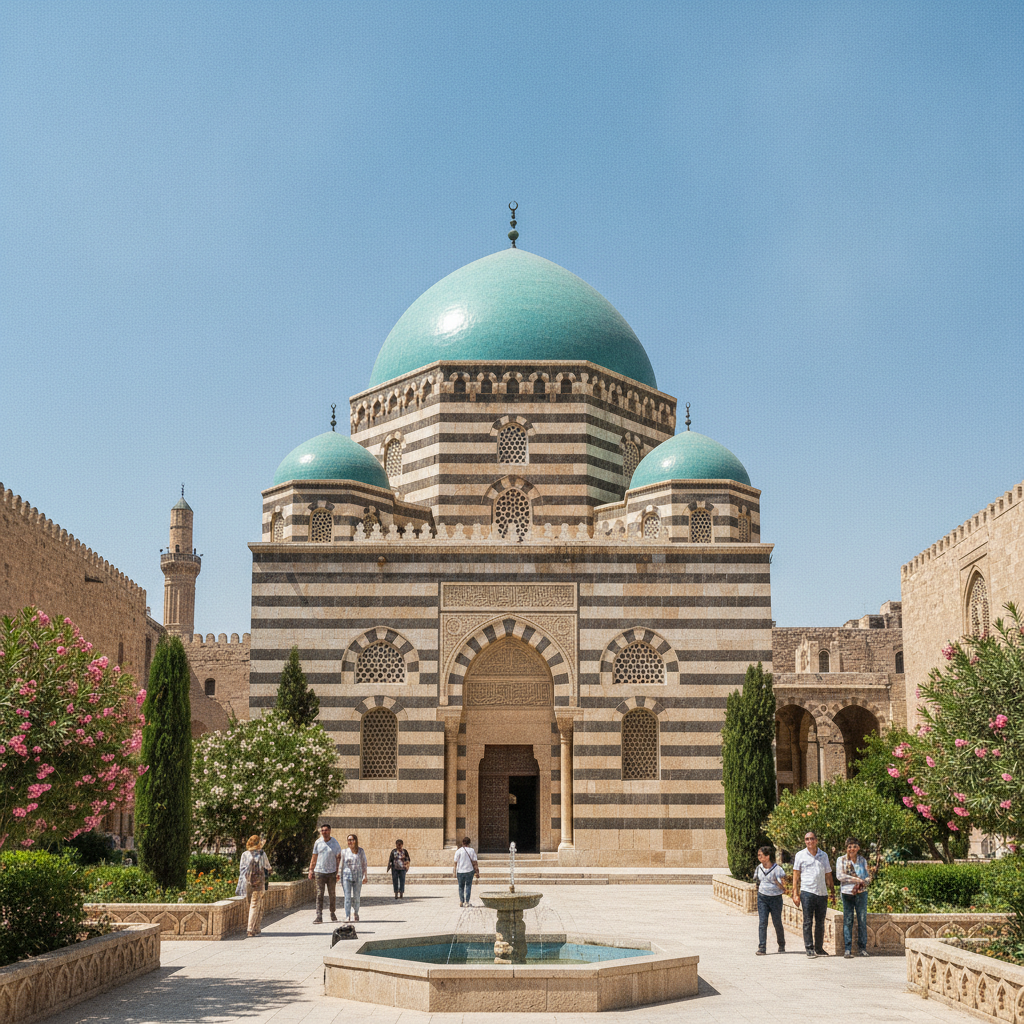
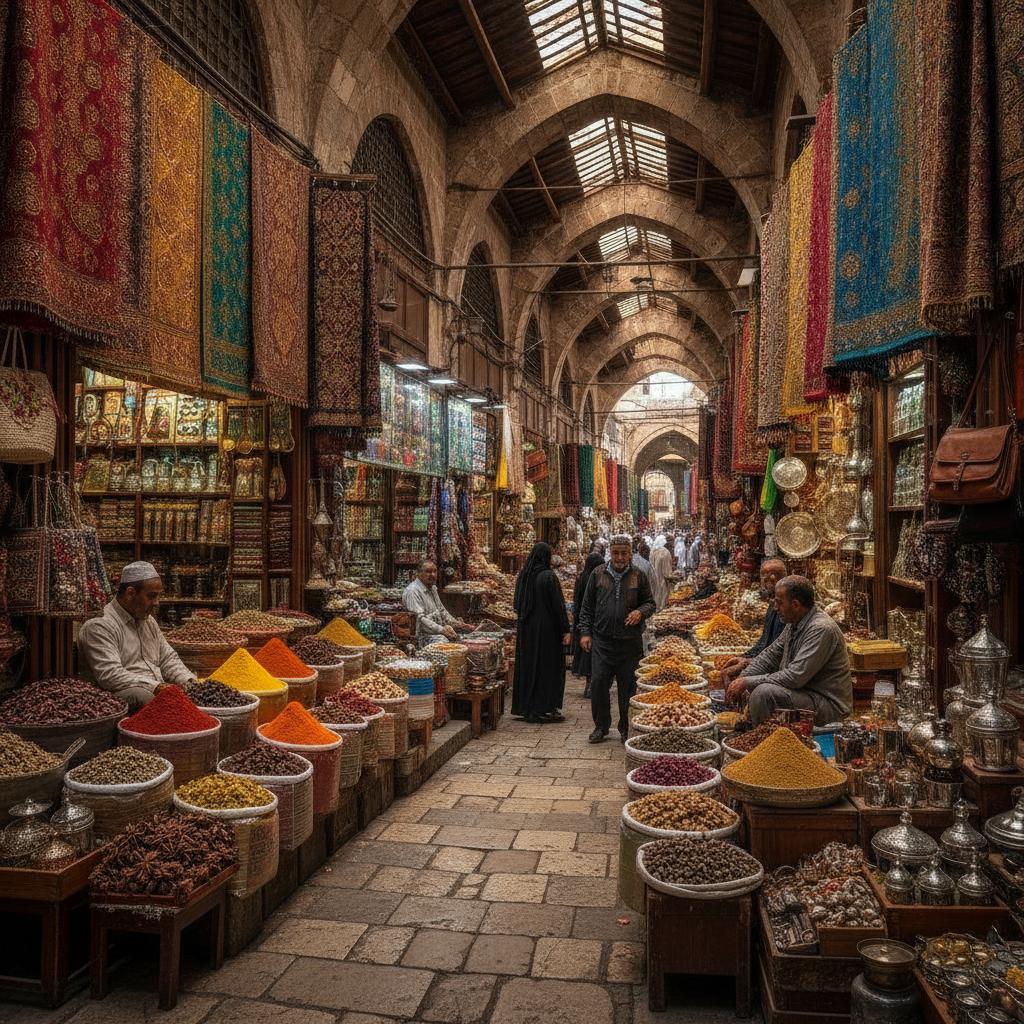
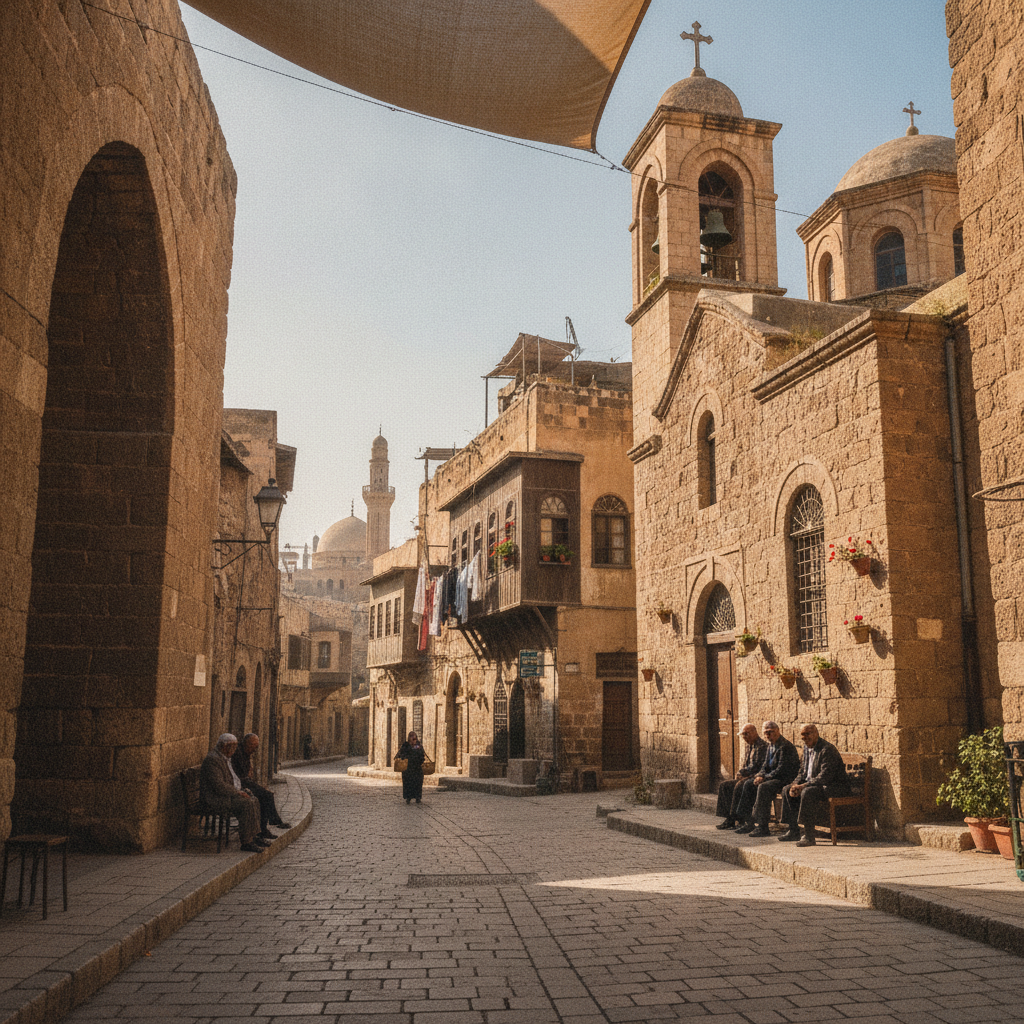
Aleppo (Halab, Arabic: حلب) — 350 km north of Damascus: Syria's second largest city and before the Civil War one of the most historically significant cities in the Middle East: the guide. The history (Aleppo is one of the oldest continuously inhabited cities in the world: the earliest reference is as Halab in the Eblaite texts from Ebla (approximately 2300 BCE): Aleppo was the capital of the Yamkhad kingdom (approximately 1800-1600 BCE): the city was subsequently ruled by the Hittites, Assyrians, Babylonians, Persians, Seleucids, Romans, Byzantines, Arabs, Crusaders, Zengids, Ayyubids, Mamluks, and Ottomans: the Citadel of Aleppo (the Citadel of Aleppo (Qalat Halab) — one of the most formidable fortified structures in the world: a massive artificial tell (archaeological mound) 50m high that has been fortified since at least the 3rd millennium BCE: the current fortification structure dates primarily to the Ayyubid period (12th-13th century): UNESCO World Heritage Site 1986: the Old City souk (the Old City of Aleppo contains the longest covered souk system in the world — approximately 13 km of covered souk passages including specialized souks for textiles, spices, gold, copper, and soap: the souk was severely damaged in the 2012-2016 Battle of Aleppo: the Civil War damage (the Battle of Aleppo (2012-2016) was the longest battle of the Syrian Civil War — 4 years of fighting that destroyed approximately 60% of Aleppo's built fabric: the ancient souk, the historic neighborhoods (Jdeideh, the Christian quarter), and the Citadel were all damaged: the reconstruction (the reconstruction of Aleppo's UNESCO World Heritage structures has begun but is far from complete as of 2025).
- 3
Palmyra – The Desert Queen and the ISIS Destruction
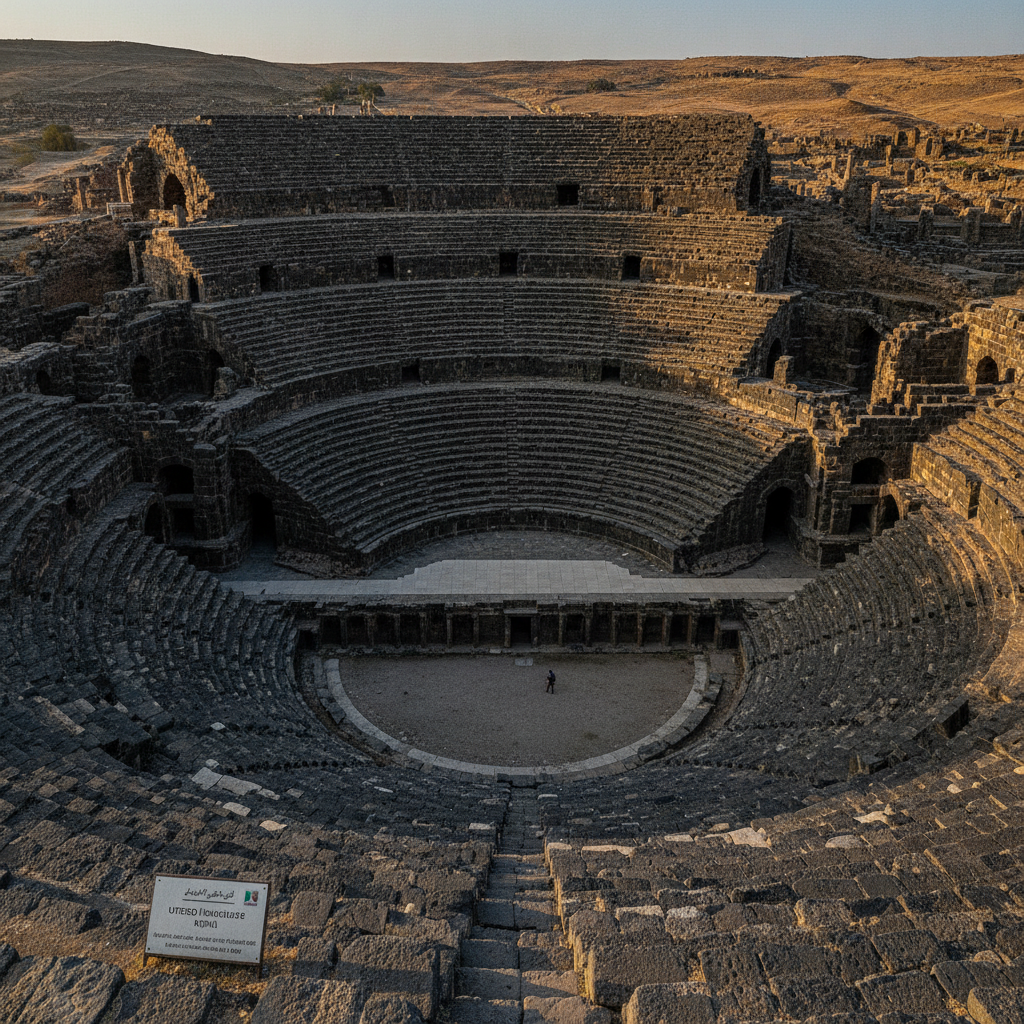
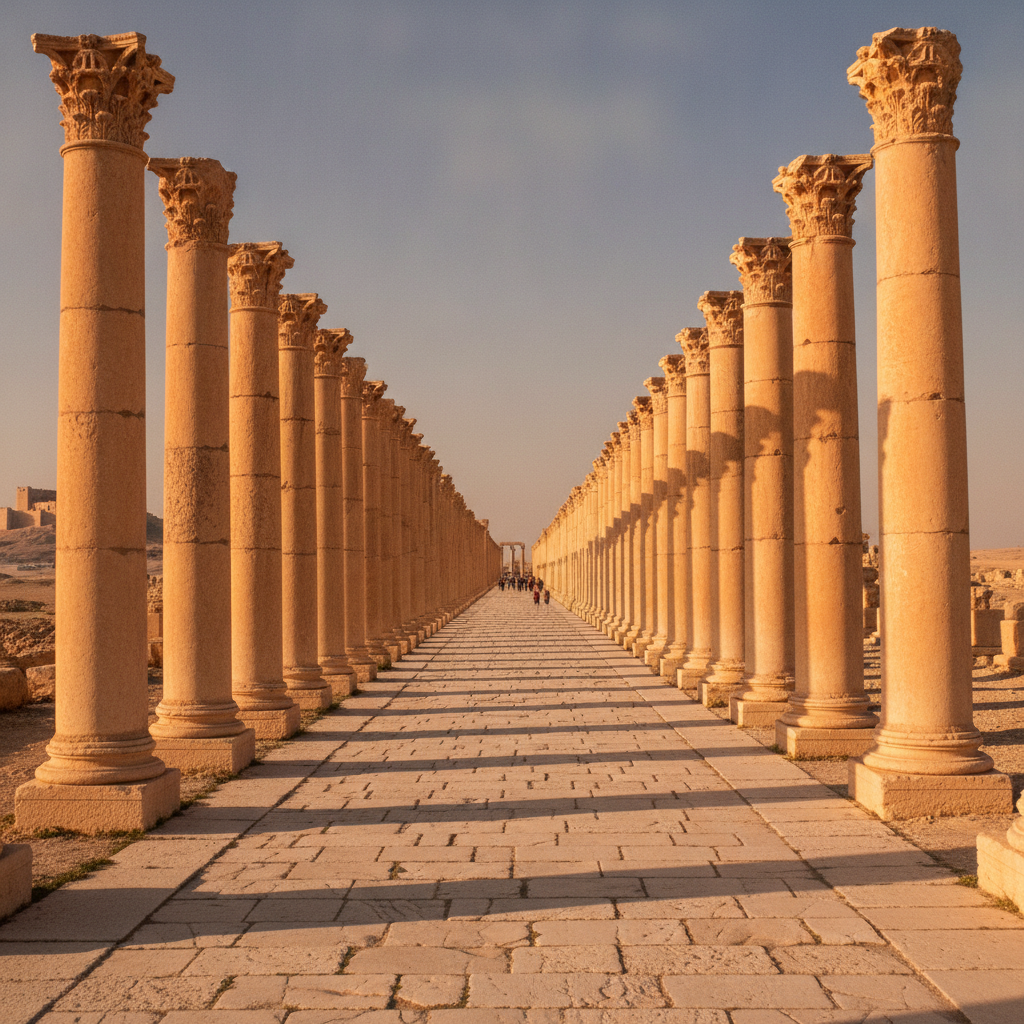
Palmyra (Tadmor, Arabic: تدمر) — 215 km northeast of Damascus in the Syrian desert: the Semitic trading city whose ruins became one of the most celebrated archaeological sites in the world before their partial destruction by ISIS in 2015: the archaeological guide. The history (Palmyra (Greek: Palma — Palm Tree City) was a Semitic Aramaic-speaking city in the Syrian desert that rose to prominence as a commercial crossroads on the trade routes between the Roman and Parthian/Sassanid Empires: the Palmyrene Empire (the Palmyrene Empire (263-273 CE) — the most dramatic episode of Palmyrene history: after the death of Palmyrene ruler Odaenathus in 268 CE his widow Zenobia (Queen Zenobia — Bat-Zabbai) assumed effective control: Zenobia launched military campaigns that conquered Egypt, Syria, and much of Anatolia from the Roman Empire: the Roman Emperor Aurelian defeated Zenobia and destroyed Palmyra in 273 CE: the ISIS destruction (the ISIS occupation of Palmyra (May 2015 - March 2016 and December 2016 - March 2017): ISIS destroyed the Temple of Bel (the primary temple, 32 CE): the Temple of Baalshamin (1st century CE): the Arch of Triumph: numerous tower tombs: executed the 82-year-old Syrian archaeologist Khaled al-Asaad who refused to reveal the location of hidden Palmyrene treasures: the current state (the Temple of Bel — partially destroyed (3 outer walls survive, the cella destroyed): the Temple of Baalshamin — almost completely destroyed: the Arch of Triumph — destroyed but rebuilt as a 3D-printed replica displayed in Trafalgar Square London in 2016 and in various cities worldwide: the Valley of the Tombs — largely intact: the colonnaded street — partially intact: UNESCO assessment (2017) found approximately 80% of the site salvageable).
- 4
Damascus Cuisine – Kibbeh, Fattoush, and the Oldest Food Culture in the World
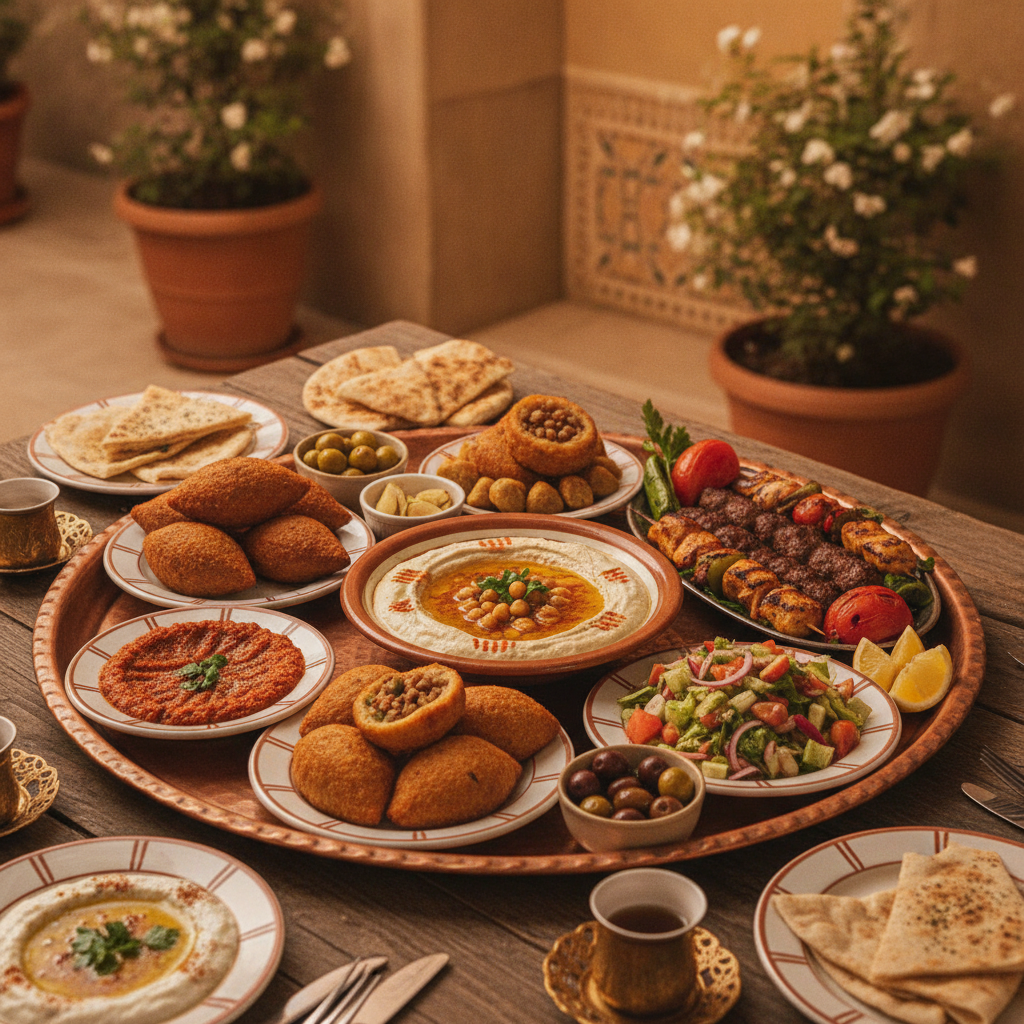
Damascus cuisine (the oldest continuously practiced urban food culture in the world — a synthesis of Syrian, Levantine, Ottoman, and Arab culinary traditions): the cuisine guide. The Damascene culinary identity (Damascus cuisine is distinguished from Lebanese cuisine by its greater use of pomegranate molasses, tamarind, and stone fruits in savory dishes: the Syrian preference for milder spicing than Lebanese cuisine: the emphasis on slow-cooked lamb: the kibbeh (the kibbeh (كبة) — the defining dish of Syrian and Lebanese Levantine cooking: a mixture of finely ground lean lamb, bulgur wheat, and onion that is formed and cooked in multiple ways: kibbeh nayyeh (raw kibbeh — the Syrian equivalent of steak tartare served with raw onion, olive oil, and flatbread): kibbeh balls (hollow shell of outer kibbeh filled with cooked lamb, pine nuts, and onions and fried or baked): kibbeh bil-saniyye (baked in a tray like a pie): the Syrian flatbread (the Syrian flatbread (khubz arabi — Arabic bread, or khubz marquq — paper-thin flatbread) is the foundation of the Damascene meal: paper-thin flatbread is baked on a domed iron griddle (saj) and used to wrap food or to scoop dips and spreads: the Damascene sweets (the Damascene pastry tradition: barazek (sesame and pistachio cookies): maamoul (date or walnut-filled semolina cookies): namoura (semolina cake with rose water and pine nuts): ghraybeh (shortbread cookies): the Old City sweet shops in the souk: the apricot tradition (Syria is one of the primary apricot-producing regions in the world: the Damascene apricot (mishmish Shami) is specifically mentioned as the finest variety in classical Arabic food writing: the Arabic word for apricot (mishmish) and the English word apricot both derive from the same Aramaic root through different transmission paths).
- 5
The Umayyad Caliphate – When Damascus Ruled the Islamic World
The Umayyad Caliphate (661-750 CE) — the first major Islamic empire with Damascus as its capital: the historical guide. The foundation (the Umayyad Caliphate was founded by Muawiyah ibn Abi Sufyan (r. 661-680 CE): Muawiyah had been the governor of Syria and a relative of the Prophet Muhammad through the Umayyad clan of the Quraysh: the Umayyad Caliphate was the first hereditary Islamic dynasty — the caliphate had previously been elective: the extent (at its peak the Umayyad Caliphate was one of the largest empires in history: the western frontier reached the Atlantic coast of the Iberian Peninsula and across the Pyrenees into France: the eastern frontier reached the Indus River (modern Pakistan) and Transoxiana (modern Uzbekistan and Tajikistan): the Battle of Tours (October 732 CE) — the Frankish army of Charles Martel defeated the Umayyad forces near Tours (France): a defeat that stopped the Umayyad expansion into Western Europe: the Damascus period (Damascus as the Umayyad capital transformed from a Byzantine provincial city to an imperial capital: the Umayyad Mosque (705-715 CE — the primary building project): the Dome of the Rock in Jerusalem (691 CE — built by Caliph Abd al-Malik): the Umayyad administrative innovations (the Umayyad administration replaced Greek and Persian with Arabic as the language of government: the first distinctive Islamic coinage was introduced under Abd al-Malik (replacing Byzantine and Sassanid coinage): the Abbasid Revolution (the Umayyad Caliphate was overthrown by the Abbasid Revolution in 750 CE: the Abbasids slaughtered most of the Umayyad family at a banquet: one Umayyad prince (Abd al-Rahman I) escaped to Spain and founded the Emirate of Cordoba (756 CE) — the Umayyad dynasty continued in Spain until 1031 CE).
- 6
Damascus vs Aleppo – The Two Great Cities of Syria
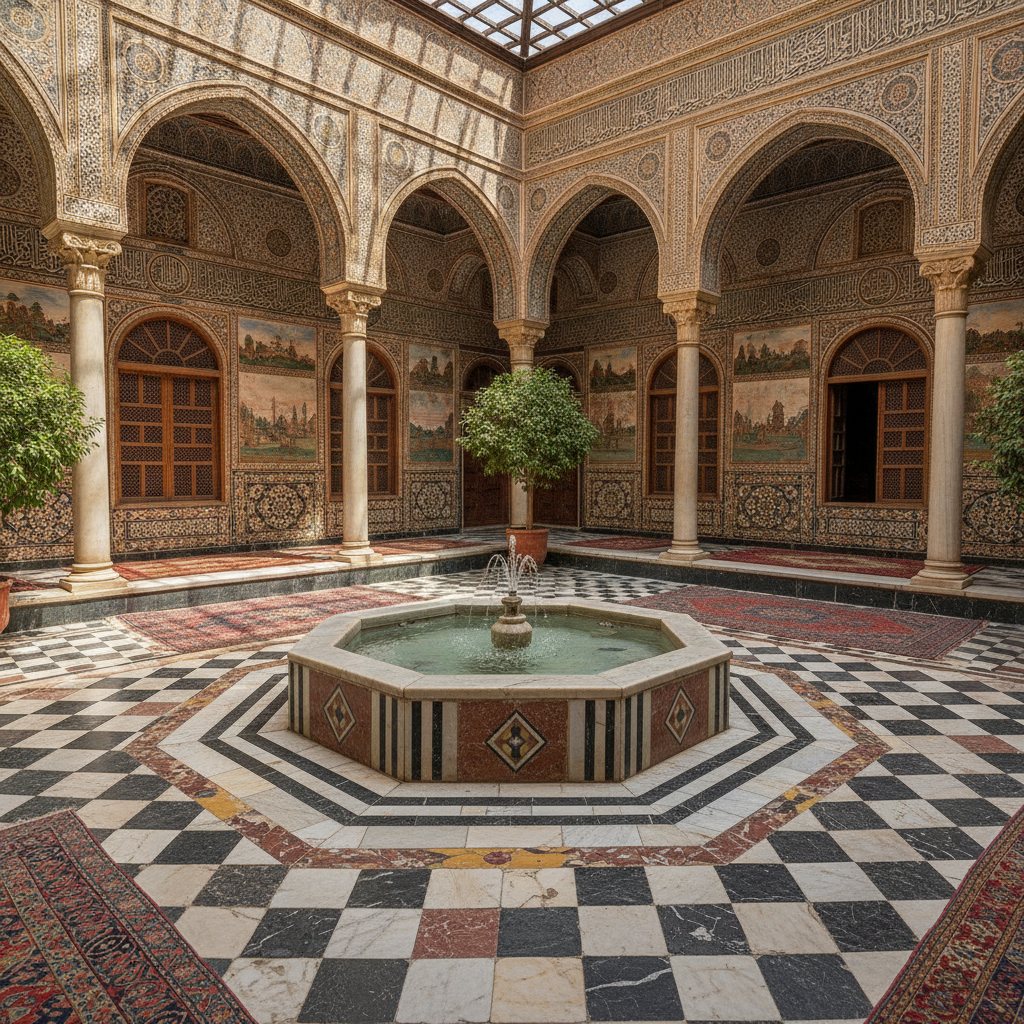
The Damascus and Aleppo comparison (the two primary cities of Syria — the political and religious capital versus the commercial and cultural capital): the comparative guide. The historical rivalry (Damascus and Aleppo have been the two dominant cities of Syria throughout recorded history: Damascus (the political center: successive capitals of the Aramaean kingdom, the Umayyad Caliphate, the Ayyubid Sultanate under Saladin, and the Ottoman Vilayet of Syria: Aleppo (the commercial center: the most important commercial city between the Mediterranean and Mesopotamia for much of the 1st and 2nd millennia CE: the Silk Road connection (Aleppo's historical commercial supremacy derived from its position as the western terminus of overland Silk Road trade from Persia, Central Asia, and China: Aleppo in the 16th-17th century was one of the most important commercial cities in the Ottoman Empire — the Venetian, English, Dutch, and French East India Companies all maintained commercial factories (fondachi) in Aleppo: the cultural distinction (Damascus is the more Arabic and Islamic city culturally: Aleppo has a more cosmopolitan tradition due to its commercial connections: Aleppo has a larger Christian population (historically approximately 15% Christian): the Aleppo soap tradition (Aleppo soap (Ghar soap) — the oldest continuously produced soap in the world: made from a mixture of olive oil and laurel berry oil (the laurel content giving it its distinctive color and antibacterial properties): the original model for Castile and Marseille soap: the Civil War damage comparison (Aleppo suffered approximately 60% destruction of its built urban fabric: Damascus suffered much less damage — the major battles were in the suburbs (particularly East Ghouta, Daraya, and the Palestinian refugee camp Yarmouk) rather than the city center).
Walk this route with audio
Stories play automatically as you reach each stop — no tapping needed.