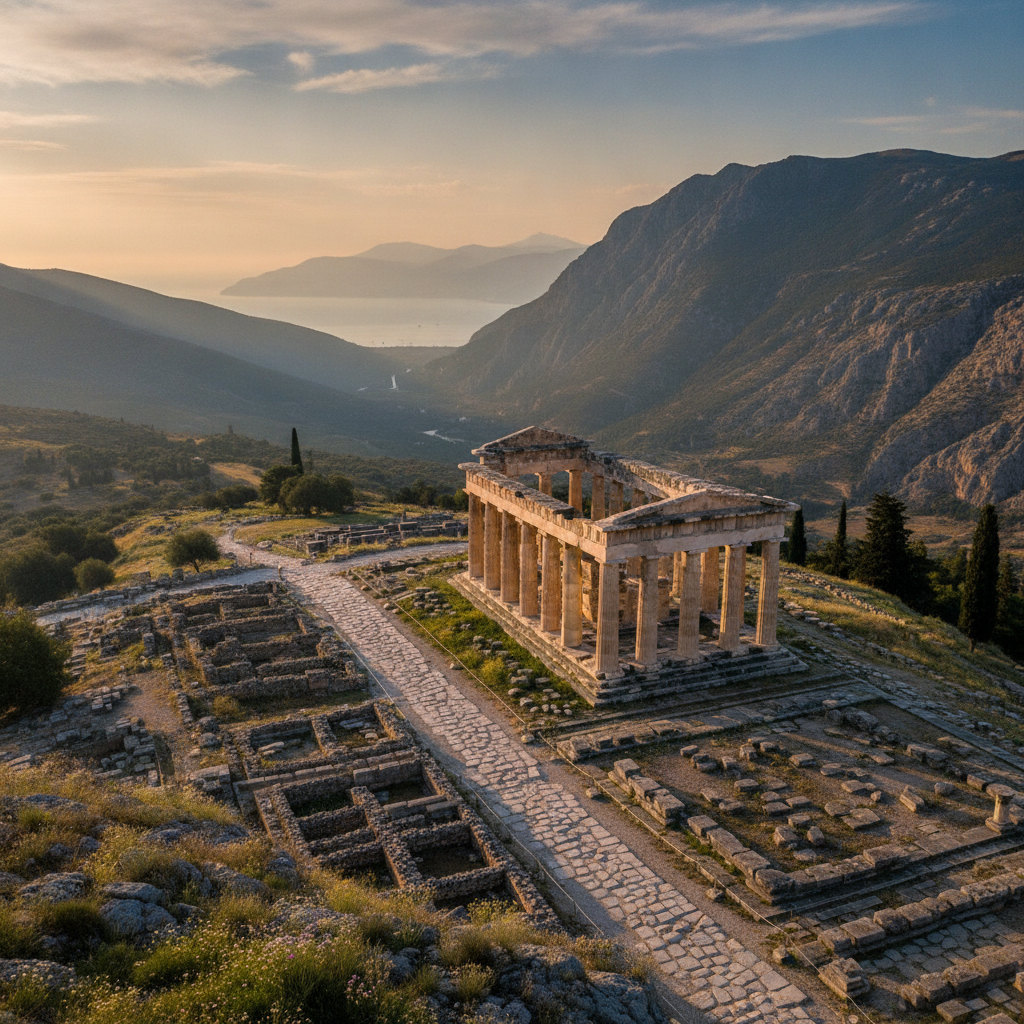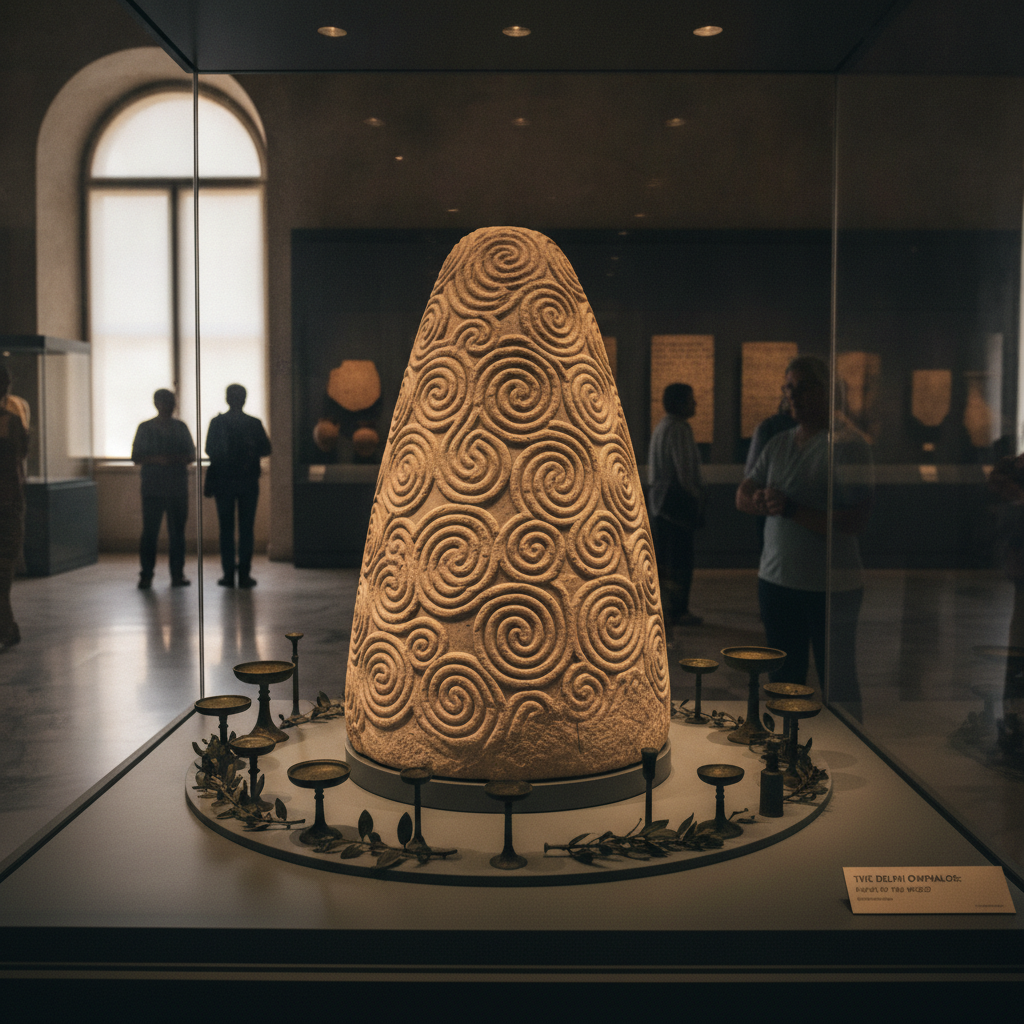
Delphi Oracle History: The Pythia Famous Pronouncements, Croesus and Persia Warnings, Socrates Wisest of Men, Alexander the Invincible, Roman Period Looting, and Theodosius Closure in 390 AD
The Delphi oracle history route covers the most famous Pythia pronouncements in Greek history: the Croesus warning before the Persian war, the Socrates wisest of all men declaration, the Alexander the invincible prophecy, the Themistocles wooden walls interpretation, the Roman emperors consulting the oracle, and the final closure of the sanctuary by Theodosius in 390 AD.
- 1
Croesus and the Oracle: The Ambiguous Warning
The most famous consultation in the Delphi oracle history, the inquiry of Croesus king of Lydia in 547 BC who asked whether he should attack the Persian empire and received the response that if he crossed the Halys River a great empire would be destroyed, demonstrates the fundamental ambiguity of the oracle pronouncements that the consulting rulers consistently misinterpreted in their favor. Croesus crossed the Halys, was defeated by Cyrus the Great, and the great empire that was destroyed was his own.
- 2
The Wooden Walls: Themistocles Interpretation
The oracle delivered to the Athenians before the Persian invasion of 480 BC, instructing them to trust in the wooden walls that Zeus grants to Athena, was interpreted by Themistocles as a reference to the Athenian navy rather than the wooden palisade on the Acropolis that the oracle text might literally suggest. The Themistocles interpretation led to the naval battle of Salamis where the Athenians and their allies destroyed the Persian fleet, confirming the oracle and establishing the greatest oracle interpretation in Greek military history.
- 3
Socrates and the Wisest Man: The Philosophical Oracle
The oracle delivered to Chaerephon, who asked whether anyone was wiser than Socrates, responded that no one was wiser, an answer that Socrates spent his life investigating and that led directly to the philosophical method of questioning the assumed knowledge of the Athenians that he described in the Apology as the origin of his philosophical mission. The Delphic maxim inscribed on the temple entrance, Know Yourself, was the philosophical context within which Socrates interpreted the oracle response.
- 4
Alexander the Invincible: The Reluctant Oracle
Alexander the Great, who visited Delphi in 335 BC before the Persian campaign to receive the oracle blessing, arrived on a day when the Pythia was not delivering oracle pronouncements and, on being refused the consultation, dragged the Pythia to the oracle chamber. The Pythia, according to Plutarch, said to Alexander that he was invincible - a statement that Alexander accepted as the oracle he required and that the Pythia may have delivered as an observation about his personality rather than a divine prophecy.
- 5
Roman Delphi: From Augustus to Nero
The Roman imperial period transformed the Delphi sanctuary from the Panhellenic religious center into the showpiece of Greek culture that the Roman emperors patronized and looted simultaneously, with Augustus restoring the oracle after the civil war period damage and Nero notoriously removing 500 bronze statues from the sanctuary to decorate the Golden House in Rome. The Roman phase of Delphi, from the 2nd century BC to the 4th century AD, added the Roman market at the entrance, the Roman theatre restoration, and the bath complex that the imperial administration funded.
- 6
The Closure: Theodosius and the End of the Oracle
The Theodosius I edict of 390 AD that ordered the closure of all pagan sanctuaries in the Roman Empire ended the Delphi oracle after approximately 1,100 years of documented consultations and brought to a close the longest continuous prophetic institution in European history. The last oracle response, delivered to the Emperor Julian who attempted to revive the pagan cult in 361 AD, was reportedly that the oracle had nothing to say, that Apollo no longer had a house, that the waters no longer spoke, and that the laurel was dead - the most poignant single document in the history of the transition from the ancient to the Christian Mediterranean.
Walk this route with audio
Stories play automatically as you reach each stop — no tapping needed.
More in Delphi
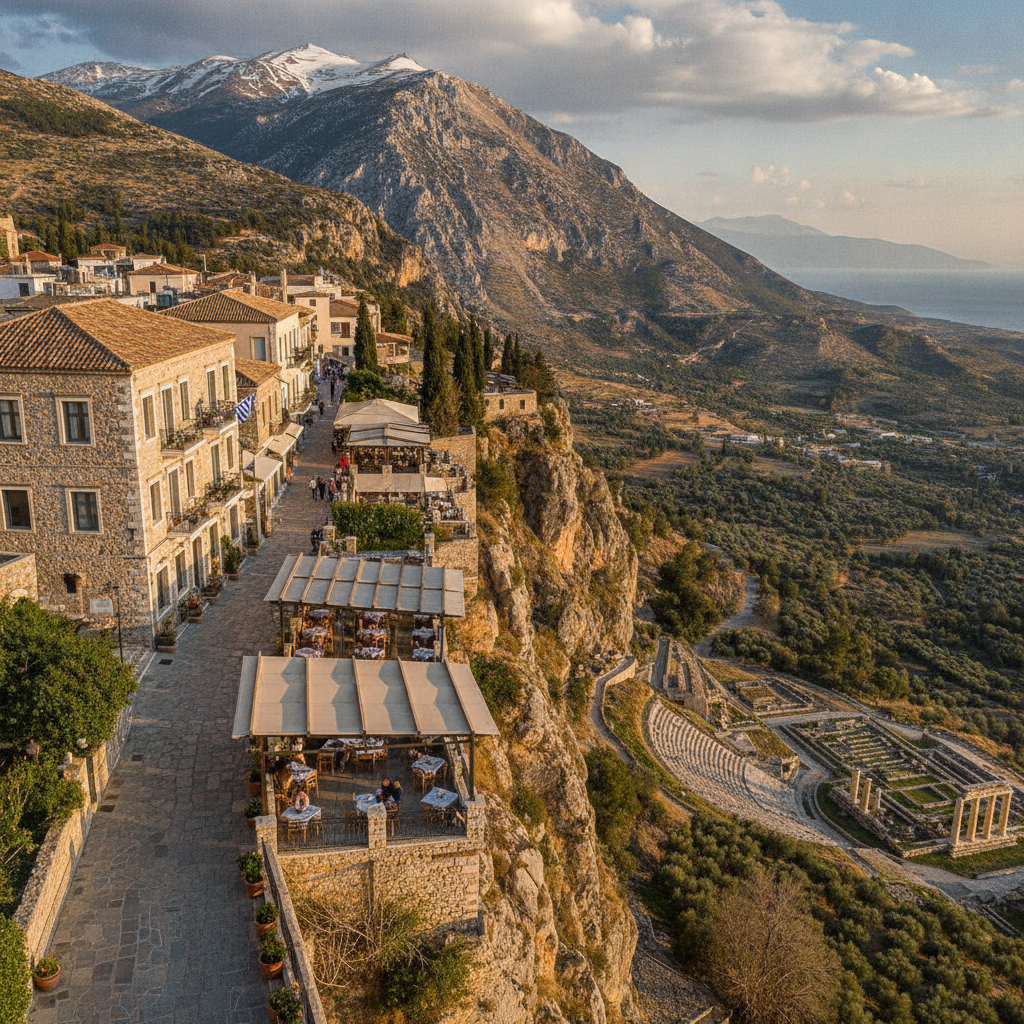
Delphi Modern History: The French School Excavation, Removal of the Kastri Village in 1890s, World Heritage Tourism Impact, Delphi Museum Expansion, and the Modern Village Above the Ancient Ruins
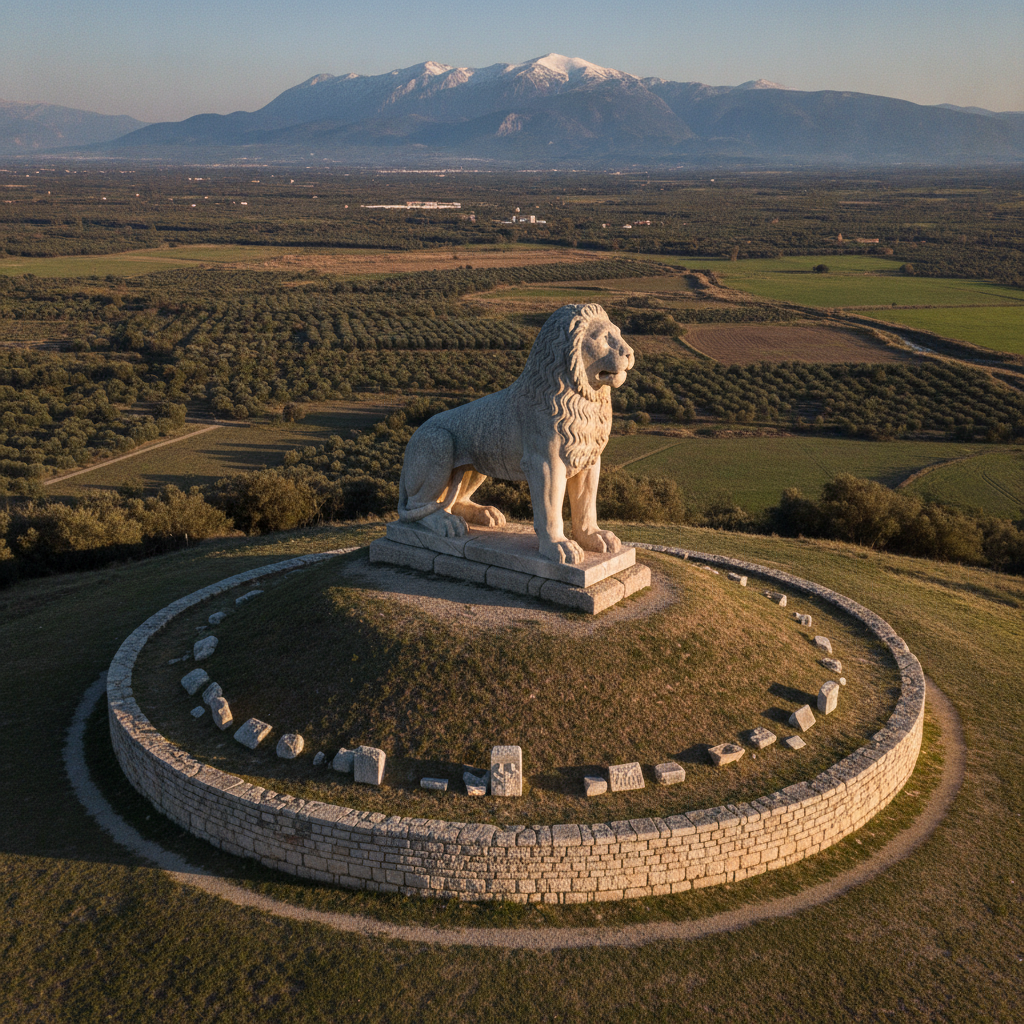
Delphi and Boeotia: Thebes Sacred Band, Chaeronea Battle Field, Orchomenos Mycenaean Treasury, Philip of Macedon Amphictyony Control, Epaminondas Theban Hegemony, and the Central Greece Historical Circuit
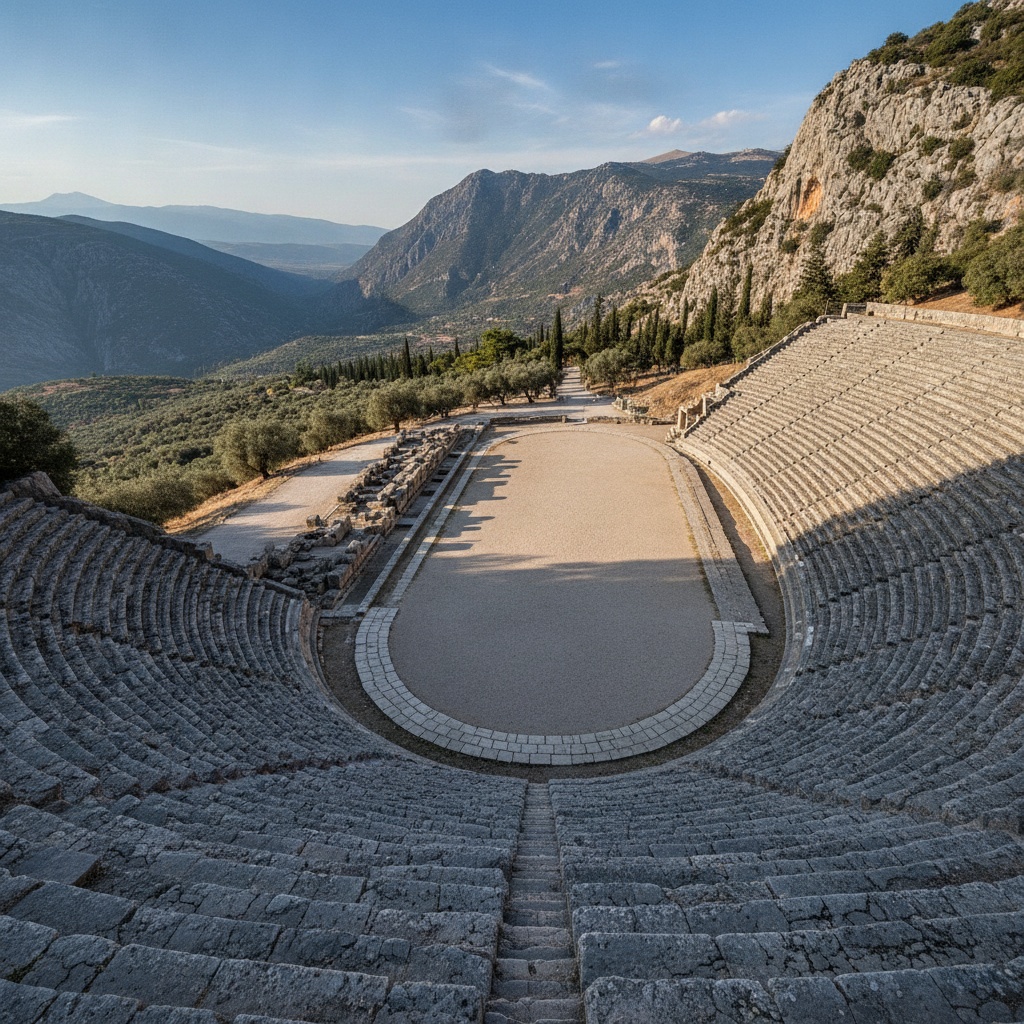
Delphi Sacred Way and Games: The Pythian Games Stadium, Treasury of the Athenians, Siphnian Treasury Frieze, Sacred Way Votive Offerings, the Ancient Athletic Tradition, and the Panhellenic Sanctuary Context
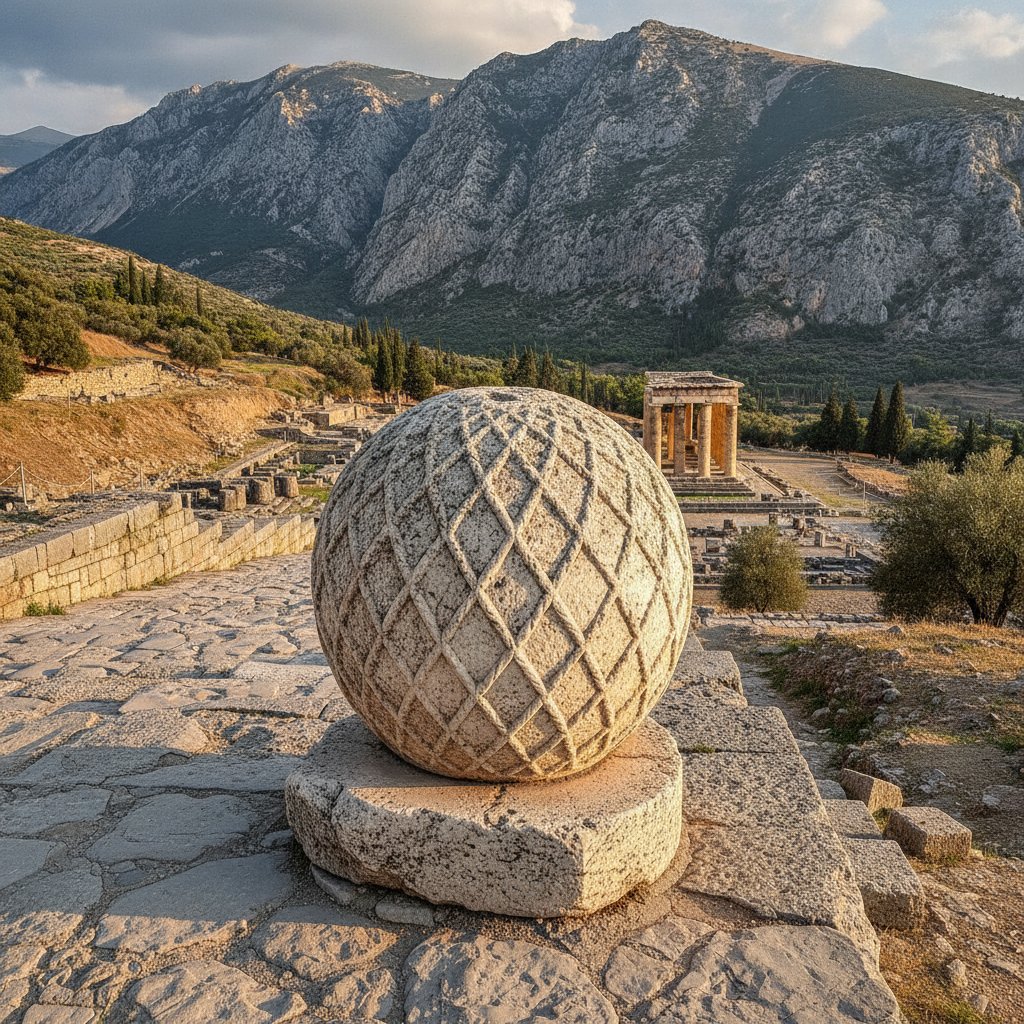
Delphi Mythology: The Omphalos Earth Navel, Two Eagles of Zeus, Python Serpent Slain by Apollo, The Foundation Myth, Gaia the Original Oracle, and the Mythological Layers of the Sacred Landscape
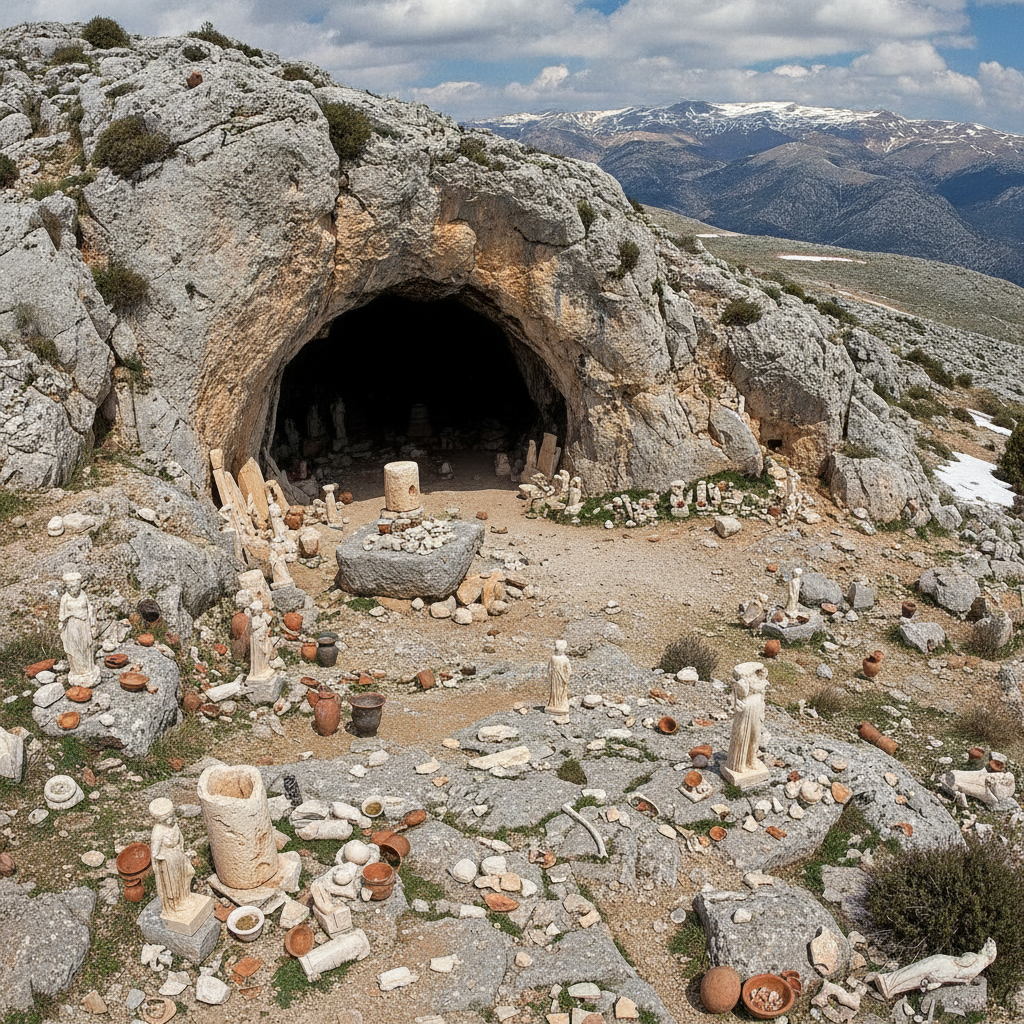
Delphi Outdoor and Food: Parnassus Hiking Trails, Corycian Cave of the Nymphs, Arachova Formaela Cheese and Trahana, Delphi Olive Oil PDO, Winter Skiing at Parnassus, and the Mountain Food Circuit