Detroit R4: Comerica Park Tigers (Ferris wheel, tiger sculptures, Little Caesars Arena Red Wings Pistons, Lions 1957 last championship, Detroit City FC Hamtramck), Hamtramck (Polish enclave 1901 to first all-Muslim city council 2021, Yemeni community largest US, Bangladeshi Bosnian diversity), Ann Arbor and University of Michigan (top public university, 107,601-seat Big House largest Western Hemisphere, Gerald Ford Madonna alumni, Ann Arbor Art Fair 500,000 visitors), Detroit River Underground Railroad (30,000-100,000 crossed to Canada 1817-1865, Second Baptist Church 1836 station, Tuskegee Airmen Museum), Detroit food (Buddy's pizza 1946 rectangular automotive pan, American vs Lafayette Coney Island hot dog rivalry since 1914, Chaldean community 130,000 largest outside Iraq), Practical (DTW Delta hub, Q Line People Mover, Ann Arbor Ann Arbor Museum Toledo Art Museum, safety guidance)
Detroit extended: Comerica Park (Ferris wheel carousel tiger sculptures, Little Caesars Arena District Detroit, Lions longest NFL championship drought since 1957, Detroit City FC independent soccer), Hamtramck (Polish 1901 to first US all-Muslim city council 2021, Yemeni American largest US community, Bangladeshi Bosnian multicultural city), Ann Arbor and UM (top US public university USD 1.8B research, Big House 107,601 seats largest Western Hemisphere, Gerald Ford alumni, Madonna dance scholarship dropout 1978, Art Fair 500,000 July), Underground Railroad (30,000-100,000 enslaved people crossed Detroit River, Second Baptist Church 1836 oldest Black Michigan church shelter, Tuskegee Airmen Museum), Detroit food (Buddy's pizza 1946 rectangular steel pan caramelized crust, American vs Lafayette Coney Island hot dog rivalry side-by-side since 1914-1917, Chaldean community 130,000), practical (DTW Delta hub, Q Line People Mover car-essential suburbs, Ann Arbor 1hr Toledo Museum glass collection, Niagara 400km via Ontario, safety core neighborhoods).
- 1
Comerica Park and Detroit Sports Today
Comerica Park (at 2100 Woodward Avenue, downtown Detroit, opened April 11, 2000): the open-air baseball stadium of the Detroit Tigers, with 41,083 seats and one of the most celebrated ballpark designs of the retro-ballpark era. The Comerica Park design (by HOK Sport, now Populous): the park is notable for the 60-meter Ferris wheel beyond the left field bleachers (only the third Ferris wheel built inside a professional sports stadium in the world at the time), the carousel with 30 hand-painted tigers (a tribute to the Tigers history), and the 15 tiger sculptures at the main entrance and tiger head sculptures atop the right field scoreboard. Little Caesars Arena (at 2645 Woodward Avenue, completed 2017): the shared arena of the Detroit Red Wings (NHL) and Detroit Pistons (NBA), the centerpiece of the District Detroit (the 50-block mixed-use redevelopment of the area around Corktown, the Fox Theatre, and the arena on Woodward Avenue, developed by Ilitch Holdings). The Detroit Lions NFL (playing at Ford Field, 2000 Brush Street, adjacent to Comerica Park): the NFL franchise that has not won a league championship since 1957 (the longest active championship drought in the NFL), but has been supported with remarkable loyalty by the Detroit fan base through decades of losing, with Thanksgiving Day football at Detroit (where the Lions have hosted a Thanksgiving game every year since 1934, making it the most enduring tradition in NFL regular season scheduling). Detroit FC soccer: Detroit City FC (the National Independent Soccer Association team, founded 2012, playing at Keyworth Stadium in Hamtramck): the most passionate soccer supporter culture in Michigan, known for its independent tifosi culture and standing supporters sections.
- 2
Hamtramck and Detroit Immigrant Communities
Hamtramck (the independent city of approximately 28,000 people, completely surrounded by Detroit, 8 km north of downtown): one of the most remarkable demographic transformations in American urban history. Hamtramck history: the city was founded as a Polish immigrant enclave in 1901 (named after a French general, Jean-Francois Hamtramck, who had commanded Fort Detroit in the 1790s), with the Dodge Main Assembly Plant (opened 1914) attracting tens of thousands of Polish, Ukrainian, and other Eastern European immigrants who made Hamtramck one of the most densely populated cities in Michigan by the 1920s. Hamtramck today: Hamtramck is now one of the most diverse small cities in the United States, with a population that is approximately 40-50% Muslim (primarily Bangladeshi, Yemeni, and Bosnian), making it one of the few US cities where the Muslim call to prayer is broadcast publicly from mosques. Hamtramck elected the first Muslim-majority city council in US history (2015) and the first all-Muslim city council (2021). Polish Village in Hamtramck: despite the demographic transformation, Hamtramck retains significant Polish heritage institutions, including the Polish Art Center (the oldest Polish art institution in the United States, founded 1939, at 9539 Joseph Campau Avenue) and several Polish restaurants and bakeries. The Yemeni American community in Hamtramck: the largest Yemeni American community in the United States (approximately 5,000-7,000 people), with the Yemen Cafe and dozens of Yemeni restaurants on Joseph Campau Avenue making Hamtramck the best destination for Yemeni food in the United States.
- 3
Ann Arbor and the University of Michigan
Ann Arbor (the Washtenaw County seat, population approximately 121,000, located 60 km west of downtown Detroit on I-94): the home of the University of Michigan (one of the most prestigious public universities in the United States) and one of the most vibrant college towns in the American Midwest. The University of Michigan (founded 1817, main campus in Ann Arbor with approximately 47,000 students): consistently ranked as the top public university in the United States (or second, with Berkeley), with one of the highest research budgets of any American public university (approximately USD 1.8 billion per year). University of Michigan notable alumni and faculty: President Gerald Ford (graduated 1935, played center on the UM football team that won back-to-back national championships in 1932 and 1933), Larry Page and Sergey Brin (the co-founders of Google both have UM connections — Page was a UM undergraduate before founding Google at Stanford), Madonna (attended UM on a dance scholarship before dropping out for New York in 1978). Michigan Stadium (the Big House, at 1201 S Main Street, Ann Arbor): the largest stadium in the United States and the largest in the Western Hemisphere by official seating capacity, with 107,601 seats (expanded to 111,000+ for special events) — a capacity exceeded only by the Rungrado 1st of May Stadium in Pyongyang, North Korea. The Big House sets the world record for attendance at a college football game — the Michigan-Notre Dame rivalry game regularly draws over 110,000 fans. Ann Arbor arts and culture: the Ann Arbor Art Fair (the largest juried art fair in the United States, held each July with 500,000 visitors), the Michigan Theater (1927 atmospheric movie palace), and the Hill Auditorium (the 3,538-seat concert hall completed 1913, the acoustic standard for American performance venues).
- 4
Detroit River and the Underground Railroad
The Detroit River and the Underground Railroad: the Detroit River (the 51-km strait connecting Lake Erie to Lake St. Clair, forming the US-Canada border between Detroit and Windsor, Ontario) was the most important crossing point on the Underground Railroad — the network of secret routes and safe houses used by enslaved African Americans to escape to freedom in the antebellum period (approximately 1810-1865). Detroit as Gateway to Freedom: it is estimated that between 30,000 and 100,000 enslaved people crossed the Detroit River to freedom in Canada between 1817 (when Michigan became a US territory) and 1865 (the end of the Civil War). The crossing was relatively short (approximately 1 km at the narrowest point), Canada had abolished slavery in 1834, and Windsor and Amherstburg (on the Canadian side) had established communities of formerly enslaved people (known as freedmen) who helped arriving freedom seekers. The Second Baptist Church of Detroit (at 441 Monroe Street, Greektown, founded 1836 by 13 formerly enslaved people): the oldest African American church in Michigan and a critical station on the Underground Railroad — the church's basement sheltered freedom seekers before they crossed the river, and the congregation included Lewis Clark (one of the people on whom Harriet Beecher Stowe based the character of George Harris in Uncle Tom's Cabin). The National Museum of the Tuskegee Airmen (at 6325 West Jefferson Avenue, Detroit): the museum dedicated to the African American military aviators who trained at Tuskegee Army Air Field during World War II — of the 996 pilots who graduated from Tuskegee, many were from the Detroit area, reflecting the large African American professional class that had developed in Detroit during the Great Migration.
- 5
Detroit Food Scene Beyond Eastern Market
Detroit food culture: beyond Eastern Market, Detroit has developed one of the most distinctive and nationally recognized regional food cultures of any Midwestern city, built on the intersection of African American soul food traditions, Polish and Eastern European immigrant cooking, Middle Eastern (particularly Yemeni, Lebanese, and Chaldean) cooking, and the influences of the Detroit music scene. Detroit pizza: Buddy's Restaurant (at 17125 Conant Street, Northeast Detroit, opened 1946): the original Detroit-style pizza (a rectangular deep-dish pizza baked in a blue steel automotive parts pan, with the cheese spread to the edges of the pan and sauce ladled on top of the cheese after baking, creating the distinctive caramelized cheese crust): one of the most important American regional pizza styles, now served nationally. Detroit Coney Island hot dog: the Detroit Coney Island (the hot dog topped with a beanless chili sauce, mustard, and diced raw onion on a steamed bun) is the most beloved street food of Detroit, with two competing restaurants — American Coney Island (at 114 W Lafayette Blvd, founded 1917 by Greek immigrant Constantine Keros) and Lafayette Coney Island (at 118 W Lafayette Blvd, founded 1914 by the Keros family) — standing side by side in downtown Detroit, the most storied fast food rivalry in Michigan. The Chaldean community (the Iraqi Christian community, approximately 130,000 Chaldean Americans in the Detroit metropolitan area, the largest Chaldean community outside of Iraq): centered in the northern Detroit suburbs (Sterling Heights, West Bloomfield, Southfield), with Chaldean grocery stores, restaurants, and cultural institutions throughout the region.
- 6
Detroit Practical Guide - Getting There and Day Trips
Detroit practical visitor guide: getting to Detroit: Detroit Metropolitan Wayne County Airport (DTW, at 11050 Ziegler Road, Romulus, 30 km southwest of downtown Detroit): the primary airport, a Delta hub with direct international flights to Europe, Asia, and Mexico. Amtrak serves Detroit with the Wolverine service (Chicago to Detroit, 5.5 hours), which also stops in Dearborn, Ann Arbor, and other Michigan cities. Getting around Detroit: downtown Detroit is walkable (Q Line streetcar on Woodward Avenue, People Mover loop), but the rest of the metropolitan area is almost entirely car-dependent. Rental cars are essential for visiting Dearborn, the suburbs, and day trips. Day trips from Detroit: Ann Arbor (60 km west, 1 hour: the University of Michigan, Michigan Theater, and the Ann Arbor Art Fair in July), Toledo Ohio (80 km south: the Toledo Museum of Art, which owns one of the finest glass collections in the world and the largest Impressionist painting collection in the Midwest), Lake Erie wine country (the northeastern Ohio and southeastern Michigan shore, with dozens of wineries along the lake), Niagara Falls (400 km east via Ontario highway system: the most practical routing is through Windsor and along the QEW through Hamilton and Burlington). Safety: Detroit has historically had one of the highest violent crime rates of any major American city; downtown, Midtown, Corktown, and Eastern Market are safe for visitors, and the vast majority of violent crime occurs in residential neighborhoods far from visitor attractions. The city has improved significantly since the 2013 bankruptcy, but visitors should remain aware of their surroundings in unfamiliar areas outside the core.
Walk this route with audio
Stories play automatically as you reach each stop — no tapping needed.
More in detroit
Detroit: 11 Stanley Cups, the World Largest Free Jazz Festival and a City Entirely Inside a City
Detroit: Polka Dot Houses in Ruins, Lincoln Chair and Rosa Parks Bus in One Museum
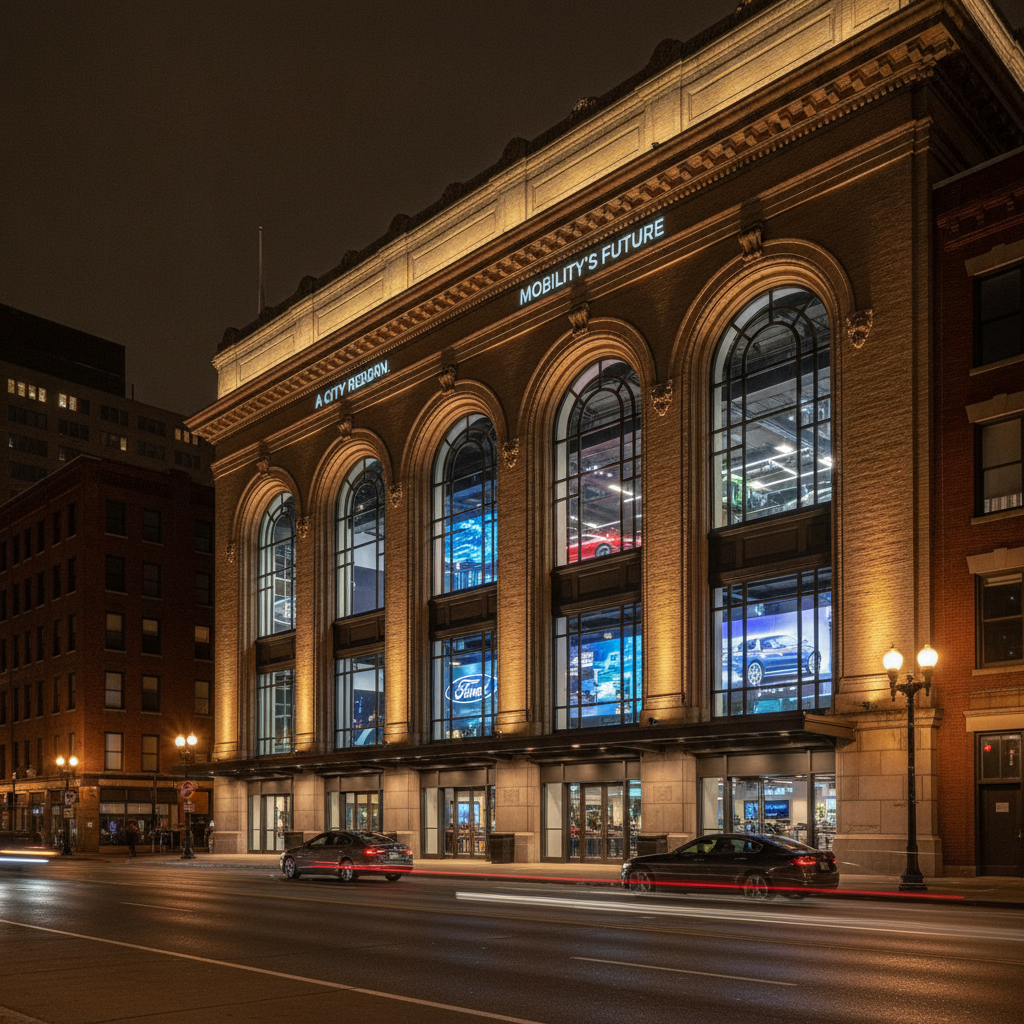
Detroit R3: Ford Motor Company (1903 founding USD 28,000, Model T 15M built, moving assembly line 1913 Highland Park, Five Dollar Day 1914 USD 5 minimum wage), Detroit 1967 uprising (43 dead, 7,200 arrested, 2,000 buildings burned, white flight acceleration, 1943 race riot 34 dead), Detroit architecture (Guardian Building 1929 Art Deco, Fisher Building most beautiful commercial AIA, Michigan Central Station 1913 Ford 2023 restoration, ruin porn phenomenon), African American heritage (Great Migration 6M, Black Bottom Paradise Valley demolished, Wright Museum largest African American history museum world), Practical (Downtown Midtown Corktown Eastern Market neighborhoods, Jazz Festival 1M Hart Plaza, Grand Prix Belle Isle, Ambassador Bridge busiest NA border), Detroit EV future (GM zero emission 2035, F-150 Lightning, Stellantis 14 brands, American Center for Mobility Willow Run B-24 plant)
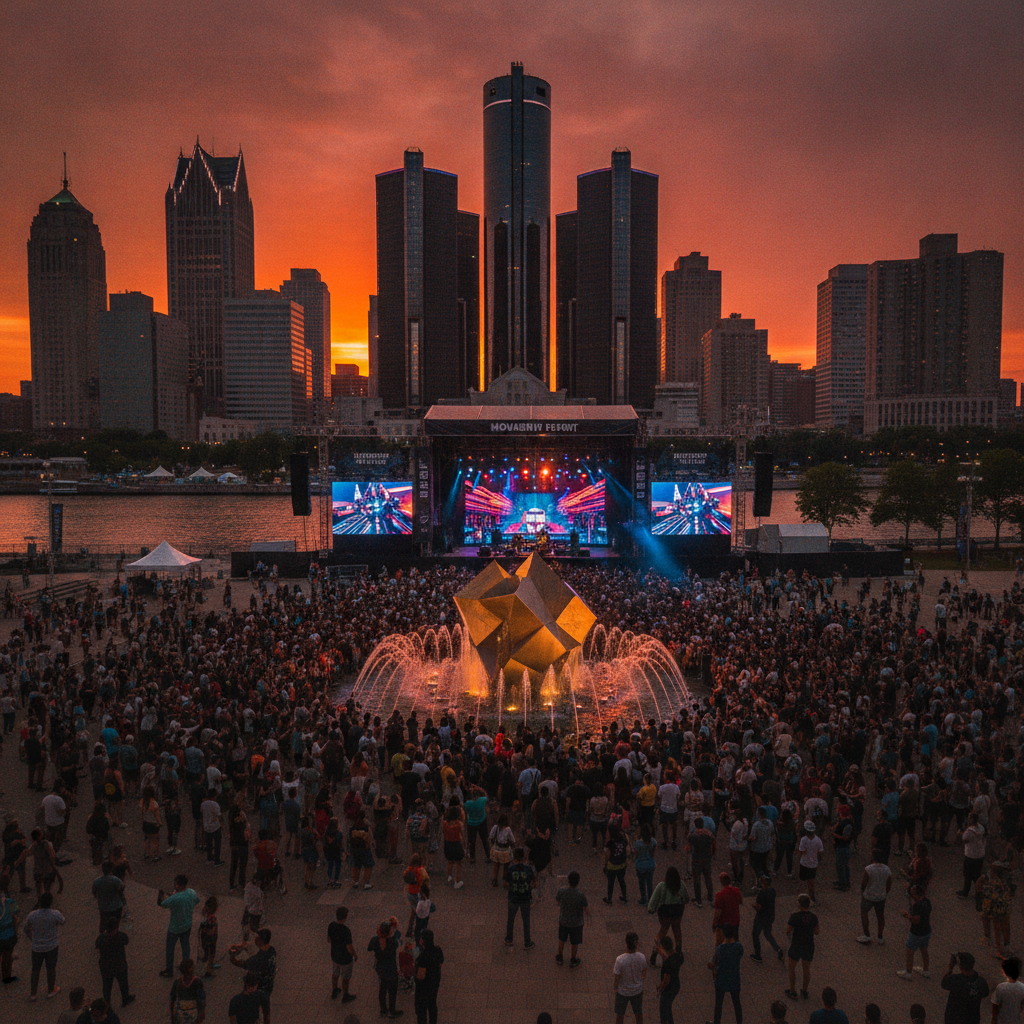
Detroit R2: Detroit techno (Belleville Three Juan Atkins Derrick May Kevin Saunderson, Model 500 No UFOs 1985 first techno, Strings of Life 1987, Movement Festival 100,000 Hart Plaza), Detroit sports (Tigers Ty Cobb .367 Hank Greenberg 58 HRs 1938, Red Wings 11 Stanley Cups, Pistons Bad Boys 1989-1990, Comerica Park Little Caesars Arena), Dearborn Arab-American (490,000 largest US Arab community, Ford River Rouge 100,000 workers 1929, F-150 assembly tour), Heidelberg Project (Tyree Guyton 1986, polka dot houses, 275,000 visitors, Detroit blight art), Great Lakes (Michigan 4 Great Lakes 5,265km coastline, Sleeping Bear Dunes Most Beautiful America 2011, Mackinac Island no cars since 1898), Detroit revival (Dan Gilbert USD 5B Bedrock, Mike Ilitch Little Caesars, Midtown Wayne State, Shinola Where American is Made)
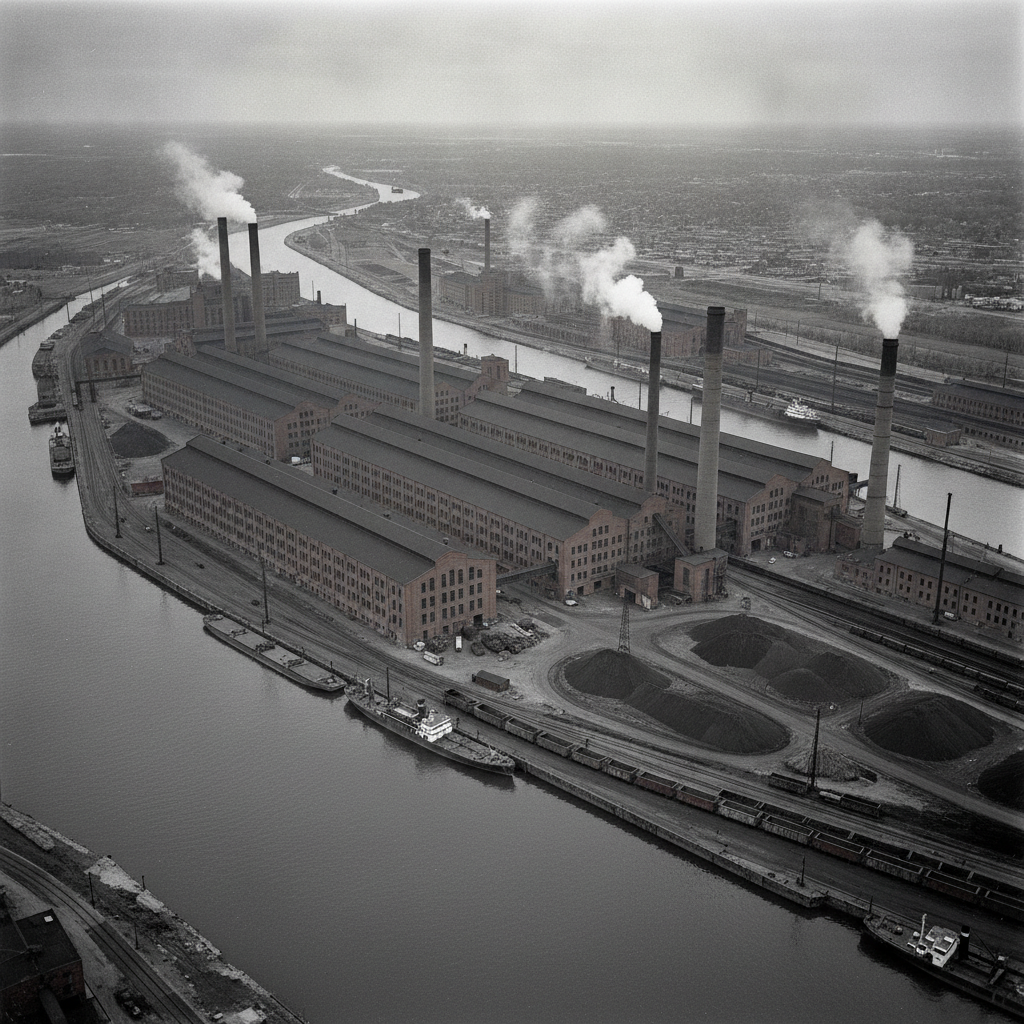
Detroit: 107000-Seat Big House Stadium, the Largest Bankruptcy in US History and Where Punk Was Born