Detroit: Polka Dot Houses in Ruins, Lincoln Chair and Rosa Parks Bus in One Museum
Walk Corktown revival from Slows BBQ in a gas station to Ford billion-dollar renovation of the Beaux-Arts train station, see how Tyree Guyton covered abandoned houses in polka dots and found objects to create the Heidelberg Project despite twice being demolished by the mayor, celebrate the Bad Boys Pistons 1989 back-to-back championships at Little Caesars Arena, find Pewabic iridescent tiles in the Guardian Building lobby and the pottery studio that guards its glaze formula, tour the Henry Ford Museum where the Lincoln assassination chair, Rosa Parks bus, and JFK limousine share one roof, and walk Dearborn where over 40 percent of residents are Arab American.
- 1
Corktown and Ford Innovation Campus
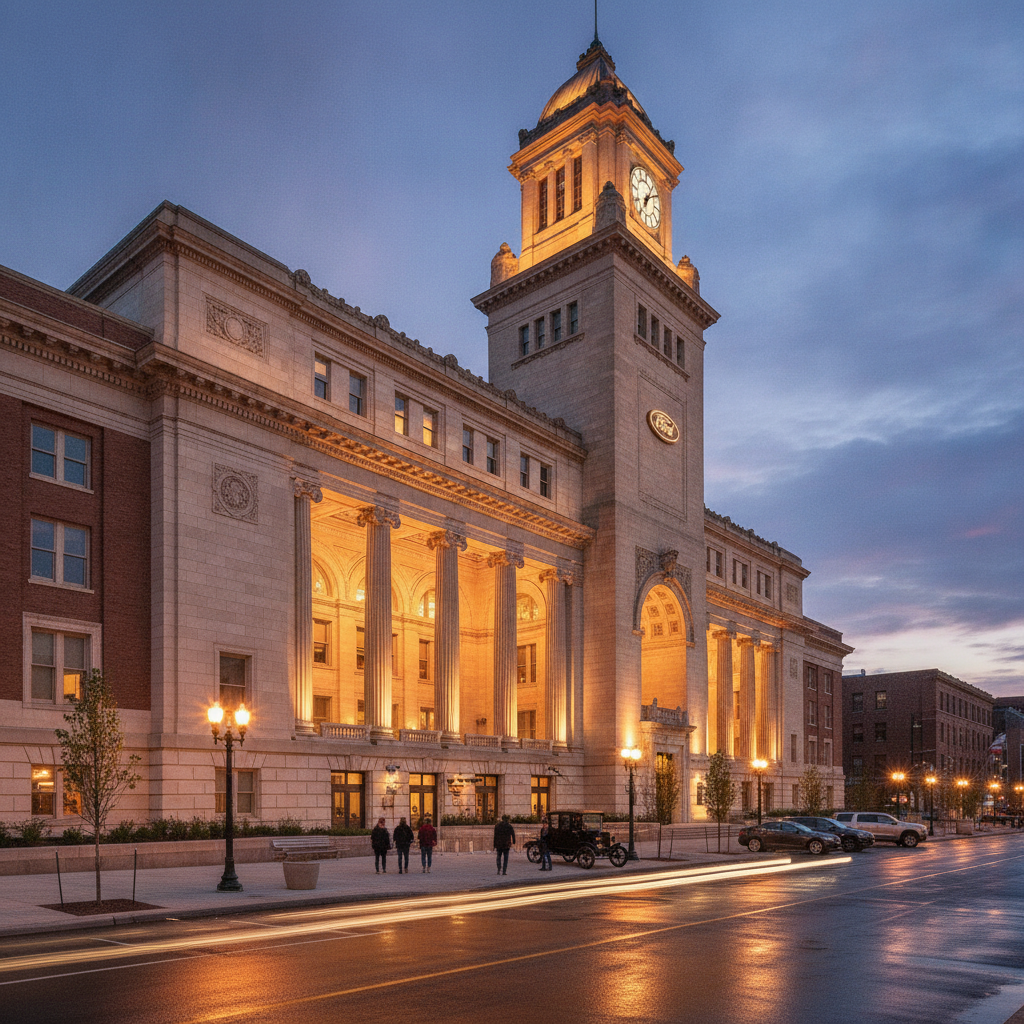
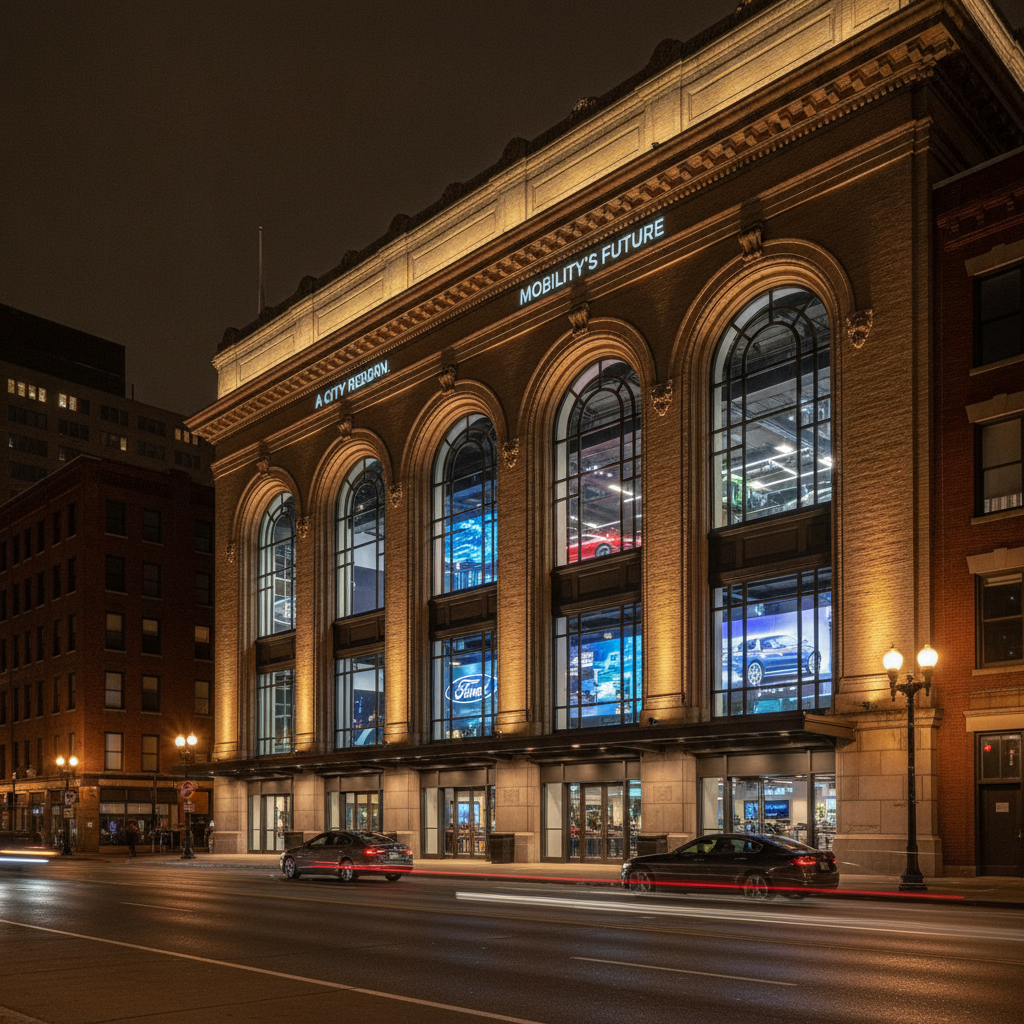
Corktown, Detroits oldest surviving neighborhood immediately southwest of downtown, was settled by Irish immigrants from County Cork beginning in the 1830s and is named for their origin. The neighborhood nearly collapsed after the closure of Tiger Stadium in 1999 and the departure of businesses, but experienced a dramatic revival beginning around 2010 driven by entrepreneurs, artists, and eventually Fords 2018 purchase and restoration of Michigan Central Station. Fords 600-million-dollar renovation of the 1913 Beaux-Arts station and adjacent buildings into an innovation campus focused on electric vehicles, autonomous driving, and mobility technology opened in 2023 and brought thousands of employees and visitors. Slows Bar BQ, opened in 2006 in a former gas station, is credited by many observers as the first sign that Corktown could be revitalized and remains one of the most celebrated barbecue restaurants in Michigan. Batch Brewing Company and other independent businesses followed.
- 2
Heidelberg Project Street Art
The Heidelberg Project on Heidelberg Street in the McDougall-Hunt neighborhood east of downtown, created by artist Tyree Guyton beginning in 1986 on abandoned and burned-out houses in his deteriorated childhood block, became one of the most visited and controversial public art environments in the United States. Guyton covered houses, sidewalks, trees, and vacant lots with found objects, painted polka dots, stuffed animals, shoes, toys, car parts, and discarded household items in compositions that reference Black American life, urban decay, and spiritual themes. Detroit Mayor Coleman Young ordered the demolition of portions twice, in 1991 and 1999, each time generating international protest. The project has inspired urban art interventions worldwide and been the subject of books, documentaries, and academic studies. Some installations were destroyed by arson in a series of fires from 2013 to 2019, but the project continues.
- 3
Detroit Pistons and Sports Culture
Detroit professional sports teams have been called Detroit 4 for their four major franchises, the Lions, Tigers, Red Wings, and Pistons. The Detroit Pistons won NBA championships in 1989 and 1990 with the Bad Boys team of Isaiah Thomas, Bill Laimbeer, Dennis Rodman, and Joe Dumars, known for physical defensive play that led to rule changes, and again in 2004 with the Chauncey Billups team that defeated the Los Angeles Lakers in an upset. Comerica Park, the home of the Detroit Tigers opened in 2000, is regarded as one of the best baseball parks in the country, with a Ferris wheel and carousel inside the park and statues of Tiger greats including Ty Cobb, Hank Greenberg, and Al Kaline surrounding the exterior. The Detroit Lions play at Ford Field, a domed stadium opened in 2002 that incorporated the facade of the Hudson Warehouse building. Little Caesars Arena opened in 2017 for the Pistons and Red Wings.
- 4
Pewabic Pottery and Arts Crafts Detroit
Pewabic Pottery at 10125 East Jefferson Avenue, founded by Mary Chase Perry Stratton and Horace James Caulkins in 1903 and operating continuously since, is a National Historic Landmark producing handcrafted ceramic tiles and vessels using the distinctive iridescent glazes developed by Stratton, whose formula remains a closely guarded proprietary technique. Pewabic tiles appear throughout major Detroit buildings including the Guardian Building, the Detroit People Mover stations, the National Shrine of the Little Flower in Royal Oak, and the Nebraska State Capitol. The pottery operates as a museum, teaching studio, and production facility selling work in its gallery. The Arts and Crafts movement had particular resonance in Detroit during the early automobile era when industrialists commissioned handcrafted architectural ornament as a counterpoint to mass production. The Cranbrook Educational Community in Bloomfield Hills, founded by newspaper publisher George Booth beginning in 1904, is one of the most significant Arts and Crafts complexes in America.
- 5
Wayne State and Midtown Cultural District
Midtown Detroit, the neighborhood along Woodward Avenue between downtown and the New Center district around the Fisher Building, experienced dramatic revitalization from 2010 onward driven by Wayne State University, the Detroit Medical Center, Henry Ford Health System, the Detroit Institute of Arts, and dozens of new restaurants, bars, and residential buildings. Wayne State University, a public research university with 24,000 students, anchors the eastern portion of the neighborhood. The Museum of Contemporary Art Detroit, founded in 2006 in a former car dealership, presents contemporary art with particular attention to Detroit-based artists. The Charles H. Wright Museum of African American History, opened at its current location in 1997, has the largest collection of African American historical artifacts and is the largest institution of its kind in the world, drawing over 150,000 visitors annually. The Shinola brand, founded in 2011, manufactures watches, bicycles, and leather goods in Detroit as a deliberate counterpart to the manufacturing heritage.
- 6
Dearborn and Henry Ford Museum
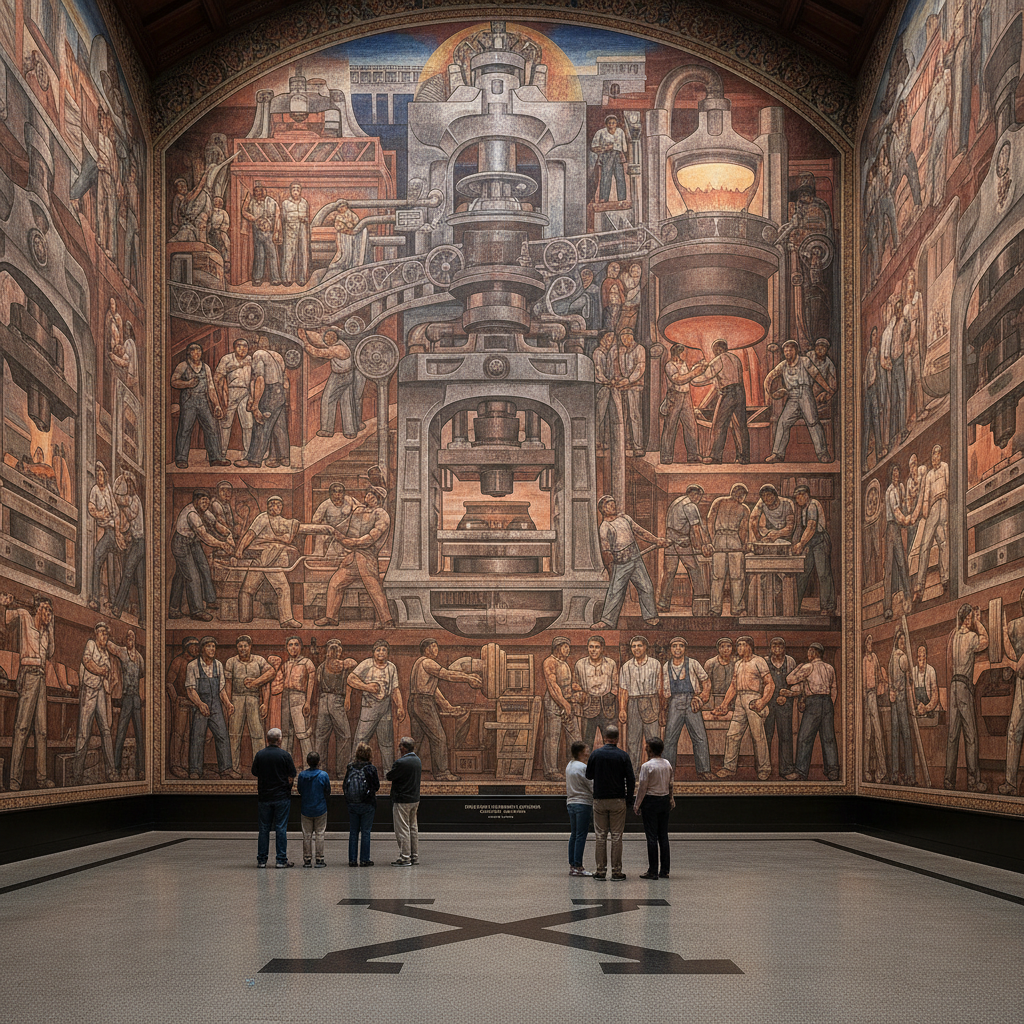
The Henry Ford in Dearborn, 10 miles west of downtown Detroit, is the largest indoor-outdoor historical museum complex in the United States, encompassing the Henry Ford Museum of American Innovation with 80 acres under one roof, Greenfield Village with 83 historic structures relocated from across the country, the Ford Rouge Complex factory tours, and the Benson Ford Research Center. The museum holds the chair in which Abraham Lincoln was sitting when he was shot at Ford Theatre, the bus in which Rosa Parks refused to give up her seat, the presidential limousine in which John F. Kennedy was shot, and the chair Thomas Edison sat in at the moment of his death. Henry Ford moved entire historic buildings to Greenfield Village, including the Wright Brothers Dayton bicycle shop and the laboratory where Edison invented the phonograph. Dearborn is also home to the largest Arab American community outside the Middle East, with Dearborn having a population that is over 40 percent Arab American.
Walk this route with audio
Stories play automatically as you reach each stop — no tapping needed.
More in Detroit
Detroit R4: Comerica Park Tigers (Ferris wheel, tiger sculptures, Little Caesars Arena Red Wings Pistons, Lions 1957 last championship, Detroit City FC Hamtramck), Hamtramck (Polish enclave 1901 to first all-Muslim city council 2021, Yemeni community largest US, Bangladeshi Bosnian diversity), Ann Arbor and University of Michigan (top public university, 107,601-seat Big House largest Western Hemisphere, Gerald Ford Madonna alumni, Ann Arbor Art Fair 500,000 visitors), Detroit River Underground Railroad (30,000-100,000 crossed to Canada 1817-1865, Second Baptist Church 1836 station, Tuskegee Airmen Museum), Detroit food (Buddy's pizza 1946 rectangular automotive pan, American vs Lafayette Coney Island hot dog rivalry since 1914, Chaldean community 130,000 largest outside Iraq), Practical (DTW Delta hub, Q Line People Mover, Ann Arbor Ann Arbor Museum Toledo Art Museum, safety guidance)
Detroit: 11 Stanley Cups, the World Largest Free Jazz Festival and a City Entirely Inside a City
Detroit R3: Ford Motor Company (1903 founding USD 28,000, Model T 15M built, moving assembly line 1913 Highland Park, Five Dollar Day 1914 USD 5 minimum wage), Detroit 1967 uprising (43 dead, 7,200 arrested, 2,000 buildings burned, white flight acceleration, 1943 race riot 34 dead), Detroit architecture (Guardian Building 1929 Art Deco, Fisher Building most beautiful commercial AIA, Michigan Central Station 1913 Ford 2023 restoration, ruin porn phenomenon), African American heritage (Great Migration 6M, Black Bottom Paradise Valley demolished, Wright Museum largest African American history museum world), Practical (Downtown Midtown Corktown Eastern Market neighborhoods, Jazz Festival 1M Hart Plaza, Grand Prix Belle Isle, Ambassador Bridge busiest NA border), Detroit EV future (GM zero emission 2035, F-150 Lightning, Stellantis 14 brands, American Center for Mobility Willow Run B-24 plant)
Detroit R2: Detroit techno (Belleville Three Juan Atkins Derrick May Kevin Saunderson, Model 500 No UFOs 1985 first techno, Strings of Life 1987, Movement Festival 100,000 Hart Plaza), Detroit sports (Tigers Ty Cobb .367 Hank Greenberg 58 HRs 1938, Red Wings 11 Stanley Cups, Pistons Bad Boys 1989-1990, Comerica Park Little Caesars Arena), Dearborn Arab-American (490,000 largest US Arab community, Ford River Rouge 100,000 workers 1929, F-150 assembly tour), Heidelberg Project (Tyree Guyton 1986, polka dot houses, 275,000 visitors, Detroit blight art), Great Lakes (Michigan 4 Great Lakes 5,265km coastline, Sleeping Bear Dunes Most Beautiful America 2011, Mackinac Island no cars since 1898), Detroit revival (Dan Gilbert USD 5B Bedrock, Mike Ilitch Little Caesars, Midtown Wayne State, Shinola Where American is Made)
Detroit: 107000-Seat Big House Stadium, the Largest Bankruptcy in US History and Where Punk Was Born