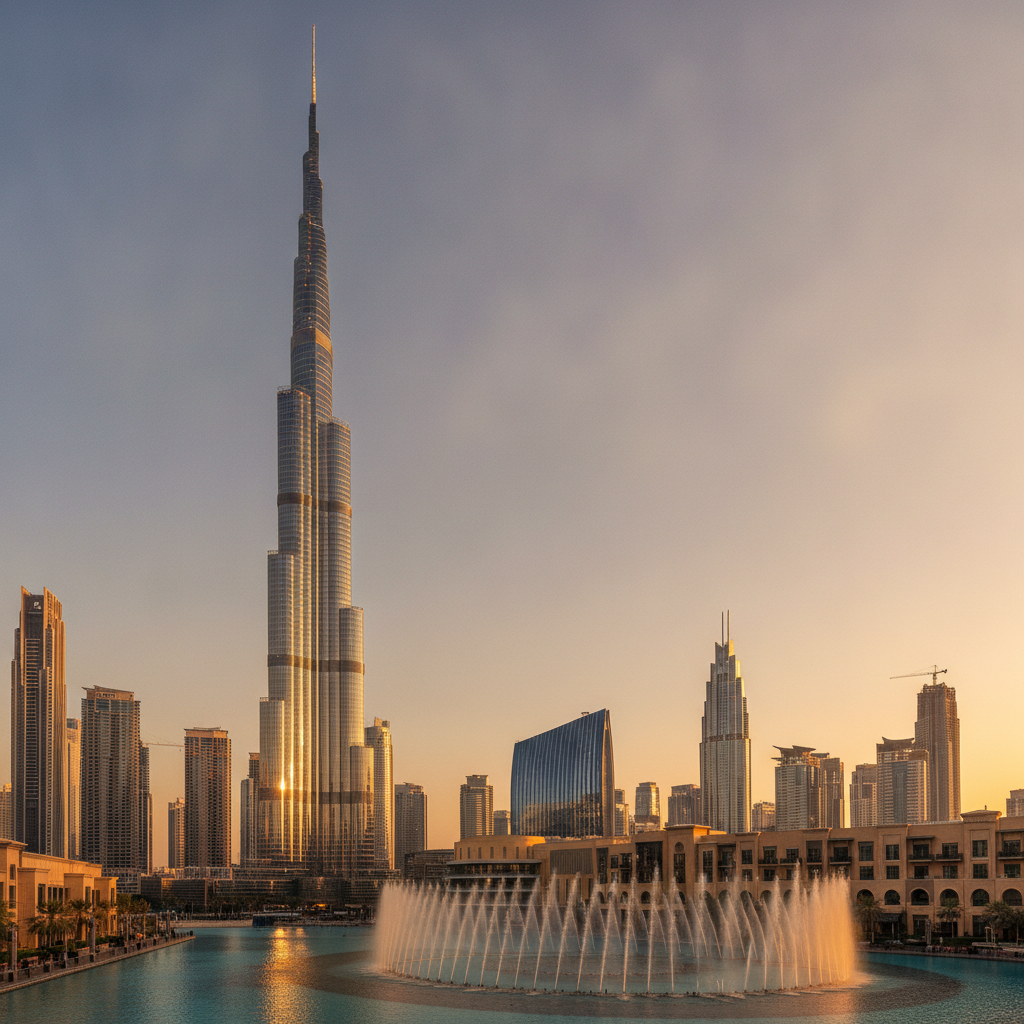
Jumeirah Beach Road, Kite Beach & Burj Al Arab: Old Dubai Meets the Sea
The Jumeirah Beach Road (also Jumeirah Road), running south from the Dubai city center along the Arabian Gulf coast for approximately 15 kilometers from Al Wasl Road to the Umm Suqeim area, is Old Dubai's beach strip: a residential and retail corridor lined with villas, schools, local cafés, and the Jumeirah Mosque (the most architecturally celebrated mosque in Dubai), fronted by a continuous beach of public parks and white sand. At its southern end: Kite Beach (one of Dubai's best public beaches, popular with kiteboarding, beach volleyball, and food trucks) and the Burj Al Arab, the sail-shaped hotel on a private island that is the most recognized architectural symbol of Dubai's transformation from trading port to luxury tourism destination.
- 1
Jumeirah Mosque — Dubai's Most Beautiful Mosque
The Jumeirah Mosque, built in 1976 in a Fatimid architectural style (Egyptian medieval Islamic architecture, characterized by twin minarets, a large central dome, and elaborate stone carving), is the most photographed mosque in Dubai and the only mosque in the UAE that welcomes non-Muslim visitors for guided tours (run by the Sheikh Mohammed Centre for Cultural Understanding, daily at 10am except Friday). The mosque, constructed in white stone against the backdrop of the Gulf, is at its most striking in the early morning and at sunset, when the light is warm and the building glows. The SMCCU tours include explanations of Islamic prayer, the significance of the mosque's architecture, and questions from visitors about Islamic culture — the Sheikh's own stated goal when he founded the centre was 'to enable non-Muslims to experience and understand the religion without needing to be Muslim.' The surrounding neighborhood — Jumeirah 1 — is primarily a wealthy residential area of villas and landscaped compounds.
- 2
La Mer & Mercato — Jumeirah's Retail Anchors
La Mer (2017), a beachfront retail and entertainment development on a 14-hectare plot on the Jumeirah 1 coast, is the most successful beach-integrated retail development in Dubai: open-air restaurants, shops, and entertainment venues on a promenade directly adjacent to a maintained public beach, with an Imax cinema, a water park (Laguna Waterpark), and a cluster of food and beverage outlets including several of Dubai's best seafood restaurants. La Mer was developed to serve the residential population of the surrounding Jumeirah villas rather than the tourist market; it is consequently more local in character than the malls and hotel strips of Downtown and the Marina. Mercato Mall (2002), a few kilometers north on Jumeirah Road, is designed as an elaborate Italian Renaissance piazza — a theme mall whose architecture is simultaneously absurd and charming — and serves as the local shopping destination for the Jumeirah villa community.
- 3
Jumeirah Beach Park & Open Beach
The Jumeirah Open Beach (also called the Russian Beach locally, reflecting the large number of Russian expatriates who use it), a 1-kilometer stretch of public beach between the Dubai Marine Beach Resort and the Sunset Beach, is one of the few genuinely free and accessible public beaches in the central Jumeirah area. The beach provides the best ground-level view of the Burj Al Arab from the north, with the hotel silhouette visible across the water approximately 2 kilometers away. Sunset Beach (Umm Suqeim 1 Beach), slightly further south, is the beach closest to the Burj Al Arab with direct sightlines to the hotel — this is where photographers position themselves for the classic Burj Al Arab-at-sunset shot.
- 4
Kite Beach — Dubai's Best Public Beach
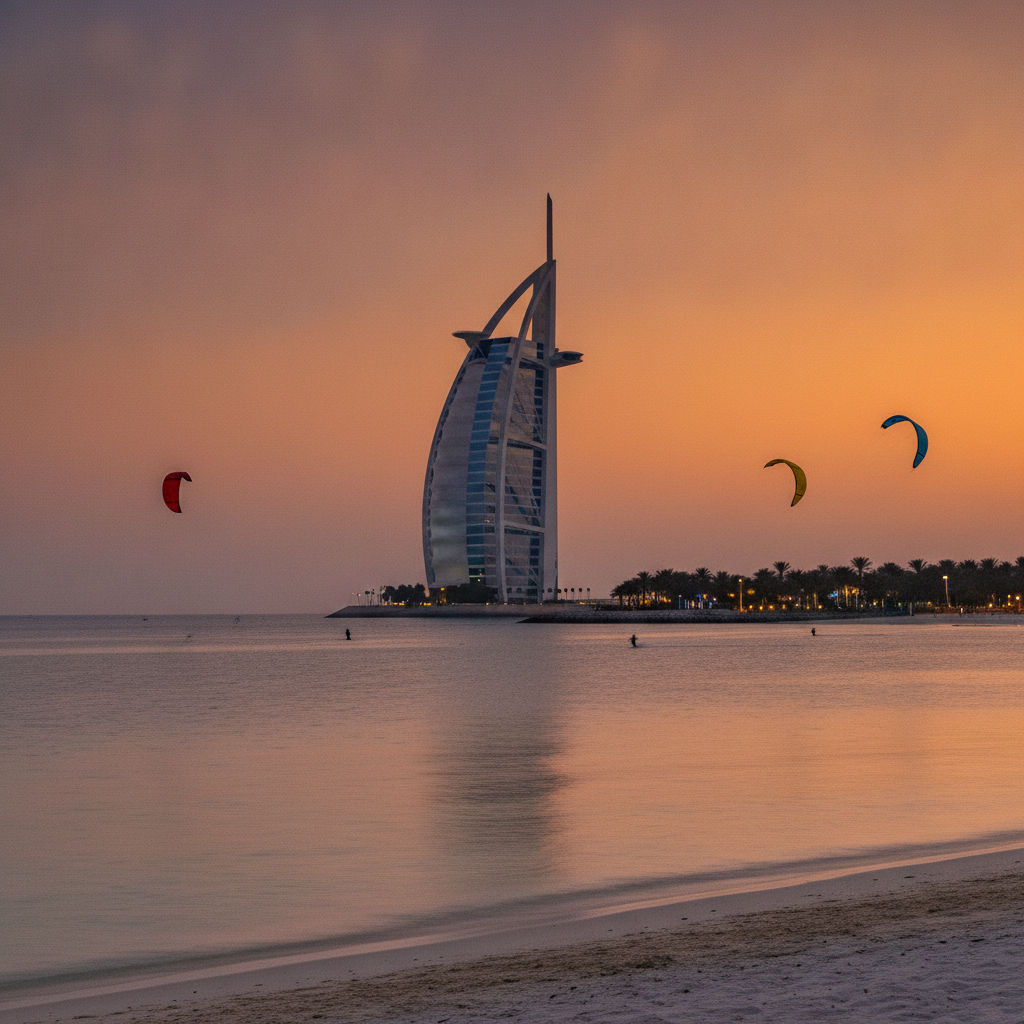
Kite Beach (Umm Suqeim Beach 2), immediately north of the Burj Al Arab private island, is consistently rated Dubai's best public beach: 1.4 kilometers of maintained white sand, with lifeguards, showers, and toilets (all free), a dedicated kiteboarding zone (the beach's eponymous activity, with 10+ kite schools operating), beach volleyball courts, a skate park, a running track, and a dense cluster of food trucks and pop-up restaurants along the beach road. The beach is backed by the Umm Suqeim Park and the Jumeirah Beach Residence food trucks (different from the JBR walk) and provides the most complete public outdoor leisure experience in Dubai. Kite Beach is also the best place in Dubai to see the Burj Al Arab from a public beach location.
- 5
Burj Al Arab — The World's Most Recognizable Hotel
The Burj Al Arab ('Tower of the Arabs'), built by the Jumeirah Group on a private artificial island 280 meters offshore at Umm Suqeim, is the world's most recognizable hotel building: a 321-meter sail-shaped structure designed by Tom Wright of WS Atkins (the same firm that designed Dubai Opera) and completed in 1999. The hotel's 202 duplex suites (the smallest is 169 square meters), gold-plated interiors (the hotel uses approximately 1,790 square meters of 24-carat gold leaf), private chauffeur-driven Rolls-Royces, and butler service created the 'seven-star hotel' concept that Dubai has since applied to numerous other properties. Access to the hotel is restricted to guests and restaurant reservations (the cheapest table starts at approximately $100 per person for afternoon tea at Skyview Bar on floor 27); the helicopter landing pad on the roof has been used for a tennis court (Roger Federer and Andre Agassi), a golf tee box (Tiger Woods), and a football pitch (Barcelona vs. a UAE select XI).
- 6
Madinat Jumeirah & Souk Madinat
Madinat Jumeirah (2004), a luxury resort complex immediately south of the Burj Al Arab, is the most elaborate traditional Arabic architecture project in Dubai: three hotels (Al Mina A'Salam, Al Dar Al Masyaf, and the recently opened Burj Al Arab Jumeirah — a boutique property connected to the Burj itself), 40 restaurants, and Souk Madinat Jumeirah, a re-creation of a traditional Arabian souk in an air-conditioned complex with artificial canals (traversed by abra water taxis), wind-tower architecture, palm gardens, and approximately 75 boutique shops and restaurants. The complex is the most considered attempt in Dubai to create an 'authentic' vernacular Arabic environment for tourism — the results are simultaneously atmospheric and theatrical, the wind towers genuinely functional (housing room ventilation equipment), the canal abras genuinely operating, and the souk genuinely selling regional craft products alongside the usual luxury goods. The Madinat amphitheater (capacity 1,200) is one of Dubai's main outdoor performance venues.
Walk this route with audio
Stories play automatically as you reach each stop — no tapping needed.
More in dubai
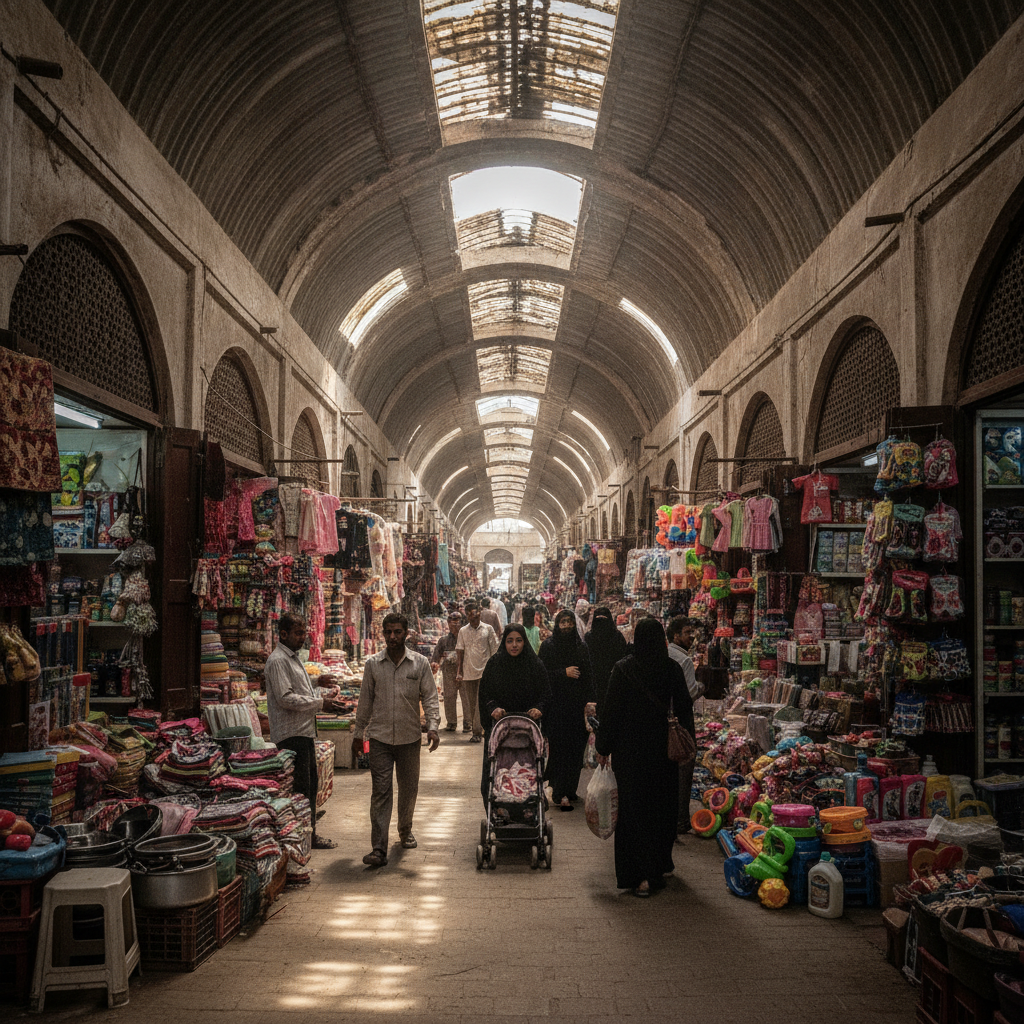
Deira: Heritage Markets, Naif Square & the Multicultural Old Quarter
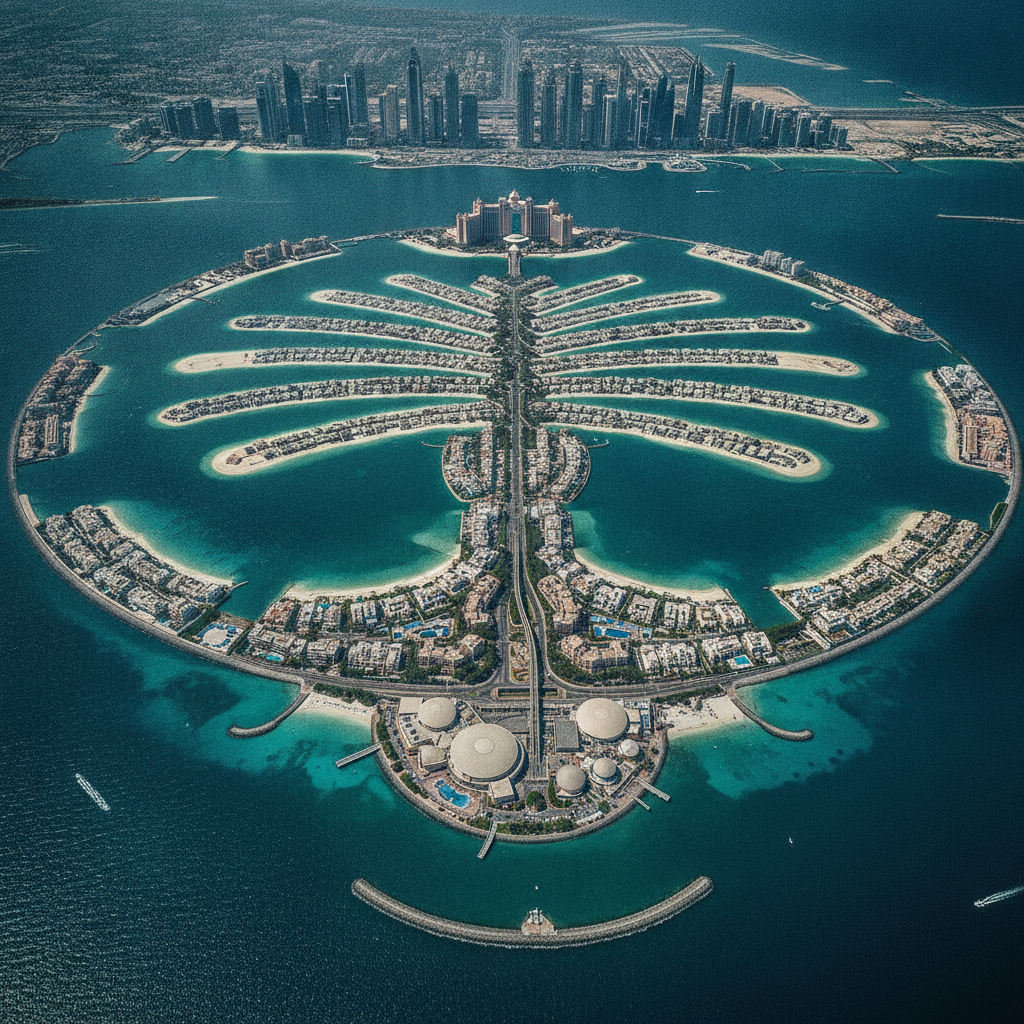
Palm Jumeirah: The World's Largest Artificial Island
Al Fahidi, Dubai Creek & the Gold Souk: Dubai Before Oil
Expo City Dubai: The World's Fair Becomes a Permanent City
Business Bay, Dubai Canal & Design District: The Creative and Commercial New Center