Literary Dublin — Joyce, Beckett, Wilde, Yeats & the Irish Literary Tradition
Dublin has produced a disproportionate share of world literature: four Nobel Prize in Literature laureates (William Butler Yeats (1923), George Bernard Shaw (1925), Samuel Beckett (1969), and Seamus Heaney (1995)), the author of the most important novel in the English language (James Joyce's Ulysses (1922)), the greatest wit in the English literary tradition (Oscar Wilde), and a continuous tradition of literary production that makes Dublin (per capita) the most literary city in the world.
- 1
James Joyce & Ulysses — The Greatest Novel in the English Language
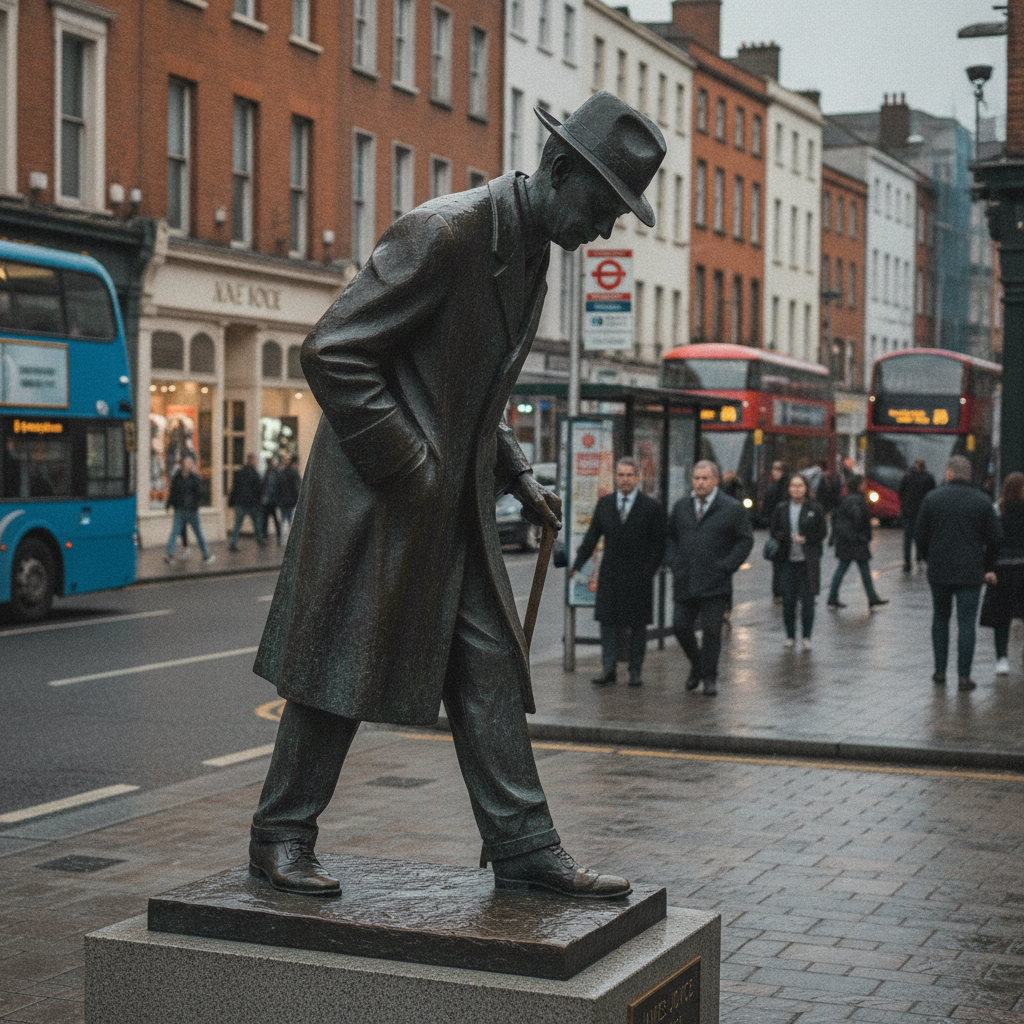
James Joyce (1882-1941 — born in Rathgar, Dublin, educated by Jesuits at Clongowes Wood College and Belvedere College, studied at University College Dublin, left Ireland for continental Europe in 1904 and lived in Trieste, Zurich, and Paris for the rest of his life): Joyce is the most important prose writer in the English language of the 20th century, and Ulysses (1922 — the novel set over a single day (June 16, 1904 — now celebrated annually as 'Bloomsday') in Dublin, following the advertising canvasser Leopold Bloom and the young artist Stephen Dedalus through the Dublin streets, pubs, and houses in a narrative that systematically parallels Homer's Odyssey) is the most formally innovative and influential novel in literary history; the Dublin of Ulysses (the pubs (Davy Byrne's on Duke Street — 'the moral pub' where Bloom famously eats a gorgonzola sandwich and glass of Burgundy), the streets (O'Connell Street (then Sackville Street), Westland Row, Eccles Street (the Bloom residence at No. 7)), and the sea (Sandymount Strand, the Forty Foot bathing place at Sandycove)) is preserved in the landscape of the city; Bloomsday (June 16) is celebrated annually with readings, walks, costume events (Victorian/Edwardian dress), and the recreation of Bloom's perambulations.
- 2
Oscar Wilde — The Incomparable Dublin Wit
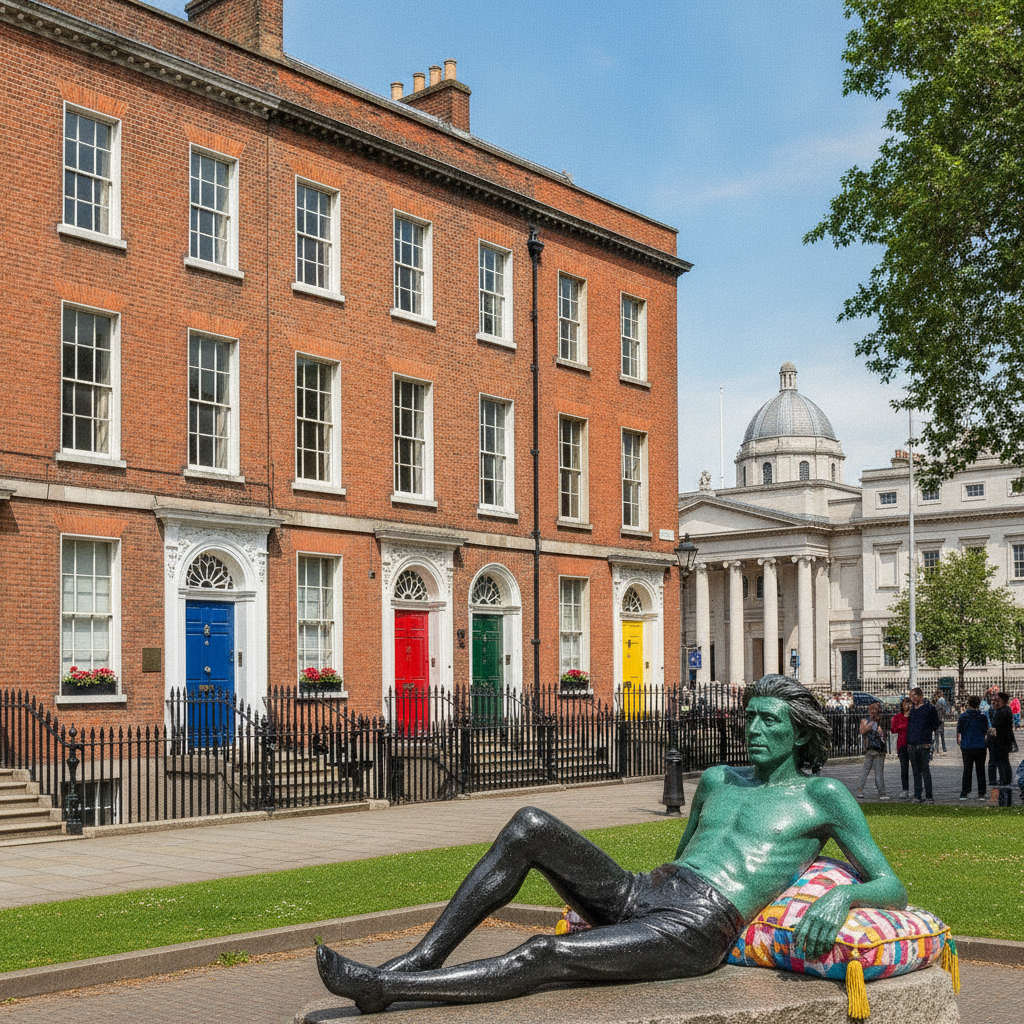
Oscar Wilde (1854-1900 — born Oscar Fingal O'Flahertie Wills Wilde at 21 Westland Row (now the Oscar Wilde House, a museum), Dublin, to Sir William Wilde (the leading oculist and ear surgeon in Ireland) and Lady Jane Wilde (the nationalist poet 'Speranza')): Wilde is the most celebrated Irish writer of the Victorian era and the greatest wit in the English literary tradition, with a body of work encompassing the plays (The Importance of Being Earnest (1895), An Ideal Husband (1895), Lady Windermere's Fan (1892)), the novel (The Picture of Dorian Gray (1890)), the fairy tales (The Happy Prince (1888)), the poems, and the prison writing (De Profundis (written 1897, in Reading Gaol)); Wilde's wit (the sustained aphoristic irony — 'I can resist everything except temptation,' 'To lose one parent, Mr Worthing, may be regarded as a misfortune; to lose both looks like carelessness') remains the most quoted in English literature; the statue of Wilde (reclining on a rock in Merrion Square Park, facing his birthplace at No. 1 Merrion Square — the flamboyant recumbent figure in multi-coloured granite and jade, by sculptor Danny Osborne (1997)) is the finest public sculpture in Dublin.
- 3
Samuel Beckett & W.B. Yeats — Nobel Laureates from Dublin
Samuel Beckett (1906-1989 — born in Foxrock, a southern suburb of Dublin, educated at Trinity College Dublin, subsequently lived in Paris (from 1937) and wrote primarily in French, translating his own works into English): Beckett's Waiting for Godot (En attendant Godot, 1953) is the most performed and most discussed play of the 20th century — the two tramps Vladimir and Estragon waiting for an undefined figure (Godot) who never comes has become the defining theatrical image of existential uncertainty in the modern world; Beckett received the Nobel Prize in Literature in 1969 ('for his writing, which — in new forms for the novel and drama — in the destitution of modern man acquires its elevation') but declined to attend the ceremony in Stockholm; the Samuel Beckett Bridge (opened 2009, designed by Santiago Calatrava, spanning the Liffey at the Custom House — the most beautiful modern bridge in Dublin, its design referencing a harp) is the most celebrated monument to Beckett in Dublin; W.B. Yeats (1865-1939, born in Sandymount, Dublin) was the co-founder of the Abbey Theatre (1904 — the national theatre of Ireland, the first state-subsidized theatre in the English-speaking world) and the first Irish Nobel Laureate (1923).
- 4
The National Library, Abbey Theatre & Dublin's Literary Institutions
The National Library of Ireland (Kildare Street — the national library, founded 1877, housing the most important collection of Irish manuscripts, newspapers, and printed books, adjacent to the National Museum of Ireland (Archaeology) and the Dáil Éireann (the Irish parliament)): the National Library has an outstanding exhibition on W.B. Yeats (the permanent Yeats exhibition — 'Yeats: The Life and Works of William Butler Yeats' — the definitive exhibition on the life, work, and historical context of Ireland's greatest poet); the Abbey Theatre (Lower Abbey Street — the national theatre of Ireland, founded 1904 by W.B. Yeats and Lady Gregory with the founding manifesto of presenting Irish plays for Irish audiences) is the oldest national theatre in the English-speaking world and the institutional home of the Irish dramatic tradition (J.M. Synge, Sean O'Casey, Brian Friel, Tom Murphy); the Irish Writers Centre (Parnell Square) and the Dublin Writers Museum (Parnell Square — the most important literary museum in Dublin, in the 18th-century house at No. 18 Parnell Square, with a collection of first editions, portraits, and memorabilia of the major Irish writers from Swift to Beckett) are the other key literary institutions.
- 5
Marsh's Library & Georgian Dublin's Literary Heritage
Marsh's Library (St. Patrick's Close, beside St. Patrick's Cathedral — the oldest public library in Ireland, founded 1701 by Archbishop Narcissus Marsh and opened to scholars in 1707, the only surviving Georgian library in Ireland still in use): Marsh's Library is the most atmospheric and historically significant small library in Ireland — a perfectly preserved 18th-century scholar's library, with its original dark oak bookcases, the three 'cages' (the wire-mesh enclosures into which readers were locked with rare books to prevent theft), and the collection of approximately 25,000 books (including Jonathan Swift's personal library and copies of books with Swift's own annotations); Jonathan Swift (1667-1745, the Dublin-born satirist whose Gulliver's Travels (1726) and A Modest Proposal (1729) are the greatest satires in the English language, and who served as Dean of St. Patrick's Cathedral 1713-1745) is the founding figure of Irish literature in English, and the Dublin of Swift (the Georgian buildings, the Liberties with their poverty, the political debates of College Green) is the model for the Dublin that all subsequent Irish writers have inhabited and responded to.
- 6
Bloomsday — June 16 in the Footsteps of Leopold Bloom
Bloomsday (June 16 — the annual celebration of James Joyce's Ulysses, commemorating the date (June 16, 1904) on which the novel is set, celebrated annually in Dublin since 1954): Bloomsday is one of the most unusual national cultural celebrations in the world — a day in which the entire city re-enacts the events of a single novel, with Joycean enthusiasts dressing in Edwardian costume (straw boaters, waistcoats, linen suits) and following the route of Leopold Bloom's journey through Dublin on June 16, 1904; the key Bloomsday locations include: the Martello Tower at Sandycove (now the James Joyce Museum — the tower in which Joyce lived briefly in 1904 with his friend Oliver St. John Gogarty, the inspiration for Buck Mulligan, and the opening setting of Ulysses), Davy Byrne's pub (Duke Street — where Bloom eats his gorgonzola sandwich, still served in the pub as the 'Bloomsday menu'), Sweny's Pharmacy (Lincoln Place — where Bloom buys a bar of lemon soap (still sold), preserved as a Joyce-dedicated bookshop and cultural centre), and the National Library (where Bloom attends Stephen's Shakespeare lecture in the Scylla and Charybdis episode).
Walk this route with audio
Stories play automatically as you reach each stop — no tapping needed.
More in dublin
Phoenix Park & Howth Head — Dublin's Natural Escapes
Georgian Dublin — Merrion Square & the Georgian Architecture
Temple Bar, Trinity College & the Book of Kells — Dublin's Historic Core
National Museum of Ireland — Bog Bodies, Celtic Gold & Irish Archaeology
Easter Rising 1916, the GPO & Irish Independence