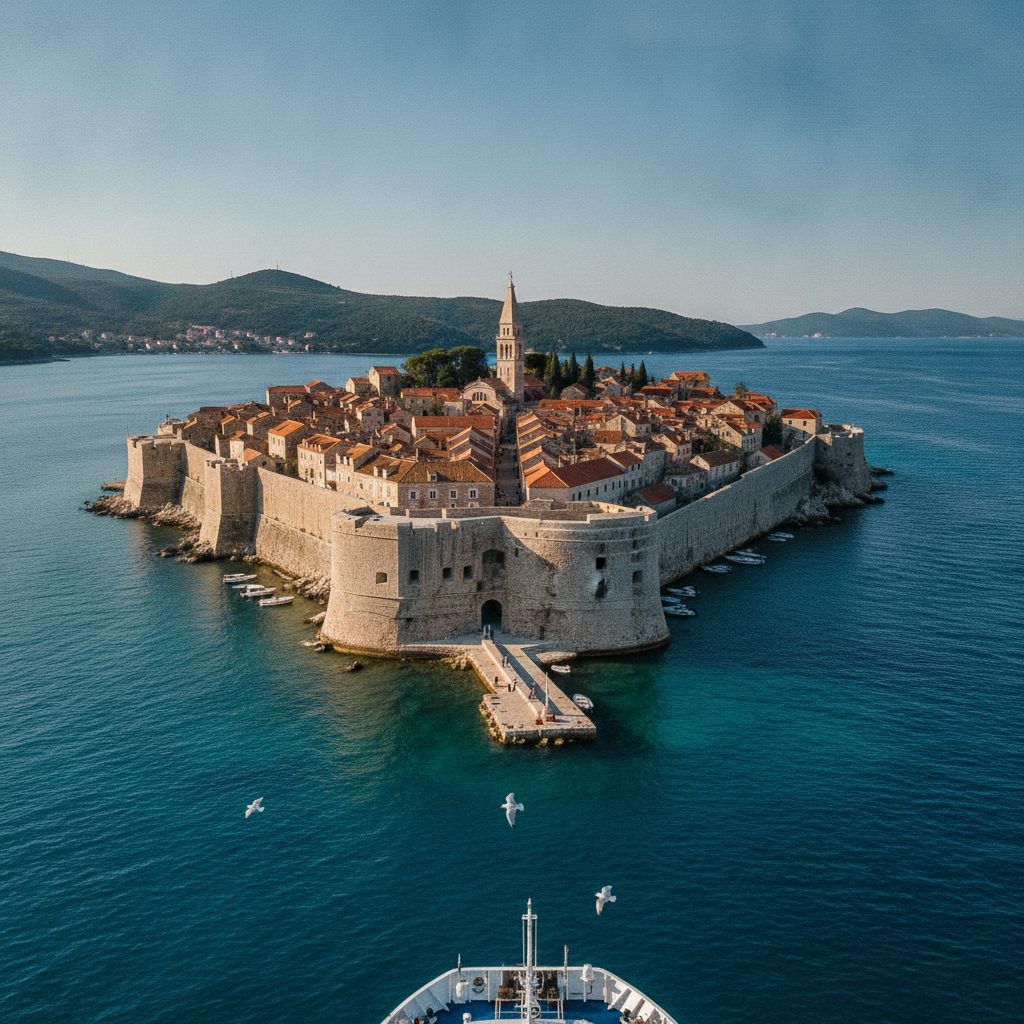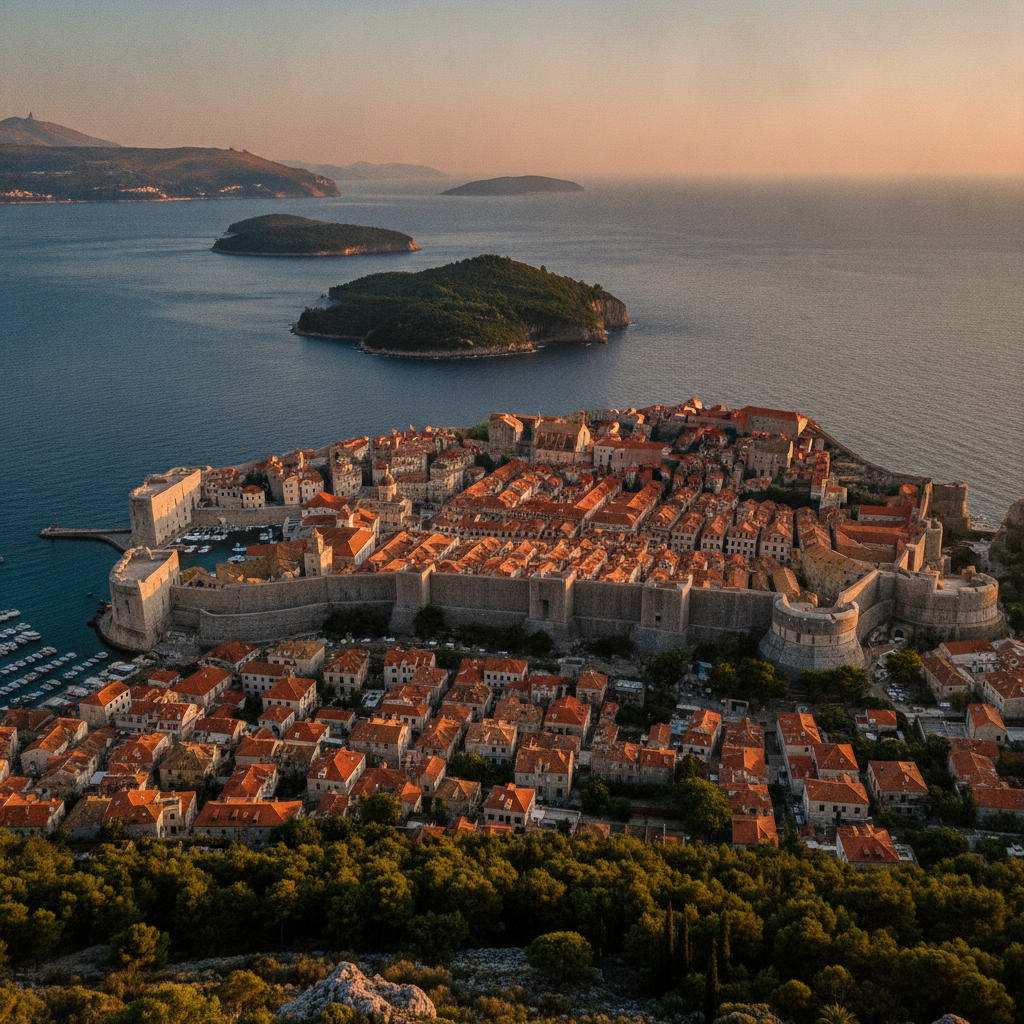
Dubrovnik Old Town — the Medieval City Walls, the Stradun & the Pearl of the Adriatic
Dubrovnik (population 28,000, the southernmost major city in Croatia, the capital of the former Republic of Ragusa — a major maritime trading republic that maintained independence from Venice, the Ottoman Empire, and the Habsburg Empire through diplomatic skill and economic power from 1358 to 1808, the UNESCO World Heritage Site since 1979) is the most completely preserved medieval walled city in Europe.
1. The City Walls Walk — the 2km Circuit Above the Adriatic
- 1
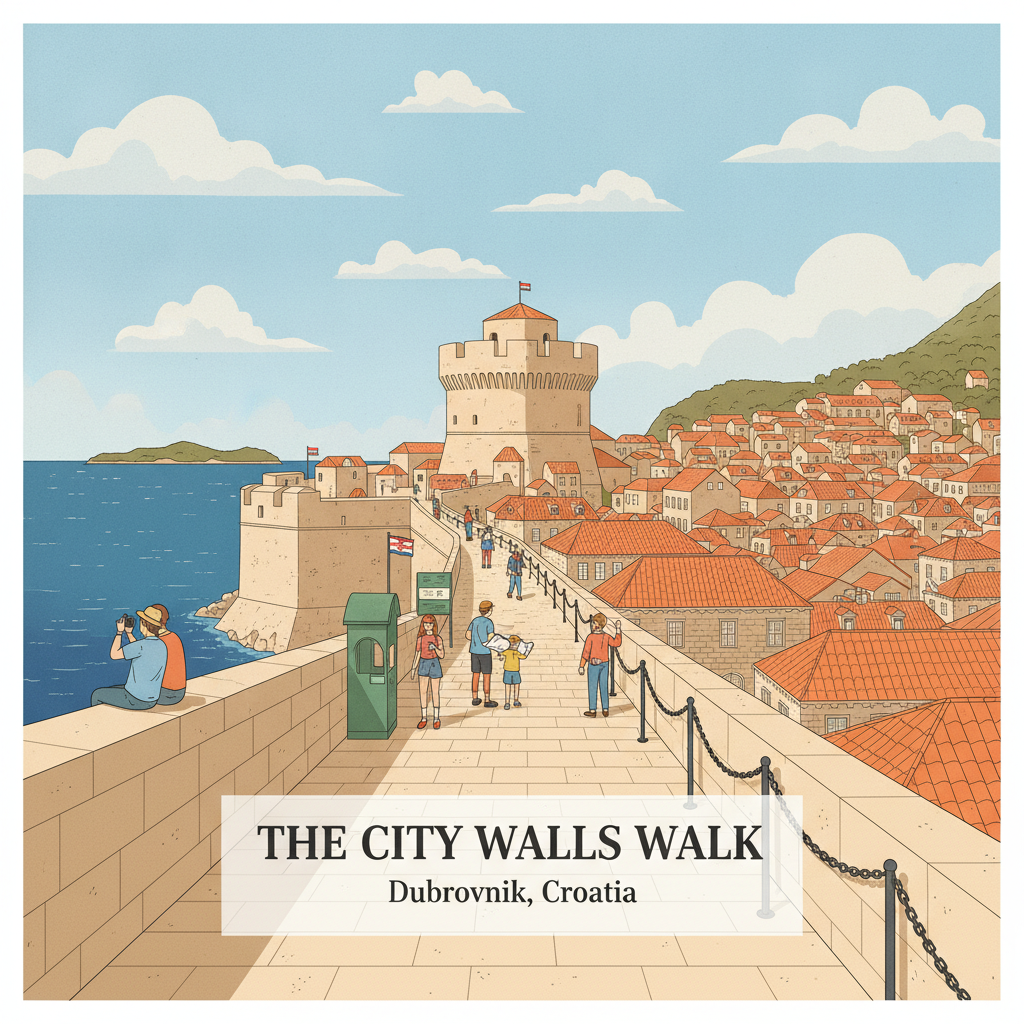
The City Walls Walk — the 2km Circuit Above the Adriatic
The Dubrovnik city walls (the complete circuit of 1,940 metres at the top of the wall, the wall walk taking 1.5-2 hours at a moderate pace, entry tickets €35 adults from April 2024, available at the Pile Gate and Ploce Gate entrances, open daily 8am-7:30pm April-October and 8am-3pm November-March, the tickets timed to reduce the maximum number of walkers simultaneously on the wall) enclose the entire medieval Old Town and provide the definitive bird's-eye perspective on the Adriatic city. The Minceta Tower (the highest point on the northern wall, the massive circular fortification built by the Florentine architect Michelozzo di Bartolomeo in 1461, the view from the top taking in the entire inland plateau above Dubrovnik) and the Bokar Tower (the south-facing sea fortification, the direct view down into the Adriatic from the wall walk) are the wall's defining structures.
- 2
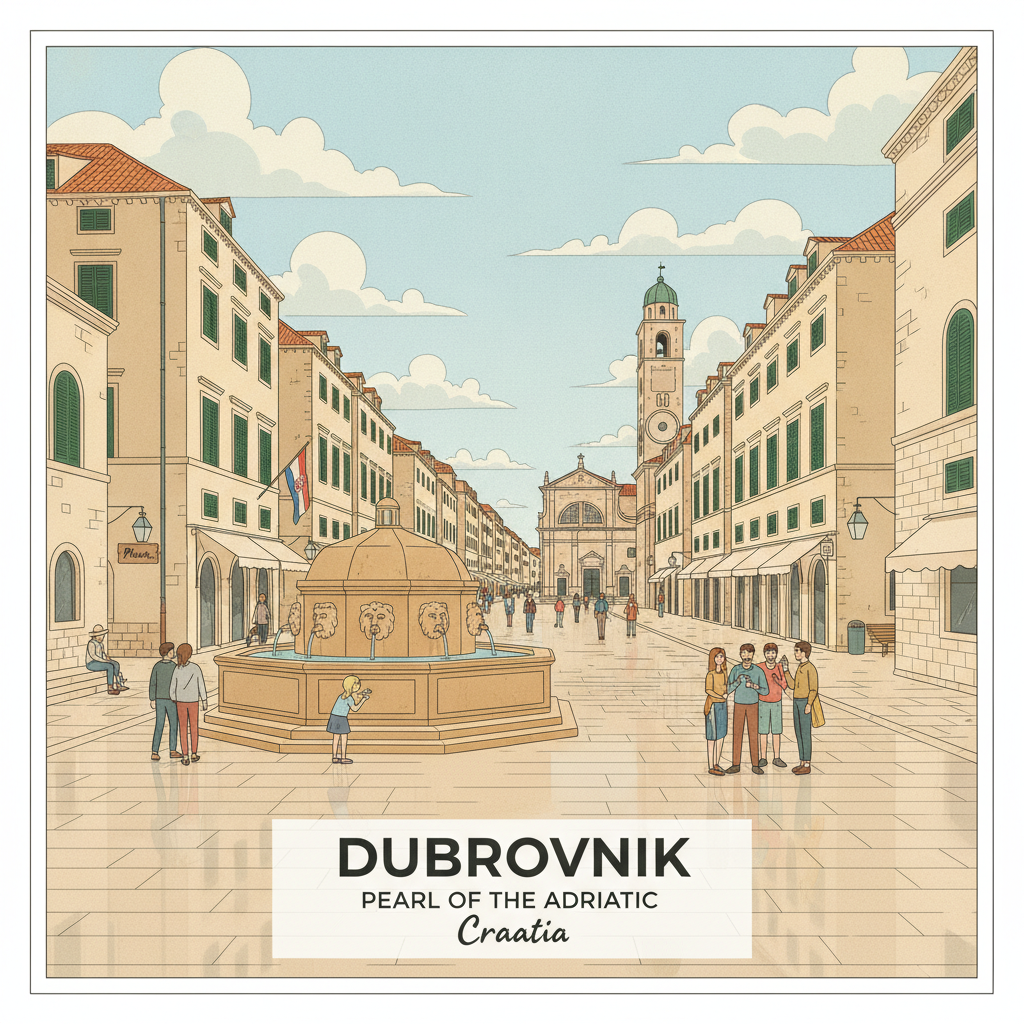
Stradun — the Marble Main Street of the Old Town
The Stradun (Placa, the main street of Dubrovnik's Old Town, 292m long, the limestone paving stones worn smooth and reflective from centuries of foot traffic, laid after the 1667 earthquake that destroyed most of the medieval city, the street running straight west-east from the Pile Gate to the Luza Square and the Clock Tower) is the social and commercial spine of the Old Town — the Onofrio Fountain (the large circular 16th-century fountain at the western end of the Stradun, the terminus of the aqueduct built in 1438 to bring water 12km from the Rijeka Dubrovacka river to the city, the 16 mask-spouts around the circumference, the local source of fresh drinking water for the Old Town) and the Church of St Blaise (the Baroque church on the Luza Square, 1717, the patron saint of Dubrovnik holding a model of the medieval city in his left hand — the most accurate reconstruction of how pre-1667 Dubrovnik looked) are the Stradun's defining endpoints.
- 3
Rector's Palace — the Republic of Ragusa's Government Centre
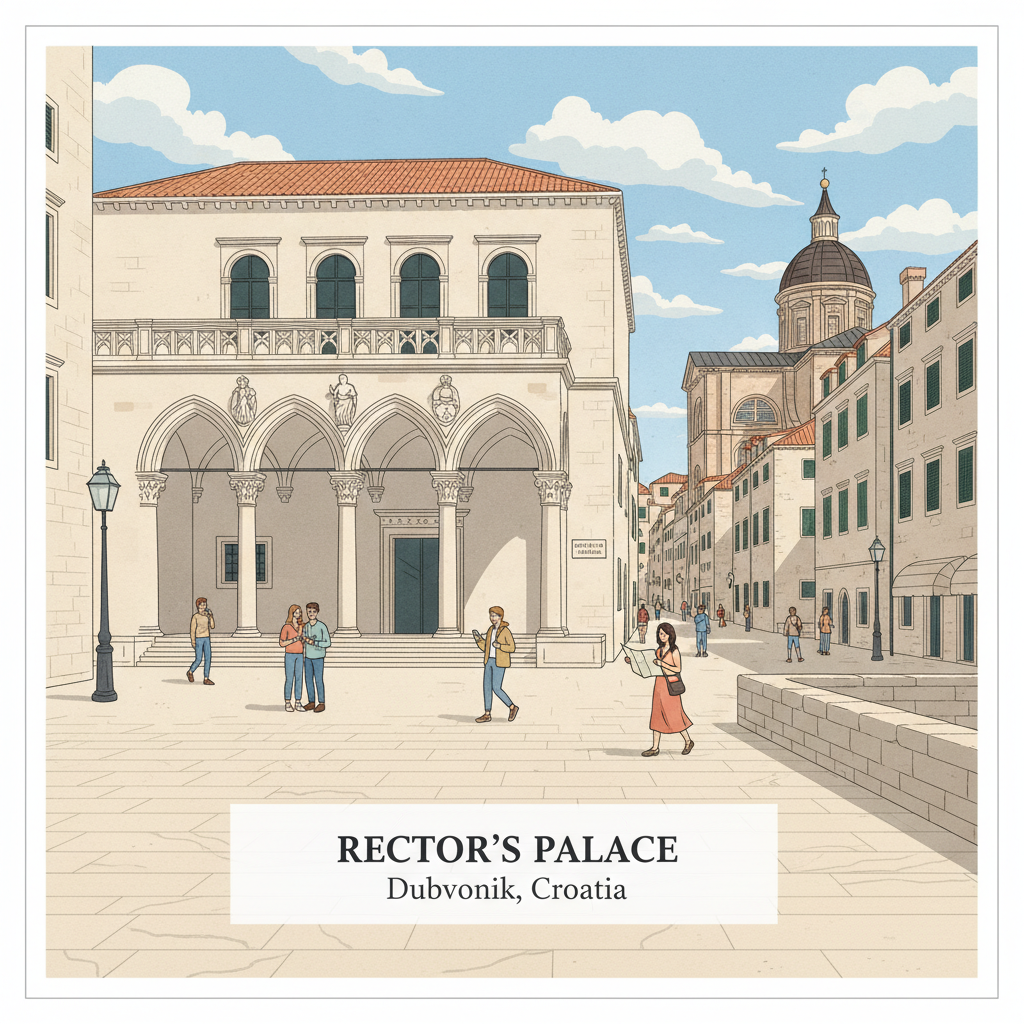
The Rector's Palace (Knezev Dvor, Pred Dvorom 3, €15 adults or included in the Dubrovnik Pass, daily 9am-6pm April-October, the palace of the elected rector of the Republic of Ragusa, rebuilt after the 1667 earthquake in the late-Gothic and early-Renaissance style, the rector serving 1-month non-renewable terms as a deliberate anti-corruption measure — the only Italian-speaking republic in the Balkans, the republic that abolished the slave trade in 1416, centuries before any other European state, and maintained diplomatic relations with both Ottoman Constantinople and Catholic Rome simultaneously) contains the museum of the Republic of Ragusa: the rector's original ceremonial robes, the senate decrees in the Ragusan dialect of medieval Latin, and the portrait collection of the rectors. The arcade (the late-Gothic columns supporting the palace's first-floor loggia) is the most photographed architectural detail in the Old Town.
- 4
Cathedral of the Assumption — the Titian Treasury
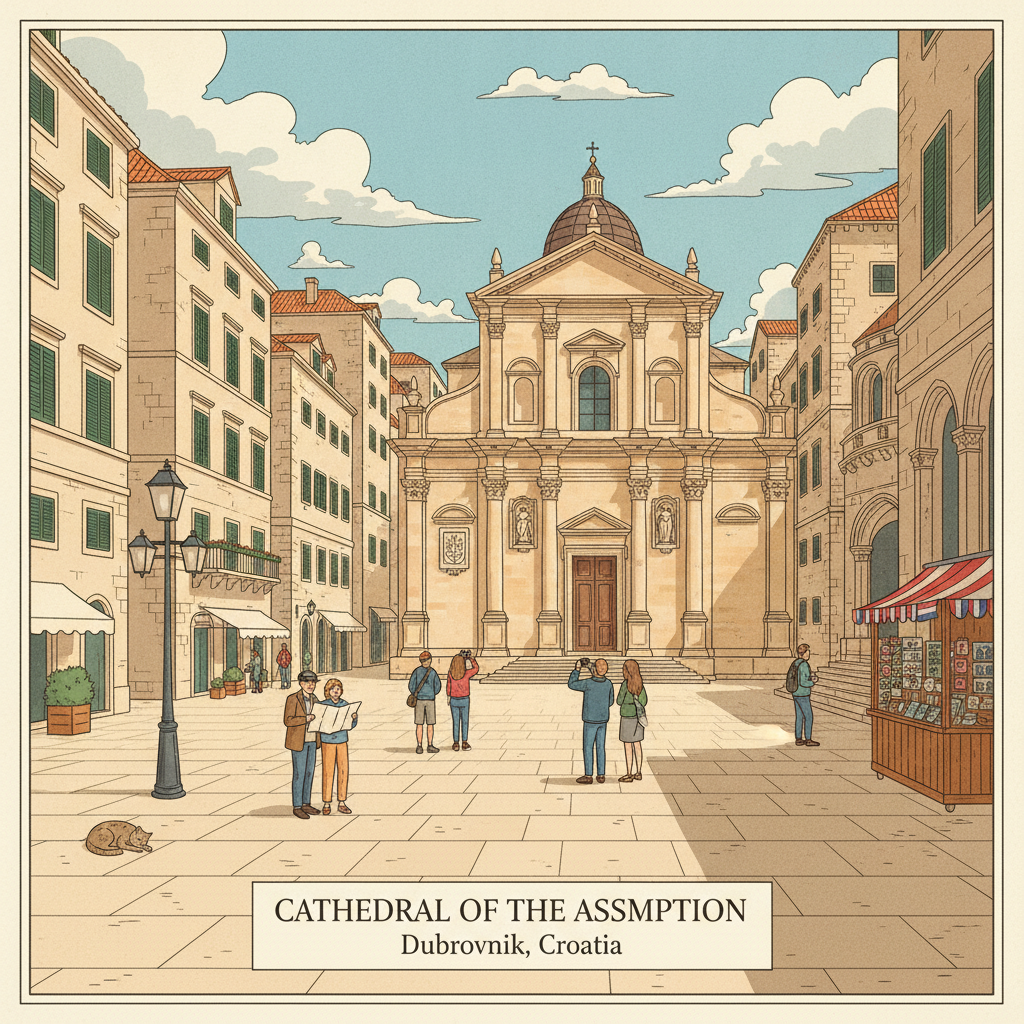
The Cathedral of the Assumption (Dubrovnik Cathedral, Zlatarska ulica 1, entry to the church free, treasury €4, daily 8am-5pm, the Baroque church built 1671-1713 after the 1667 earthquake destroyed the earlier Romanesque cathedral funded by Richard I of England — the Lionheart, who donated the funds for the original cathedral after being shipwrecked near Dubrovnik and rescued by the Ragusans in 1192) contains the Cathedral Treasury: the polyptych altarpiece of the 12th-century Ragusa school (the Madonna Enthroned with Saints, the oldest surviving painting in Dubrovnik), the reliquary arm and foot of Saint Blaise (the gold-and-enamel reliquaries from the Byzantine workshop, 11th century, the most valuable objects in the treasury), and the Titian altarpiece (the Assumption of the Virgin, the workshop of Titian, 1552, the largest painting in Dubrovnik). The Rectors Palace and Cathedral together constitute the heart of the former Ragusan governmental district.
- 5
Dominican Monastery — the Gothic Cloister and the Renaissance Altarpieces
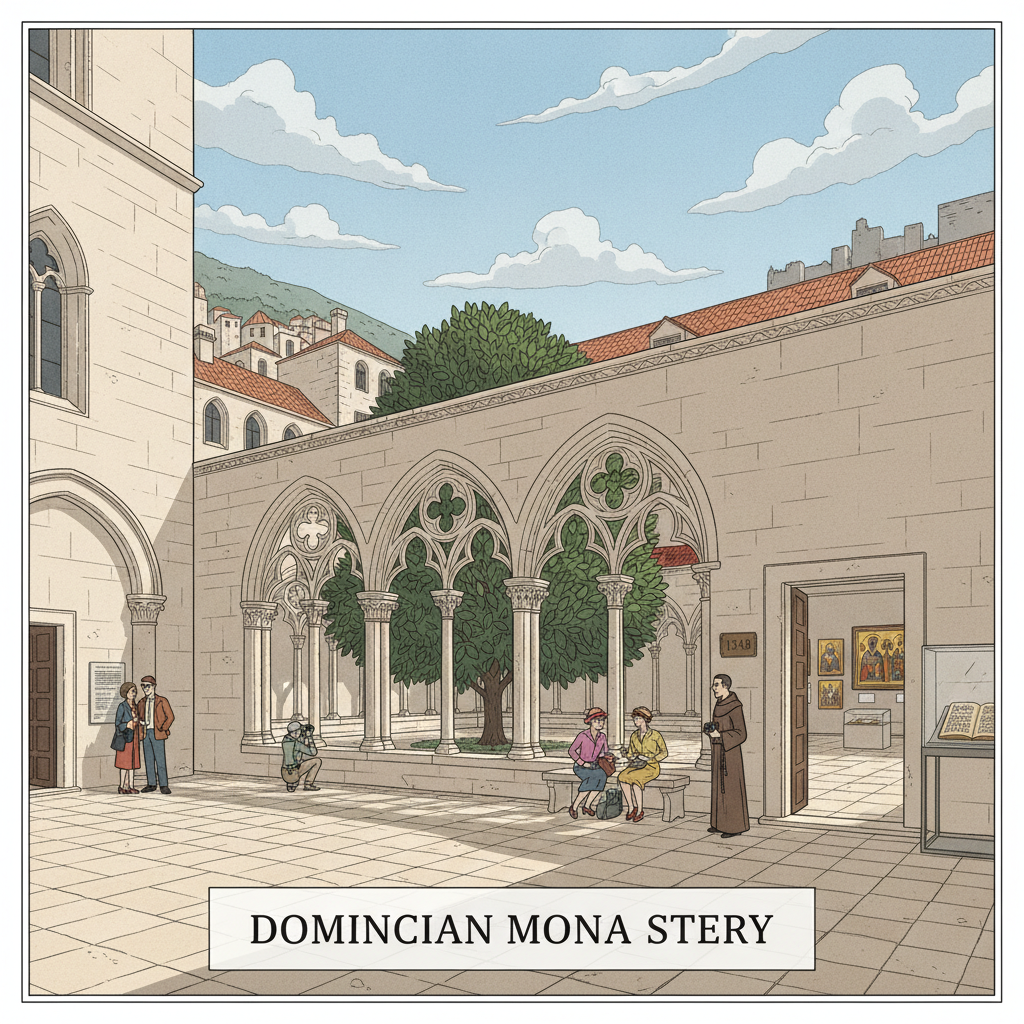
The Dominican Monastery (Dominikanska ulica 4, near the Ploce Gate, €5 adults, daily 9am-6pm, the 14th-century Dominican foundation occupying the northeast corner of the Old Town, the monastery completed in 1348 and surviving the 1667 earthquake better than any other monumental building in Dubrovnik due to its massive structural buttressing) contains the finest Gothic cloister in Dalmatia (the arcaded courtyard with late-Gothic stone tracery, the magnolia tree in the centre planted in the 18th century now 15m high, the only magnolia growing inside a Gothic cloister in Croatia) and the monastery museum (the Nikola Bozidarevic polyptych of 1513 — the masterwork of Ragusan Renaissance painting — the gold-background paintings from the 14th-century Ragusan school, and the 16th-century Gospel of Humac in the original Glagolitic script of the Croatian church).
- 6
Lokrum Island — the Benedictine Monastery and the Naturist Beach
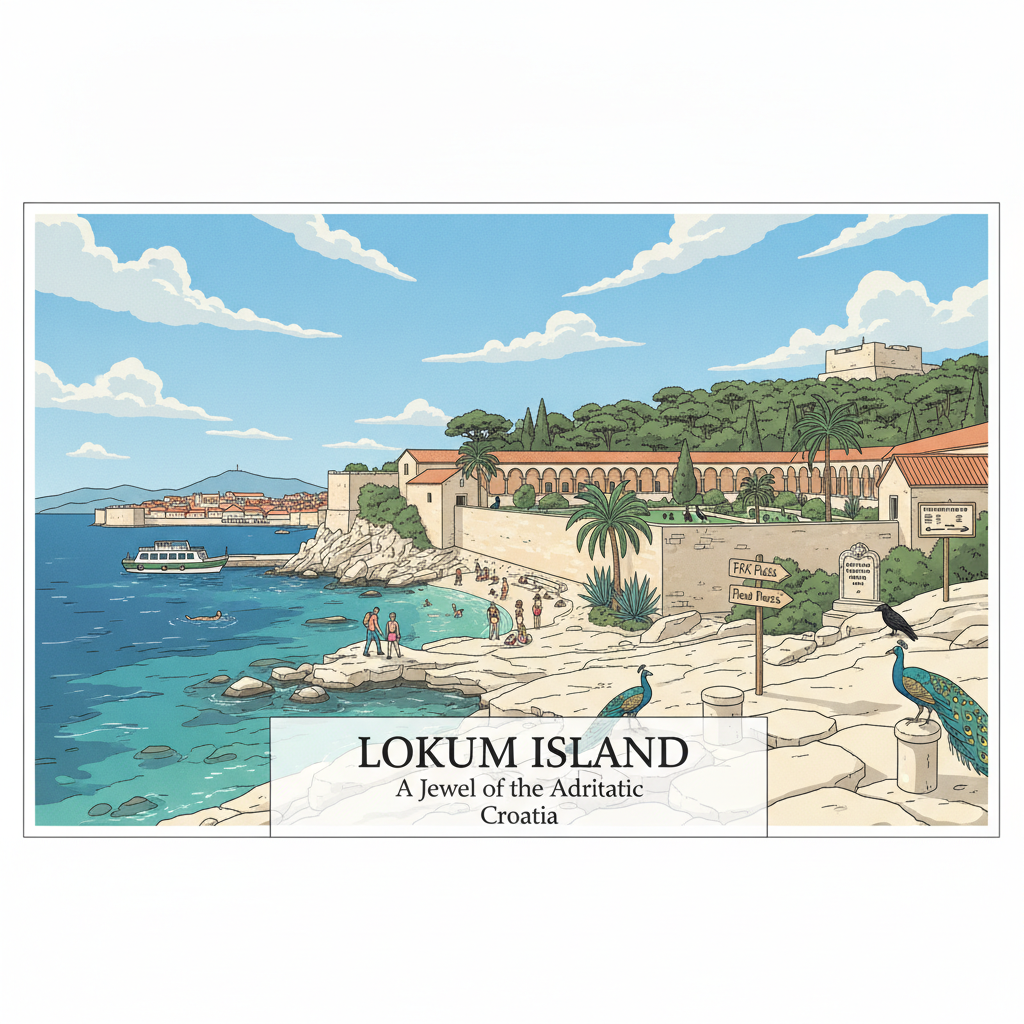
Lokrum (the island 600m southeast of the Dubrovnik Old Town, accessible by boat from the Old Port every 30 minutes in summer, boat ticket €20 return, the island a protected nature reserve — no overnight accommodation, no cars, the island returning to the ravens and peacocks at 6pm when the last boat returns, the monastery founded by Richard I of England in 1191 as a thanksgiving for his rescue, the present monastery building rebuilt by the French in 1806 who used it as a botanical garden) offers the most accessible natural escape from the Old Town crowds. The Naturist Beach (the FKK beach on the island's southeast rocky shore, the most established naturist beach in southern Croatia, free), the Dead Sea — Mrtvo More (the small saltwater lake in the island's interior, connected to the sea by underground channels, warmer and calmer than the open sea, the best swimming on the island), and the Fort Royal (the Napoleonic fort on the highest point of the island at 98m, the view of the Old Town walls from the sea level) are the island's three essential experiences.
Walk this route with audio
Stories play automatically as you reach each stop — no tapping needed.
More in dubrovnik
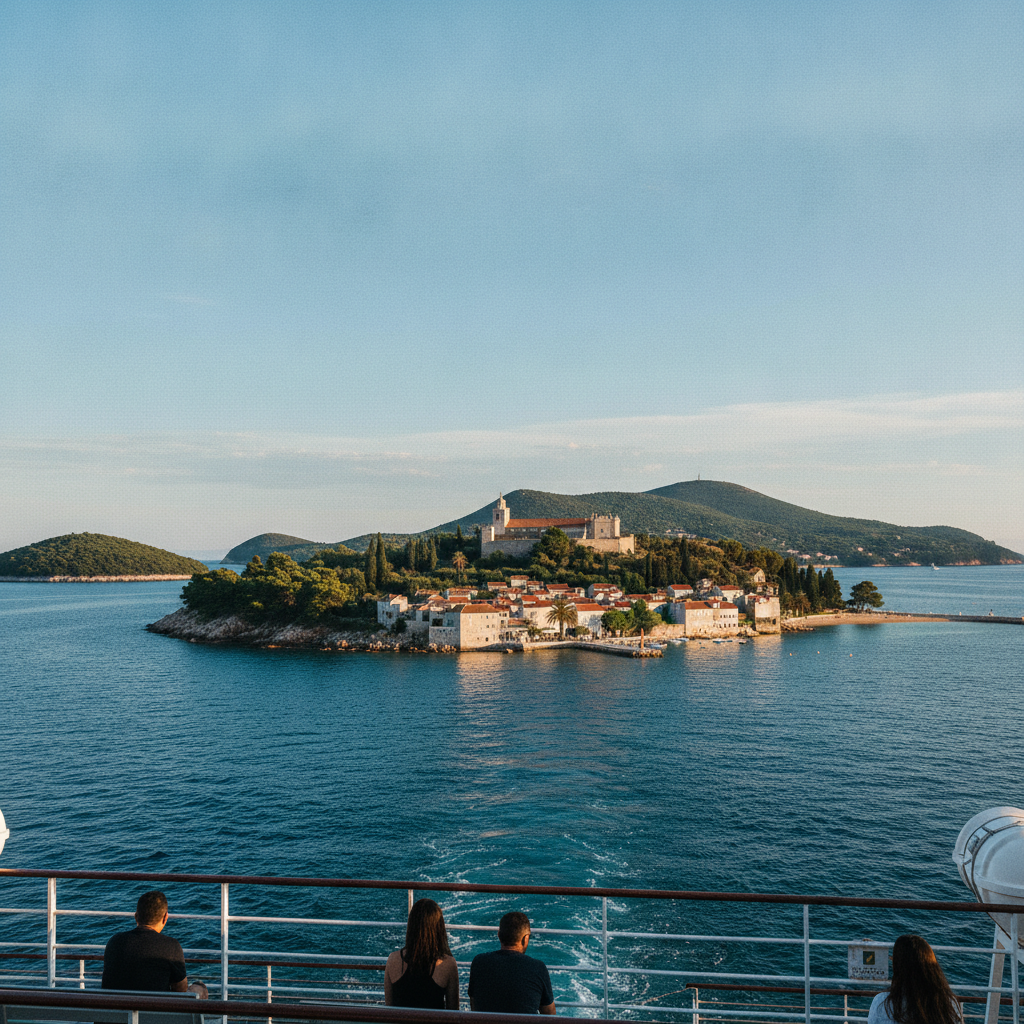
Elafiti Islands Day Trip — Lopud, Sipan & the Best Beach Near Dubrovnik
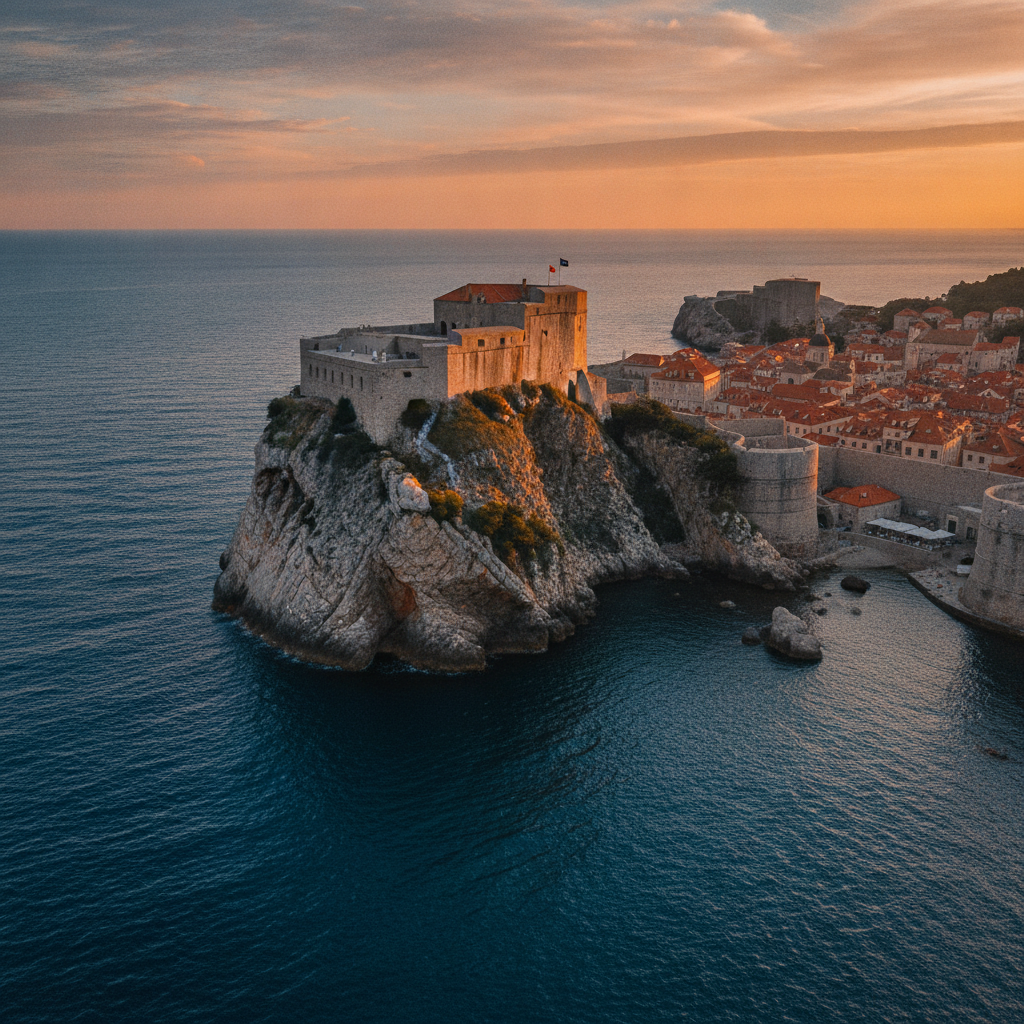
Game of Thrones in Dubrovnik — King's Landing Filming Locations
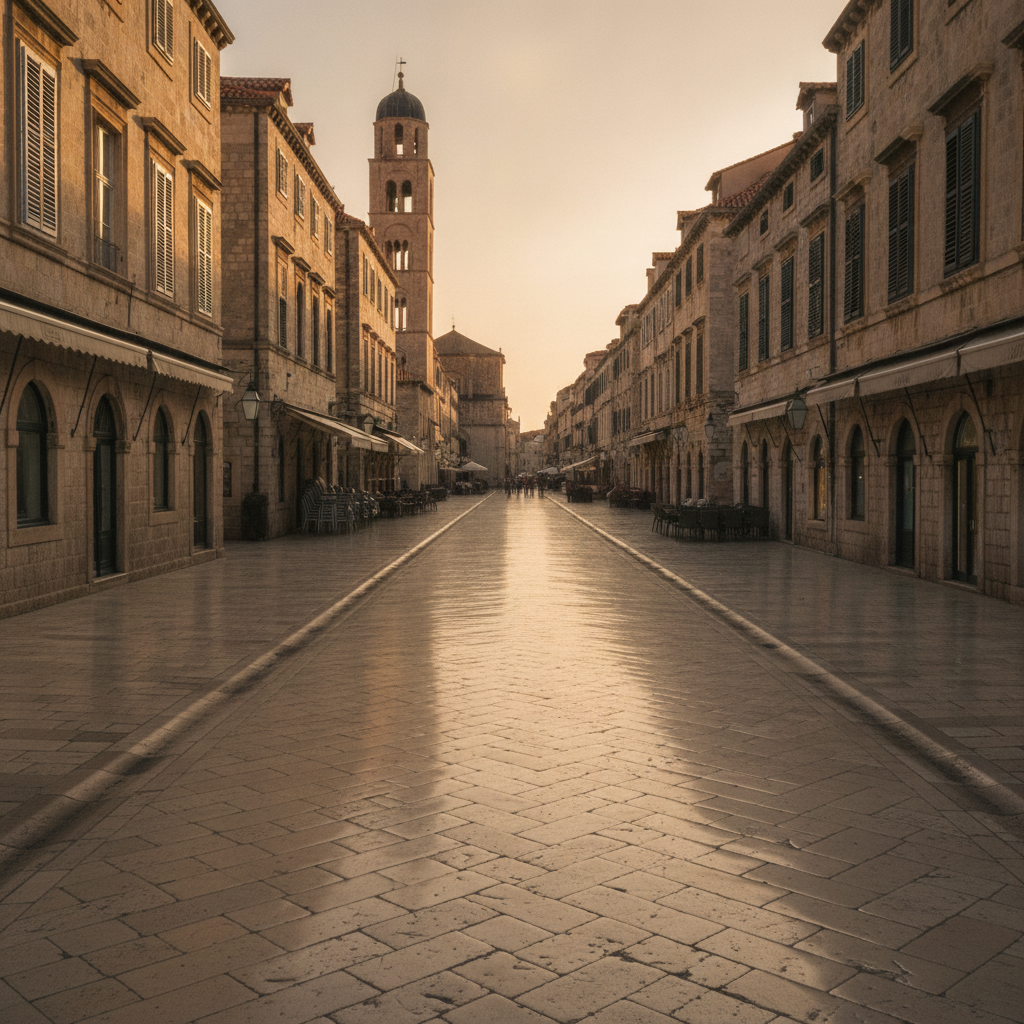
Dubrovnik Practical Guide — Crowds, Seasons, the Dubrovnik Pass & Local Food
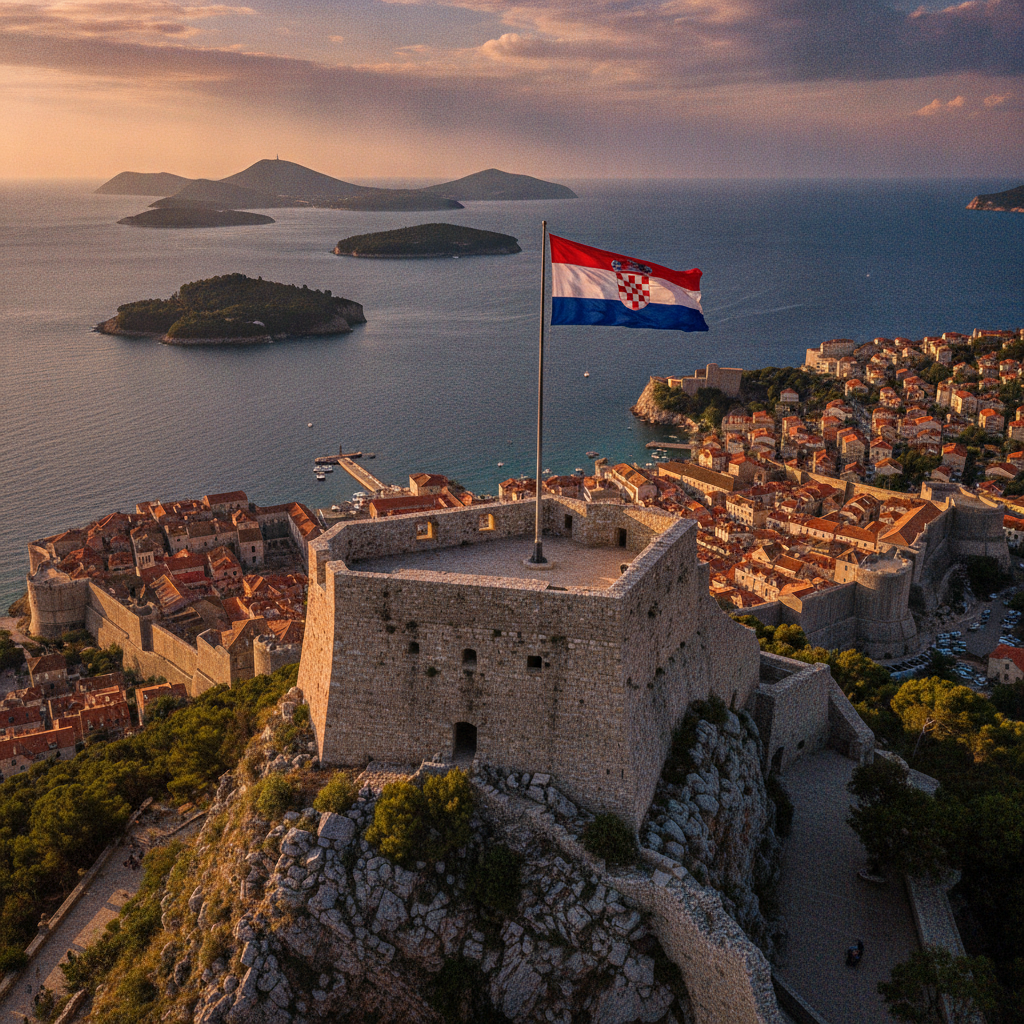
Mount Srd — Cable Car, Fort Imperial & the 1991 Homeland War Museum