Korcula Island — Marco Polo's Birthplace, Plavac Mali Wine & the Moresca Dance
Korcula (the island 180km northwest of Dubrovnik, accessible by fast catamaran from Dubrovnik in 3 hours or by car via the Peljesac Bridge and ferry from Orebic in 2 hours, the island of 16,000 inhabitants, the home of the island wine tradition centred on Plavac Mali red wine and the rare Grk white wine variety grown only on Lumbarda) is the most culturally distinctive island in the Dalmatian archipelago.
- 1
Korcula Old Town — the Fishbone Medieval City
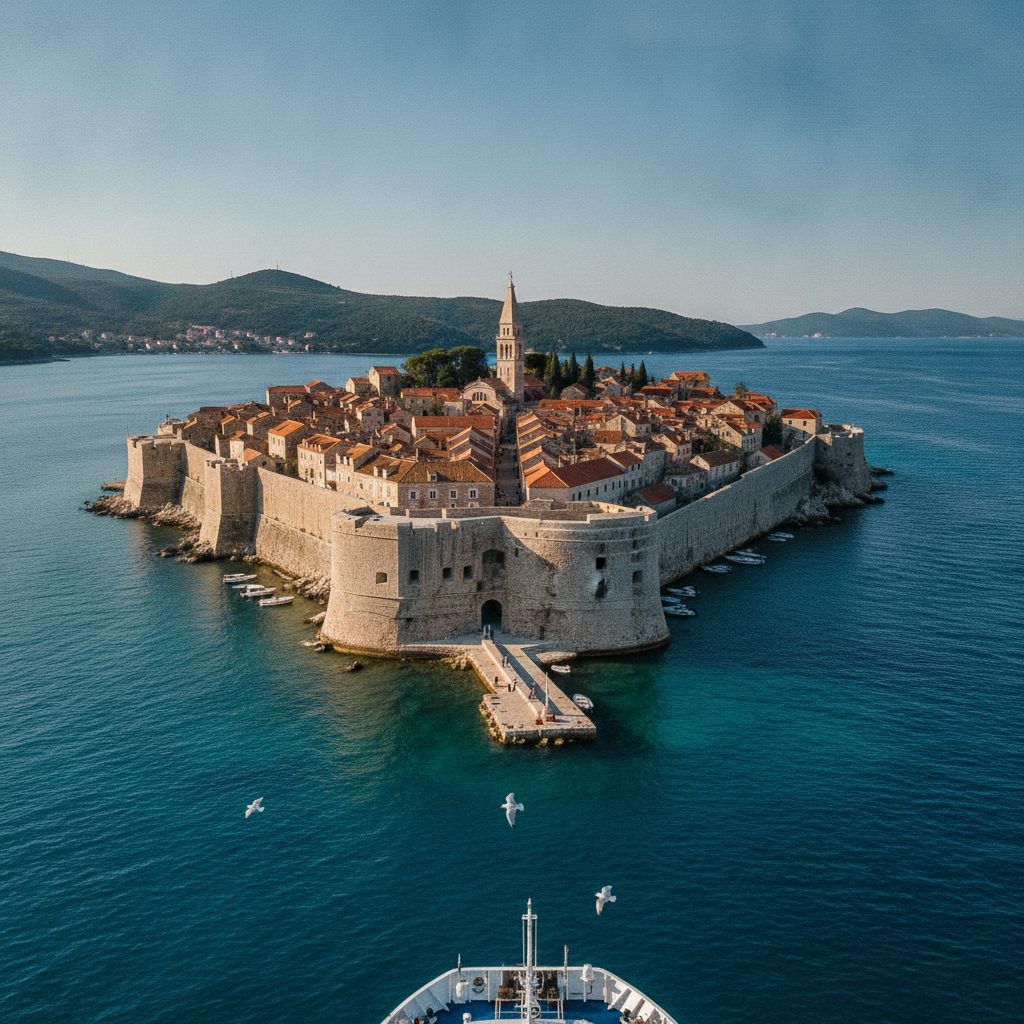
Korcula Old Town (the medieval walled town on the peninsula at the northeast end of the island, the UNESCO-aspirant heritage site with the herringbone street plan designed by medieval urban planners to deflect the bora wind — the main street running the full length of the peninsula with side streets angled at 45 degrees to both deflect wind and prevent overcrowding at intersections, the architectural solution unique in the Adriatic) is the best-preserved medieval walled town in Dalmatia after Dubrovnik. The Land Gate (the 14th-century entrance gate to the Old Town, the triumphal arch built to celebrate Korcula's resistance to the Ottoman attack of 1571, the same year as the Battle of Lepanto, the carved coat-of-arms of the Ragusan Republic above the arch) and the Cathedral of St Mark (the Gothic-Renaissance cathedral, begun 1301, the canopied ciborium above the main altar by Bonino da Milano 1412, the chapel of St Roch with the Tintoretto altarpiece) are the Old Town's defining monuments.
- 2
Marco Polo House — the Contested Birthplace
The Marco Polo House (the medieval tower house in the centre of the Korcula Old Town at Depolo ulica 1, the claimed birthplace of Marco Polo — the Venetian merchant-explorer who described his travels to China in Il Milione (1300), the most widely read geographical text of the medieval period, the birthplace claimed by both Venice and Korcula, with the Croatian claim based on the Polo family's documented Dalmatian origin and a 1954 Italian study identifying the family as originally from the Dalmatian town of Curzola — the Italian name for Korcula — €3 adults, daily 9am-7pm May-September) offers a multimedia presentation of Marco Polo's life and the debated claim. The rooftop terrace (the view over the Old Town rooftops from the top of the medieval tower, the best interior elevated position in the Old Town) is the specific reason to enter regardless of the birthplace question.
- 3
Plavac Mali — the Korcula Red Wine Tradition
Plavac Mali (the dominant red grape variety of the Dalmatian islands, a natural crossing of Dobricic and Tribidrag — the same Tribidrag that arrived in California as Zinfandel and in southern Italy as Primitivo, making Plavac Mali a sibling variety to both Zinfandel and Primitivo rather than a direct ancestor, the correction made by UC Davis DNA analysis in 2001) is produced across Korcula's hillside vineyards but the most celebrated Korcula expression comes from the Cara district (the concentrated slope above the island's south coast, the maximum sun exposure and the thin red soil over limestone producing the densest, most tannic Plavac Mali in the Dalmatian islands). The Zlatan Otok winery (Sveta Nedjelja village, Hvar, the largest premium Dalmatian wine producer, also producing wines from Korcula grapes), and the Tomic winery (Jelsa, Hvar) and the Grk white wine of Lumbarda (the ancient Greek white variety grown only in the sandy soil of Lumbarda on Korcula's east end, the only sandy soil in the rocky Dalmatian island chain, the wine produced in tiny quantities, €15-25/bottle at the Bire winery in Lumbarda) complete the island wine picture.
- 4
Moresca — the Sword Dance of Korcula
The Moresca (the traditional sword dance of Korcula, a narrative performance depicting the battle between the Black King and the White King for the hand of the Princess Bula, the dance performed by two troupes of 12 dancers each, the sword choreography developing from stylized sword-striking sequences to a full theatrical battle, the dance lasting 40 minutes with live brass band accompaniment) is performed every Thursday evening at 9pm in the Korcula Old Town square in July-August (€10 tickets, available at the Korcula Tourist Board office on the waterfront, the performance commencing rain-or-shine). The Moresca's origin (the Moorish dance tradition imported to the Adriatic in the 16th century, the name deriving from Moro — Moor — the Black King representing the Moorish tradition, the dance found in similar forms throughout the Mediterranean from Malta to Spain) is documented in the Korcula Municipal Museum (the Bishop's Treasury in the Cathedral, €3, the oldest version of the Moresca script dated 1570).
- 5
Korcula Food — the Black Risotto and Prstaci Shellfish
The Korcula food tradition (the island cuisine drawing from the Adriatic fish, the island garden vegetables, and the lamb grazed on the island's aromatic macchia) centres on: the crni rizot (black risotto, the Adriatic squid risotto coloured black with cephalopod ink, the risotto made with the small squid or cuttlefish caught fresh in the Korcula channel, the dish available at every island restaurant for €12-18), the prstaci (the date mussels, Lithophaga lithophaga, the long dark shellfish that bore into the limestone rock of the Adriatic, the most prized and most ecologically controversial shellfish of the Dalmatian coast — protected by EU law since 2009 but still sold illegally in local restaurants at €30-50 per portion, the visitor advised not to order them), and the lamb prsutt (the dry-cured lamb ham from the island sheep grazed on the rosemary and sage of the Korcula macchia, available from the island's butcher shops at €8-12/100g). The Konoba Mate (Cara village, Korcula, the restaurant in the wine-producing village in the island's interior, the lamb under a peka and the prstaci the signature dishes, +385 20 731 309, reservation essential) is the island's most celebrated konoba.
- 6
Blato and Vela Luka — the Working Island Towns
Blato (the largest town on Korcula island and the municipal capital, population 3,500, in the flat fertile basin in the island's centre, the town with no tourist infrastructure and the most intact Dalmatian island town life of any settlement in the archipelago — the evening korzo walk on the Aleja ulica, the local men playing petanque in the shade of the plane trees, the Wednesday market with the island's vegetable producers selling their produce directly from the ground) and Vela Luka (the town at the western end of the island, the second-largest settlement, the site of the Vela Spila cave — the oldest Neolithic archaeological site in Dalmatia, 20,000 years of continuous human habitation documented by the Vela Luka Cultural Centre, free access to the cave exterior, €5 for the guided interior tour) are the correct destinations for visitors wanting authentic Dalmatian island town life rather than the tourist services of the Old Town.
Walk this route with audio
Stories play automatically as you reach each stop — no tapping needed.
More in dubrovnik
Elafiti Islands Day Trip — Lopud, Sipan & the Best Beach Near Dubrovnik
Dubrovnik Old Town — the Medieval City Walls, the Stradun & the Pearl of the Adriatic
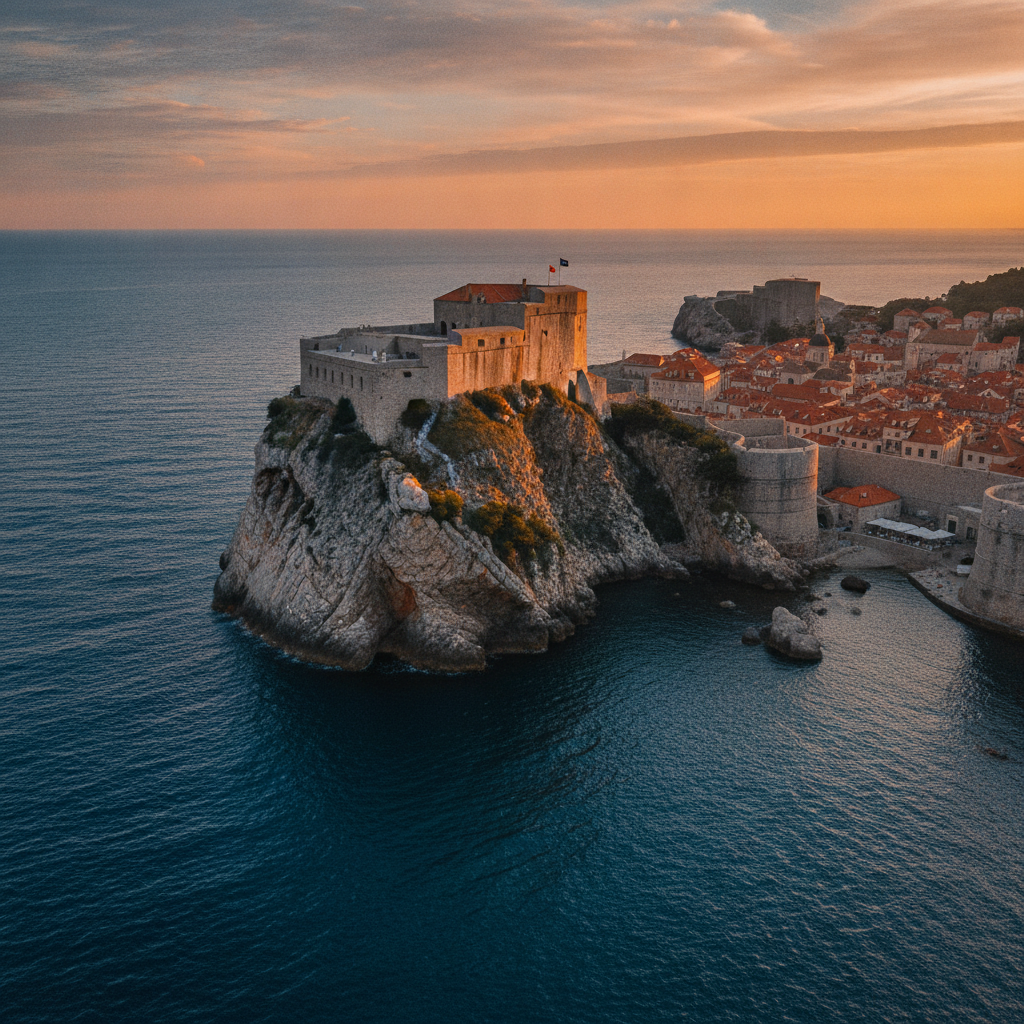
Game of Thrones in Dubrovnik — King's Landing Filming Locations
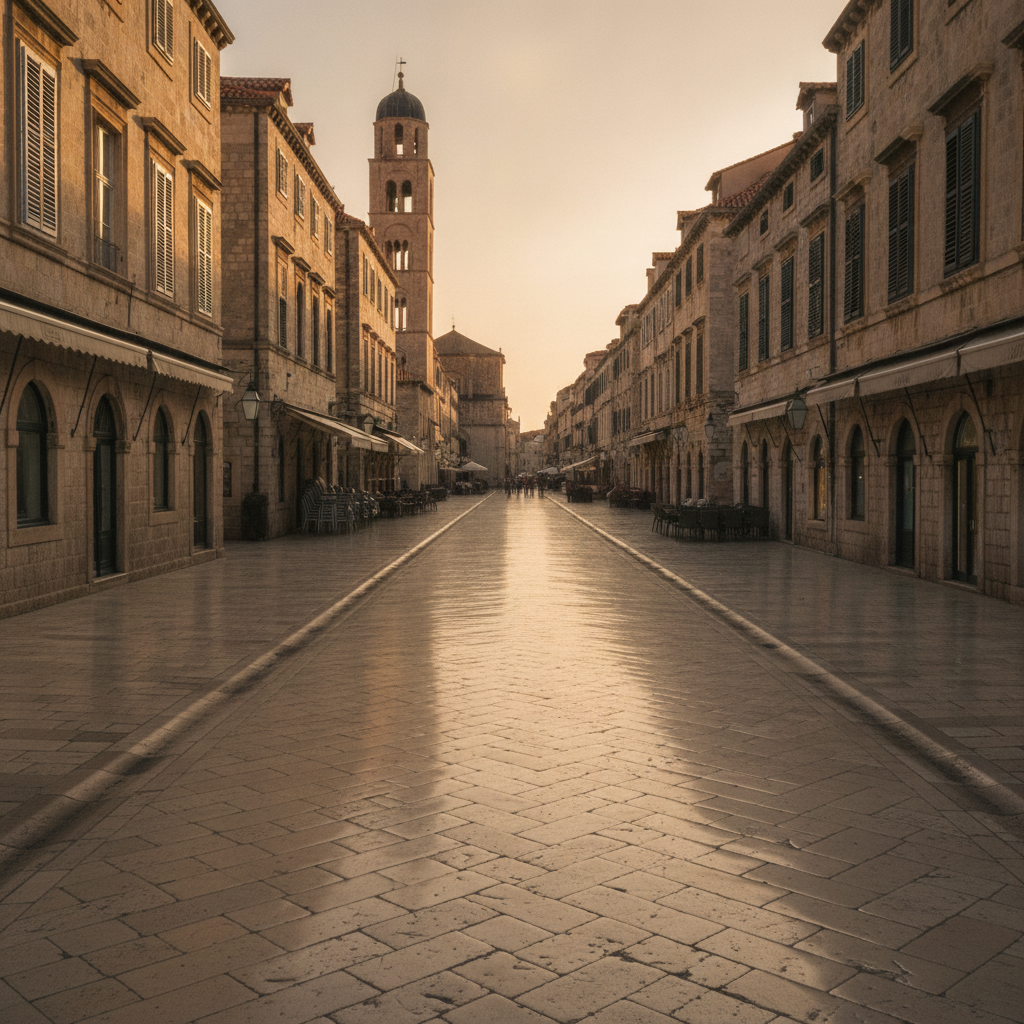
Dubrovnik Practical Guide — Crowds, Seasons, the Dubrovnik Pass & Local Food