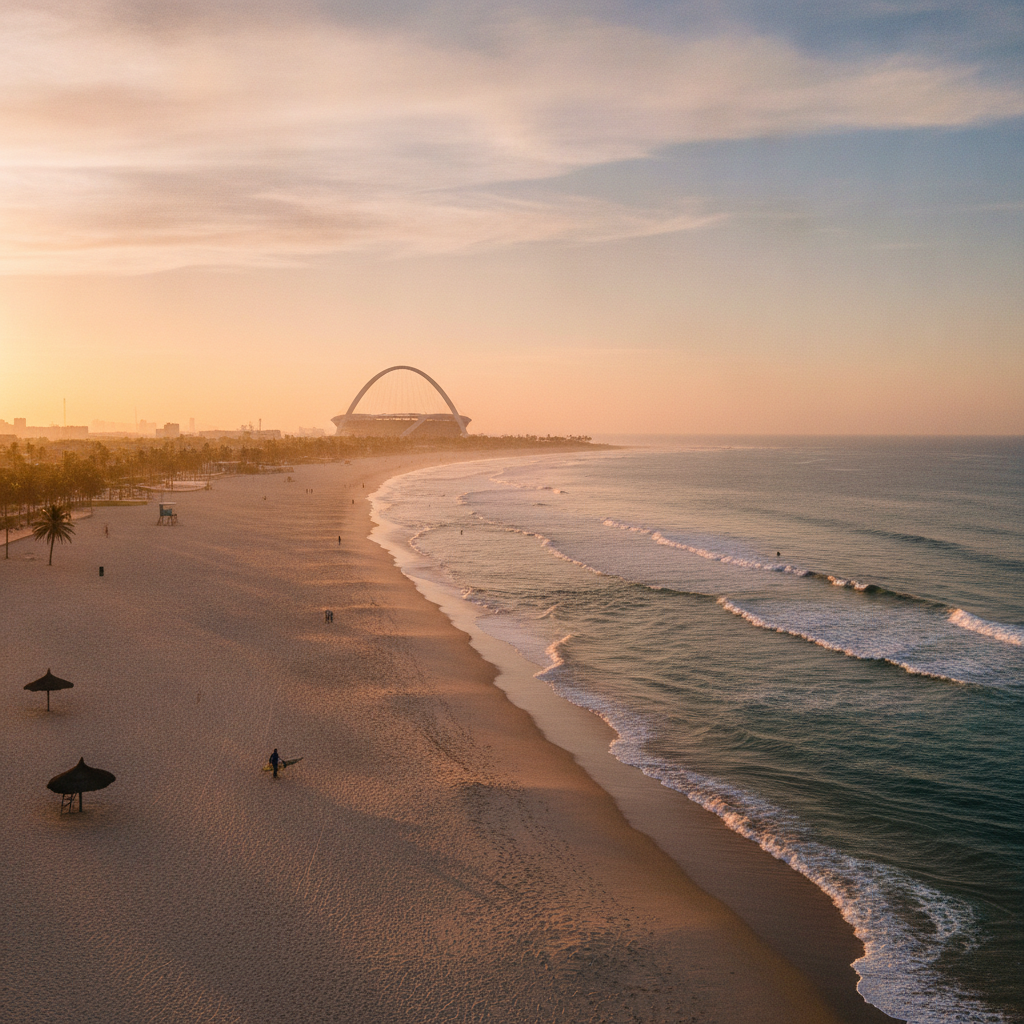
Durban: Drakensberg, Valley of a Thousand Hills, Sugar Cane History, Moses Mabhida Stadium, and Gqom Music
Durban region: the Drakensberg Royal Natal day trip, the Valley of a Thousand Hills, the colonial sugar cane industry and the creation of the Durban Indian community, Moses Mabhida Stadium and the 2010 FIFA World Cup, the BAT Centre arts scene, and gqom music from Durban townships.
- 1
The uKhahlamba-Drakensberg from Durban - The Royal Natal and Giant Castle
The uKhahlamba-Drakensberg Park (UNESCO World Heritage Site): the full Drakensberg experience accessible from Durban (approximately 3-4 hours by road to the Royal Natal National Park). The Amphitheatre: the 5-km-wide basalt cliff face above the Tugela Falls (the second-highest waterfall in the world at approximately 948 meters total drop). The Drakensberg is the highest mountain range in South Africa (Thabana Ntlenyana at 3,482 meters). Giants Castle: the central Drakensberg massif (approximately 3.5 hours from Durban) with the most accessible San rock art sites: the Main Caves shelter contains approximately 500 individual San paintings, the largest accessible rock art site in the Drakensberg. The Champagne Valley (the central Drakensberg resort area) is the primary holiday accommodation base.
- 2
Valley of a Thousand Hills - The Comrades Marathon Country
The Valley of a Thousand Hills (approximately 45 km west of Durban): the most dramatically beautiful landscape within easy reach of the city, a series of deeply incised valleys through which the Umgeni River flows toward the Indian Ocean. The PheZulu Safari Park in the Valley of a Thousand Hills: the Zulu cultural village and the craft market. The Comrades Marathon: the most famous ultramarathon in the world (approximately 89 km between Pietermaritzburg and Durban: alternating between the up run and down run each year). The Comrades Marathon (first run 1921) draws approximately 25,000 runners annually and is the primary global ultramarathon event. The Valley of a Thousand Hills Road is one of the most scenic drives accessible as a day trip from Durban.
- 3
The Natal Sugar Fields - The History That Created the Durban Indian Community
The sugar cane industry of KwaZulu-Natal: the British colonial administration began bringing indentured Indian laborers to the Natal Colony in 1860 to work the sugar plantations after Zulu people refused to work as agricultural laborers for the colonial settlers. The indentured labor system was a post-slavery labor system: Indian workers signed 5-year contracts and were transported to Natal, receiving minimal wages and tied to the land. The last Indian indentured workers arrived in 1911 (the Indian government suspended the indenture system after sustained campaigning by Gandhi and the Indian community). After the indenture period, many workers remained in Natal and established the Indian community that now constitutes approximately 25% of Durban population. Today the KwaZulu-Natal midlands and the coastal areas north and south of Durban remain the primary sugar-producing region of South Africa.
- 4
The Moses Mabhida Stadium and the 2010 FIFA World Cup Heritage
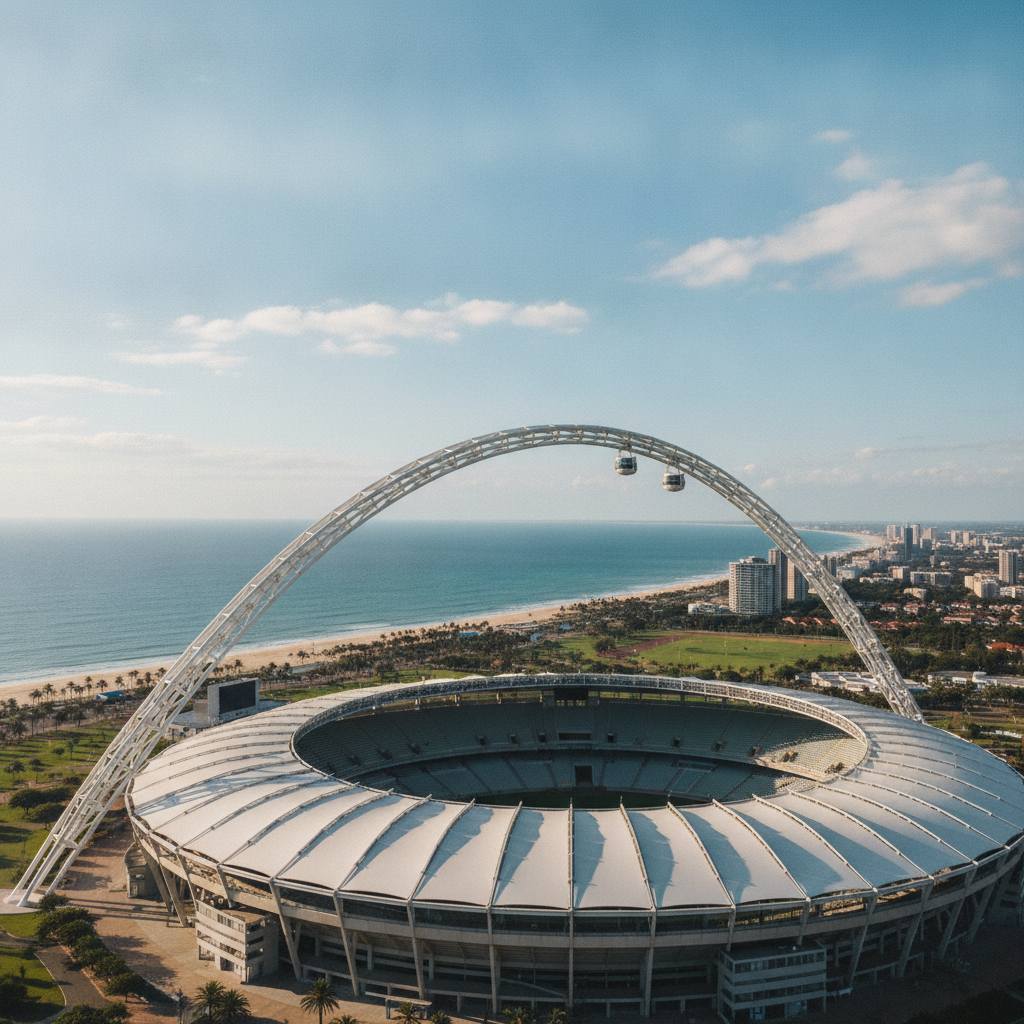
The Moses Mabhida Stadium (completed 2010 for the FIFA World Cup): the primary sporting stadium of Durban, designed by the German architectural firm gmp Architekten and named for Moses Mabhida, the general secretary of the South African Communist Party. The stadium is most distinctive for the arch spanning the roof (the GreatArc: a 350-meter-long steel arch bisecting the stadium roof). The SkyCar (a cable car that ascends the GreatArc to a viewing platform 106 meters above the playing field): the most dramatic urban viewpoint in Durban. The stadium (capacity approximately 56,000) hosted 6 matches in the 2010 FIFA World Cup including three quarterfinals. The nearby People Park, the cycling and running track, and the Durban beachfront infrastructure were developed in preparation for the World Cup.
- 5
The Durban Arts and Cultural Scene - African Art and the Local Music
The Durban Art Gallery (the oldest art gallery in Africa still in its original building, founded 1892): the collection includes significant South African art including works by Gerard Sekoto and the post-apartheid South African art movement. The BAT Centre (Bartel Arts Trust Centre, on the Victoria Embankment at the Durban harbour): the primary independent arts center in Durban, with a performance venue, gallery, and studios. The local Durban music scene: gqom (pronounced g-kome): the electronic music genre that emerged from the Durban township club scene approximately 2012-2014. Gqom (Zulu for drum or hit): the most internationally distributed Durban music genre, characterized by a dark, minimal sound with heavy sub-bass and tribal percussion patterns. Durban gqom artists (Babes Wodumo, DJ Lag, Distruction Boyz) achieved international attention, with gqom becoming a significant global club music genre by 2017-2020.
- 6
Durban Six Routes Legacy - KwaZulu-Natal Complete Reference
Durban six-route complete reference. Route 1: Durban port and Indian heritage, Victoria Street Market, Golden Mile beachfront, uShaka Marine World, Gandhi and satyagraha, iSimangaliso UNESCO wetland park, Zulu culture and Isandlwana, Bunny Chow practical. Route 2 (this route): Drakensberg from Durban (Royal Natal, Giants Castle rock art), Valley of a Thousand Hills, the sugar cane history that created the Indian community, Moses Mabhida Stadium and the 2010 World Cup, Durban arts (BAT Centre, Durban Art Gallery), gqom music. Remaining routes needed: Route 3 (Pietermaritzburg, Midlands Meander, Battlefields of Isandlwana and Rorkes Drift), Route 4 (Indian food deep dive, Durban nightlife, Wilson Wharf, Warwick Triangle), Route 5 (Drakensberg rock art history, Zulu history in depth, the KZN Sharks Board), Route 6 (final complete Durban and KwaZulu-Natal travel reference). KwaZulu-Natal province summary: 11.7 million people, the most linguistically homogeneous South African province (approximately 85% Zulu speakers), subtropical climate, the most biologically diverse coastline in South Africa.
Walk this route with audio
Stories play automatically as you reach each stop — no tapping needed.
More in durban
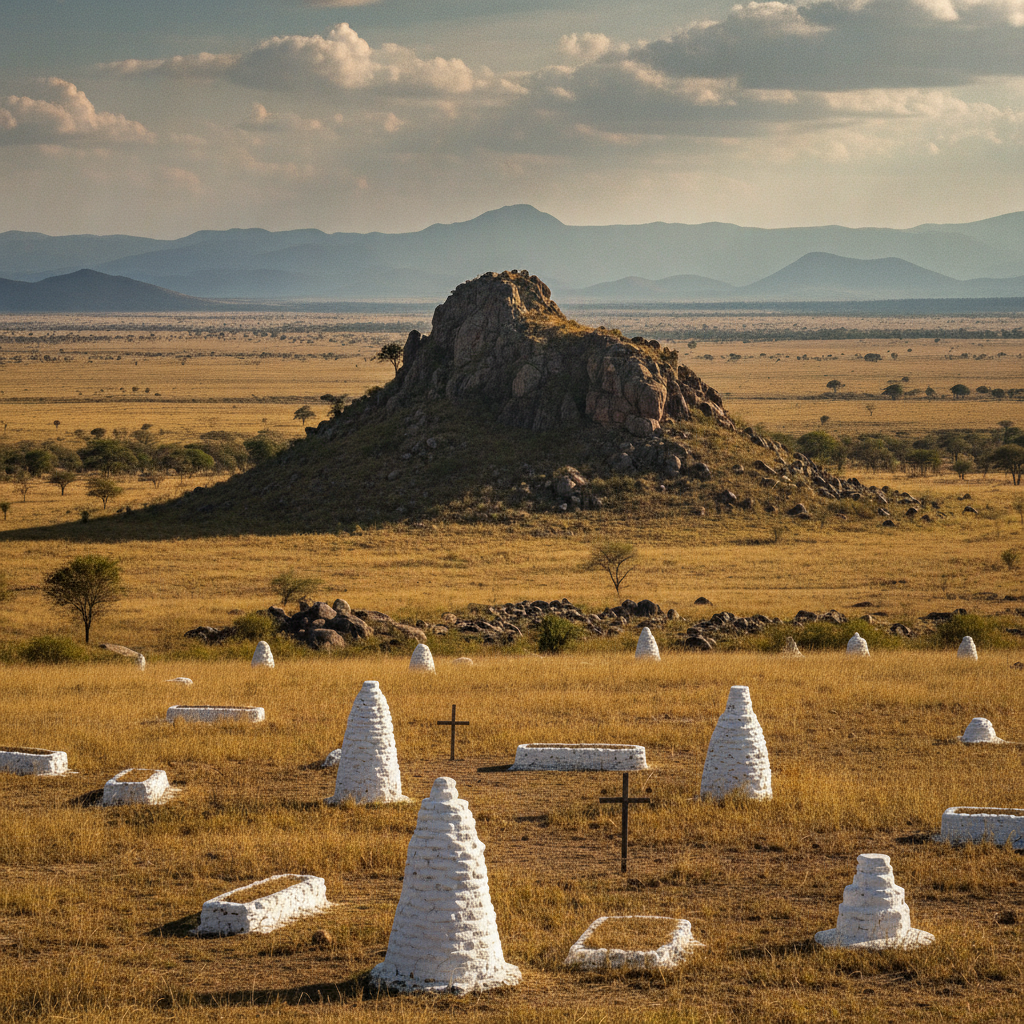
Durban History: Pietermaritzburg, the Anglo-Zulu War Battlefields, Midlands Meander, and the Sardine Run
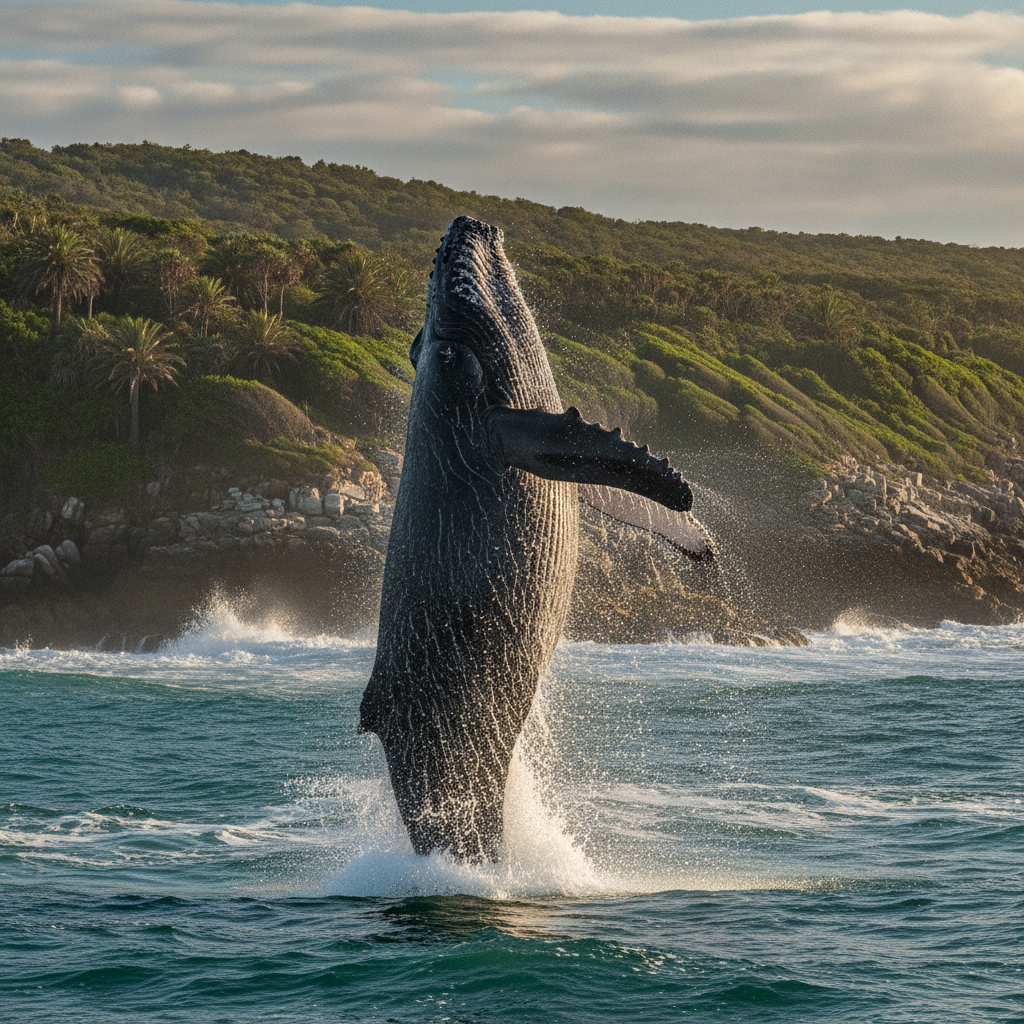
Durban Final Legacy: Wild Coast, Whale Watching, Durban vs Cape Town, the Berea, and the Complete KwaZulu-Natal Reference
Durban Food and Nightlife: Bunny Chow, Victoria Street Market, Umhlanga, Wilson Wharf, and the Gqom Club Scene
Durban Heritage: San Rock Art, the Zulu Kingdom, isiZulu Culture, Hluhluwe-iMfolozi White Rhino Conservation, and KZN Midlands