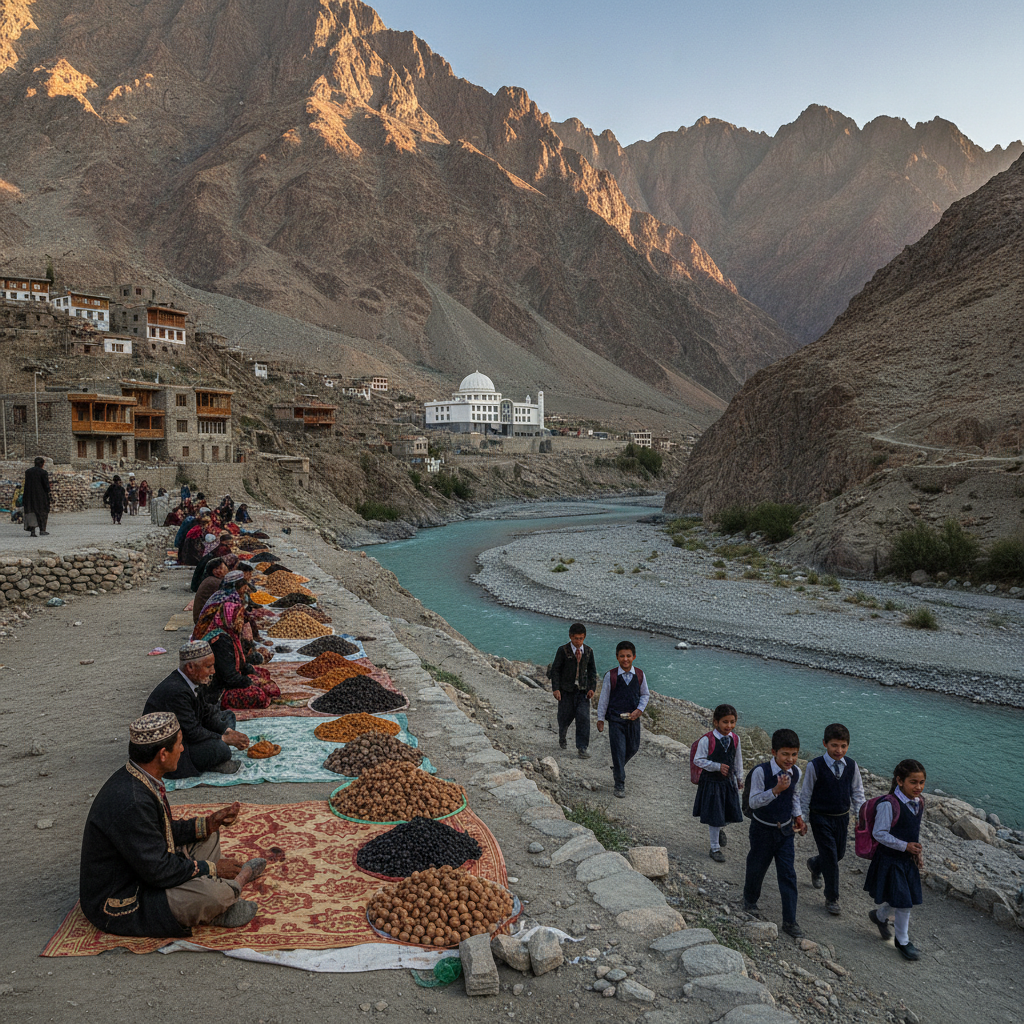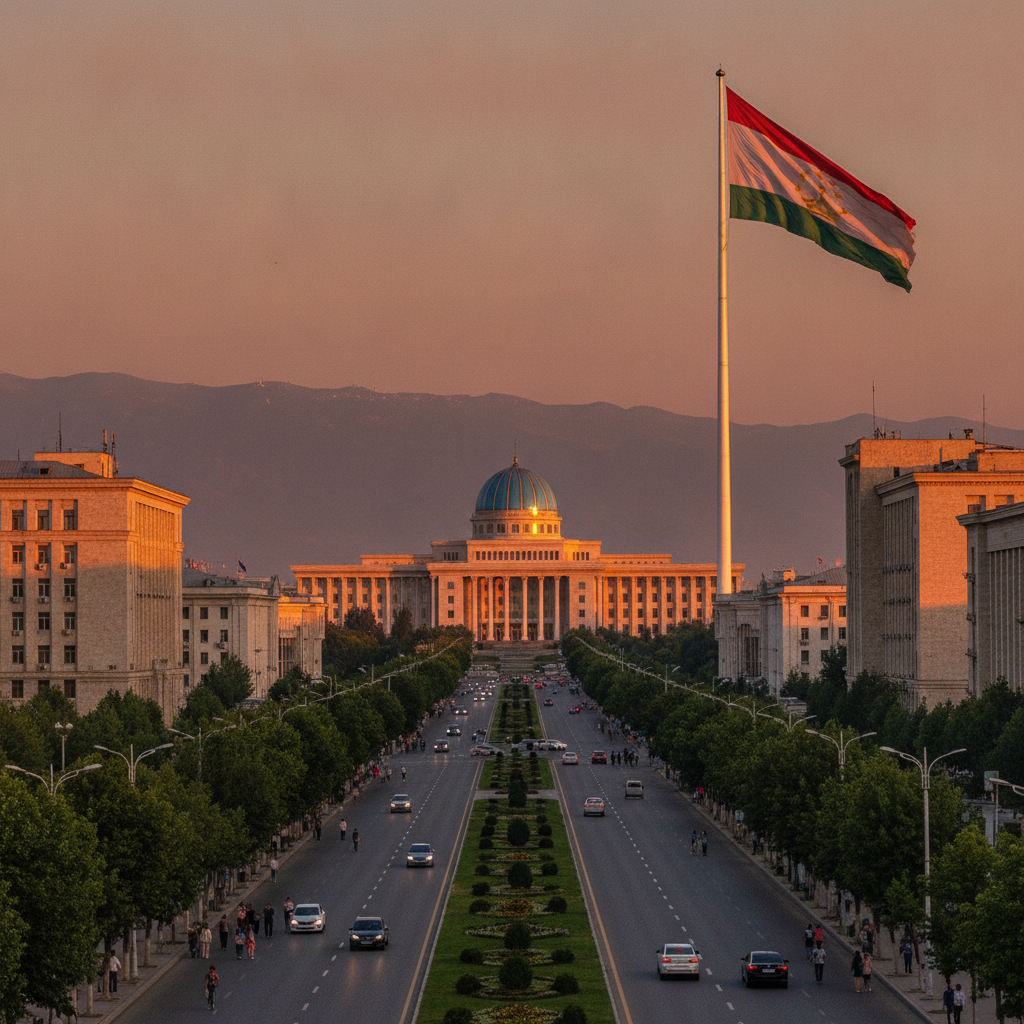
The Dushanbe 165m Flagpole Briefly World's Tallest in 2011, Rudaki the 9th-Century Father of Persian Poetry & the Nurek Dam World's Tallest from 1972 to 2018
Rudaki Avenue's 165m flagpole (briefly the world's tallest in 2011 before Jeddah's 171m flagpole); Abu Abdollah Rudaki (858–941 CE) founding New Persian literature as court poet in Bukhara; Tajik as the only Persian-speaking nation in Central Asia surrounded by Turkic-speaking neighbors; the Pamir Highway M41 crossing the Ak-Baital Pass at 4,655m (highest paved road in the former Soviet Union); the Nurek Dam (300m) as the world's tallest dam from 1972 to 2018; and the Sogdian Penjikent frescoes (5th–8th century) as the primary surviving pre-Islamic Central Asian paintings.
- 1
Rudaki Avenue – The Spine of Dushanbe
The Rudaki Avenue heritage (the primary boulevard of Dushanbe — the central axis of the Tajik capital): the avenue guide. The avenue (Rudaki Avenue (Хиёбони Рӯдакӣ) — named for the 9th-century Persian poet Abu Abdollah Rudaki (the Father of Persian Poetry) — the primary north-south boulevard of Dushanbe, 6.2 km long from the Kokhi Millat (Palace of Nations) in the south to the Botanical Gardens in the north: the Kokhi Millat (the Palace of Nations (Кохи Миллат) — the official residence and office of President Emomali Rahmon: the building (the Palace of Nations is a large neoclassical palace with a blue-tiled dome and a grand columned facade — it was completed in 1999 and expanded in 2010: the building sits at the southern terminus of Rudaki Avenue with the Flagpole (the Dushanbe National Flagpole — the third-tallest flagpole in the world at 165m — completed 2011 — the flagpole was briefly the tallest in the world before surpassing by the Jeddah flagpole (171m) in 2014: the Rudaki Park (the central park on Rudaki Avenue — the primary public green space of Dushanbe — the park contains the statue of Abu Abdollah Rudaki (the seated bronze statue of the poet by the sculptor Jahongir Sulaimoni): the National Library (the Tajik National Library (Китобхонаи Миллии Тоҷикистон) on Rudaki Avenue — the largest library in Central Asia by collection size: the building (the new National Library building (completed 2012) is a distinctive dome structure housing 6 million volumes).
- 2
Persian Identity – Tajiks in the Turkic Sea
The Tajik Persian identity heritage (the extraordinary cultural position of the Tajik people — the only Persian-speaking nation in Central Asia, surrounded on all sides by Turkic-speaking peoples): the identity heritage guide. The Tajik identity (the Tajiks (Тоҷикон) are the primary Iranian-speaking people of Central Asia — the speakers of Tajik (Тоҷикӣ) — a variety of Persian (Farsi/Dari) written in the Cyrillic script (since 1940): the language (Tajik is the official language of Tajikistan and is mutually intelligible with Iranian Persian (Farsi) and Afghan Dari at approximately 90%+ — the three varieties are considered dialects of the same language by most linguists: the primary difference between Tajik and Iranian Persian is the vocabulary — Tajik contains a high proportion of Turkic (Uzbek) loanwords from centuries of coexistence: the Cyrillic script (the Soviet authorities replaced the Tajik Arabic script (1929) with Latin (1929–1940) and then with Cyrillic (1940) — the Cyrillic Tajik alphabet has 35 letters: unlike Uzbekistan and Turkmenistan which readopted Latin script, Tajikistan retains Cyrillic for official purposes although Arabic script has been reintroduced for cultural and religious uses since independence): the historical context (the Tajiks are the direct descendants of the Sogdians — the Iranian-speaking merchant people of the Zerafshan and Amu Darya river valleys who dominated Silk Road commerce from the 3rd century BCE to the 8th century CE: Samarkand and Bukhara (now in Uzbekistan) were the primary centers of Sogdian-Tajik civilization — the Uzbek-Tajik cultural rivalry over these cities is one of the primary tensions in post-Soviet Central Asia).
- 3
The Pamir Highway – Roof of the World Access
The Pamir Highway heritage (the M41 highway from Dushanbe to the Kyrgyz border — the most dramatic mountain road in the former Soviet Union and one of the most spectacular road journeys in the world): the Pamir Highway guide. The road (the Pamir Highway (М41) runs 1,200 km from Dushanbe through the Pamir mountains to Osh (Kyrgyzstan) — the road crosses the world's second-highest inhabited plateau (the Pamir Plateau — average altitude 3,500–4,500m) and passes through the Wakhan Corridor (the narrow strip of Afghan territory that extends east to the Chinese border): the construction (the Pamir Highway was built by Soviet military engineers between 1931 and 1940 as a strategic military road connecting the Tajik SSR with the Chinese and Afghan borders: the highest point (the Ak-Baital Pass (Ак-Байтал — White Stallion) at 4,655m — the highest point of the Pamir Highway and the highest paved road in the former Soviet Union): the GBAO (the Gorno-Badakhshan Autonomous Oblast (GBAO) — the Pamiri-speaking autonomous region of eastern Tajikistan covering 45% of the country's area but containing only 3% of the population: GBAO requires a special permit (the GBAO permit) for foreign visitors in addition to the standard Tajik visa: the Wakhan Corridor (the Afghan Wakhan Corridor — the narrow strip of Afghan territory (15–65 km wide, 350 km long) separating Tajikistan from Pakistan — the corridor was created by the British and Russian Empires in 1895 to prevent Russian expansion reaching the British-controlled Indian subcontinent).
- 4
Dushanbe's Rudaki Museum & Tajik Culture
The Tajik cultural heritage museums (the primary museums and cultural institutions of Dushanbe — the repositories of Tajik civilization from the Sogdian period through the present): the cultural heritage guide. The National Museum (the National Museum of Tajikistan (Осорхонаи Миллии Тоҷикистон) on Dushanbe's main avenue — the primary repository of Tajik historical artifacts: the museum (the current National Museum building (completed 2013) replaced the Soviet-era museum in a modern building adjacent to the Palace of Nations: the primary collections: the Sogdian collection (wall paintings, silver coins, and pottery from the Sogdian settlements of the Zerafshan Valley — the Penjikent frescoes (5th–8th century CE) copied in the museum collection are the primary surviving examples of pre-Islamic Central Asian painting); the Bactrian gold (the collection of Kushan-era (1st–4th century CE) gold jewelry and figurines from the Tajikistan excavations); the Islamic manuscripts (the collection of Arabic and Persian manuscripts from the Tajik Islamic library tradition): the Rudaki Museum (the Rudaki Museum (Осорхонаи Рӯдакӣ) — the museum dedicated to the 9th-century poet Abu Abdollah Rudaki — the Father of Persian Poetry: Rudaki (858–941 CE) was the court poet of the Samanid dynasty in Bukhara and the primary founder of the New Persian literary tradition (the literary Persian that replaced Pahlavi as the standard literary language of Iran and Central Asia): the Behzod Museum (the Kamolliddin Behzod Fine Arts Museum — the primary fine arts museum of Dushanbe containing Soviet-era Tajik painting).
- 5
Hissar Fortress & Dushanbe Day Trips
The Hissar Fortress heritage (the primary historical monument accessible from Dushanbe — the ruins of the Hissar Khanate fortifications 30 km west of the capital): the day trip guide. The Hissar Fortress (the Hissar Fortress (Қалъаи Ҳисор) 30 km west of Dushanbe on the road to Samarkand: the fortress (the current ruins date to the 18th-century Hissar Khanate — the fortress was the administrative center of the Bukharan Emirate's western districts until the Russian conquest (1920): the remains include the main gate (the double-arch muqarnas-decorated gateway — the most complete surviving element of the fortress), the citadel mound (a 70m earthen mound of compressed rubble — the remains of the original medieval fortress that occupied the site since at least the 7th century BCE), and two ruined 16th-century medressas (the Kuhna Madressa and the Nau Madressa): the Varzob Canyon (the Varzob Canyon (Дарёи Варзоб) — the gorge of the Varzob River 15–40 km north of Dushanbe: the canyon is the primary summer recreation area for Dushanbe residents — the Varzob Gorge road follows the river through spectacular limestone and schist canyon walls rising 800m above the water: the canyon contains the Varzob Sanitarium district (the Soviet-era resort complex of health sanatoria built into the gorge slopes): the Nurek Lake (the Nurek Reservoir (Нурекрезервуар) — the 70 km reservoir created by the Nurek Dam (300m high — the tallest dam in the world from 1972 to 2018 when the Jinping-I Dam in China surpassed it): the reservoir is 75 km south of Dushanbe).
- 6
Dushanbe Practical Guide – Visa, Budget & Safety
The Dushanbe practical travel guide (the comprehensive logistics and planning information for independent travel to Dushanbe and Tajikistan): the practical guide. The visa (the e-Visa for Tajikistan (the evisa.tj system) allows citizens of most Western countries to obtain a Tajik visa online in 3–5 business days for USD 50: the alternative (the Tajikistan visa-on-arrival at Dushanbe Somoni International Airport for citizens of most EU countries, the USA, Canada, and Australia: the GBAO permit (the Gorno-Badakhshan Autonomous Oblast permit — a required additional permit for the Pamir Highway and eastern Tajikistan — the GBAO permit can be added to the e-Visa for an additional USD 20): the airport (the Dushanbe International Airport (DYU) — 4 km south of central Dushanbe: the taxi from the airport to the city center costs TJS 30–50 (USD 3–5) by negotiated rate: the currency (the Tajikistani Somoni (TJS) — the exchange rate approximately 1 USD = 10–11 TJS: USD cash is the most useful foreign currency in Tajikistan (especially for the Pamir Highway where card payment is unavailable): the accommodation (the budget accommodation in Dushanbe: the cheapest guesthouses in central Dushanbe charge USD 10–20 per night for a private room: the mid-range hotels charge USD 40–70 per night: the recommended area (the streets immediately west of Rudaki Avenue between Rudaki Park and the National Museum): the safety (Tajikistan is generally safe for foreign tourists in the major cities and on the Pamir Highway: the Afghan border regions (the Panj River border) should be avoided: the 2022 Ishkashim border incident (the July 2022 shooting incident at the Ishkashim border crossing resulted in several deaths and temporary closure of the border — the situation has since normalized).
Walk this route with audio
Stories play automatically as you reach each stop — no tapping needed.
More in Dushanbe
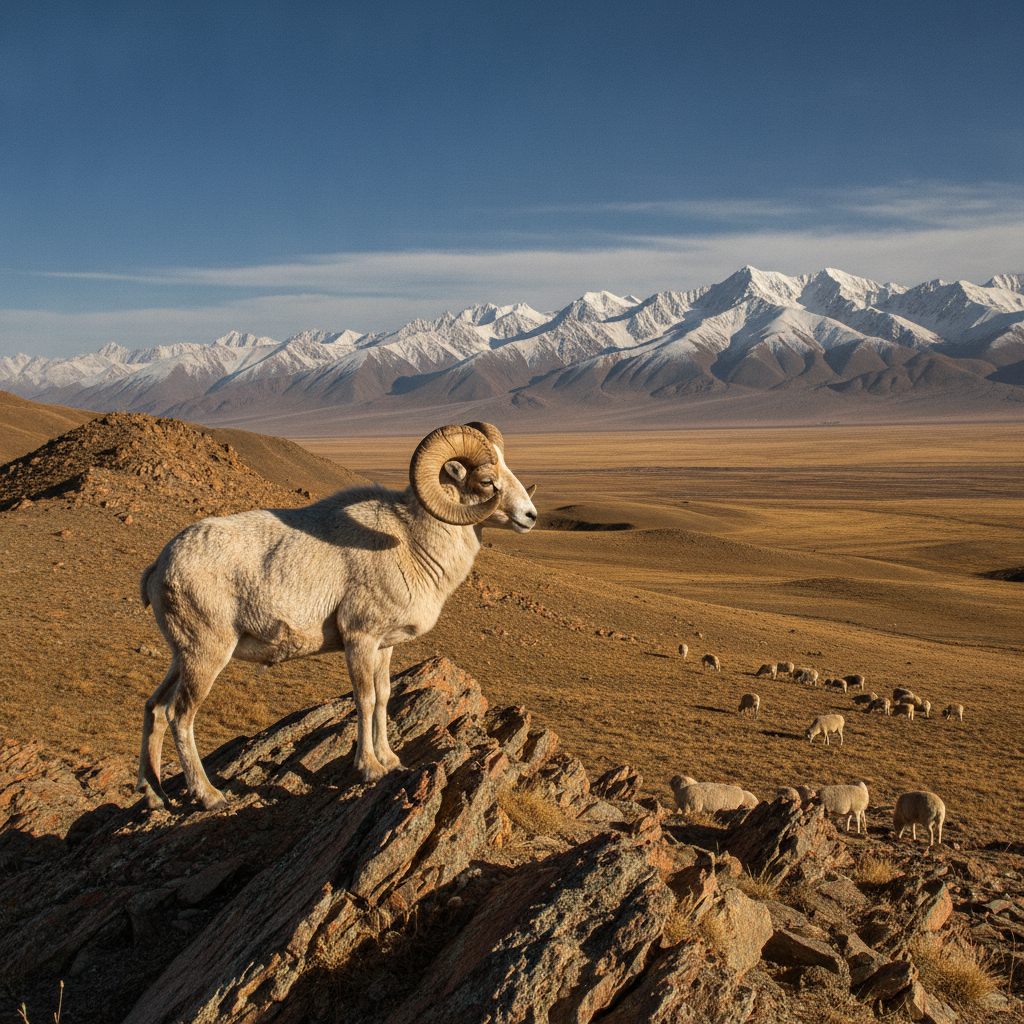
Ibn Sina's Germ Theory of Disease 1,000 Years Before Pasteur, Marco Polo Sheep Horns Reaching 190cm (the Largest of Any Sheep Species) & Tajik and Iranian Persian 90% Mutually Intelligible Despite Different Scripts
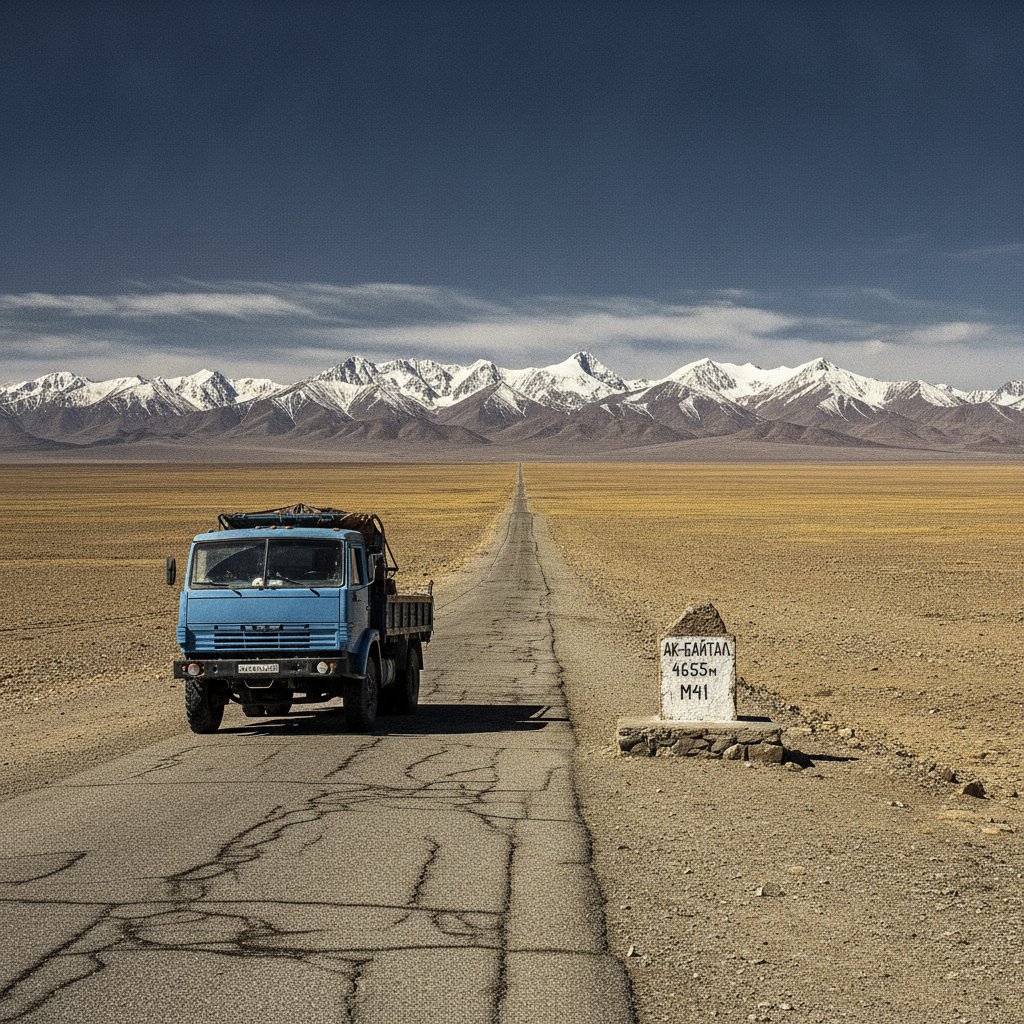
The Sogdian Penjikent Wall Paintings Showing Rustam Scenes 1,200 Years Before Ferdowsi's Shahnameh, Samanid Patronage Simultaneously Producing Rudaki and Ibn Sina & the Pamir Highway Ak-Baital Pass at 4,655m
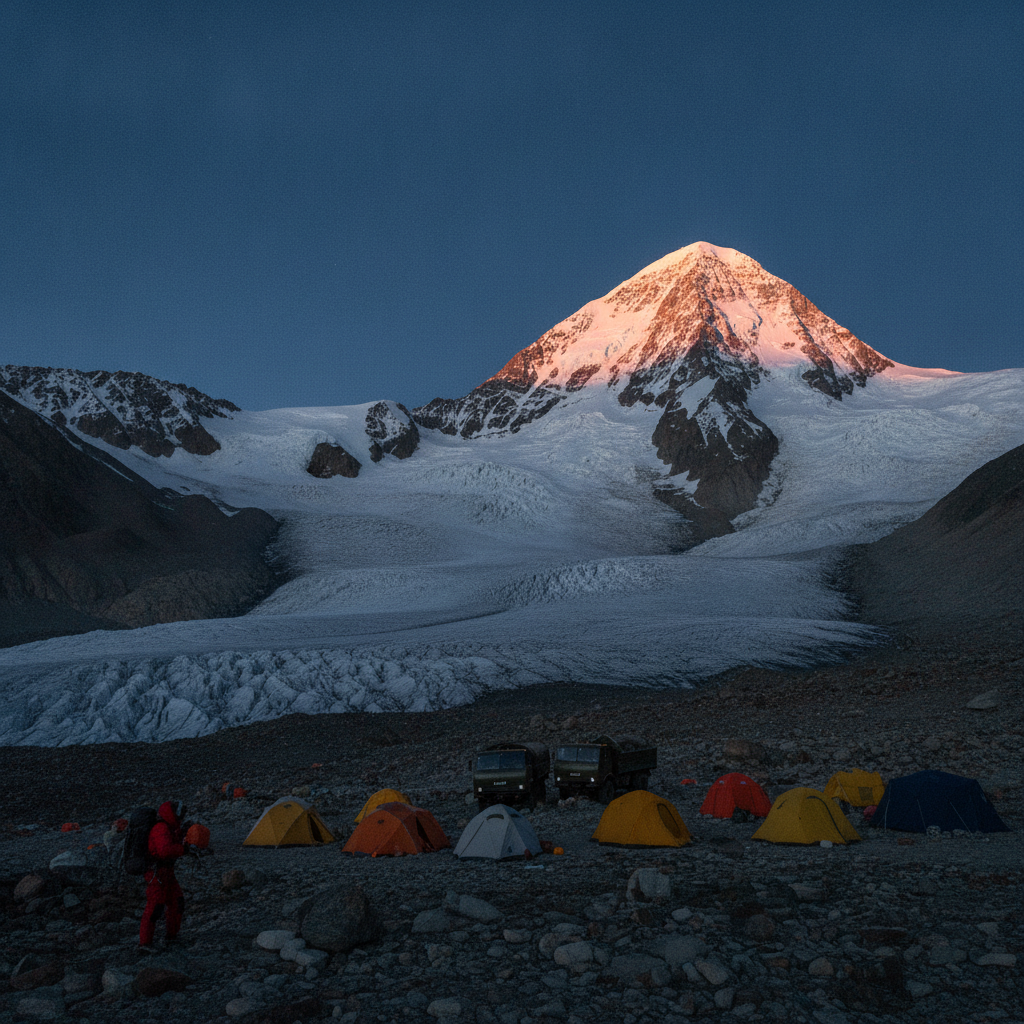
The Aral Sea Shrinking 88% (from 68,000 km² to 8,000 km²) Due to Amu Darya Diversion, Ismoil Somoni Peak the Highest Point in the Former Soviet Union at 7,495m & Tajikistan the Poorest Former Soviet Republic at USD 1,200 GDP Per Capita
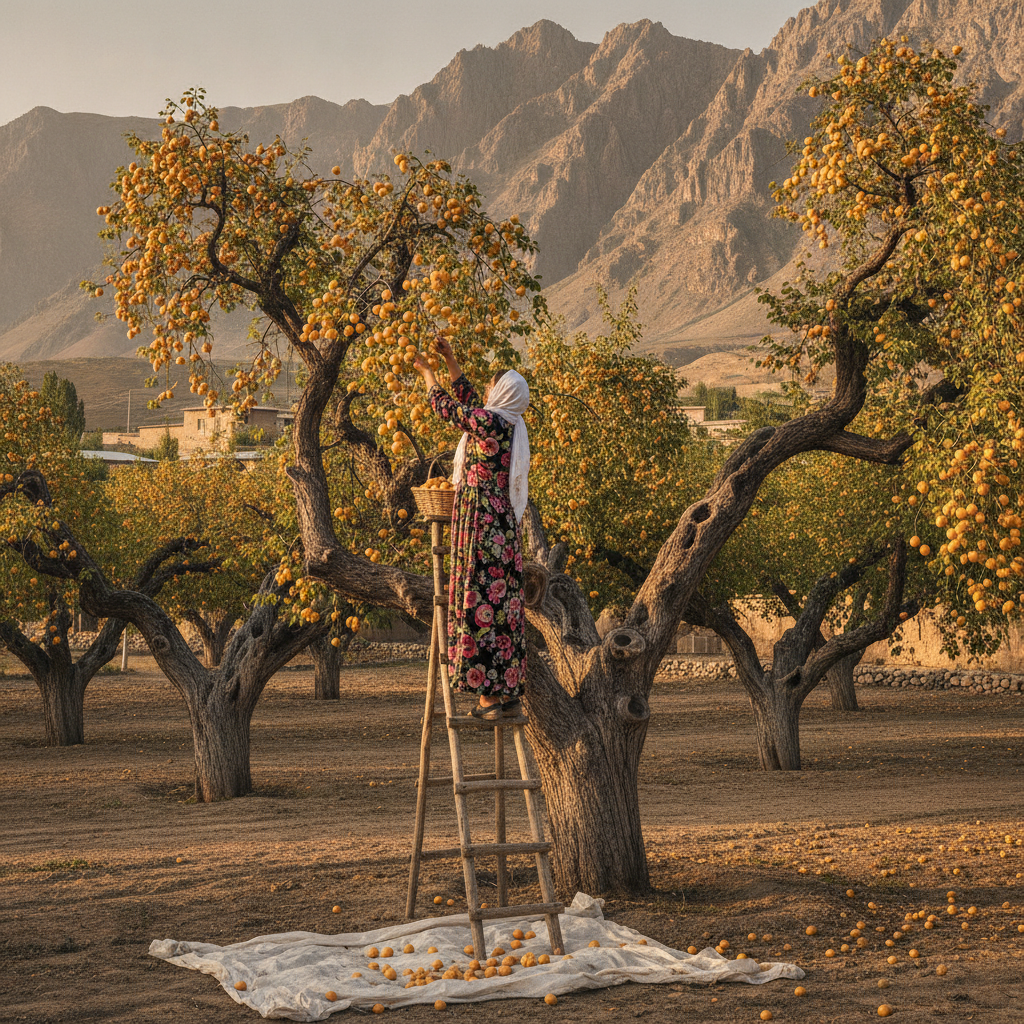
Ferdowsi's Shahnameh at 60,000 Couplets the Longest Single-Authored Epic in World Literature, Tajikistan's 150+ Apricot Varieties vs the 3-5 Commercial Varieties Globally & Penjikent Directly Route via Uzbekistan Requires a Transit Visa