Edinburgh Festival, Fringe & Hogmanay — The World's Greatest Arts Festival City
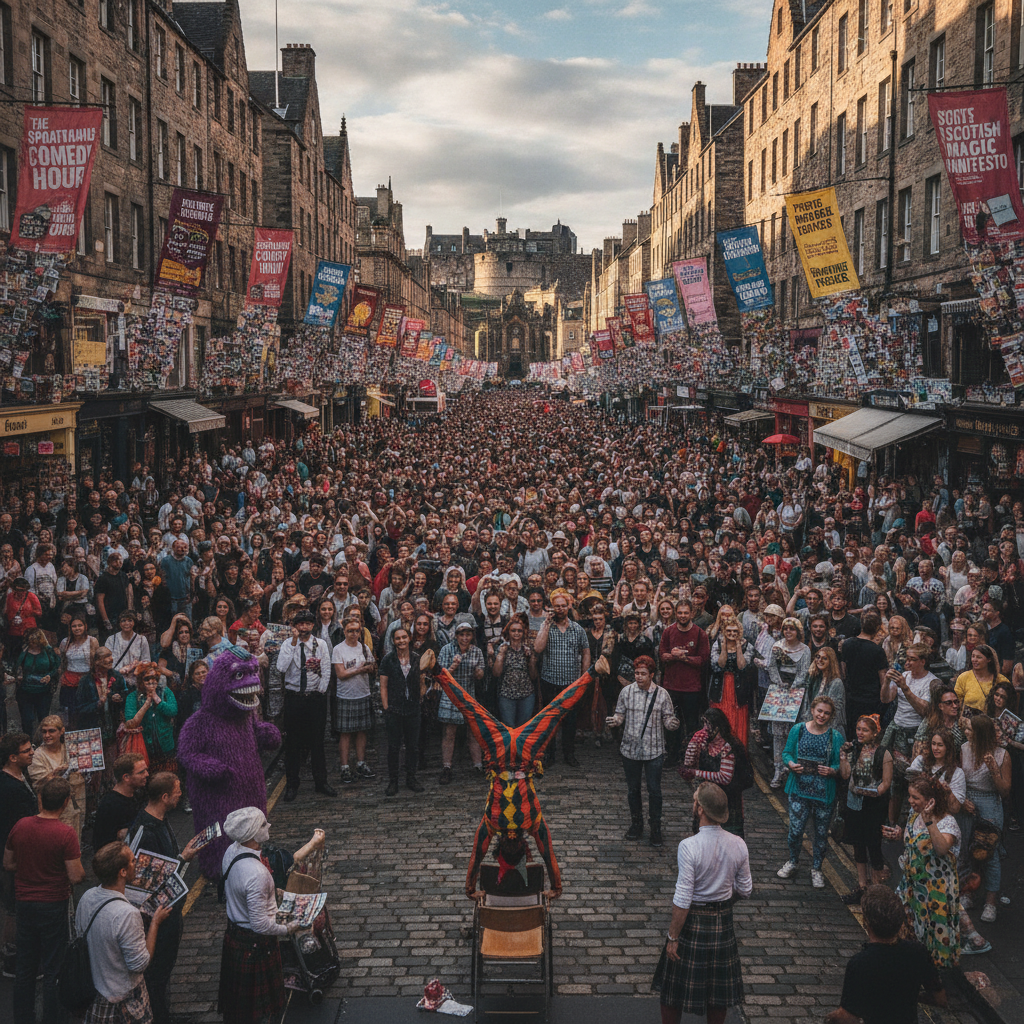
Edinburgh in August is the most creatively intense city on Earth: the Edinburgh International Festival (the curated programme of world-class classical music, opera, theatre, and dance, established 1947) and the Edinburgh Festival Fringe (the open-access arts festival that grew up alongside it from 1947, now the largest arts festival in the world by number of performances) transform the entire city into a performing arts venue for three weeks.
- 1
Edinburgh Festival Fringe — The World's Largest Arts Festival
Edinburgh Festival Fringe (the open-access arts festival held each August in Edinburgh, the largest arts festival in the world by number of performances): the 2023 Fringe comprised 3,553 shows in 323 venues over 25 days — the sheer scale (approximately 25,000 performances of comedy, theatre, dance, circus, cabaret, children's shows, musicals, and spoken word) makes the Fringe a unique event in global cultural history; the Fringe began in 1947 when eight uninvited companies turned up to perform alongside the inaugural Edinburgh International Festival, and has grown organically ever since (it has no programme committee and no selection process — any company can register to perform, which is why the Fringe is simultaneously the most democratic and the most unpredictable arts event in the world); the Fringe has launched the careers of virtually every major British comedian of the last 40 years (Billy Connolly, Rowan Atkinson, Emma Thompson, Phoebe Waller-Bridge, Lee Evans, Sean Lock, Daniel Kitson) and many international careers; the Royal Mile during August becomes a street of continuous outdoor performance.
- 2
Edinburgh International Festival — World-Class Classical Arts
Edinburgh International Festival (the curated arts festival held each August, founded 1947 in the aftermath of World War II by Rudolf Bing (the Austrian-British opera impresario who later directed the Metropolitan Opera in New York), Henry Harvey Wood, and the Lord Provost of Edinburgh — established explicitly as a European cultural project, to help rebuild European civilization through the arts after the destruction of the war): the EIF presents approximately 180 performances of opera, classical music, theatre, and dance over three weeks, all at the highest international standard; the festival's annual programme has premiered or featured virtually every major classical artist of the post-war era; the closing Fireworks Concert (held from the Castle Esplanade on the final Saturday, with the Edinburgh Symphony Orchestra performing a synchronized programme while fireworks are fired from Edinburgh Castle in a 30-minute display visible from all over the city and the Firth of Forth) is the most watched annual outdoor event in Scotland; the Royal Edinburgh Military Tattoo (held on the Castle Esplanade (the open area in front of Edinburgh Castle) each August during the Festival period — the parade of military bands, massed pipe bands, and international performers against the backdrop of the illuminated castle) is the most-watched ticketed event in Scotland.
- 3
Hogmanay — Scotland's New Year & the World's Greatest Street Party
Hogmanay (the Scottish New Year celebrations, held December 31 - January 2 — the most important annual celebration in Scotland, exceeding Christmas in cultural significance in the Scottish calendar): Hogmanay (the word's origin is disputed — possibly from the Old French aguillaneuf (gift at New Year), or from the Gaelic Oge maidne (young morning)) is the occasion for: the Edinburgh Hogmanay Street Party (held on Princes Street and the surrounding area of central Edinburgh, with ticketed access (approximately 80,000 tickets), live music stages, and the midnight countdown and fireworks from Edinburgh Castle — one of the largest ticketed New Year's celebrations in the world); the Torchlight Procession (the evening parade of several thousand people carrying torches from the Old Town to Holyrood Park on December 30 — the largest torchlight procession in the world); and the 'first-footing' tradition (the custom of visiting neighbours and friends immediately after midnight, traditionally bringing coal, shortbread, salt, black bun, and whisky as gifts — the Scottish New Year tradition that has been exported worldwide through the Scottish diaspora).
- 4
Scotch Whisky — The Water of Life
Scotch whisky (whisky distilled and matured in Scotland, the most important Scottish product in international trade and the defining Scottish cultural contribution to world drinking culture): Scotland produces approximately 70% of the world's whisky by value, from approximately 140 active distilleries (the most since the pre-Prohibition era); the Scotch Whisky Experience (Castlehill — the whisky visitor centre at the top of the Royal Mile, adjacent to the Castle Esplanade, with the world's largest collection of Scotch whisky (over 3,500 bottles) and an educational tour of the distillation process) is the primary visitor introduction to Scotch whisky in Edinburgh; the five whisky-producing regions of Scotland (Speyside (the valley of the River Spey in northeast Scotland — the heartland of Scotch whisky, with 50+ distilleries including Glenfiddich, Macallan, and Glenlivet), Highlands, Islay (the island known for heavily peated whiskies, including Ardbeg, Laphroaig, and Lagavulin), Lowlands, and Campbeltown) each produce characteristically distinct styles; the traditional Scotch whisky vocabulary (dram, malt, age statement, cask type, finish, nose, and palate) is a specialized language.
- 5
Haggis, Cranachan & Scottish Food Culture
Scottish cuisine (the food culture of Scotland, shaped by the country's harsh climate, its extraordinary natural larder (Aberdeen Angus beef, Scottish salmon, Highland venison, Orkney lamb, Scottish langoustines and scallops, Arbroath smokies (smoked haddock), Stornoway black pudding), and the Burns Supper tradition): the Burns Supper (the annual dinner held on January 25 (Burns Night) to celebrate the life and poetry of Robert Burns (1759-1796) — the national poet of Scotland — with the Address to a Haggis (Burns's poem in praise of the haggis, recited before the haggis is ceremonially piped in and cut with a sgian-dubh (the small dagger worn in the stocking)), the Toast to the Lasses and the Reply, and the consumption of haggis (the dish of minced sheep's offal (liver, heart, lungs) mixed with oatmeal, onions, and spices, traditionally cooked in a sheep's stomach) with neeps (turnip/swede) and tatties (mashed potato)); Cranachan (the Scottish dessert of raspberries, cream, toasted oatmeal, and whisky — the finest Scottish dessert and the one most closely tied to the landscape and produce of Scotland).
- 6
Leith & the Edinburgh Food Scene
Leith (the former port district of Edinburgh, at the mouth of the Water of Leith on the Firth of Forth — the most rapidly gentrifying neighbourhood in Edinburgh and the centre of the city's restaurant revolution): Leith was the principal commercial port of Edinburgh from the medieval period until the decline of Scottish heavy industry in the 1970s-80s, and was a separate burgh from Edinburgh until 1920; the Leith food scene (led by The Kitchin (Commercial Quay — the first Edinburgh restaurant to win a Michelin star in the modern era (2007), run by Tom Kitchin, the most prominent Scottish chef of his generation, serving a 'From Nature to Plate' philosophy emphasizing Scottish seasonal ingredients), Restaurant Martin Wishart (The Shore — 1 Michelin star), and the Shore (the waterfront street of converted Georgian and Victorian warehouses with the highest concentration of restaurants, bars, and cafes in Leith)) has made Leith one of the most important food destinations in Scotland; the Royal Yacht Britannia (the former Royal Yacht of the British Royal Family (1953-1997), permanently berthed at Ocean Terminal in Leith — the most visited paid attraction in Edinburgh after the Castle) is a significant attraction.
Walk this route with audio
Stories play automatically as you reach each stop — no tapping needed.
More in edinburgh
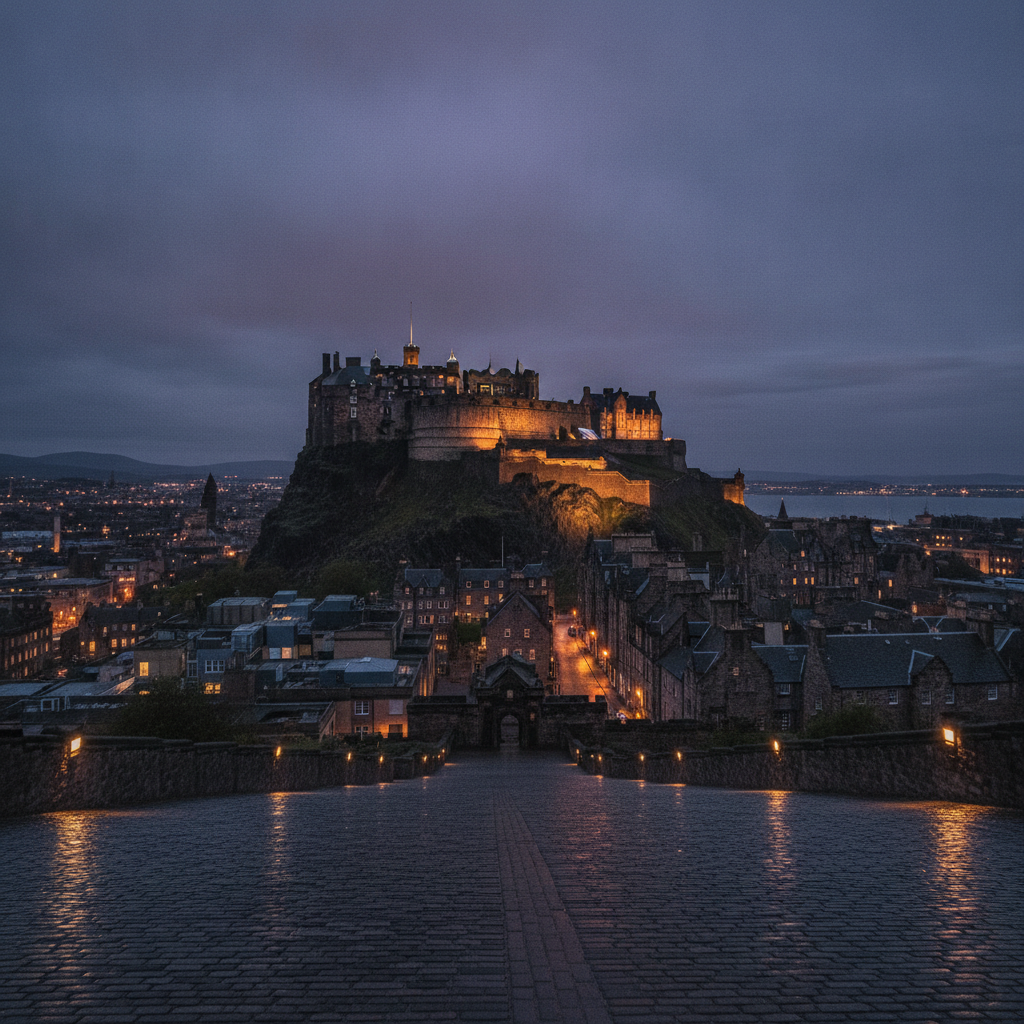
Edinburgh Castle, the Royal Mile & Holyrood — The Old Town
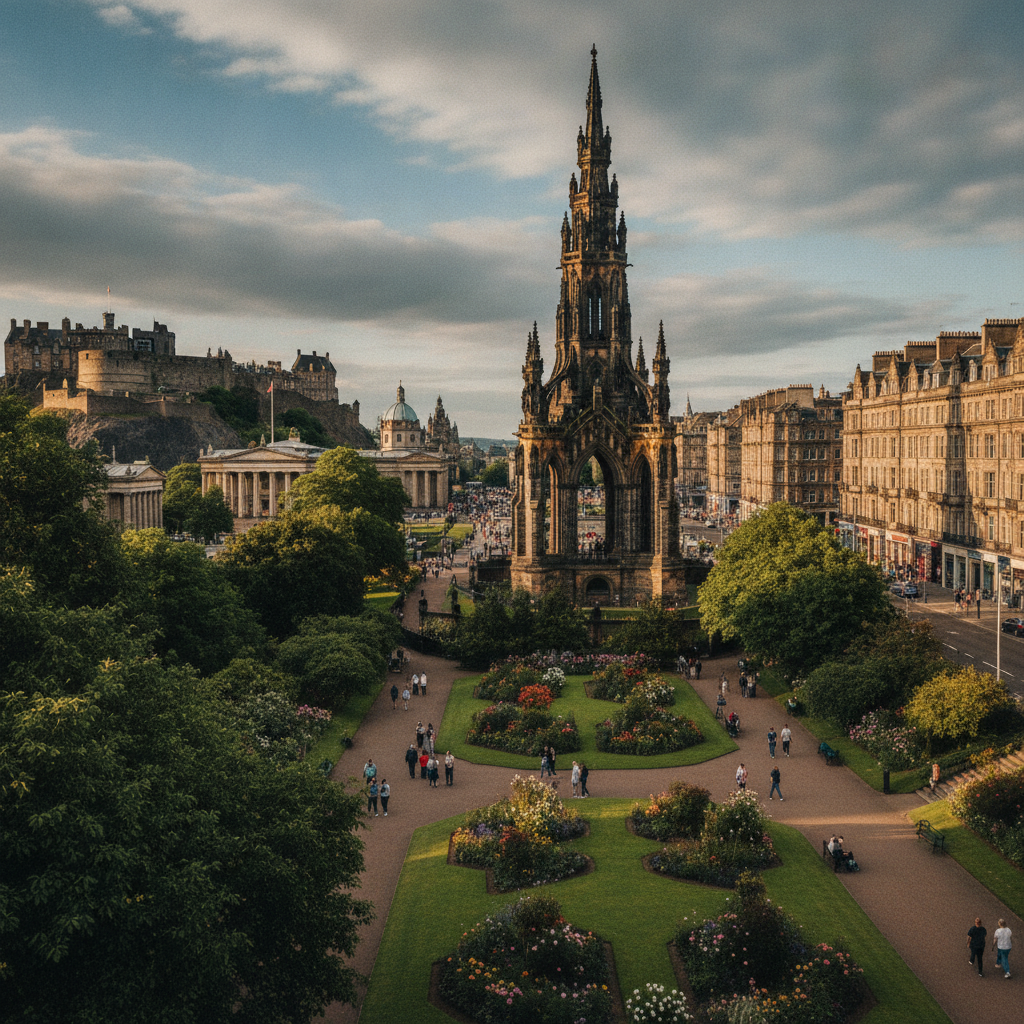
The New Town — Georgian Edinburgh & the Scottish Enlightenment
Mary Queen of Scots & Scottish History
St Andrews, Golf & the Fife Coastal Path
Scotch Whisky Distillery Tours & the Whisky Trail