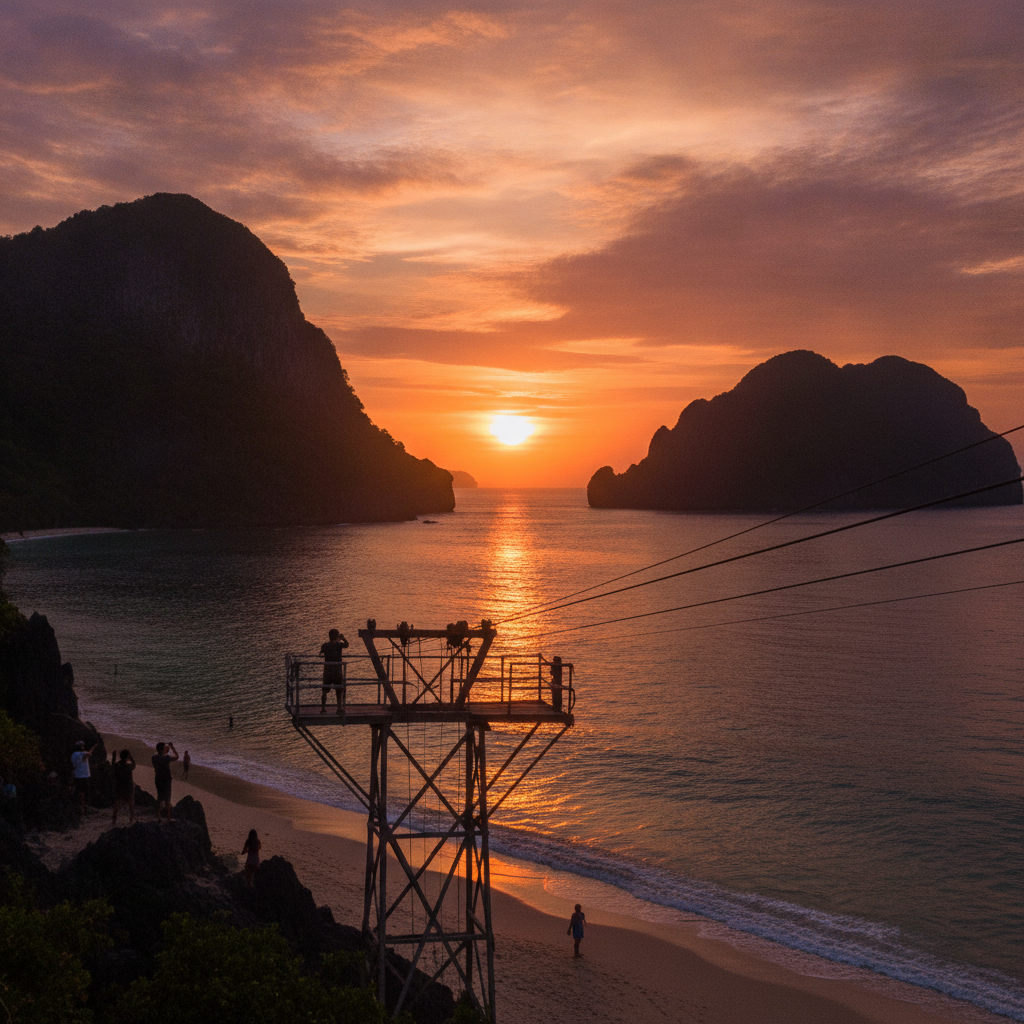
El Nido After Dark: Dinoflagellate Bioluminescence on the Paddle Stroke, 89,000 Hectares of Palawan Mangroves & San Vicente's 14.7km Beach That Chose Not to Become El Nido
New moon night kayaking when dinoflagellate plankton flash with every stroke—observable June–October but present year-round on dark nights, simultaneous with the Milky Way reflection in the still Bacuit Bay; Shimizu Island's 35–40% live coral cover at the Tour A stop most visitors rush through for the Cathedral Cave photograph; San Vicente's deliberate slow development policy with 200 daily visitors on a 14.7km beach that comfortably holds thousands—the DOT model for avoiding El Nido's 200,000 visitor trajectory; Palawan's 89,000 mangrove hectares and 30 of the world's 40+ species providing the juvenile fish nursery that El Nido's restaurants depend on; the Corong-Corong lagoon 2km from the pier navigable by kayak for 4km into the mangrove system; and El Nido's honest summary: 3–4 days optimal, Tour A essential, dawn kayak before the 09:00 departures, and the magic is in the landscape not the destination.
- 1
The Bacuit Bay Night – Bioluminescence & Night Kayaking
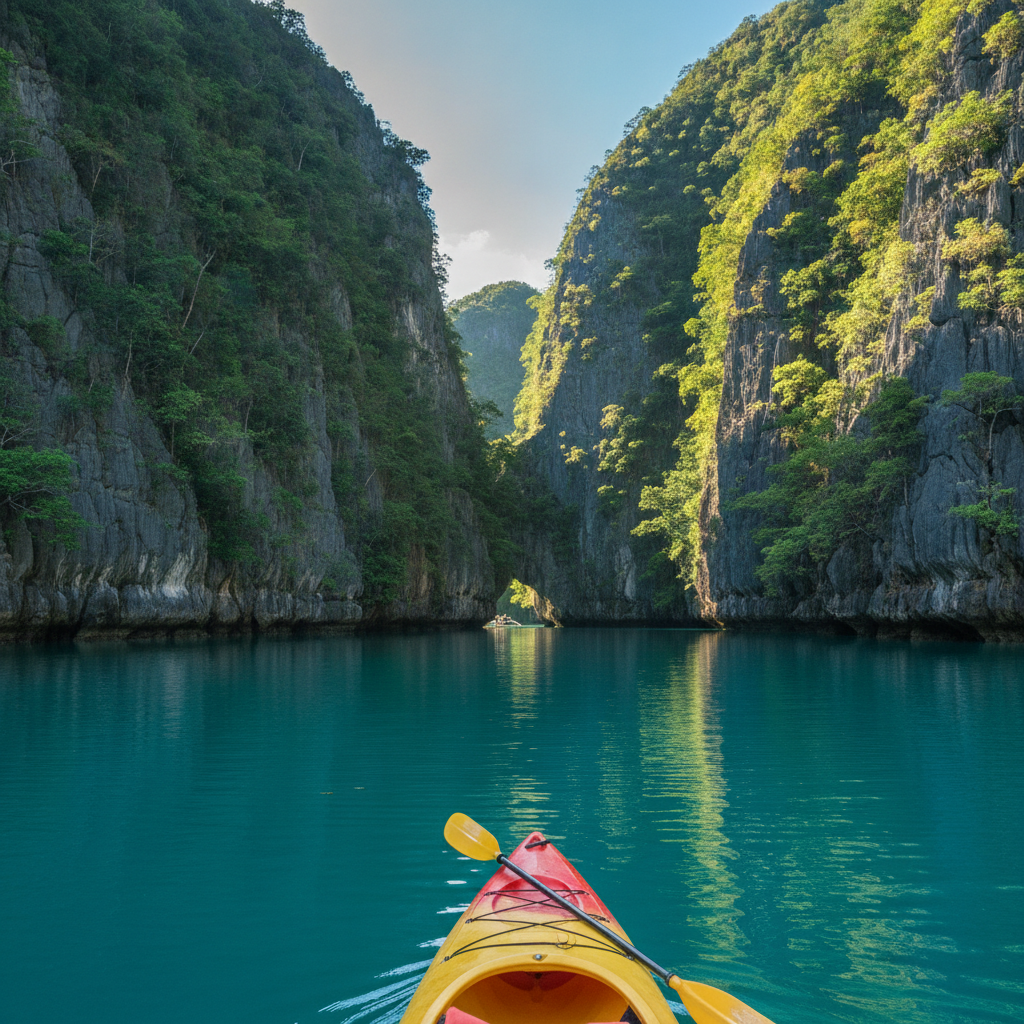
The bioluminescence visible in the Bacuit Bay on dark nights (particularly during the new moon period—when the absence of moonlight allows the biological light sources to be most visible)—is one of El Nido's least publicised and most extraordinary experiences: dinoflagellate plankton (single-celled marine organisms that produce light through a biochemical reaction when disturbed) are present in the bay in sufficient concentration to produce visible flashes with every stroke of a paddle or movement through the water. The bioluminescence window: most intense in the bay's sheltered inner areas (away from open-sea current and wave action that disperse the dinoflagellate concentration), typically from June–October (the wetter season, when nutrients from runoff stimulate dinoflagellate growth)—but observable year-round on darker nights. The night kayaking experience: a 2-hour night kayak through the Bacuit Bay (departing at 19:30 from the El Nido pier, navigating by the shapes of the limestone towers against the stars) with the phosphorescence visible in the paddle stroke—offered by a handful of El Nido operators as an alternative to the daytime tour programmes. The Milky Way connection: the Bacuit Bay's dark-sky quality means that night kayaking is simultaneously a bioluminescence experience and an astronomy experience—the stars reflected in the water and the dinoflagellate flashes in the same visual field create an experience that visitors consistently describe as among the most memorable of any nature destination.
- 2
The Big Lagoon's Underwater World – Snorkelling the Bacuit Bay
The snorkelling within the Bacuit Bay—conducted primarily from the tour boats at the specific coral gardens adjacent to each island stop—provides access to a marine environment that, while damaged by the tourist volume in some areas, remains extraordinary in its diversity and visual impact at the less-visited sites. The Big Lagoon underwater: the lagoon floor (3–8 metres depth) has a coral garden of branching corals, table corals, and massive Porites (brain coral)—the lagoon's enclosed, sheltered water produces exceptionally calm conditions ideal for snorkellers of all abilities. The Shimizu Island coral garden (Cathedral Cave—Tour A): the reef surrounding Shimizu Island is generally considered the finest snorkelling site on the standard tour circuit—the coral coverage is higher than at most other tour stops (approximately 35–40% live coral, versus 10–20% at the heavily visited Big Lagoon), with good fish diversity (schools of blue-and-yellow fusiliers, individual Napoleon wrasse, and occasional sea turtles at the deeper reef edge). The night snorkel (the least common but most vivid Bacuit Bay experience): several operators offer night snorkelling at the sheltered reef zones in the Bacuit Bay, where bioluminescent plankton, nocturnal reef fish (parrotfish sleeping in mucus cocoons, octopus hunting), and the absence of tour boats create conditions unlike the daytime tours.
- 3
Palawan's Long Beach & the San Vicente Model
San Vicente Long Beach (14.7 km of white sand—the longest beach in the Philippines, on the San Vicente coast of northern Palawan, 130 km south of El Nido)—has been designated by the Philippine Department of Tourism as the alternative development model to El Nido: a slow, low-impact, high-value development that maximises the economic benefit per tourist while minimising the ecological footprint. The current San Vicente: the beach had, as of 2023, approximately 15 small eco-lodges and guesthouses, no chain hotels, an unpaved road access (the national road from Taytay to San Vicente was sealed in 2022 but the beach access roads remain unpaved), and a daily visitor count of approximately 200 people on a beach that can comfortably accommodate several thousand. The government plan: the DOT's 'San Vicente as the Next El Nido' development plan envisions controlled development with a cap on accommodation density, mandatory environmental impact assessment for all projects, and a community benefit-sharing mechanism for the fishing villages along the beach. The comparison: El Nido's transformation from 2005 to 2019 (10,000 to 200,000 annual visitors) produced significant economic benefit for some Palaweño communities and significant ecological degradation—the San Vicente model proposes a slower, more controlled version of the same transformation. The tension: without development, the fishing communities of San Vicente lack the income alternatives that tourism would provide; with unmanaged development, San Vicente risks becoming El Nido 15 years from now.
- 4
Palawan's Mangrove Ecosystem – The Underwater Forest
The mangrove forests of Palawan—estimated at 89,000 hectares (the largest mangrove area in the Philippines)—are one of the most significant ecological assets of the island: nursery grounds for the juvenile fish that populate the coral reefs, storm surge protection for the coastal communities, and a carbon sequestration ecosystem that stores approximately 10× more carbon per hectare than tropical rainforest. The mangrove species: Palawan's mangroves include 30 of the world's 40+ mangrove species (the highest diversity of any Philippine island)—from the tall Rhizophora mucronata (the common stilt-root mangrove) and Avicennia marina (the grey mangrove) to the rare Sonneratia caseolaris (the crabapple mangrove, found in only a few Palawan sites). The kayaking access: the mangrove creeks around El Nido (the most accessible is the Corong-Corong Lagoon, 2 km south of El Nido town—navigable by kayak for approximately 4 km into the creek system) are the primary visitor access to the mangrove ecosystem. The ecological relationship: the mangrove root systems provide nursery habitat for the juvenile snapper, grouper, barracuda, and sea bass that the fishing community and the tourist restaurants depend on—the protection of the mangrove system directly maintains the food supply of El Nido's restaurants and the income of the fishing fleet. The threat: the historical conversion of mangroves to fishpond aquaculture (a practice that devastated Palawan's coastal mangroves in the 1980s–1990s) has been largely arrested by DENR regulations, but is still occurring in some areas.
- 5
El Nido's Festivals & Local Culture – Pagdiriwang & the Palawan Calendar
El Nido town's local cultural calendar—distinct from the international tourist programme of island tours and accommodation—reflects the layered identity of the community: indigenous Tagbanua and Cuyonon traditions, the Catholic ceremonial calendar brought by Spanish missionaries, and the contemporary Filipino popular culture of fiestas and basketball. The El Nido Day (June 22—the anniversary of the municipality's foundation): the annual fiesta combining a sports tournament (barangay basketball—the most intensely followed sport in Filipino municipal culture), cultural presentations (traditional dances by Tagbanua community groups), and a street party with live music. The Palawan Day (August 15—the anniversary of Palawan province's creation as a separate province): the more significant regional celebration, with events in Puerto Princesa and in El Nido simultaneously. The Pista ng Nayon (the barangay-level fiesta, which each of El Nido's 15 barangays celebrates on its patron saint's day): the community-level Catholic festivals that are the most intensely local expression of Palaweño culture—featuring the traditional ritual of the harana (a serenade performed outside a young woman's house, a Spanish colonial courtship practice that has become a fiesta entertainment tradition). The Palawan sporting culture: basketball is the Philippines' national obsession, and the municipal basketball court in El Nido (which doubles as the main public plaza) is the social heart of the town—the PBA (Philippine Basketball Association) games broadcast on television attract the same level of community attention as the Sinulog attracts in Cebu.
- 6
El Nido in Summary – The Essential Experience & What You Won't Find
El Nido's essential experience—the combination of geology, water, solitude, and wildlife that makes it the benchmark for island beauty in the Philippines and one of the most internationally recognised island destinations in Asia—is best understood by clarifying what it is and what it isn't. What El Nido is: an extraordinary geological landscape of limestone karst towers enclosing turquoise lagoons, with a coral reef system (damaged but still rich) and a biodiversity context (Palawan endemics, dugongs, whale sharks occasionally, sea turtles reliably) that no other Philippine island offers in the same configuration. What El Nido is not: a beach destination in the classic sense (the town beach is functional but not exceptional; the finest beaches—Nacpan, Duli—require transport and are not guaranteed calm). It is not an adventure tourism hub (the activities are island-hopping, snorkelling, and sea kayaking—there is no diving of the quality available at Tubbataha, Coron, or Apo Island; no surfing to compare with Siargao; no trekking to compare with Rinjani). It is not a nightlife destination. And it is not the uncrowded paradise that the photographs imply—at peak season, the Big Lagoon feels more like a swimming pool than a hidden wonder. The optimum visit: 3–4 days, including one full day of island hopping (Tour A required; Tour C for Secret Beach), one half-day of Nacpan beach, one dawn kayak to the Big Lagoon before the tours depart, and one evening watching the sunset from Las Cabañas. Anything beyond 4 days risks discovering that the magic is in the landscape, not the destination—and the landscape is best experienced briefly and intentionally.
Walk this route with audio
Stories play automatically as you reach each stop — no tapping needed.
More in El Nido
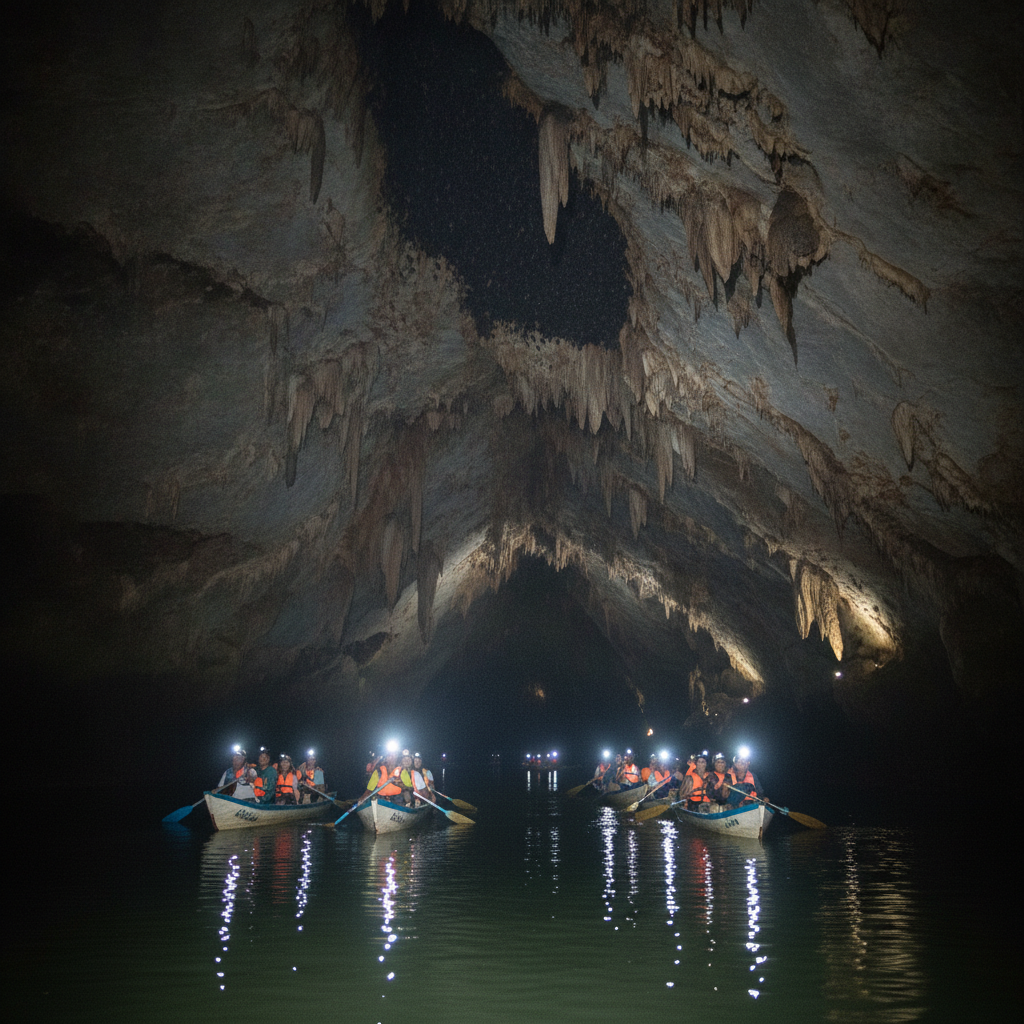
Palawan's Wider World: Puerto Princesa's 8.2km Underground River, the Tagbanua's 50,000-Year Presence & the 14.7km San Vicente Beach That Refused Boracay's Fate
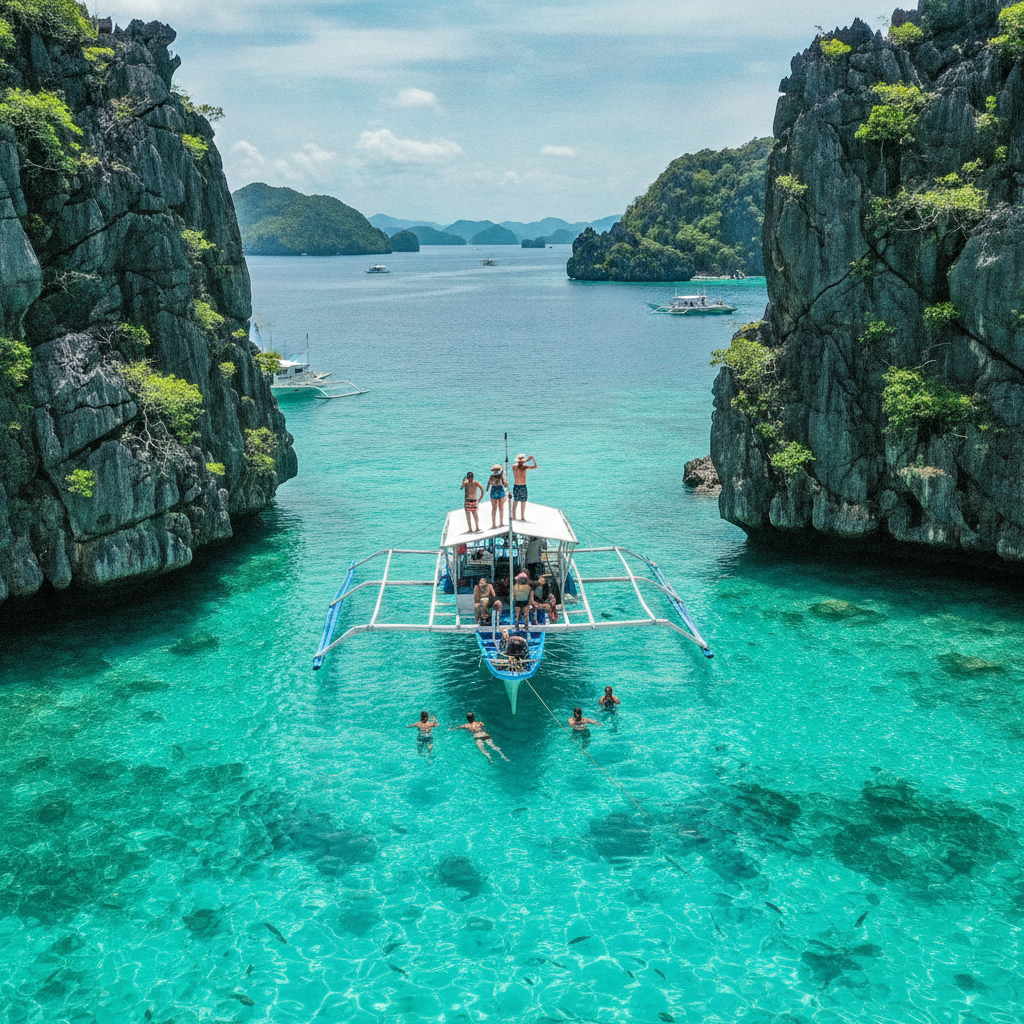
El Nido's Operating Reality: 80 Simultaneous Tour Boats in the Big Lagoon, the Bajau People's Genetically Larger Spleens & Halong Bay's 3 Million Annual Visitors vs. El Nido's 200,000
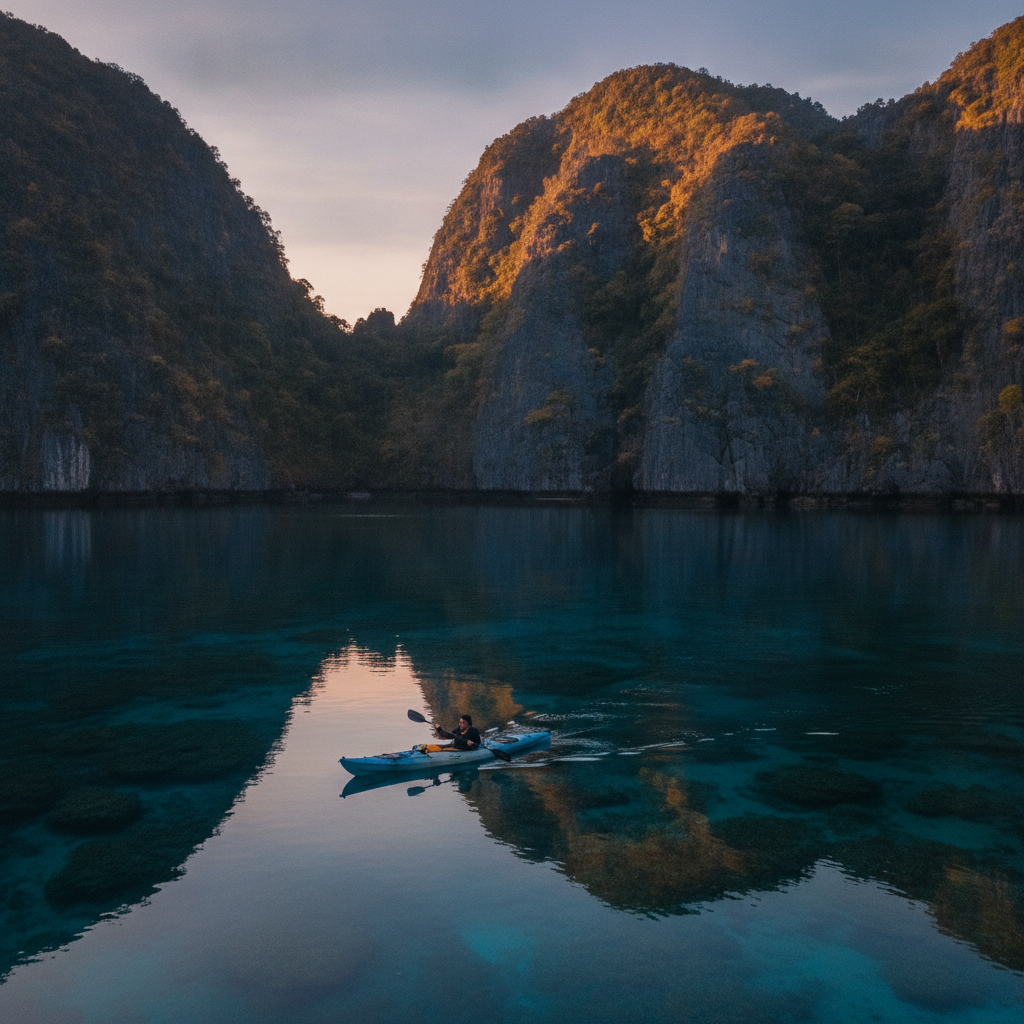
El Nido at Its Quietest: The 05:30 Dawn Kayak to Big Lagoon Before 80 Tour Boats Arrive, Culion Island's 17,000-Patient Leper Colony & the Lio Estate's 1MW Solar Airport
El Nido: The Bacuit Archipelago's Hidden Lagoons Accessible Only Through Rock Cracks, Barracuda Lake's 38°C Salt Water Below 28°C Freshwater & the Last Palawan Pangolin