El Nido at Its Quietest: The 05:30 Dawn Kayak to Big Lagoon Before 80 Tour Boats Arrive, Culion Island's 17,000-Patient Leper Colony & the Lio Estate's 1MW Solar Airport
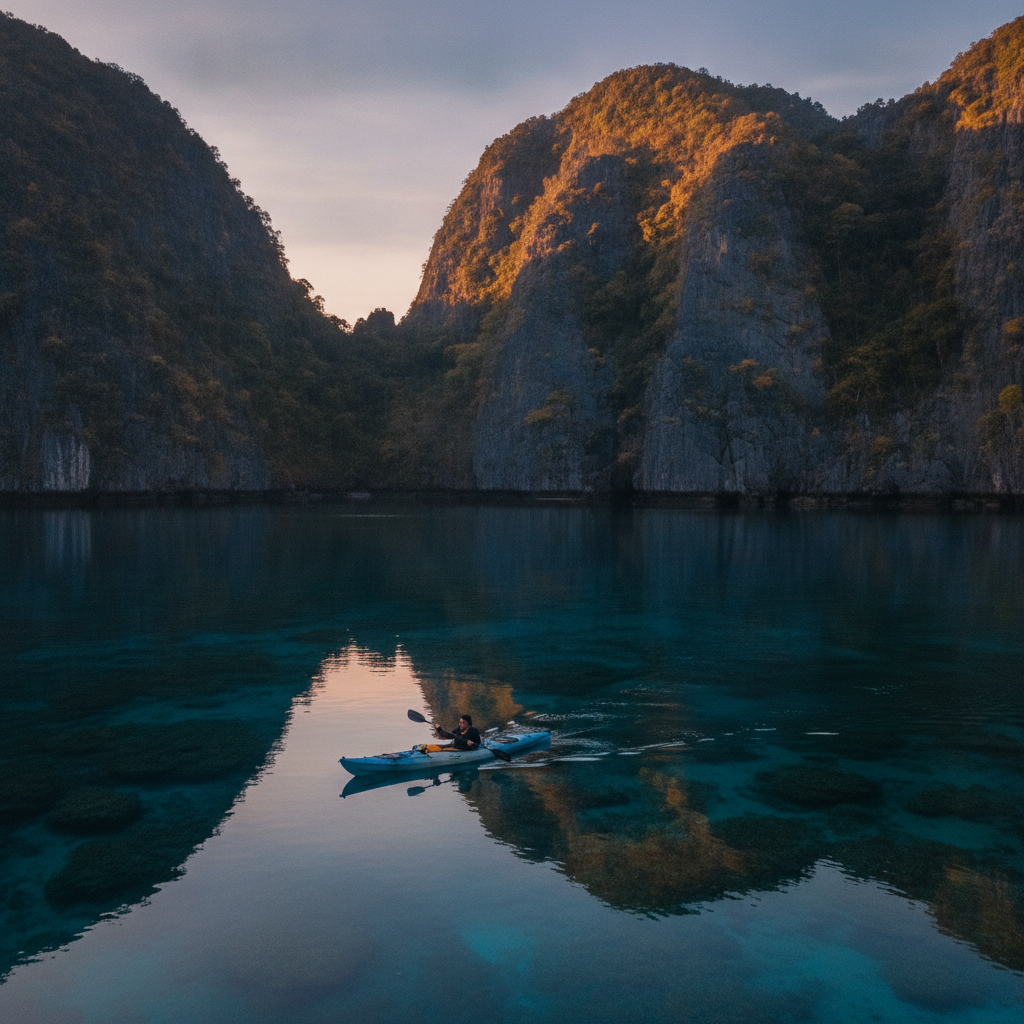
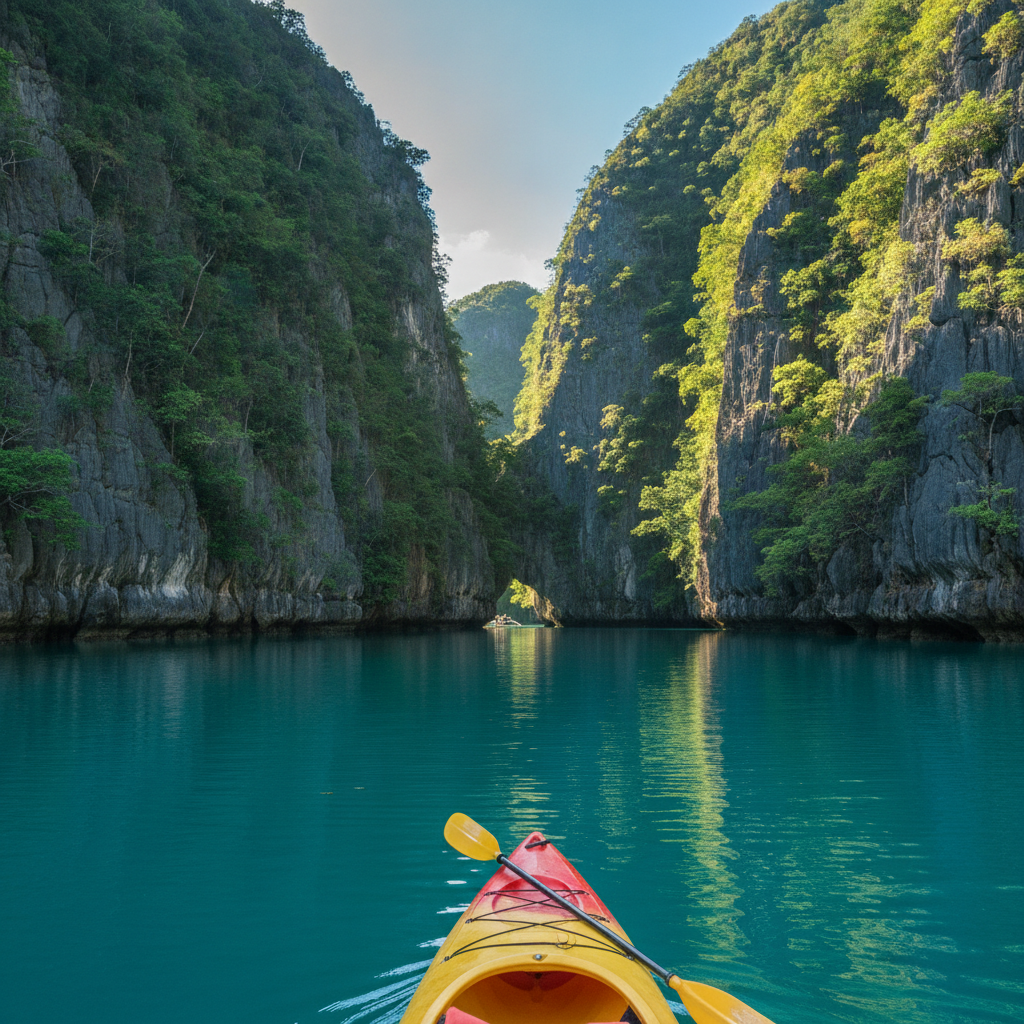
The Big Lagoon entrance reached by sea kayak at 06:00 with no other boats—the identical limestone walls and turquoise water as the Tour A photographs, with silence instead of 1,000 simultaneous tourists; the Small Lagoon's 60cm entrance requiring life jacket removal for a horizontal rock swim; Culion Island's 40-year American colonial leprosy isolation programme for 17,000 patients now a history museum in a regular municipality; the Linapacan archipelago's 30–40 metre horizontal visibility ranked among the clearest water in the world and almost entirely undeveloped; the Lio estate's solar power, rainwater harvesting, and composting programme versus the displacement of fishing communities from the coastal areas it now manages; and the Batak people—300–450 individuals, the only remaining hunter-gatherer group with primary forest access in Palawan, the most critically endangered indigenous community in the Philippines.
- 1
The Hidden Lagoon Sequence – Miniloc to Shimizu to Secret Beach
The sequence of hidden water bodies within the Bacuit Archipelago—each enclosed within the limestone formations and accessible only through restricted passages—constitutes the most distinctive feature of the El Nido island-hopping experience, and the specific character of each passage creates a graduated progression from easily accessible to genuinely challenging. The Big Lagoon (Miniloc Island—the most famous): the entrance passage is wide enough for a bangca at most tidal stages—the entire group can paddle in by kayak, and the enclosed lagoon (approximately 500 metres × 300 metres) has vertical limestone walls on all sides with a maximum depth of approximately 8 metres; the experience is of being inside a natural amphitheatre. The Small Lagoon (also Miniloc—the more challenging): the entrance passage requires swimmers to duck through a gap at water level (approximately 60 cm high, requiring removal of life jackets and a low horizontal swim of 2 metres through the rock)—the restriction creates genuine excitement for most visitors and a physical barrier that limits the number who can enter; the interior is smaller than the Big Lagoon but feels more enclosed. The Secret Beach (Matinloc Island—Tour C): only revealed at low tide (the passage is submerged at high water); at the right tidal stage, visitors swim through a cavern in the cliff face to emerge in a small enclosed beach visible from no external vantage point—the most 'hidden' of El Nido's hidden places. Cudugman Beach (Tour B): accessible through a cave rather than a lagoon—a 30-metre swim through a cave (headlamps provided) to emerge on a white sand beach with no other access.
- 2
Palawan Indigenous Communities Beyond the Tagbanua
The indigenous communities of Palawan—beyond the Tagbanua (who inhabit the northern and central island)—include several other distinct groups with their own languages, territories, and relationships to the tourism economy. The Batak (the oldest recorded indigenous group in Palawan—related to the Negrito peoples of the Philippines and considered one of the oldest human communities in Southeast Asia; found in the mountainous interior of central Palawan, north of Puerto Princesa): a semi-nomadic hunter-gatherer community whose territory has been progressively reduced by agricultural settlement; the Batak number approximately 300–450 individuals (the most critically endangered indigenous community in the Philippines) and are the only remaining hunter-gatherer group in Palawan with direct access to primary forest. The Palaw'an (also spelled Palawano—the dominant indigenous group of southern Palawan): a community of approximately 35,000 people with a complex spiritual system (the Baraw—a spiritual leader who mediates between the human and spirit world) and an elaborate oral literature tradition. The Cuyonon (the indigenous community of the Cuyo archipelago, east of Palawan, now dispersed across northern Palawan): an Austronesian-language group whose fishing and trading culture predates Spanish colonisation; the Cuyonon constitute a significant part of El Nido's boat crew and fishing communities. The IPRA (Indigenous Peoples' Rights Act of 1997—the Philippine legislation that provides legal recognition for ancestral domains): the legal framework under which all Palawan indigenous communities can claim recognition, though implementation has been inconsistent.
- 3
Sea Kayaking El Nido – The Multi-Day Paddle Route
Sea kayaking—paddling a double sit-on-top sea kayak through the Bacuit Bay islands at one's own pace, without a tour boat—is the mode of exploration that provides the most intimate and self-directed access to the El Nido landscape. The kayaking advantage: sea kayaking allows access to passages too shallow for bangca (some lagoon entrances at low tide are only accessible by kayak); allows the paddler to choose their own pace and direction (the tour boats follow fixed routes with time limits at each site); and allows the complete silence that the motorised tour boats don't provide—paddling in the Bacuit Bay at dawn with no other boats present is a qualitatively different experience from the midday tour. The rental operators: several El Nido town operators rent sea kayaks for self-guided day exploration (PHP 300–500 per kayak per day—a single or double kayak); the more ambitious multi-day kayaking (camping on beaches within the archipelago, with camping equipment in dry bags) is offered by a handful of adventure operators (El Nido Paddle Club, several independent guides). The multi-day kayaking circuit: a 4-day paddle departing from El Nido town, camping on the beaches of Cadlao Island (night 1), Tapiutan Island (night 2), and Matinloc Island (night 3) before returning to El Nido—covering approximately 60 km of paddling with full access to the same lagoons and caves that the tour boats visit, but in conditions of solitude impossible at tour boat peak hours. The physical requirement: calm weather conditions are essential for multi-day kayaking (the South China Sea can generate significant swell with minimal warning); the dry season (November–May) provides the most reliable conditions.
- 4
The El Nido Sunrise – Dawn Kayaking & Pre-Tour Quiet
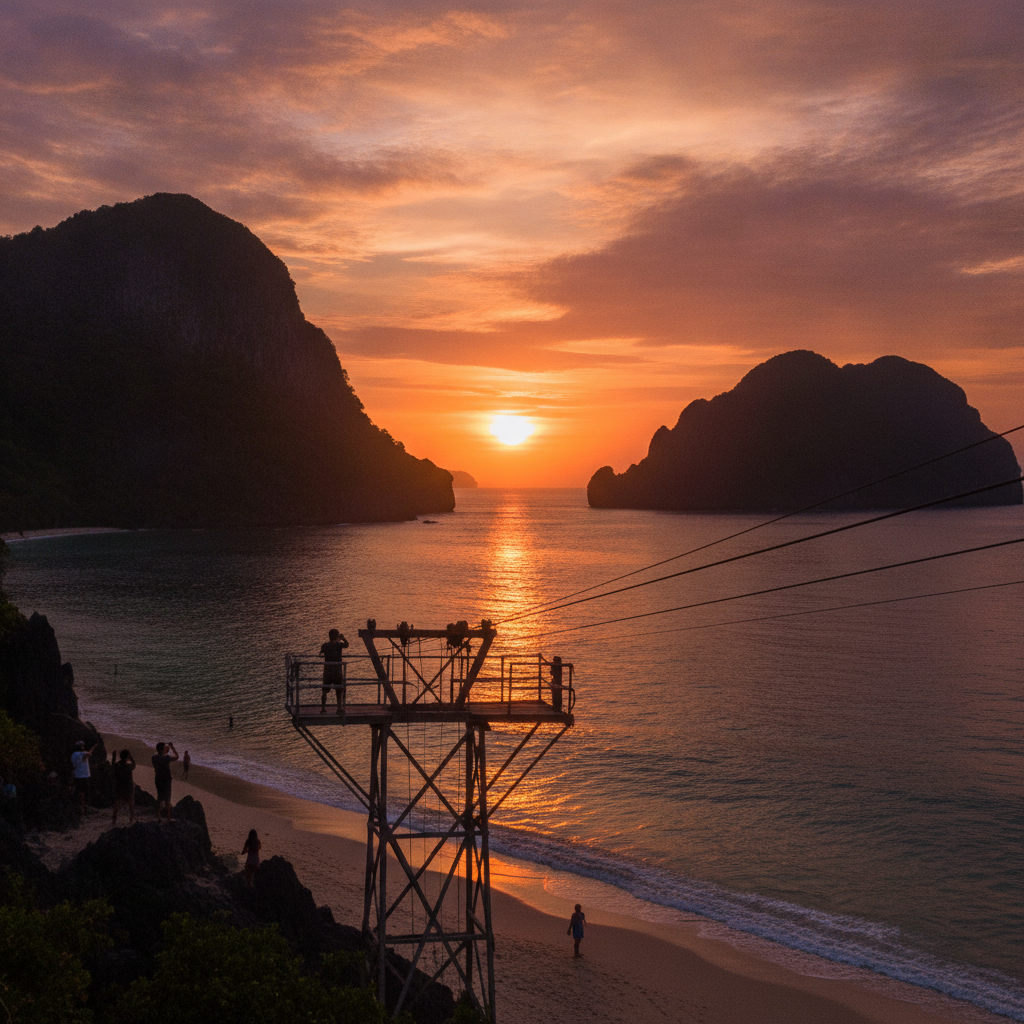
El Nido's most under-appreciated experience—the pre-dawn and dawn hours in the Bacuit Bay, before the tour boats depart from the El Nido pier at 09:00—provides the version of the landscape that most closely resembles the photographs that inspire visitors to come. The dawn sequence: the first light appears on the eastern faces of the limestone towers at approximately 05:30 (the towers catch the rising sun while the west-facing lagoons remain in shadow); by 06:00, the low morning light produces the golden-orange colour temperature that flatters the limestone most dramatically; by 07:30, the light has normalised and the tour boats are beginning their pre-departure preparations. The kayaking window: departing from the El Nido town pier by 05:30 (dawn), a sea kayak can reach the Big Lagoon entrance at Miniloc Island in approximately 40 minutes—arriving at the lagoon just as the first light enters through the crack in the eastern limestone wall, with no other boats present. The fishing boats: the local fishing fleet (traditional bangca with outriggers) departs El Nido bay between 03:00 and 05:00 and returns between 07:00 and 09:00 with the night's catch; the sight of the fishing fleet returning through the limestone-tower-framed bay at dawn—with the town's market buyers waiting on the pier—is the most local visual experience in El Nido, entirely invisible to tourists who sleep past 08:00. The breakfast recommendation: the Artcafe and several warungs on the main street open at 06:00 specifically to serve the pre-tour crowd.
- 5
Palawan's Western Coastline – The Calamianes & the Wild Northwest
The northwestern coast of Palawan—from El Nido north through the Calamian archipelago (Busuanga, Coron, and the 50+ smaller islands north of El Nido)—is one of the least explored and most diverse island seascapes in the Philippines. The Calamian archipelago: three major islands (Busuanga—the largest, with the Coron Town and Coron Bay WWII wreck diving that has been described earlier; Coron Island—the island with Kayangan Lake and the Tagbanua ancestral domain; and Culion Island—the site of the world's largest leper colony, established in 1906 by the American colonial government, housing 17,000 patients over its 40-year operational period before modern leprosy treatment made isolation unnecessary in the 1950s; now a regular Philippine municipality with a unique history museum). The Linapacan archipelago: the group of islands between El Nido and Busuanga (the slow boat from El Nido to Coron passes through these islands)—one of the most pristine coral reef systems in the Philippines, almost entirely undeveloped. Linapacan's water is consistently ranked among the clearest in the world—horizontal visibility of 30–40 metres has been recorded in specific sites. The Siete Pecados Marine Park (near Coron Town): a cluster of seven small rock outcrops with an exceptional fringing reef—the most accessible dive site for day trips from Coron Town, with schooling fish, coral gardens at 5–15 metres depth, and hawksbill turtles.
- 6
El Nido's Future – The Lio Estate Model & Sustainable Development
The Lio Tourism Estate—a 330-hectare master-planned tourism development 3 km north of El Nido town, developed by the Ayala Corporation's Ten Knots subsidiary from 2015—represents the most ambitious attempt to create a sustainably managed tourism destination in the Philippines: a multi-hotel, multi-restaurant, multi-activity development within a single managed estate that controls land use, waste management, water supply, and energy production in a coordinated system. The Lio Airport: the private airport within the Lio estate (serving AirSWIFT's Manila–El Nido direct route—the only international-standard facility in El Nido, compared to the alternatives of Puerto Princesa airport or the Taytay airport further south) has been the primary enabler of El Nido's post-2015 tourism growth, reducing the journey time from Manila from a full day to 1.5 hours. The Lio model: the estate incorporates solar power (a 1-MW installation), rainwater harvesting, greywater recycling, a composting programme (the estate processes 100% of its organic waste on-site), and a marine conservation programme (ongoing coral planting and turtle monitoring). The tension: the Lio estate development has been criticised for displacing fishing communities from the coastal areas it encompasses, and for driving land prices in El Nido municipality beyond the reach of Palawan local residents. The national question: whether the Lio model (integrated sustainable development with private management) or the unmanaged growth of El Nido town (organic, accessible, economically inclusive but ecologically damaging) represents the better long-term outcome for the Bacuit Bay is the central debate in Philippine ecotourism policy.
Walk this route with audio
Stories play automatically as you reach each stop — no tapping needed.
More in El Nido
Palawan's Wider World: Puerto Princesa's 8.2km Underground River, the Tagbanua's 50,000-Year Presence & the 14.7km San Vicente Beach That Refused Boracay's Fate
El Nido After Dark: Dinoflagellate Bioluminescence on the Paddle Stroke, 89,000 Hectares of Palawan Mangroves & San Vicente's 14.7km Beach That Chose Not to Become El Nido
El Nido's Operating Reality: 80 Simultaneous Tour Boats in the Big Lagoon, the Bajau People's Genetically Larger Spleens & Halong Bay's 3 Million Annual Visitors vs. El Nido's 200,000
El Nido: The Bacuit Archipelago's Hidden Lagoons Accessible Only Through Rock Cracks, Barracuda Lake's 38°C Salt Water Below 28°C Freshwater & the Last Palawan Pangolin