Ephesus and Early Christianity: Paul the Apostle Missions, the House of the Virgin Mary at Meryemana, Cave of the Seven Sleepers, John Gospel in Ephesus, Christian Pilgrimage Circuit, and the Acts of the Apostles
The Ephesus early Christianity route covers the Paul the Apostle mission to Ephesus from the Acts of the Apostles, the House of the Virgin Mary on Bulbul Mountain as the papal-approved pilgrimage site, the Cave of the Seven Sleepers legend, the John Gospel written in Ephesus tradition, the complete Christian pilgrimage circuit, and the significance of Ephesus in the New Testament.
- 1
Paul at Ephesus: The Acts Chapter 19 Mission
Paul the Apostle spent 3 years in Ephesus on his third missionary journey from approximately 53 to 56 AD, the longest continuous stay in any single city during his missions, establishing the Christian community in the most important commercial city in the Roman province of Asia. The Acts of the Apostles chapter 19 describes the riot of the silversmiths who made their living from the Artemis figurine trade and who drove Paul from the city when his preaching persuaded so many people to abandon the pagan cult that the trade in religious objects collapsed - the most economically motivated religious riot in the New Testament.
- 2
House of the Virgin Mary: The Papal Pilgrimage Site
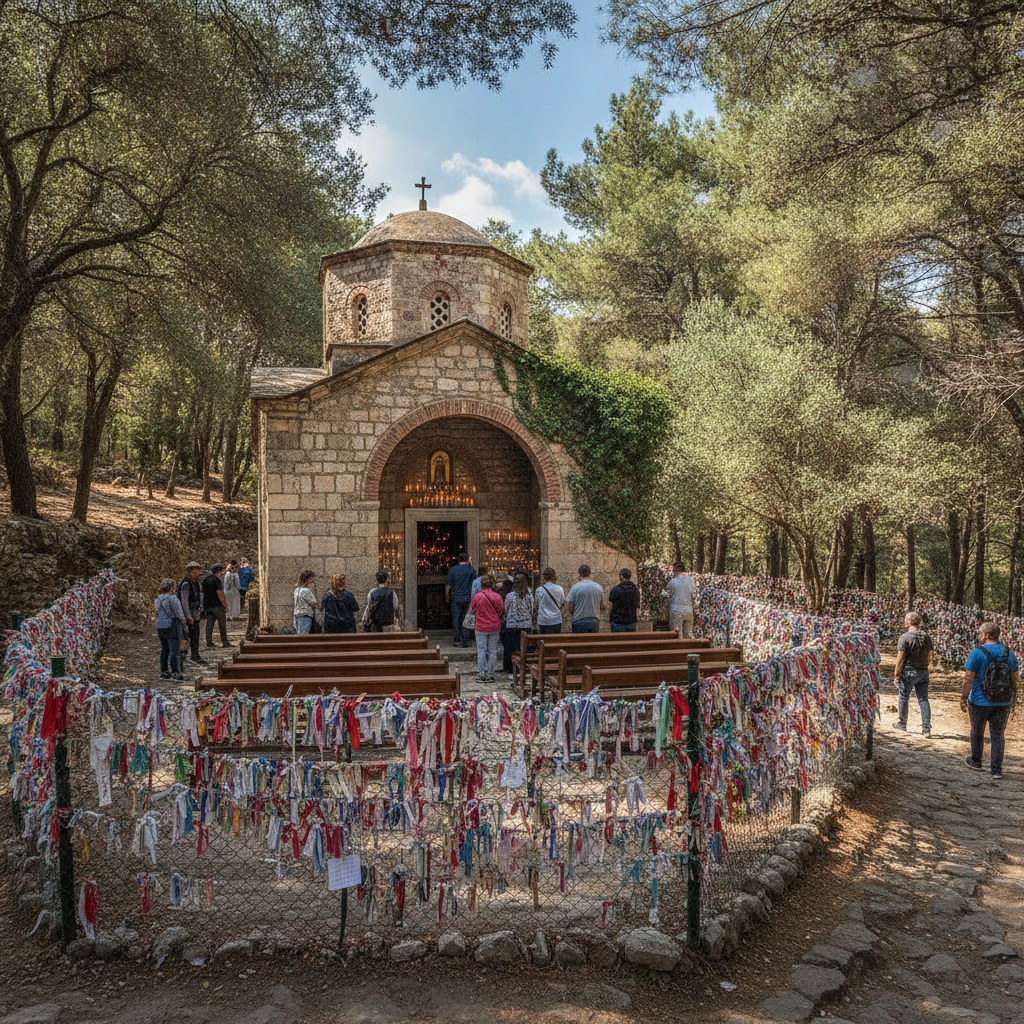
The House of the Virgin Mary at Meryemana, the small stone chapel on the Bulbul Mountain 7 kilometers from Ephesus that tradition and the 19th century visions of the German mystic Anne Catherine Emmerich identified as the house where Mary lived after the Crucifixion in the care of the Apostle John, is the most visited Christian pilgrimage site in Turkey with the papal approval of John Paul II and Benedict XVI who both visited in 1979 and 2006. The site is also visited by Muslims who venerate Mary as the mother of the prophet Isa.
- 3
Cave of the Seven Sleepers: The Christian Hibernation Legend
The Cave of the Seven Sleepers above Ephesus, where the legend preserved in the Quran and the Byzantine Christian tradition identifies the cave in which seven young Christian men fled the Roman persecution of Decius in 250 AD and miraculously slept for 200 years until awakening in the Christian Roman empire, is the most theologically significant natural site in the Ephesus circuit and the legend that both the Christian and the Muslim traditions share as a miracle of divine protection over the faithful. The cave with the Byzantine church built over the burial site of the seven young men is accessible from the main Ephesus road.
- 4
John at Ephesus: The Fourth Gospel and Revelation
The Apostle John, identified in the Christian tradition as the author of the Fourth Gospel, the three Epistles of John, and the Book of Revelation, is believed to have lived in Ephesus in the last decades of the 1st century AD after the crucifixion of Jesus, writing the Gospel and the Epistles in the city where he established the largest early Christian community in Asia Minor. The Revelation, addressed to the Seven Churches of Asia including Ephesus, Smyrna, Pergamon, Thyatira, Sardis, Philadelphia, and Laodicea, describes the Ephesian church as the first and largest of the seven.
- 5
Christian Pilgrimage Circuit: The Seven Churches of Revelation
The Seven Churches of Revelation circuit from Ephesus through Smyrna (Izmir), Pergamon (Bergama), Thyatira (Akhisar), Sardis (Sart), Philadelphia (Alasehir), and Laodicea near Pamukkale, the organized pilgrimage tour that the Christian travel groups from the United States, South Korea, and the Philippines follow through western Turkey, provides the most theologically structured single travel itinerary in Turkey and the circuit that most completely covers the early Christian geography of Asia Minor.
- 6
Ephesus and the New Testament: The Asian Church Capital
Ephesus appears more frequently in the New Testament than any other city outside Jerusalem and Antioch, with the mention in Acts, the Epistle to the Ephesians attributed to Paul, the two Epistles to Timothy written from Rome to the Ephesian church leader, and the specific address in Revelation. The Ephesian church community that Paul established and John continued was the most important single early Christian community in Asia Minor and the organizational model for the development of the institutional church structure that the Council of Ephesus of 431 AD formalized with the declaration of Mary as Theotokos.
Walk this route with audio
Stories play automatically as you reach each stop — no tapping needed.
More in Ephesus
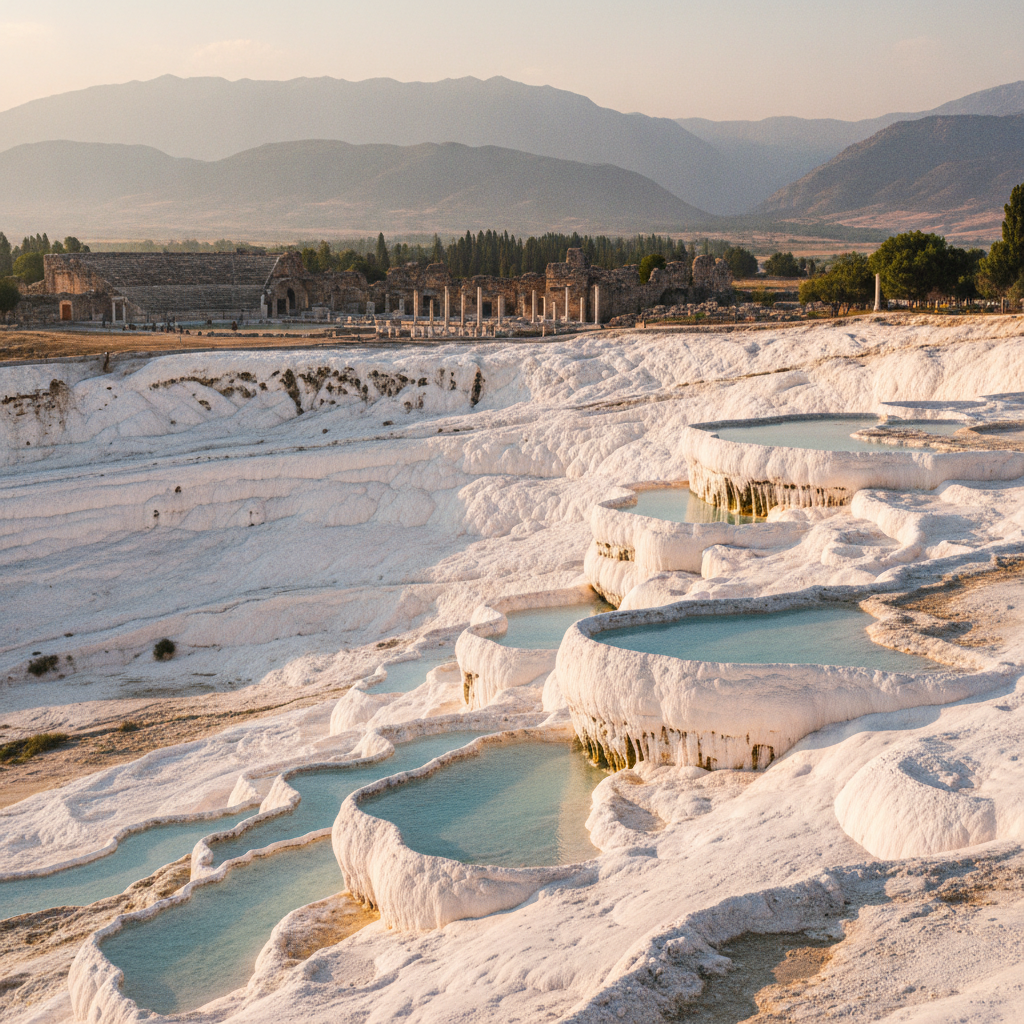
Ephesus to Pamukkale: The Travertine Cotton Castle, Hierapolis Roman Spa City, the Necropolis, Sacred Pool of Cleopatra, Calcium Terraces Natural Wonder, and the Ephesus-Pamukkale Day Circuit
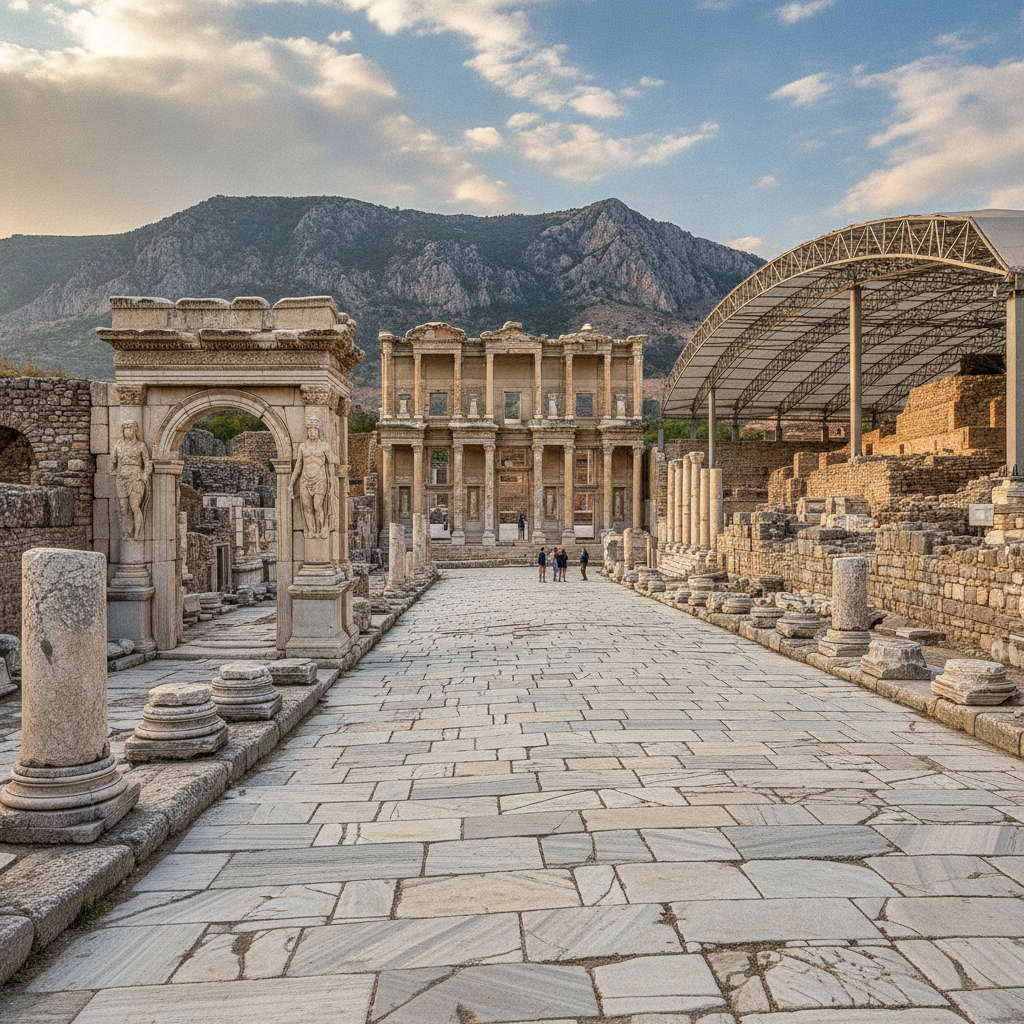
Ephesus Museum and Streets: Selcuk Archaeological Museum Collections, Isa Bey Mosque Seljuk Architecture, the Curetes Street Marble Paving, Ancient Public Fountains, the Brothel and the Social Life, and the Marble Road
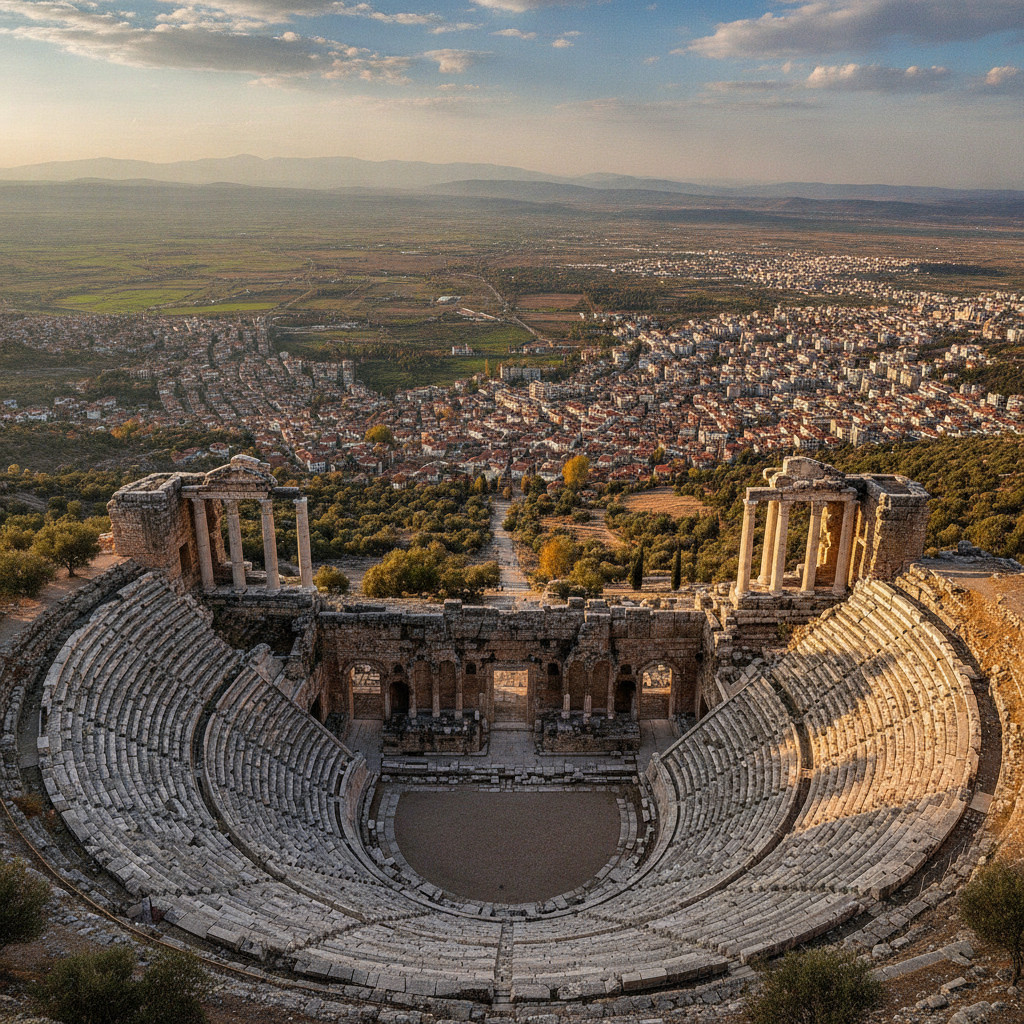
Ephesus to Pergamon: The Asklepion Medical Center, Bergama Acropolis Sheer Theatre, Red Basilica, Zeus Altar Berlin Museum, Pergamon Library, and the Aegean Archaeological Circuit
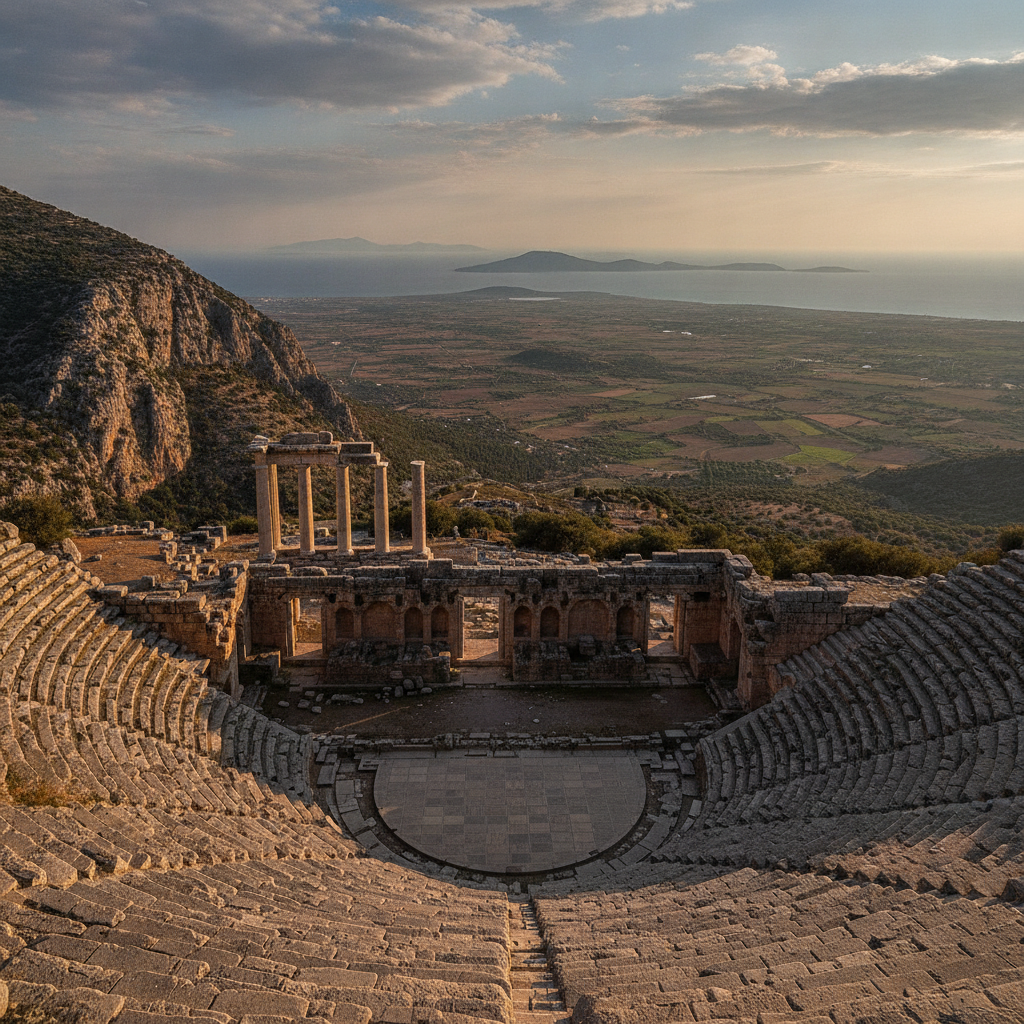
Ephesus Coast and Day Trips: Kusadasi Cruise Port Bazaar, Dilek Peninsula National Park, Amazon Beach, Priene Ancient City, Miletus Theatre, Didyma Apollo Temple Oracle, and the Maeander Valley Circuit
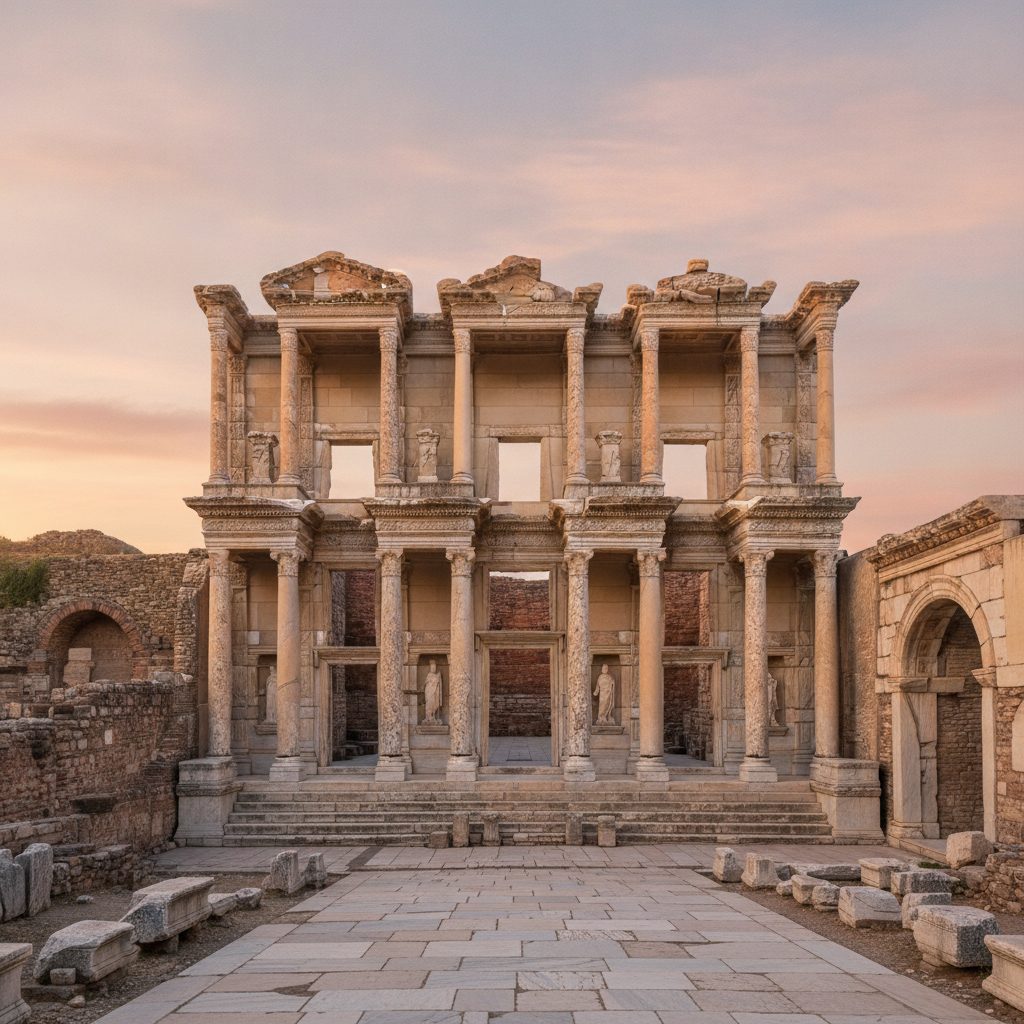
Ephesus Essential: Library of Celsus, the Great Theatre, Artemision Wonder of the World, Terrace Houses of the Wealthy, Roman Agora, and Saint John Basilica on Ayasuluk Hill