The Guanche Indigenous Population of the Canary Islands Were Amazigh (Berber) Speakers Linguistically Related to the Tamazight Populations of the Moroccan Atlantic Coast Who Were Progressively Conquered by Spanish Settlers in the 15th Century; The Battle of Alcacer Quibir in 1578 Where the Moroccan Saadians Killed Portuguese King Sebastian I Triggered the Portuguese Succession Crisis Leading to the 60-Year Iberian Union of Portugal and Spain Under Philip II; The Essaouira Pastilla au Fruits de Mer (Shrimp, Crab, and White Fish in Warqa Pastry With Saffron Cream) Was Invented in Essaouira as a Seafood Adaptation of the Classic Fassi Bastilla
The Guanche Canary Islanders as Amazigh (Berber) speakers related to Morocco; the 1578 Alcacer Quibir battle killing King Sebastian I and triggering the Portuguese-Spanish Iberian Union; the Essaouira pastilla au fruits de mer as a local seafood invention; the plaza Moulay Hassan as the primary evening dining and socializing space; thuya workshop photography in the morning light; and the Essaouira complete guide with certified argan oil at 100-300 MAD per 100ml.
- 1
Essaouira and the Canary Islands Connection - The Eastern Atlantic Network
Essaouira and the Canary Islands: the shared Atlantic history and the eastern Atlantic maritime network that connected the Moroccan coast and the African archipelago. The Canary Islands (the Canary Islands (Islas Canarias) - the Spanish archipelago approximately 100-500 km off the northwest African coast opposite the Moroccan Souss region and Western Sahara: the islands are geologically part of the Atlantic Ocean but politically Spanish: the islands have served as the primary staging post for Atlantic exploration from the 15th century onward: the Canary Current (the cold Canary Current flows southward from the Azores toward the Canary Islands and the Moroccan Atlantic coast: the upwelling of cold nutrient-rich water created by the Canary Current is the reason for the extraordinary richness of the Moroccan-Mauritanian Atlantic fishing grounds: the Eleonora's falcon (Falco eleonorae) that breeds on the Essaouira Iles Purpuraires also breeds on the Canary Islands: a single species whose range connects Morocco and the Spanish islands: the Atlantic crossing (the Canary Islands were the jumping-off point for the Spanish Atlantic crossing: Christopher Columbus departed from Las Palmas de Gran Canaria on his third voyage in 1498: the northeast trade winds that blow the Essaouira kite surfers are the same winds that carried Columbus across the Atlantic: the guanches (the Guanche - the indigenous Amazigh (Berber) population of the Canary Islands: related to the Amazigh populations of the Moroccan Atlantic coast: the Guanche were progressively conquered and assimilated by Spanish settlers in the 15th century: their language (Guanche) is now extinct but is known to be related to the Tamazight languages of Morocco and the Sahara).
- 2
Essaouira in Winter - The Quiet Season and the Storm Watching
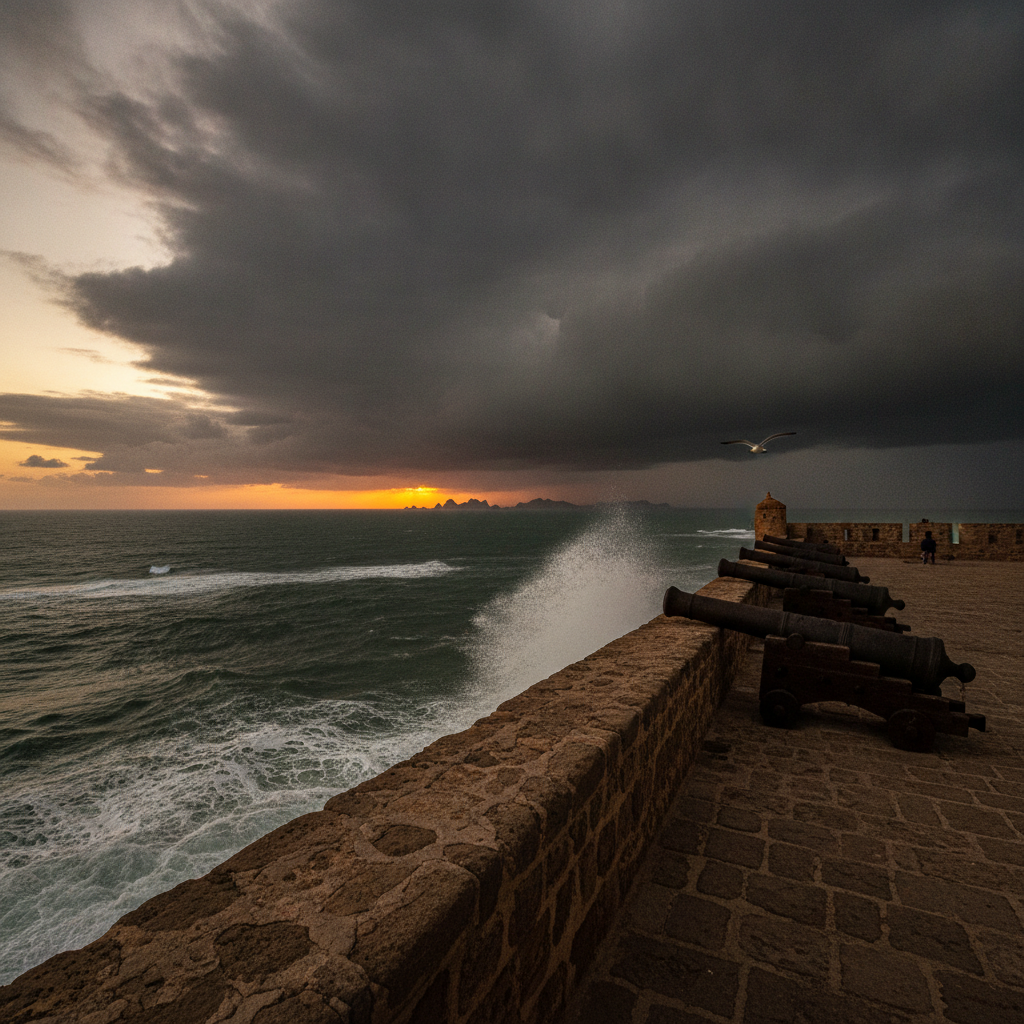
Essaouira in winter: the quiet season and the extraordinary experience of the Atlantic storm season at the Wind City. The winter Essaouira (December-February): the quietest tourist season: the medina is primarily inhabited by locals: the tourism infrastructure is operating at low capacity and rates are lowest: the atmosphere is the most authentic: the winter wind (the winter trade winds at Essaouira are often stronger than the summer winds: the Atlantic swells increase in winter as North Atlantic depressions generate large swell trains that reach the Moroccan coast: the winter waves at Sidi Kaouki and Moulay Bouzerktoun are at their peak size for experienced surfers): the storm watching (a winter Atlantic storm approaching Essaouira from the northwest creates extraordinary wave conditions at the Skala de la Kasbah: waves crash against the base of the sea wall sending spray 5-10m up the rampart face: the bronze cannons receive the spray directly: the storm light (the pre-storm light on the Atlantic creates a dramatic luminosity: the dark clouds, the green-grey sea, the white spray: the post-storm light when the air is washed clean and the visibility extends to the horizon: the winter rain (the Essaouira region receives approximately 300mm of rainfall annually concentrated in November-March: the medina streets in the rain: the blue walls darkening when wet: the cats retreating to sheltered doorways: the winter temperature (12-18C daytime: relatively mild by European standards but the wind chill makes it feel cooler: layers and a windproof jacket are essential year-round in Essaouira).
- 3
The Moroccan-Portuguese Encounter - Ceuta, Mazagan, and the Atlantic Struggle
The Moroccan-Portuguese encounter of the 15th-17th centuries: the struggle for control of the Atlantic Moroccan coast and the Portuguese fortifications that became Moroccan heritage. The Portuguese expansion (the Portuguese began their Atlantic expansion along the Moroccan coast in the early 15th century: the capture of Ceuta (1415 - the Portuguese captured Ceuta from the Marinid Moroccan state: Ceuta is still a Spanish (formerly Portuguese) enclave on the Moroccan coast today: the Battle of Alcacer Quibir (1578) - the Battle of the Three Kings: the Portuguese King Sebastian I led an invasion of Morocco at the request of the deposed Moroccan pretender: the Portuguese-Moroccan force was utterly defeated by the Saadian Sultan Abd al-Malik at Alcacer Quibir: 8,000 Portuguese soldiers killed and 15,000 captured: King Sebastian I was killed: the death of Sebastian I (who had no heir) triggered the Portuguese succession crisis that led to the union of Portugal and Spain under Philip II (1580-1640 - the Iberian Union): the Moroccan Atlantic fortifications (the Portuguese built fortifications at several points on the Moroccan Atlantic coast: the Mazagan fortress (El Jadida UNESCO - the primary surviving Portuguese fortification): the Mogador fortress (on the site of the later Essaouira): the Safi fortress: the Agadir Oufella fortress (destroyed by the 1960 earthquake): the impact (the Moroccan victory at Alcacer Quibir allowed the Saadian dynasty to flood the Moroccan economy with the enormous ransom payments for 15,000 Portuguese prisoners: the Saadian treasury became briefly the richest in the Islamic world).
- 4
Essaouira Food Culture - The Plaza Moulay Hassan and Evening Dining
The Essaouira food culture and the evening dining scene centered on the Plaza Moulay Hassan: the food guide. The Plaza Moulay Hassan (the Plaza Moulay Hassan - the primary public square of Essaouira: located between the medina and the sea wall: the square is surrounded by cafe and restaurant terraces on three sides and opens to the sea and the port on the fourth side: the plaza comes alive in the late afternoon and evening as the day cools: the cafe terraces fill with locals drinking mint tea and tourists watching the sunset through the sea wall arch: the restaurants (the primary Essaouira restaurants are on the ground floor facing the Plaza Moulay Hassan and on the adjacent Rue Mohammed Zerktouni: the primary dishes: the grilled fish (bought fresh from the harbor grill stalls for 50-100 MAD or ordered at a restaurant for 80-150 MAD per plate): the fish tagine (a Moroccan tagine with fresh fish, preserved lemon, olives, and chermoula): the calamari (deep-fried squid: the Essaouira calamari influenced by the Spanish seafood tradition from the adjacent Spanish Protectorate zone): the pastilla au fruits de mer (a seafood version of the classic bastilla pie: shrimp, crab, and white fish in a warqa pastry with saffron cream - an Essaouira invention: the street food (the freshly grilled sardines at the harbor entrance grill stalls: the most authentic food experience in Essaouira: point at the sardines, agree a price, wait 10 minutes for them to be grilled over charcoal: the Moroccan hospitality (the Essaouira approach to tourism is more relaxed than the aggressive souk commerce of Marrakech and Fes: the vendors are present but the hard sell is less intense).
- 5
Essaouira Photography - Blue Boats, Bronze Cannons, and the Golden Hour
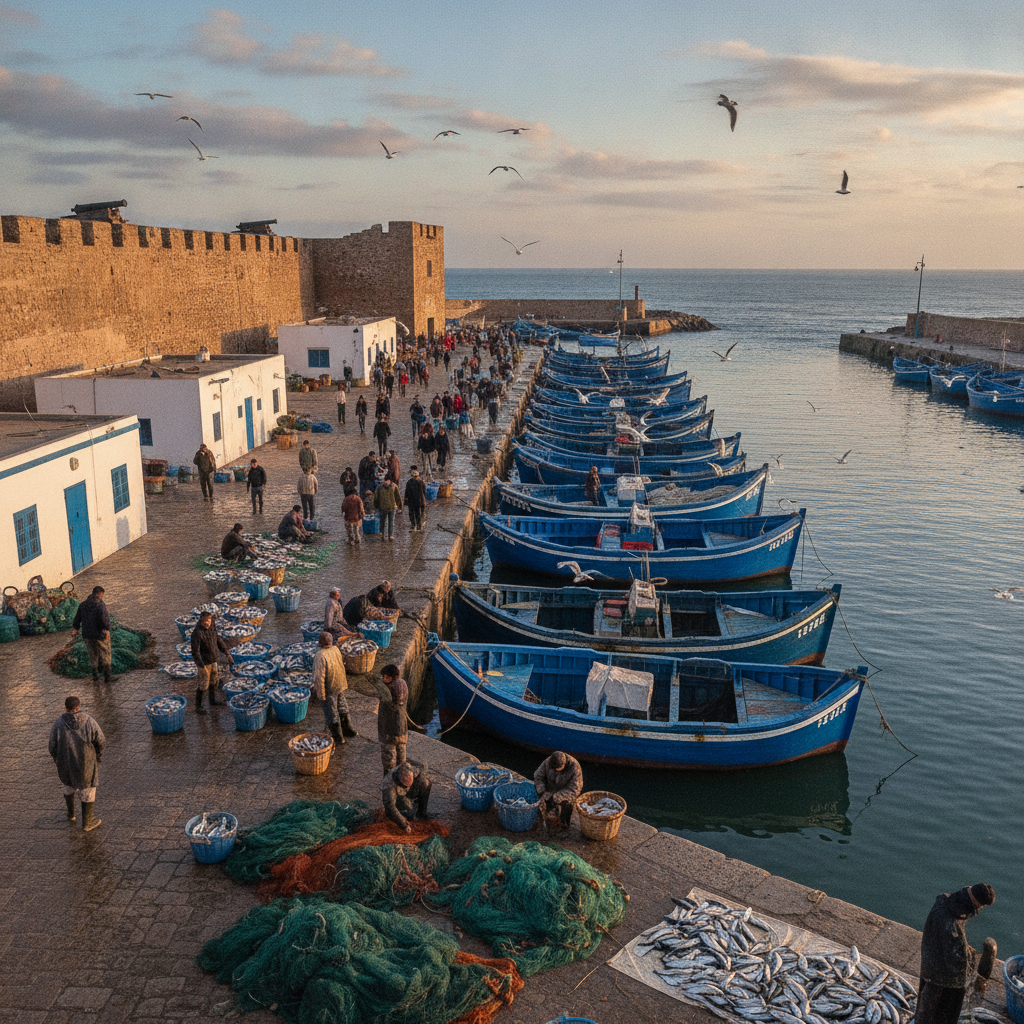
The Essaouira photography guide: the best locations, the optimal timing, and the specific subjects that make the Wind City one of the most photogenic cities in Morocco. The Skala de la Kasbah at sunset (the primary photography pilgrimage in Essaouira: position on the rampart walkway 30-45 minutes before sunset: the bronze cannons in warm backlight against the Atlantic: the Iles Purpuraires offshore: the direct view of the setting sun: the 25-35mm focal length for the wide rampart scene: the 85-135mm telephoto for cannon close-ups against the sky): the fishing harbor (the Skala du Port: the late afternoon blue boats: the blue wooden fishing boats (pointus) in the harbor catch the warm late afternoon light against the dark harbor water: the fishermen mending nets: the seagulls over the water: the sea wall arch (the arch in the sea wall of the Skala de la Kasbah frames a view of the ocean that is one of the iconic Essaouira images: position inside the arch looking outward for a silhouette effect against the bright ocean: the thuya workshop (the artisan workshop doorways in the morning: the artisan cross-legged at the workbench with wood shavings and the half-completed marquetry in warm workshop light: the Gnawa musicians (the guembri player in the Plaza Moulay Hassan at dusk: the instrument is visually distinctive and the player often wears the traditional Gnawa black and white striped garment): the light (Essaouira light is extraordinary: the Atlantic position, the sea spray in the air, and the wind-washed clarity create a luminosity that photographers describe as unique: the golden hour is particularly spectacular with the warm light on the white medina walls and the bronze cannons).
- 6
Essaouira Final Complete Guide - Everything You Need to Know
Essaouira final complete guide: the comprehensive reference for Morocco's most distinctive Atlantic heritage city. The foundations (Essaouira: population approximately 80,000: Atlantic coast Morocco: 170 km northwest of Marrakech: UNESCO World Heritage medina (2001): founded as Phoenician Mogador (7th century BCE): Portuguese fort (16th century): definitive city 1764-1765 by French engineer Cornut for Sultan Mohammed III). The highlights (the Skala de la Kasbah sea ramparts with 17th-18th century bronze cannons: the Gnawa and World Music Festival (June - 450,000-500,000 free visitors over 4 days): the Gnawa music tradition (guembri bass lute, qraqeb iron castanets, lila all-night healing ceremony): the thuya root burl marquetry craft with mother-of-pearl and camel bone inlay: the harbor grill stalls with grilled sardines at 50-100 MAD: the Iles Purpuraires offshore with Eleonora's falcon breeding colony: the Jimi Hendrix legend: the Orson Welles Othello connection (Palme d'Or Cannes 1952): the Tujjar al-Sultan Jewish merchant heritage). The practical (no airport or train: Supratours bus from Marrakech 2.5-3 hours at 90-120 MAD: the medina is navigable without a guide: best season year-round: June for Gnawa Festival, September-April for surf, summer for wind sports and cool temperatures, winter for quiet season and storm watching: the accommodation from budget fondouks at 150-200 MAD per night to luxury riads at 1,500-3,000 MAD: the shopping (thuya boxes 50-150 MAD: certified argan oil 100-300 MAD per 100ml: Berber silver jewelry 100-500 MAD).
Walk this route with audio
Stories play automatically as you reach each stop — no tapping needed.
More in Essaouira
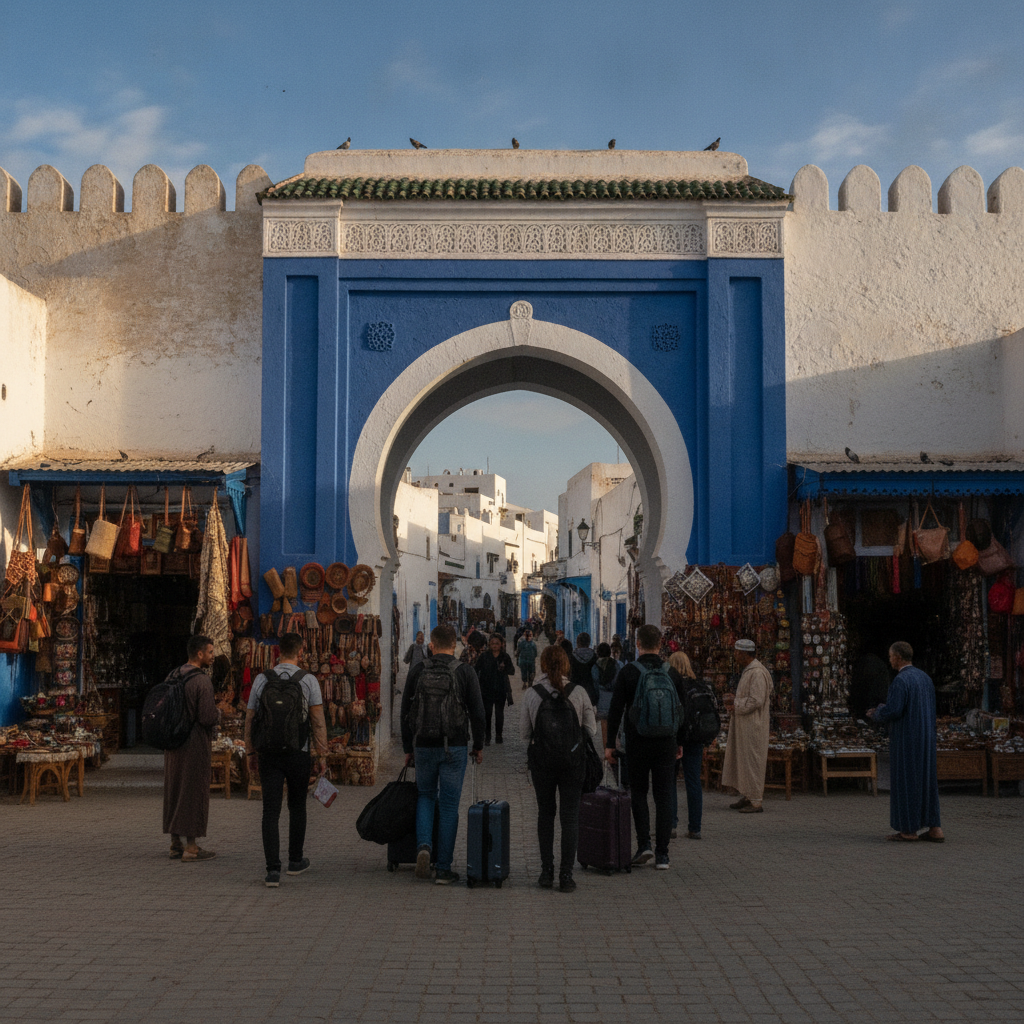
Essaouira Practical: Transport from Marrakech and Agadir, the Best Riad Accommodation, the Optimal Visit Timing, the Wind Season Implications, and the Departure Summary
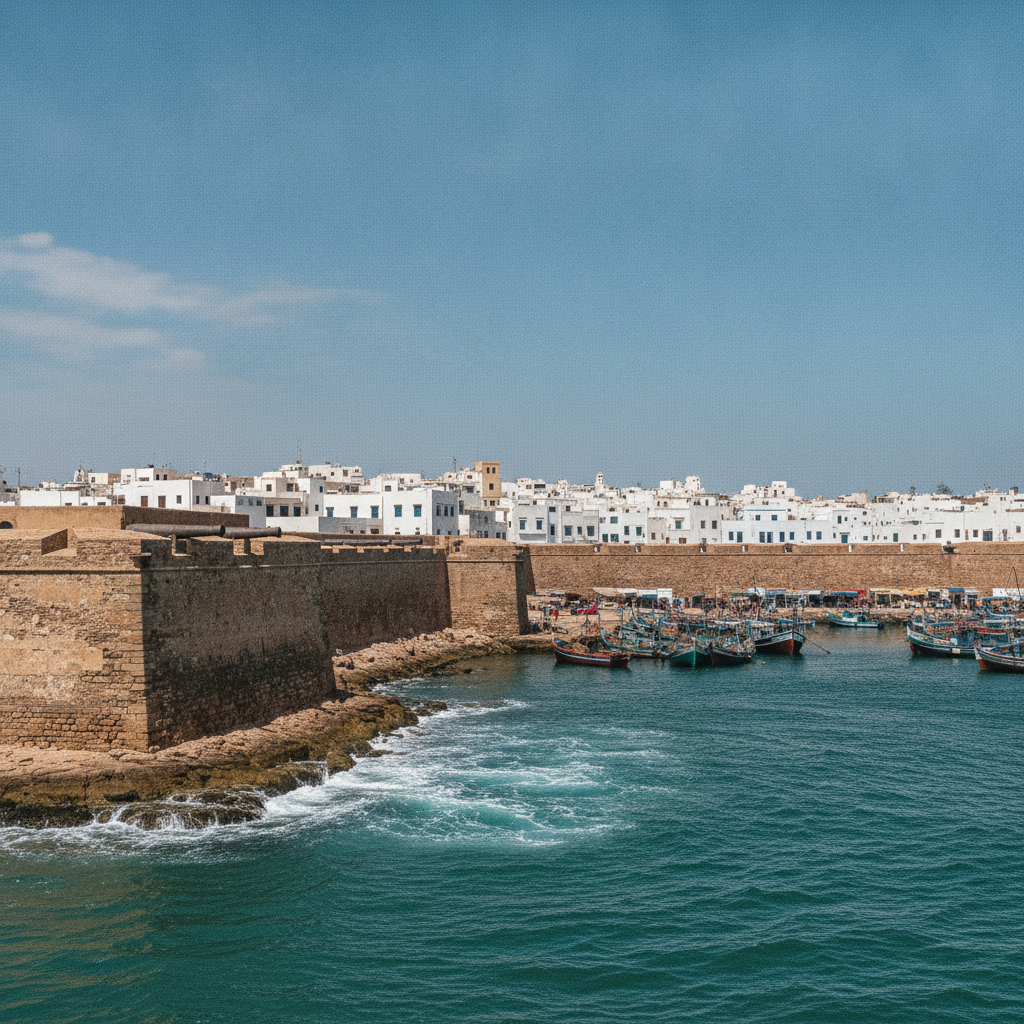
Essaouira Essential: The Atlantic Ramparts, the UNESCO Medina, Gnawa Music, the Mogador Portuguese Heritage, the Orson Welles and Jimi Hendrix Connections, and the Wind City Character
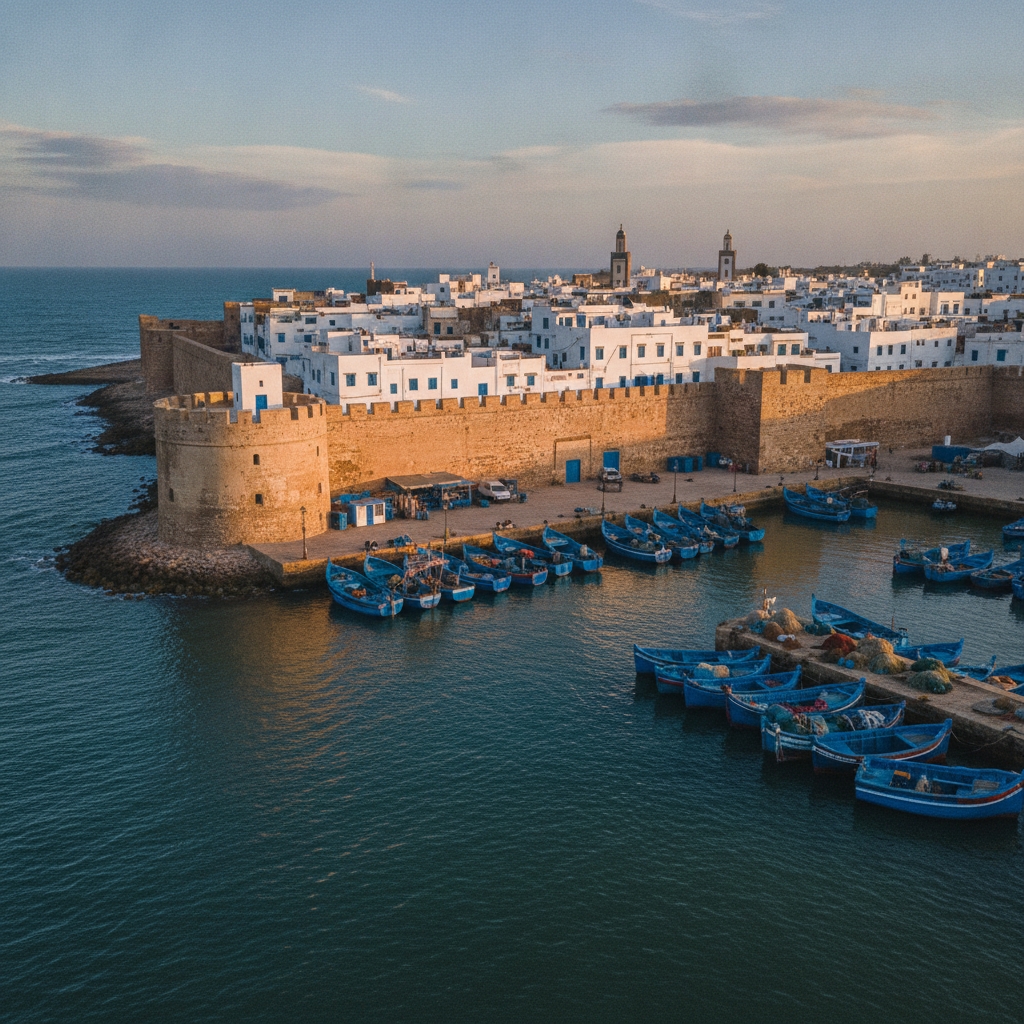
Essaouira History: The Mogador Portuguese Trading Post, the Phoenician Foundation, the Jewish Merchant Community, the Gnawa Slave Trade Origins, the 18th Century Sultan Rebuilding, and the UNESCO Recognition
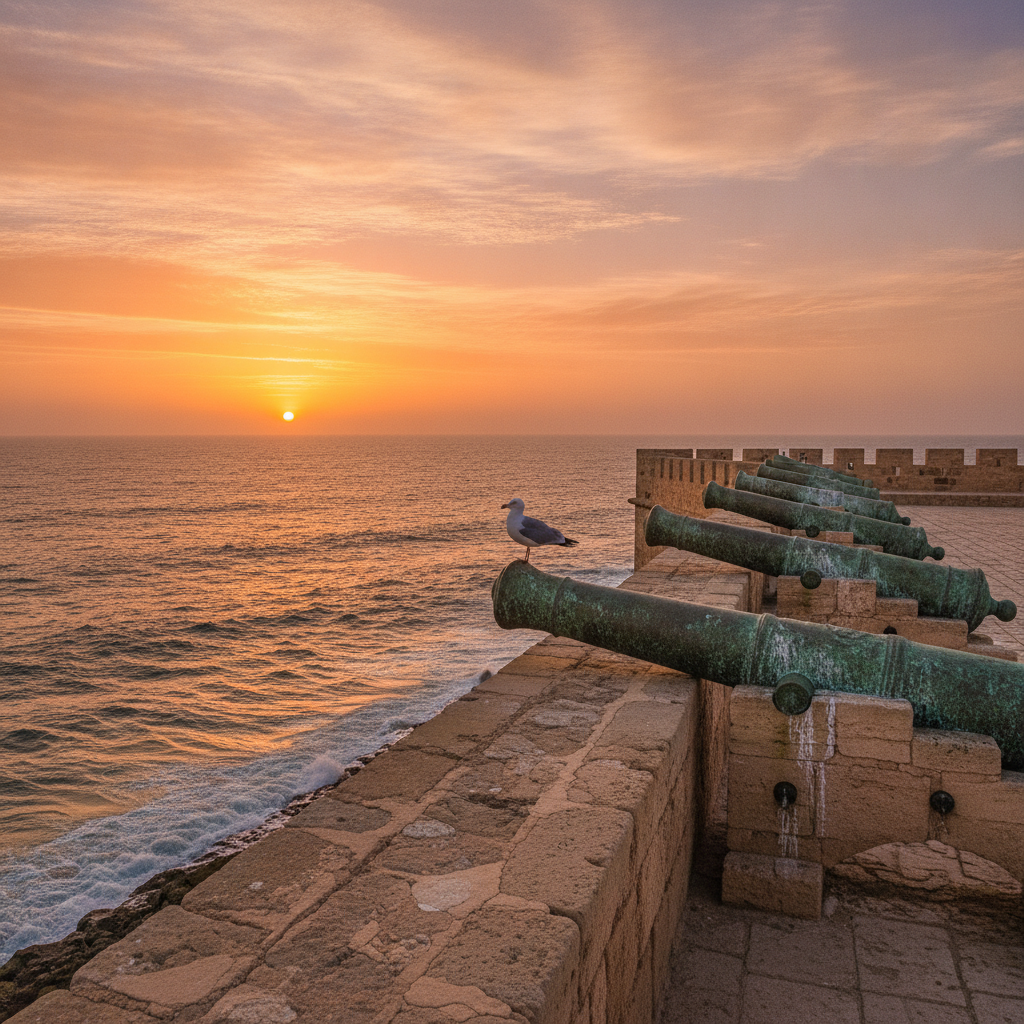
Essaouira's UNESCO-Listed Ramparts Were Designed by French Engineer Theodore Cornut in 1764-1765 Under Sultan Mohammed III and Line the Atlantic With 17th-18th Century Bronze Cannons Seized From European Ships; The Gnawa and World Music Festival of Essaouira Attracts 450,000-500,000 Visitors Over 4 Days in June and Is the World's Largest Gnawa Festival; The Thuya Arborvitae Root Burl Exploitation for the Essaouira Marquetry Craft Is Not Sustainable as Burl Harvesting Kills the Root System Preventing Tree Regeneration
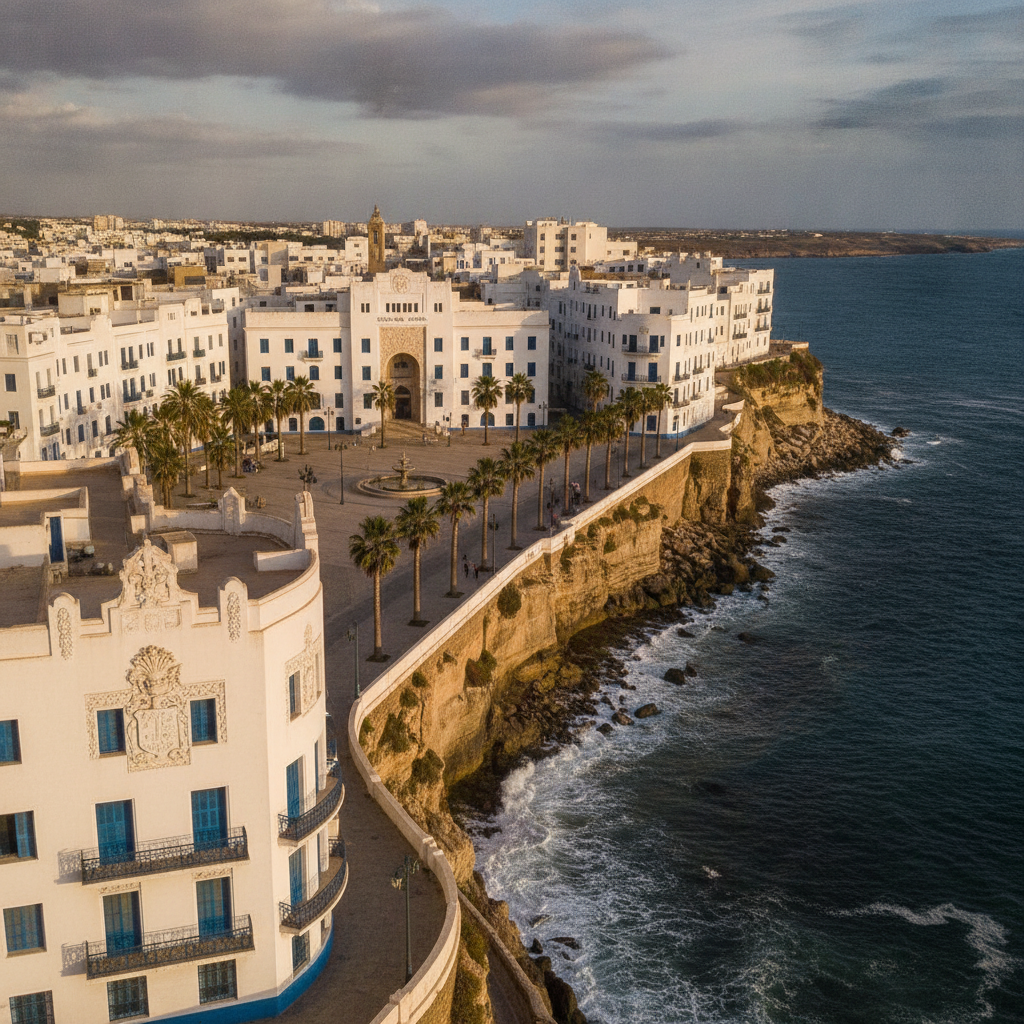
Essaouira South: Sidi Ifni the Art Deco Spanish Enclave, Tiznit the Silver Jewelry Capital, the Souss Valley Connection, and the Route to Agadir