Essaouira's UNESCO-Listed Ramparts Were Designed by French Engineer Theodore Cornut in 1764-1765 Under Sultan Mohammed III and Line the Atlantic With 17th-18th Century Bronze Cannons Seized From European Ships; The Gnawa and World Music Festival of Essaouira Attracts 450,000-500,000 Visitors Over 4 Days in June and Is the World's Largest Gnawa Festival; The Thuya Arborvitae Root Burl Exploitation for the Essaouira Marquetry Craft Is Not Sustainable as Burl Harvesting Kills the Root System Preventing Tree Regeneration
Essaouira's ramparts designed by French engineer Cornut in 1764-1765 with 17th-18th century bronze cannons; the Gnawa Festival attracting 450,000-500,000 visitors over 4 June days; thuya burl harvesting killing the root system and threatening the craft's material sustainability; Essaouira's 300 wind days per year making it a top-5 world windsurfing destination; harbor grill stalls serving grilled sardines for 50-100 MAD; and the Supratours bus from Marrakech in 2.5-3 hours at approximately 90-120 MAD.
- 1
The Essaouira Ramparts and the Atlantic - UNESCO World Heritage Fortifications
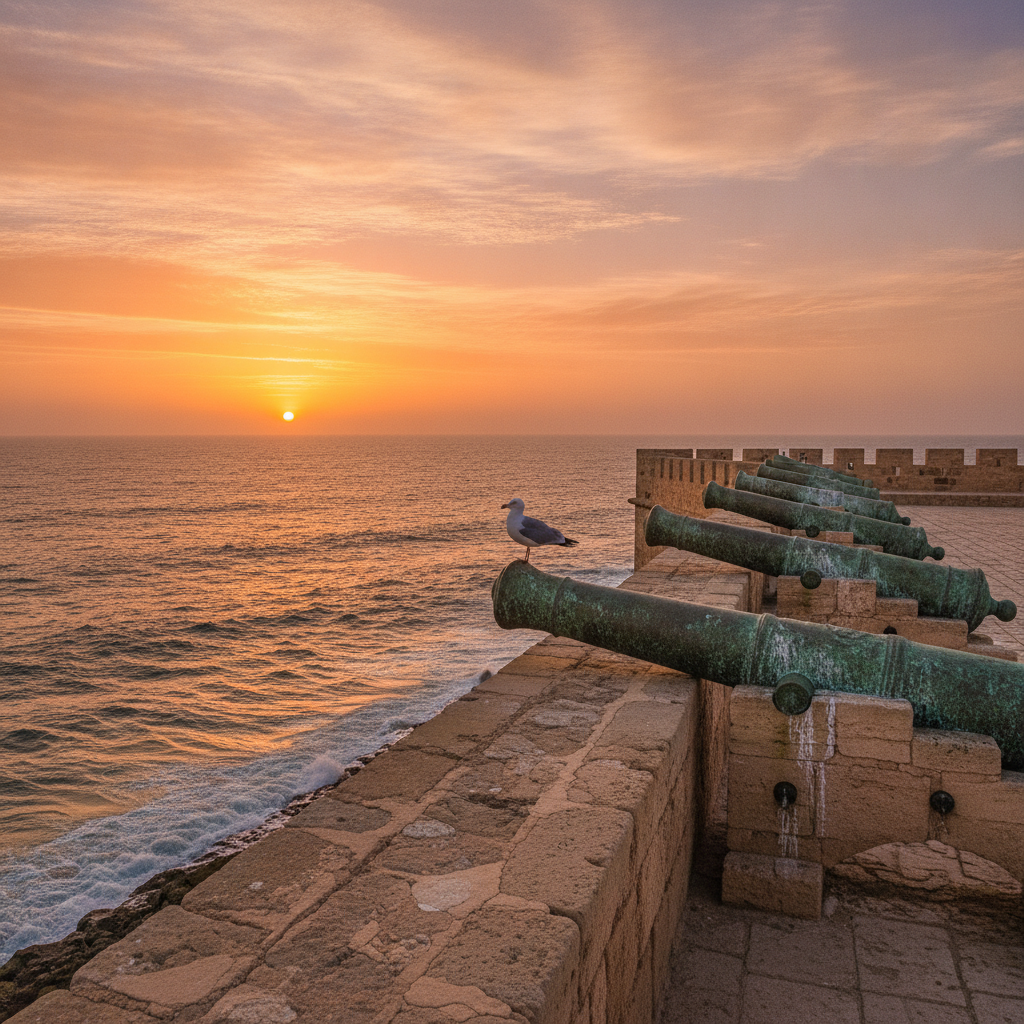
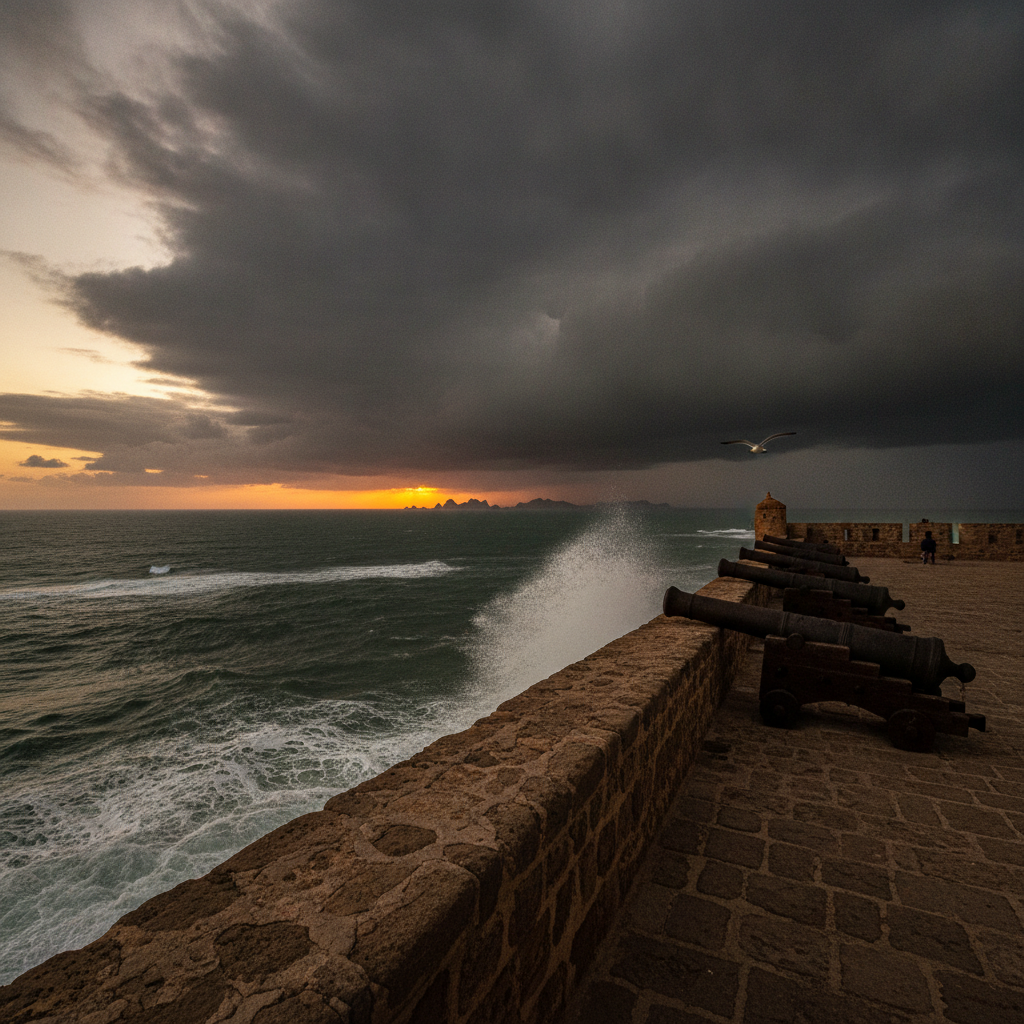
The ramparts of Essaouira (the Skala) - the Portuguese-era fortifications that define the city's character and give it one of the most dramatic coastal settings in Africa: the fortification guide. The history (Essaouira was the site of the Phoenician trading post of Mogador (possibly from the Berber tafogalt (little fortification)): the Portuguese built a fortress here in the early 16th century: the definitive city was founded and designed by Sultan Mohammed III in 1764-1765: the French engineer Theodore Cornut designed the ramparts and the urban plan of the new city (the ville nouvelle as an Agadir replacement after the 1755 earthquake destroyed Agadir Oufella): the ramparts (the Skala de la Kasbah (the sea ramparts of Essaouira) - the primary rampart platform: a 200m long parapet walk along the top of the sea wall facing the Atlantic: lined with bronze cannons (17th-18th century European cannons - many seized from European ships or purchased by Moroccan sultans): the rampart walk is open to visitors: the Skala du Port (the harbor ramparts - the second major rampart walk overlooking the fishing port): the view (the view from the Skala de la Kasbah: the Atlantic Ocean extending to the horizon: the Essaouira archipelago (the Iles Purpuraires - a small archipelago 1.5 km offshore: the primary habitat of the Eleonora's falcon (Falco eleonorae) which breeds on the islands in summer: the islands give the city its alternative name Mogador from the ancient toponym: the UNESCO inscription (the Medina of Essaouira (formerly Mogador) was inscribed as a UNESCO World Heritage Site in 2001 for its outstanding example of a late 18th century fortified seaport town incorporating European military architecture within a Moroccan-African context).
- 2
Jimi Hendrix and the Gnawa Music Connection - Essaouira's Rock and Sufi Heritage
Jimi Hendrix, the Gnawa music tradition, and Essaouira's extraordinary musical heritage: the music guide. Jimi Hendrix (Jimi Hendrix (1942-1970) visited Morocco in 1969 shortly before his death in September 1970: the precise itinerary of his Moroccan visit is uncertain but accounts place him in Essaouira: the legend (a persistent local legend holds that Hendrix visited Essaouira and was so enchanted by the city that he considered settling there: the story is supported by photographs of Hendrix in Essaouira but the details are disputed: the Guitar Place (the Gnawa musician Bachir Attar (the master of the guembri bass lute and the leader of the Master Musicians of Joujouka adjacent to Essaouira) has connections to the Hendrix story: the tourism legacy (the Jimi Hendrix Hotel and Jimi Hendrix Cafe in Essaouira trade on the legend: the Guitar Place (Dar Souiri) is marketed as the house where Hendrix stayed: the Gnawa music (the Gnawa music tradition - one of the primary Essaouira cultural heritage elements: the Gnawa are descendants of sub-Saharan African slaves brought to Morocco via the trans-Saharan trade: the primary instruments: the guembri (3-string bass lute with camel-skin soundboard): the qraqeb (large iron castanets): the lila (the all-night healing ceremony): the Gnawa and World Music Festival of Essaouira (established 1998): the most important Gnawa festival in the world: held annually in June: attracts 450,000-500,000 visitors over 4 days: features world-class international musicians for fusion performances: Gnawa-jazz, Gnawa-blues, Gnawa-electronic: the connection between Gnawa and blues (the trance rhythms of Gnawa music and the pentatonic scales of the guembri have a structural kinship with the American blues tradition that both musicians and musicologists have noted: both descend from West African musical traditions via different routes).
- 3
Essaouira Thuya Wood Craft - The Arborvitae Root Marquetry Tradition
The thuya wood craft of Essaouira - the distinctive woodworking and marquetry tradition using the thuya (arborvitae - Tetraclinis articulata) root burl: the craft guide. The thuya tree (Tetraclinis articulata (thuya, arborvitae, sandarac tree) - an evergreen conifer of the cypress family: native to the western Mediterranean and the Atlantic coast of northwest Africa: in Morocco the primary habitat is the Anti-Atlas mountains and the Atlantic coast from Agadir to Essaouira: the tree has been heavily exploited for its aromatic wood and in Morocco it is now primarily represented by the root burl (the lignotuber - the underground burl from which new stems regenerate): the wood (the thuya wood is exceptionally dense, aromatic, and has a distinctive red-brown heartwood with swirling burl grain: the thuya root burl has an extraordinary burled wood pattern that is considered one of the most beautiful in the world: the scent (the thuya wood has a distinctive, pleasant aromatic resinous scent - it was the source of the sandarac resin used as an art varnish in medieval European and Islamic manuscripts: the craft (the Essaouira thuya craft tradition: the primary products: the inlay marquetry (thuya veneer inlaid into geometric patterns on boxes, frames, and furniture): the turned bowls and cups from thuya root burl: the carved panels: the chess sets and backgammon boards: the inlay materials (the thuya veneer is combined with contrasting inlay materials: mother-of-pearl (from the Essaouira Atlantic shellfish): camel bone (ivory substitute): ebony (imported West African blackwood): lemon wood (a yellow citrus wood): the sustainability (the exploitation of the thuya root burl is not sustainable in its current form: the burl harvesting kills the root system that allows the tree to regenerate: Moroccan conservationists have raised concerns about the depletion of the thuya wood resource).
- 4
Essaouira's Atlantic Winds - The Wind City and World-Class Windsurfing
Essaouira as the wind city of Morocco - the trade winds and the Alizee that make Essaouira the most reliably windy city in Morocco and one of the best windsurfing and kitesurfing destinations in the world: the wind guide. The wind (Essaouira wind: the Alizee (the northeastern trade winds that blow southwestward toward the Atlantic from the European continent): the Essaouira location on a westward-facing headland with no geographic obstruction to the northwest Atlantic fetch creates ideal conditions for the sustained strong winds: the average wind speed at Essaouira (the wind blows at 25-40 km/h for approximately 300 days per year: the wind is most consistent and strongest in summer (June-September) when the north-northeast trade winds are most established: the Chergui (the Chergui (a hot dry easterly wind from the Sahara) occasionally replaces the Atlantic trade wind in late spring and early autumn - the Chergui brings sand dust and raises temperatures dramatically): the windsurfing (Essaouira is consistently rated one of the top 5 windsurfing destinations in the world: the wave category (the Atlantic swell combined with the consistent trade wind creates excellent wave windsurfing conditions): the flat-water section (the flat-water section south of the beach is protected from the direct swell and is ideal for beginner and freestyle windsurfing: the kitesurfing (kitesurfing is the faster-growing wind sport at Essaouira: the long flat beach south of the city is ideal for kitesurfing: numerous kitesurfing schools operate on the beach: the camel riding (the long, flat, hard-packed Atlantic beach south of Essaouira is also used for camel and horse riding: a peculiarly Essaouiran experience: riding a camel at a brisk walk on a deserted windswept Atlantic beach at sunset).
- 5
Essaouira Seafood and Atlantic Cuisine - Grilled Fish on the Harbour
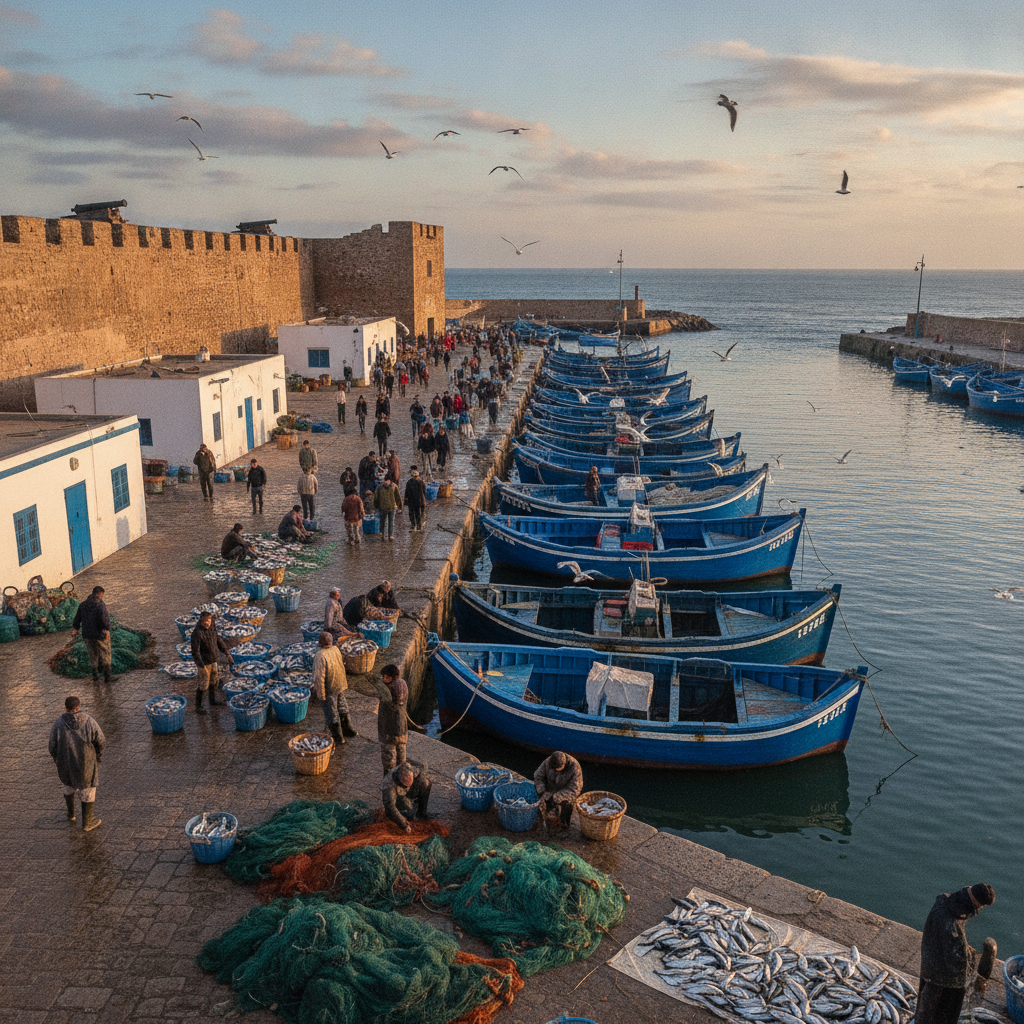
The Essaouira seafood tradition and the Atlantic fishing port cuisine: the food guide. The fishing port (the Essaouira fishing port (port de peche) is located within the Skala du Port ramparts: the primary working fishing port of the city: the fishing fleet consists primarily of small blue-painted fishing boats (pointus) and larger Atlantic trawlers: the catch (the primary fish of the Essaouira Atlantic coast: sardines (Morocco is the world's second largest sardine producer - the Essaouira sardines are particularly prized for their flavor): the swordfish (espadon): the sea bass (loup de mer): the sole: the monkfish: the squid and octopus: the shrimp: the lobster: the fish grills (the primary Essaouira seafood experience: the fish grill stalls at the harbor entrance (the Port de Peche grill stalls): the grill stalls set up in the late morning as the fishing boats return with the morning catch: the display (the fresh fish laid out on ice for the customer to select: the customer points to the fish they want and agrees a price per kilo: the fish is grilled over charcoal (the primary cooking method): served with Moroccan bread, chermoula sauce (the Moroccan fish marinade), harissa, and a simple salad: the price (grilled fish at the harbor grill stalls: approximately 50-100 MAD per person (USD 5-10) for a substantial grilled sardine or sole meal): the argan oil (the Essaouira area is at the northern edge of the argan tree range: local argan oil is used in Essaouira cooking: the calamari (deep-fried calamari (chipirones) is a popular Essaouira snack: the Spanish culinary influence from the nearby Spanish Sahara (Spanish Sahara (now Western Sahara) was adjacent to the Essaouira supply zone).
- 6
Essaouira Practical Guide - Arriving, Staying, and the Marrakech Day Trip
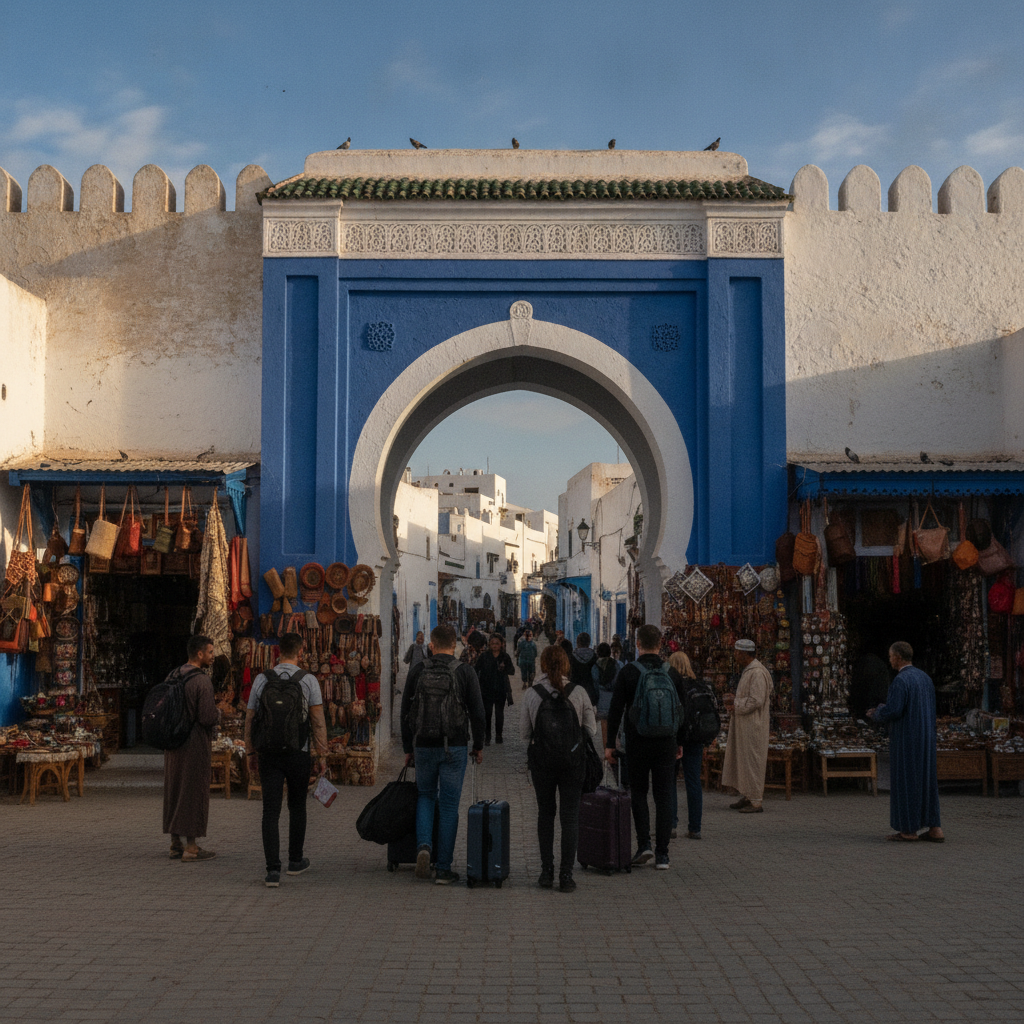
The Essaouira practical guide - essential visitor information for the Wind City of Morocco: the practical guide. The arrival (Essaouira has no airport and no train station: the primary access methods: from Marrakech: the Supratours bus (the bus service that connects with the ONCF train system: a direct Supratours bus from Marrakech to Essaouira takes approximately 2.5-3 hours and departs multiple times daily: the cost is approximately 90-120 MAD one-way: the CTM bus from Casablanca: approximately 5.5 hours: the grand taxi from Marrakech: approximately 2-2.5 hours in a shared taxi: the own car from Marrakech via the N8: approximately 170 km: 2.5 hours): the accommodation (the primary accommodation is riads and guesthouses within the medina: prices: budget rooms from approximately 200-300 MAD per night: mid-range riads 400-700 MAD per double: the weather (Essaouira climate: Mediterranean (Csa): the wind moderates summer temperatures: July-August: 20-25C (cooler than Marrakech by 10-15C): the city is comfortable in summer when Marrakech is unbearably hot: winter: 12-18C: the wind makes winter feel cooler than the thermometer indicates: the season (Essaouira is a year-round destination but the Gnawa Festival in June is the primary annual event: the summer wind makes it the best cool alternative to hot Marrakech: the Marrakech day trip (Essaouira can be done as a long day trip from Marrakech (2.5 hours each way leaves approximately 3-4 hours in the city): but the city is better experienced over 2-3 nights to absorb the atmosphere and the sunset: the medina (the Essaouira medina is smaller and less complex than Fes or Marrakech: navigable without a guide: the primary streets are well-marked).
Walk this route with audio
Stories play automatically as you reach each stop — no tapping needed.
More in Essaouira
The Guanche Indigenous Population of the Canary Islands Were Amazigh (Berber) Speakers Linguistically Related to the Tamazight Populations of the Moroccan Atlantic Coast Who Were Progressively Conquered by Spanish Settlers in the 15th Century; The Battle of Alcacer Quibir in 1578 Where the Moroccan Saadians Killed Portuguese King Sebastian I Triggered the Portuguese Succession Crisis Leading to the 60-Year Iberian Union of Portugal and Spain Under Philip II; The Essaouira Pastilla au Fruits de Mer (Shrimp, Crab, and White Fish in Warqa Pastry With Saffron Cream) Was Invented in Essaouira as a Seafood Adaptation of the Classic Fassi Bastilla
Essaouira Practical: Transport from Marrakech and Agadir, the Best Riad Accommodation, the Optimal Visit Timing, the Wind Season Implications, and the Departure Summary
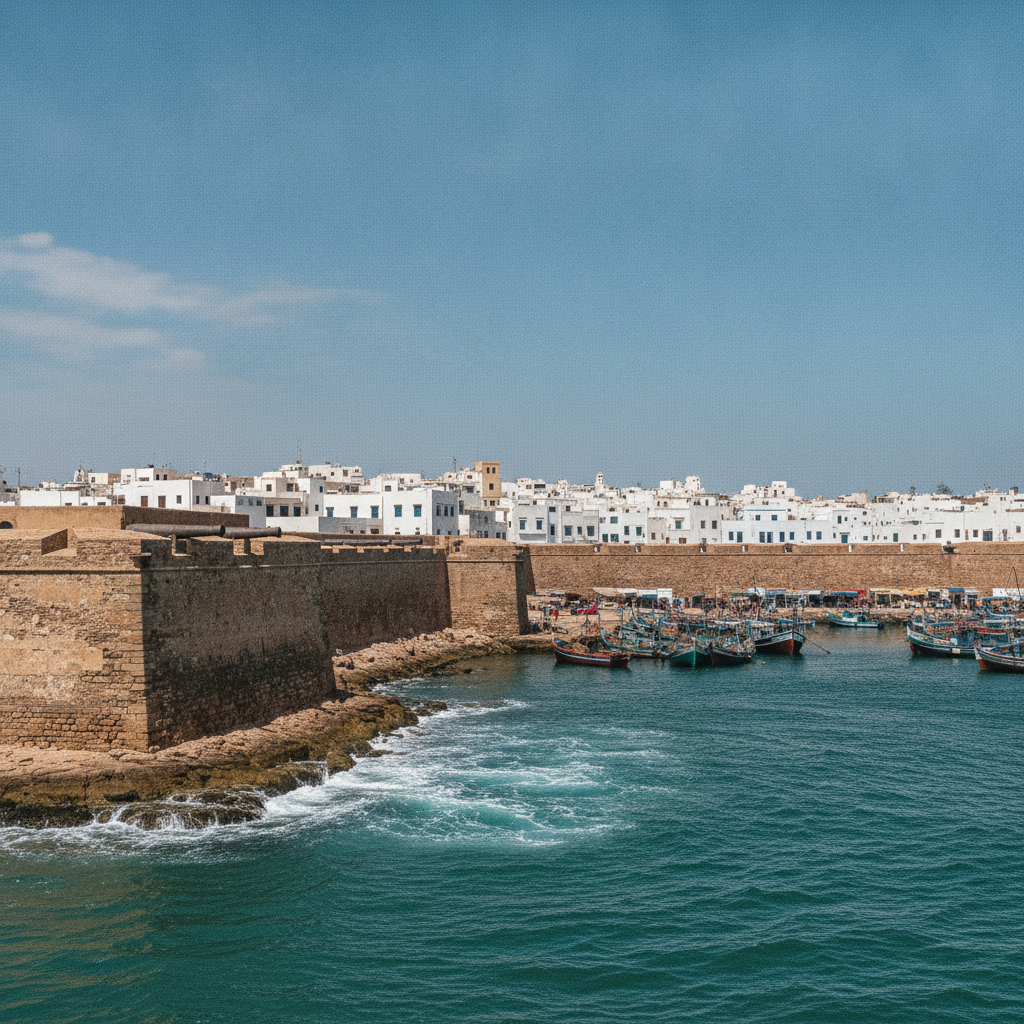
Essaouira Essential: The Atlantic Ramparts, the UNESCO Medina, Gnawa Music, the Mogador Portuguese Heritage, the Orson Welles and Jimi Hendrix Connections, and the Wind City Character
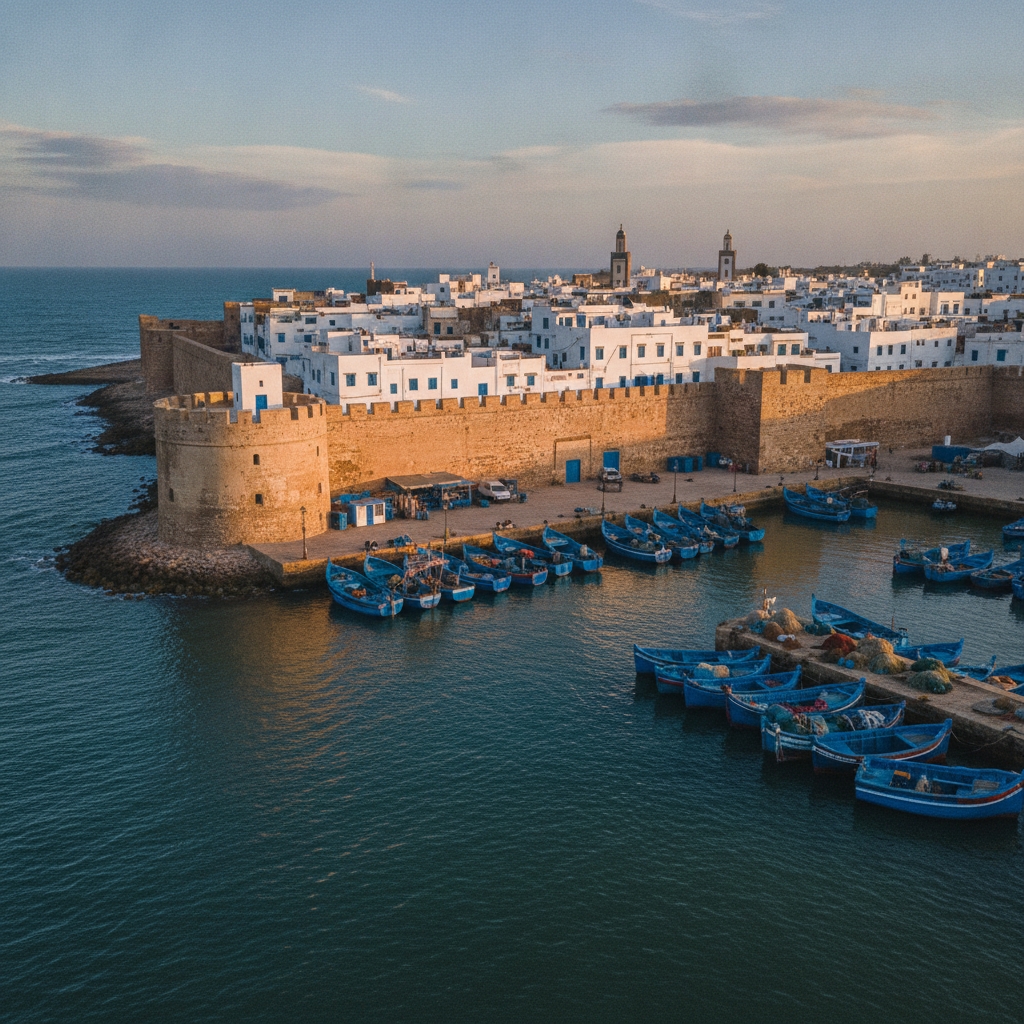
Essaouira History: The Mogador Portuguese Trading Post, the Phoenician Foundation, the Jewish Merchant Community, the Gnawa Slave Trade Origins, the 18th Century Sultan Rebuilding, and the UNESCO Recognition
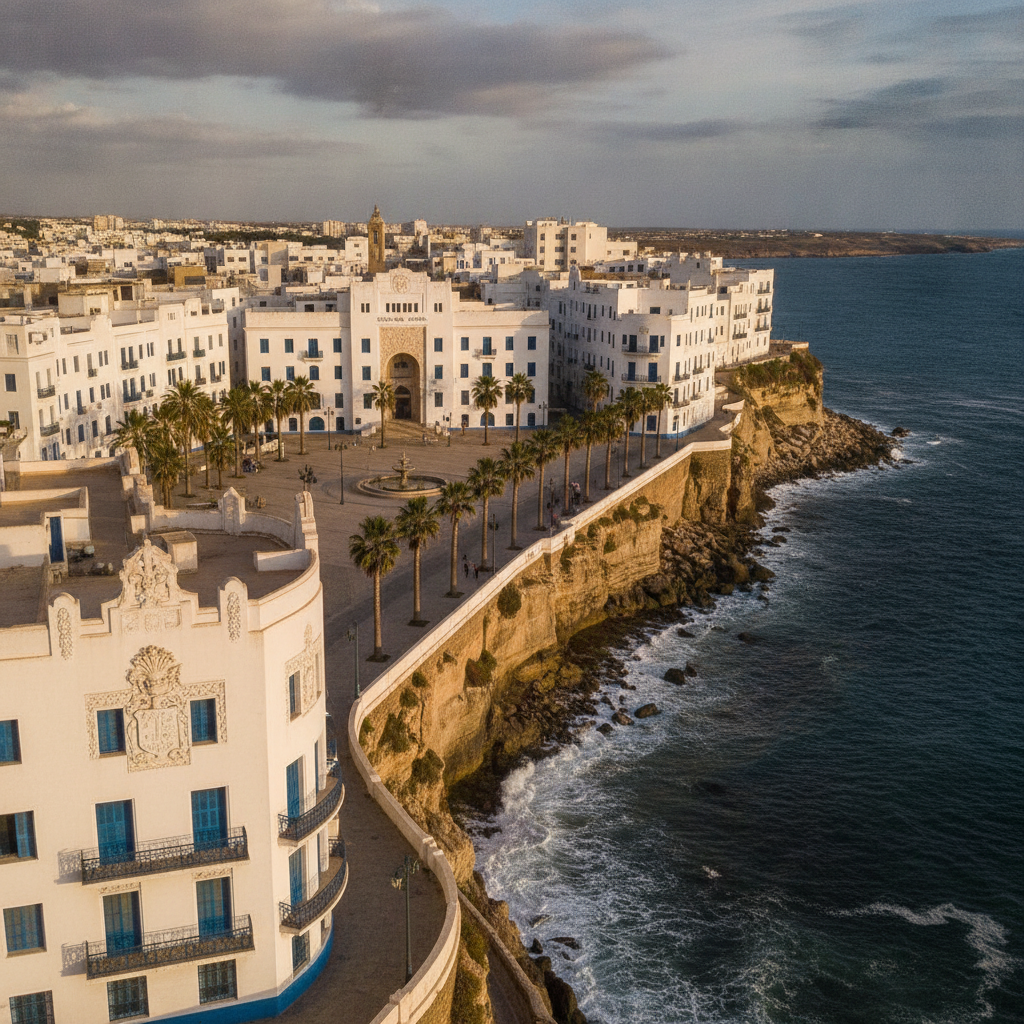
Essaouira South: Sidi Ifni the Art Deco Spanish Enclave, Tiznit the Silver Jewelry Capital, the Souss Valley Connection, and the Route to Agadir