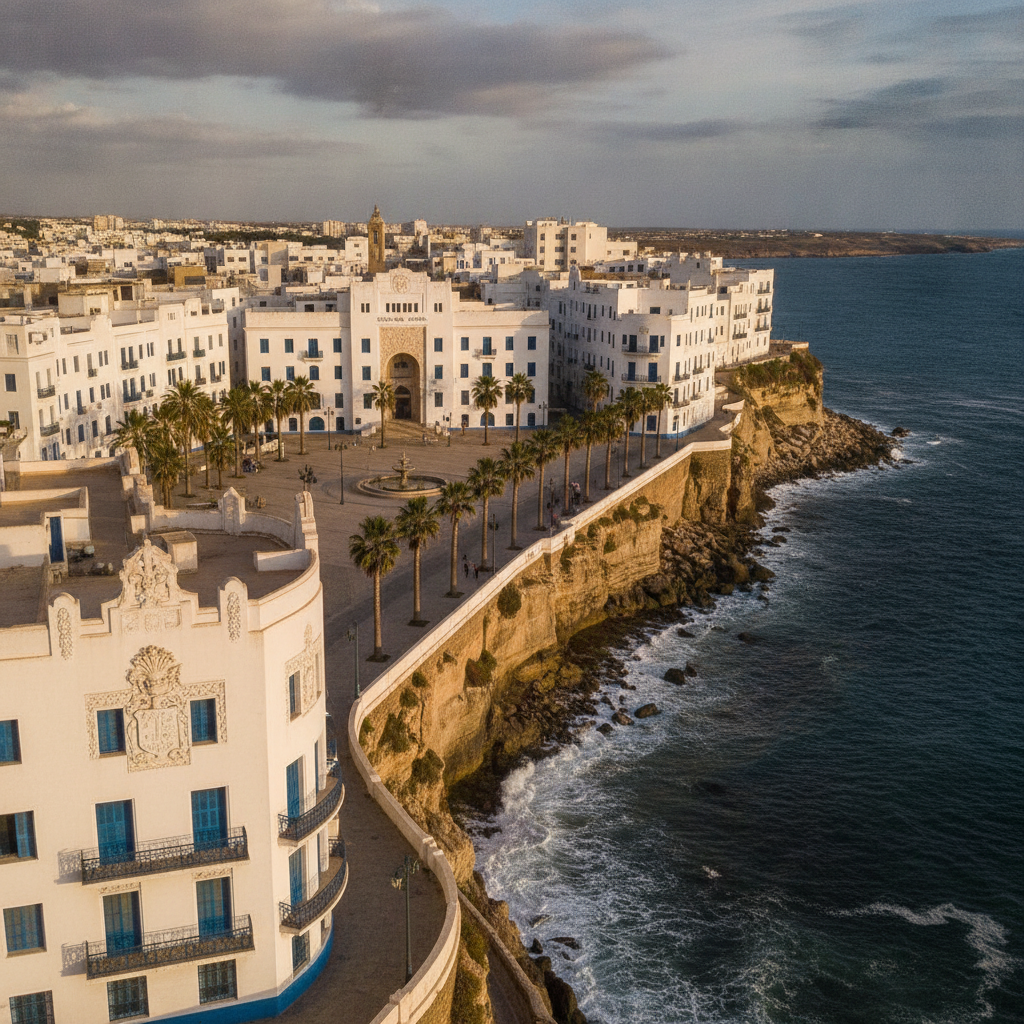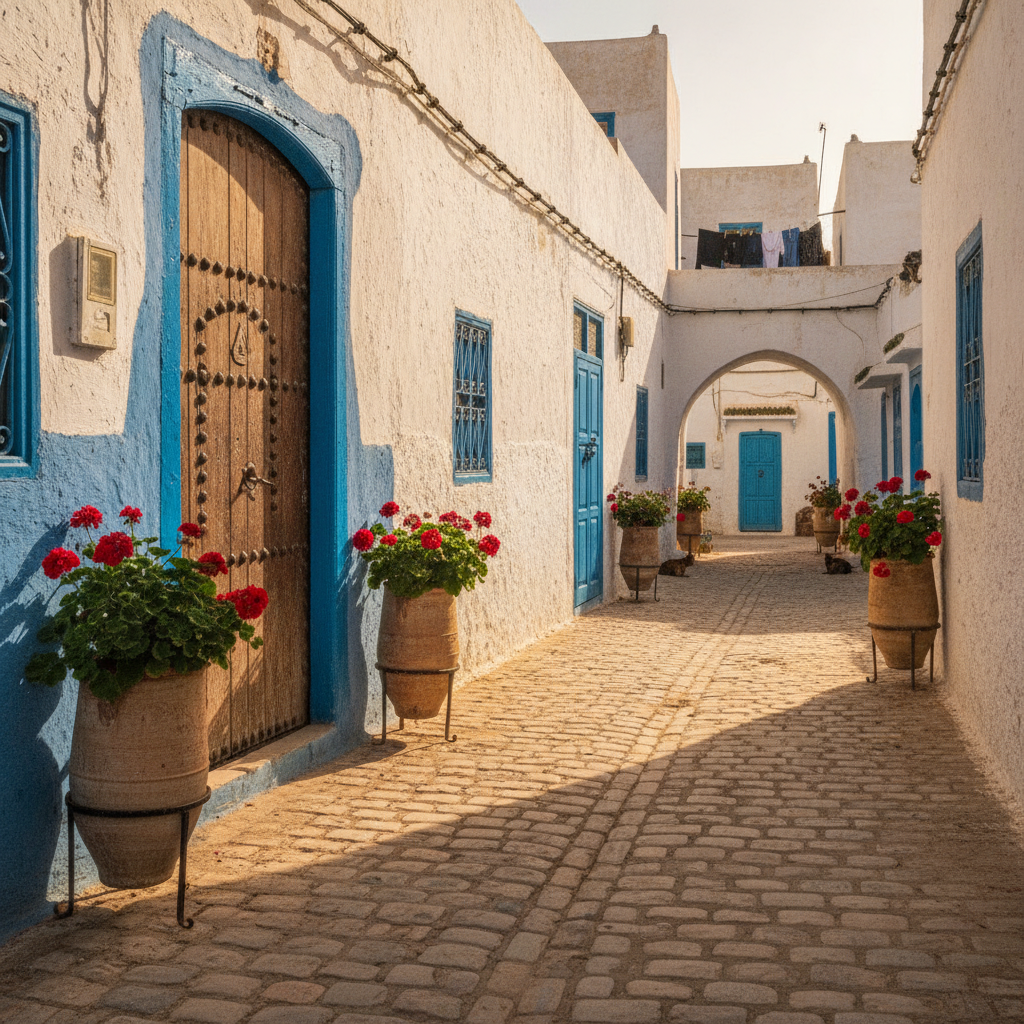
Essaouira Was the Primary Atlantic Terminus of the Western Trans-Saharan Trade Routes With West African Gold Dust, Ivory, and Enslaved People Passing Through Until the Suez Canal Opening in 1869 Diverted the Trade; The 1960 Agadir Earthquake (Magnitude 5.9) Killed 15,000 People in 15 Seconds Destroying the Entire Historic City; The Essaouira Naive Painting School Discovered by Danish Gallerist Damgaard in 1988 Visualizes the Gnawa Spirit World and Is Now Internationally Collected
Essaouira as the primary Atlantic terminus of trans-Saharan gold and ivory trade until 1869; the 1960 Agadir earthquake killing 15,000 in 15 seconds and leaving no historic medina; Damgaard discovering the Essaouira naive painting school in 1988; Gnawa spirit mluk beings rendered as visual figures connecting to West African ritual traditions; the blue fishing boats best photographed from the Skala du Port at golden hour; and Essaouira vs Agadir (culture and wind sports vs package beach resort).
- 1
Essaouira and the Saharan Trade Routes - Gateway Between Morocco and Sub-Saharan Africa
Essaouira as the primary Atlantic terminus of the western trans-Saharan trade routes in the 18th-19th centuries. The trade goods passing through Essaouira: gold dust from the Saharan trading centers of Timbuktu and the Saharan oasis towns; enslaved people from West Africa brought north via the Moroccan trans-Saharan route (the trade in enslaved Africans continued in Morocco until the early 20th century); ostrich feathers (for European fashion); ivory; gum arabic; copper and copper goods from Morocco southward; European manufactured goods and sugar northward from Essaouira. The caravans (the trans-Saharan caravans arrived in Marrakech from the south and the goods were then transported west to Essaouira for export. The gold (the West African gold that funded the Moroccan Alaouite dynasty in the 17th-18th centuries passed through Essaouira in significant quantities). The decline (the opening of the Suez Canal in 1869 and the development of the European colonial railway networks in West Africa in the 1880s-1900s progressively diverted the trans-Saharan trade away from the Atlantic Morocco route: Essaouira declined as a port city in the late 19th century).
- 2
The Essaouira Fishing Industry - Blue Boats and Atlantic Sardines
The Essaouira fishing industry and the blue-painted wooden fishing boats that are among the most photogenic elements of the city. The fishing port (the port de peche within the Skala du Port ramparts: approximately 300-400 small fishing vessels based in the port: the fleet ranges from small day-trip pointus (small wooden fishing boats traditionally pointed at both ends) to larger Atlantic trawlers operating 3-7 day trips). The catch (the primary species of the Essaouira Atlantic fishing grounds: sardines (Sardina pilchardus: Morocco is consistently the world's second largest sardine producer after Norway: the Moroccan Atlantic sardines are canned for export primarily to Europe and West Africa: the Essaouira sardines are also sold fresh at the harbor market): the swordfish (espadon - Xiphias gladius): the sea bass: the sole: the octopus and squid: the shrimp: the blue boats (the traditional Moroccan wooden fishing boat is painted blue - the color of the sea and the sky: the blue paint has practical benefits (antifouling properties) as well as aesthetic ones: the cluster of blue boats in the Essaouira harbor (best photographed from the Skala du Port walkway in the late afternoon when the boats are tied up for the evening and the golden light catches the blue hulls).
- 3
Essaouira Souks - The Medina Market and the Artisan Quarter
The Essaouira medina souks: the market streets and the artisan quarter of the Wind City. The souk geography (the primary Essaouira souk streets are organized in a rational grid layout (the result of Cornut's Enlightenment urban plan) unlike the organic medinas of Fes or Marrakech. The primary souk streets: Rue Mohammed Zerktouni (the main commercial street running from the Place Moulay Hassan toward the ramparts): the covered souk area (the roofed market arcade in the center of the medina): the spice souk (near the Bab Doukkala gate): the thuya craft souk (the cluster of thuya wood workshops and showrooms in the northern medina near the Skala de la Kasbah: the workshops are open and visitors can watch the artisans inlaying thuya veneer with mother-of-pearl and camel bone: the silver jewelry souk (the silver jewelry shops selling Berber tribal jewelry, filigree work, and Saharan jewelry): the weavers souk: the Gnawa music instruments (guembri and qraqeb sold in several shops in the souk): the food souk (the fresh produce market near the Bab Marrakech gate: local vegetables, spices, fresh herbs, argan oil, and honey: the fish souk (the morning fish market at the port de peche entrance: fresh sardines, swordfish, and shellfish from the morning catch).
- 4
Essaouira Budget Guide - How to Enjoy the Wind City Without Overpaying
The Essaouira budget guide: how to experience the Wind City on a budget. The transport to Essaouira (Supratours bus from Marrakech: approximately 90-120 MAD one-way (USD 9-12): the CTM bus from Casablanca: approximately 160 MAD (5.5 hours): the grand taxi from Marrakech: approximately 50-70 MAD per person (shared taxi): the accommodation (budget guesthouses and fondouks in the medina from approximately 150-250 MAD per night: mid-range riads 300-600 MAD: the food (the harbor grill stalls: grilled sardines or sole approximately 50-100 MAD per person: the cheapest food in Essaouira: the freshest fish in Morocco: the medina food stalls (briouats, msemen with honey, harira soup for 5-15 MAD per item): the wind sports (windsurfing lesson approximately 300-400 MAD per 2-hour session: kitesurfing lesson approximately 400-500 MAD per 2-hour session: equipment rental 200-300 MAD per half-day): the free sights (the Skala de la Kasbah ramparts (free entry): the Skala du Port (small entry fee approximately 10 MAD): the beach (free): the medina souk browsing (free): the watch the fishermen unload the catch at the harbor (free): the Gnawa musicians in the Plaza Moulay Hassan (free - but tip the musicians): the paid sights (the Kasbah museum (approximately 20-30 MAD): the Simon Attias synagogue (small donation): the souks (shopping is the primary paid activity - set a budget for thuya wood items and silver jewelry).
- 5
Essaouira vs Agadir - Morocco's Two Atlantic Cities Compared
Essaouira and Agadir: the comparative guide to Morocco's two primary Atlantic coast cities and their fundamentally different characters. Agadir (Agadir: population approximately 600,000: the primary beach resort city of Morocco: rebuilt entirely after the devastating 1960 earthquake (magnitude 5.9) that killed approximately 15,000 people in 15 seconds: the earthquake was caused by a fault directly beneath the old citadel of Agadir: the rebuild created a entirely modern city with no historic medina (the old Kasbah of Agadir Oufella on the hill above the rebuilt city is all that survives): the Agadir beach: a long, wide, protected Atlantic beach with calm surf (the bay is partially sheltered from the Atlantic swell): modern resort hotels, beach clubs, and water sports: the Agadir tourism (primarily European package tourism: the primary Moroccan sun-and-sea resort for British, German, and French package holiday tourists: a fundamentally different tourism model from Essaouira): Essaouira (historic UNESCO medina: the Gnawa music tradition: the artisan craft tradition: the wind and wave sports: the Jimi Hendrix legend: the Orson Welles film connection: the creative and artistic community: the fishing port): the comparison (Agadir for package beach holiday with Mediterranean-style resort facilities and calm swimming: Essaouira for culture, heritage, wind sports, music, and the authentic Atlantic fishing port atmosphere: the two cities complement rather than compete: Agadir is 170 km south of Essaouira by the N1 coastal road through the argan forest).
- 6
Essaouira and the Saharan Desert Art - The Naive Painting School and the African Heritage
Essaouira and its connection to the Saharan African artistic tradition: the naive painting school and the deeper African cultural heritage of the Wind City. The naive painting school (the Essaouira naive and self-taught painting school: discovered by Danish gallerist Frederiksen Damgaard at the Galerie Damgaard (founded 1988): the primary characteristics of the Essaouira school: figurative but non-realistic compositions: the use of bright, flat color areas: figures that combine human and animal elements: Gnawa spirit beings (mluk) rendered as visual figures: Sufi symbolism: geometric patterns derived from carpet and textile designs: the primary artists of the Essaouira school (multiple self-taught painters from different cultural backgrounds: several artists of Gnawa heritage whose work directly visualizes the Gnawa spirit world): the Gnawa heritage (the Gnawa artistic tradition: the Gnawa lila altar cloths (each Gnawa mluk spirit has an associated color and the lila altar uses associated color textiles): the Gnawa spirit possession ceremony as a visual and performance tradition: the connection to African art (the Gnawa cultural heritage is ultimately derived from the West African cultural traditions (Bambara, Songhay, Wolof) of the enslaved people brought to Morocco via the trans-Saharan slave trade: the connection to the visual traditions of West African masks, ritual textiles, and healing ceremonies is identifiable in Essaouira naive painting: the international recognition (the Essaouira naive painting school is collected in France, Belgium, Germany, and the United States: the Gnawa music tradition is studied by ethnomusicologists as a connection between African music and the American blues tradition).
Walk this route with audio
Stories play automatically as you reach each stop — no tapping needed.
More in Essaouira
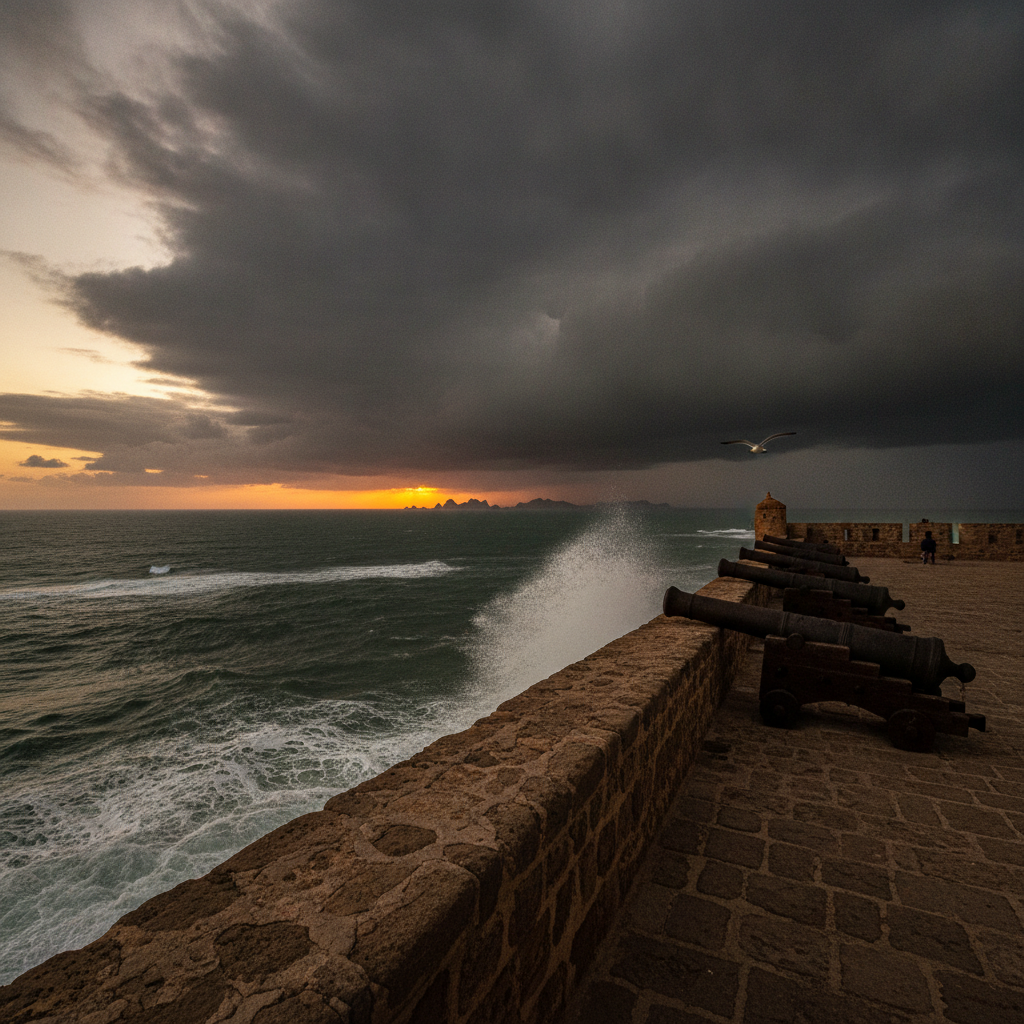
The Guanche Indigenous Population of the Canary Islands Were Amazigh (Berber) Speakers Linguistically Related to the Tamazight Populations of the Moroccan Atlantic Coast Who Were Progressively Conquered by Spanish Settlers in the 15th Century; The Battle of Alcacer Quibir in 1578 Where the Moroccan Saadians Killed Portuguese King Sebastian I Triggered the Portuguese Succession Crisis Leading to the 60-Year Iberian Union of Portugal and Spain Under Philip II; The Essaouira Pastilla au Fruits de Mer (Shrimp, Crab, and White Fish in Warqa Pastry With Saffron Cream) Was Invented in Essaouira as a Seafood Adaptation of the Classic Fassi Bastilla
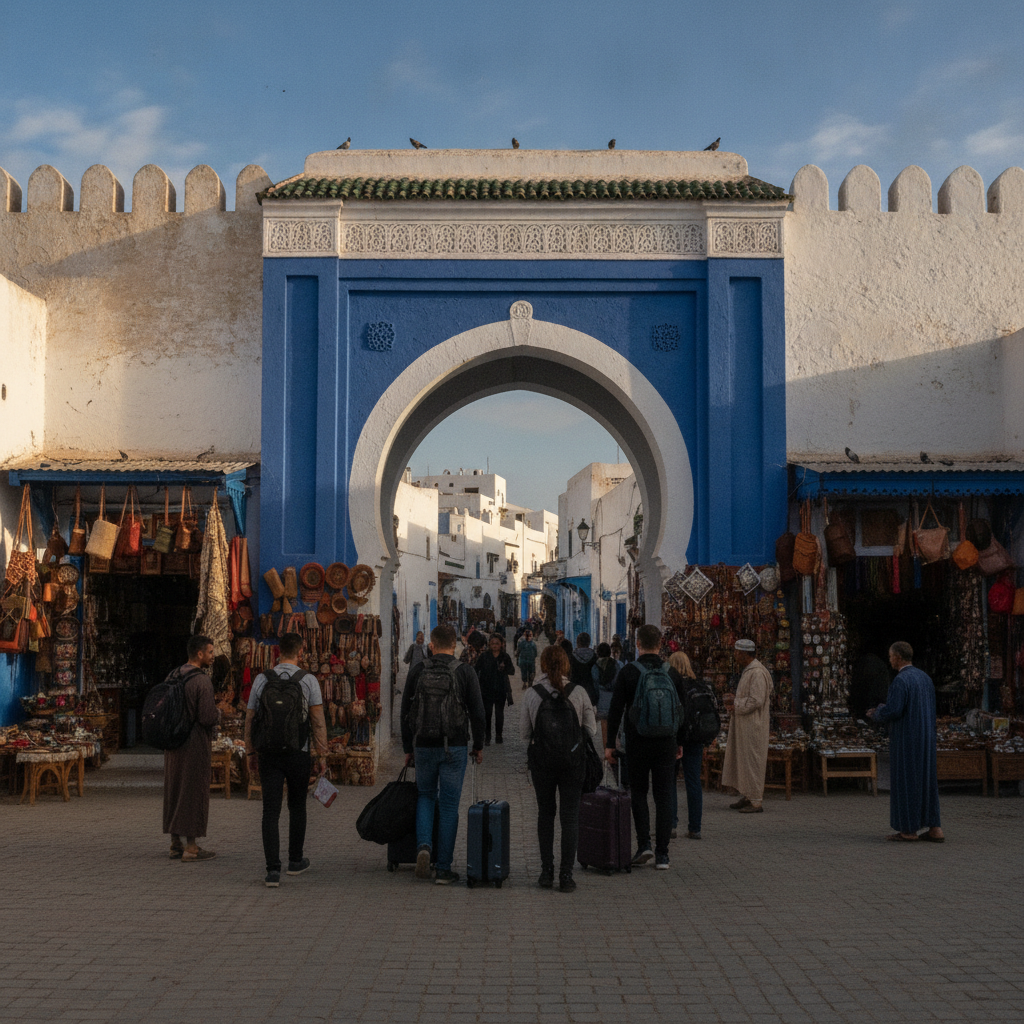
Essaouira Practical: Transport from Marrakech and Agadir, the Best Riad Accommodation, the Optimal Visit Timing, the Wind Season Implications, and the Departure Summary
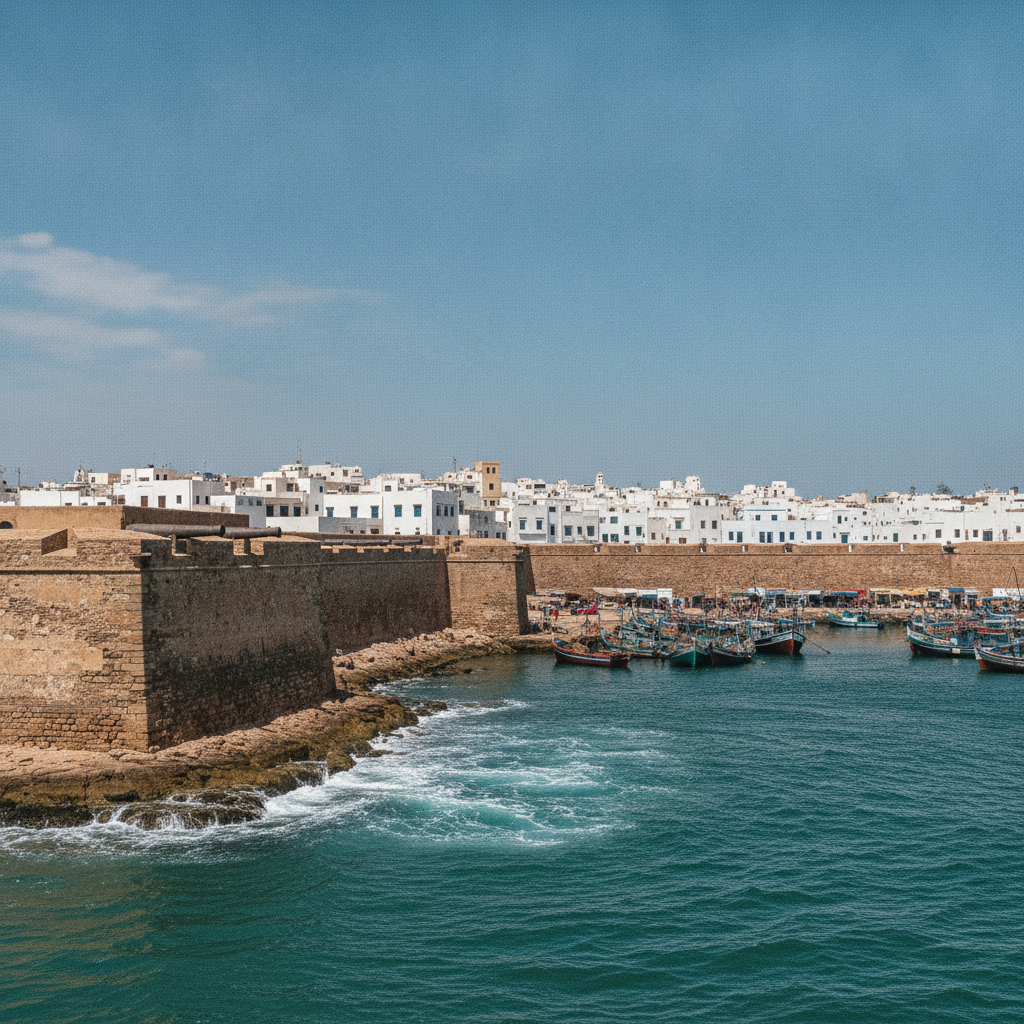
Essaouira Essential: The Atlantic Ramparts, the UNESCO Medina, Gnawa Music, the Mogador Portuguese Heritage, the Orson Welles and Jimi Hendrix Connections, and the Wind City Character
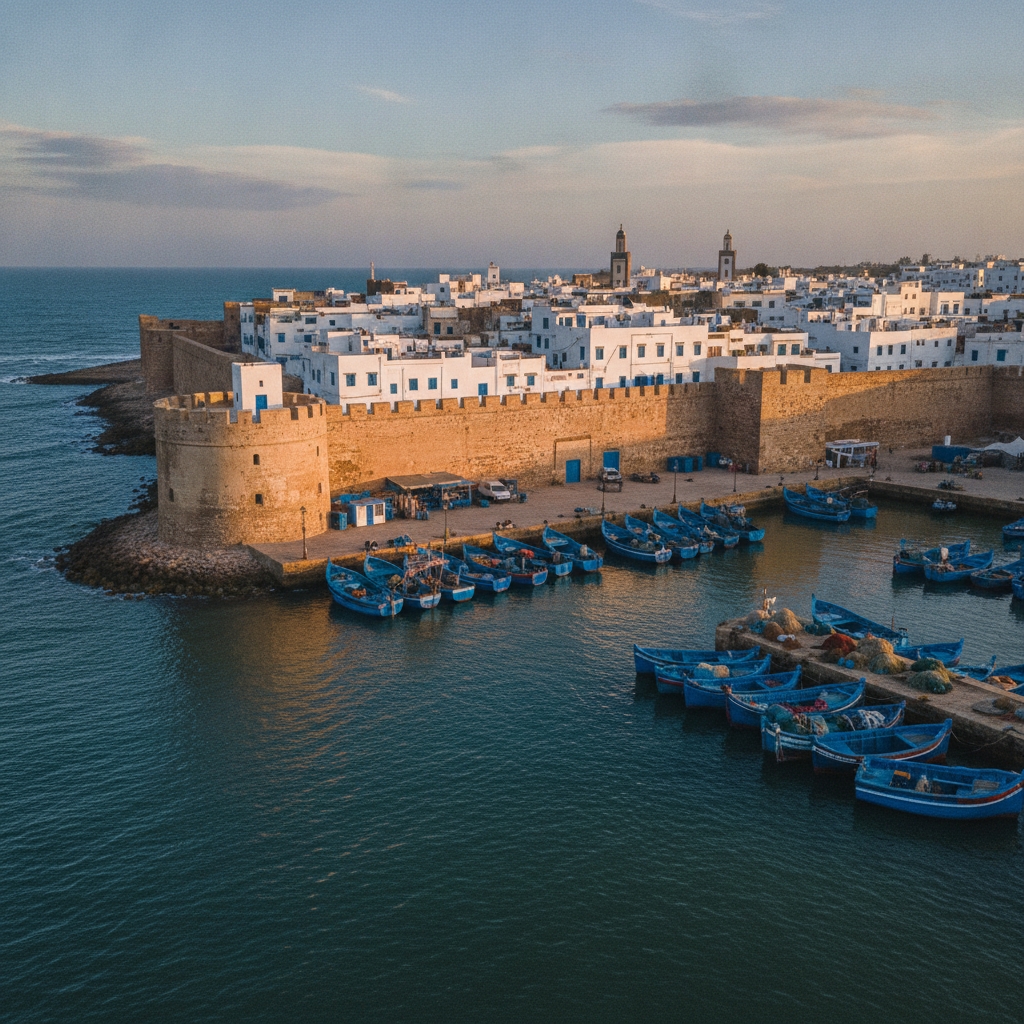
Essaouira History: The Mogador Portuguese Trading Post, the Phoenician Foundation, the Jewish Merchant Community, the Gnawa Slave Trade Origins, the 18th Century Sultan Rebuilding, and the UNESCO Recognition
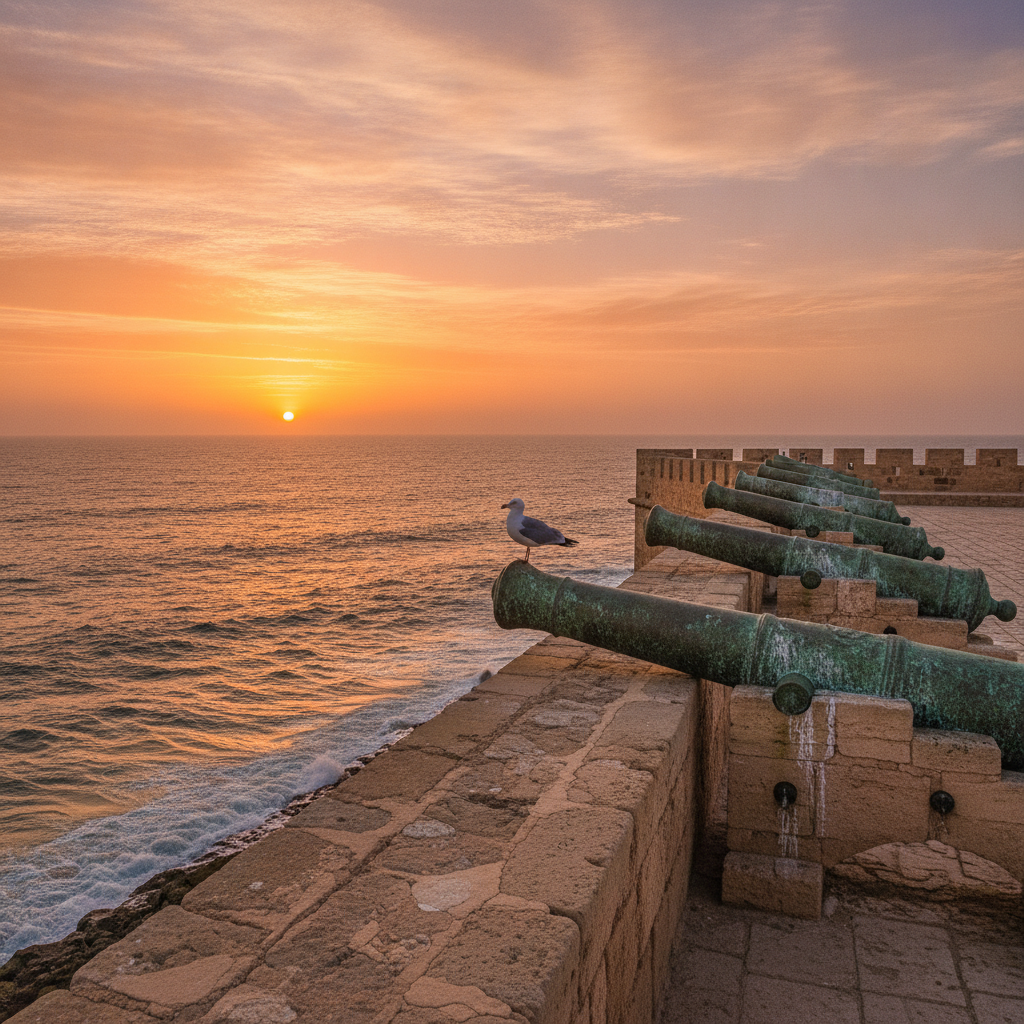
Essaouira's UNESCO-Listed Ramparts Were Designed by French Engineer Theodore Cornut in 1764-1765 Under Sultan Mohammed III and Line the Atlantic With 17th-18th Century Bronze Cannons Seized From European Ships; The Gnawa and World Music Festival of Essaouira Attracts 450,000-500,000 Visitors Over 4 Days in June and Is the World's Largest Gnawa Festival; The Thuya Arborvitae Root Burl Exploitation for the Essaouira Marquetry Craft Is Not Sustainable as Burl Harvesting Kills the Root System Preventing Tree Regeneration