Ibn Khaldun's Muqaddimah Concept of Asabiyya (Group Solidarity) As the Driver of Historical Change Anticipated Modern Sociology by 500 Years; The Tijaniyya Sufi Order Founded in Fes in 1781 Has 100-150 Million Adherents Primarily in West Africa Making It One of the World's Largest Sufi Orders; The Fassi Bastilla Pie Combines Sweet Warqa Pastry With Savory Pigeon Meat Eggs and Almonds in the Definitive Andalusian-Moroccan Sweet-Savory Dish
Ibn Khaldun's asabiyya theory anticipating modern sociology by 500 years; the Tijaniyya Sufi order (founded Fes 1781) having 100-150 million West African adherents; bastilla pie combining sweet pastry with savory pigeon meat eggs and almonds; the seven crafts of Fes including zellij hand-cut tile mosaics; the Chouara Tannery optimal photography at 9-11am; and a complete Fes 3-day itinerary including Volubilis Roman mosaics and Meknes Bab Mansour gate.
- 1
Ibn Khaldun - The Fassi Scholar Who Invented Sociology and the Philosophy of History
Ibn Khaldun (1332-1406) - the Tunisian-born, Fes-educated historian, philosopher, and social scientist who is regarded as the founder of historiography, sociology, and economics as systematic disciplines: the intellectual biography. The life (Abu Zayd Abd al-Rahman ibn Muhammad ibn Khaldun al-Hadrami (1332-1406): born in Tunis into an aristocratic Arab family that had emigrated from Andalusia in the 13th century: his family had served as officials and scholars in the Hafsid court of Tunis: education (Ibn Khaldun studied Islamic jurisprudence, theology, Arabic philology, and the rational sciences in Tunis and in Fes: he was a student at the intellectual orbit of al-Qarawiyyin in Fes: the Muqaddimah (the Kitab al-Ibar (Book of Lessons) with its introductory volume the Muqaddimah (Prolegomena) (1377): Ibn Khaldun's masterwork: the Muqaddimah is a theoretical framework for understanding human civilization and historical change: the primary concepts: Asabiyya (group solidarity or social cohesion) - Ibn Khaldun's central concept: he argued that the cohesion of a social group (particularly a tribal or nomadic group) is the primary driver of political power and historical change: civilizations rise when a group with high asabiyya conquers a sedentary civilization: as the conquering group becomes urbanized and sedentary their asabiyya decays and they become vulnerable to conquest by a new group with high asabiyya: the historical cycle (Ibn Khaldun identified an approximately 3-4 generational cyclical pattern in the rise and fall of dynasties: the cyclical rise and fall of the Moroccan Berber dynasties (Almoravids, Almohads, Marinids) that he himself had observed provided the empirical basis for his theory: the universal recognition (Ibn Khaldun's Muqaddimah is regarded as one of the most important works in the history of social thought: his concepts anticipate modern sociology (Durkheim), economics (Keynes), and historical sociology (Weber) by 500 years).
- 2
Fes as the Spiritual Capital of Morocco - Sufi Orders and the Moulay Idriss Shrine
Fes as the spiritual and religious capital of Morocco - the significance of the city as the center of Islamic scholarship, Sufi brotherhoods, and the shrine of the Idrisid founder: the spiritual guide. The Moulay Idriss Mausoleum (the Mausoleum of Moulay Idriss I (the founder of the Moroccan Idrisid dynasty and the first Moroccan Islamic dynasty): the mausoleum is located within the Fes el-Bali medina: the mausoleum is a major pilgrimage site for Moroccan Muslims: traditionally non-Muslims were not permitted to enter the inner sanctuary: the current policy permits non-Muslims to enter the outer forecourt but not the main shrine chamber: the moussem (the annual Moussem of Moulay Idriss (the religious festival and pilgrimage held at the mausoleum each autumn): one of the most important religious events in the Moroccan calendar: the Sufi brotherhoods (Fes is the center of the primary Moroccan Sufi brotherhoods (turuq): the Tijaniyya order (the Tijaniyya Sufi order - founded in Fes in 1781 by Ahmed ibn Idris al-Tijani (born in Algeria): the Tijaniyya is the most widely diffused Sufi order in West Africa: it has approximately 100-150 million adherents in West Africa (primarily Senegal, Mali, Mauritania, Nigeria, and Cameroon) making it one of the largest Sufi orders in the world: the Tijaniyya zawiya in Fes is the global headquarters of the order and the destination of pilgrims from across West Africa: the Qadiriyya order (the other major Moroccan Sufi order with significant West African diffusion): the zawiya culture (the zawiya (the Sufi lodge and shrine) as the primary institution of Moroccan popular religious life: Fes has dozens of zawiyas dedicated to different awliya (saints) and Sufi orders).
- 3
Fassi Cuisine - The Most Refined Regional Kitchen of Morocco
The Fassi cuisine of Fes - the most elaborate and historically refined regional culinary tradition in Morocco and one of the most sophisticated Islamic culinary traditions in the Mediterranean world: the culinary guide. The Andalusian heritage (the Fassi culinary tradition was profoundly shaped by the waves of Andalusian refugees who arrived in Fes over the centuries - particularly after 1492 (the Spanish expulsion of Muslims and Jews): the Andalusian refugees brought with them the refined culinary traditions of al-Andalus including the use of sweet-savory combinations (dried fruits with meat), rose water and citrus flavorings, complex spice blends, and the elaborate pastry tradition: the bastilla (pastilla - the signature dish of Fes: a flaky warqa pastry pie - the warqa is an extraordinarily thin pastry sheet made by dabbing a ball of wet dough repeatedly on a heated convex griddle (tabia): the bastilla filling - traditional version: shredded pigeon meat (alternatively chicken) cooked with onions, saffron, and cinnamon: the eggs (scrambled in the pigeon cooking liquid): the almonds (blanched, fried, and ground with cinnamon and sugar): the whole assembled in layers within warqa pastry, baked, and dusted with powdered sugar and cinnamon: the sweet-savory combination (sweet pastry with savory pigeon meat) is the definitive Andalusian-Moroccan culinary signature: the mrouzia (lamb slow-cooked with honey, almonds, raisins, ras el hanout, and saffron - a Fassi celebration dish particularly associated with Eid al-Adha: the k'dra (a Fassi tagine technique cooking chicken or lamb in a broth with preserved butter (smen), onions, and chickpeas or almonds): the m'hanncha (the snake pastry - almond paste rolled in warqa pastry into a coiled snake shape, baked, and dusted with sugar and cinnamon - the primary Fassi dessert): the smen (Moroccan preserved butter - aged clarified butter with a pungent, cheese-like flavor used in Fassi cooking as a primary fat).
- 4
Fes Artisan Crafts - Zellige, Carved Plaster, and the Seven Crafts of the Medina
The artisan crafts of Fes - the seven traditional crafts (les sept metiers) that have defined the Fes medina as the primary center of Moroccan artisanal production for over a thousand years: the crafts guide. The seven crafts (the traditional seven crafts of Fes: the leather workers (dabbaghin - the tanneries): the potters (kharrazin - the ceramic and pottery district of Fes is the Ain Nokbi quarter outside the medina: the distinctive Fes blue pottery (blue-and-white ceramic with geometric floral designs): the metal workers (haddadin - the coppersmiths and brassworkers of the Souk al-Attarine and Souk Sbaghine areas: the weavers (nassajin - the silk weavers of the Souk al-Kattanine area: the Fes weaving tradition produces kaftans, djellabas, and the elaborate brocade (dibaj) fabrics used for caftan embroidery): the carpenters (nejjarine - the carpenters of Fes working primarily in cedarwood: cedar is abundant in the Middle Atlas mountains south of Fes: the carved cedarwood ceilings, doors, and screens of Fes mosques and madrasas are the work of the nejjarine: the Nejjarine Museum of Wooden Arts and Crafts): the zellij tile workers (zellijyyine - the makers of the hand-cut geometric tile mosaics: the zellij process: tiles are first fired in a kiln: then painted with mineral colorants: then fired again: then the skilled zellijyyi cuts the tile by hand with a small hammer and chisel into precise geometric shapes: the cut tesserae are then assembled face-down on the ground into the geometric pattern: then set in cement: the zellijyyine of Fes supply the zellij panels used in Moroccan royal palaces, mosques, and madrasas across Morocco and increasingly in luxury architecture worldwide: the embroidery (tarrazin - the Fassi embroidery (tiraz) school: the Fes embroidery tradition uses geometric and floral motifs in polychrome silk thread on linen: distinct from the Moroccan cross-stitch tradition of Azemmour and Chefchaouen).
- 5
Fes Photography Guide - The Blue Hour, the Tanneries, and Medina Alleys
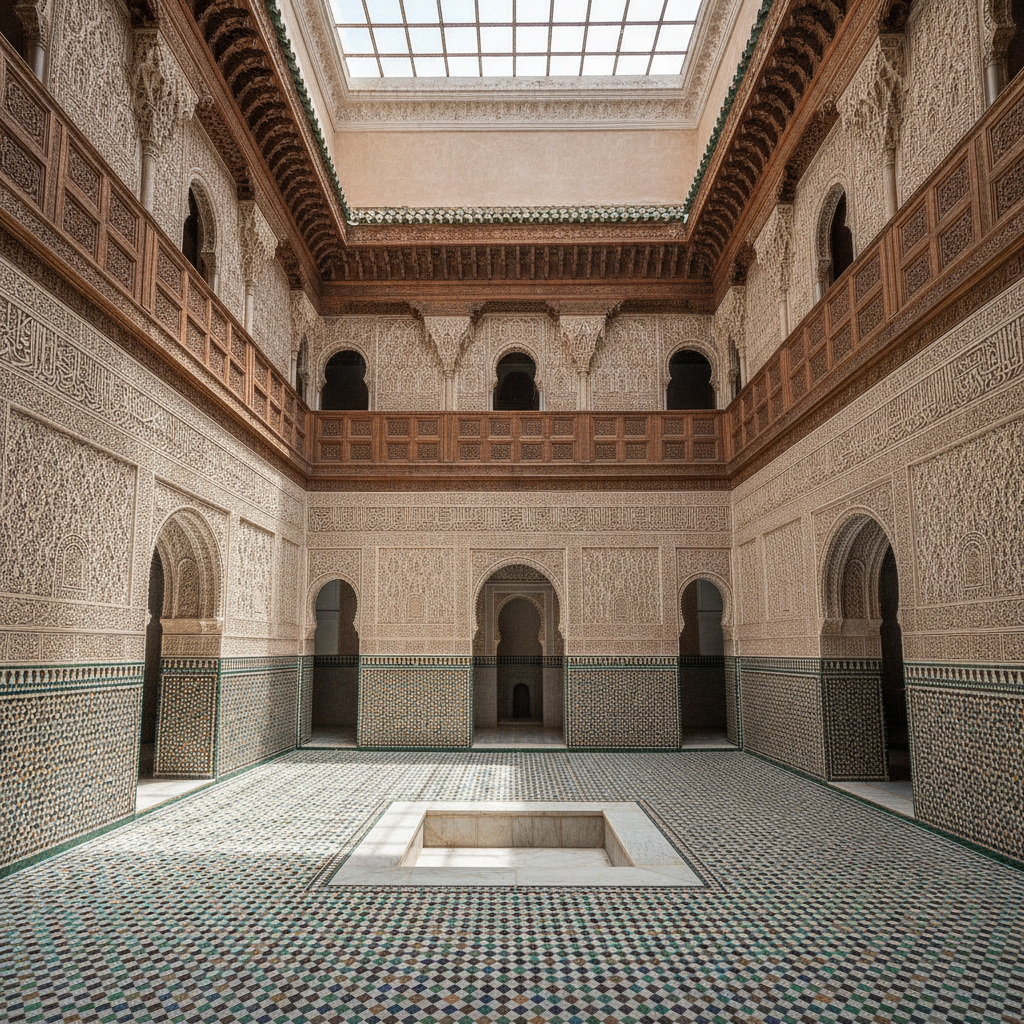
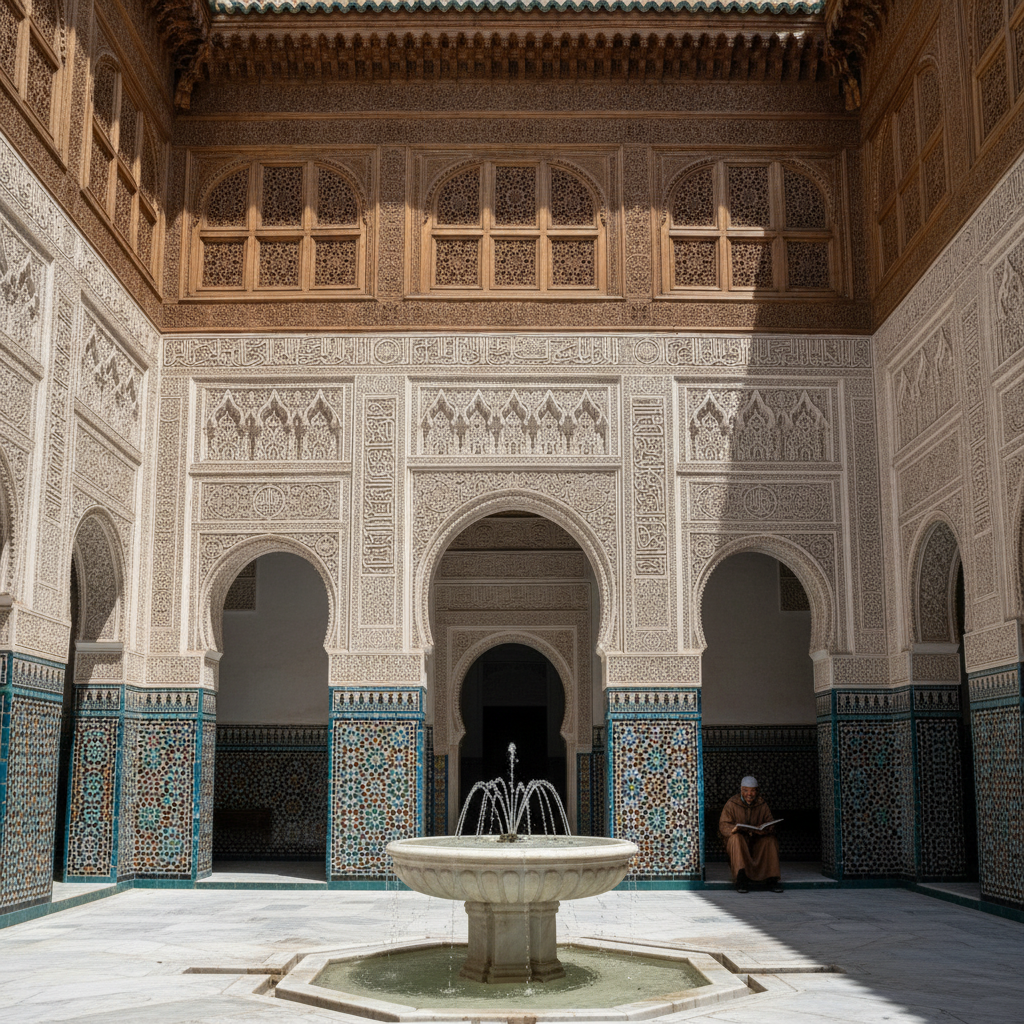
The Fes photography guide - the primary photography locations and the optimal conditions for photographing one of the world's most visually extraordinary cities: the photography guide. The tannery (the Chouara Tannery - the primary photography destination in Fes: the optimal time is mid-morning (9-11am) when the sun is high enough to illuminate the tannery floor from the terrace but not yet overhead and washing out the colors: the dye vats are most vivid when freshly filled (the colors fade as the day progresses and hides are processed): the position (the terrace of the surrounding leather goods shops is the primary viewpoint: the highest terrace gives the most comprehensive view of the tannery layout: a telephoto lens (70-200mm) allows compression of the vat pattern and isolation of individual workers: the medina alleys (the narrow alleyways of Fes el-Bali: the optimal light conditions for the alleys are in the morning (east-facing alleys lit directly) and late afternoon (west-facing alleys lit): the covered souks (the covered markets of the Souk al-Attarine, Souk al-Kattanine, and Souk Cherabliyin - the dappled light filtering through reed and bamboo roof panels creates a distinctive chiaroscuro: the Bou Inania Madrasa (the courtyard of the Bou Inania Madrasa - the optimal time is between 10am-12pm when the sunlight falls directly into the courtyard and illuminates the carved plasterwork and zellij: the rooftop terraces (the rooftop terraces of medina riads and restaurants offer panoramic views over the sea of flat rooftops and green-tiled mosque roofs: the dawn light on the medina from a rooftop is particularly spectacular with the mist in the Fes valley: the crowds (Fes is most photogenic on weekday mornings when the medina is active but not yet crowded with tourist groups: Ramadan evenings (iftar time) create extraordinary crowd scenes in the medina).
- 6
Fes 3-Day Itinerary - The Medieval City, the University, and the Tanneries
The Fes 3-day itinerary - a structured guide to experiencing the primary sights and culture of Morocco's most complex medieval city in three days: the itinerary guide. Day 1 (Fes el-Bali - the medina core: morning: hire an official guide at the medina entrance (Bab Bou Jeloud): follow the main medina route from Bab Bou Jeloud east toward the Qarawiyyin mosque: the Bou Inania Madrasa (on the main thoroughfare near Bab Bou Jeloud): the Souk al-Attarine (the spice market adjacent to the Qarawiyyin mosque): the al-Qarawiyyin mosque exterior and forecourt (non-Muslims may not enter the prayer hall but can view the interior from the doorways): the Chouara Tannery (10-15 minutes walk northeast of the Qarawiyyin - arrive by 10am for optimal light): the Nejjarine Square and museum: afternoon: lunch at a medina restaurant (try bastilla and harira): the afternoon souks (the Souk Henna, the dyers souk, the coppersmiths souk): evening: dinner on a riad rooftop terrace overlooking the medina: Day 2 (Fes el-Jedid and the wider city: morning: the Royal Palace gates (exterior only): the Mellah (the Jewish quarter): the Ibn Danan synagogue: afternoon: the Bou Jeloud Gardens: the Dar Batha Museum (housed in a 19th century palace: the primary museum of Fassi arts and crafts: the Fes pottery collection): the potters quarter of Ain Nokbi (outside the medina - the production kilns and the Fes blue ceramic tradition): evening: the Ville Nouvelle (the French colonial new city): dinner at a Ville Nouvelle restaurant: Day 3 (Day trip to Volubilis and Meknes: taxi or shared taxi to Volubilis (80 km): 2 hours at the Roman ruins (the Decumanus Maximus, the mosaics, the triumphal arch): continue to Meknes (30 km): the Bab Mansour gate: the Heri es-Souani granaries: the Mausoleum of Moulay Ismail: return to Fes by evening train or taxi).
Walk this route with audio
Stories play automatically as you reach each stop — no tapping needed.
More in Fes
Morocco's King Bears the Title Amir al-Muminin (Commander of the Faithful) Giving the Moroccan Monarchy a Unique Theocratic Religious Legitimacy Distinct From All Other Arab Monarchies; The Andalusian Music Tradition al-Ala Was Brought to Fes by Refugees From the 1492 Expulsion of Muslims and Jews From Spain and Is Still Performed in Three Regional Schools; Fes Is Arguably the Most Important Single City in the Spiritual Life of West African Islam Through the Tijaniyya Sufi Order With 100-150 Million Adherents
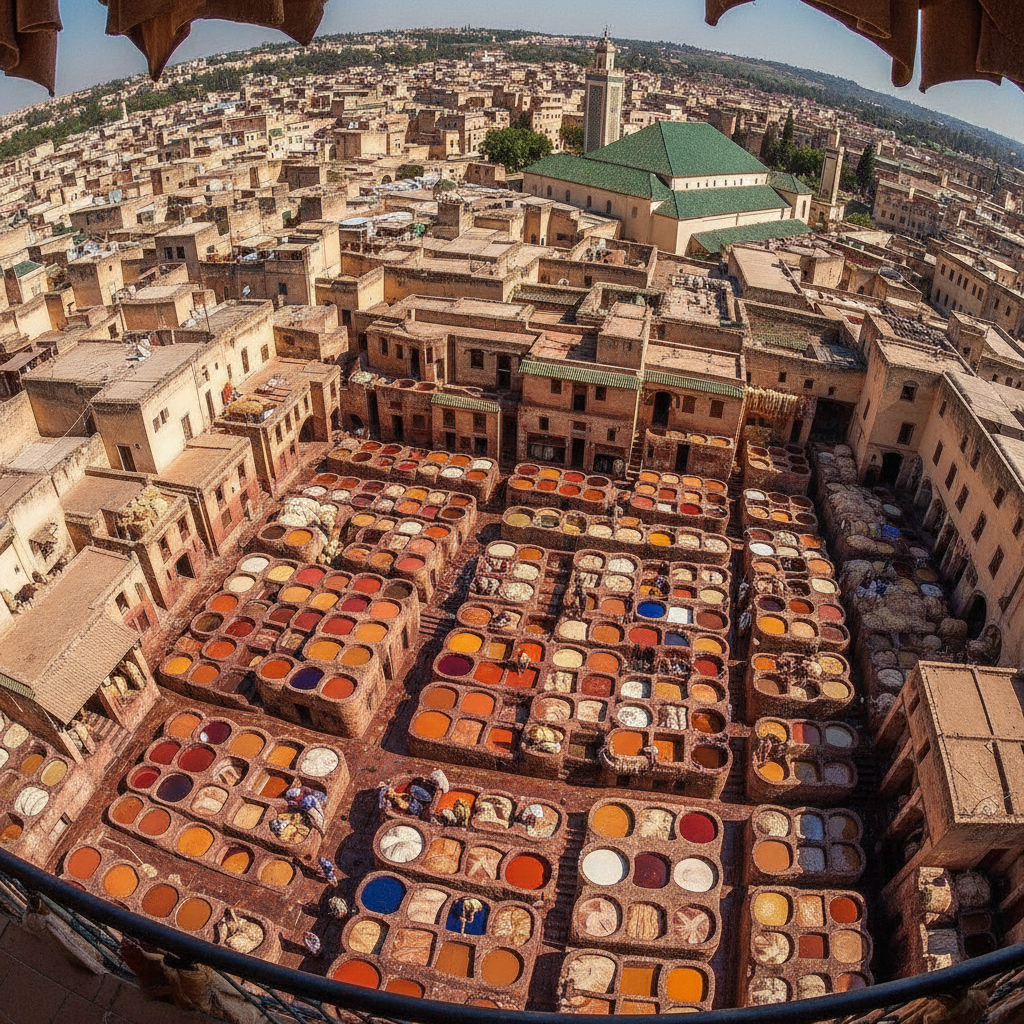
The Fes el-Bali Medina Is the Largest Car-Free Urban Area in the World With 9,000 Streets and 150,000 Inhabitants; The University of al-Qarawiyyin Founded in 859 CE by Fatima al-Fihri Is the Oldest Continuously Operating University in the World; The Chouara Tannery Uses Pigeon Dung as an Ammonia Source to Soften Hides in a Process Unchanged Since the Medieval Period
The Fes Festival of World Sacred Music Founded in 1994 Presents Sufi, Gnawa, Gregorian, Jewish, Hindu, and Buddhist Sacred Music in Venues Within the 1,200-Year-Old Medina; The Almohad Dynasty (1147-1244) Was the Most Hostile to Jews in Moroccan History Forcing Conversion or Emigration and Driving Fassi Jews to Flee to Christian Spain; The Fes Medina Has No Single Tourist Focal Square Like Marrakech's Djemaa el-Fna Making It More Authentically Urban and Less Tourist-Organized
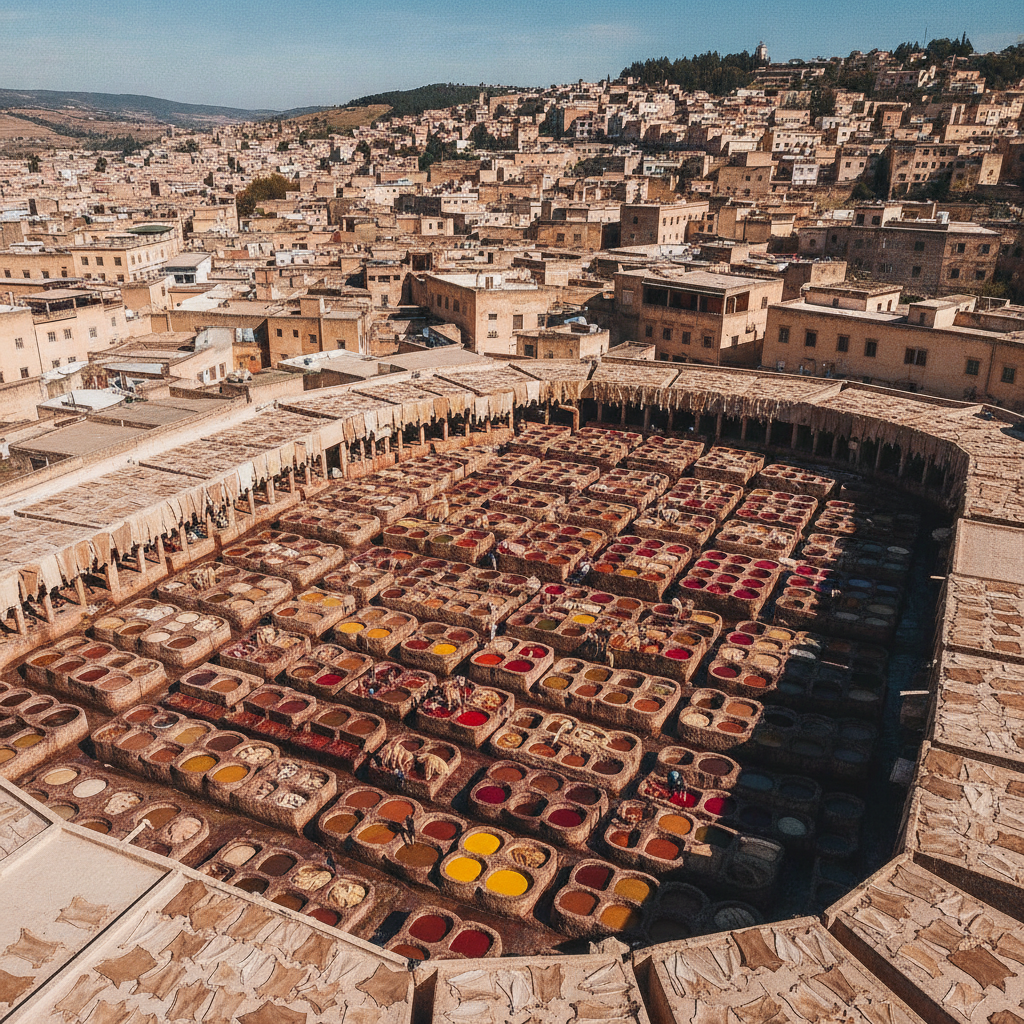
Fes Essential: Fes el-Bali the World Oldest Living Medina, the Bou Inania Madrasa, al-Qarawiyyin University, the Chouara Tanneries, the Blue Gate, and the Medieval City Character
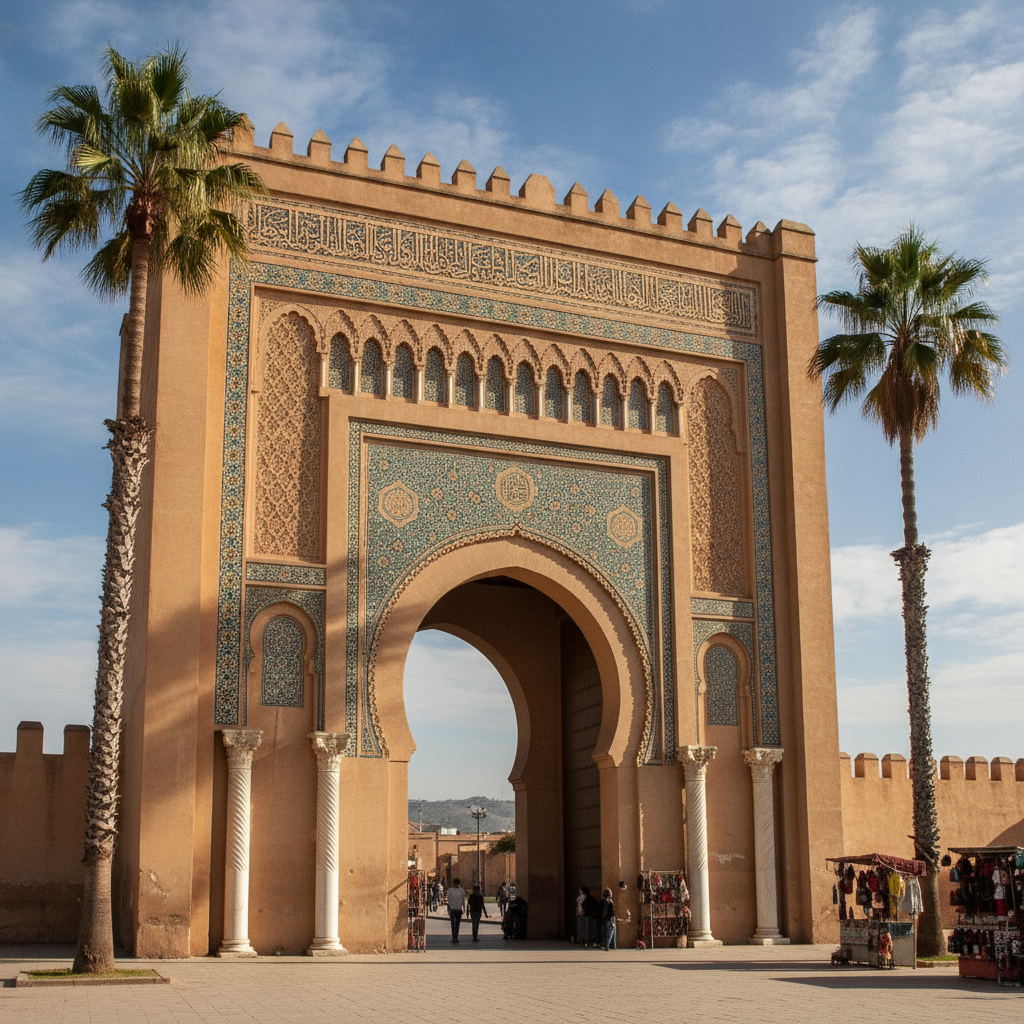
Fes History: The Idrisid Foundation, the Marinid Golden Age, the Wattasid and Saadian Decline, the Alaouite Revival, the French Protectorate, and the Contemporary Fes Identity