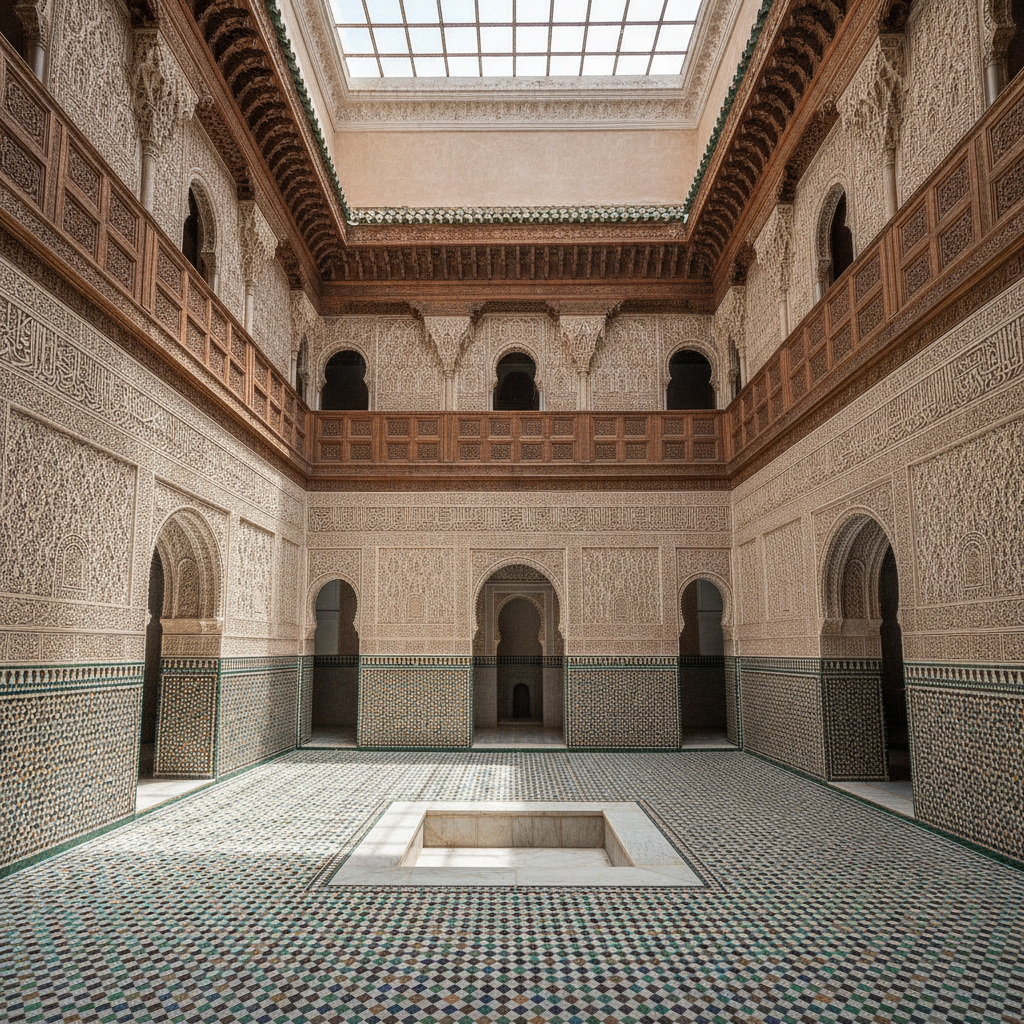
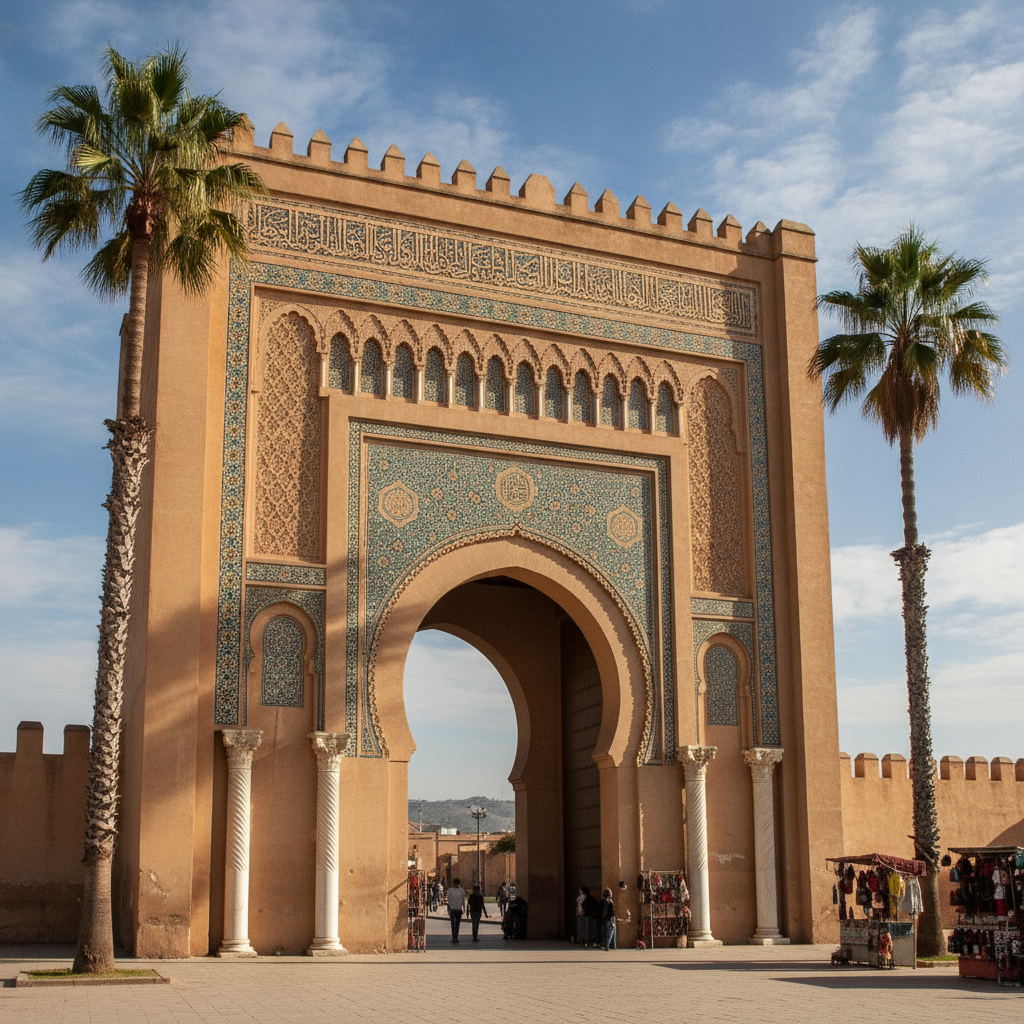
Idris I Was Poisoned in 791 CE on Orders of the Abbasid Caliph Harun al-Rashid From Baghdad Demonstrating the Extraordinary Long-Reach of Abbasid Power; The Bab Mansour Gate of Meknes (1732) Is Decorated With Marble Columns Taken From the Roman Ruins of Volubilis 33 km Away; The Fassi Ulema (Islamic Scholars of Fes) Have Legitimated or Challenged Moroccan Rulers for Over a Thousand Years as One of the World's Oldest Ongoing Political Relationships
Idris I poisoned by Abbasid Caliph Harun al-Rashid from Baghdad; the Bab Mansour gate decorated with marble columns from Roman Volubilis; Moulay Ismail holding 2,000-4,000 European Christian slaves to build Meknes; the Fes medina UNESCO-listed 1981 as Morocco's first; the February 20 Movement of 2011 with Fes as a primary protest center; and Fes as the center of Moroccan civilization with the world's oldest university, the Tijaniyya Sufi order, and the defining Moroccan artisanal traditions.
- 1
The Idrisid Dynasty - Morocco's First Islamic State Founded by a Descendant of the Prophet
The Idrisid dynasty (788-974 CE) - the first Moroccan Islamic dynasty and the founders of Fes: the founding history guide. Idris I (Abu Abdallah Idris ibn Abdallah (c.745-791 CE): great-great-grandson of the Prophet Muhammad through Ali ibn Abi Talib (the Prophet's cousin and son-in-law) and Fatima al-Zahra (the Prophet's daughter): Idris I fled the Abbasid Caliphate after the Battle of Fakhkh (786 CE - a Shia uprising in Medina that was crushed by the Abbasid forces): Idris I escaped to Morocco and was received by the Berber Awraba tribe: he founded the city of Walili (on the site of the Roman Volubilis) as his capital: he then founded the first settlement at Fes on the right bank of the Wadi Fes in 789 CE: his death (Idris I was poisoned in 791 CE on the orders of the Abbasid Caliph Harun al-Rashid - an extraordinary illustration of the long reach of Abbasid power: at his death he left his Berber wife Kanza pregnant: Idris II (Idris II (791-828 CE): the posthumous son of Idris I: raised by the Awraba tribe: became imam at age 11: Idris II established the main settlement of Fes on the left bank of the Wadi Fes in 809 CE and made Fes his capital: Idris II expanded the city by inviting the Andalusian refugee community (818 CE) and the Qarawiyyin refugee community (824 CE): the dynasty (the Idrisid dynasty ruled Morocco from Fes until 974 CE when the dynasty ended under pressure from the Fatimid Caliphate (based in Tunisia) and the Umayyad Caliphate of Cordoba: the legacy (the Idrisid dynasty established Morocco as an independent Islamic state separate from both the eastern Abbasid Caliphate and the Spanish Umayyads: this independence shaped the distinct Moroccan-Maghrebi Islamic identity that persists today).
- 2
Volubilis - The Roman City at the Gates of Fes
Volubilis (Oualili) - the best-preserved Roman city in Morocco and one of the most significant Roman sites in North Africa: the Roman heritage guide. The location (Volubilis is located 33 km north of Meknes and 80 km west of Fes in the Khraifa plain at the foot of the Zerhoun massif: elevation approximately 400m: the site overlooks the Khoumane valley: the history (Volubilis was first settled by the indigenous Berber Amazigh population: it became a major city of the Roman client kingdom of Mauretania Tingitana: Roman municipium status granted circa 44 CE under the Emperor Claudius: the city at its peak (2nd-3rd century CE): population approximately 20,000: the urban infrastructure: a forum, a basilica (law court), a capitoline temple (dedicated to Jupiter, Juno, and Minerva), triumphal arches, thermal baths, and approximately 40 aristocratic houses with mosaic floors: the triumphal arch (the Triumphal Arch of Caracalla (217 CE) - dedicated to the Emperor Caracalla by the governor Marcus Aurelius Sebastenus: the arch is 8.9m high and is the best-preserved Roman triumphal arch in Morocco: the mosaics (the Volubilis mosaics are the primary attraction: the House of Orpheus mosaic (Orpheus charming the animals with his lyre): the House of Dionysos (the Labors of Hercules mosaic): the Gordian Palace (the largest house at Volubilis with multiple mosaic-floored rooms): the Islamic heritage (after the Roman withdrawal the Idrisid king Idris I established his capital at Volubilis (Oualili) in the late 8th century: the city gradually declined and was largely abandoned by the 11th century: the 1755 Lisbon earthquake severely damaged the remaining Roman structures: UNESCO designation (1997).
- 3
Meknes - The Ismaili Imperial City and the Greatest Moroccan Baroque Architecture
Meknes - the imperial city built by Sultan Moulay Ismail (1672-1727) as the primary Moroccan capital and one of the most extraordinary royal urban projects in the Islamic world: the imperial city guide. Moulay Ismail (Moulay Ismail ibn Sharif (1645-1727): the founder of the Alaouite dynasty's effective rule over Morocco: he ruled for 55 years (1672-1727) - the longest reign of any Moroccan sultan: he united Morocco after a period of civil war and tribal fragmentation: the building program (Moulay Ismail made Meknes his capital and embarked on a monumental building program: the fortifications: 25 km of walls with massive bastions surrounding the imperial quarter: the Bab Mansour gate (the Bab al-Mansur al-Aleuj - built 1732 after Moulay Ismail's death: the most celebrated gate in Morocco and one of the most ornate Islamic gates in the world: the gatehouse is faced entirely with zellij tilework and carved plaster panels: flanked by two marble columns taken from Volubilis: the Heri es-Souani (the royal granaries and stables of Moulay Ismail: vaulted stone granaries covering approximately 2 hectares: designed to store grain for a garrison of 12,000 horses: the vaulted chambers (now partially ruined) create a dramatic forest of arches: the Agdal Basin (the large reservoir adjacent to the granaries used for irrigation and water supply): the slaves (the Meknes of Moulay Ismail was built in part by enslaved European Christian captives: Moulay Ismail held approximately 2,000-4,000 European slaves (captured by Moroccan corsairs in the Mediterranean) as part of his workforce: the Mausoleum of Moulay Ismail (one of the few shrines in Morocco that non-Muslims are permitted to enter): UNESCO inscription (1996).
- 4
The Blue Gate of Fes - Bab Bou Jeloud and the Portal to the Medieval World
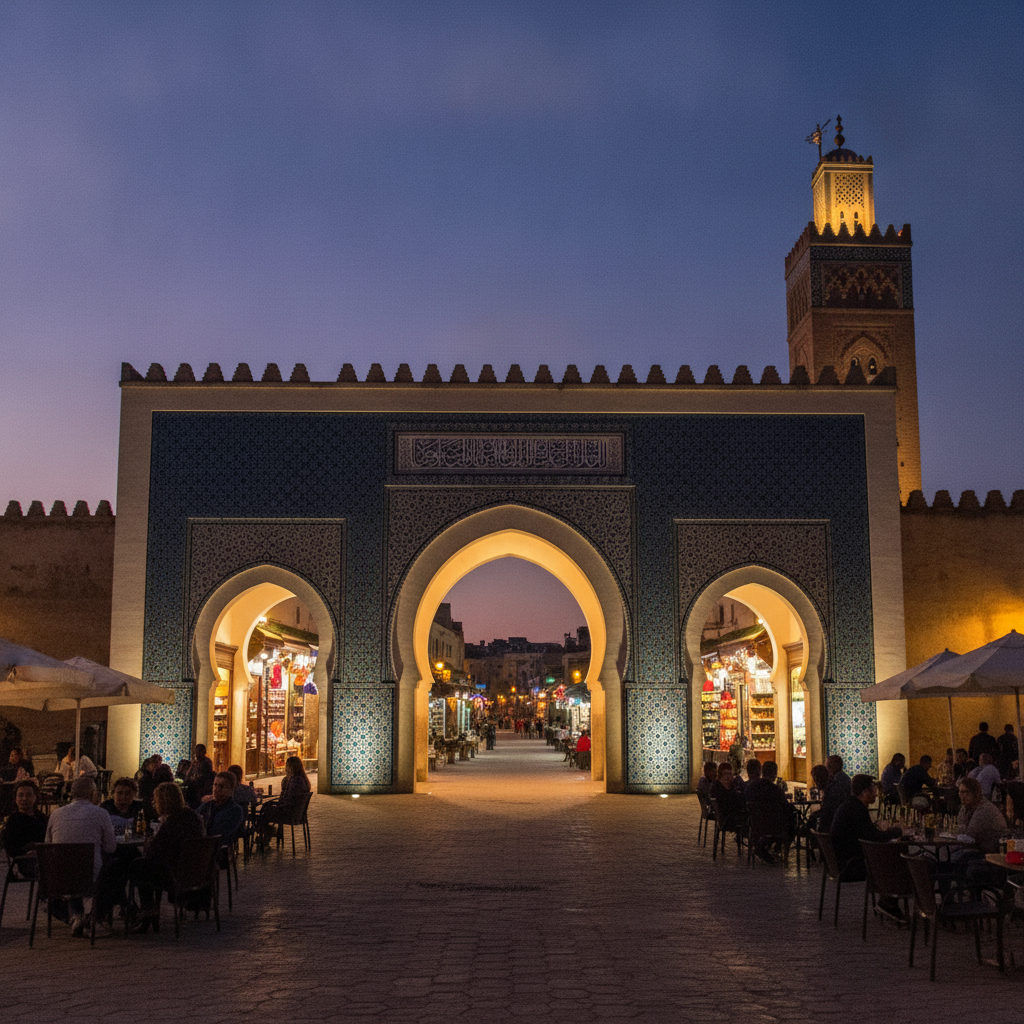
Bab Bou Jeloud (the Blue Gate) - the primary entrance to Fes el-Bali and one of the most photographed monuments in Morocco: the gateway guide. The gate (Bab Bou Jeloud (the Gate of Bou Jeloud): built in 1913 by the French Protectorate authorities: despite its relatively recent construction the gate is now universally regarded as the iconic entrance to the Fes medina: the design (the gate has three horseshoe arches supported on slender stone piers: the exterior (western) facade is covered with blue zellij tilework (Fes blue - a distinctive shade of cobalt blue that is the color of Fes): the interior (eastern) facade is covered with green zellij tilework (the color of Islam - green is the primary color of the Moroccan Alaouite dynasty): the calligraphic inscription in the arch frieze reads: this gate was built under the reign of His Majesty Moulay Abd al-Hafid: the position (Bab Bou Jeloud sits at the junction between the Ville Nouvelle (the French colonial city to the west) and Fes el-Bali to the east: the square in front of the gate (Place Bou Jeloud) is the primary meeting point between the medina and the modern city: restaurants and cafes with terrace seating overlook the gate: the Bou Jeloud quarter (the area immediately inside Bab Bou Jeloud - the first section of Fes el-Bali encountered by visitors: the Bou Inania Madrasa is 100m from the gate: the main medina thoroughfare (Rue Talaa Kebira - the Large Hill Road) begins at the gate and descends eastward toward the Qarawiyyin mosque area: the cafe terraces (the cafes with terrace seating on the Place Bou Jeloud (outside the gate) offer the most photographed view in Fes - the Blue Gate illuminated at night with the medina rooftops behind).
- 5
Fes in the Context of the Arab Spring - Morocco's 2011 Protests in the Ancient Capital
Fes and the 2011 protests - the role of Morocco's spiritual capital in the February 20 Movement that shook the country: the contemporary history guide. The February 20 context (the February 20 Movement of 2011 - the Moroccan response to the Arab Spring: protests called for a new constitution, an elected prime minister, an end to corruption, and Amazigh rights: Fes as a protest center (Fes was one of the primary centers of the February 20 protests: the protests gathered in the Batha Square and other open spaces adjacent to the medina: the university community (the University of Sidi Mohamed ben Abdellah in Fes) was a significant base for the protest movement: the Islamist context (Fes has historically been the center of Moroccan Islamist political movements: the Justice and Development Party (PJD) - the Moroccan Islamist political party that won the November 2011 elections after the constitutional reform: founded in 1998 from merger of several Islamist organizations: the PJD governed Morocco from 2011 to 2021 (two terms) when it was unexpectedly defeated in the 2021 elections by the National Rally of Independents (RNI) party of billionaire agriculture minister Aziz Akhannouch: the significance (Fes as the center of Islamic scholarship and Sufi spirituality gives protests in the city a particular religious weight and historical resonance: the Fassi ulema (Islamic scholars of Fes) have historically played a significant role in legitimating or challenging Moroccan rulers: the relationship between the Makhzen (the Moroccan royal court and state) and the Fassi ulema class is one of the oldest and most complex political relationships in Moroccan history: the current situation (Fes has undergone significant urban development and gentrification of the riad market since the 2000s under Mohammed VI's medina heritage conservation program).
- 6
Fes Legacy - The City That Defined Moroccan Civilization
The legacy of Fes - the comprehensive assessment of the role of Fes in the creation and preservation of Moroccan and Maghrebi Islamic civilization: the legacy guide. The spiritual primacy (Fes is universally regarded as the spiritual capital of Morocco: the site of the mausoleum of the Idrisid dynasty founders: the center of the primary Sufi orders (the Tijaniyya with 100-150 million West African adherents): the seat of the most prestigious Islamic scholars (ulema) in Morocco: the intellectual legacy (the al-Qarawiyyin university (founded 859 CE) - 1,165 years of continuous operation: the training ground for Ibn Khaldun, Ibn Battuta, and Leo Africanus among the most significant medieval Muslim intellectuals: the Fassi scholarly tradition of Islamic jurisprudence (Maliki fiqh), philosophy, astronomy, and mathematics: the artistic legacy (the Marinid architectural tradition (13th-15th century) that produced the Bou Inania Madrasa, the Attarine Madrasa, and the al-Qarawiyyin library expansion: the basis for all subsequent Moroccan royal architectural patronage: the artisanal legacy (the seven crafts of Fes - the leather tanneries, the blue pottery, the zellij tilework, the cedarwood carving, the silk weaving, the embroidery, and the copper and brass metalwork: the Fes artisanal tradition defines Moroccan decorative arts globally: the culinary legacy (the Fassi cuisine - bastilla, mrouzia, k'dra - as the most refined Moroccan regional kitchen: the cuisine of the Moroccan royal court: the demographic legacy (the 14th century Black Death and the subsequent demographic collapse that marked the beginning of the long Fes economic decline relative to Casablanca and Rabat: the 20th century heritage preservation (UNESCO designation 1981: the rehabilitation of riads as upscale guesthouses since the 1990s: a model of heritage-led tourism development: the threat (the medina faces structural decay, drainage problems, and the challenge of maintaining a living urban community within a UNESCO protected heritage zone).
Walk this route with audio
Stories play automatically as you reach each stop — no tapping needed.
More in Fes
Morocco's King Bears the Title Amir al-Muminin (Commander of the Faithful) Giving the Moroccan Monarchy a Unique Theocratic Religious Legitimacy Distinct From All Other Arab Monarchies; The Andalusian Music Tradition al-Ala Was Brought to Fes by Refugees From the 1492 Expulsion of Muslims and Jews From Spain and Is Still Performed in Three Regional Schools; Fes Is Arguably the Most Important Single City in the Spiritual Life of West African Islam Through the Tijaniyya Sufi Order With 100-150 Million Adherents
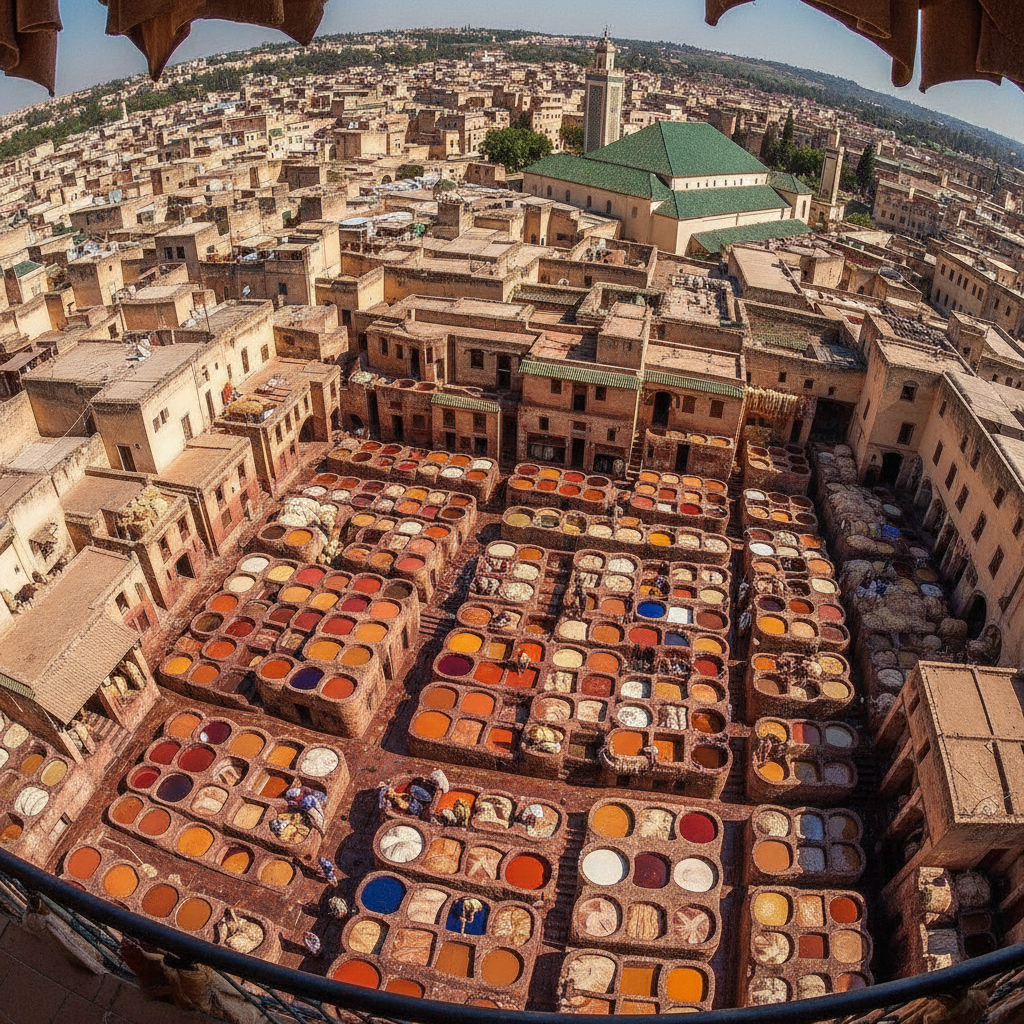
The Fes el-Bali Medina Is the Largest Car-Free Urban Area in the World With 9,000 Streets and 150,000 Inhabitants; The University of al-Qarawiyyin Founded in 859 CE by Fatima al-Fihri Is the Oldest Continuously Operating University in the World; The Chouara Tannery Uses Pigeon Dung as an Ammonia Source to Soften Hides in a Process Unchanged Since the Medieval Period
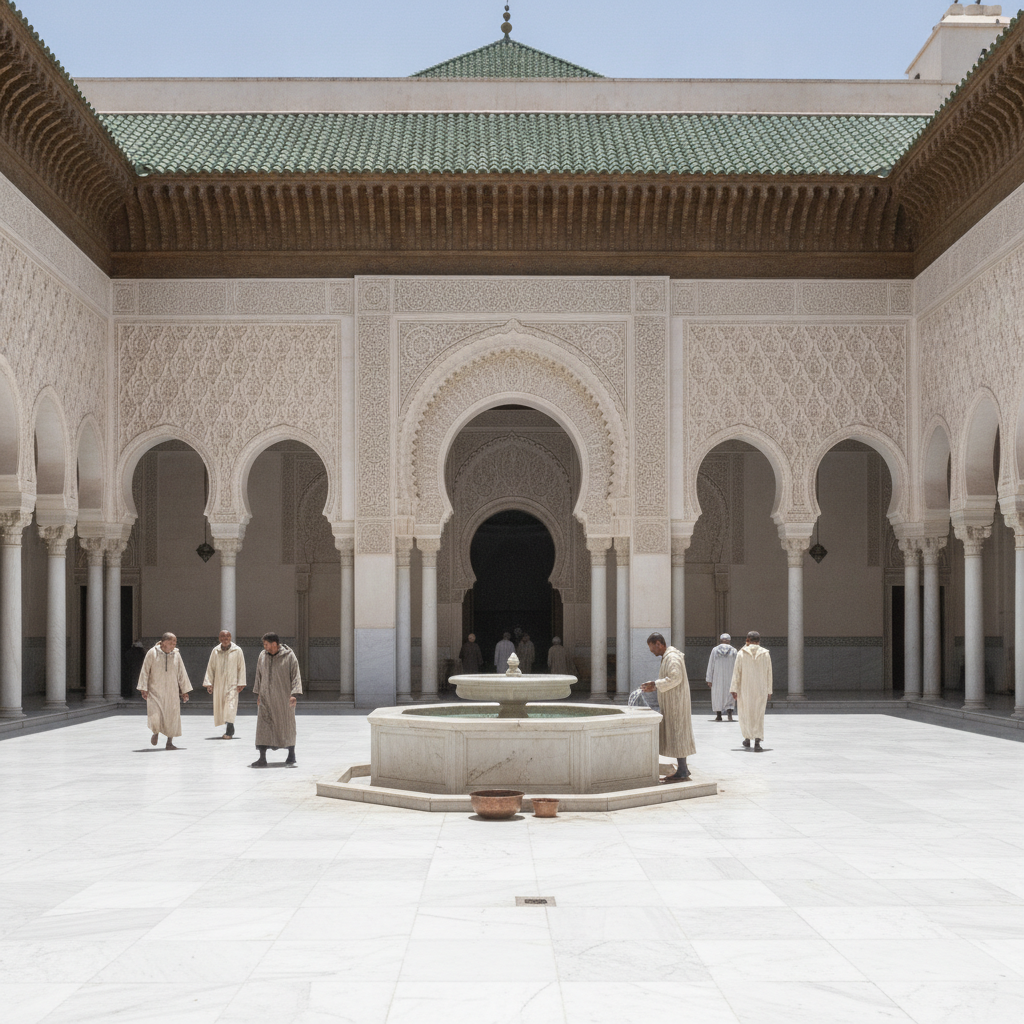
The Fes Festival of World Sacred Music Founded in 1994 Presents Sufi, Gnawa, Gregorian, Jewish, Hindu, and Buddhist Sacred Music in Venues Within the 1,200-Year-Old Medina; The Almohad Dynasty (1147-1244) Was the Most Hostile to Jews in Moroccan History Forcing Conversion or Emigration and Driving Fassi Jews to Flee to Christian Spain; The Fes Medina Has No Single Tourist Focal Square Like Marrakech's Djemaa el-Fna Making It More Authentically Urban and Less Tourist-Organized
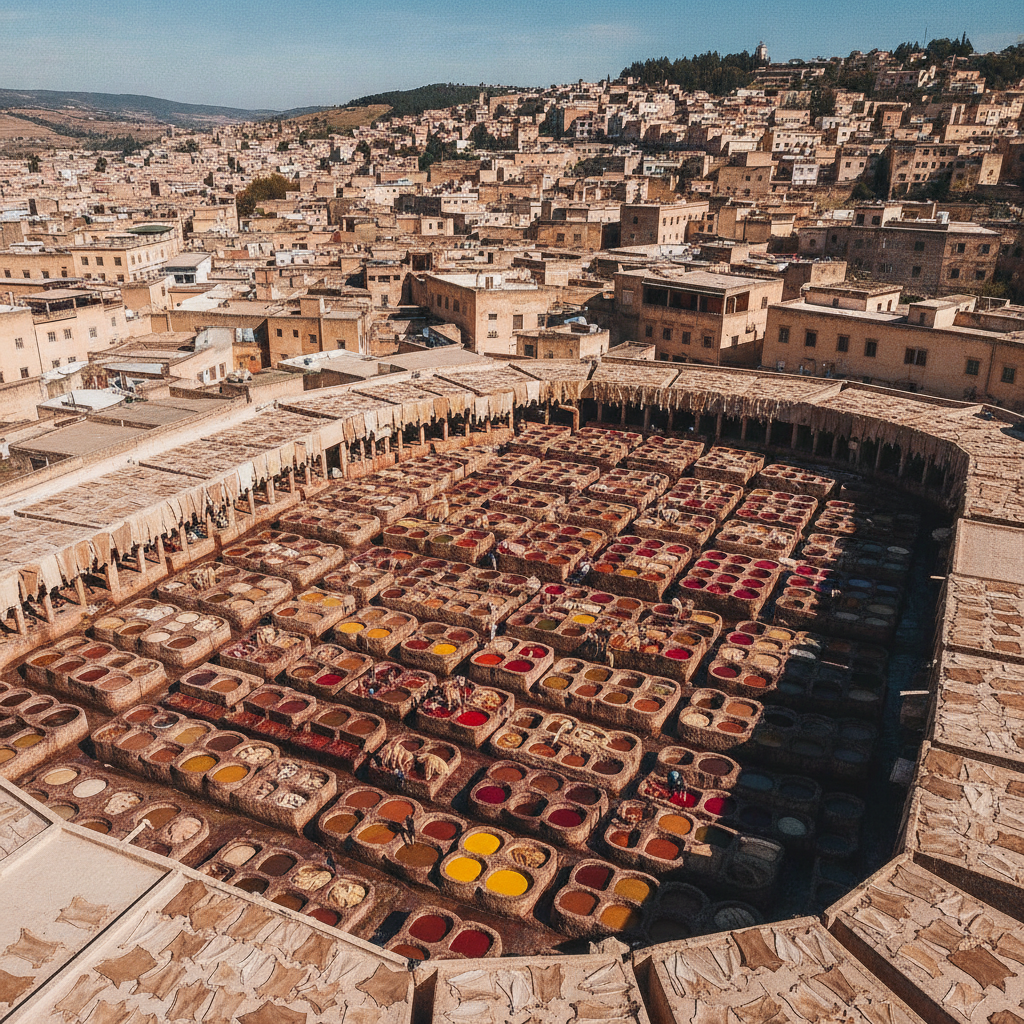
Fes Essential: Fes el-Bali the World Oldest Living Medina, the Bou Inania Madrasa, al-Qarawiyyin University, the Chouara Tanneries, the Blue Gate, and the Medieval City Character
Fes History: The Idrisid Foundation, the Marinid Golden Age, the Wattasid and Saadian Decline, the Alaouite Revival, the French Protectorate, and the Contemporary Fes Identity