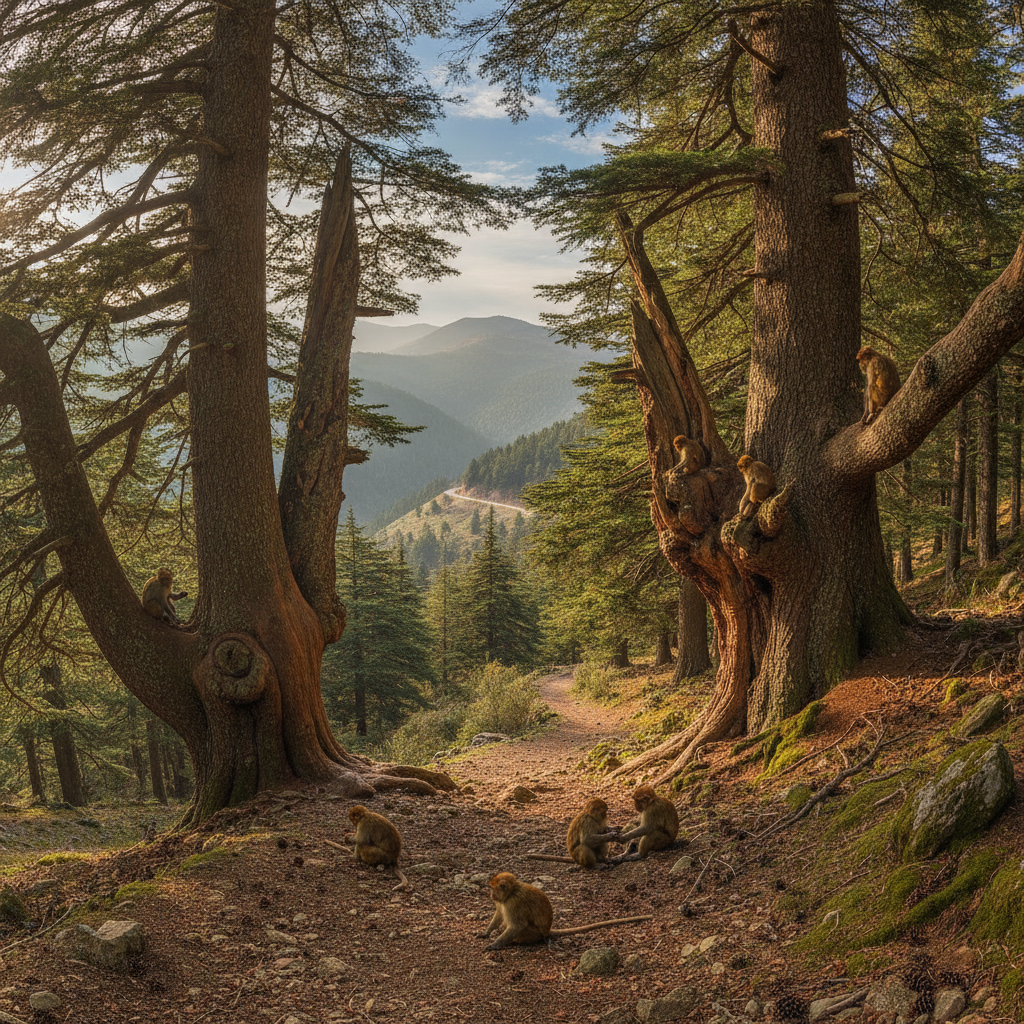
Morocco's King Bears the Title Amir al-Muminin (Commander of the Faithful) Giving the Moroccan Monarchy a Unique Theocratic Religious Legitimacy Distinct From All Other Arab Monarchies; The Andalusian Music Tradition al-Ala Was Brought to Fes by Refugees From the 1492 Expulsion of Muslims and Jews From Spain and Is Still Performed in Three Regional Schools; Fes Is Arguably the Most Important Single City in the Spiritual Life of West African Islam Through the Tijaniyya Sufi Order With 100-150 Million Adherents
Morocco's Amir al-Muminin title giving unique theocratic legitimacy; the al-Ala Andalusian music tradition preserved in three Moroccan regional schools after the 1492 expulsion; Fes as the most important city in West African Islam through the Tijaniyya order; the Ramadan medina with cannon-fire iftar, harira soup, and souks open until 3am; the attarine herbalist market and traditional Moroccan pharmacopoeia including habba sawda (nigella sativa); and Fes as the only city in the world that hosts the world's oldest university, the headquarters of a 150-million-member Sufi order, and the world's largest medieval living medina simultaneously.
- 1
Fes and the Arab World - Morocco's Unique Political Position in the Middle East and North Africa
Morocco's geopolitical identity and its position in the Arab world - the distinctive features of the Moroccan state and society that distinguish it from the Arab states of the Middle East: the geopolitical guide. The Arab League (Morocco is a member of the Arab League (founded 1945): the 22 member states of the Arab League span the Arab world from Morocco (Mauritania) to Iraq and Yemen: Morocco's distinctive position in the Arab world: the furthest west of the Arab states: the only Arab state with a significant Atlantic coastline: the historical association with Andalusia and the Iberian Peninsula that distinguishes Moroccan civilization from the Levantine and Gulf Arab cultures: the monarchy (Morocco is one of three remaining Arab monarchies with a traditional hereditary system (the others are Jordan and the Gulf states): the Moroccan monarchy derives its legitimacy from the Alaouite dynasty's claimed descent from the Prophet Muhammad through Hasan ibn Ali: the King of Morocco bears the title Amir al-Muminin (Commander of the Faithful) - a specifically religious title that gives the Moroccan monarchy a unique theocratic character distinct from the Gulf monarchies and the Jordanian Hashemite monarchy: the Arabization (the Arabization of Morocco - the process by which the primarily Amazigh (Berber) population of Morocco gradually adopted Arabic language and Islamic culture: the Arabization was gradual (8th-14th centuries) and incomplete - large Amazigh populations retained their Tamazight language particularly in rural areas: the 2011 constitution recognized Tamazight as a co-official language: the Darija (Moroccan Darija - the Moroccan Arabic dialect: significantly different from the Arabic of Egypt and the Levant: influenced by Tamazight Berber, French, and Spanish: a native speaker of Egyptian Arabic would find Moroccan Darija partially or largely incomprehensible without exposure).
- 2
The Andalusian Heritage of Fes - The Legacy of Muslim Spain in Moroccan Culture
The Andalusian heritage of Fes and Morocco - the profound and lasting cultural impact of the Muslim civilization of al-Andalus (Islamic Spain) on Moroccan culture, architecture, cuisine, and music: the Andalusian heritage guide. The Andalusian migrations to Fes (the three primary waves of Andalusian Muslim refugees to Morocco and Fes: 818 CE - the Cordoba martyrs uprising: approximately 8,000 families expelled from Cordoba by the Umayyad Emir Al-Hakam I settled in Fes east bank (the Andalusian Quarter): 1091-1227 - continuous migration during the Almoravid and Almohad periods as the Christian reconquest of Spain (the Reconquista) gradually advanced southward: 1492-1502 - the most dramatic wave: the expulsion of Muslims (Moriscos) and Jews from Spain after the completion of the Reconquista: the Alhambra Decree (1492) expelled all Jews: the 1502 decree forced Muslims to convert or leave: hundreds of thousands of Andalusian Muslims and Jews flooded into Morocco over the following decades: the cultural impact (the Andalusian refugees brought: the refined Andalusian Islamic high culture including Arabic poetry, music (the Andalusian music tradition - al-Ala), literature, philosophy, and architecture: the Andalusian culinary tradition (sweet-savory combinations, use of dried fruits with meat, rose water and citrus flavoring, complex pastry) that became the foundation of Fassi cuisine: the craftsmanship of al-Andalus - woodcarving, stucco work, ceramic tile (azulejo), and silk weaving: the Andalusian music (the Moroccan Andalusian music tradition (al-Ala) - the classical sung poetry tradition originating from the Andalusian muwashshah form: the three regional Moroccan schools: the Fassi school, the Tetouani school, and the Rabati school: each school preserves a distinct regional repertoire of Andalusian nubat (song suites)).
- 3
Fes in Moroccan Literature - The City of Learning in North African Writing
The representation of Fes in Moroccan literature and the literary culture of the ancient city: the literary guide. The Fassi literary tradition (Fes has been the primary center of Arabic-language literary culture in Morocco for over a millennium: the al-Qarawiyyin scholars (the ulema scholars of the al-Qarawiyyin university produced legal treatises, theological texts, geographical works, and historical chronicles in Arabic over more than a thousand years: the primary medieval Fassi literary works: the biographical dictionaries of Fassi scholars (the tabaqat literature): the historical chronicles of the Moroccan dynasties: the theological and jurisprudential treatises of the Maliki school: the 20th century Moroccan literature (the primary Moroccan literary figures with Fassi connections: Driss Chraibi (1926-2007) - born near Casablanca but deeply engaged with Fassi themes: Le Passe Simple (1954) is partly set in the atmosphere of traditional Moroccan society in which Fes is the center of traditional authority: the Fassi novel (the Fassi bourgeoisie and their world of the medina riad, the madrasa education, and the commercial souk has been a recurring subject of Moroccan French-language literature: the representation of Fes as the repository of traditional Moroccan values and the center of a world threatened by modernization and French colonial transformation: the poetry (Fes has a strong tradition of Arabic malhun (sung classical poetry): the malhun poets of Fes composed long qasidas (odes) on religious, romantic, and satirical themes that were performed in the medina coffeehouses: the contemporary literary scene (the Fes Rencontres Internationales de la Litterature - the annual international literature festival of Fes held alongside the sacred music festival).
- 4
Traditional Medicine in Fes - The Attarine Herbalist Market and Moroccan Folk Healing
The traditional medicine practices of Fes - the herbalist market, the traditional Moroccan pharmacopoeia, and the interplay between folk healing, Islamic medicine, and modern healthcare in Morocco's oldest city: the traditional medicine guide. The Souk al-Attarine (the Souk al-Attarine (the spice and herbalist market) adjacent to the al-Qarawiyyin mosque in Fes el-Bali: the name means the market of the perfumers and spice merchants: the attarine sell a vast range of dried herbs, spices, resins, minerals, and animal products for culinary and medicinal use: the Moroccan pharmacopoeia (the traditional Moroccan herbal medicine (tibb al-a'shab) tradition draws on: Islamic medicine (the Galenic-Arabic medical tradition: Ibn Sina's Canon of Medicine (al-Qanun fi al-Tibb): the primary medicinal herbs used in the Moroccan traditional pharmacopoeia: the thyme (zaatar - Thymus species): the rosemary (azir): the sage (salmiya): the chamomile (babunaj): the black seed (nigella sativa - habba sawda - considered one of the most important medicinal plants in Islamic medicine: the Prophet Muhammad reportedly said that habba sawda is a cure for everything except death): the ras el hanout medicinal use (the ras el hanout spice blend sold by the attarine for cooking and for medicinal purposes including as an aphrodisiac and a warming tonic): the spiritual healing (the Moroccan folk healing tradition (ruqya) - Islamic spiritual healing using Koranic recitation and prayer: used to treat what are believed to be cases of jinn possession, the evil eye (al-ayn), and sorcery (sihr): the traditional healer (the fqih - the Koranic scholar who performs ruqya healing): the Moroccan hammam (the hammam as a therapeutic institution - the steam heat, the kessa exfoliation, and the black soap beldi are understood in both physical and spiritual purification terms).
- 5
The Fes Medina After Dark - The Night Medina and Ramadan in the Ancient City
The Fes medina at night and during Ramadan - the transformed character of the ancient city after dark and the extraordinary atmosphere of the annual month of fasting: the night and Ramadan guide. The medina at night (the Fes el-Bali medina has a completely different character at night from the daytime: the daytime commercial intensity of the narrow souks with their packed donkeys, merchants, and tourist groups gives way to a quieter, more atmospheric nighttime medina: the primary streets are lit by electric lights (a relatively recent installation in the oldest parts of the medina): the residential alleys (the derbs - the dead-end alleyways leading to residential clusters) are dark and quiet at night: the mosques (the minarets of the Fes medina broadcast the adhan (call to prayer) five times daily and night: the sound of multiple minarets calling simultaneously from different directions is one of the most powerful acoustic experiences of the Fes medina: the rooftop experience (the rooftop terrace of a Fes riad at night: the darkness of the medina below broken only by the lit minarets and the occasional lit street: the muezzin sound echoing across the rooftops: the Ramadan medina (the Fes medina during Ramadan is the most extraordinary night experience: the entire city fasts from dawn to sunset: at sunset (iftar) the medina transforms: the sound of the Ramadan cannon (a cannon fired at sunset to announce the end of the daily fast): the streets fill immediately after iftar as the entire population emerges to socialize, eat, and shop: the Ramadan night market (the medina souks stay open until 2-3am during Ramadan: the special Ramadan foods: harira soup, shabakia (honey-glazed sesame cookies), chebakia, dates, milk: the tarawih prayers (the nightly Ramadan prayers at the al-Qarawiyyin mosque - the primary Ramadan prayer destination in Morocco after the Mohammed V Mosque in Casablanca).
- 6
Fes Full Legacy - One Thousand Years as the Spiritual Capital of the Western Islamic World
Fes complete legacy - the comprehensive assessment of the role of Fes in the history of Morocco, the Maghreb, West Africa, and the broader Islamic world over twelve centuries: the complete legacy guide. The primary claims to historical significance (Fes is unique in the Islamic world in the following respects: the oldest continuously operating university in the world (al-Qarawiyyin, 859 CE): the global headquarters of the largest Sufi order in West Africa (the Tijaniyya, 1781 CE - 100-150 million adherents): the best-preserved medieval Islamic medina in the world (Fes el-Bali UNESCO 1981): the primary center of Moroccan Maliki Islamic jurisprudence for 1,200 years: the primary training ground of the Moroccan ulema class that legitimates the Alaouite dynasty: the intellectual legacy (the scholars produced by Fes: Ibn Khaldun (founder of historiography and sociology): Ibn Battuta (the greatest medieval traveler): Leo Africanus (the first systematic European description of Africa): the thousands of unnamed ulema who produced the Moroccan Islamic legal tradition: the artistic legacy (the Marinid architectural program of Fes (13th-15th centuries) defined the vocabulary of Moroccan decorative arts - the zellij, the carved plaster, the cedarwood - that is now globally recognized as the Moroccan aesthetic: the Fassi culinary tradition as the high cuisine of Morocco: the craftsmanship of the seven trades: the Sufi musical legacy (the music of the Fes Festival of World Sacred Music): the West African connection (the Tijaniyya Sufi order headquartered in Fes has a deeper presence in West Africa than any other single Moroccan institution: the West African pilgrims who have been traveling to Fes to visit the Tijani zawiya for 200 years represent a continuous spiritual connection between Fes and the most populous region of Africa: Fes is arguably the most important single city in the spiritual life of West African Islam).
Walk this route with audio
Stories play automatically as you reach each stop — no tapping needed.
More in Fes
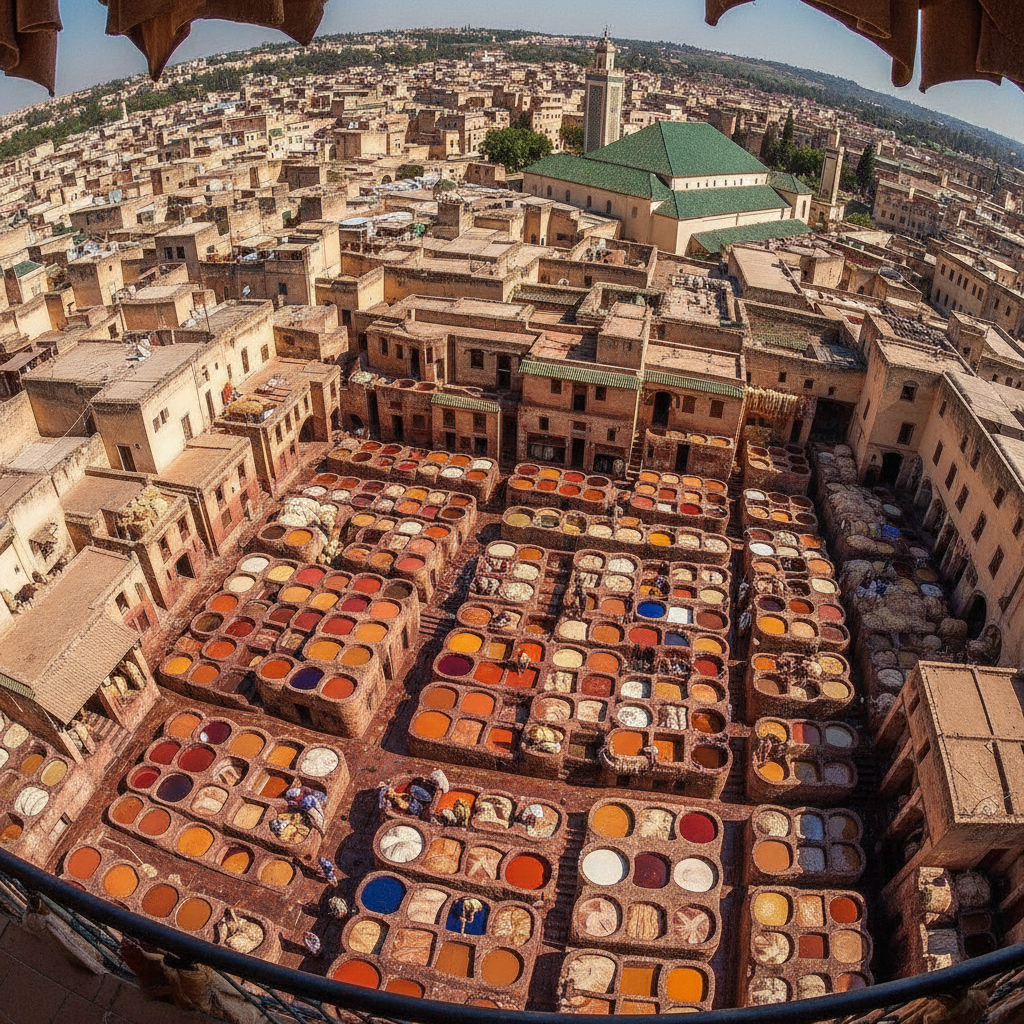
The Fes el-Bali Medina Is the Largest Car-Free Urban Area in the World With 9,000 Streets and 150,000 Inhabitants; The University of al-Qarawiyyin Founded in 859 CE by Fatima al-Fihri Is the Oldest Continuously Operating University in the World; The Chouara Tannery Uses Pigeon Dung as an Ammonia Source to Soften Hides in a Process Unchanged Since the Medieval Period
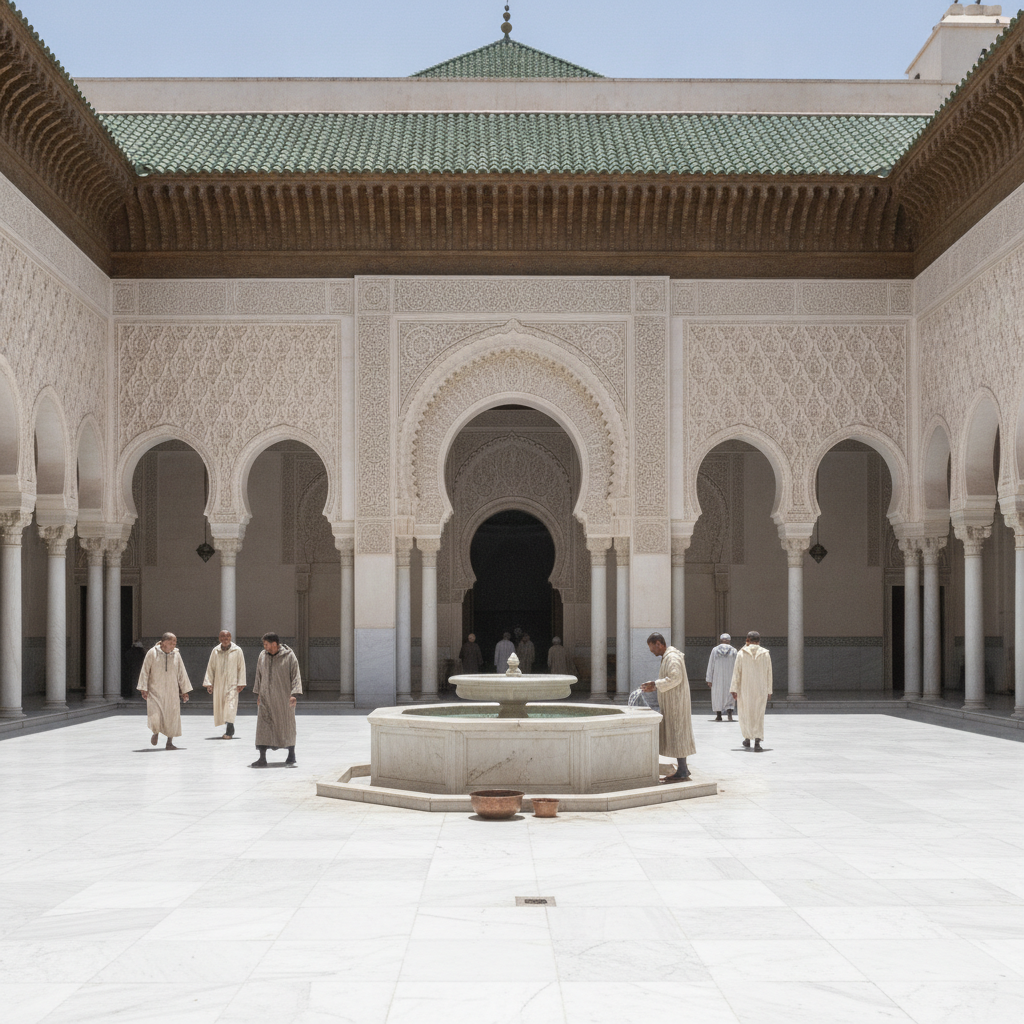
The Fes Festival of World Sacred Music Founded in 1994 Presents Sufi, Gnawa, Gregorian, Jewish, Hindu, and Buddhist Sacred Music in Venues Within the 1,200-Year-Old Medina; The Almohad Dynasty (1147-1244) Was the Most Hostile to Jews in Moroccan History Forcing Conversion or Emigration and Driving Fassi Jews to Flee to Christian Spain; The Fes Medina Has No Single Tourist Focal Square Like Marrakech's Djemaa el-Fna Making It More Authentically Urban and Less Tourist-Organized
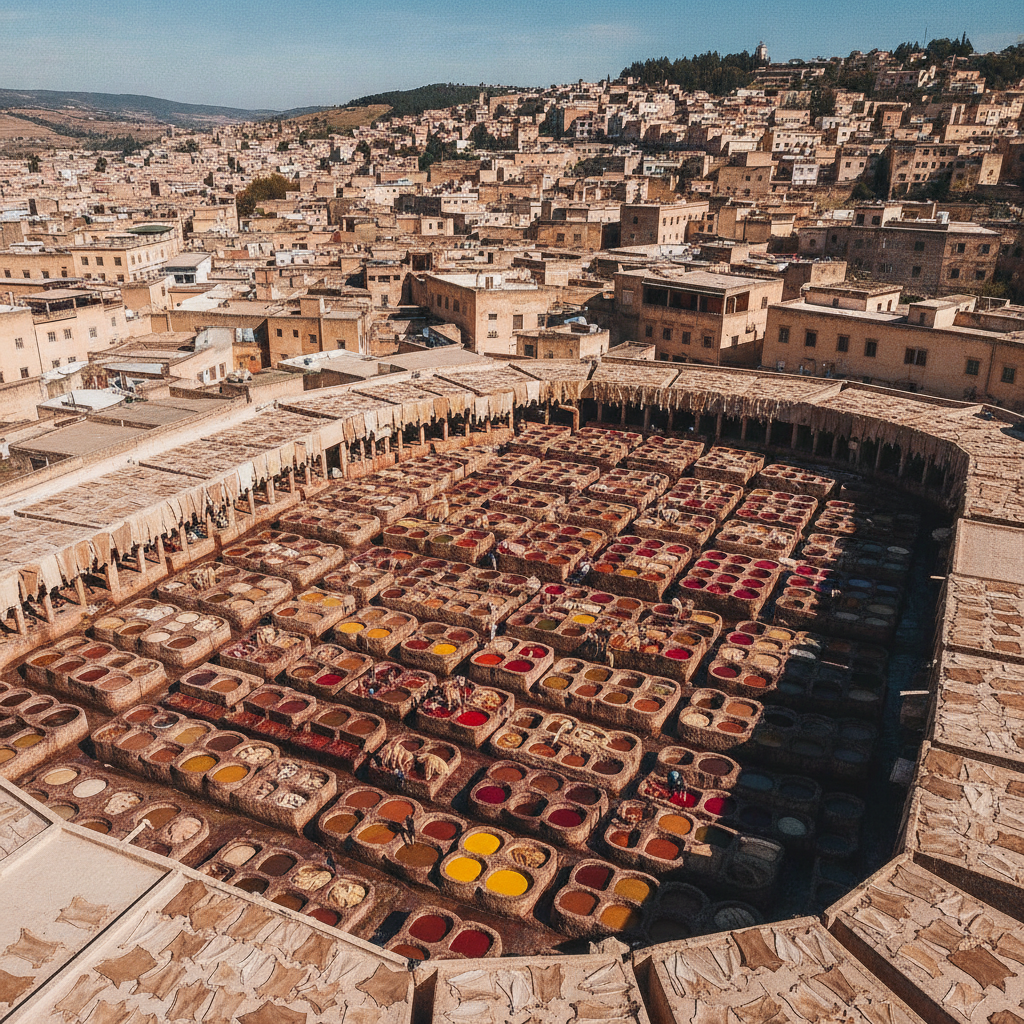
Fes Essential: Fes el-Bali the World Oldest Living Medina, the Bou Inania Madrasa, al-Qarawiyyin University, the Chouara Tanneries, the Blue Gate, and the Medieval City Character
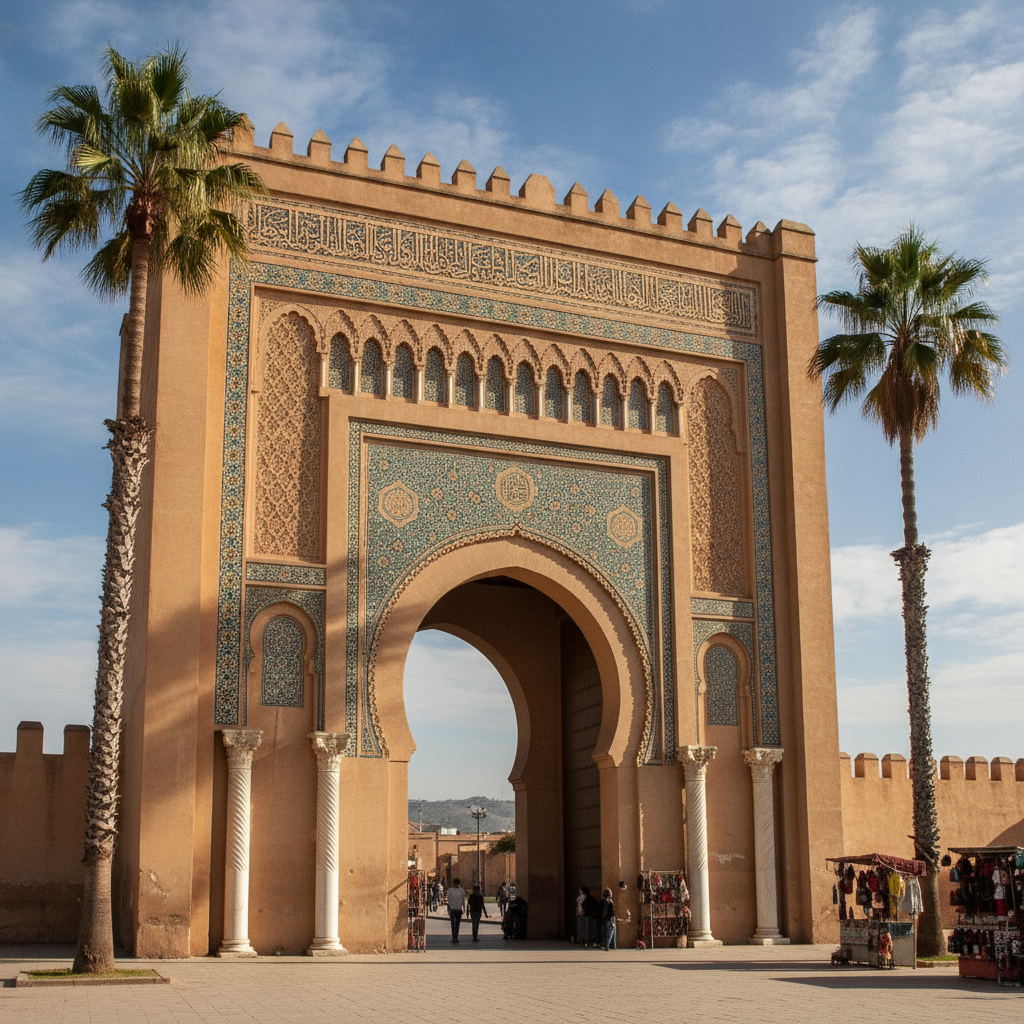
Fes History: The Idrisid Foundation, the Marinid Golden Age, the Wattasid and Saadian Decline, the Alaouite Revival, the French Protectorate, and the Contemporary Fes Identity
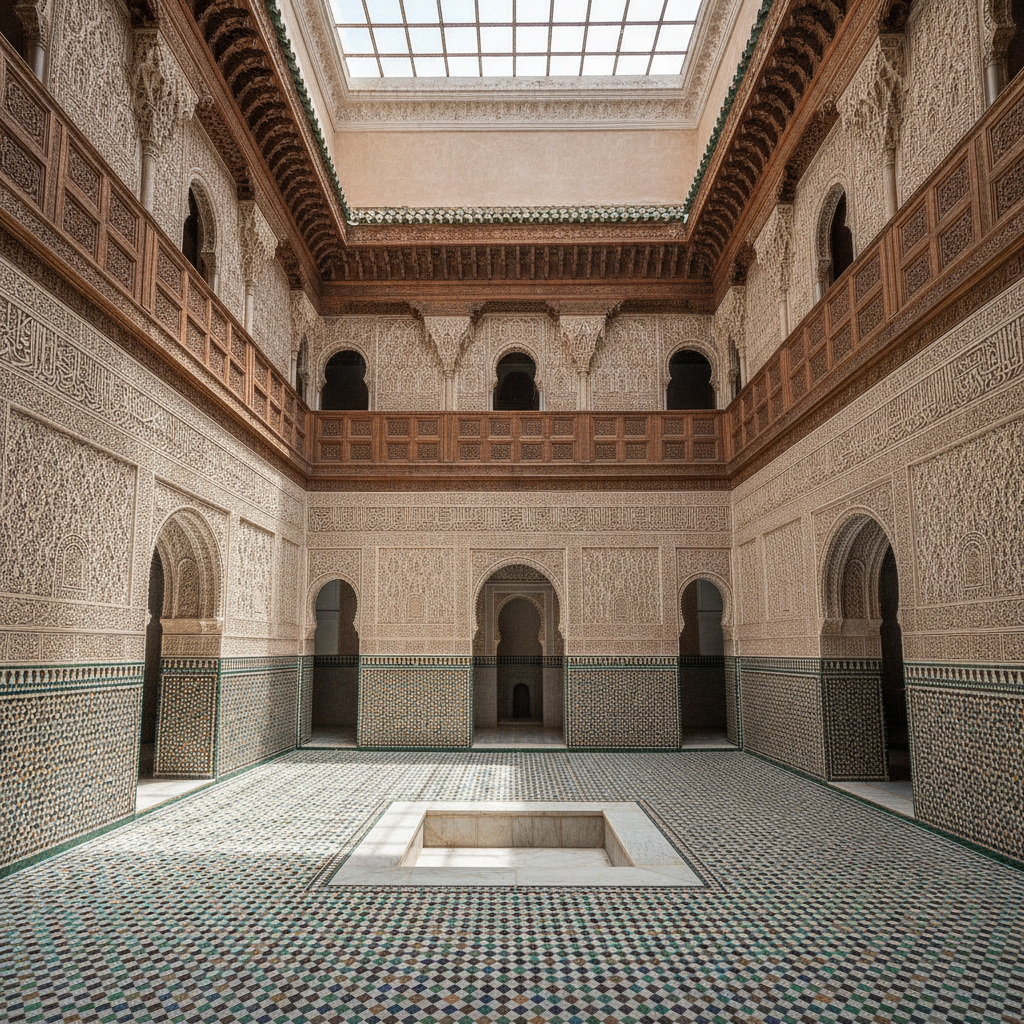
Fes Craft Heritage: The Al-Attarine Madrasa, the Nejjarine Fountain and Museum, the Funduq Carpenter Tradition, the Fes Pottery Blue Ceramic, and the Living Craft Guilds