Four Thousand Islands Waterfall & Rapids Walk
Chase the falls of Si Phan Don — the Khon Falls system is the largest waterfall complex by volume in Southeast Asia, and the Li Phi Falls, the Tat Somphamit cascade, and the viewing points over the Khon Phapheng Falls create the most dramatic waterfall landscape accessible in Laos.
- 1
Li Phi Falls Entry
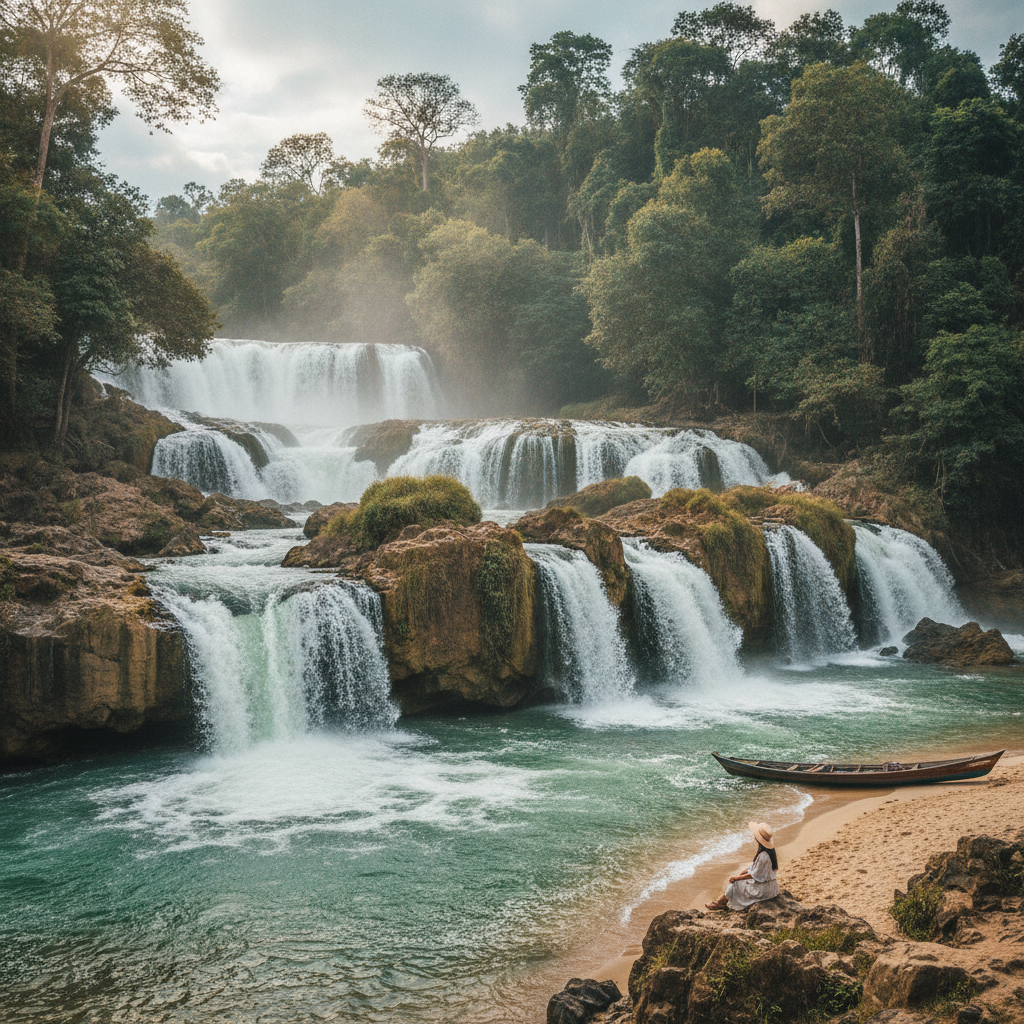
Li Phi Falls (Somphamit Falls) on the western branch of the Mekong channel between Don Khon and the smaller islands to the west is the most immediately accessible major waterfall from the Don Khon island trail — the path from the Don Khon village to the Li Phi Falls viewpoint (the 1km walk along the island's western shore to the point where the Mekong's western channel cascades over the rock threshold) passes through the island's quieter village environment before arriving at the viewing platforms over the turbulent water. The falls at Li Phi (the white water visible through the spray, the roar of the water audible from several hundred metres, and the rainbow visible in the spray on sunny afternoons) provides the most sensory complete encounter with the Mekong's hydraulic power accessible from the main tourist islands.
- 2
Khon Phapheng Falls East
Khon Phapheng Falls (10km by road east of the Don Det boat pier, accessible by tuk-tuk or motorbike taxi from the mainland Nakasang village) is the largest waterfall by volume in Southeast Asia and one of the most underestimated in the global waterfall literature — the falls (carrying 11,000 cubic metres of water per second during the wet season peak flow, three times the flow of Niagara Falls) descend 21 metres over a 10km width, creating a curtain of white water that produces the most powerful hydraulic sound accessible at any waterfall in mainland Southeast Asia. The viewing platforms (the wooden observation decks built above the main cascade at the eastern end of the falls system) provide the most dramatic single waterfall viewpoint accessible in Laos, with the scale of the water volume making the Khon Phapheng the most impressive freshwater spectacle in the region even though its height (21 metres) is modest compared to the most famous waterfalls elsewhere.
- 3
Mekong Rapids Swimming
The swimming in the rapids and the calm sections between the Li Phi Falls and the Don Khon pier (the natural swimming pools created by the rock formations in the Mekong channel at this point, accessible by the path along the eastern shore of Don Khon) is the most physically engaging water activity accessible in Si Phan Don — the swimming in the Mekong (the clear water of the dry season visible to considerable depth in the shallow sections, the current manageable in the protected pools beside the main channel flow, and the dramatic backdrop of the Li Phi Falls visible upstream during the swim) is the most immediately refreshing activity available after the cycling and walking of the Don Khon island circuit. The swimming's historical context (the same Mekong pools used by the island community for bathing and swimming for generations) makes it the most traditionally continuous recreational activity accessible in the Si Phan Don tourist experience.
- 4
Tad Lo Waterfall Day Trip
Tad Lo waterfall (in the Bolaven Plateau, accessible as a day trip or overnight from Si Phan Don by the road north through the Laos highlands) is the most dramatically contrasting waterfall accessible from the Four Thousand Islands base — the Tad Lo cascade (the two-tiered waterfall on the Se Done River in the Bolaven Plateau forest, accessible from the small guesthouse community at the falls base) descends in the highland forest environment of the plateau, completely different in character from the flat-river hydraulic scale of the Khon Falls system below. The contrast between the two waterfall environments (the highland forest cascade of Tad Lo and the lowland river cascade of Khon Phapheng) provides the most complete survey of the waterfall landscape of southern Laos accessible within a two-day itinerary.
- 5
Rapids Wildlife Observation
The Mekong rapids between the Si Phan Don islands (the turbulent sections of the river between the calm channel stretches, created by the rock formations of the ancient Mekong bed that create the conditions for both the falls and the areas of accelerated flow between them) are the most important bird habitat accessible in the Four Thousand Islands — the rapids attract the various kingfisher species (the pied, the common, and the white-throated kingfisher all visible hunting in the turbulent water at the rapids' edge), the common and black-naped terns (visible soaring above the rapids and plunge-diving for the fish stunned by the turbulence), and the occasional osprey visible at the more remote rapids sections. The rapids' fish concentration (the stunned fish visible at the surface in the turbulent water making the rapids the most productive single fishing location in the Si Phan Don area) makes the rapids the most wildlife-active single habitat accessible from the main tourist islands.
- 6
Four Thousand Islands Count
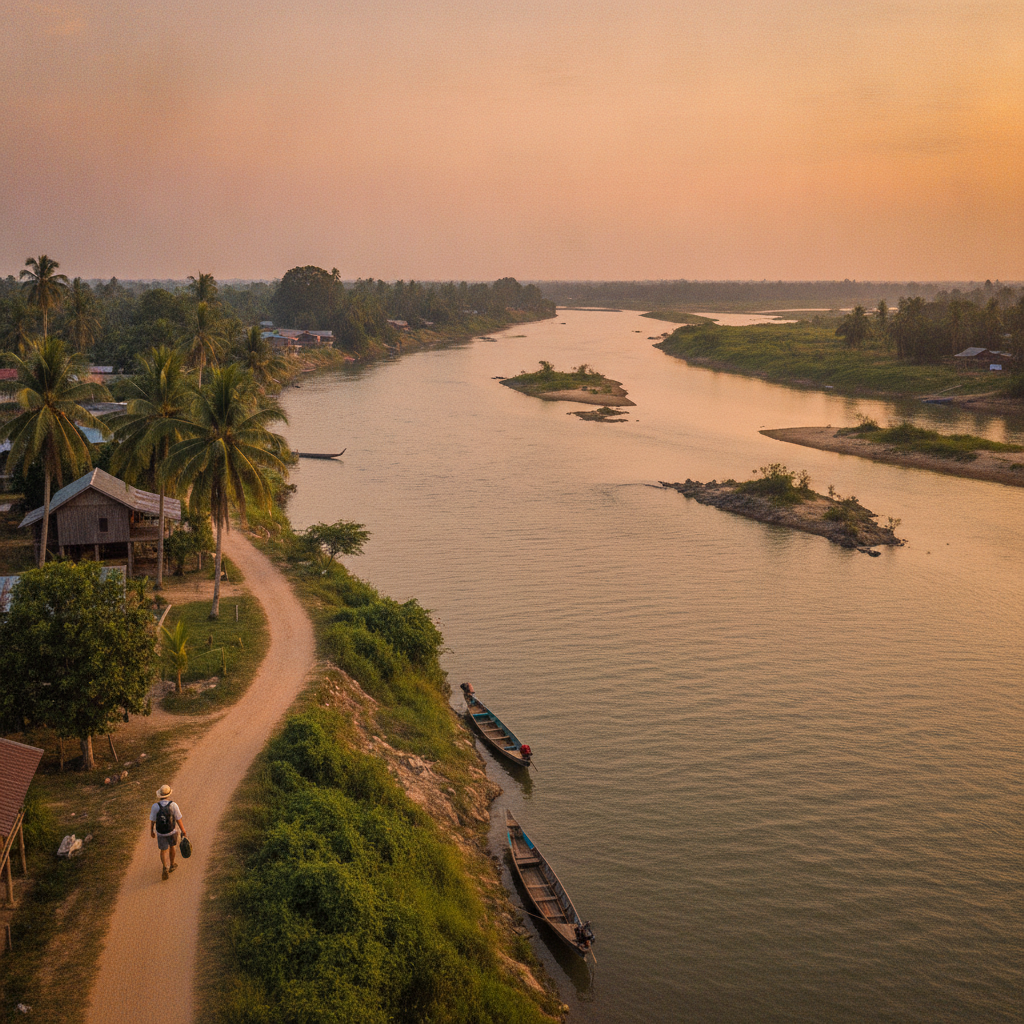
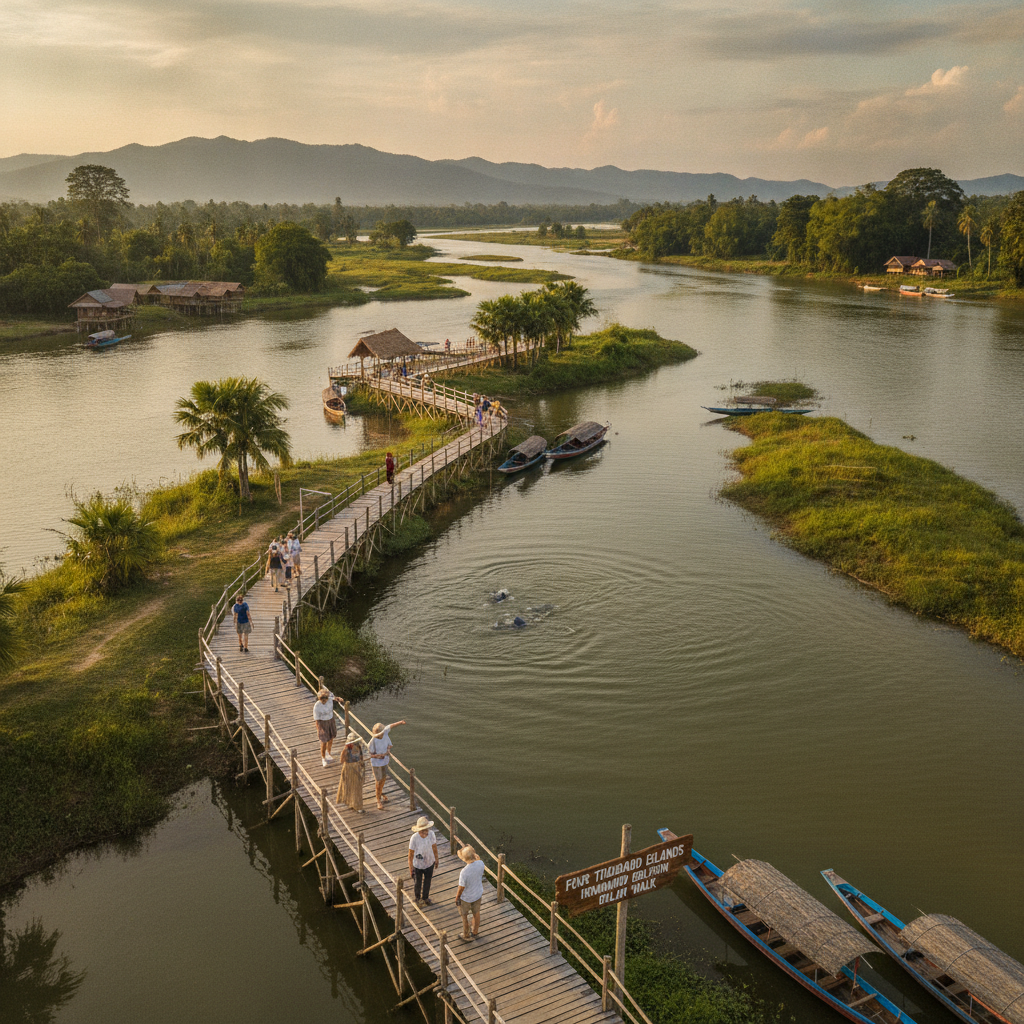
The geographical explanation for the 'Four Thousand Islands' name (the Lao name 'Si Phan Don' meaning literally 'Four Thousand Islands', referring to the count of islands, islets, sandbars, and rocky outcrops visible in the Mekong between Khon Phapheng Falls and the broader Cambodian floodplain below) is most directly observable from the elevated viewpoints above the main channel — the panoramic view from the Khon Phapheng viewpoint platform or from the elevated sections of the Don Khon walking trail reveals the extraordinary fragmentation of the Mekong at this point (the single river channel splitting into hundreds of braided channels around the rock formations and the river islands of all sizes) that gives Si Phan Don its name. The island count varies with the Mekong's water level (the wet season floods covering many of the smaller islands, the dry season low water revealing the maximum number of exposed sandbars and rocky outcrops).
Walk this route with audio
Stories play automatically as you reach each stop — no tapping needed.