Galapagos Conservation: The Human Presence, Tourism Management, and Future Threats
The Galapagos faces an inherent tension between its extraordinary conservation value and the economic pressures of a human population of approximately 33,000 people living in the four inhabited towns, plus the 250,000 tourists visiting annually. The Galapagos National Park, created in 1959 and the oldest in Ecuador, manages 97 percent of the land area as strictly protected; the remaining 3 percent contains the human settlements. The UNESCO World Heritage and Biosphere Reserve designations added to the conservation framework. But introduced invasive species, climate change affecting ocean temperatures, illegal fishing within the marine reserve, and the management of tourism itself represent ongoing challenges to the integrity of the ecosystem.
- 1
The National Park System: Rules That Protect the Ecosystem
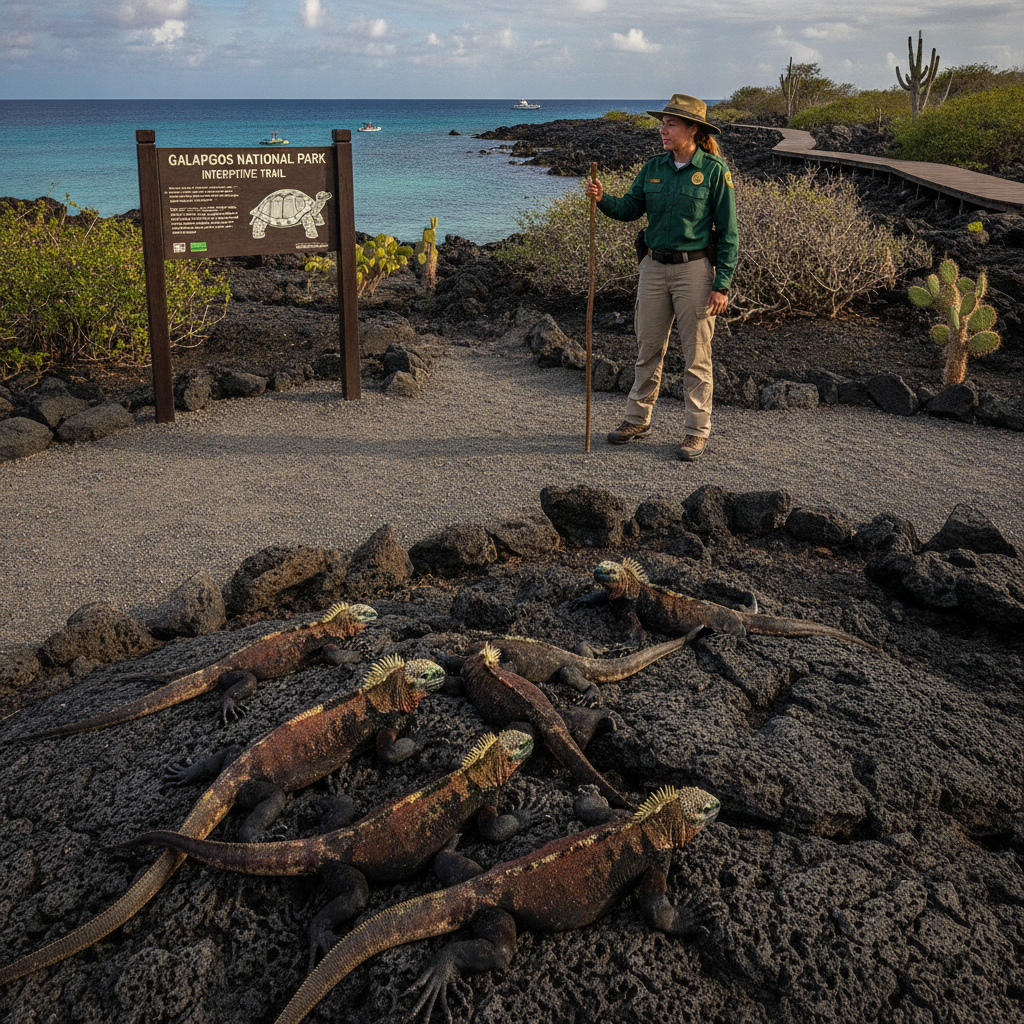
The Galapagos National Park imposes visitor rules that are strictly enforced and are fundamental to the functioning of the conservation system. Visitors must stay on marked trails at all visitor sites, remain two meters from wildlife, not touch animals, not take any natural material from the islands, not bring food to visitor sites, and not smoke. All land visits must be accompanied by a licensed naturalist guide. The marine reserve prohibits commercial fishing of sharks and specific vulnerable species throughout the reserve; enforcement capacity has historically been inadequate relative to the size of the reserve. The controlled access system means visitor numbers at each site are managed by the park authority, with boat passenger limits and visit frequency restrictions for each visitor site. The system has been effective in concentrating human impact on designated areas while leaving the majority of each island undisturbed.
- 2
Invasive Species Management: The Ongoing Battle
The most immediate threat to Galapagos ecology is invasive species, including plants, animals, and insects introduced deliberately or accidentally through the supply chain connecting the islands to the mainland. Over 800 introduced plant species compete with the approximately 600 native species; invasive blackberry, guava, quinine tree, and elephant grass have transformed large areas of several islands. Introduced wasps, fire ants, and Philornis fly larvae, which parasitize bird nestlings, threaten bird populations. The biosecurity system at Galapagos airports and ports attempts to intercept new introductions, but the challenge grows with increasing population and tourism. The Galapagos National Park and the Charles Darwin Foundation implement island restoration programs: the successful goat eradication on Pinta, Isabela, and Santiago is the largest achievement, but rat eradication, pig removal, and plant control operations continue on multiple islands simultaneously.
- 3
Climate Change and El Niño: Ocean Temperature Effects on Galapagos Species
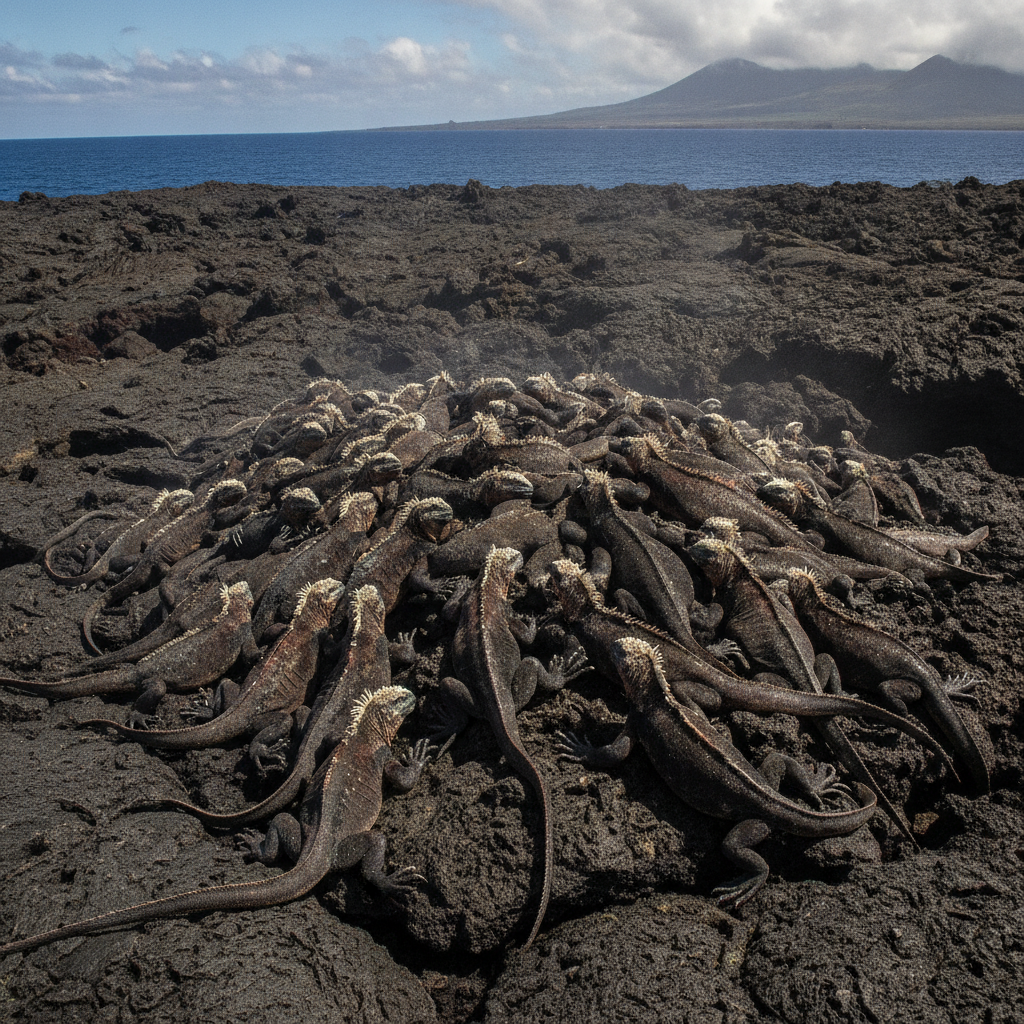
The Galapagos ecosystem is vulnerable to climate change through the warming of the cold currents that underpin the food chain. El Niño events, which warm the equatorial Pacific and suppress the cold upwelling that brings nutrients to the surface, cause mass starvation events for sea lions, marine iguanas, and seabirds that depend on the cold-water fish and invertebrate communities. The 1982-83 El Niño, the strongest of the 20th century, killed an estimated 77 percent of the marine iguana population and caused mass sea lion mortality across the archipelago. The 1997-98 El Niño had similar effects. As climate change makes extreme El Niño events more frequent and intense, the boom-and-bust cycle that species have adapted to over millions of years is being compressed and amplified beyond the range of their evolutionary experience. Warming ocean temperatures also bleach the corals of the Galapagos marine reserve and shift the ranges of cold-water species.
- 4
Human Population Growth and the Settlement Question
The human population of the Galapagos has grown from approximately 3,000 in 1960 to approximately 33,000 in 2020, with Puerto Ayora on Santa Cruz now a town of nearly 15,000 people with supermarkets, schools, hospitals, and the full infrastructure of a small Ecuadorian city. This growth creates pressure on the ecosystem through wastewater generation, solid waste management, demand for food imports that risk introducing new species, and the expansion of the agricultural zone. The Ecuadorian government has attempted to control population growth through a residency permit system; residents must have been born on the islands or have lived there for more than five years to have residency rights. The tourism economy creates high wages relative to mainland Ecuador, continuing to attract migrants. Managing the human community while preserving the ecological integrity that makes the islands economically valuable is the central governance challenge of the Galapagos.
- 5
Illegal Fishing and the Marine Reserve Enforcement Challenge
The Galapagos Marine Reserve, established in 1998 and expanded to 198,000 square kilometers in 2022, prohibits commercial fishing within its boundaries except for a regulated artisanal fishing quota for the resident fishing community. Industrial fishing fleets from Ecuador, China, and other nations have historically operated close to the reserve boundary, and illegal entry into the reserve has been documented repeatedly. The giant squid fishery in international waters adjacent to the reserve brings hundreds of Chinese-flagged fishing vessels to the area annually; in 2020 a fleet of over 300 vessels was detected just outside the reserve boundary. Enforcement of a marine reserve of this size requires aerial patrol capacity, fast patrol vessels, and the political will to intercept and prosecute violators, all of which have been inconsistently available. The expanded reserve boundary announced in 2022, creating a corridor connecting the Galapagos to the Cocos Island marine protected area of Costa Rica, is intended to close the gap between two of the Eastern Pacific largest protected areas.
- 6
Sustainable Tourism: What Your Visit Funds and What to Choose
The Galapagos National Park entrance fee, currently 100 USD for most international visitors, goes directly to the national park authority and funds ranger salaries, patrol operations, and conservation programs. The tourism economy is the primary income source for the resident human population; a well-managed tourism industry is thus aligned with conservation in providing the economic incentive for the local community to support the protected area system. Choosing a licensed naturalist guide with formal training rather than unqualified guides supports the professional standards the park requires. Choosing operators committed to sustainable practices, including proper waste management aboard vessels, responsible wildlife approach distances, and support for conservation organizations, directs tourism revenue toward better environmental outcomes. Several cruise operators contribute a portion of revenue to specific conservation projects; these commitments are increasingly disclosed in marketing materials and verifiable through the Charles Darwin Foundation partner programs.
Walk this route with audio
Stories play automatically as you reach each stop — no tapping needed.
More in Galapagos
Galapagos Geology: Hotspot Volcanism and the Making of the Islands
Galapagos Giant Tortoises: Natural History, Near Extinction, and Recovery
Galapagos Diving and Snorkeling: Shark Aggregations and Underwater Wildlife
Galapagos Reptiles: Marine Iguanas, Land Iguanas, and Lava Lizards
Galapagos Islands: Evolution Laboratory and the Most Fearless Wildlife on Earth