Galapagos Giant Tortoises: Natural History, Near Extinction, and Recovery
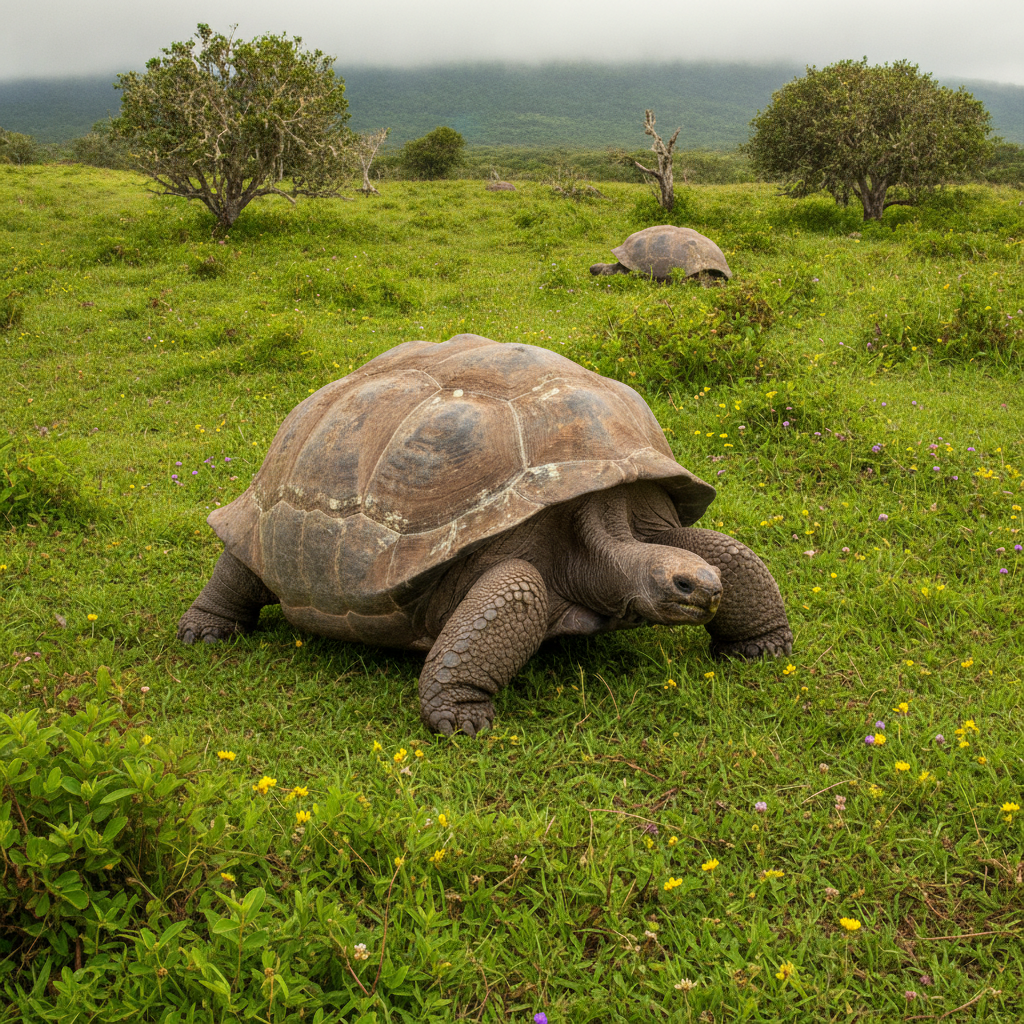
The giant Galapagos tortoises, the largest living tortoises on earth and among the longest-lived vertebrates with individuals confirmed at over 170 years old, are the emblematic animals of the archipelago and the source of its name: galapago is an old Spanish word for saddle, describing the shape of some tortoise shells. Fourteen subspecies evolved on different islands, each with distinctive shell shape and body size adapted to local vegetation and terrain. By the 19th century, whalers and pirates had removed hundreds of thousands of tortoises for meat during voyages; introduced rats, pigs, and goats further devastated the populations. Conservation efforts since the 1970s have prevented the extinction of all remaining subspecies and some populations have recovered substantially.
- 1
Giant Tortoise Subspecies: Dome-Shelled and Saddle-Backed Forms
The 14 recognized subspecies of Galapagos giant tortoise are divided into two main morphological forms that are directly linked to the vegetation available on each island. Dome-shelled tortoises, with high-domed shells and shorter necks, are found on islands with abundant ground-level vegetation; they feed by grazing close to the ground and do not need to reach upward. Saddle-backed tortoises, with an anterior flare in the shell that allows the head and neck to extend upward at a sharp angle, evolved on drier islands with less ground vegetation where cactus pads at head height are a primary food source. The shell flare is an evolutionary response to a feeding niche: it allows the tortoise to raise its head to nearly 60 centimeters off the ground. The interaction between shell shape and feeding ecology is one of the clearest examples of natural selection producing anatomical adaptation visible to the non-specialist observer.
- 2
Lonesome George: The End of a Subspecies and a Conservation Symbol
Lonesome George, the last known Pinta Island tortoise, lived at the Charles Darwin Research Station on Santa Cruz from 1971 until his death in June 2012, when he was estimated to be between 100 and 150 years old. Attempts to breed him with females from related subspecies produced infertile eggs. His death marked the confirmed extinction of the Chelonoidis abingdonii subspecies and attracted international attention to Galapagos conservation. His taxidermied body is now displayed at the American Museum of Natural History in New York, though the Galapagos National Park has expressed interest in its return. Lonesome George became a global icon of extinction risk and the consequences of human exploitation of island species, and his image is used widely in conservation education materials. In 2019 genetic analysis confirmed that a tortoise on Wolf Volcano on Isabela carries Pinta Island genetic markers, suggesting some Pinta ancestry may survive in the wild.
- 3
The Charles Darwin Research Station: Breeding Program and Repatriation
The Charles Darwin Research Station in Puerto Ayora on Santa Cruz has operated a giant tortoise captive breeding and repatriation program since 1965 that has raised over 7,000 young tortoises from eggs collected from wild nests and returned them to their home islands after several years in captivity, when they are large enough to escape predation by rats. The program has been critical for subspecies that had been reduced to very small wild populations; the Espanola subspecies was reduced to 14 individuals in the 1960s and is now back above 1,000 wild individuals following decades of captive breeding and repatriation, one of the most successful island species recoveries ever achieved. Visitors to the research station can observe the breeding pens with tortoises of different ages and see the progression from hatchlings to the juvenile-size animals prepared for release.
- 4
El Chato Tortoise Reserve: Wild Giant Tortoises in the Santa Cruz Highlands
The giant tortoise reserve at El Chato in the humid interior highlands of Santa Cruz is the most accessible site for observing free-ranging wild giant tortoises in their natural habitat. Dome-shelled Santa Cruz tortoises wander through the grassy highland pasture, which occupies former agricultural land that is now managed for tortoise habitat. In the wet season from January through May, the tortoises concentrate in the highlands feeding on the lush grass; in the dry season they migrate down toward the coast following the moisture gradient. The reserve is reached by taxi from Puerto Ayora in approximately 30 minutes; visitors walk the reserve trails independently, encountering tortoises at close range along the path. The reserve also provides sightings of dark-billed cuckoos, vermilion flycatchers, paint-billed crakes, and Galapagos doves in the surrounding habitat.
- 5
Invasive Species: The Greatest Ongoing Threat to Galapagos Tortoises
The recovery of giant tortoise populations has been complicated by the invasive species introduced by humans over the centuries of human activity in the Galapagos. Rats prey on eggs in the nest and on hatchlings after hatching; the black rat introduced by sailors remains present on many islands and is the primary reason captive rearing of hatchlings was developed as a management tool. Feral pigs root up nests, consume eggs, and compete with tortoises for food. Feral goats, introduced to several islands by settlers for livestock, devastated the vegetation that tortoises depend on before massive eradication programs in the early 2000s removed them from Pinta, Isabela, and other islands. The aerial goat eradication programs on Isabela and Santiago using helicopters and trained marksmen are considered among the most ambitious and successful invasive species removal operations in conservation history, with hundreds of thousands of goats removed.
- 6
Tortoise Behavior and Longevity: What Makes Giant Tortoises Different
Giant Galapagos tortoises are among the most extreme examples of the reptile life history strategy of slow metabolism, long lifespan, and late maturity. They do not reach sexual maturity until approximately 20 to 25 years of age. Wild individuals have been documented at ages above 170 years based on historical records of marked animals. The slow metabolism allows them to survive for up to a year without food or water by burning stored fat; this characteristic made them ideal provisions for sailing ships, which loaded live tortoises into the hold as a supply of fresh meat that required no care for months. They thermoregulate by basking in the morning sun and retreating to shade in the heat of the day. The morning wallowing of large groups of tortoises in the muddy pools of the El Chato reserve, pressing into the mud to regulate temperature and deter ticks, is one of the most memorable sights available to Galapagos visitors.
Walk this route with audio
Stories play automatically as you reach each stop — no tapping needed.
More in Galapagos
Galapagos Geology: Hotspot Volcanism and the Making of the Islands
Galapagos Diving and Snorkeling: Shark Aggregations and Underwater Wildlife
Galapagos Reptiles: Marine Iguanas, Land Iguanas, and Lava Lizards
Galapagos Conservation: The Human Presence, Tourism Management, and Future Threats
Galapagos Islands: Evolution Laboratory and the Most Fearless Wildlife on Earth