Galapagos Reptiles: Marine Iguanas, Land Iguanas, and Lava Lizards
The reptiles of the Galapagos are the most visually distinctive animals of the archipelago and among the most ancient-looking creatures on earth. Three groups dominate the reptile fauna: marine iguanas, land iguanas, and the seven species of lava lizards distributed across different islands. The marine iguana, found only in the Galapagos, is the only sea-going lizard on earth and represents one of the most dramatic examples of adaptation to a novel ecological niche. The land iguanas, of which there are two species plus the hybrid population on South Plaza, are large yellow-orange herbivores that feed primarily on cactus pads. Together with the giant tortoises, the iguanas give the Galapagos its primordial, Jurassic character.
- 1
Marine Iguanas: Diving, Basking, and the Salt Sneeze
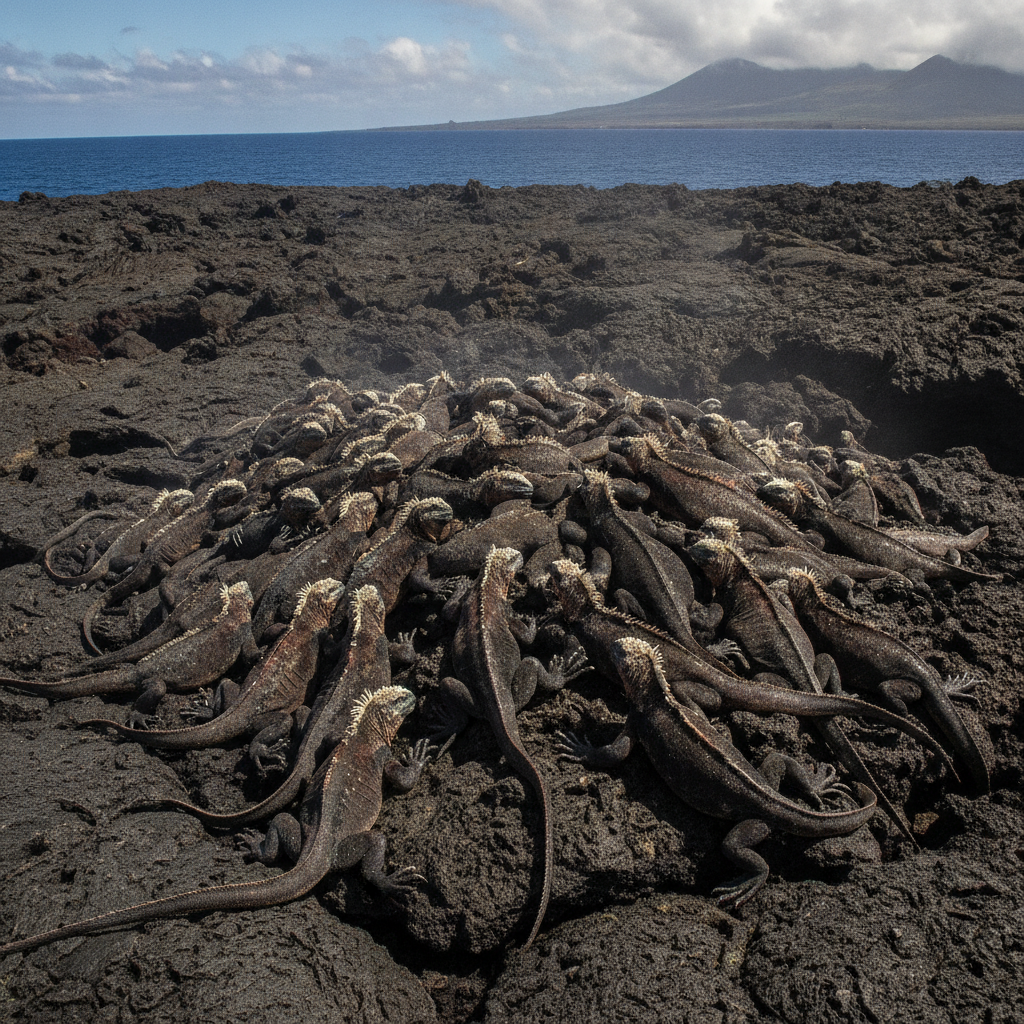
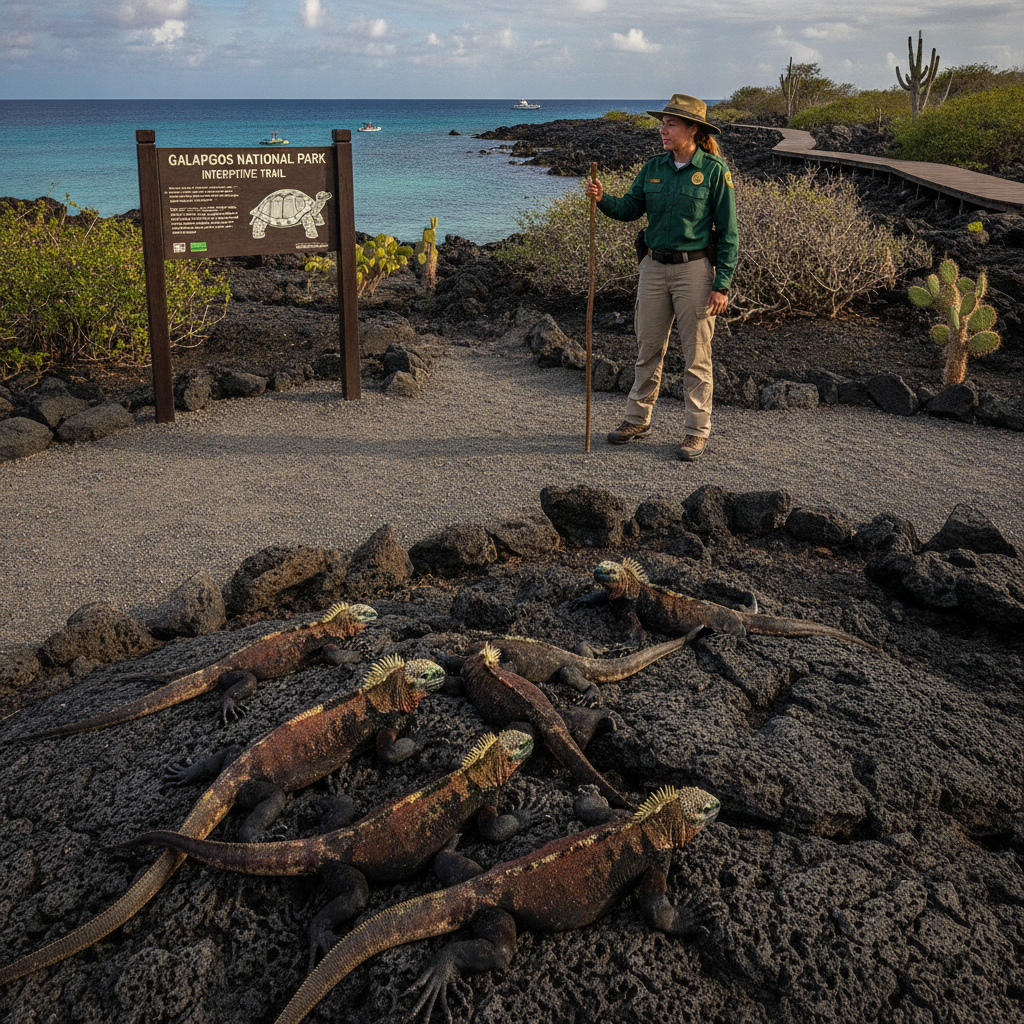
The marine iguana is the only lizard that regularly enters the sea to feed, diving to depths of up to 12 meters to graze on green and red algae growing on submerged rock surfaces. The physiological adaptations are remarkable: flattened tails for swimming, reduced metabolic rate during diving to conserve oxygen, and specialized nasal salt glands that expel the excess salt ingested with seawater through powerful sneezes that deposit white salt crystals on the snout and forehead. After feeding, marine iguanas must warm their body temperature by basking on the black volcanic rocks, and the communal basking aggregations, with hundreds of animals piled together on the warm lava, are one of the defining Galapagos spectacles. Marine iguana size varies significantly between islands: the largest males, on Fernandina, exceed 1.5 meters and 12 kilograms; the smallest, on Genovesa, rarely exceed 60 centimeters, an adaptation to the reduced food availability on the arid northern island.
- 2
Land Iguanas: Yellow Giants of Santa Cruz and South Plaza
The two Galapagos land iguana species, Conolophus subcristatus and the smaller Conolophus pallidus found only on Santa Fe, are large yellow-orange herbivores that feed primarily on the pads and fruit of the prickly pear cactus. They have the behavioral adaptation of allowing the cactus pad to fall to the ground and then rolling it with the snout to dislodge the spines before eating. On South Plaza Island, just off the east coast of Santa Cruz, a population of hybrid iguanas resulting from mating between marine and land iguanas has established itself; these hybrids, with darker coloration and a blended body shape, are visible from the visitor trail alongside both parent species. The land iguanas of Baltra Island were entirely extirpated from the island through human activity; the current population was reestablished by translocating animals from South Plaza beginning in the 1980s.
- 3
Lava Lizards: Island-Specific Diversification on a Small Scale
The seven species of Galapagos lava lizard represent a miniature version of the adaptive radiation that produced Darwin finches, with a single founding ancestor diversifying into distinct species on different islands. Each island has its own lava lizard species, identifiable by coloration patterns and body size. The most common is the Galapagos lava lizard on the main islands, where the females display a distinctive red head and throat that intensifies during breeding season. Lava lizards are omnivores, eating insects, plant material, and occasionally small vertebrates. They are the only Galapagos reptile with a recognizable social display: males perform rapid push-up sequences from prominent rock surfaces to establish territory, and the frequency and vigor of the display signals competitive fitness. On any rock surface at any visitor site in the Galapagos, at least one lava lizard is almost certainly visible.
- 4
Green Sea Turtles: Nesting Beaches and Snorkeling Encounters
The Galapagos Pacific green sea turtle, a subspecies of the green turtle that nests only on Galapagos beaches and nowhere else in the eastern Pacific, is abundant throughout the archipelago and one of the most reliably encountered large animals for snorkelers. Females haul out on beaches to nest from December through March; the nesting beaches on Floreana and the remote eastern islands are the most important. The males spend their entire lives in the water, and mating pairs are commonly observed from snorkel boats in the calm waters around the main islands. Underwater, green turtles are unhurried and approach close to snorkelers, often rising to the surface to breathe within arms reach. Their feeding behavior on submerged algae makes them regular companions for snorkelers in the shallow rocky areas. The Galapagos population numbers approximately 15,000 nesting females, making it one of the larger Pacific green turtle populations.
- 5
Galapagos Snakes and Geckos: The Less-Noticed Reptiles
Two species of Galapagos racer snake and four species of gecko complete the reptile fauna, though they attract far less attention than the larger and more dramatic iguanas and tortoises. The Galapagos racer, a slender non-venomous snake that feeds on lava lizards, marine iguana hatchlings, and small birds, was captured in a remarkable BBC documentary sequence hunting hatchling marine iguanas by coordinated group pursuit, attracting international attention. The snake is not aggressive toward humans and is easily observed at visitor sites on Fernandina and Isabela where population density is highest. The geckos are primarily nocturnal and are seen most easily on the walls of buildings in Puerto Ayora after dark. All Galapagos snakes and geckos are endemic and found nowhere outside the archipelago, representing additional examples of the speciation that the isolation of the islands has produced.
- 6
Hybrid Iguanas and Evolutionary Theory: South Plaza Close Up
The hybrid iguanas of South Plaza Island, produced by mating between land iguanas and marine iguanas when the species come into contact in the zone where both inhabit the South Plaza plateau, provide a visible demonstration of one of the conditions for speciation: the fertility of hybrids. The South Plaza hybrids are largely infertile, which explains why the hybrid population remains small and does not overwhelm the parent species despite contact between them. This pattern, called the biological species concept, defines separate species as populations that do not interbreed in nature or produce infertile offspring when they do. The South Plaza visitor trail provides access to both parent iguana species and the hybrids within a 45-minute walk, making it one of the most focused evolutionary biology field demonstrations available anywhere in the world without laboratory equipment. The island also has one of the densest sea lion colonies in the archipelago and large schools of yellow-tailed mullet in the surrounding waters.
Walk this route with audio
Stories play automatically as you reach each stop — no tapping needed.
More in Galapagos

Galapagos Geology: Hotspot Volcanism and the Making of the Islands
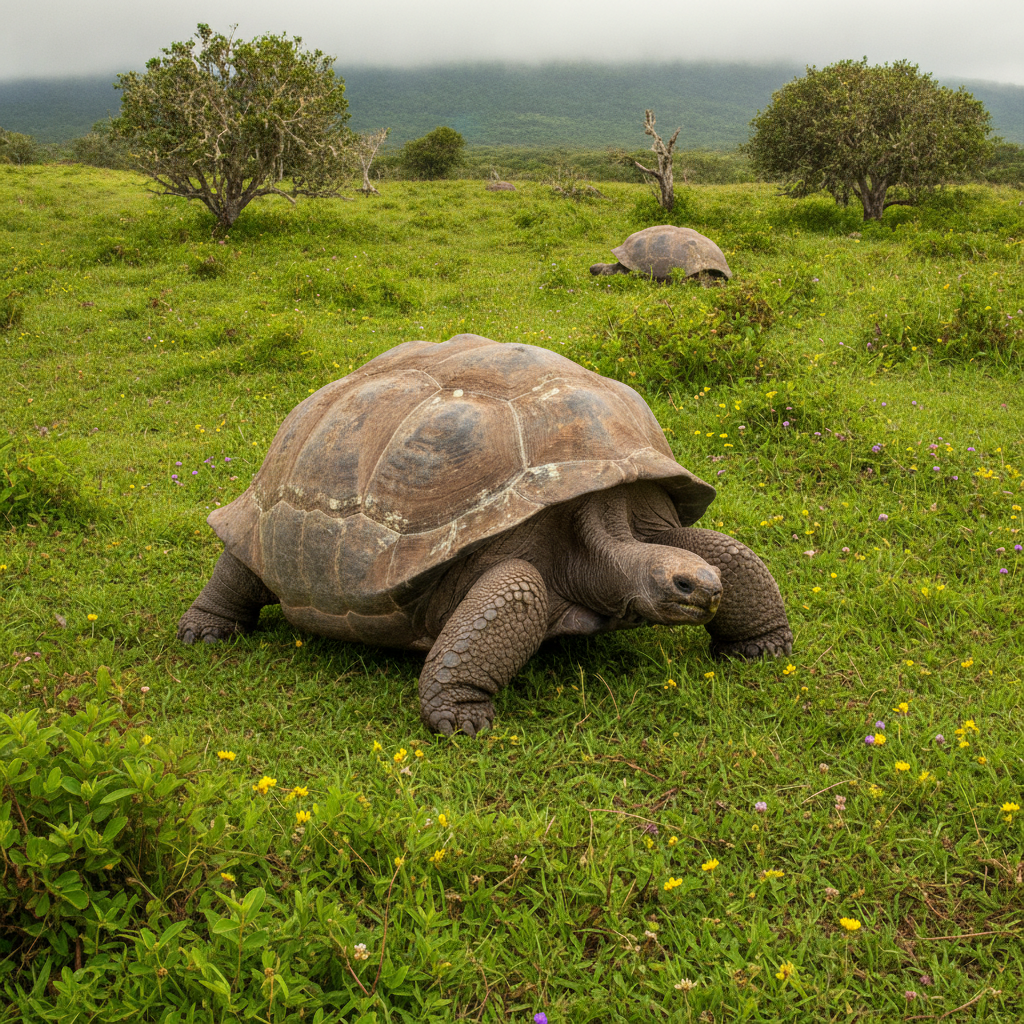
Galapagos Giant Tortoises: Natural History, Near Extinction, and Recovery
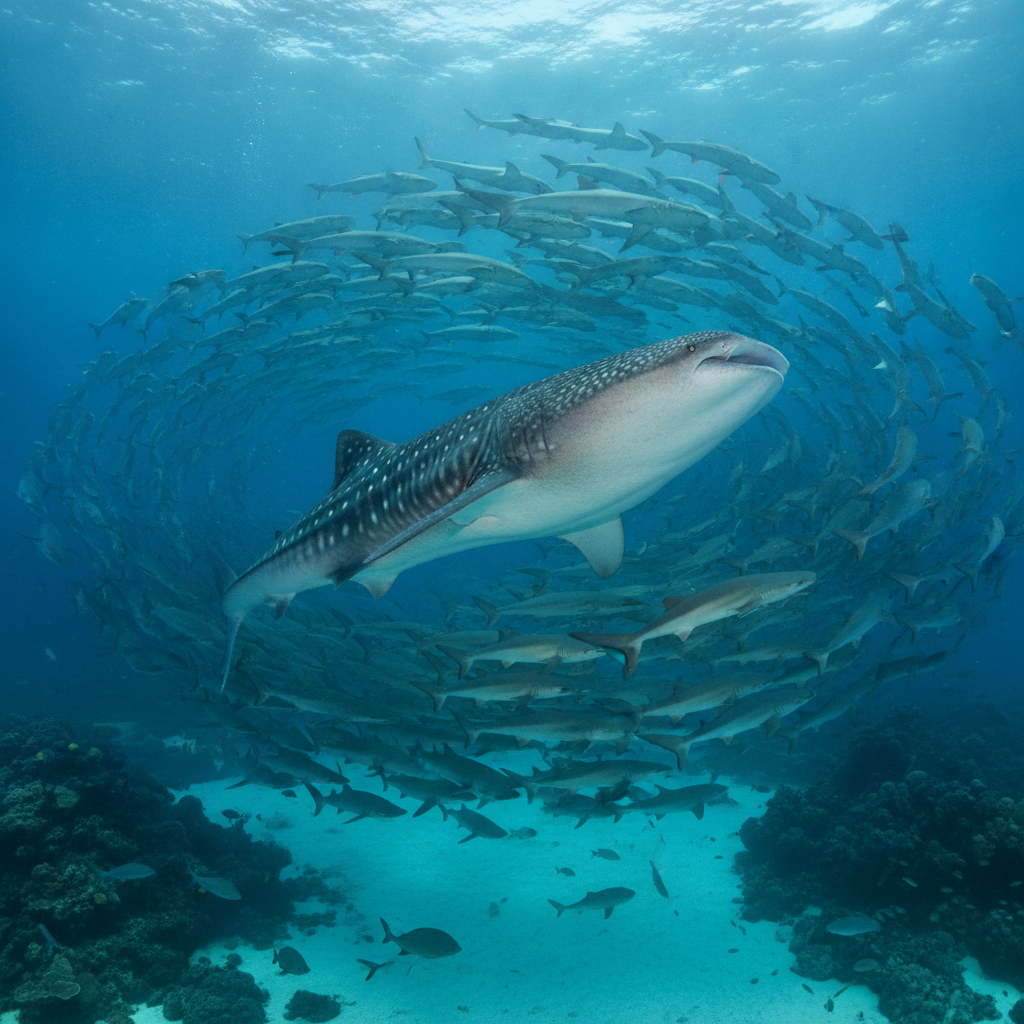
Galapagos Diving and Snorkeling: Shark Aggregations and Underwater Wildlife
Galapagos Conservation: The Human Presence, Tourism Management, and Future Threats
Galapagos Islands: Evolution Laboratory and the Most Fearless Wildlife on Earth