Gdańsk Long Lane & the Old Town — Neptune's Fountain, the Crane & Hanseatic Heritage
Gdańsk (the Baltic port city at the mouth of the Vistula River, population 470,000, one of Poland's most historically significant cities — the Free City, the Hanseatic port, the birthplace of the Solidarity trade union movement, the site of the first shots of World War II on 1 September 1939 at the Westerplatte peninsula) was 95 percent destroyed in 1945 and rebuilt building-by-building from historical records into the most complete post-war urban reconstruction in Poland.
- 1
The Golden Gate and the Long Lane
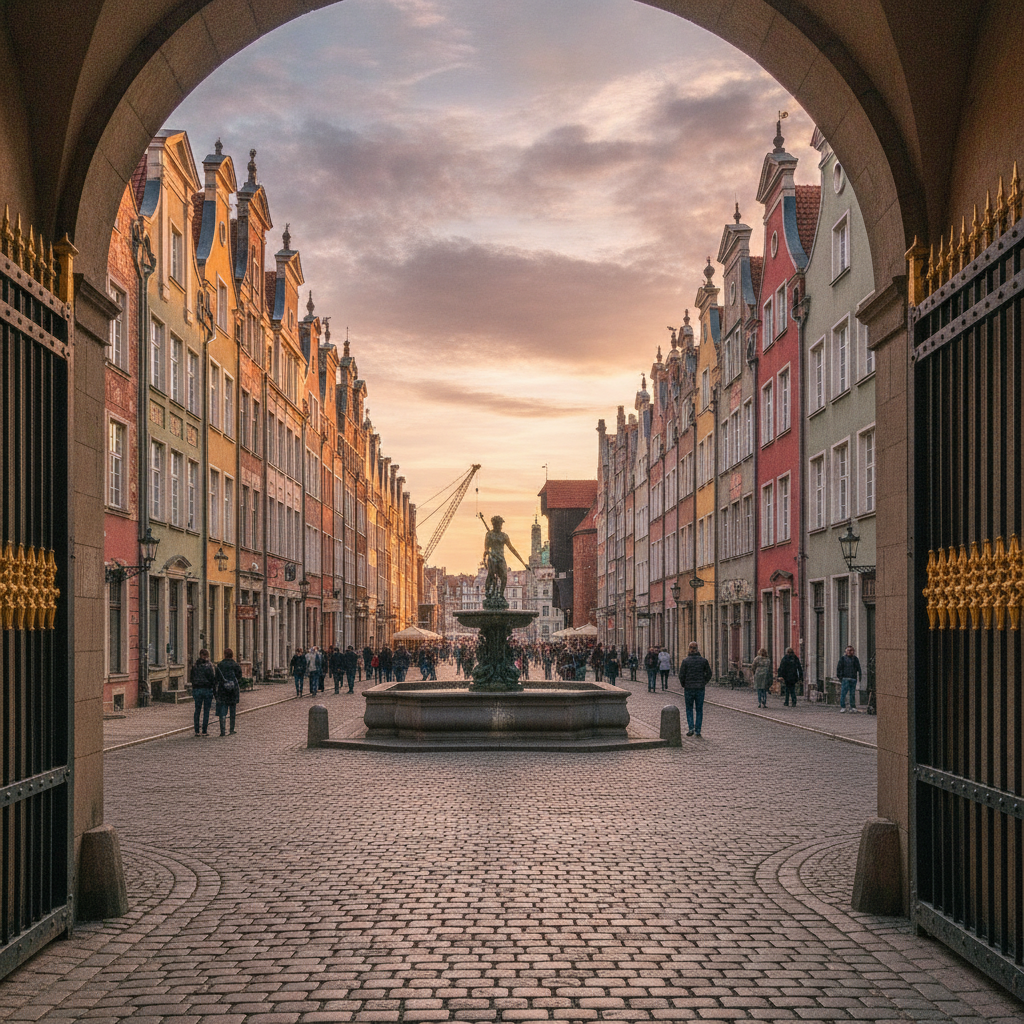
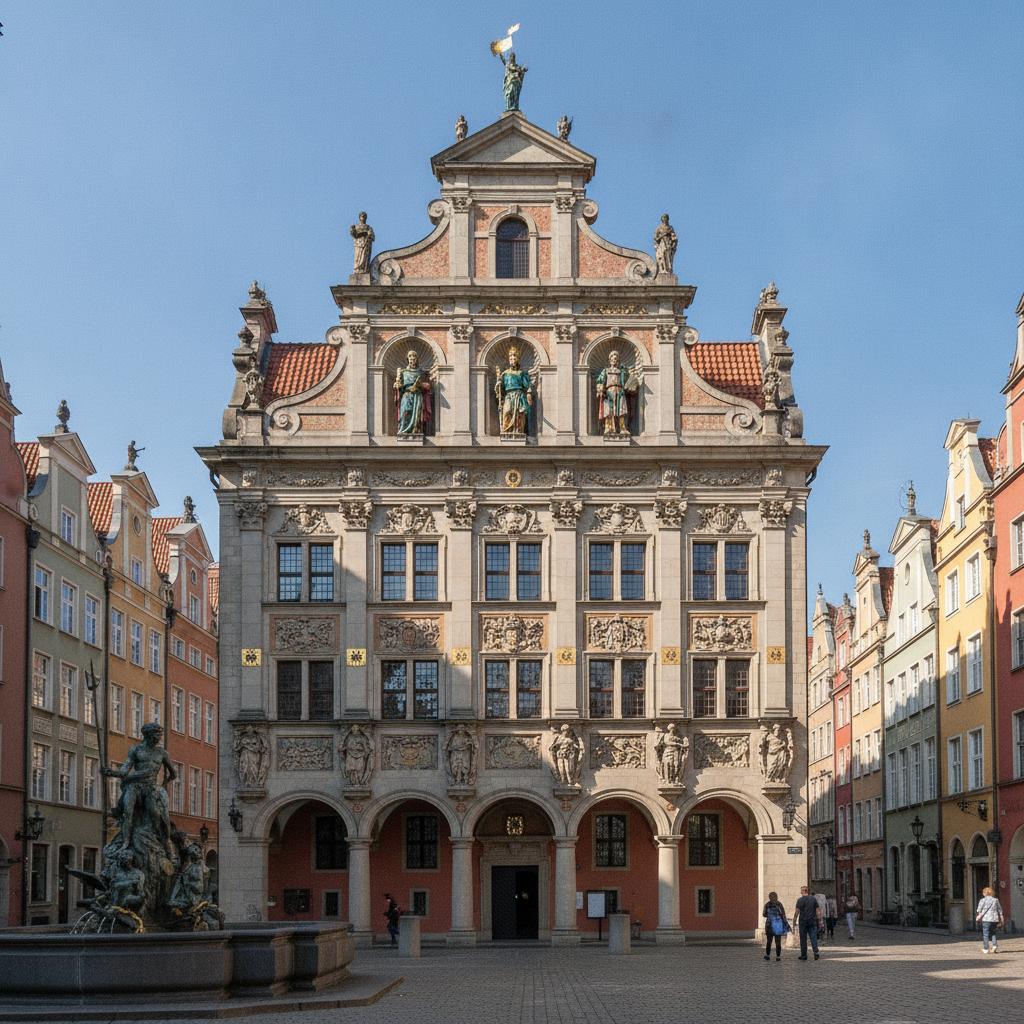
The Golden Gate (Złota Brama, the 17th-century Mannerist gate at the western entrance to the Long Lane, built 1612-1614 by Abraham van den Blocke, the gate forming the formal entry to the city's main civic street, the allegorical statues on the attic storey representing Peace, Freedom, Wealth, and Fame facing outward — the virtues desired by entering merchants — and Prudence, Piety, Justice, and Concord facing inward — the virtues expected of the citizens — the most articulate expression of the mercantile values of the Gdańsk burghers who commissioned it) and the Long Lane (Ulica Długa, the main pedestrian street of the Old Town, 250m long, the Dutch-Flemish Mannerist and Baroque facades of the rebuilt burgher houses — the houses with the steep crow-stepped gables, the ornate portals, the decorative friezes, each facade unique — the street reconstructed from historical records and photographs after 1945 into the most complete Hanseatic streetscape surviving in the Baltic region after Bruges and Tallinn) are the defining architectural experience of Gdańsk.
- 2
The Neptune Fountain and the Long Market
The Neptune Fountain (Fontanna Neptuna, at the junction of the Long Lane and the Long Market, the bronze fountain cast 1633 by the Flemish sculptor Peter Husen and the Gdańsk blacksmith Georg Pohl, the triton figure of Neptune standing on a pedestal in the centre of the circular basin, the fountain symbolizing Gdańsk's mastery of the Baltic trade, the legend that the city's famous Goldwasser liqueur — the gold-flake schnapps — was invented when Neptune struck the fountain with his trident and gold began flowing from the Motława River) and the Long Market (Długi Targ, the wide rectangular square of the Gdańsk Old Town connecting the Long Lane to the Motława waterfront, the Artus Court — the Gothic-Renaissance merchant guildhall at the west end of the Long Market — on the right, the Main Town Hall tower visible above the Long Market from the Green Gate, the square lined with the grandest of the Gdańsk townhouses) together constitute the ceremonial centre of the Hanseatic city.
- 3
The Crane — the Medieval Port Machine
The Crane (Żuraw, the medieval double-turreted wooden crane at the Motława waterfront, the largest surviving medieval port crane in the world, built c. 1442-1444, the crane used to load and unload ships in the Gdańsk port and to step the masts of newly constructed ships — the crane capable of lifting 4 tonnes to a height of 27m using human-powered treadwheels, the two wooden treadwheels inside the towers driven by workers walking inside the wheel, the crane used continuously from 1444 to 1858, the crane housing the Central Maritime Museum branch with the history of Baltic shipping and the working replica of the treadwheel mechanism, €10 adults, Tuesday-Sunday 10am-6pm) is the most iconic single structure in Gdańsk and the most important medieval industrial monument in the Baltic region. The view from the Green Gate (the 16th-century gate at the eastern end of the Long Market opening onto the Motława River, the view through the gate arch to the Crane and the river the most photographed vista in Gdańsk) and the Motława riverbank (the granary island across the river — Spichrzowa Island, the reconstructed brick granaries of the Gdańsk grain trade, the most important commodity traded through the port from the 14th to the 18th century — visible from the Długie Pobrzeże quayside).
- 4
The Main Town Hall and the Amber Road
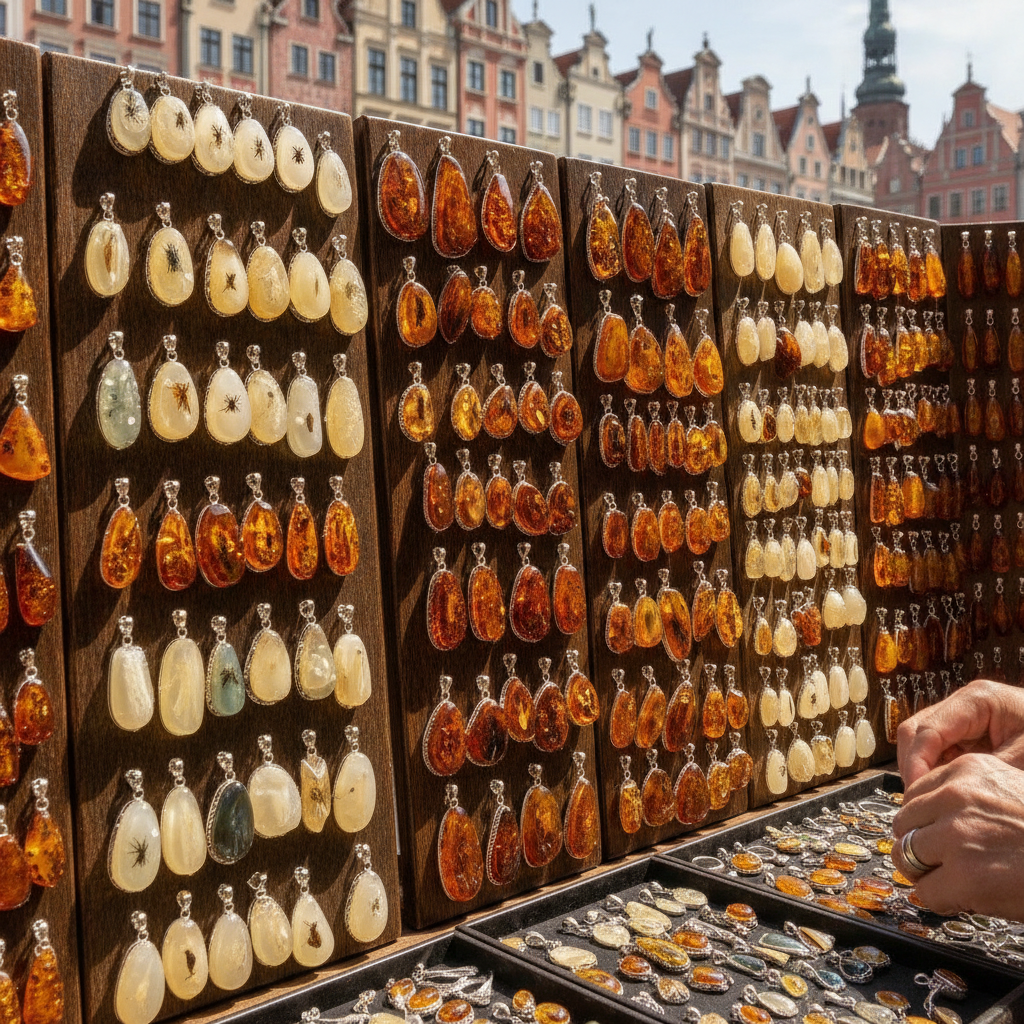
The Main Town Hall (Ratusz Głównego Miasta, at the corner of the Long Lane and Korzenna Street, the Gothic-Renaissance building begun 1378, the 82m tower with the gilded figure of King Sigismund II Augustus at the summit the most recognizable silhouette in Gdańsk, the building housing the Gdańsk History Museum, €10 adults, Tuesday-Sunday 10am-6pm, the Red Hall on the first floor — the most important Renaissance interior in Gdańsk, the carved wooden wainscoting, the coffered ceiling with the allegorical paintings, the 1609 painting 'Apotheosis of Gdańsk' by the Flemish painter Izaak van den Blocke covering the ceiling) and the Amber Road (Gdańsk's claim as the world amber capital — the city at the northern terminus of the ancient Amber Road that carried Baltic amber south to Rome, the amber trade making Gdańsk wealthy throughout antiquity and the medieval period, the amber shops of the Long Lane and the adjacent streets the physical continuation of this 3,000-year commercial tradition, the amber museum — Museum Bursztynu — in the Great Mill at Wielkie Młyny 16, €8 adults, Tuesday-Sunday 10am-6pm, the natural amber specimens and the amber jewellery collection the most comprehensive in Poland).
- 5
St. Mary's Basilica — the Brick Gothic Giant
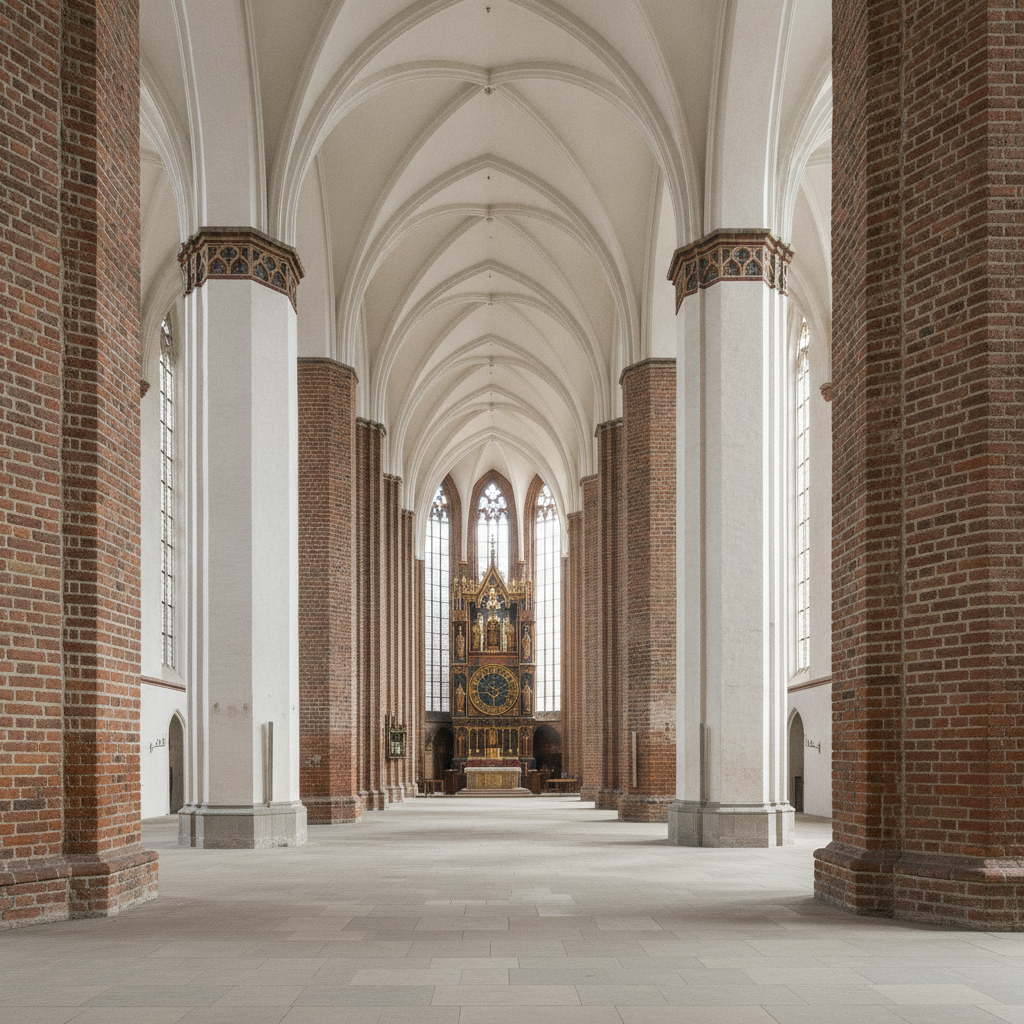
The Basilica of the Assumption of the Virgin Mary (Bazylika Mariacka, Podkramarska 5, the largest brick Gothic church in the world and the largest church in Poland, built 1343-1502, the interior 105m long and 66m wide, the vault rising to 29m, the church accommodating 25,000 people, the astronomical clock of 1470 — the most complex Gothic mechanical clock in the world, the clock showing the time, the date, the phase of the moon, and the positions of the sun and moon in the zodiac, the skeleton figure of Death striking the hour — the interior the most overwhelming Gothic space in Northern Europe, free, open daily 8am-7pm in summer) is 5 minutes walk north of the Long Lane. The tower (the climb of 405 steps to the top of the Gothic tower, €5, the panorama of the Old Town roofline and the Baltic coast the most complete view of Gdańsk available, open during church visiting hours). The Hans Memling triptych (the Last Judgement altarpiece by Hans Memling, painted 1467-1473 for the Medici banker Angelo di Jacopo Tani, captured by Gdańsk pirates en route to Florence, the altarpiece kept in Gdańsk ever since — now displayed in the National Museum in Gdańsk at Toruńska 1, €10 adults, one of the great Northern Renaissance altarpieces).
- 6
Westerplatte — the First Shots of World War II
Westerplatte (the peninsula at the mouth of the Port Channel north of Gdańsk, accessible by boat from the Long Quay at €10-15 return or by bus 106 from the city centre, the site of the first military action of World War II on 1 September 1939 at 4:45am when the German battleship Schleswig-Holstein opened fire on the Polish Military Transit Depot on the peninsula, the 182 Polish soldiers of the garrison holding the position for 7 days against a German force of 3,500 before surrendering on 7 September 1939 — the 7-day resistance the first symbol of Polish military resistance to the Nazi invasion): the monument (the 25m granite monument on the hill above the peninsula, erected 1966, the most symbolically important military monument in Poland, the inscription in Polish 'Never Again War'), the ruins of the barracks and the guardhouses (the concrete structures destroyed in the 1939 fighting, the ruins left in situ as a memorial), and the museum (the display of the 1939 battle in the restored officer's barracks, €5 adults, the panoramic view of the Baltic Sea and the port entrance from the monument terrace)
Walk this route with audio
Stories play automatically as you reach each stop — no tapping needed.
More in gdansk
Gdańsk Amber, Food & the St. Dominic's Fair — the Baltic Amber Capital
Gdańsk Solidarity Heritage — the European Solidarity Centre, the Shipyard & the End of Communism
Gdańsk Practical Guide — Reconstruction, Flemish Architecture & the National Museum
Gdańsk Churches & Art — St. Mary's Basilica, the Teutonic Legacy & the Memling Altarpiece