Gdańsk Practical Guide — Reconstruction, Flemish Architecture & the National Museum
Gdańsk's 95 percent destruction in 1945 and its post-war reconstruction into the most complete Hanseatic streetscape in the Baltic region is itself one of the most remarkable stories in European urban history — the rebuilt city often more architecturally accurate than the preserved originals in other cities.
- 1
The 1945 Destruction and the Reconstruction
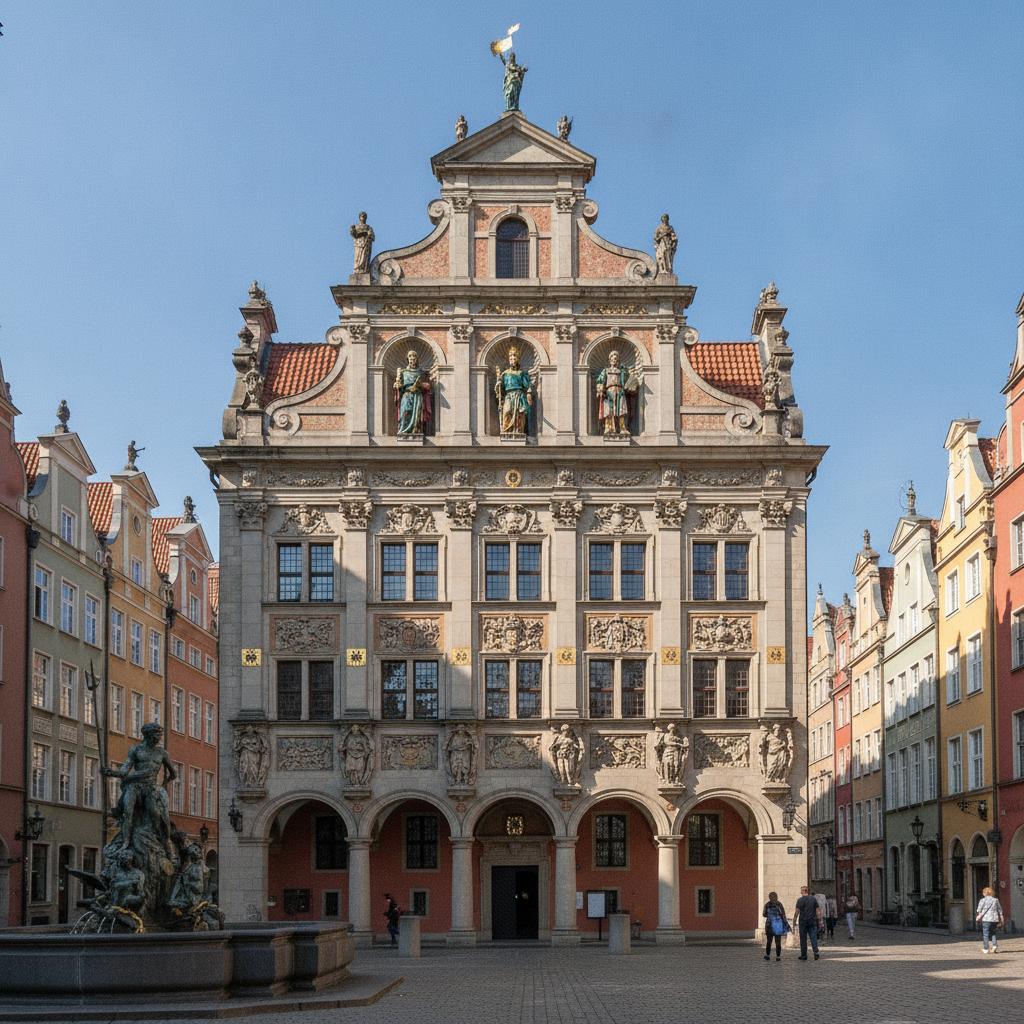
Gdańsk in 1945 (the city then called Danzig, the capital of the Free City of Danzig — the independent city-state created by the Treaty of Versailles in 1919 between Poland and Germany — occupied by Nazi Germany from 1 September 1939, the city defended by the German military in the face of the Soviet Red Army advance in March 1945, the Old Town burned and shelled in the fighting of 26-30 March 1945, 95 percent of the historic buildings reduced to rubble in 4 days): the Polish decision to rebuild (the post-war Polish government's choice to rebuild the devastated city rather than abandon it, the rebuilding based on the meticulous documentation compiled by the German Kunstschutz — the Nazi cultural protection organization — which had photographed and measured every significant building in Danzig between 1939 and 1944 precisely because the Nazis feared Allied bombing, the German documentation thus becoming the blueprint for the Polish reconstruction — the most politically ironic archival use in 20th-century European urban history). The rebuilding began in 1947 and the Long Lane was substantially complete by 1955, the reconstruction following the 17th-century Dutch Mannerist and Baroque style of the peak Hanseatic period.
- 2
The Dutch Influence — Flemish Mannerism in the Baltic
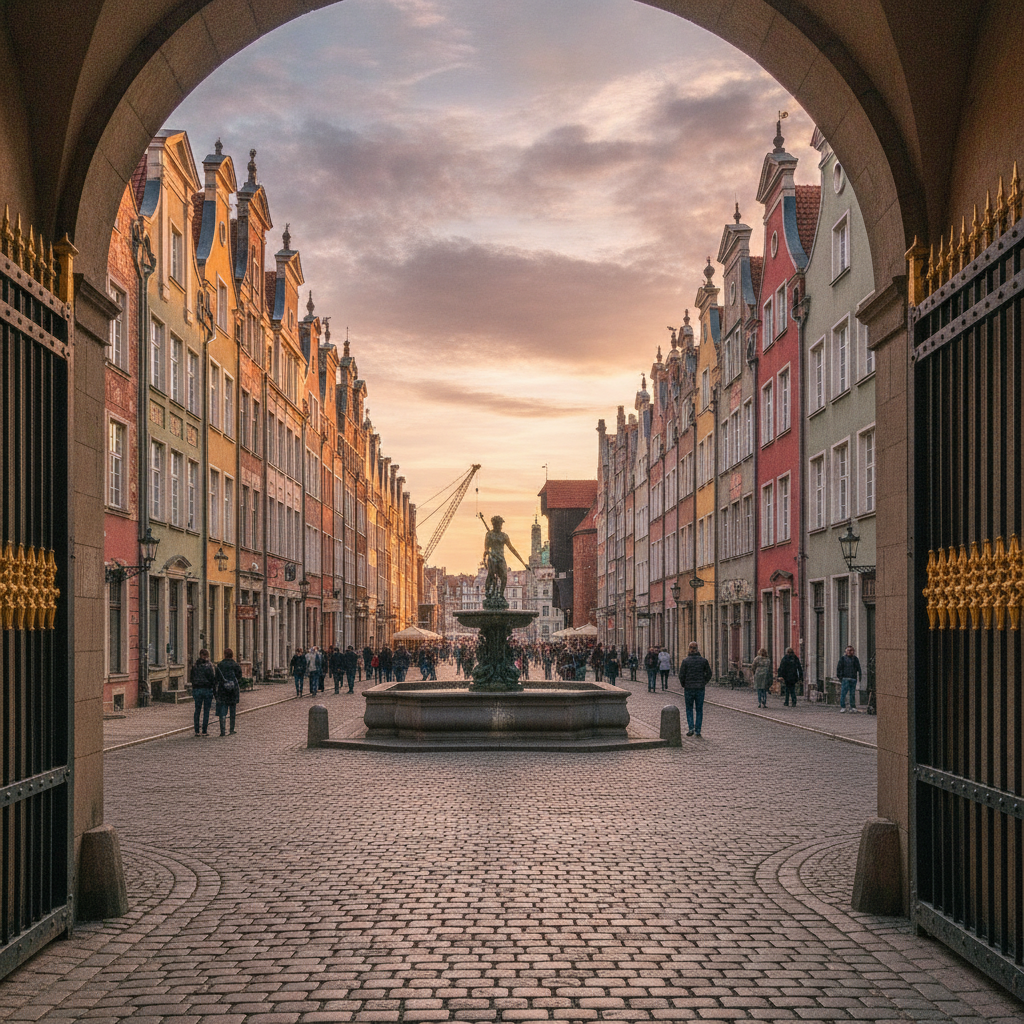
Gdańsk's architectural character (the Dutch Mannerist and Flemish Baroque style of the burgher houses, the style imported from the Low Countries by the Gdańsk merchant community who maintained direct trade connections with Antwerp and Amsterdam from the 15th to the 18th centuries, the architects Abraham van den Blocke, Willem van den Blocke, and Anthonis Opbergen designing the major civic buildings in the Antwerp Mannerist style — the Golden Gate, the Green Gate, the Great Arsenal, the Artus Court facade — the style characterized by the crow-stepped gables, the ornate cartouche decorations, the alternating brick and stone elements, the pilastered facades with classical orders applied decoratively): the Great Arsenal (Wielka Zbrojownia, Targ Węglowy 6, the 1609 arsenal building by Anthonis Opbergen, the most elaborate Flemish Mannerist facade in Gdańsk, the four-storey gabled facade with the grotesque warrior heads, the shell cartouches, and the cannon decorations — the building now functioning as a shopping centre, the facade the most important architectural document in the city, the interior converted in the 1990s but the exterior intact as reconstructed). The walk from the Golden Gate to the Green Gate (the 350m circuit taking in the most concentrated Dutch Mannerist architecture in the Baltic region, the visual coherence of the rebuilt Long Lane demonstrating why Gdańsk is considered the most successful post-war reconstruction in Poland).
- 3
The National Museum in Gdańsk — the Memling Altarpiece
The National Museum in Gdańsk (Muzeum Narodowe w Gdańsku, Toruńska 1, €10 adults, Tuesday-Sunday 10am-5pm, the museum in the 15th-century Franciscan monastery building, the most important art museum in Pomerania) holds the Last Judgement altarpiece by Hans Memling (the triptych painted 1467-1473, the central panel the most detailed Last Judgement in Northern Renaissance art — the figures of the saved ascending to heaven on the left and the damned descending to hell on the right, the Christ enthroned in majesty above the weighing of souls, the individual face of each figure rendered with Memling's characteristic psychological intensity, the altarpiece commissioned by the Bruges banker Angelo di Jacopo Tani for the Medici chapel in Florence, captured by the Gdańsk privateer Paul Beneke while en route from Bruges in 1473, kept in Gdańsk since and now considered Polish cultural property). The museum's permanent collection also includes the Gdańsk civic silver (the most important collection of Gdańsk goldsmithing, the guild silver from the 16th-18th centuries documenting the wealth of the Hanseatic merchant community) and the Flemish and Dutch paintings (the works by Jan van Scorel, Adriaen van Ostade, and Jan Davidszoon de Heem from the Gdańsk Patrician collections).
- 4
The Great Mill and the Amber Museum
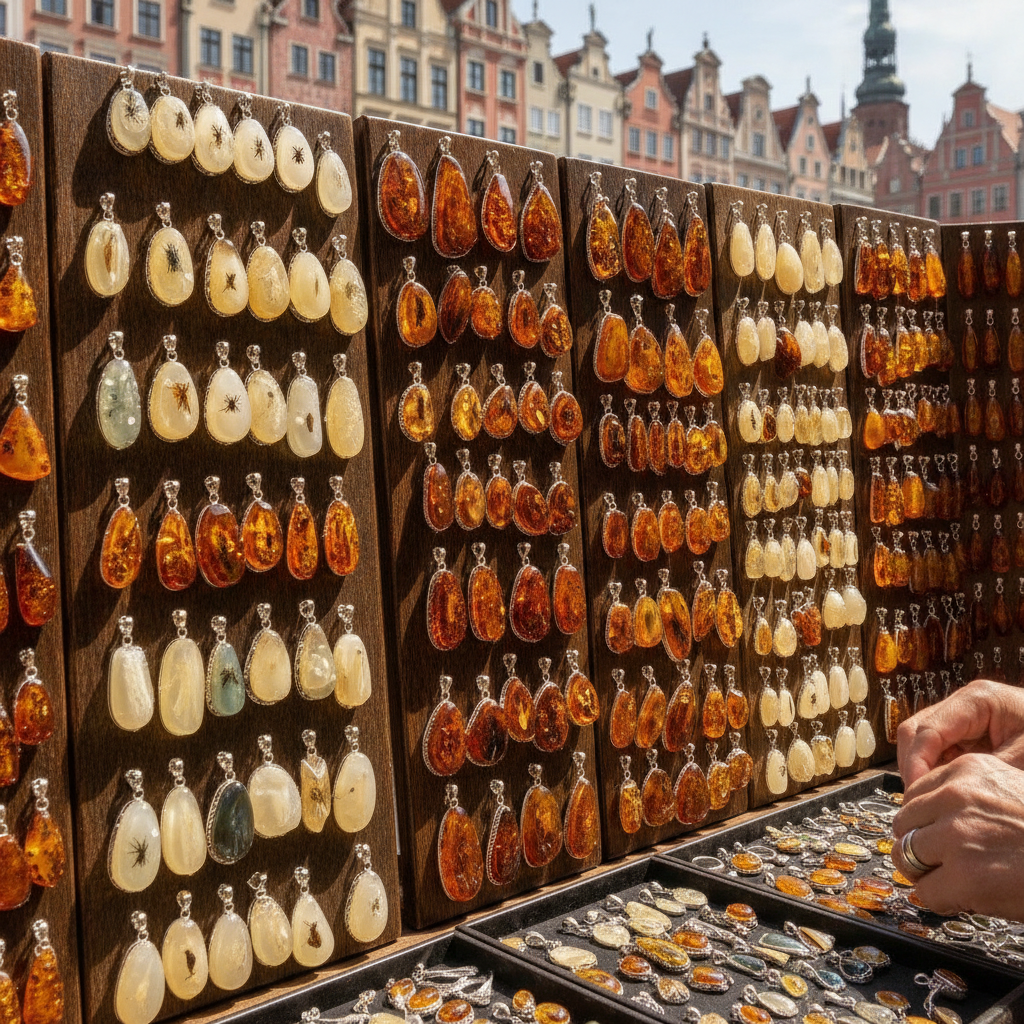
The Great Mill (Wielkie Młyny, Wielkie Młyny 16, the largest Gothic mill in medieval Central Europe, built by the Teutonic Knights in 1350 to process the grain arriving from the Polish hinterland via the Vistula, the 18 millstones running continuously until 1945, the building now housing the Amber Museum, €8 adults, Tuesday-Sunday 10am-6pm, the most comprehensive amber museum in the world): the natural amber collection (the specimens from the Baltic deposits ranging from 40-50 million years ago, the specimens with prehistoric inclusions — the most scientifically valuable items in the collection, the identified species including 100+ insect species never found in any other fossil record — the oldest specimens predating the dinosaur extinction), the historical amber objects (the amber artefacts from the Neolithic to the present, the amber used for amulets in the Stone Age, the Roman amber trade objects, the Baroque amber cabinet furniture, the 18th-century Gdańsk amber craftwork), and the contemporary amber jewellery (the design innovation in amber, the international design competition pieces, the intersection of the ancient material and the contemporary design — the fastest-growing sector of the Gdańsk amber industry). The reconstructed mill machinery (one of the 18 millstones reconstructed to its working configuration, the scale of the medieval milling operation visible from the size of the mill wheel).
- 5
St. Bridget's Church — Solidarity's Spiritual Home
The Church of St. Bridget (Kościół Świętej Brygidy, Profesorska 17, 5 minutes walk north of the Long Lane, the Gothic church built in the 14th century, the church that became the spiritual home of the Solidarity movement during the 1980s — the priest Henryk Jankowski serving as the unofficial chaplain of the Gdańsk Solidarity organization, the church used for the masses attended by thousands of striking and protesting workers throughout the martial law period, the interior decorated with the amber altarpiece installed in 1997 — the 11m tall amber-clad altarpiece the largest amber decorative object in the world, the amber donated by Solidarity supporters and Baltic amber producers as a tribute to the movement, free, open during church hours daily 9am-6pm) and the Solidarity memorial plaques (the interior of the church covered with hundreds of plaques commemorating the Solidarity members, the martial law internees, and the victims of communist repression — the wall of remembrance the most physically comprehensive record of the individual membership of the Solidarity movement, each plaque placed by a family or a local Solidarity organization). The connection between St. Bridget's and the ECS (the 10-minute walk between the churches representing the spiritual and the political history of the same movement).
- 6
Gdańsk in 3 Days — the Optimal Circuit
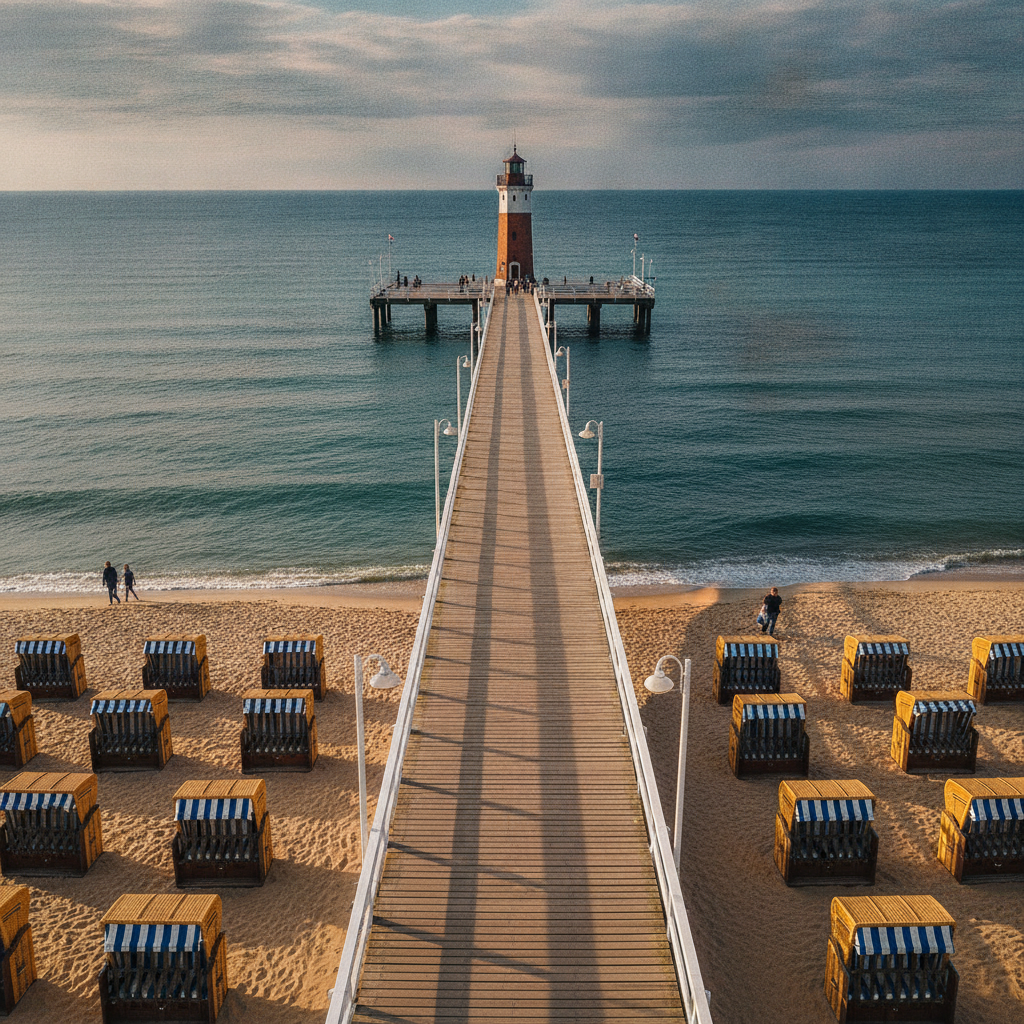
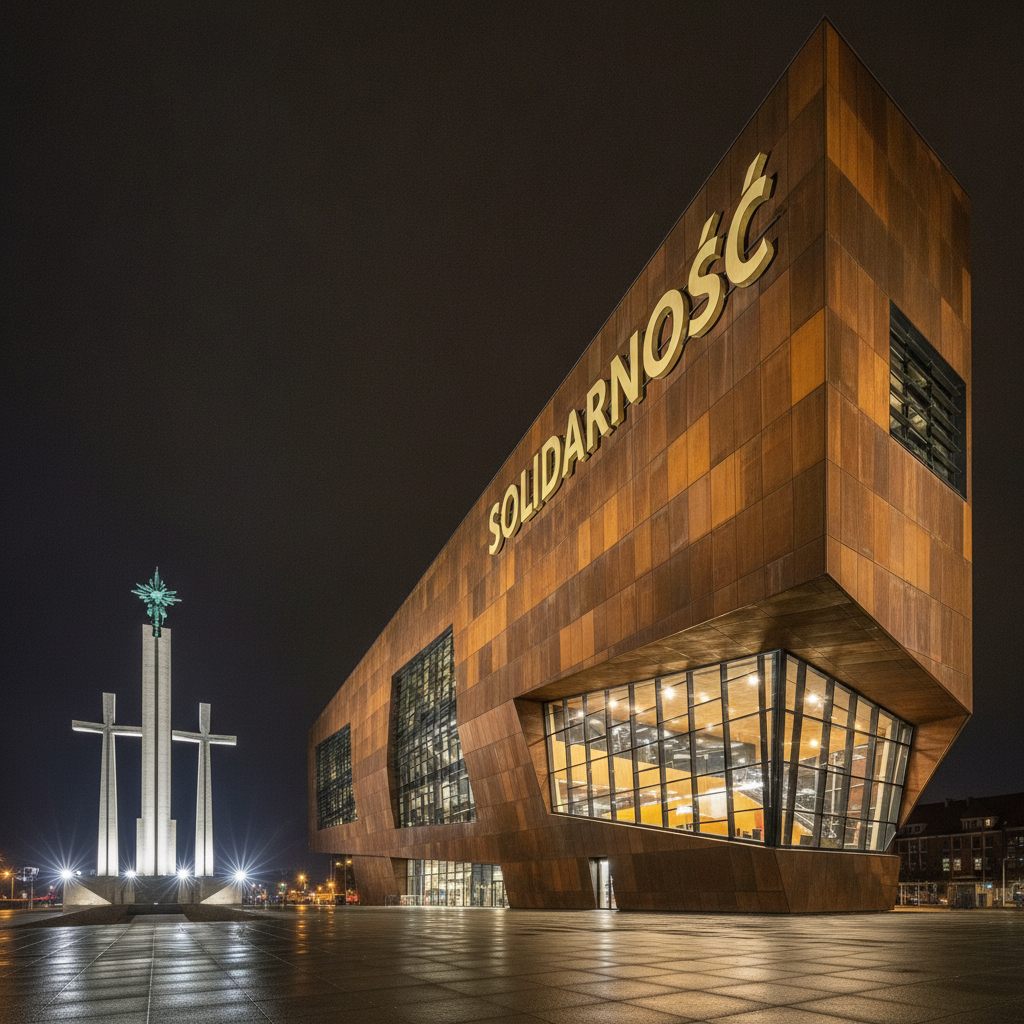
The 3-day Gdańsk circuit for the maximally informed visit: Day 1 — the Old Town (morning: the Long Lane from the Golden Gate to the Green Gate, the Neptune Fountain, the Artus Court, the Main Town Hall, the Crane, the Amber Museum at the Great Mill; afternoon: St. Mary's Basilica and the tower climb, Mariacka Street amber shopping, the Motława waterfront; evening: Długie Pobrzeże restaurants, the amber herring and the Goldwasser at the Long Quay taverna), Day 2 — the Solidarity history (morning: the ECS museum, the Shipyard Gate 2, the Monument of the Three Crosses; afternoon: the boat from the Long Quay to Westerplatte, 30 minutes on the peninsula, the boat returning in the late afternoon; evening: St. Bridget's Church, the Wrzeszcz neighbourhood restaurants), Day 3 — the Tri-City (morning train to Sopot: the Molo pier, the Grand Hotel terrace, the beach; afternoon train to Gdynia: the modernist district walk, the Granary Island restaurant for Baltic fish; return train to Gdańsk in the evening). The 3-day pass for the SKM commuter rail (€12) the single most cost-effective transport purchase for the Tri-City visit.
Walk this route with audio
Stories play automatically as you reach each stop — no tapping needed.
More in gdansk
Gdańsk Amber, Food & the St. Dominic's Fair — the Baltic Amber Capital
Gdańsk Solidarity Heritage — the European Solidarity Centre, the Shipyard & the End of Communism
Gdańsk Long Lane & the Old Town — Neptune's Fountain, the Crane & Hanseatic Heritage
Gdańsk Churches & Art — St. Mary's Basilica, the Teutonic Legacy & the Memling Altarpiece