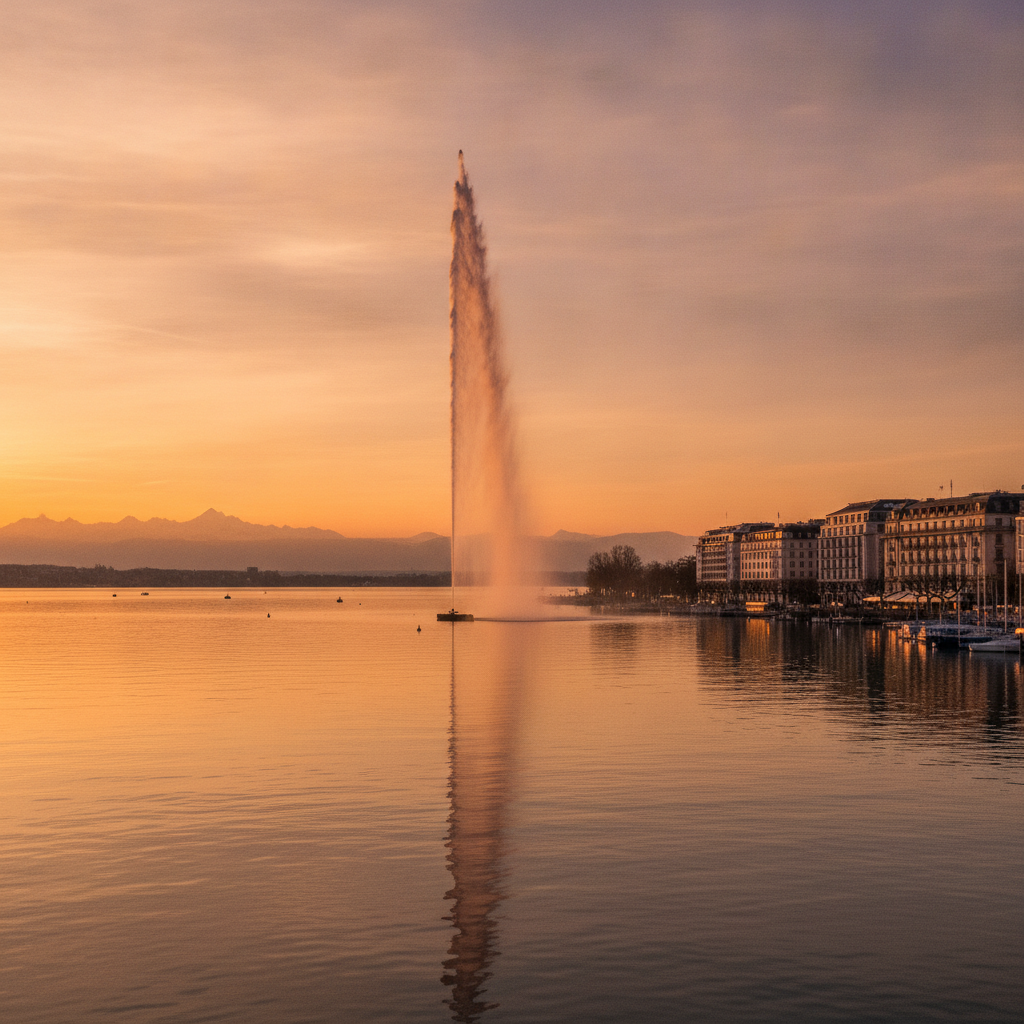
Geneva Watches, the Rue du Rhône & Jean-Jacques Rousseau's City
Geneva's international identity rests on three pillars — the luxury watch industry, the role as a global diplomatic hub, and the intellectual tradition of Rousseau and Calvin — all concentrated in the 2km from the Rue du Rhône to the Old Town.
- 1
The Geneva Watch Boutiques — Patek Philippe to Rolex
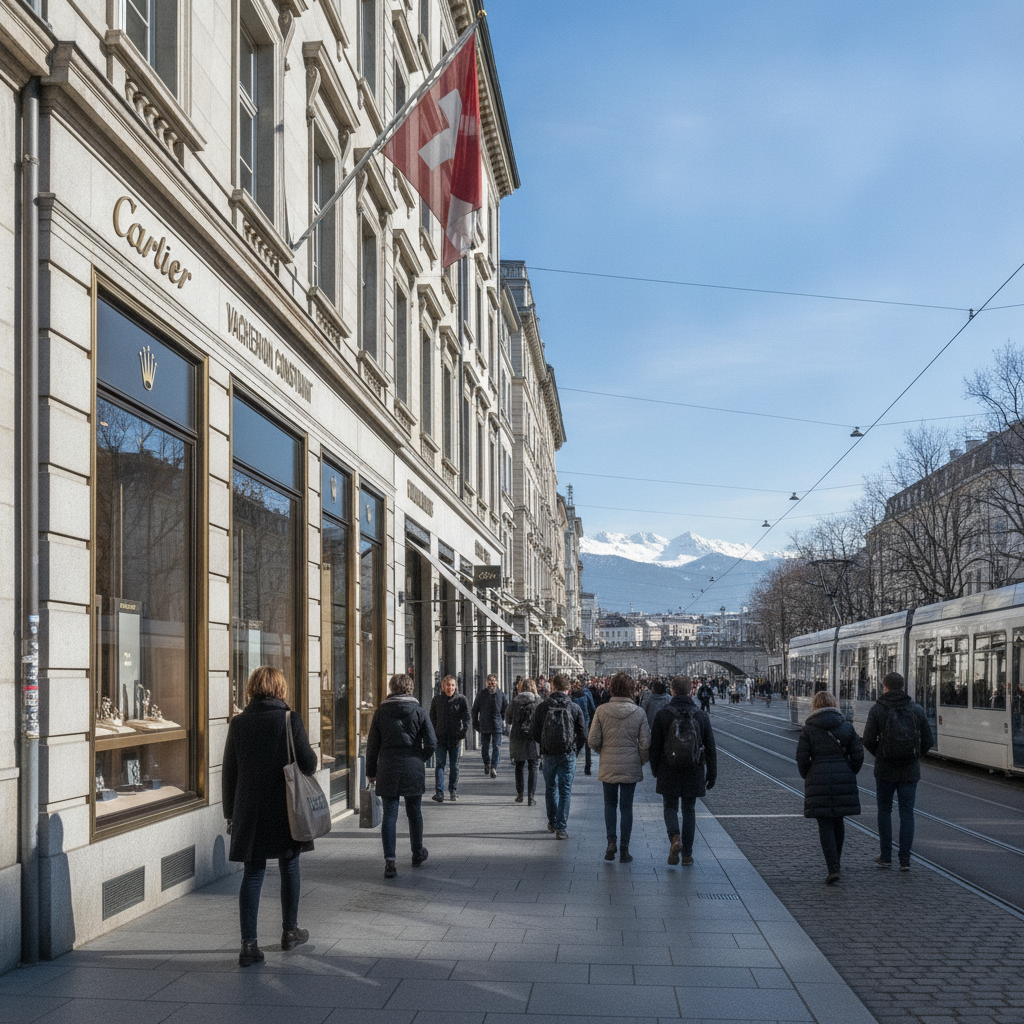
Rue du Rhône watch district (the primary luxury retail street of Geneva, the 400m stretch from the Pont du Mont-Blanc east to the Place du Molard the most concentrated luxury watch retail in the world): the Geneva watch brands (the watches bearing the Geneva Seal — Poinçon de Genève — the quality hallmark requiring the complete manufacture within the Canton of Geneva: Patek Philippe at Rue du Rhône 41 — the most collectible watch brand in the world, the Grandmaster Chime Reference 6300 sold at auction for CHF 31 million in 2019, the most expensive watch ever sold; Vacheron Constantin at Rue des Moulins 1 — the oldest continuously operating watch manufacturer in the world since 1755; Rolex at Place de Longemalle 2 — the most recognised watch brand globally, the Crown of the Oyster the most copied watch design in history; Chopard at Rue de la Rhône 8 — the most jewel-encrusted watches in the Geneva luxury market; and the Richemont brands — Cartier, IWC, Jaeger-LeCoultre — represented on the same 400m street), the tax refund (the Swiss VAT refund of 7.7% on purchases over CHF 300 for the non-EU resident, the maximum saving on a CHF 50,000 watch purchase being CHF 3,850, the refund form available at every retailer and processed at the Geneva airport departure — the financial incentive for the international visitor to purchase in Switzerland rather than in France or Germany where the same brands are priced in euros at comparable levels), the vintage watches (the Geneva watch auction houses — Christie's Geneva, Sotheby's Geneva, and Antiquorum at Rue de Rive 8 — the vintage watch auctions held in May and November making Geneva the most important single market for the vintage watch collector outside London and New York) and the Patek Philippe Museum (the Musée Patek Philippe at Rue des Vieux-Grenadiers 7, the most important single-brand horology museum in the world, CHF 10 adults, the collection spanning 5 centuries of precision timekeeping).
- 2
Jean-Jacques Rousseau — the Geneva Philosopher
Jean-Jacques Rousseau (the most important intellectual product of Geneva — born at 40 Grand-Rue in the Old Town June 28 1712, the philosopher whose 'Social Contract' 1762 and 'Émile' 1762 established the theoretical foundation of modern democratic politics and modern education, the most politically influential thinker of the 18th century after Locke): Rousseau's Geneva (the Geneva of Rousseau's birth a Calvinist city-state of 20,000 citizens with the right to vote — the most democratic polity in Europe in 1712, the model that Rousseau extrapolated into his General Will theory — the idea that legitimate government derives from the consent of the governed, the direct precursor of the French Declaration of the Rights of Man 1789 and the American Declaration of Independence 1776, both documents whose authors had read Rousseau), the Île Rousseau (the small island in the Rhône at the foot of the Pont des Bergues, the statue of Rousseau by James Pradier 1835 on the island's poplar-shaded promenade, the most romantically situated public monument in Geneva — the island accessible by foot from both banks on the connecting bridges, the poplar trees surrounding the statue Rousseau's own preferred tree, free, always accessible), the Maison de Rousseau et de la Littérature (the MRL at Grand-Rue 40, the house of Rousseau's birth, now a literature museum with the permanent Rousseau exhibition and the rotating literary exhibitions, CHF 5 adults, Tuesday-Sunday 11am-6pm, the most contextually correct Rousseau museum — the actual room of his birth on the third floor) and Rousseau's legacy (the Romantic movement in literature deriving directly from Rousseau's Confessions 1782 — the first autobiographical self-examination in Western literature, the model for every subsequent memoir and autobiography — and from the concept of the sublime in nature, the idea that the Alpine landscape evokes awe and moral elevation, the theoretical foundation of Alpine tourism).
- 3
The Palais des Nations and the Diplomatic Quarter
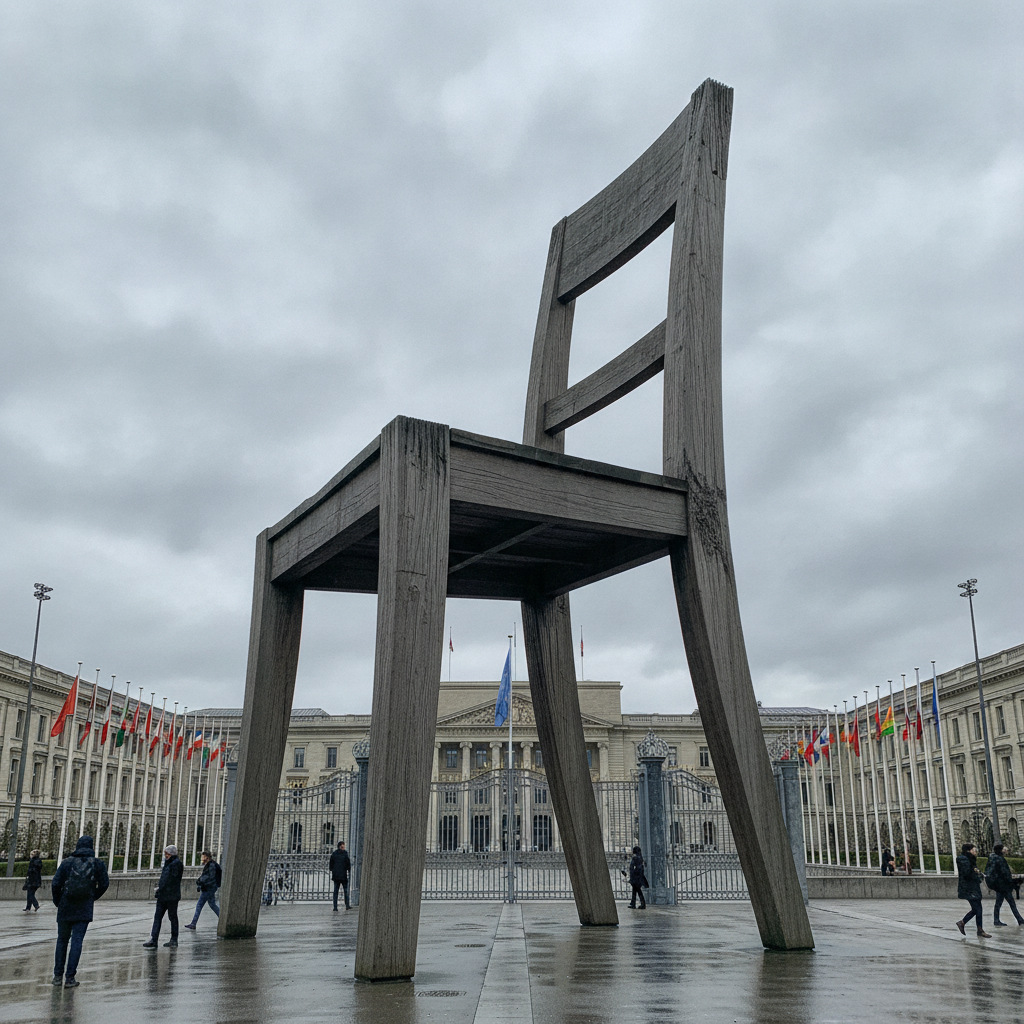
International Geneva quarter (the 2km radius around the Palais des Nations containing the highest concentration of international organizations in the world): the Palais des Nations (Avenue de la Paix 8, the main building of the League of Nations 1929-1938, now the European UN headquarters — the guided tour the primary visitor experience, booking required 2 weeks in advance at ungeneva.org, CHF 15 adults, the Salle des Assemblées with the José Maria Sert ceiling murals depicting the march of the nations toward peace — the murals painted in the optimistic late 1930s just before the Second World War proved the League of Nations ineffective), the Red Cross headquarters (the International Committee of the Red Cross at Avenue de la Paix 19 adjacent to the Palais des Nations, the organization founded by Henri Dunant after the Battle of Solferino 1859 — the most universally recognized humanitarian organization in the world, the ICRC headquarters not open to the public but the International Red Cross Museum immediately adjacent the most accessible expression of the ICRC's work), the Botanical Garden (the Jardin Botanique at Route de Lausanne 192, adjacent to the Palais des Nations, the botanical garden of the University of Geneva containing 16,000 species across 28 hectares, free, daily 8am-7:30pm April-October, the Alpine rock garden the most specific to the Swiss context — the 500 Alpine plant species in the most geographically appropriate display garden in Europe, the free-roaming peacocks and the deer in the enclosed park the family attraction), and the Place des Nations (the square in front of the Palais des Nations main gate, the Broken Chair sculpture by Daniel Berset 1997 — the 12m wooden chair with the broken leg commissioned by the Handicap International anti-landmine campaign — the most photographed public sculpture in Geneva and the most politically specific outdoor monument in the international city).
- 4
The Carouge District — Geneva's Bohemian Quarter
Carouge (the independent-minded municipality immediately south of Geneva, 2km from the Old Town accessible by tram 12 or 13 in 15 minutes, the most charming neighborhood in the greater Geneva area, the 'little Turin' — built by King Victor Amadeus III of Sardinia 1772-1786 as a planned Italian baroque town to compete commercially with Geneva): the architecture (the 18th-century Piedmontese Baroque houses of the Carouge street grid — the Place du Marché the central square, the 4 Baroque fountains the defining outdoor space, the house facades in the ochre and terracotta Piedmontese palette, the most Italian single urban environment north of the Alps), the markets (the Marché de Carouge on the Place du Marché — Wednesday and Saturday mornings, the most locally attended fresh market in the greater Geneva area, the Savoie and the Geneva producers at the cheese and the charcuterie stalls, the flower stalls the most attended section — and the Sunday antique market the most browsed weekend market in the city), the bars and restaurants (the Carouge the most relaxed dining area near Geneva — the Lebanese restaurants on the Rue Saint-Joseph, the wine bars on the Rue de Carouge with the natural wine selection, the Saturday evening restaurant circuit the most lively in the greater Geneva area at the most affordable Geneva restaurant prices — CHF 30-50 per person for the dinner), and the craftsmen studios (the Carouge jewelry making and the glassblowing studios — the Carouge the traditional home of the Geneva artisan jewellery-making, the alternative to the Rue du Rhône luxury watches, the hand-made silver and the semi-precious stone pieces at CHF 30-200 at the studio-boutiques on the Rue du Marché and the Rue du Temple, the most distinctive Geneva-area souvenir at the most accessible price point).
- 5
Geneva Transportation Hub — Connecting to France and the Alps
Geneva as a hub (the city at the convergence of the Swiss rail network, the French TGV network, the Geneva Airport, and the Lake Geneva steamer routes — the most transport-connected city in French-speaking Switzerland): the Geneva-Cornavin station (the main SBB station at the city centre, the departure point for: the TGV Lyria to Paris Gare de Lyon 3.5 hours at CHF 50-120, the fastest overland connection between Switzerland and France; the SBB intercity to Zurich 2.5 hours at CHF 50; the RER regional trains around Lake Geneva to Lausanne 38 minutes, to Nyon 20 minutes, and to Morges 25 minutes; and the regional trains to Annemasse in France 12 minutes — free for the non-EU visitor on foot at the border crossing, the first French train station serving the Geneva transport zone at no extra cost with the Unireso day ticket), the Geneva tram system (the 8-line TPG tram and bus network, the 60-minute ticket at CHF 3.50 covering the complete city including Carouge and the Palais des Nations, the transit free from the airport with the CFF arrival ticket), the Lake Geneva steamers (the CGN steamer from the Geneva Quai du Mont-Blanc pier 1, the Belle Époque paddle steamers the most atmospheric transport option — the steamer to Yvoire in France 1 hour at CHF 15, the steamer to Lausanne 3.5 hours at CHF 39), the cross-border transport (the Y Bus from Geneva to Annecy in France 1.5 hours at €10, the Léman Express cross-border rail service connecting Geneva to the French Haute-Savoie towns — Annemasse, Évian, Thonon-les-Bains — the most recently opened cross-border rail network in Western Europe, fully operational from December 2019) and the Alpine access (the direct train from Geneva to Chamonix via St-Gervais in the French Alps 2.5 hours at CHF 40-60 including the Mont Blanc Express narrow-gauge section, the Eurostar seasonal direct service London St Pancras to Geneva Cornavin 8 hours the most sustainable single intercontinental transport option to the Swiss Alps from London).
- 6
The Plainpalais District — Geneva's Contemporary Arts Hub
Plaine de Plainpalais (the large flat open space in the Plainpalais district 1km south of the Old Town, the most used public space in Geneva for the flea market, the circus, the concerts, and the political demonstrations — the Plainpalais the functional centre of the non-tourist Geneva life): the Mamco (the Musée d'Art Moderne et Contemporain at Rue des Vieux-Grenadiers 10, the contemporary art museum of Geneva, the most important contemporary art institution in French-speaking Switzerland, free first Sunday of the month, CHF 12 adults otherwise, Tuesday-Friday noon-6pm, Saturday-Sunday 11am-6pm — the former industrial building housing 4 floors of rotating contemporary art exhibitions, the collection focused on the post-1960 international contemporary art with the particular strength in the Arte Povera, the Fluxus, and the Swiss conceptual art), the Centre d'Art Contemporain (the CAC at Rue des Vieux-Grenadiers 10 adjacent to the Mamco, the exhibition space for the emerging contemporary artists, free, Wednesday-Sunday noon-6pm), the Tuesday/Friday market (the Marché de Plainpalais at the Plaine de Plainpalais, the most locally frequented outdoor market in Geneva — the fresh produce, the flowers, the cheese, and the charcuterie stalls on the Tuesday and the Friday mornings from 8am to 1pm, the flea market on Saturday and Sunday from 8am to 6pm — the flea market the most visited Saturday activity for the Geneva residents and the most anthropologically interesting market for the observer of the real Geneva population, the vintage clothing, the second-hand books, the Swiss military surplus, and the antique furniture the primary categories), and the Café du Soleil at Plainpalais (the corner café at the edge of the Plainpalais at Rue du Marché 31, the quintessential Geneva neighbourhood café — the Rosette wine by the carafe, the merguez sandwich at CHF 8, the local regulars at the bar — the most authentically Geneva café experience available at the most affordable Geneva price point, the opposite experience from the Café de Paris on the Rue du Mont-Blanc in every measurable dimension).
Walk this route with audio
Stories play automatically as you reach each stop — no tapping needed.
More in geneva
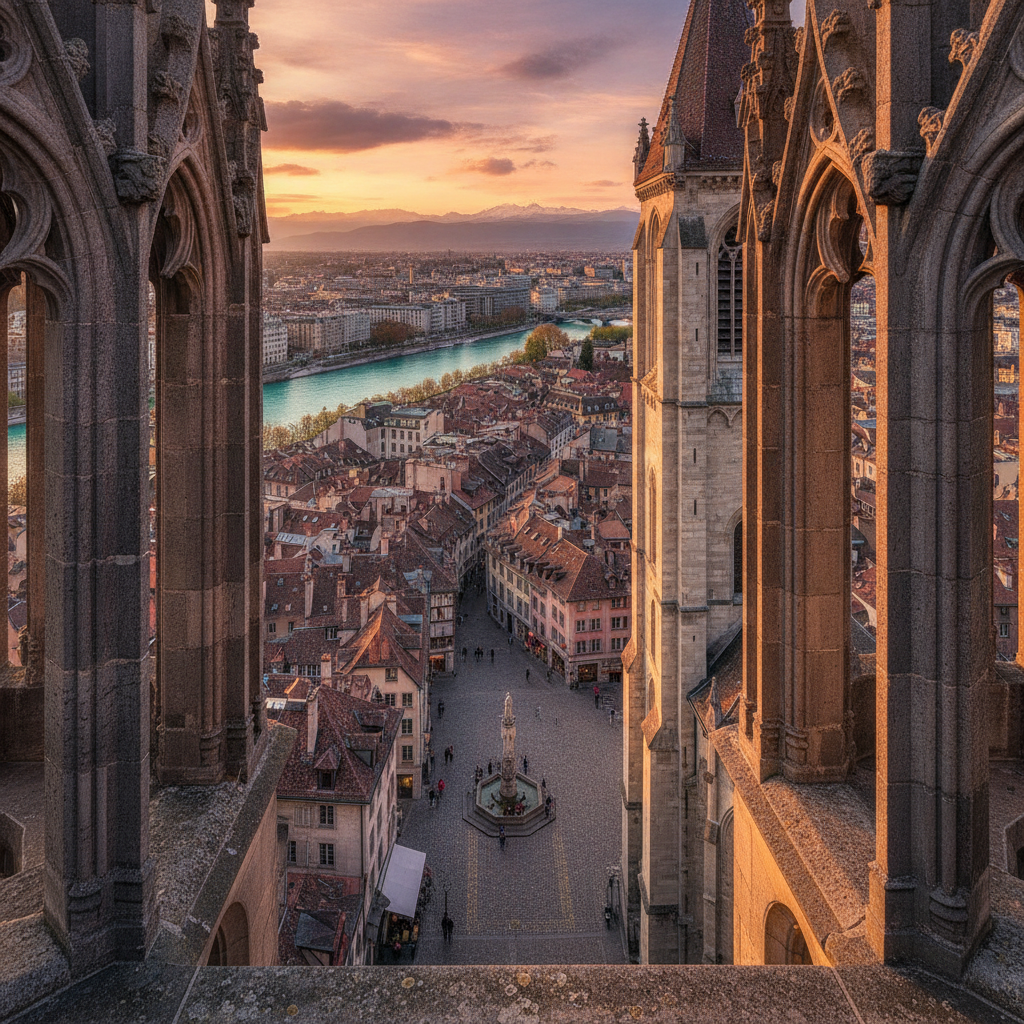
Geneva Old Town Walk — the Cathedral, the Bourg-de-Four & the Reformation Heritage
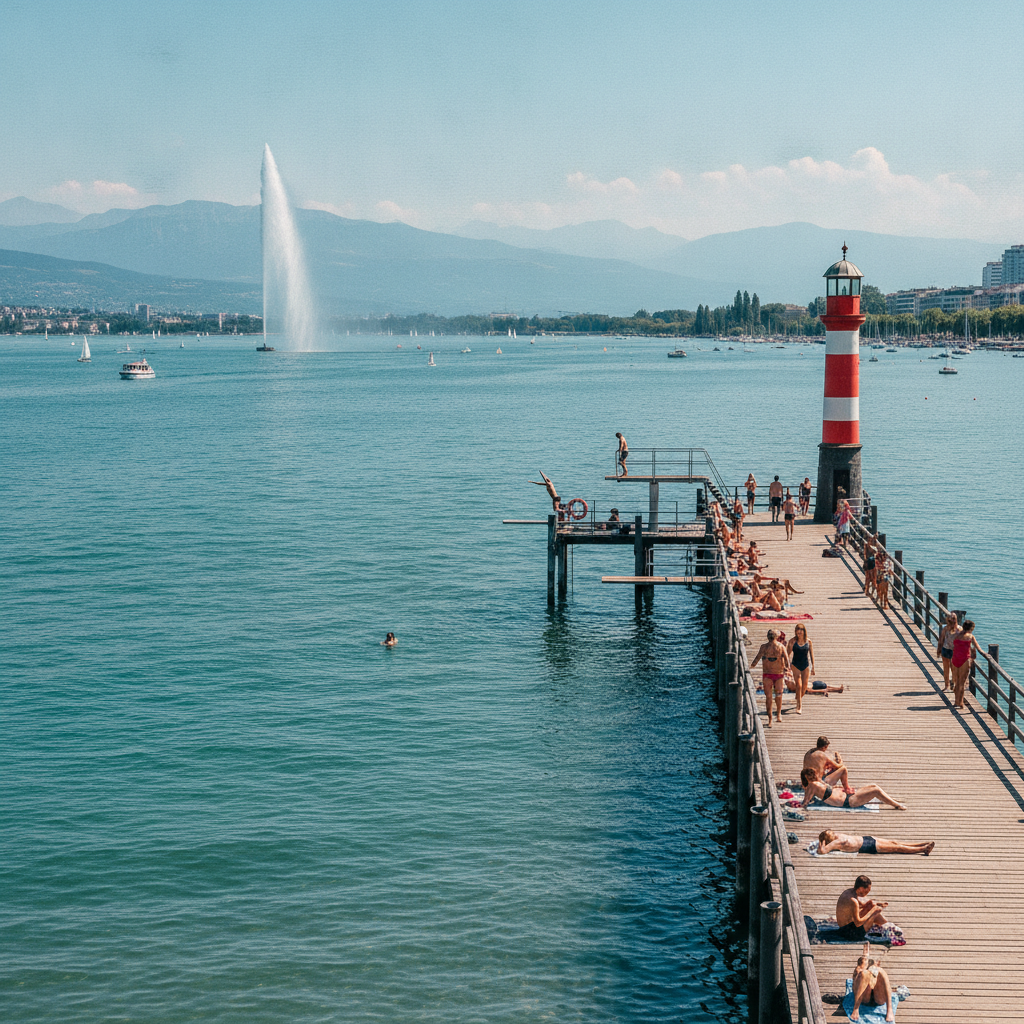
Geneva Outdoors — the Bains des Pâquis, the Rhône Parks & the City's Green Spaces
Geneva Culture — CERN, the MAH, the Ariana Museum & French-Swiss Cuisine
Geneva Annual Calendar — the Escalade, the Fêtes de Genève & Seasonal Guide