Ghent — the World's Most Important Painting, the Gravensteen Castle, the Graslei, Three Towers & Flemish Food
Ghent holds the most important painting in the world — the van Eyck Altarpiece; the most completely preserved urban castle in Belgium — the Gravensteen; the most beautiful medieval quayside in the Low Countries — the Graslei; and the most specifically Ghent dish in all Belgium — the waterzooi.
- 1
The Ghent Altarpiece — the World's Most Important Painting
Ghent Altarpiece (the Adoration of the Mystic Lamb (Van Eyck Altarpiece) at the Sint-Baafskathedraal (St. Bavo's Cathedral) — the most important single painting in the world by scholarly consensus, the most technically accomplished and the most iconographically complex single multi-panel painting in the history of Northern European art): the altarpiece (the Ghent Altarpiece (Ghentse Altaarstuk) — the polyptych completed by Jan van Eyck in 1432 (begun by his brother Hubert van Eyck), the 12-panel hinged altarpiece the most completely surviving major altarpiece of the Flemish Primitive period, the Adoration of the Mystic Lamb at the centre the most ambitiously theological single religious composition in 15th-century painting, the altarpiece the single most-often-stolen-and-recovered artwork in history (stolen or moved at least 13 times, including by Napoleon (1794), by the German occupiers in WWI (1914), by the Nazis in WWII (1942), and by the Allied art recovery teams (1945 — the 'Monuments Men'), the most adventurously travelled single altarpiece in the history of Belgian art), the mystic lamb (the Adoration of the Mystic Lamb central panel — the white lamb on the altar, the fountain of life below, the angelic choir, the knights of Christ, the just judges, and the holy hermits converging on the central sacrificial lamb the most comprehensively theological single panel composition in 15th-century Flemish art, the lamb the most symbolically concentrated single Flemish Primitive painted object, the recent restoration (2012-2022 — the most comprehensive single Flemish Primitive restoration project of the 21st century) revealing the original vivid colours beneath 500 years of varnish and over-painting), the Just Judges (the Just Judges lower left panel — the original panel stolen in 1934 and never recovered the most enduring single art theft mystery in Belgian history, the replacement copy by Jef van der Veken (1945) the most closely studied single painted copy in any Belgian cathedral, the original panel the most sought-after single missing Belgian artwork), the viewing room (the dedicated Mystic Lamb viewing room in the Sint-Baafskathedraal baptismal chapel — the most specifically single-artwork-viewing-room-formatted visitor experience in any Belgian cathedral, the climate-controlled case, the moveable panels, and the high-resolution interpretive displays the most comprehensively artwork-access-providing single cathedral museum installation in Belgium, €16 adults, advance booking strongly recommended) and the cathedral (the Sint-Baafskathedraal (St. Bavo's Cathedral) — the most architecturally monumental Gothic cathedral in Ghent, the cathedral nave the most spatially immense single ecclesiastical space in the Ghent centre, the Rubens 'Conversion of St. Bavo' altarpiece in the ambulatory the most dramatically Baroque single painting in any Flemish Gothic cathedral exterior, free entry to the cathedral nave, €6 for the ambulatory Rubens, €16 for the Mystic Lamb viewing room).
- 2
The Gravensteen — the Castle of the Counts
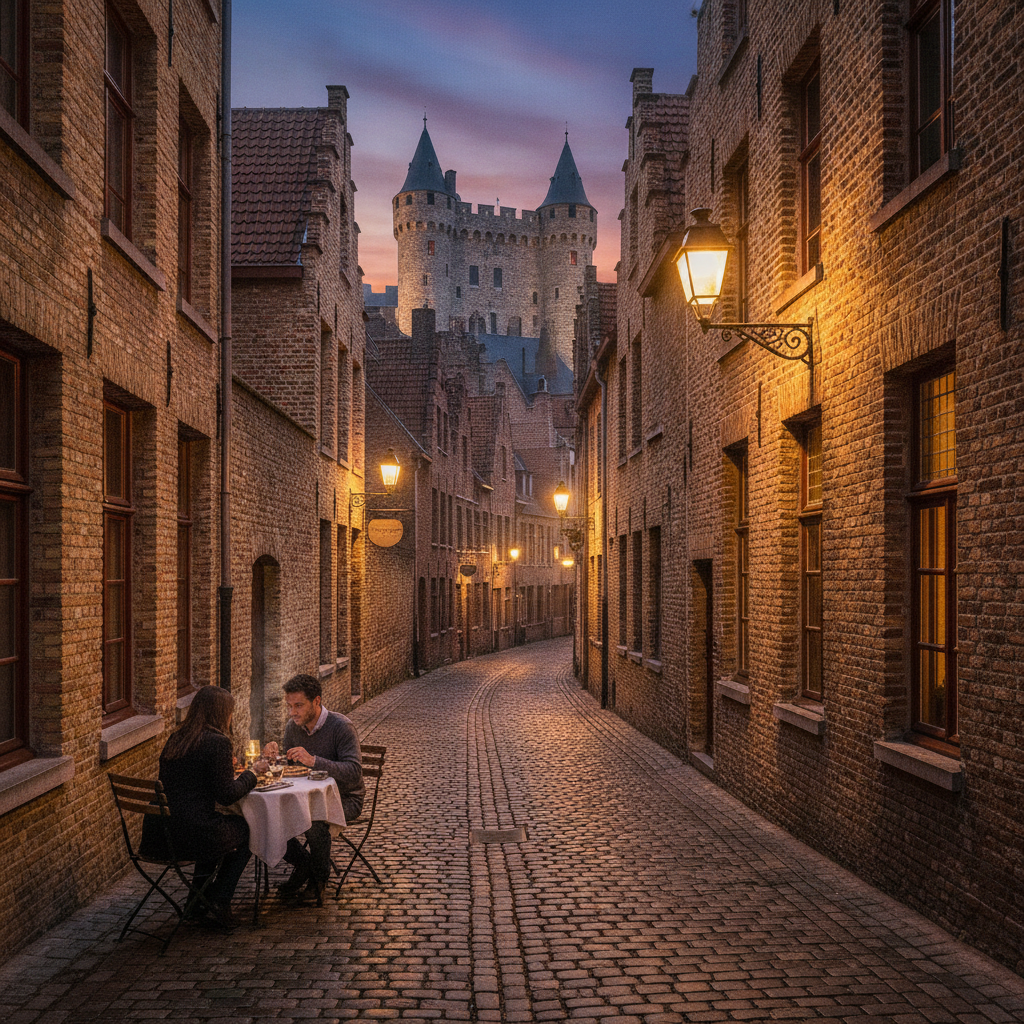
Gravensteen (the Gravensteen (Castle of the Counts) at Sint-Veerleplein 11 — the most completely preserved single urban castle in Belgium, the 9th-century origin and the 12th-century stone reconstruction the most archaeologically ancient significant castle structure in any Flemish city centre): the castle (the Gravensteen — the castle of the Counts of Flanders, the 12th-century stone construction by Count Philip of Alsace (1180) on the 9th-century Carolingian motte-and-bailey site, the most completely preserved single moated castle in a Belgian city centre, the concentric walls and the keep the most instructively complete single medieval castle defensive system accessible in any Belgian city, the audio guide the most atmospherically narrated single castle audio guide in Belgium (narrated with ironic humour acknowledging the castle's role as a house of medieval torture), €14 adults, open daily), the torture chamber (the Gravensteen torture chamber museum (Foltermuseum) — the most visited single room in the Gravensteen, the collection of medieval torture and execution instruments the most extensively displayed single torture-instrument collection in any Belgian castle, the guillotine (used during the French Revolutionary Terror in Ghent) the most specifically modern single execution device in the otherwise medieval collection, the most gasped-at single museum room in any Belgian city), the count's living quarters (the Gravensteen count's living quarters reconstruction — the most completely medieval-noble-life-reconstructing single room series in any Belgian castle, the Romanesque windows, the great hall, and the countess's bower the most architecturally intact single noble residential sequence in a Flemish medieval castle), the wall walk (the wall walk on the Gravensteen ramparts — the most panoramically positioned single rampart walk in the Ghent historic centre, the view from the rampart over the Leie and the Lys river junctions and the Patershol neighbourhood the most completely medieval-roofscape-revealing single elevated view in Ghent), the moat (the Gravensteen moat — the most completely water-filled single castle moat of any Belgian medieval castle, the moat reflected in the castle towers the most cinematographically complete single medieval castle-and-moat composition in Belgium) and the Sint-Veerleplein (the Sint-Veerleplein square at the Gravensteen entrance — the most dramatically castle-backdrop-positioned single square in the Ghent historic centre, the former public execution square the most historically sinisterly-purposed single public space in Ghent, the fish market (Vismarkt) on the square the most historically positioned single fresh fish retail site in the Ghent centre).
- 3
The Graslei and Korenlei — the Most Beautiful Quaysides in Belgium
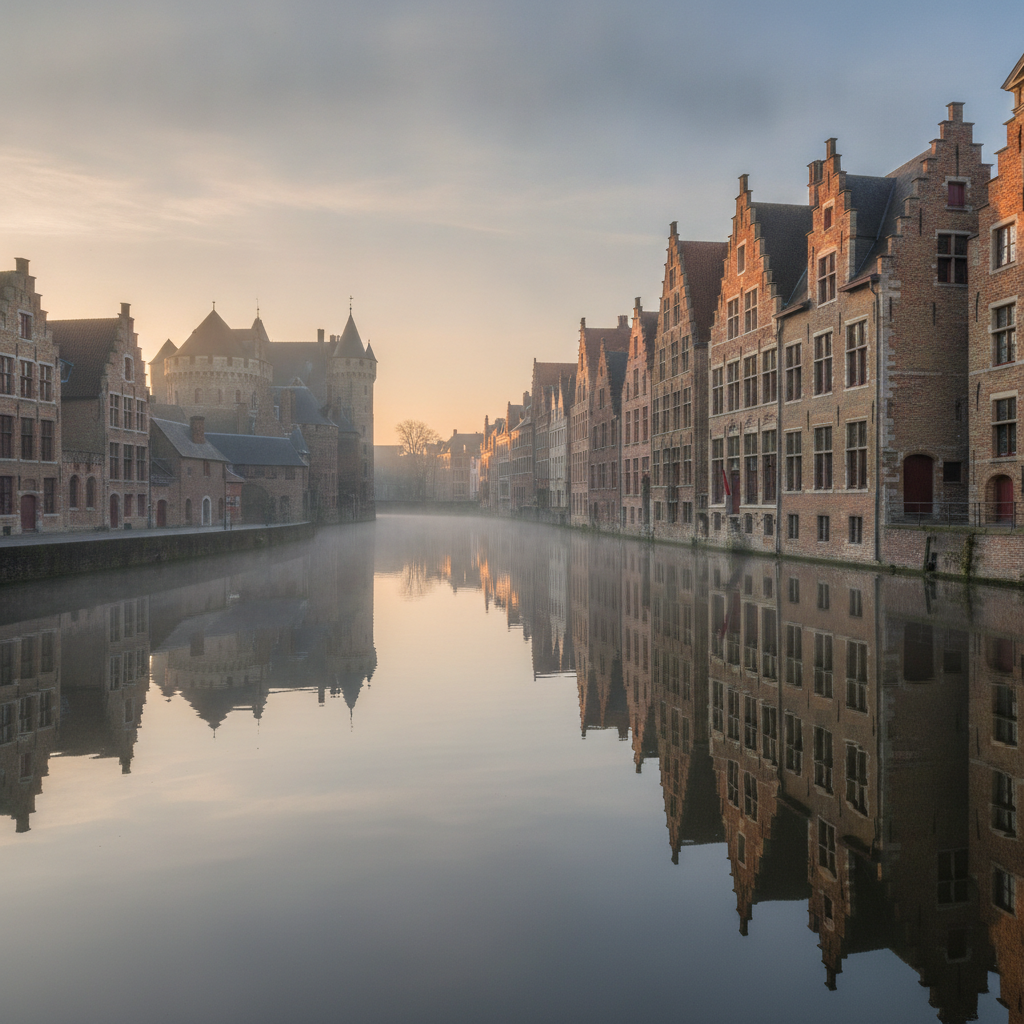
Graslei and Korenlei (the Graslei and Korenlei medieval quaysides on the Leie River in the Ghent centre — the most architecturally magnificent single pair of medieval river quaysides in the Low Countries, the guild-house facades the most comprehensively guild-specialised single urban quayside in Belgium): the Graslei (the Graslei — the south quay of the Lys (Leie) river, the most magnificently guild-house-facade-aligned single quay in the Low Countries: the Spijker (grain storehouse, 1200 — the oldest standing secular building in Ghent), the Tolhuisje (customs house, 1682), the Korenstapelhuis (grain stacking house, 12th-13th century), the Gildehuis van de Vrije Schippers (house of the free boatmen, 1531), and the Gildehuis van de Metselaars (house of the stonemasons, 1527) the 5 most instructively guild-function-named single buildings on any Belgian river quay, the Graslei the most photographed single quayside in any Belgian city), the Korenlei (the Korenlei — the north quay, the most architecturally Baroque-and-Gothic-mixed single quay opposite the Graslei, the Gildehuis der Onvrije Schippers (house of the tied boatmen, 1739) the most ornately Baroque single guild building on the Korenlei, the Ghent grain crane (graankraan) reconstruction on the Korenlei the most historically grain-trade-instructive single reconstruction in the Ghent quayside), the Grasbrug (the Grasbrug bridge between the Graslei and the Korenlei — the most photographically centred single position for the Graslei-and-Korenlei dual-quay composition, the bridge the primary pedestrian crossing between the 2 medieval guild quaysides, the most used single photographic position in Ghent), the boat tour (the Ghent river boat tour from the Graslei — the 40-minute canal circuit the most comprehensively canal-network-covering single Ghent tour, the water-level view of the Gravensteen and the Graslei the most architecturally instructive single perspective on the Ghent medieval centre, €11 adults), the evening animation (the Graslei and Korenlei terraces in summer — the most atmospherically animated single outdoor drinking and dining area in Ghent, the bar terraces on both quays from April to September the most visited single outdoor social space in any Belgian city centre in the summer evening, the most photogenically canal-reflected single Belgian evening terrace scene) and the Ghent Light Festival (the Ghent Light Festival (Lichtfestival) every 3 years in January — the most internationally attended single light art event in Belgium, the canal-reflected light installations on the Graslei and Korenlei the most photographically dramatic single light festival compositions in any Belgian city, the next edition in 2027 the most anticipated single Ghent cultural event in the Ghent triennial calendar).
- 4
Sint-Niklaaskerk and the Ghent Three Towers
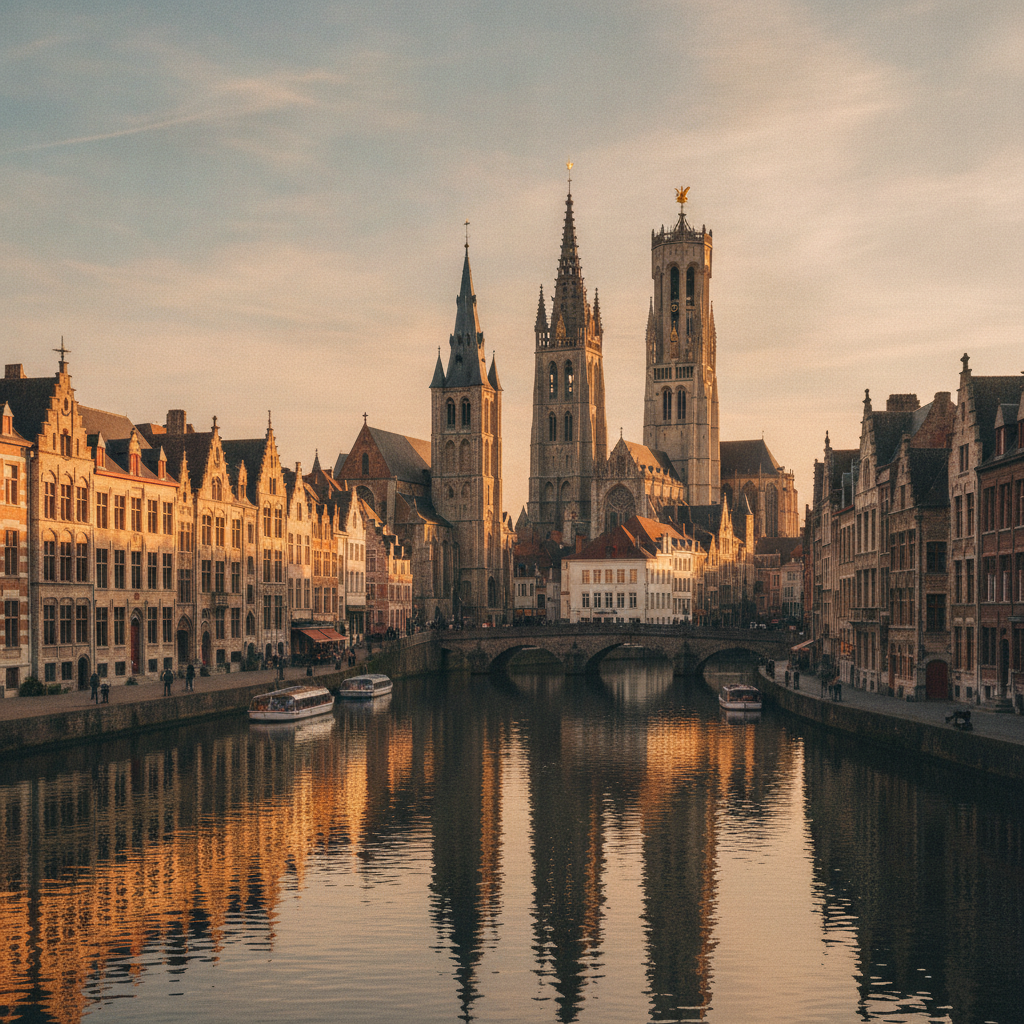
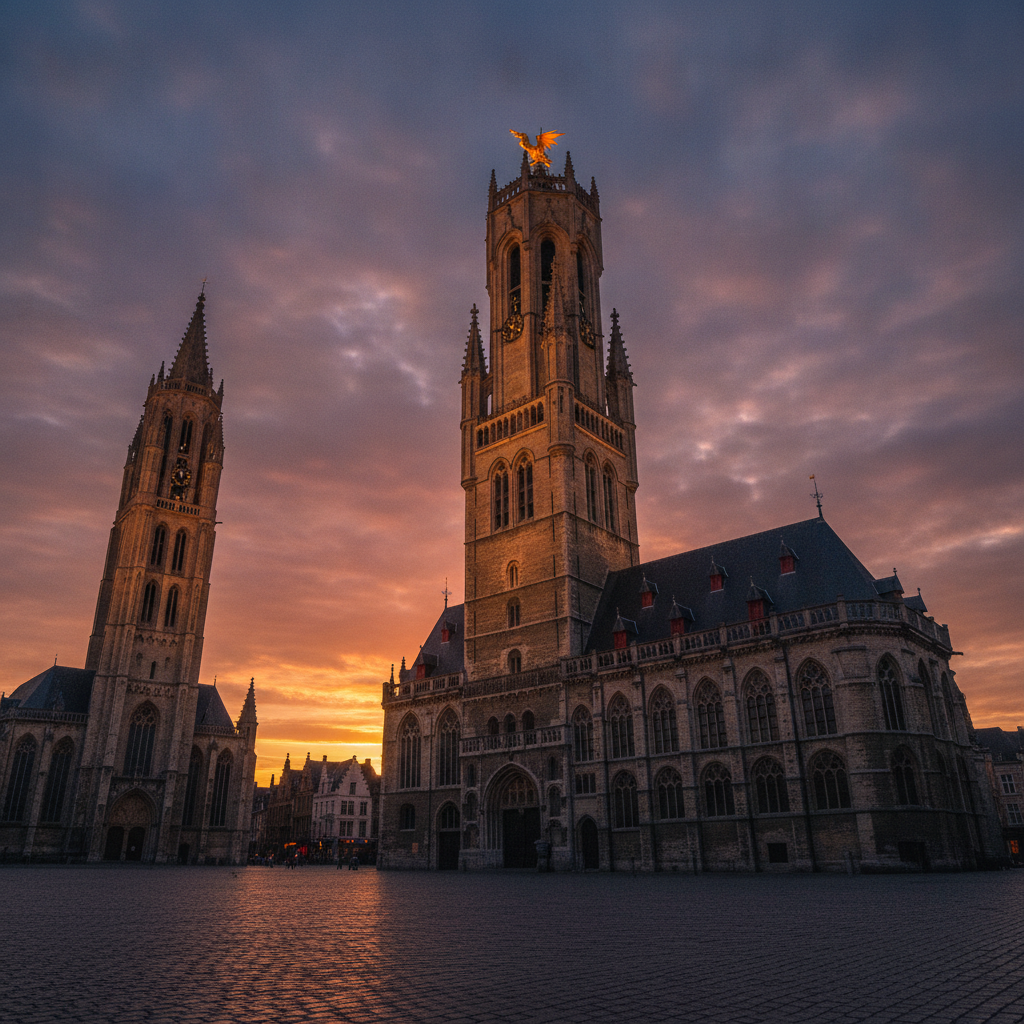
Ghent Three Towers (the Drie Torens — the 3 towers of Ghent: the Sint-Niklaaskerk, the Belfort, and the Sint-Baafskathedraal standing in a single straight north-south line — the most architecturally iconic single skyline composition in Belgium, the line of 3 towers the most reproduced single Ghent image): the Sint-Niklaaskerk (the Sint-Niklaaskerk (Church of St. Nicholas) at the Korenmarkt — the most elegantly proportioned Gothic church in Ghent, the church construction from the 13th to the 15th century in the Ghent Scheldt Gothic style (Scheldt Gothic — the most specifically local single Gothic architectural style in Belgium, distinguished from the French and the Brabantine Gothic by the use of the blue-grey Tournai limestone), the most beautifully silhouetted single church tower in the Ghent Three Towers composition, the interior the most purely Gothic single ecclesiastical space in Ghent, free entry), the Belfort (the Belfort (Belfry) of Ghent at the Emile Braunplein — the most symbolically civic single tower in Ghent, the 91m Gothic belfry the most politically historically significant single tower in Belgium (the tower housing the city charters and the city treasures, the most civic-freedom-associated single building in Ghent), the gilded copper dragon at the summit the most iconically Ghent single decorative object, the Belfort panorama the most panoramically positioned single 360° view of the Ghent medieval roofscape, €10 adults with the panoramic lift), the Korenmarkt (the Korenmarkt (Corn Market) square at the foot of the Sint-Niklaaskerk — the most comprehensively café-terrace covered single historic square in Ghent, the most populous single outdoor drinking space in the Ghent centre on summer evenings, the view from the Korenmarkt of the Sint-Niklaaskerk tower and the Belfort tower the most frequently photographed single paired-tower view in Ghent), the St. Michael's Bridge (the Sint-Michielsbrug (St. Michael's Bridge) over the Leie — the most panoramically positioned single bridge in Ghent, the view from the bridge simultaneously encompassing the Graslei, the Korenlei, the Gravensteen, the Sint-Niklaaskerk, the Belfort, and the Sint-Baafskathedraal the most comprehensively Ghent-medieval-cityscape-revealing single standing position in the city, the most visited single photography point in Ghent) and the Ghent urban form (the Ghent medieval street plan — the most completely river-junction-determined single Belgian medieval city plan, the 3 rivers (the Leie, the Schelde, and the Lieve) converging at Ghent the most hydraulically complex single city junction in Belgium, the most specifically river-trade-determined single medieval city layout in the Low Countries, the rivers and the canals forming the most navigable single internal waterway network of any Belgian medieval city).
- 5
Ghent Food — Waterzooi, Cuberdons and the Restaurant Scene
Ghent gastronomy (the Ghent food scene — the most Michelin-starred single Belgian city after Brussels for concentration of starred restaurants per capita, the most internationally chef-recognised single Flemish city for culinary innovation, and the most specifically local single Belgian dish in the national food repertoire): the waterzooi (the Gentse Waterzooi — the most city-origin-specific single Belgian dish, the Ghent fish and vegetable stew (the original 15th-century recipe using fresh river fish from the Leie river) — the most authentically medieval-recipe-preserving single Flemish dish, the chicken waterzooi (the more widely served contemporary version replacing the polluted-river fish) the most ordered single main course in any Ghent traditional restaurant, the best waterzooi: the Brasserie Pakhuis at Schuurkenstraat 4 the most comprehensively waterzooi-and-Belgian-cuisine focused single restaurant in Ghent), the cuberdons (the Ghent cuberdons (neuzekes — 'little noses') — the most specifically Ghent single confectionery: the purple raspberry-flavoured gum-arabic sugar cone the most city-origin-associated single Belgian sweet, the Neuzekes stall at the Friday market the most specifically locally purchased single Ghent confectionery, the hardening outer sugar shell enclosing the liquid raspberry syrup centre the most technically distinctive single Belgian sweet manufacturing challenge, the cuberdon the most unstorable single Belgian confectionery (must be eaten within 3 weeks of manufacture — the most perishable single Belgian heritage food)), the Michelin stars (the Ghent Michelin-starred restaurants: the Chambre Séparée (1* Michelin) at Vrouwbroersstraat 5 the most internationally chef-recognised single Ghent restaurant (chef Kobe Desramaults the most critically praised single Ghent chef), the open-fire kitchen the most theatrically fire-cooking-focused single Belgian Michelin-starred restaurant; the OAK (1*) at Ottogracht 2 the most produce-led single starred Ghent restaurant; the Publiek (1*) at Ham 39 the most accessibly priced single starred Ghent restaurant at the most value-for-Michelin single dinner in Belgium), the Gentse mustard (the Ghent mustard (Gentse mosterd) — the most specifically Ghent-produced single condiment, the traditional Ghent mustard ground on the stone mill at the Tierenteyn-Verlent mustard shop at Groentenmarkt 3, operating since 1790 the most continuously open single mustard shop in Belgium, the earthenware crock the most specifically Ghent souvenir food purchase), the Vrijdagmarkt (the Vrijdagmarkt (Friday Market) — the largest single historic market square in Ghent, the Friday market the most eclectic single outdoor market in the Ghent centre with the vegetables, the antiques, and the food stalls, the Jacob van Artevelde statue the most politically historically significant single statue in the Ghent public space (van Artevelde the 14th-century Ghent rebel leader who allied Ghent with England against the French)) and the Ghent beer (the Ghent beer tradition — the Staminee De Geus at Travweg 4 the most historically rooted single Ghent beer café, the Gruut (the Ghent city brewery at Stadthuisbrug 3 brewing with the medieval gruut (herb mixture) rather than hops — the most historically authentic single medieval Belgian beer recipe in current production, the Ghent amber the most locally historically rooted single Ghent beer style, the most specifically Ghent heritage-beer-experience single brewery visit in the city).
- 6
Ghent Practical — Getting There, Card and the Ghent Festivals
Ghent practical guide (the essential visitor logistics for Ghent — the most comprehensively festival-calendar-rich single Belgian city, the most student-population-animated single Flemish city, and the most easily combined single day trip from Brussels or Bruges): the transport (the Ghent transport: the Brussels Midi to Ghent Sint-Pieters in 35 minutes by IC train at €12 (the most efficient single Brussels day trip by rail); the Bruges to Ghent in 30 minutes direct IC train at €10 (the most efficiently combined single pair of Belgian cities by rail); the Ghent Sint-Pieters station 2km from the historic centre — tram 1 or 2 to the Korenmarkt the most direct single public transport connection to the Ghent centre, €2.60 single, the Ghent City Card including the tram the most cost-efficient single pass; the Ghent city centre car-free on the Graslei, Korenlei, and the historic core), the Ghent City Card (the Ghent City Card at €30 for 48 hours — the most comprehensively museum-entry-including single visitor card in Ghent, including the Gravensteen, the Ghent Altarpiece, the STAM, the Design Museum, the Belfort, and the river boat tour, plus unlimited city transport, the most cost-efficiently stacked single Belgian city card for the visitor intending to visit 4+ attractions), the Ghent Light Festival (the Lichtfestival Gent — the most internationally attended single light-art event in Belgium, held every 3 years in January (2024, 2027), the canal reflections and the historic building projections the most visually dramatic single light-festival composition in any Belgian city, the most comprehensively canal-reflected single light festival in the Low Countries), the Ghent Festivities (the Gentse Feesten — the annual 10-day folk festival in the third week of July, the most attended single urban folk festival in Belgium with 1 million visitors, the free outdoor concerts on multiple stages in the historic centre the most comprehensively free-admission single Belgian music festival, the most animated single week in the Ghent annual calendar, the most authentically community-participated single Belgian city festival), the student population (the Ghent University student population — 45,000 students the most demographically significant single institution in Ghent at 20% of the total population, the most student-bar-animated single Belgian city centre outside Brussels, the Overpoort bar street the most continuously animated single bar street in any Belgian university city) and the accommodation (the Ghent accommodation: the Marriott Ghent at Korenlei 10 the most canal-view-room-position single luxury hotel in Ghent; the Ghent River Hotel at Waaistraat 5 the most architecturally interesting conversion of a 17th-century sugar refinery and a 19th-century steelworks into the most characterful single Ghent hotel; the Backstay Hostel at Ernest Clauslaan 4 the most socially animated single budget option in Ghent at €25-35 per night the most consistently reviewed single Ghent hostel).
Walk this route with audio
Stories play automatically as you reach each stop — no tapping needed.
More in ghent
Ghent — the Altarpiece Restoration, Gruut Medieval Beer, Gothic Masterworks, Belgium's Vegan Capital & Charles V
Ghent — Patershol Quarter, the Vrijdagmarkt, SMAK Contemporary Art, the Gentse Feesten & Ghent Architecture
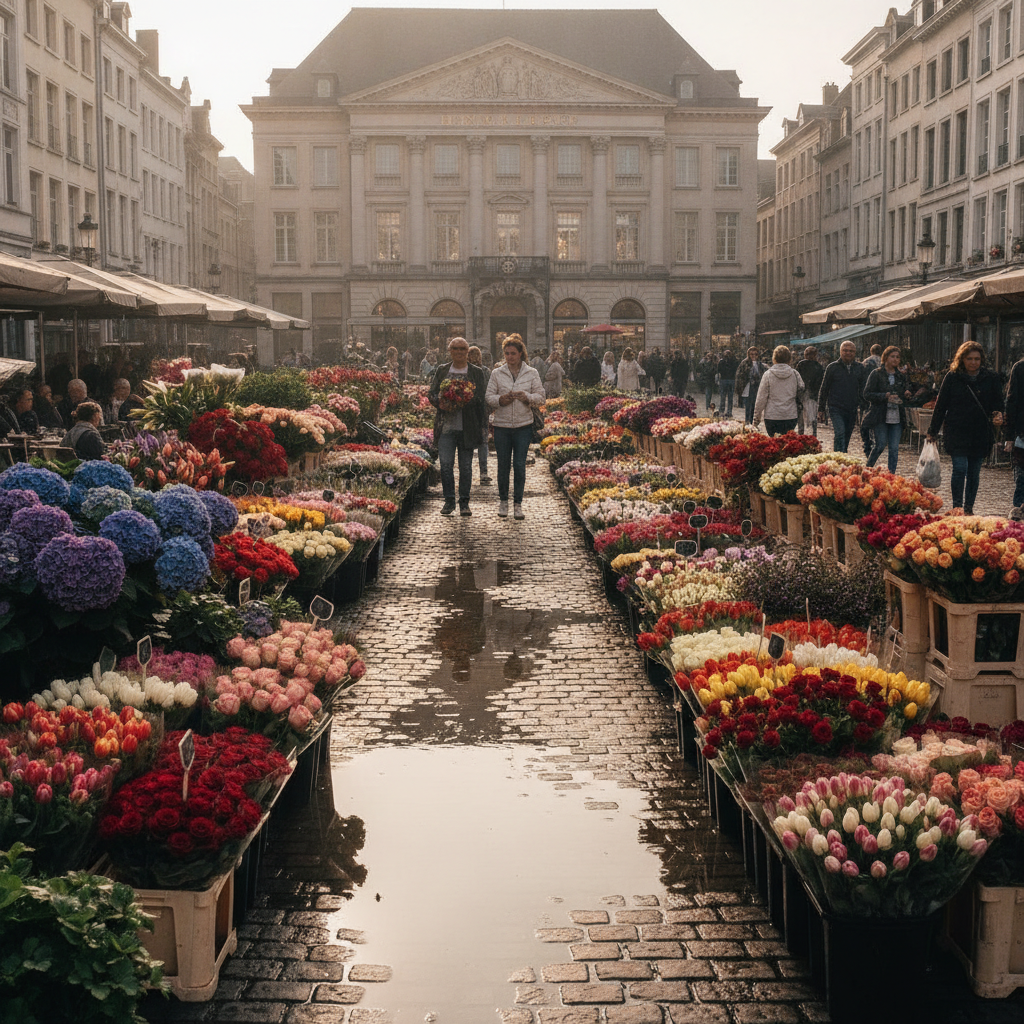
Ghent — Open Monuments Day, the Lys Valley Painters, Art Nouveau Heritage, Cuberdons, Family Visits & Seasonal Festivals
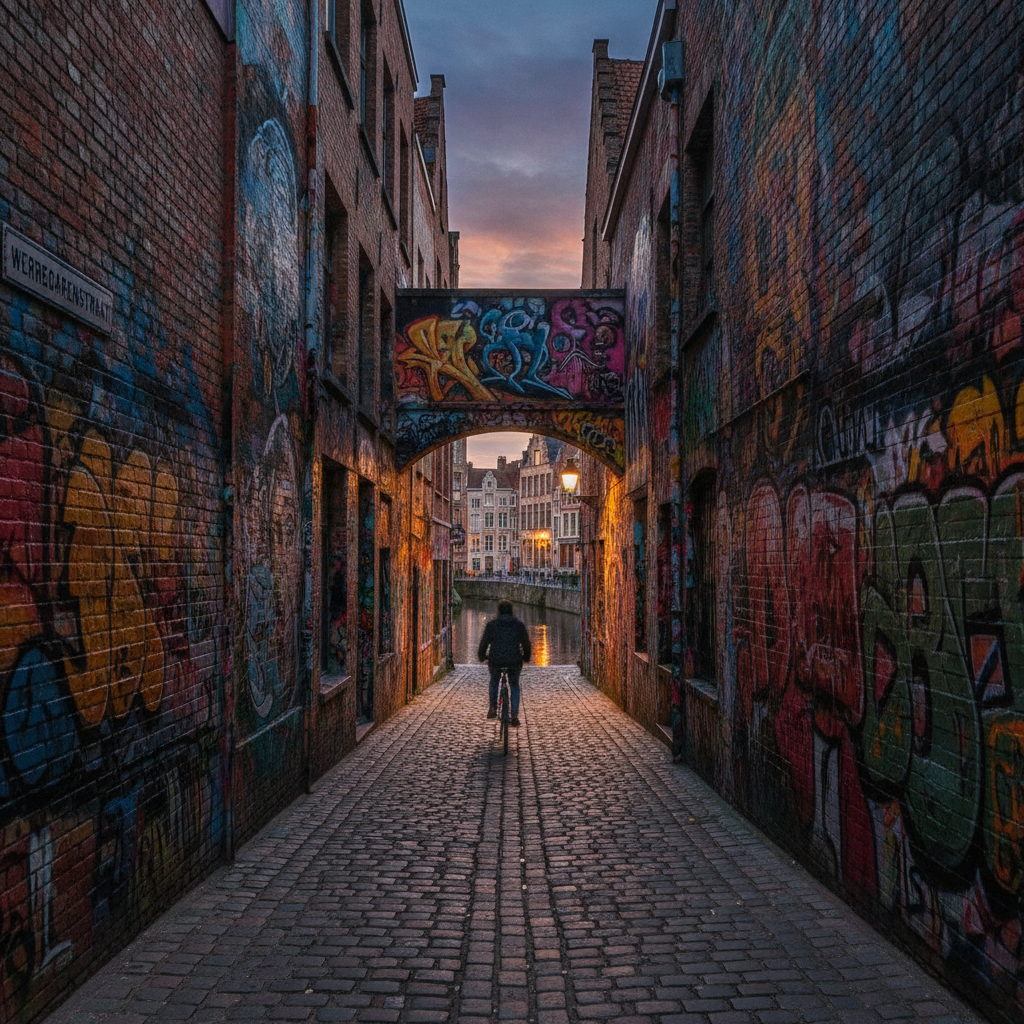
Ghent — Street Art, the Citadelpark & SMAK, Sint-Pietersabdij, Cycling Culture, dEUS Music & the Flemish Ardennes