Goa's Complexities: The 252-Year Inquisition, Konkani's Four Scripts & the CRZ Laws Defending the Coastline
Encounter Goa's contested history and present—the Portuguese Inquisition that ran for 252 years, burning 57 people alive and banning sacred threads in a colony it was converting, Konkani language written in four simultaneous scripts whose statehood movement only succeeded in 1987, beach shack licences allocated annually by the state government to bamboo-and-thatch restaurants that vanish before each monsoon, Mario Miranda's 50-year ink illustration career and the Serendipity Arts Festival filling Panjim's Portuguese buildings with contemporary art in December, and the Goa Foundation's legal battles to enforce the 200-metre coastal construction ban against a development industry that keeps testing it.
- 1
The Goa Inquisition – The Dark Side of Portuguese History
The Goa Inquisition (1560–1812)—one of the longest-running Inquisitions in history—was established by the Portuguese to enforce Catholic orthodoxy among the converted Hindu and Muslim population of Goa. The first Inquisitor, Aleixo Dias Falcão, arrived in 1560; the Inquisition's palace (the 'Big House') was established in Old Goa. The Inquisition banned Hindu religious practices (including the wearing of sacred threads, visiting Hindu temples, and observing Hindu festivals) for converted Christians; it prosecuted crypto-Hindus, crypto-Muslims, New Christians (converted Jews from Portugal), and foreign merchants. Approximately 16,000 persons were tried between 1561 and 1774; 57 were burned alive. The Inquisition also prevented non-Catholic Europeans from settling in Goa. It was abolished by the French in 1812 during the Napoleonic Wars' pressure on Portugal.
- 2
Goa's Konkani Language – The State's Official Language
Konkani—the official language of Goa, spoken by approximately 2.3 million people in Goa, Maharashtra, and Karnataka—was recognised as one of India's 22 scheduled languages in 1992, following a political movement that included demands for Goa's separate statehood (achieved 1987—Goa was previously a Union Territory). Konkani is written in four different scripts: Devanagari (standard for official purposes), Roman (used by Goan Catholics since Portuguese times—Konkani was first written in Roman script), Kannada (by Konkani speakers in Karnataka), and Persian (historically). The Goa Konkani Academy promotes the language; Damodar Mauzo's Karmelin (1983, written in Konkani) won the Sahitya Akademi Award in 2022, bringing international attention to Konkani literature. Goa also has a significant Marathi-speaking population; the language question was politically contentious in the 1960s–80s.
- 3
Goa's Beach Shack Culture – The Seasonal Restaurant Tradition
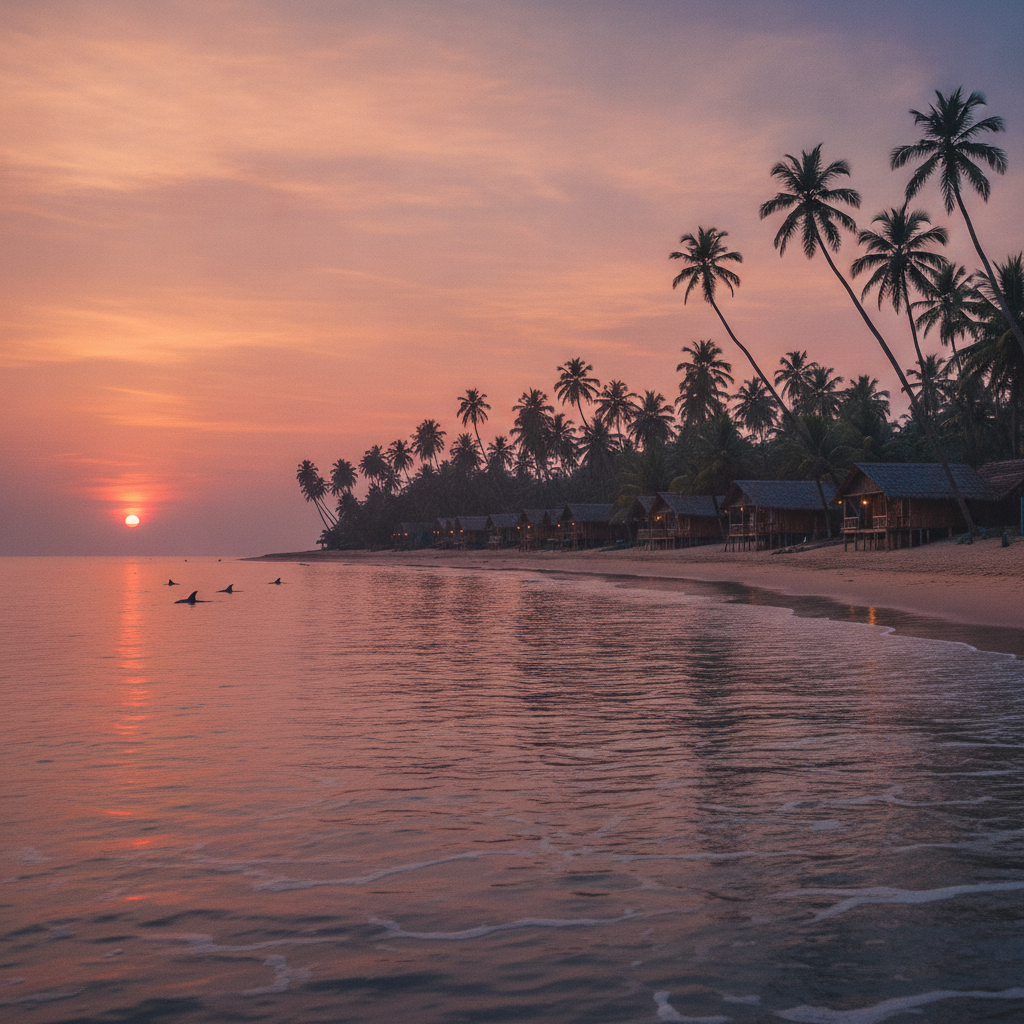
Goa's beach shacks—temporary restaurants built directly on the beach between October and May, then dismantled before the monsoon—are the most characteristic institution of Goa's tourism economy. A beach shack consists of a bamboo and palm-thatch structure with plastic chairs and tables, a gas stove kitchen, a freezer for beer, and a fishing family or local entrepreneur serving fresh seafood, cold Kingfisher beer, and Goan dishes. The regulatory system: shack licences are allocated annually by the Goa government; the prime beach front is divided between licensed operators. Competition for licences is intense; the most established shacks (Brittos and St Anthony's at Calangute, Curlies at Anjuna, Frankie's at Palolem) have operated for decades. A fish thali (full Goan meal) at a shack costs ₹300–600 (€3.30–6.60); a kingfisher beer ₹80–150 (€0.88–1.65).
- 4
Goa's Art Scene – The Sunaparanta Centre & Contemporary Artists
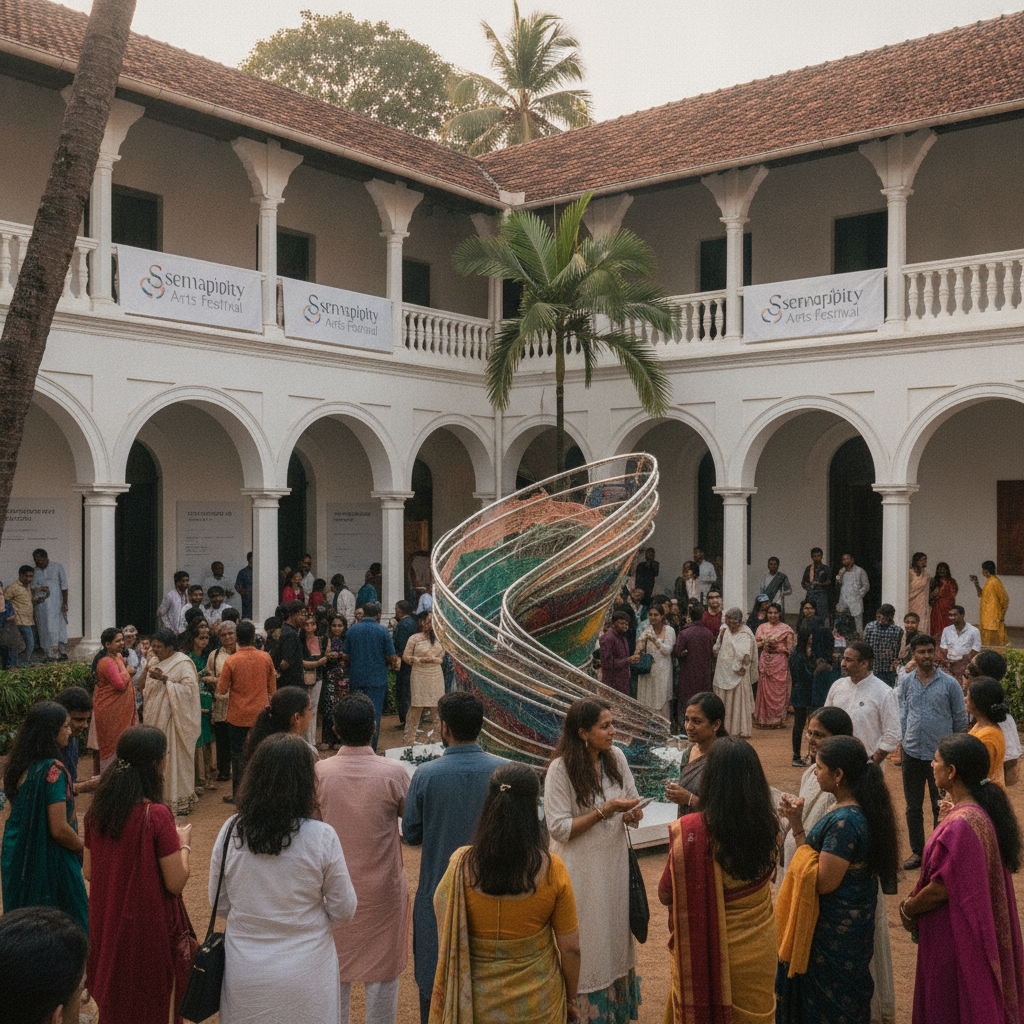
Goa has a more developed contemporary art scene than most Indian states of equivalent size, rooted in the international population and creative professionals who have settled here. The Sunaparanta Goa Centre for the Arts (Panjim, established 2012)—a dedicated contemporary art foundation with gallery spaces, residencies, and the Serendipity Arts Festival—is the premier venue. The Serendipity Arts Festival (Panjim, December, 10 days) brings together visual art, music, dance, theatre, food art, and craft in a city-wide festival that has grown to be one of India's most significant multidisciplinary arts events. The International Film Festival of India (IFFI, November–December, also in Panjim) is Asia's largest film festival by attendance. Mario Miranda (1926–2011)—born in Goa, whose ink illustrations of Indian urban life appeared in Times of India and The Illustrated Weekly of India for 50 years—is Goa's most celebrated artist.
- 5
Goa's Ayurveda & Wellness Industry
Goa has developed a significant Ayurveda and wellness tourism industry alongside its beach tourism, catering particularly to European visitors who combine beach holidays with extended treatment programmes. Authentic Ayurvedic treatment (panchakarma—a series of purification procedures including oil massage, steam treatments, nasal cleansing, and therapeutic enemas, prescribed after consultation with an Ayurvedic physician and taken over 14–28 days) requires a commitment incompatible with a one-week beach holiday; the majority of 'Ayurveda' offered at beach resorts is therefore abbreviated and of limited therapeutic value. Genuine Ayurveda clinics in Goa (Ayurveda Natural Health Centre in Calangute, Goa Ayurvedic Centre in Panjim) offer proper consultations and individualised treatment programmes. Kerala—rather than Goa—is the traditional home of Ayurveda; Goa's wellness scene also incorporates yoga, meditation, and various international wellness modalities.
- 6
Goa's Future – Overtourism, Development & the Goan Identity
Goa faces intense development pressure: its 101 km coastline is among the most sought-after real estate in India; its small size (3,702 km²) makes large-scale tourism infrastructure (new airport at Mopa, new highway projects, new hotel developments) feel transformative rather than incremental. The Mopa Greenfield Airport (North Goa, opened 2022) has doubled Goa's air capacity. The Goan identity—distinct from the rest of India in language, religion, culture, and historical experience—has mobilised politically around coastal regulation zone (CRZ) laws, which prohibit permanent construction within 200 metres of the high-tide line and are frequently contested and violated. Environmental organisations (Goa Foundation, led by activist Claude Alvares) have fought landmark legal battles to enforce CRZ protections and prevent casino expansion, new highways through wildlife corridors, and mining in the Western Ghats.
Walk this route with audio
Stories play automatically as you reach each stop — no tapping needed.
More in Goa
Goa's Hidden Layers: Hindu Temples Rebuilt After the Inquisition, the Taxi War That Expelled Uber & Divar Island's Untouched Villages
Goa's History: 451 Years of Portuguese Rule, St Francis Xavier's Incorrupt Body & India's Only Surviving Carnival
Goa Complete: Monsoon Magic, Cashew Feni Distilleries, Sunburn Festival & Konkani Catholic Christmas Midnight Mass
Goa Unfiltered: The 1510 Spice-Trade Conquest, Brazil's Cashew Tree Transforming Goa's Economy & Choosing Your Beach