Guadalajara Pre-Hispanic Roots and the Cazcanes: The Indigenous World the Spaniards Found, the Mixton War That Delayed the Conquest of Western Mexico by a Decade, and the Archaeological Sites in the Jalisco Highlands
When Nuno de Guzman and the Spanish conquistadors reached the western Mexican plateau in 1530 they encountered not the large organized states of the Aztec Triple Alliance that had made the conquest of central Mexico a transaction with an existing bureaucracy, but a landscape of dozens of independent indigenous groups speaking different languages in a decentralized political configuration that made conquest more violent and less systematic than what Cortes had experienced in Tenochtitlan. The Cazcanes, the most militarily organized of the Jalisco indigenous groups, resisted the Spanish advance with enough effectiveness to organize the Mixton War of 1541 to 1542, in which a coalition of Cazcane, Zacatec, and Guachichil warriors controlled enough of the highlands to threaten the survival of the Spanish settlements in New Galicia, requiring the personal intervention of the Viceroy Antonio de Mendoza with an army that included 30,000 Nahua allies from central Mexico, whose role in the suppression of the Cazcane rebellion is largely unacknowledged in the standard history that portrays the conquest as a Spanish-indigenous binary. The Mixton War delayed the definitive founding of Guadalajara at its current location until 1542, after three previous attempts to establish the city at different sites had failed due to indigenous resistance. The pre-Hispanic cultures of Jalisco, including the distinctive shaft tomb tradition in which the dead were interred in vertical shafts with lateral chambers containing ceramic figures, jewelry, and grave goods, produced an artistic tradition of hollow ceramic figures of humans and animals that are among the most expressive pre-Columbian art objects in Mesoamerica.
- 1
Cazcane Resistance and the Mixton War
The Mixton War of 1541 to 1542, the most serious indigenous military challenge to Spanish authority in western Mexico, was organized by Cazcane warriors who fortified the volcanic buttes called penoles of the Jalisco highlands, including the Penol of Mixton, Nochistlan, and Juchipila, converting these naturally defensible positions into military bases from which they conducted raids against Spanish settlements and threatened the colony of New Galicia with complete destruction. The Viceroy Antonio de Mendoza, leaving Mexico City for the only time during his tenure to personally command the response, marched to Jalisco with an army of approximately 450 Spanish soldiers and a much larger force of Nahua allies from Tlaxcala and other central Mexican communities, whose participation was decisive in breaking the Cazcane defensive positions. The Nahua allies, who had supported the Spanish in the conquest of Tenochtitlan and subsequent campaigns, played an indispensable role in the Mixton War that colonial histories systematically minimized in favor of the heroic Spanish commander narrative. The defeat of the Cazcane coalition in 1542 allowed the permanent establishment of Guadalajara at its current location on April 14, 1542, after three previous founding attempts at Nochistlan, Tonala, and the Tlapallan valley had been abandoned due to indigenous resistance. The Cazcane resistance tradition is commemorated at the Penol de Nochistlan, a hilltop archaeological site in the Jalisco highlands north of Guadalajara.
- 2
Shaft Tomb Culture and Ceramic Art
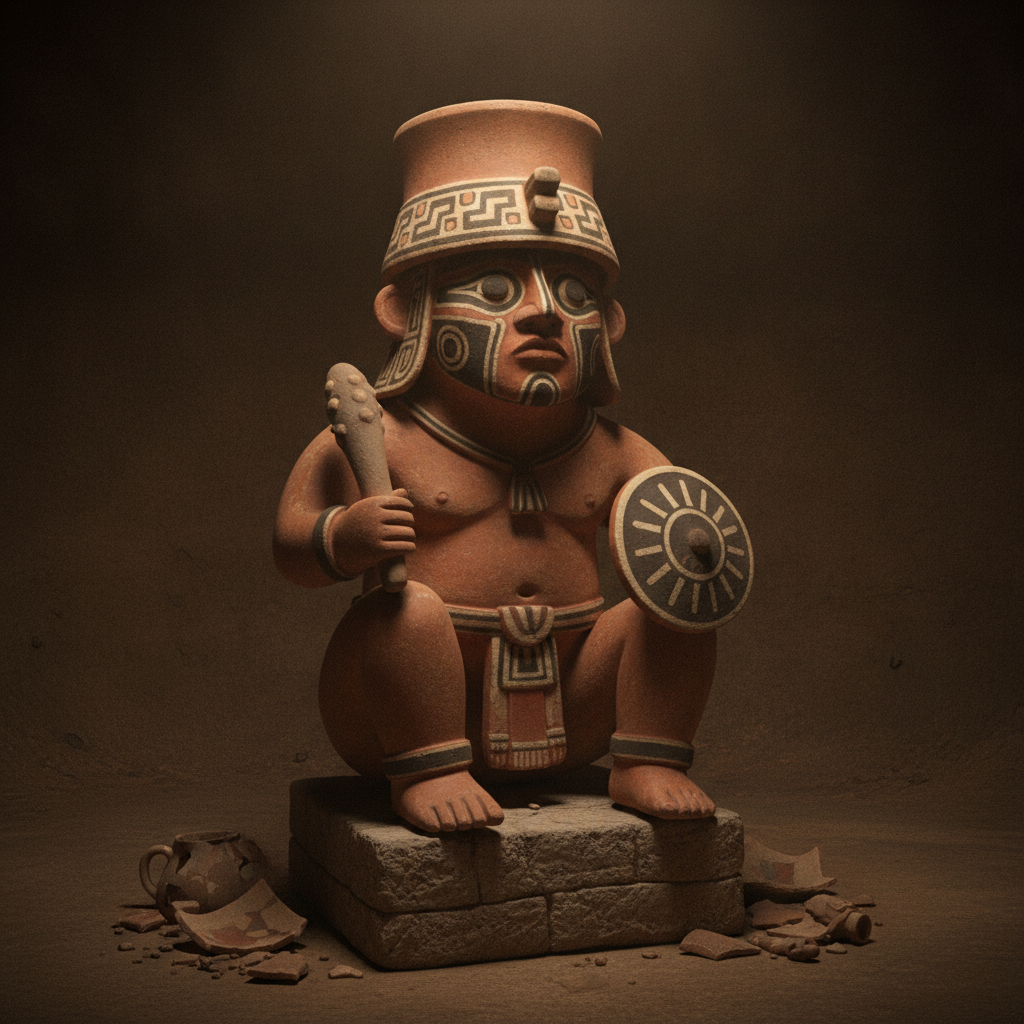
The shaft tomb culture of western Mexico, distributed across the modern states of Jalisco, Nayarit, Colima, and Sinaloa from approximately 300 BCE to 600 CE, produced one of the most distinctive artistic traditions in pre-Columbian Mesoamerica: hollow ceramic figures of humans engaged in everyday activities, ball players, musicians, dogs, houses, and ritual scenes, placed as grave goods in the lateral chambers of burial shafts that reached 10 to 15 metres below the surface. The Jalisco ceramic tradition within the shaft tomb culture produces figures characterized by their large scale, the elongated heads indicating head-binding practices, and the scenes of communal ceremony and feasting that provide evidence for social organization in the pre-Columbian west Mexican cultures that left no writing and few permanent structures. The ceramic dogs, which represent the xoloitzcuintli breed that the indigenous cultures of Mexico believed guided the souls of the dead through the underworld, are among the most recognized pre-Columbian art objects internationally and have been widely reproduced and exported. The regional museum of the Instituto Cultural de Cabanas in Guadalajara holds examples of shaft tomb ceramic art, though the most comprehensive collection is at the Museo Nacional de Antropologia in Mexico City where the west Mexican collection is significantly underrepresented relative to the central Mexican and Maya collections.
- 3
Tonala and Tlaquepaque Pre-Hispanic Settlements
Tonala, the town that is today the wholesale craft center of the Guadalajara metropolitan area, was the capital of an indigenous chiefdom ruled by a female leader, Cihualpilli Tzotzomatzin, at the time of the first Spanish contact, and the site of an early Spanish military engagement in 1530 when Nuno de Guzman's forces fought the Tonalteca warriors before the local rulers submitted to Spanish authority and Tonala became a key staging point for the subsequent conquest of the Jalisco highlands. The female political leadership at Tonala is unusual in the documentary record of the Jalisco indigenous groups, most of which were organized under male war leaders or councils, and the Cihualpilli Tzotzomatzin is the only named indigenous woman in political authority documented in the early colonial sources for western Mexico. The pre-Hispanic ceramic tradition of the Tonala area, which produced the polychrome pottery styles that influenced the craft market of the colonial and modern town, has been traced through archaeological deposits to communities occupying the area from approximately 1000 CE. The Guadalajara area itself was not a major pre-Hispanic settlement, with the founding of the Spanish city displacing small agricultural communities rather than a major urban center, which partly explains why Guadalajara has less visible pre-Hispanic presence than cities founded on major indigenous capitals like Mexico City or Oaxaca.
- 4
Huichol Wixaritari Culture and Sacred Geography
The Wixaritari, called Huichol in Spanish, an indigenous group of approximately 45,000 people living in communities in the Sierra Madre Occidental mountains of Jalisco, Nayarit, and Durango, maintain one of the most intact ceremonial traditions in Mexico, centered on an annual pilgrimage to Wirikuta in the San Luis Potosi desert to collect peyote, the hallucinogenic cactus that is central to Huichol religious ceremony and that has been used in ritual context in the region for at least 5,700 years based on archaeological evidence from Texas-Mexico border cave sites. The Huichol pilgrimage, a 900-kilometre journey following ancient sacred routes through several Mexican states, is conducted by shamans called marakames who interpret the visions produced by the ritual peyote consumption as messages from the gods. The Huichol yarn paintings, works created by pressing colored yarn into a beeswax-covered board to create complex geometric and figurative images representing visions and mythological narratives, have become widely sold craft objects in Guadalajara markets including the Museo Huichol Wixarika in Zapopan. The commercialization of Huichol art has created economic opportunities for individual artists while generating concern within the community about the commercialization of sacred imagery. The Mexican government designated Wirikuta as a protected natural area in 1994 but has since issued mining concessions within the protected zone that the Huichol community continues to contest in courts.
- 5
Guadalajara Archaeological Museum Collections
The Museo Regional de Guadalajara, housed in the former Convento de San Francisco seminary building in the historic center, contains the primary collection of pre-Hispanic archaeological material from Jalisco, Nayarit, Colima, and Sinaloa, including shaft tomb ceramic figures, stone tools, jewelry of shell, jade, and obsidian, and architectural fragments from the pre-Hispanic sites of the western Mexican plateau. The collection was assembled during the 19th and 20th centuries through a combination of documented archaeological excavation and acquisition from huaqueros, unauthorized looters of pre-Hispanic sites, whose activities in the Jalisco highlands from the late 19th century onward stripped many shaft tomb sites of their contents before any archaeological documentation was possible. The consequence is that much of the most visually impressive shaft tomb ceramic art now in international museums and private collections was excavated without contextual documentation, making the interpretation of the objects and the social life they represent impossible beyond the objects themselves. The museum also holds colonial art from the Jalisco ecclesiastical tradition, ethnographic collections from the Wixaritari and Nahua communities of Jalisco, and natural history specimens from the state. The permanent collection is housed in a former seminary building whose colonial architecture, including a 17th-century cloister, provides a historically appropriate setting for the colonial-era portion of the collection.
- 6
Guadalajara and the Nahua Communities of Jalisco
The Nahua-speaking communities of northern Jalisco, the descendants of groups who migrated from central Mexico in the pre-Hispanic period or were settled in Jalisco as allies and colonists during the Spanish conquest, maintain indigenous language communities in the municipalities of Mezquitic, Bolaños, and Huejuquilla el Alto in the northern Jalisco highlands, representing the linguistic border between the Nahuatl-speaking central Mexican traditions and the Uto-Aztecan languages of the Wixaritari. These communities were established partly as a result of the Mixton War suppression, when the Viceroy Mendoza settled Nahua warriors and their families in the conquered Jalisco highlands as a population counterweight to the defeated Cazcane and other local indigenous groups. The colonial documentation of these communities provides evidence for the complexity of the indigenous ethnic landscape of New Galicia, which the standard narrative of indigenous Mexico simplifies to a binary of Spanish colonizers and indigenous victims without acknowledging the active military and political role of various indigenous groups in the conquest and subsequent colonial administration. The Nahua communities of northern Jalisco participate in the Guadalajara economy through craft production, seasonal agricultural labor, and increasingly through urban migration to the metropolitan area, where they join the broader invisible indigenous presence in a city that does not visually mark its indigenous population the way that Oaxaca or the Yucatan Peninsula cities do.
Walk this route with audio
Stories play automatically as you reach each stop — no tapping needed.
More in Guadalajara
Guadalajara and the Mexican Revolution: How Jalisco Shaped the Cristero War, the Dorados of Pancho Villa and the Ley Fuga Executions That Made the Revolution in the West More Violent Than the History Books Record

Guadalajara: The City That Gave Mexico Tequila Mariachi and the Charro Horseman, the UNESCO-Listed Murals in a Former Orphanage and the Craft Capital Where Every Artisan in Mexico Eventually Shows Up
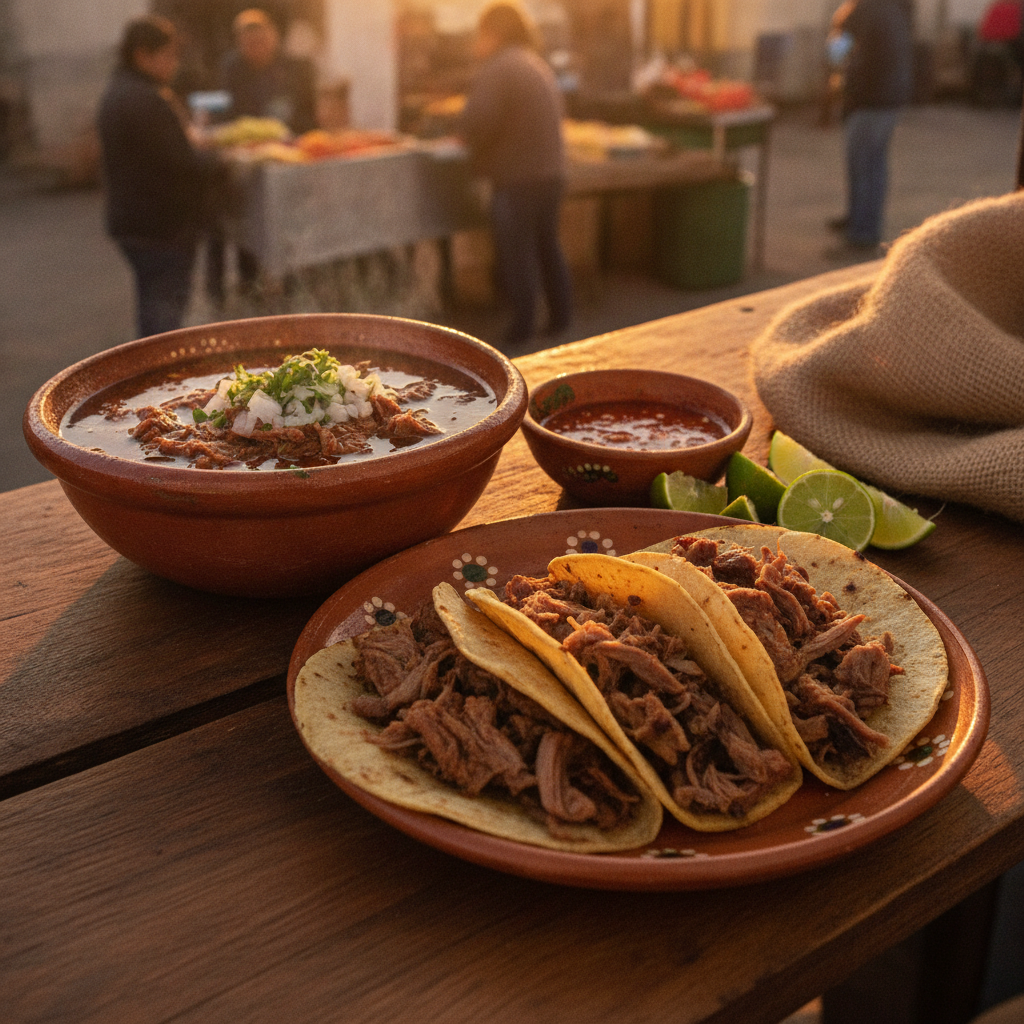
Tapatian Food Culture: Birria Taco Stands at Dawn, Tejuino Cart Vendors, Torta Ahogada Drowned in Chile Sauce and the Tequila Ritual That Defines Jalisco at the Table
Guadalajara Colonial Churches Convents and the Ecclesiastical Architecture of New Galicia: From the Franciscan Missionaries Who Built the First Permanent Structures to the Baroque Elaboration of the 18th Century
Guadalajara Muralism Art Nouveau and the Orozco Legacy: Walking the City That Produced the Most Searing Political Art in Mexican History While Rivaling Mexico City in Colonial Architecture