Guanajuato Day Trips Sierra Gorda Queretaro Dolores Hidalgo and the Bajio Heritage Circuit Connecting Colonial Silver Cities Mountains and Hot Springs in the Heart of Central Mexico
Guanajuato city is the hub of a regional heritage circuit that connects six UNESCO World Heritage Sites within a radius of 200 kilometres, including the historic center of Queretaro, the missions of the Sierra Gorda, and the independence heritage monuments of Dolores Hidalgo and San Miguel de Allende, making the Bajio region the densest concentration of colonial heritage in Mexico outside of Mexico City. The regional circuit is serviced by frequent bus connections between the major cities, with Guanajuato functioning as the overnight base from which visitors access the surrounding destinations on day trips or multi-day extensions. The Sierra Gorda of Queretaro, a UNESCO World Heritage biosphere reserve 150 kilometres east of Guanajuato on the road to Mexico City, contains five Franciscan mission churches built in the 18th century under the direction of Fray Junipero Serra before his transfer to California, whose facades represent the most elaborate example of indigenous artisan execution of European Baroque design in Mexico, with Pame and Chichimec craftsmen encoding pre-Hispanic cosmological symbols into the Catholic decorative program in a process of creative resistance that art historians call indigenous baroque. The thermal springs of Comanjilla, 30 kilometres west of Guanajuato near Leon, provide the outdoor thermal pool experience in a highland landscape that the wellness tourism market values, with water temperatures of 40 to 50 Celsius fed from the volcanic hydrothermal system of the Bajio. The Guanajuato to San Luis Potosi highway passes through the dramatic desert landscape of the Llanos de Ojuelos, where the semi-arid plateau of the Bajio transitions to the true desert of the north, and where the colonial-era haciendas of the silver transport route survive as ruins in the landscape.
- 1
Sierra Gorda Missions and Junipero Serra
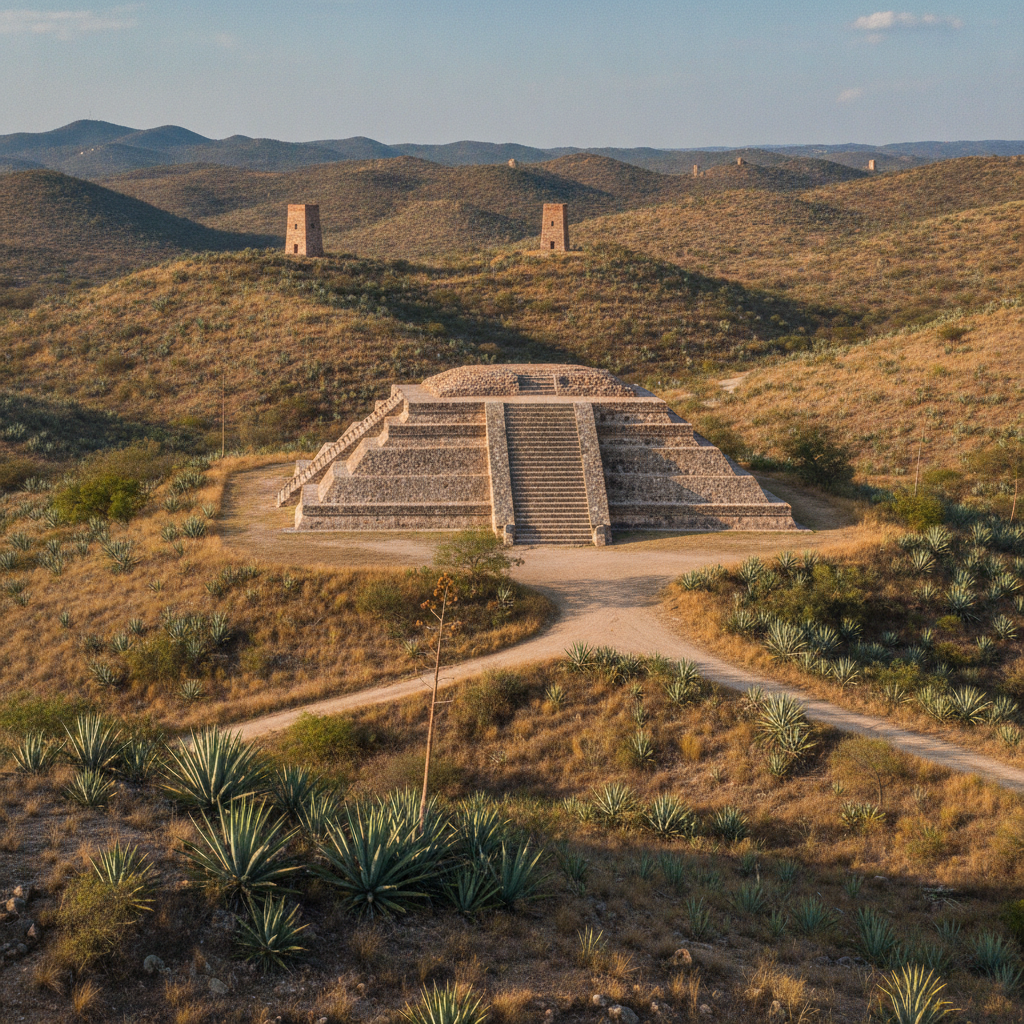
The Sierra Gorda of Queretaro, the mountain biosphere reserve whose five Franciscan mission churches were built between 1740 and 1768 by Fray Junipero Serra before his subsequent mission-founding activity in Baja California and Alta California, contains the most extraordinary ensemble of indigenous Baroque architecture in Mexico, where the Pame and Chichimec craftsmen who built the churches encoded pre-Hispanic symbols of their cosmological tradition into the Catholic decorative program of the facades. The five Sierra Gorda missions at Jalpan, Landa de Matamoros, Arroyo Seco, Tancoyol, and Tilaco each present a unique variation of the churrigueresque Baroque vocabulary adapted by indigenous stone carvers who were simultaneously converting to Christianity and preserving elements of their own visual culture in the new religious building. The Jalpan mission, Serra's base from 1751 to 1758 and the most architecturally accomplished of the five, presents a facade in which the Virgin of Guadalupe, the Virgin of the Pillar, and the patron saints of the Franciscan order are surrounded by the maize cobs, plumed serpents, and solar discs of the pre-Hispanic Chichimec and Pame tradition, creating a syncretistic visual language that the Catholic authorities either did not recognize or deliberately tolerated as part of the conversion strategy. The UNESCO World Heritage designation of the Sierra Gorda missions in 2003 recognized the exceptional cultural value of this indigenous Baroque tradition as a document of the colonial encounter between European Christianity and the indigenous cultures of the Gran Chichimeca frontier. The Sierra Gorda biosphere itself, the largest protected area in Mexico's central highlands at 383,000 hectares, contains cloud forest, tropical dry forest, and semi-arid scrub in the mountain range separating the Bajio from the Gulf coastal plain.
- 2
Dolores Hidalgo Independence Capital and Ceramics
Dolores Hidalgo, 50 kilometres north of Guanajuato on the road to San Luis Potosi, is the town where the Mexican War of Independence began on September 16, 1810, when the parish priest Miguel Hidalgo rang the church bell and delivered the Grito de Independencia from the steps of the parish church to a congregation he had assembled under the pretext of the morning mass. The Parroquia de Nuestra Senora de los Dolores, the colonial church on the main plaza of Dolores Hidalgo, preserves the bell that Hidalgo rang and presents the churrigueresque facade that was under construction at the time of the Grito, making it the building most associated with the beginning of the independence movement. The Museo Casa Hidalgo, the house where Hidalgo lived and worked before the uprising, has been converted to an independence museum with exhibits on his life, the independence conspiracy, and the subsequent history of the war. The ceramics industry of Dolores Hidalgo, which produces brightly painted Talavera-style pottery in bold floral and geometric designs, operates from dozens of workshops throughout the town and constitutes the primary craft industry and souvenir economy of the city, with tiles, tableware, and decorative pieces sold in the market stalls along the main street. The unusual ice cream flavors of Dolores Hidalgo, sold from the wheeled carts in front of the parish church, have become a food tourism attraction in themselves, with vendors offering nieves in shrimp, beer, corn, chile, and other non-traditional flavors alongside the conventional fruit and cream options.
- 3
Thermal Springs Comanjilla and the Bajio Wellness Circuit
The thermal spring resorts of the Guanajuato-Leon area, concentrated in the municipality of Silao and the Comanjilla valley 30 kilometres west of Guanajuato city, provide outdoor thermal pool experiences fed by the hydrothermal system of the Bajio volcanic geology, with water temperatures ranging from 38 to 52 Celsius in the various pool configurations. The Comanjilla resort complex, the oldest and most established thermal establishment in the Guanajuato area, has operated since the colonial period when the thermal water was valued for its medicinal properties, and has developed into a modern resort with multiple thermal pools, spa facilities, and accommodation ranging from cabins to hotel rooms. The Hacienda La Labor at Comanjilla, a converted colonial hacienda whose thermal pools are fed directly from the hot spring source, represents the architectural integration of heritage tourism with the thermal wellness product that the Bajio resort market has developed. The thermal spring resorts of Irapuato, including La Caldera and the Balneario Los Mezquites, serve the working-class Mexican tourism market with lower-priced thermal pool access and the weekend family outing culture that defines the thermal resort tradition in the central Mexican states. The circuit connecting Guanajuato city to the Comanjilla thermal springs, Irapuato, and the strawberry production areas of the Bajio valley creates a half-day tourism route that combines the heritage experience of the colonial capital with the agricultural and wellness tourism products of the surrounding Bajio plain.
- 4
Queretaro UNESCO Heritage City and Aqueduct
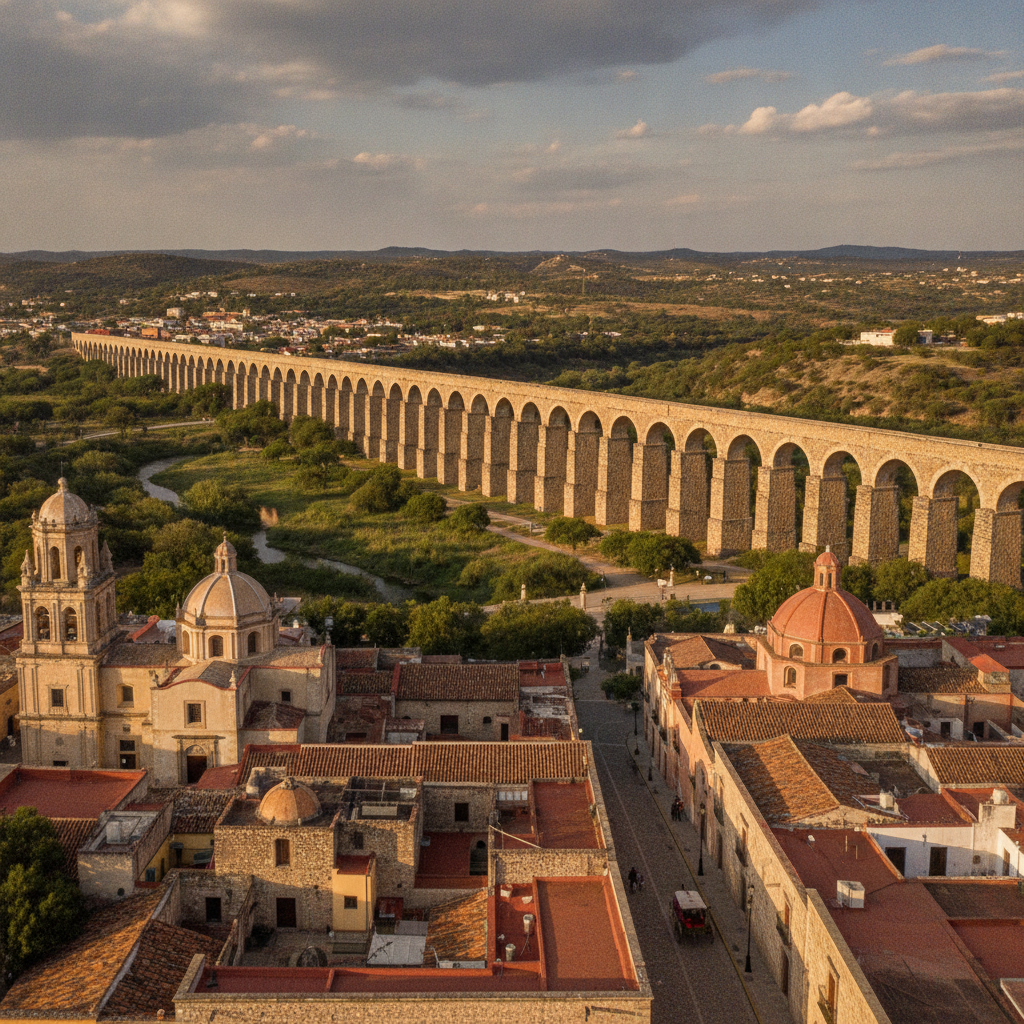
Queretaro city, 80 kilometres south of Guanajuato on the Mexico City highway, is the capital of Queretaro state and a UNESCO World Heritage colonial city whose 16th and 17th-century historic center preserves the best-maintained colonial urban fabric in the Bajio, including the 74-arch Los Arcos aqueduct built between 1726 and 1738 to bring spring water from the Santa Maria mountain 9 kilometres to the city center, a structure whose 28-metre-high arches and kilometre-long course makes it the most impressive colonial hydraulic engineering monument in Mexico. The historic center of Queretaro, designated UNESCO World Heritage in 1996, covers the dense colonial urban fabric of the first and second ring neighborhoods around the Plaza de Armas, with the Governor's Palace, the regional museum in the former convent, the Casa de la Corregidora commemorating Josefa Ortiz de Dominguez, and the baroque church facades of Santa Rosa de Viterbo, La Congregacion, and El Carmen representing the full spectrum of the regional colonial architecture. The Cerro de las Campanas, the hill on the western edge of Queretaro where the Emperor Maximilian of Habsburg was executed by firing squad on June 19, 1867, at the conclusion of the French Intervention, is the site where the end of the empire that offered Mexico a European monarchy under Hapsburg rule was marked by the execution that restored the republican government of Benito Juarez. The Queretaro industrial corridor, stretching along the highway from Queretaro to San Juan del Rio, hosts aerospace manufacturing including Bombardier and Safran operations, automotive component production, and technology companies that have made Queretaro one of the fastest-growing industrial cities in Mexico while maintaining the colonial heritage center that tourism depends on.
- 5
Leon City Shoes and the Bajio Industrial Metropolis
Leon de los Aldama, the largest city in Guanajuato state at 1.5 million residents and the fifth-largest metropolitan area in Mexico, is the industrial capital of the Bajio and the center of Mexico's leather goods and shoe manufacturing industry, producing an estimated 250 million pairs of shoes annually and constituting the largest concentration of footwear manufacturing in Latin America. The shoe district of Leon, concentrated in the La Feria market and the surrounding industrial neighborhoods where leather tanneries, cut-and-stitch workshops, and shoe factory showrooms operate in a concentrated manufacturing ecosystem, sells shoes at factory prices to wholesale buyers from throughout Mexico and from the Mexican-American retail market of the US southwest. The annual Sapica shoe trade show in Leon, the largest footwear industry event in Latin America held twice yearly, draws international buyers and establishes the seasonal trends for the Mexican shoe market, making Leon a global footwear industry venue despite its regional location. The historic center of Leon, less architecturally preserved than Guanajuato city but containing the Expiatorio cathedral, the Plaza Principal, and the Barrio del Coecillo colonial neighborhood, offers a colonial heritage experience without the tourism premium of the UNESCO designated cities, making it an interesting complement to the Guanajuato circuit for visitors interested in working Mexican cities rather than heritage destinations. The Del Bajio International Airport in Silao, between Leon and Guanajuato, connects the Bajio region to Mexico City, US cities including Houston, Dallas, Los Angeles, and Chicago, and Canadian destinations with the international service that the combined tourism and industrial economy generates.
- 6
Guanajuato Day Trip Logistics Practical Regional Guide
The regional circuit of the Guanajuato Bajio is most efficiently organized with Guanajuato city as the overnight base, using the frequent bus services from the Central de Autobuses to reach San Miguel de Allende in 80 minutes, Queretaro in 90 minutes, Leon and the airport in 45 minutes, and Dolores Hidalgo in 60 minutes. The first-class bus operators ETN, Primera Plus, and Omnibus de Mexico serve the Guanajuato routes with modern comfortable coaches, and tickets can be purchased at the bus station or online, with the total cost of a day trip by bus to any of the regional destinations ranging from 150 to 300 pesos round trip. The Guanajuato taxi and Uber services provide connection from the historic center to the bus station, which is located 4 kilometres from the Jardin Union in a valley below the city, accessible through the underground tunnel road. The rental car option from the Leon airport allows greater flexibility for the Sierra Gorda missions, which require a 150-kilometre road trip through mountain terrain best navigated in a private vehicle, and for the thermal spring resorts whose rural locations are not well served by public bus. The accommodation range of Guanajuato city spans from the colonial boutique hotels of the historic center at 100 to 250 dollars per night to the university-area guesthouses at 40 to 80 dollars, with the hostel sector serving the student and backpacker market at 15 to 30 dollars per bed in shared dormitories, making Guanajuato the most economically accessible of the Bajio heritage cities for budget travelers. The best street food concentration in Guanajuato is in the callejones above the Mercado Hidalgo on weekday mornings, when the gorditas, tamales, and atole vendors set up before the tourist circuit activates and the prices reflect the Mexican economy rather than the tourist premium.
Walk this route with audio
Stories play automatically as you reach each stop — no tapping needed.
More in Guanajuato
Guanajuato Walking the Callejones by Night Romantic Legends Ghost Stories and the Social Life of a Canyon City Where Every Alley Has a Story and Every Stairway Leads to a Different Century
The Guanajuato Independence Conspiracy Miguel Hidalgo Ignacio Allende and the Bajio Network That Launched the Mexican War of Independence From a Silver Mining City in September 1810
Guanajuato Practical Guide Getting There Navigation Tips Neighborhoods Safety Climate and How to Survive the Underground Tunnels the Cobblestone Callejones and the Most Disorienting Colonial City in Mexico
Guanajuato Baroque Art Churrigueresque Architecture La Valenciana Church and the Artistic Legacy of a Colonial City That Built the Most Elaborate Religious Buildings in Mexico With Silver Money
Guanajuato Food Cajeta Enchiladas Mineras Mercado Hidalgo and the Working Class Cuisine of a Silver Mining City Where the Miners Diet and the Aristocrats Table Developed Side by Side for Three Centuries