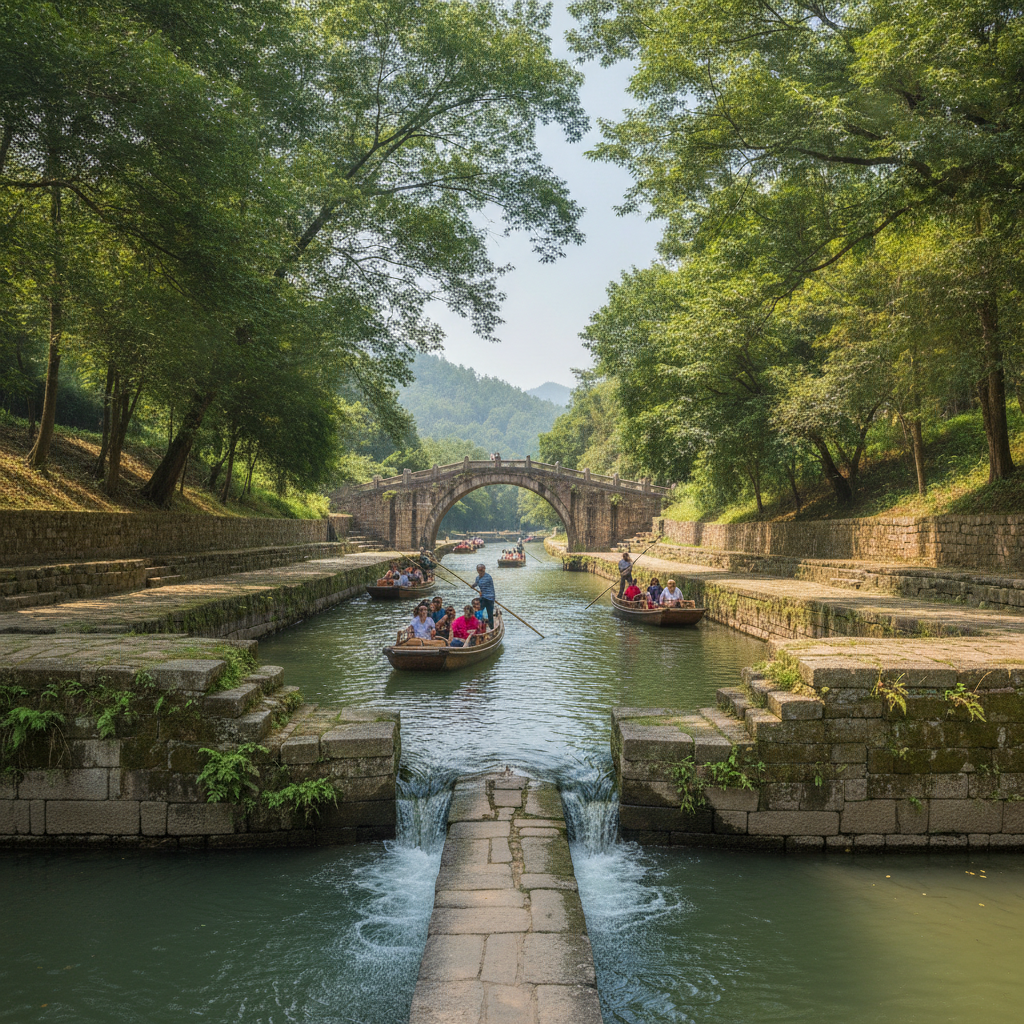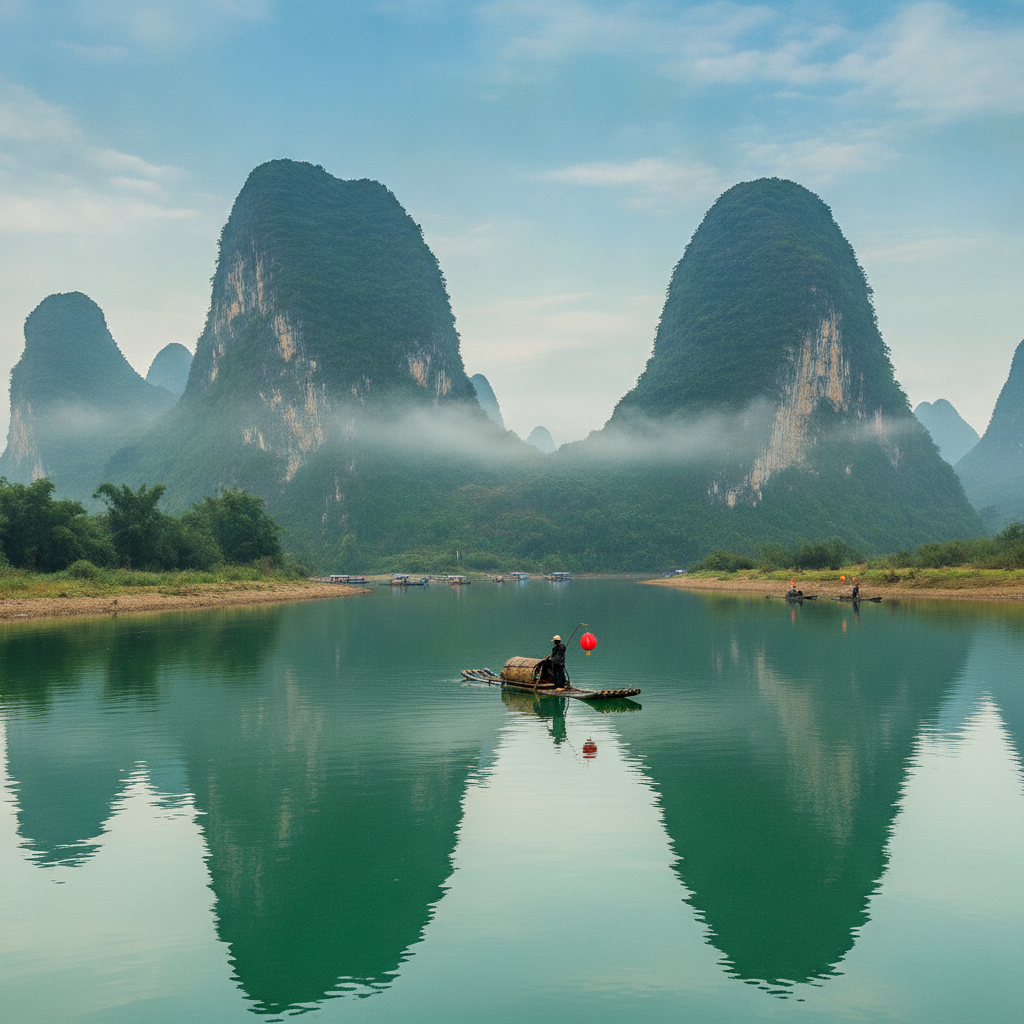
The 20-Yuan Note Landscape, the Cave With 77,000 Square Metres of Stalactites & the Red Yao Women Who Hold the World Record for Longest Hair
The Li River's Yellow Cloth Shoal as the most reproduced Chinese landscape; the Xingping 10-yuan note view making the Li River the most currency-referenced river in the world; the Reed Flute Cave's 77,000 m² and WWII air-raid shelter history; the Red Yao women's average 1.4m floor-length hair and the world record holder; the Moon Hill's 50-metre natural arch as the most photographed in China; and the Guilin osmanthus wine giving the city its name.
- 1
The Li River Cruise – 83 km of Karst Dreamscape
The Li River cruise from Guilin to Yangshuo: the 83-km journey through the karst landscape on the back of the 20-yuan RMB banknote. Departs Zhujiang Wharf (20 km south of Guilin city center) at 09:00–10:00 daily, arrives Yangshuo in 4–4.5 hours. The 9 Horses Fresco Hill (九马画山) and the Yellow Cloth Shoal (黄布滩—the shoal where the 20-yuan note landscape is photographed) are the cruise highlights. The karst peaks (300-million-year limestone formations dissolved by carbonic acid) create the tower-karst (峰丛) unique to Guilin and Halong Bay. The 10-yuan note section: the Xingping area 57 km downstream from Guilin, where the Jingping karst grouping appears on the 10-yuan banknote—the most currency-referenced river journey in the world.
- 2
Reed Flute Cave – 180-Million-Year Underground Palace
Reed Flute Cave (芦笛岩—the limestone cave 5 km northwest of Guilin city center): the largest karst cave in the Guilin region. Interior: 240 metres wide, 300 metres deep, 77,000 m² total area. The 180-million-year-old stalactites include the Crystal Palace chamber where speleothems create a fantasy-palace landscape. Illuminated 50-minute guided tour (English available). The cave was used as a civilian air-raid shelter during Japanese bombing of Guilin in WWII. Named for the reeds at its entrance traditionally used to make flutes.
- 3
Yangshuo – Karst Town, West Street & Beer Fish
Yangshuo (阳朔—83 km south of Guilin at the Li River cruise terminus): the most bicycle-friendly tourist town in China. West Street (洋人街—'Foreigner Street'): the tourist lane with cooking classes, cafes, and bike rentals. The beer fish (啤酒鱼): whole Li River carp braised in local beer with tomatoes and chili—the most famous Yangshuo dish. The Moon Hill (月亮山—8 km south of Yangshuo): the 50-metre natural limestone arch—the most photographed natural arch in China, reached in 30 minutes from the road. The cormorant fishing evening performance: fishermen using cormorant birds (with a ring preventing swallowing) to catch Li River fish—the most atmospheric evening spectacle in the Guilin region.
- 4
Longji Rice Terraces – The Dragon's Backbone
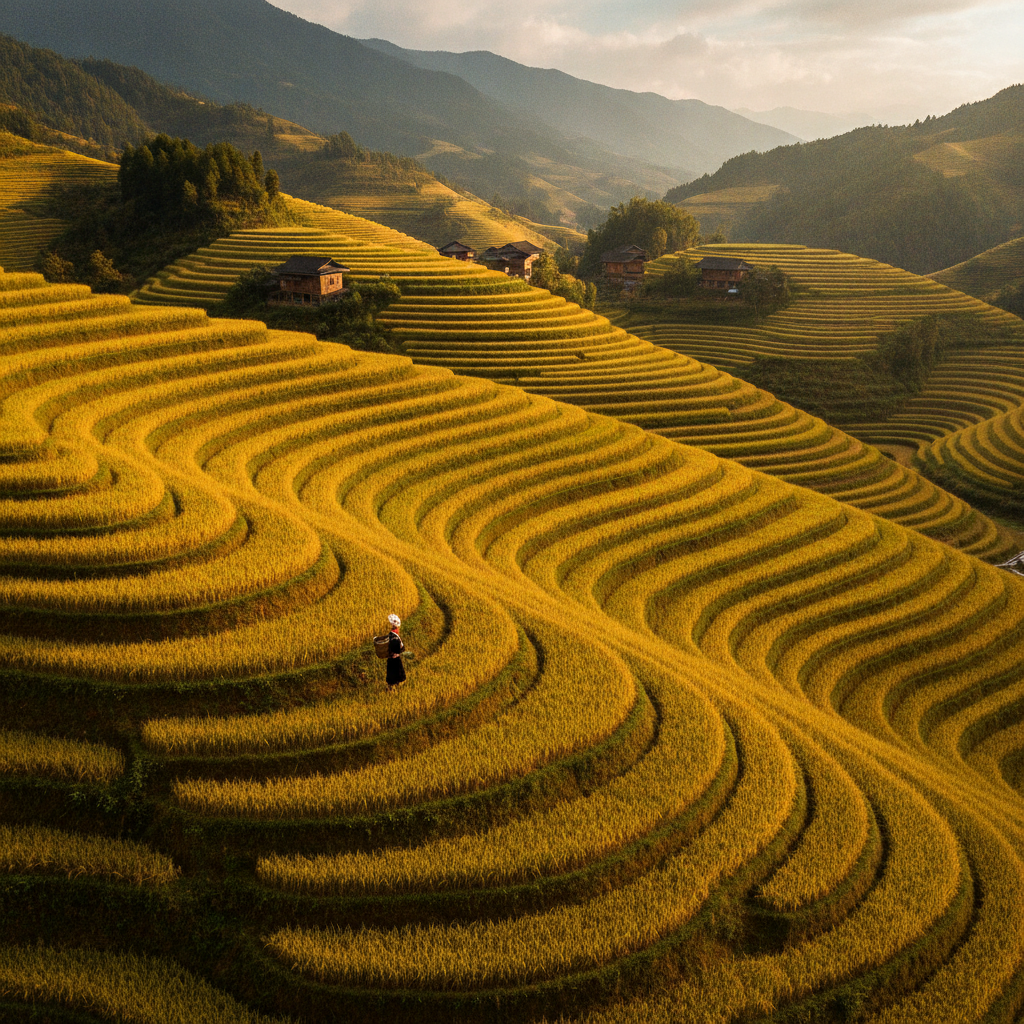
The Longji Rice Terraces (龙脊梯田—'Dragon's Backbone'—80 km north of Guilin): the most dramatic rice terrace landscape in southern China. Built over 650 years by Zhuang and Yao ethnic minority communities on the mountain slopes from 300 to 1,100 metres elevation. Average terrace width: less than 1 metre; some sections have 1,000+ terrace layers between valley floor and ridge. The Red Yao (红瑶) women: known for floor-length hair (average 1.4m; the world record for longest hair belongs to a Red Yao woman). Hair-washing ceremony: performed publicly once per year at the Lu'an River. Best viewpoints: Ping'an (平安) and Dazhai (大寨) ridgeline platforms.
- 5
Guilin City Sites – Elephant Trunk Hill & Seven Star Park
Guilin's urban karst attractions: Elephant Trunk Hill (象鼻山—the 55-metre karst rock at the confluence of the Li and Taohua rivers): the stone arch at the base creates the 'trunk'; the Water Moon Cave beneath it creates a circular reflection in the river. Seven Star Park (七星公园—the largest park in Guilin with 7 karst peaks arranged like the Big Dipper, the Seven Star Cave, and the largest concentration of Tang and Song Dynasty stone inscriptions in Guilin). Fubo Hill (伏波山—213m karst peak on the Li River bank): the Pearl Still Water Cave inside contains a stalactite that nearly touches the cave pool. Guilin rice noodle (桂林米粉): blanched rice noodles in pork-herb broth with braised pork, dried tofu, peanuts, and pickled vegetables—the most important street food in the Guilin region.
- 6
Getting to & Around Guilin – Practical Guide
Guilin Liangjiang International Airport: direct flights to Hong Kong (1h20m, 4 daily—most convenient international access), Singapore (3h30m, daily), Bangkok (3h, 4 weekly), Seoul Incheon (3h, 3 weekly). High-speed rail from Guilin North Station: Guangzhou (2h30m, ¥180); Guiyang (1h40m); Changsha (1h50m). Within Guilin: taxi for city sites (¥10–15); transfer to Li River cruise pier (20 km from center, taxi ¥60–80 or cruise bus ¥20). The Guilin–Yangshuo–Longji 3-day circuit: Day 1 city sites; Day 2 Li River cruise + Yangshuo; Day 3 Longji terraces. Best time: April–October (high water for most dramatic karst reflections); October–November for Longji harvest gold color. Guilin osmanthus wine (桂花酒): the osmanthus-infused rice wine that gives Guilin its name (桂林 = 'Forest of Osmanthus').
Walk this route with audio
Stories play automatically as you reach each stop — no tapping needed.
More in Guilin
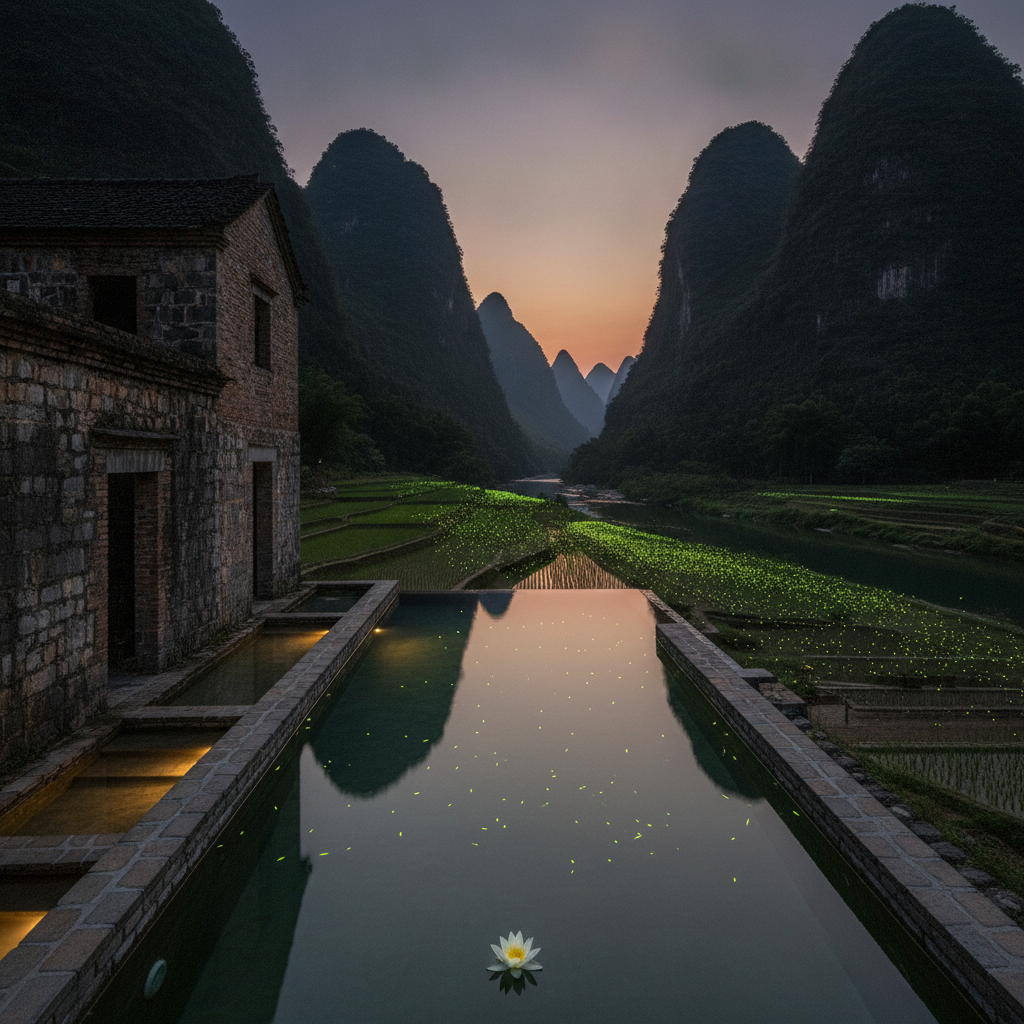
The Song Dynasty Painter Who Invented a New Brushstroke Technique Just for This Mist, the Alila Yangshuo in a Sugar Mill & the Longji Terrace Mirror in February When the Fields Are Flooded
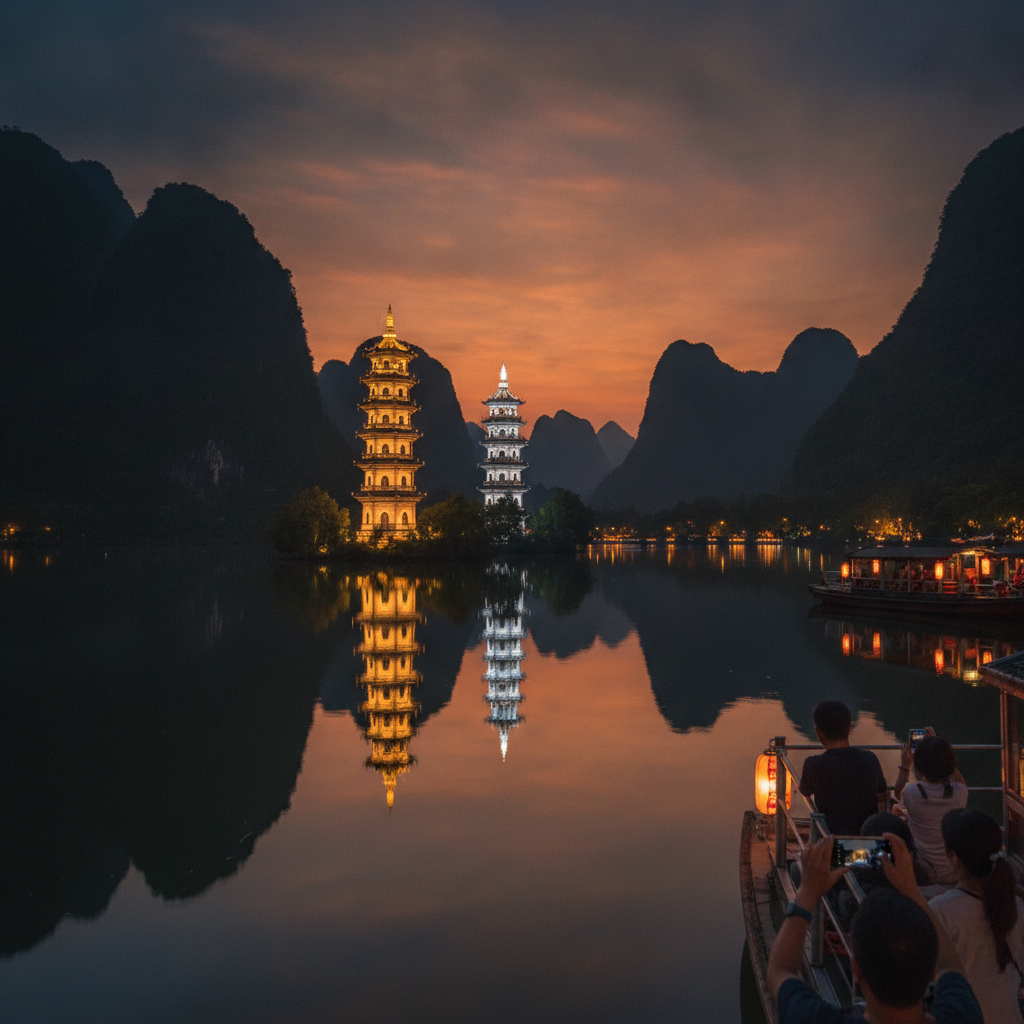
The World's Tallest Bronze Pagoda on a Lake Island, the Cave That Sheltered Thousands During the 1944 Japanese Bombing & the Savory Tea That Takes Three Encounters to Like
The 300-Million-Year Acid That Sculpted Tower Mountains Found Only Here and in Halong Bay, the Dong Bridge Built Without Metal Nails & the Beer Fish Braised in the River It Came From
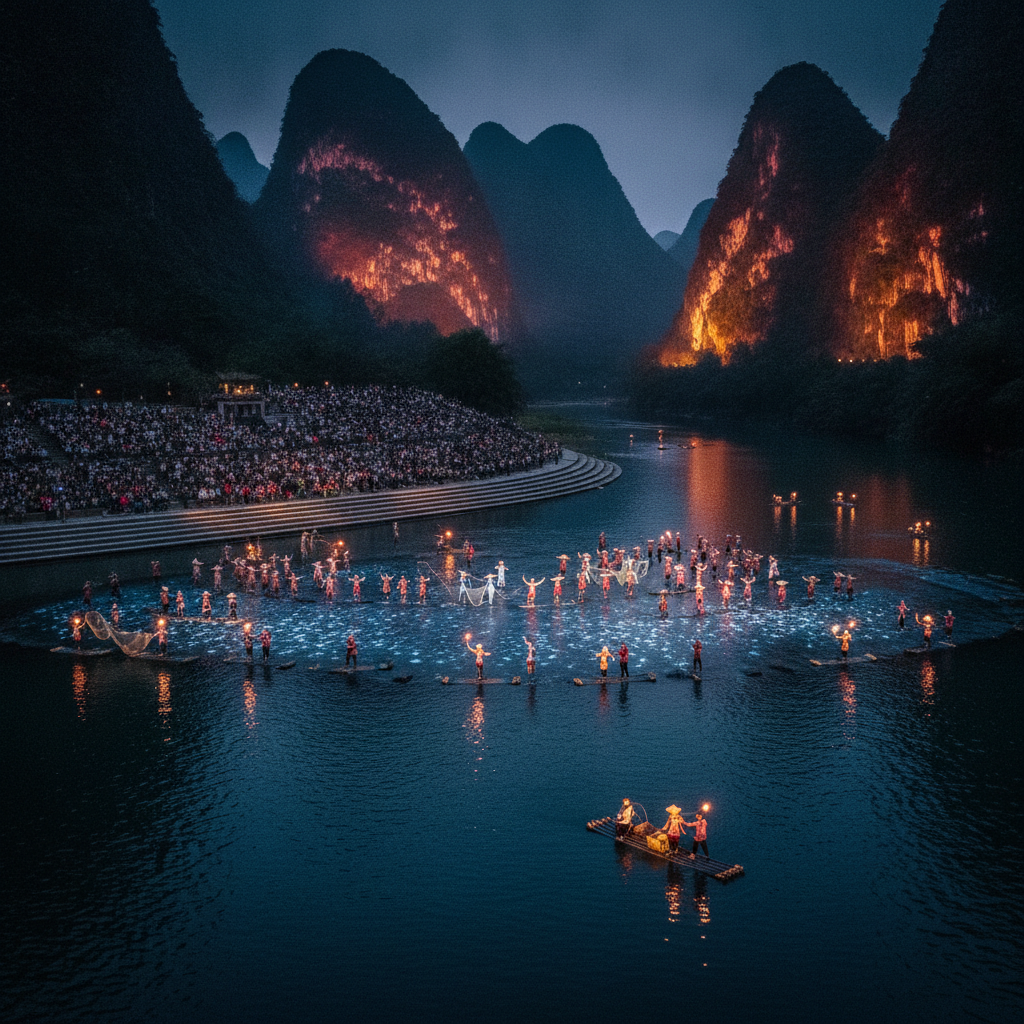
The River Filmed on 500 Million Banknotes, the Zhang Yimou Outdoor Performance With 600 Real River Fishermen & the Fuli Village Where Fans Are Painted With Mountains That Appear on Money