The Pagoda on the 10-Won Coin, the Bell Whose Tone Lasts 3 Minutes & the Oldest Astronomical Observatory in East Asia
The Dabotap's image on Korea's smallest denomination coin; the Seokguram's 3.78-metre seated Buddha as the most artistically significant Buddha image in Korea; the Silla tomb construction's river-stone anti-looting layer unique among East Asian burial traditions; the Emille Bell's 3-minute resonance as the longest of any bronze bell in the world; the Cheomseongdae's 362 granite blocks with the 365 body blocks representing calendar days; and the Wolji Pond's 1,300-year abandonment before 1975 archaeological discovery.
- 1
Bulguksa Temple – Korea's Greatest Buddhist Monument
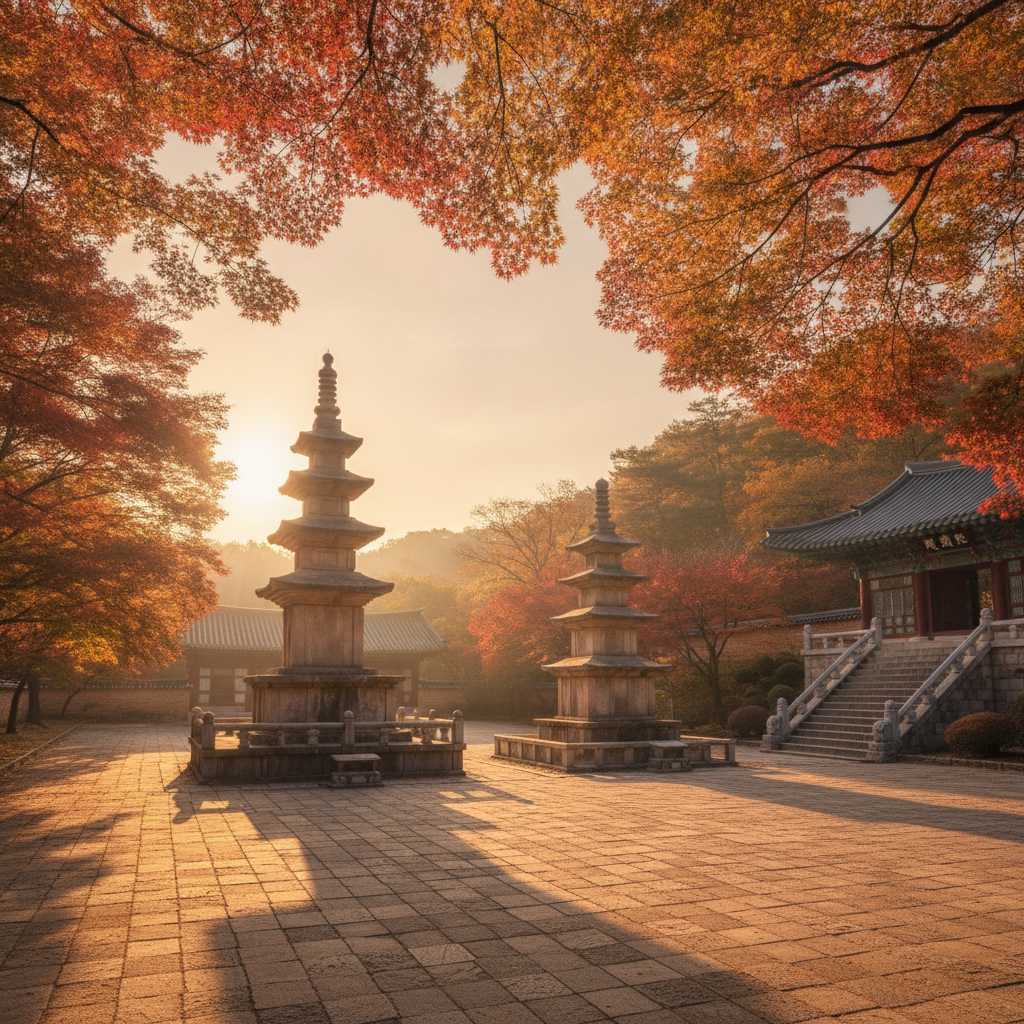
Bulguksa Temple (불국사—the Buddhist temple complex on the slopes of Mount Toham southeast of Gyeongju City, built during the Silla Dynasty (774 CE completion under King Hyegong)): the UNESCO World Heritage Site (listed 1995 as one of the 4 UNESCO sites in Gyeongju—the only Buddhist temple complex in Korea to achieve UNESCO listing solely on the merit of its architectural and artistic significance). The temple architecture (the two stone staircases leading to the main gate (the Cheongun Bridge (Blue Cloud Bridge—33 steps) and the Baekun Bridge (White Cloud Bridge—17 steps) ascending to the main hall): the 33 steps represent the 33 stages of enlightenment in Buddhist doctrine; the stone bridges are among the most technically accomplished stone constructions of 8th-century East Asia). The DaWebeonjeon (the main hall of Bulguksa—the Hall of the Great Hero): the Seokgatap and Dabotap pagodas (the two stone pagodas in the main courtyard): the Seokgatap (the 'Sakyamuni Pagoda'—the 8.2-metre three-story pagoda in the restrained granite style that embodies the Korean Buddhist aesthetic of harmonious proportions): the Dabotap (the 'Many Treasures Pagoda'—the 10.4-metre pagoda with its intricately carved stone lattice and multiple tiers, the most complex stone pagoda construction surviving from the Silla period): the image of the Dabotap appears on the 10-won coin (the smallest denomination in South Korean currency). The Seokguram Grotto (the UNESCO companion site 3 km east of Bulguksa by mountain road—the 8th-century artificial granite grotto containing the 3.78-metre seated Buddha statue: the most artistically significant Buddha image in Korea).
- 2
The Royal Tumuli – Silla's Burial Mounds
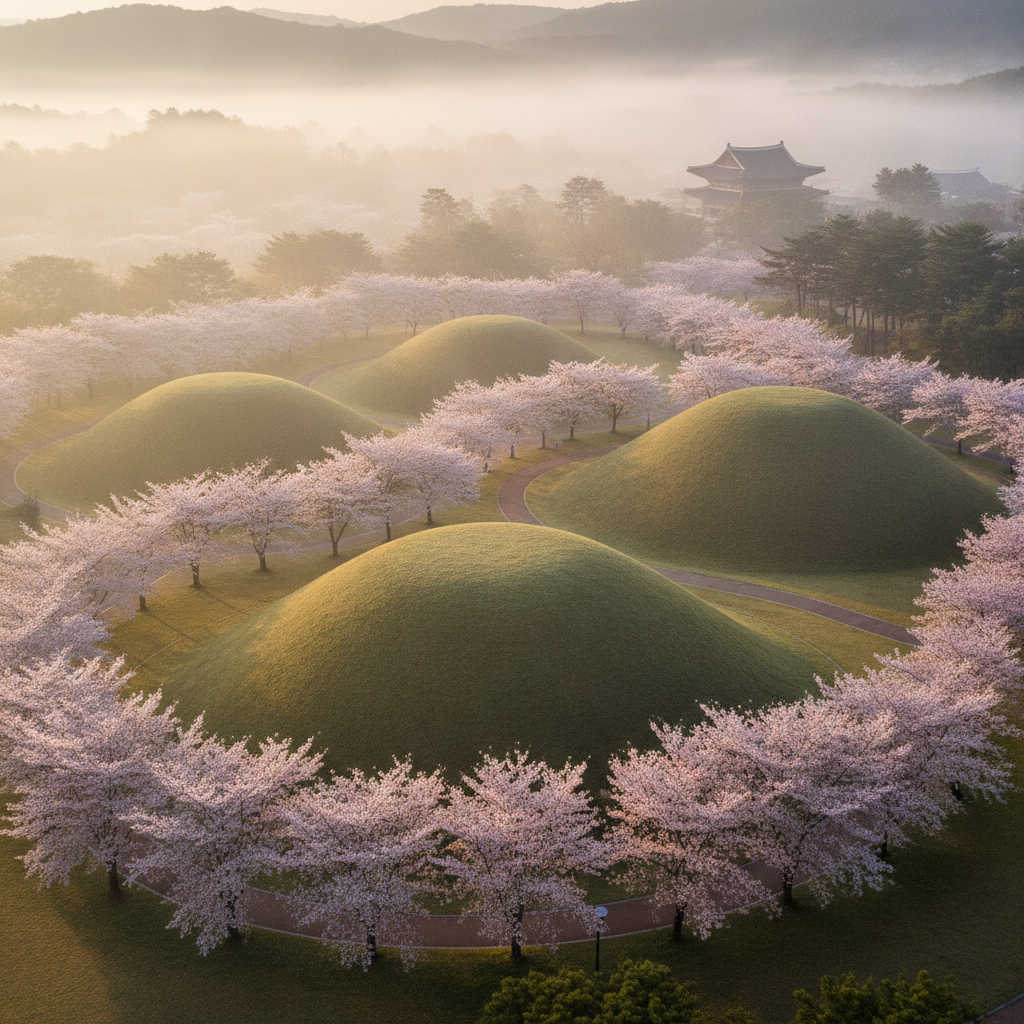
The Silla royal tombs (the burial tumuli of the kings and queens of the Silla Kingdom (57 BCE–935 CE) that are the most visually distinctive landscape feature of central Gyeongju): the grass-covered earthen mounds that rise above the city streets like geological features. The Daereungwon Tomb Complex (대릉원—the most concentrated group of royal burial mounds in Gyeongju, containing 23 tombs within a park boundary in the center of Gyeongju City): the park is the single most important archaeological landscape in South Korea—walking among the burial mounds in the morning light (before the tour groups, at 08:00 when the park opens) provides the most direct physical encounter with the Silla Kingdom's funerary culture. The tomb construction (the Silla burial mound construction technique—the wooden burial chamber is first assembled at ground level; the chamber is then covered in small river stones to the depth of 3–4 metres (the stone layer prevents looters from tunneling without disturbing the stone and alerting the guards); the entire structure is then covered in a soil mound of 22–23 metres height): this layered construction is unique to the Silla Kingdom and differs from the Chinese and Japanese burial mound traditions. The Cheonmachong (Heavenly Horse Tomb—the only open tomb in the Daereungwon complex, excavated in 1973): the interior burial chamber is visible to visitors (the single wooden chamber with the replica burial goods displayed in the chamber positions—the most direct encounter with Silla burial practice). The gold artifacts (the crown, belt, earrings, and necklaces from the Silla royal tombs—the finest gold metalwork in Korean history: displayed at the Gyeongju National Museum).
- 3
Gyeongju National Museum – The Silla Gold Collection
The Gyeongju National Museum (경주국립박물관—the primary repository of Silla artifacts, located in the southeastern part of Gyeongju City adjacent to the Anap Lake): the museum that holds the world's most important collection of Silla-period art and artifacts. The Silla gold (the gold artifacts from the royal tombs—the most internationally recognized category of Silla art): the Silla gold crown (신라 금관—the 5 surviving complete Silla gold crowns (4 in the Gyeongju National Museum and 1 in the Seoul National Museum)—each crown was constructed from hammered sheet gold with dangling gold pendant ornaments (곡옥, gogok—the comma-shaped jade ornaments, also known as magatama in Japanese): the Silla crown is the most elaborate gold crown construction in East Asian history, with the largest number of gold pendant ornaments of any crown type in the world). The Emille Bell (성덕대왕 신종—the Divine Bell of Great King Seondeok, also known as the Emille Bell (에밀레종)): the 3.75-metre tall, 18.9-tonne bronze bell cast in 771 CE: the largest surviving bell from the Silla period and the most technically accomplished bronze casting in Korean history: the bell's resonance characteristics (the bell produces a tone that lasts approximately 3 minutes from a single strike—the longest resonance time of any bronze bell in the world): the legend of the Emille Bell (the legend that a child was melted into the bronze to give the bell its voice—the bell's tone is said to sound like a crying child calling 'eomma, eomma (엄마, 어머니—'mother')'—the legend that gave the bell its popular name 'Emille').
- 4
Bomun Lake & Gyeongju's Resort District
The Bomun Lake Resort (보문관광단지—the purpose-built tourism resort district 5 km east of Gyeongju City center, centered on the 4.2 km² Bomun Lake (a reservoir created in 1975 as the resort's centerpiece)): the most complete resort infrastructure in the Gyeongju region and the primary accommodation base for visitors to the UNESCO sites. The Bomun Lake scenery (the lake with the Toham Mountain ridge as the backdrop and the resort hotel skyline on the southern shore—the morning mist over the lake in autumn and the cherry blossom circuit of the lake road in late March are the most photographed resort landscapes). The World Culture Expo Park (the park on the northern shore of Bomun Lake—the permanent exhibition space created for the 2000 World Culture Expo held in Gyeongju): the Expo Science Park and the Sky Observatory Tower (the 8-sided pagoda-style observation tower providing the Gyeongju Basin panorama). The Gyeongju Bicycle Circuit (the Bomun Lake bicycle path—the 7-km circuit of the lake on the dedicated bicycle path, connecting the resort hotels with the lake shore park and the Expo site): the most practical active recreation in the resort area. The Gyeongju Hilton (the former Hilton Gyeongju, now operating under the Gyeongju Commodore name—the 325-room resort hotel on the southern Bomun Lake shore with the most complete spa and conference facilities): the primary international standard hotel in the Gyeongju resort district.
- 5
Gyeongju's Cheomseongdae & Donggung Palace
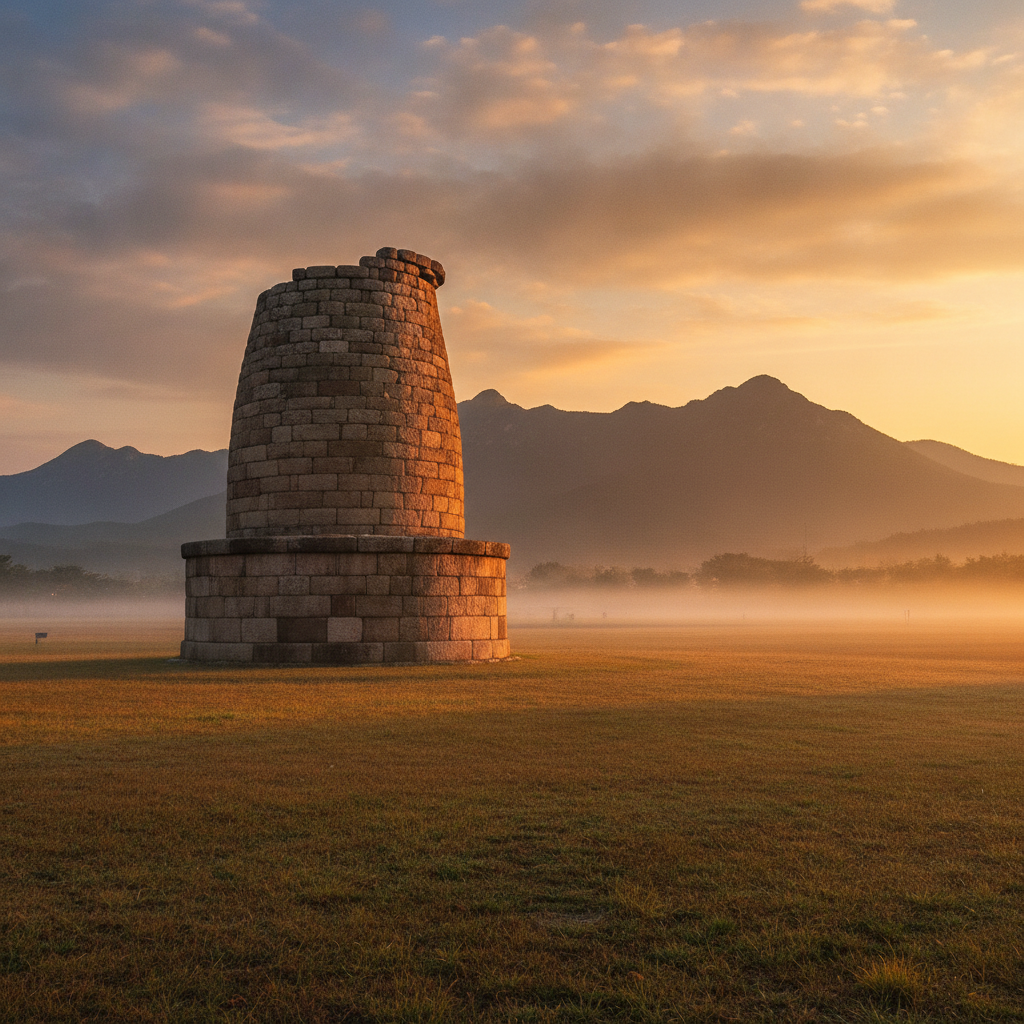
The Gyeongju historic area sites beyond the tumuli and the temple (the in-city historic monuments that represent the daily civic and scientific life of the Silla Kingdom): the UNESCO World Heritage component sites within the Gyeongju city boundary. The Cheomseongdae (첨성대—the observatory tower built in the 7th century during the reign of Queen Seondeok (632–647 CE)): the oldest surviving astronomical observatory in East Asia and one of the oldest standing scientific structures in the world. The Cheomseongdae construction (the 9.4-metre high cylindrical stone tower built from 362 granite blocks in a specific arrangement—the 27 courses of stone (the 27 layers) between the square base and the square top are said to represent Queen Seondeok's position as the 27th ruler of Silla; the 365 blocks of the body are said to represent the days of the year; the 12 foundation stones represent the months): the Donggung Palace and Wolji Pond (동궁과 월지—the reconstructed Silla Dynasty royal pleasure palace and its lotus pond on the eastern side of Gyeongju City): the pond (the Anapji (안압지)—the artificial pond dug in 674 CE to provide a garden landscape for the Silla royal family (the pond was discovered by archaeologists in 1975 after 1,300 years of abandonment and the palace complex was reconstructed): the night illumination of the Wolji Pond (the pond's surface reflecting the illuminated palace buildings in the still water—the most photographed night scene in Gyeongju: best viewed 18:00–21:00).
- 6
Getting to Gyeongju & Practical Guide
Gyeongju's transport position (the historic city accessible from Busan and Seoul by rail—the most convenient day-trip or overnight destination in Korea's southeastern region): the practical guide for visiting the 'museum without walls'. The KTX access (the KTX Gyeongju Station (Singyeongju Station—the high-speed rail station is located 10 km west of the Gyeongju city center in the Gyeongju new development area): the fastest option from Seoul (Seoul Station → Singyeongju Station: 2h10m; ₩47,600 KRW; connecting to the city center by bus (15 minutes, ₩1,300) or taxi (₩12,000–15,000)). The slower rail option (the Mugunghwa or ITX trains to Gyeongju Station—the original downtown station 5 minutes' walk from the Daereungwon tumuli): the Busan–Gyeongju Mugunghwa (1h10m from Busan Station to Gyeongju Station; ₩5,200 KRW): the most convenient access for a Busan-based day trip. Within Gyeongju (the city bicycle rental (the public bicycle system at the Gyeongju Station and the Daereungwon entrance—₩3,000/4 hours): the most appropriate transport for the flat central Gyeongju historic area; the taxi (the 10–15-minute taxi from the city center to Bulguksa costs approximately ₩12,000–15,000): the practical transport to the mountain temple. The Gyeongju 2-day itinerary: Day 1 (city center): Daereungwon tumuli (2 hours) → Cheomseongdae observatory → Wolji Pond (evening): Day 2 (eastern sites): Bulguksa Temple (2 hours) → Seokguram Grotto (1.5 hours) → Gyeongju National Museum (2 hours).
Walk this route with audio
Stories play automatically as you reach each stop — no tapping needed.
More in Gyeongju
The 60-Metre Wooden Pagoda Burned by the Mongols in a Single Day, the First Silla Gold Crown Found in 1921 by Colonial Archaeologists & the Valley Where 7 Stone Pagodas Stand in 500 Metres
The Roman Glass Bowl Found in a Korean Royal Tomb, the Largest Steel Mill in the World 30 km from the Oldest Observatory in East Asia & the Dynasty That Had More Female Rulers Than Any Other in Korean History
The 1-Million-Person City of the 8th Century, the Dome Built Like Mycenae on a Korean Mountain & the Bread Shaped Like a Royal Burial Mound
The 600-Year-Old Village Where the Same Two Clans Still Live, the Warrior Youth Who Unified Korea at Age 16 & the 81,258 Buddhist Woodblocks Carved to Stop the Mongol Invasion