1988 Earthquake Resilience and Memorial
Confront Gyumri's defining tragedy — the catastrophic 1988 earthquake that killed tens of thousands — and witness the city's remarkable resilience and ongoing reconstruction, a story of loss, solidarity, and the determination to rebuild.
- 1
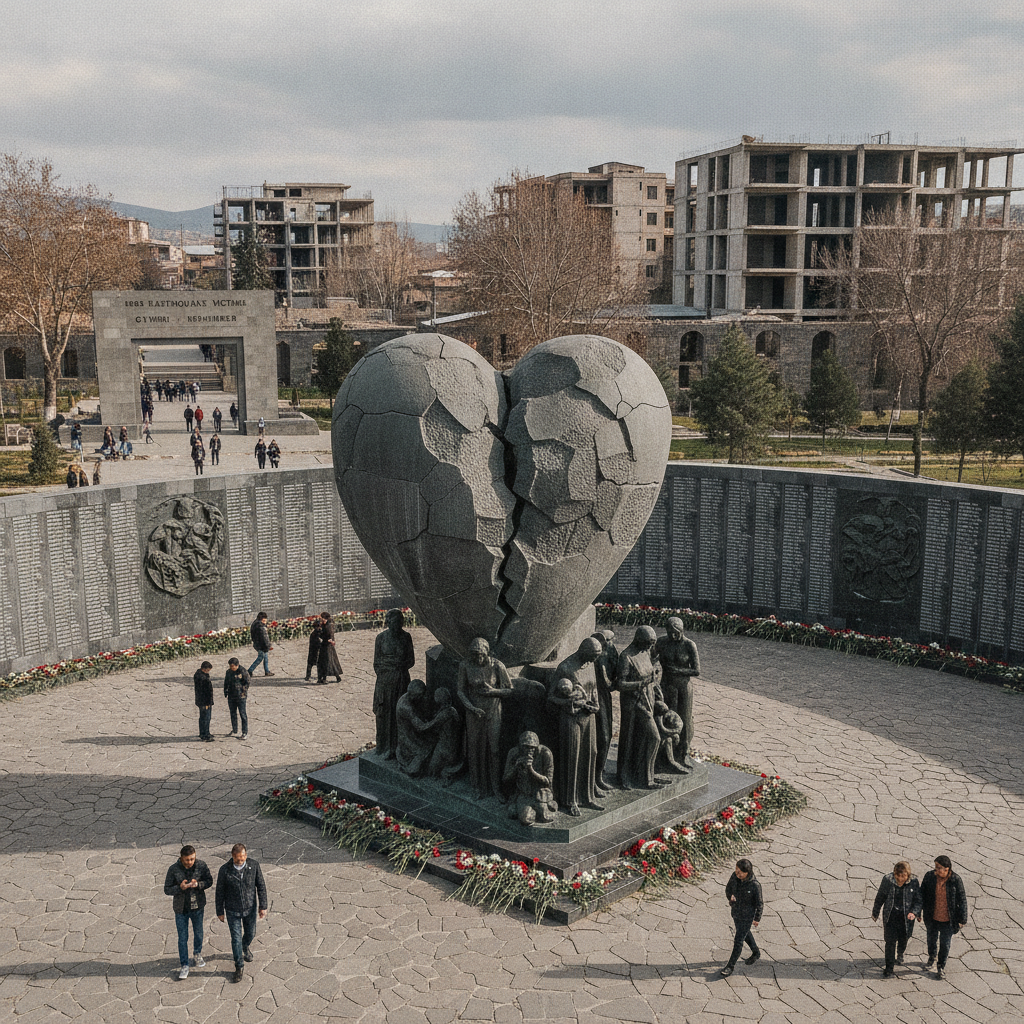
Earthquake Memorial Site
Stand at the main memorial to the 1988 earthquake victims where thousands of names are inscribed, the disaster having killed over 25,000 people in Gyumri and surrounding areas in one of the worst natural disasters in Soviet history.
- 2
Domik Quarter
Walk through the Domik district where families displaced by the earthquake still live in Soviet-era metal container homes meant as temporary shelter over 35 years later, a visible reminder of the reconstruction challenges that persist.
- 3
Collapsed Building Memorial
View the preserved ruins left as memorials to the earthquake's destruction, the collapsed tuff stone walls and concrete structures bearing witness to the force of the tremor that leveled much of the city in 30 seconds.
- 4
Rebuilt Cathedral
Visit the reconstructed Holy Savior Cathedral that was destroyed in the earthquake and painstakingly rebuilt using traditional tuff stone techniques, its restoration a symbol of the community's determination to recover its architectural heritage.
- 5
Rebuilt Neighborhoods
Walk through neighborhoods reconstructed with international aid in the years following the earthquake, comparing the new construction styles with the surviving historic Kumayri quarter that give Gyumri its distinctive dual character.
- 6
Resilience Community Center
Visit a community center established in the earthquake's aftermath that has supported recovery, preserved cultural traditions, and maintained community bonds through decades of reconstruction challenges and post-Soviet economic hardship.
Walk this route with audio
Stories play automatically as you reach each stop — no tapping needed.