Hamburg — Aussenalster, St. Pauli, Museum Ships, Elbjazz & the Wilhelmsburg
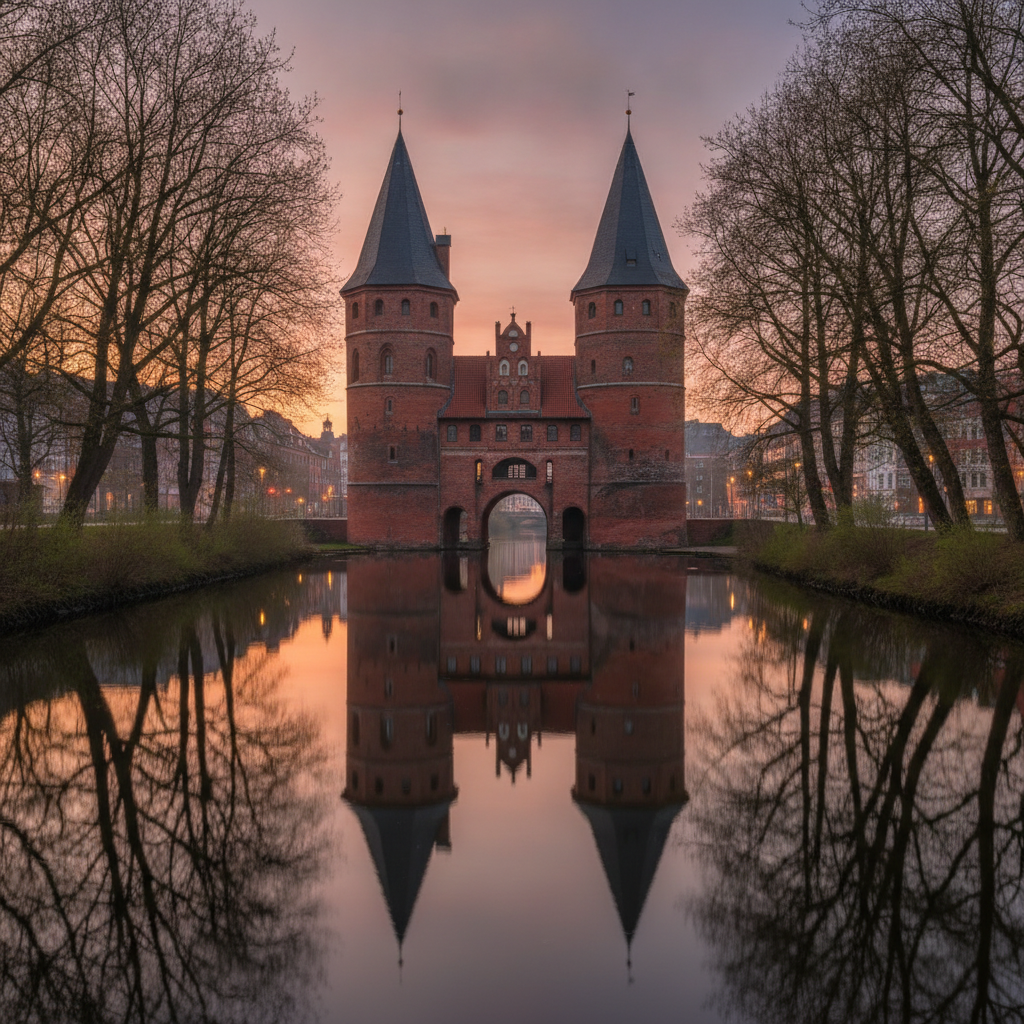
Hamburg's Aussenalster sailing lake, the politically charged FC St. Pauli Millerntor, the historic museum ships at the Landungsbrücken, and the international cultural festivals complete the Hamburg portrait.
- 1
The Aussenalster — Sailing, Swimming and the Lakeside Walk
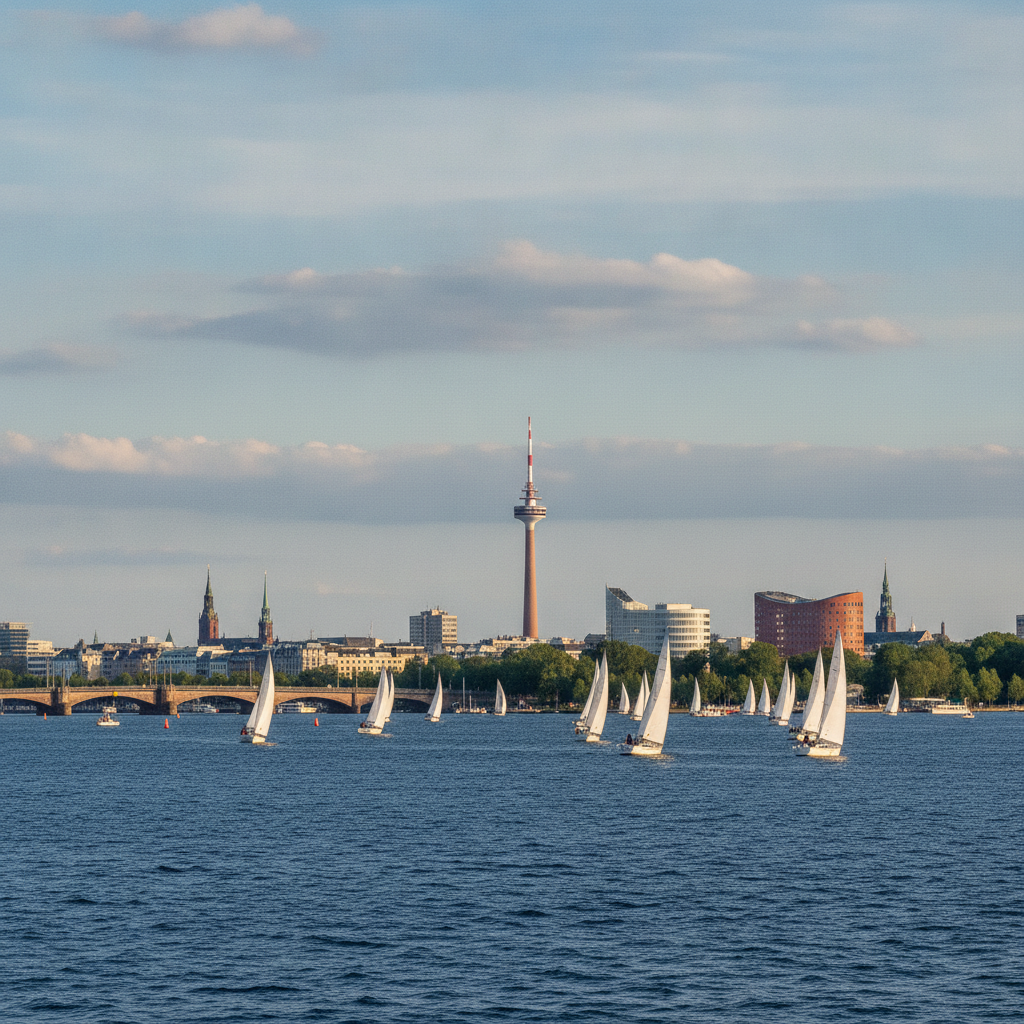
Aussenalster (the Outer Alster at 164 hectares — the most sailed urban lake in Germany with 28 sailing clubs): the sailing culture (the Hamburg Regatta in June the most attended single sailing event on the Alster, the NRV sailing courses for beginners at €200-300 for the weekday beginner course the most accessible entry into Hamburg sailing culture), the lakeside cafés (the Alsterpavillon at the Jungfernstieg — the most elegantly positioned lakeside terrace café in Hamburg with the Rathaus clock tower above; the Hotel Atlantic café terrace the most fashionably positioned refreshment at the Aussenalster north end), the Alster ferry (the ATG Alster-Touristik 50-minute harbour canal tour the most complete water-level view of the historic Alsterfleet, the 80-minute Aussenalster circuit showing the villa gardens at €18 adults, year-round), the Alster lidos (the 8 free public Badestellen around the Aussenalster including the Uhlenhorst and the Winterhude lidos — the swimming water quality routinely at Grade A, the most pleasant hot-afternoon cooling option within 20 minutes of the Hauptbahnhof at no cost), the Aussenalster circumference walk (the 7.5km walk around the Aussenalster the most complete flat urban walk in Hamburg, passing the sailing club piers, the villa gardens of the Harvestehude, and the Kennedy-Brücke and the Lombardsbrücke crossings, the best Hamburg orientation walk for the first-time visitor, 90 minutes at a comfortable pace) and the Alsterpark (the Alsterpark at the north Aussenalster shore — the 24-hectare formal park with the waterfront lawn the most fashionable summer afternoon destination in the Hamburg residential north, free, accessible by S-Bahn S1 to the Dammtor station then 15 minutes on foot).
- 2
St. Pauli — FC St. Pauli and the Millerntor
St. Pauli (the neighbourhood north of the Reeperbahn — the most internationally recognised alternative urban neighbourhood in Hamburg): the FC St. Pauli (the Millerntor-Stadion at Heiligengeistfeld — the most internationally renowned left-wing football club in the world with the skull-and-crossbones badge, the 'Nie wieder Krieg' ('Never Again War') slogan on the official merchandise the most politically explicitly anti-fascist statement on a German professional football club, the match tickets from €15 for the standing Nordkurve terrace, the stadium museum free on non-matchdays), the Hafenstrasse (the Hafenstrasse on the Elbe waterfront — the most historically significant squatted street in German urban history, the squatting from 1981 the longest-running single urban squat in Germany, the residents eventually granted legal tenancy in 1995, the murals on the houses the most politically documented street art in Hamburg), the Heiligengeistfeld (the Heiligengeistfeld — the most dramatically multi-use single urban site in Hamburg: the Millerntor-Stadion football ground becoming the Hamburger DOM funfair 3 times per year, the most incongruous seasonal land-use in Germany), the Hamburger DOM (the Hamburger DOM funfair — the most attended single event series in Hamburg at 10 million visitors per year across 3 annual editions, spring, summer, and winter, each for 4 weeks, free entry with individual ride pricing, the ghost rides and the ferris wheel the most atmospheric elements) and the Grosse Elbstrasse waterfront (the 2km waterfront walk from the Fischmarkt to the Neumühlen pier — the fish wholesalers, the fish processing plants, and the Fischauktionshalle of 1896 the most historically complete working harbour building in Hamburg, the Fischereihafen Restaurant at No. 143 the most established fish restaurant on the Elbe, the most actively working harbour-side promenade in the city).
- 3
The Rickmer Rickmers and Hamburg's Museum Ships
Hamburg maritime heritage (the most completely documented maritime history of any German city — the sailing ship museum fleet, the International Maritime Museum, and the port infrastructure the most complete maritime heritage landscape in northern Europe): the Rickmer Rickmers (the 1896 iron-hull 3-mast steel barque at Landungsbrücken Pier 1 — the most atmospherically complete 19th-century sailing vessel accessible at the Hamburg waterfront, the original rigging, the crew quarters, and the navigation instruments preserved at 1:1 scale, CHF 6 adults, daily 10am-6pm), the Cap San Diego (the 1962 motor cargo ship at the Überseebrücke Pier 10 — the most technically complete surviving example of the 1960s general cargo ship, the largest seagoing museum ship in the world, still capable of sailing under its own power for 2 coastal voyages per year, the engine room tour the most mechanically detailed museum experience at any Hamburg ship, CHF 10 adults, daily 10am-6pm), the Feuerschiff ELBE 3 (the 1888 lightship (floating lighthouse) moored at the Vorsetzen quay — the oldest surviving lightship in Germany, the most historically distinctive floating heritage vessel in Hamburg after the Rickmer Rickmers, open to visitors on summer weekends at no fixed charge), the International Maritime Museum (the Internationales Maritimes Museum at Kaispeicher B HafenCity — the world's largest private maritime museum with 40,000 objects on 10 floors, the historical ship models and the 19th-century sea charts the most comprehensive navigation heritage collection in Germany, CHF 15 adults, Tuesday-Sunday 10am-6pm), the Övelgönne Museum Harbour (the Museumshafen Övelgönne — the voluntary-operated collection of historic Elbe working ships, the steam icebreaker Stettin of 1933 and the 19th-century wooden Elbe lighters, free viewing from the quay, ships open on summer weekends 10am-5pm, the most peaceful maritime heritage site in Hamburg) and the Elbe pilotage history (the Hamburg Lotsen (Elbe River Pilots) — the most specialised river pilotage service in German shipping history, the 120km Elbe River approach the most complex single ship channel in Germany, the pilot station at the Seemannshöft the primary operational centre, the Lotsenbrüderschaft Hamburg foundation of 1611 the oldest pilot guild in continuous operation in Germany).
- 4
Hamburg's Cultural Festivals — Elbjazz, Harbour Front and Dockville
Hamburg cultural festivals (the most festival-rich city in northern Germany — the Elbjazz, the Harbour Front Literaturfestival, the Altonale, and the MS Dockville the 4 most distinctive annual events): the Elbjazz (the Elbjazz Festival in June — the most musically distinctive annual event in Hamburg, the 2-day jazz and contemporary music festival at the harbour and the Blohm + Voss shipyard, the stages on the working shipyard quays and the live music on the historic ships the most atmospherically unusual festival setting in northern Europe, tickets from €60 per day), the Harbour Front Literaturfestival (the Harbour Front Literaturfestival in September — the most internationally attended literary festival in northern Germany with 180 authors from 35 countries at the harbour venues and the Elbphilharmonie, readings in German and in translation at the Kampnagel and the Laeiszhalle, tickets from €12 per reading), the Altonale (the Altonale in Altona in June — the most locally embedded street festival in Hamburg, the 3-week programme with the street art, the outdoor cinema, and the free neighbourhood concerts the most community-involved festival in Hamburg, free entry for most events), the MS Dockville (the MS Dockville on the Wilhelmsburg island in August — the 3-day indie and electronic music festival the most scenically unusual setting in Germany with container ships passing the stages, 10,000 visitors per day, tickets from €90 per day), the Internationales Kurzfilmtage (the oldest short film festival in Germany founded in Hamburg in 1955 — the programme of 400+ short films from 70+ countries at the Metropolis and the Abaton cinemas each September, the €8 per screening ticket or €60 for the 5-day festival pass, the most internationally curated film event in Hamburg) and the Reeperbahn Festival (in September — the most important urban music discovery festival in Germany with 900 concerts in 100 venues over 4 days, the €100 4-day pass the best value music access in northern Germany, the Reeperbahn and the St. Pauli neighbourhood the most geographically concentrated festival district in northern Europe).
- 5
Hamburg's Jewish History and the Holocaust Memorial
Hamburg Jewish history (the Hamburg Jewish community one of the oldest and most historically significant in Germany — the community established since the 16th century, the Grindel quarter the primary pre-war Jewish neighbourhood, and the Bullenhuser Damm the most haunting single Holocaust memorial site in the city): the Grindelberg (the Grindelviertel in Rotherbaum — the former primary Jewish neighbourhood in Hamburg, the Bornplatz Synagogue site at the Joseph-Carlebach-Platz the location of the largest synagogue in Hamburg destroyed in the November 1938 Kristallnacht pogrom, the outline of the synagogue marked in the paving stones the most specific single memorial to the destroyed Jewish community centre in Hamburg, the Talmud Torah School at Grindelallee 26 the most intact surviving pre-war Jewish educational building in Hamburg), the Bullenhuser Damm (the Bullenhuser Damm memorial at Bullenhuser Damm 92 — the school building where 20 Jewish children and the 4 adult prisoners who cared for them were murdered by the SS on the night of April 20-21 1945 in one of the last documented mass murders of the Nazi period, the rose garden memorial in the school basement the most intimate and the most emotionally devastating single Holocaust memorial in Hamburg, free, the school open as a memorial on Sundays 10am-5pm), the Institut für die Geschichte der deutschen Juden (the Institute for the History of German Jews at Beim Schlump 83 — the most academically thorough archive of Hamburg Jewish history in any German research institution, the reading room and the library open to the public Tuesday-Friday, the most comprehensively documented account of the Hamburg Jewish community 1590-1945 in a single archive), the Stolpersteine (the Stolpersteine (stumbling stones) in Hamburg — the most numerically extensive single-city installation of Gunter Demnig's memorial bronze cobblestones in Germany with over 6,000 Stolpersteine in the Hamburg pavement, each stone marking the last residence of a Hamburg Holocaust victim, the most geographically dispersed Holocaust memorial form in the city) and the Synagogue Hohe Weide (the Hohe-Weide-Synagoge at Hohe Weide 34 — the main synagogue of the Hamburg Jewish community, the 1960 building the largest post-war synagogue in Hamburg, the community the most active and the most publicly visible Jewish religious community in northern Germany, the Gemeindehaus adjacent the most practically central point for the Hamburg Jewish community information and events calendar).
- 6
Hamburg's Stadtpark and the Northern Districts
Hamburg northern districts (the residential districts north of the Schanzenviertel and the Alster — the most comprehensively middle-class and the most architecturally intact Gründerzeit residential areas in Hamburg): the Stadtpark (the Hamburg Stadtpark in Winterhude — the 148-hectare park the most classically landscaped urban park in Hamburg, the 1914 water tower the most architecturally distinctive park landmark, the open-air summer concerts at the Stadtpark Bühne the most popular free or low-cost live entertainment venue in Hamburg for the warm season, the summer solstice concert on the longest day of the year the most attended single free event in the Stadtpark), the Eppendorf village centre (the Eppendorfer Landstrasse — the most complete village-scale independent retail street in Hamburg, the Eppendorf weekly market the most quality-focused neighbourhood food market outside the Isemarkt, the 19th-century villa streets of the Eppendorf the most architecturally intact bourgeois residential neighbourhood in Hamburg, the most recommended area for the visitor seeking the authentic Hamburg upper-middle-class daily life at the café and the Konditorei), the Winterhude (the Winterhude neighbourhood between the Stadtpark and the Alster north shore — the most complete surviving early-20th century apartment building neighbourhood in Hamburg, the Gertigstrasse café row the most locally patronised café street in the Hamburg north, the most recommended café crawl street in Hamburg for the visitor interested in the non-tourist neighbourhood food culture), the Uhlenhorst (the Uhlenhorst neighbourhood on the Aussenalster east shore — the most elegantly residential neighbourhood in Hamburg, the boat hire at the Uhlenhorst lido the most relaxed single waterside activity in the Hamburg residential north, the rowing boats and the paddleboats at €8 per hour the most Hamburg-characteristic leisure activity), the Mundsburg (the Mundsburg U-Bahn junction neighbourhood — the most practically useful residential neighbourhood for the budget traveller, the apartment hotels and the guest houses at the Mundsburg the most accessible budget accommodation in walking distance of the Aussenalster and the Kunsthalle, the most underrated neighbourhood for the Hamburg visitor seeking central proximity without the Hauptbahnhof-area pricing) and the Barmbek (the Barmbek neighbourhood northeast of the centre — the Museum der Arbeit at Wiesendamm 3 the most directly working-class focused museum in Hamburg in the former copper smelter building with the original factory interiors preserved, the most architecturally intact industrial interior accessible in Hamburg, CHF 9 adults, Tuesday-Sunday 10am-5pm).
Walk this route with audio
Stories play automatically as you reach each stop — no tapping needed.
More in hamburg
Hamburg — Kunsthalle, Parks, Elbchaussee, Beatles & St. Nikolai
Hamburg — Hanse Heritage, Wilhelmsburg, Literary Culture, North Sea & the Practical Guide
Hamburg — Rathaus, Gängeviertel, Cycling, Neighbourhoods, Food & the Events Calendar
Hamburg — Speicherstadt, Elbphilharmonie, Reeperbahn, Alster & the Port