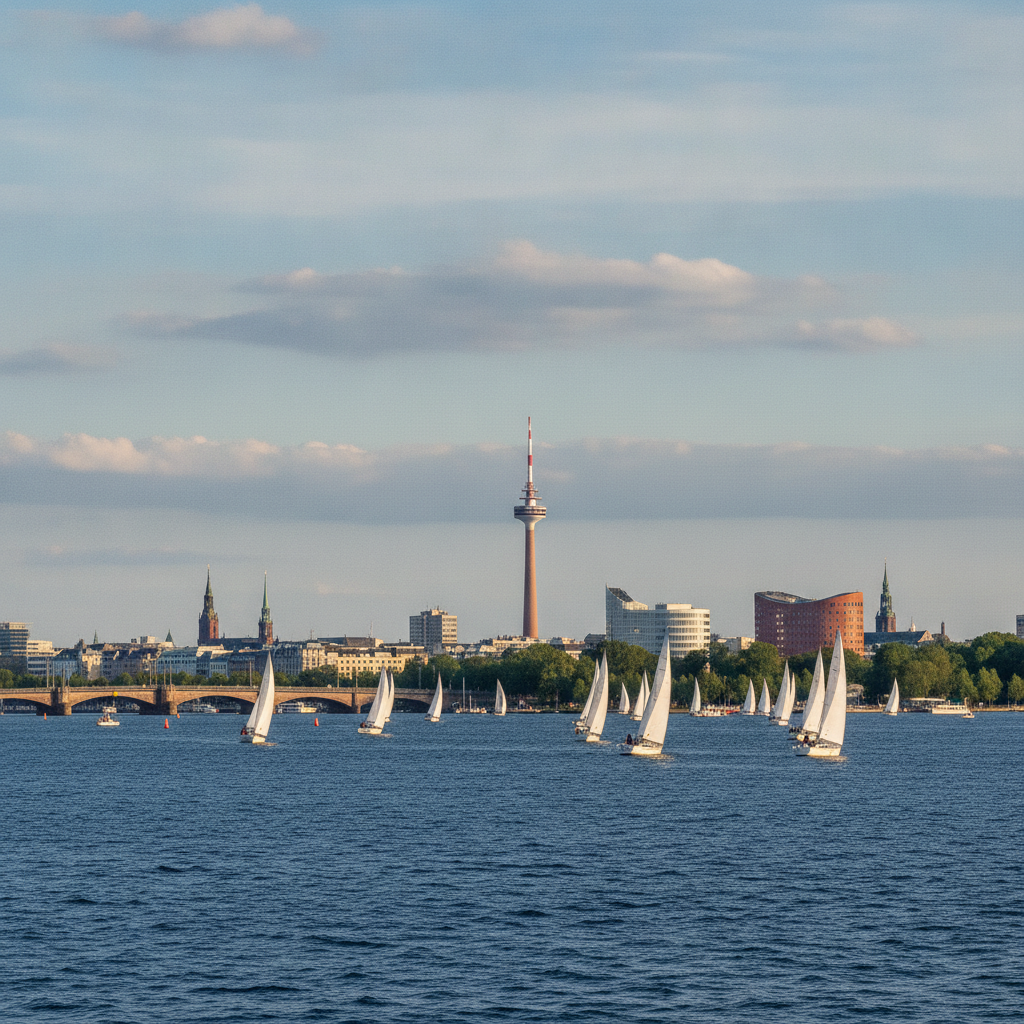
Hamburg — Kunsthalle, Parks, Elbchaussee, Beatles & St. Nikolai
Hamburg's cultural depth spans the northern European Old Masters at the Kunsthalle, the Elbe villa culture of the Elbchaussee, the formative Beatles era at the Grosse Freiheit, and the most powerful anti-war memorial in Germany at the St. Nikolai ruin.
- 1
Planten un Blomen — Hamburg's Central Park
Planten un Blomen (the 47-hectare park at the western edge of the Hamburg Altstadt — Low German for 'Plants and Flowers', the most visited city park in Hamburg): the rose garden (the Rosengarten within Planten un Blomen — the 25,000 rose plants in 1,350 varieties the most species-diverse single rose planting in a German public park, peak bloom mid-June to mid-July), the Japanese Garden (the Japanischer Garten — the first Japanese garden in Germany established 1936 as a gift from Osaka, the teahouse, the koi pond, and the maple trees the most meditative garden in Hamburg), the water-light concerts (the Wasserlichtkonzerte at the park pond — the evening illuminated fountain performances every evening May-September at 9-10pm, the coloured water jets and the classical music the most theatrically elaborate free public spectacle in Hamburg, the most attended free evening event in the city), the tropical greenhouse (the Gewächshaus at the adjacent Hamburg Congress Centre — the most complete tropical plant collection accessible in Hamburg year-round, free, the most unusual mid-city warm-climate space in northern Germany in winter) and the Wallanlagen (the surrounding historic city-wall moat and earthworks landscape converted to public parkland in the 1820s, the most historically grounded green space in Hamburg representing the former city wall circuit, the most complete surviving 17th-century fortification landscape in northern Germany in park form).
- 2
The Hamburg Kunsthalle
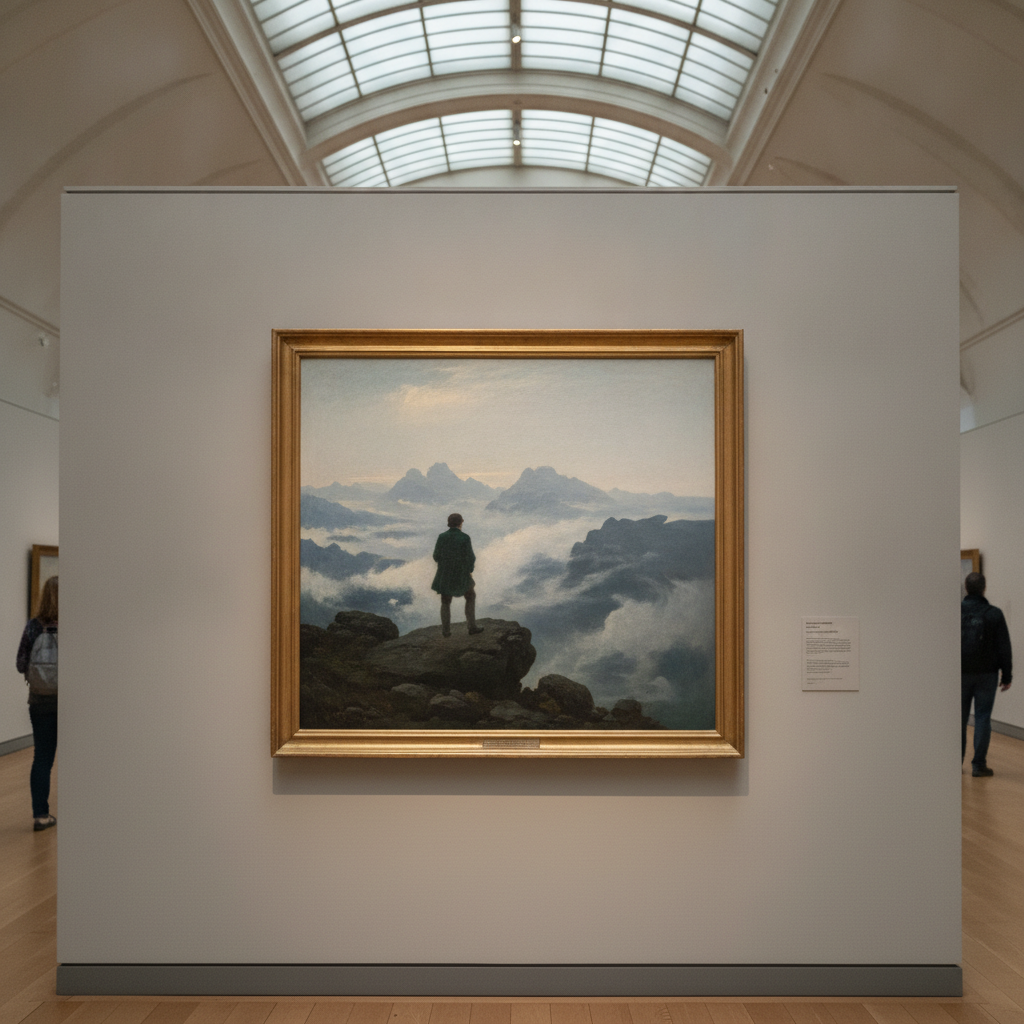
Hamburger Kunsthalle (the largest single art museum in northern Germany at Glockengiesserwall 5 — the collection spanning the 14th to the 21st century across 3 interconnected buildings, CHF 16 adults, Tuesday-Sunday 10am-6pm, Thursday to 9pm): the Old Masters (the 14th-18th century collection in the Haupthaus — the Master Bertram Passion Altarpiece of 1383 the oldest surviving painted altarpiece in Germany; Caspar David Friedrich's 'Wanderer above the Sea of Fog' 1818 the most internationally recognised single painting in the collection and the most reproduced German Romantic painting in history; and the Hans Memling 'St. Barbara' panel the most technically refined Flemish painting in the Hamburg collection), the Galerie der Gegenwart (the 1996 Oswald Mathias Ungers cubic modernist building housing the post-1960 contemporary art — the Gerhard Richter 'October 18 1977' cycle the most discussed work), the Museum für Kunst und Gewerbe (the Museum of Arts and Crafts at Steintorplatz 1 — the applied arts museum with 500,000 objects covering the Art Nouveau furniture, the Jugendstil interiors, the East Asian applied arts, and 20th-century industrial design, the 'Hamburg Room' the most complete surviving Art Nouveau domestic interior in northern Germany, CHF 12 adults), the Bucerius Kunst Forum (the Bucerius Kunst Forum at Rathausmarkt 2 — the most prestigious temporary exhibition venue in Hamburg for international loan shows, CHF 16 adults per exhibition) and the Deichtorhallen (the Deichtorhallen at Deichtorstrasse 1-2 — the 2 former iron-framed wholesale market halls of 1911 now the most spacious single contemporary art and photography exhibition spaces in Hamburg, the Hall for Contemporary Art and the House of Photography, CHF 12 adults each, Tuesday-Sunday 11am-6pm, Tuesday to 9pm).
- 3
The Elbchaussee — Hamburg's Grand Villa Mile
Elbchaussee (the 10km promenade road along the Elbe River west of Hamburg — the most architecturally prestigious residential avenue in Germany, the road from the Grosse Elbstrasse in Altona to the Blankenese village lined with the merchant villas of the Hamburg trading dynasties): the villa architecture (the Elbchaussee villas — the most continuous sequence of 19th and early-20th century merchant villa architecture in Germany, predominantly private with walled gardens, the Hirschpark at Elbchaussee 499 the most accessible estate park on the public walk — the former Godeffroy family estate with the deer herd, free, daily), the Jenisch Park (the 42-hectare English landscape park at Klein Flottbek with the Jenischhaus neo-classical villa of 1831 — the most complete villa-and-landscape park ensemble in Hamburg, CHF 6 for the villa, the park free), the Övelgönne Beach (the Övelgönner Elbstrand — the natural sand and pebble beach on the Elbe, the container ships passing at 200m distance the most dramatically scaled shipping view from any German city beach, the Strandperle beach bar at Övelgönne 60 the most beloved summer café in Hamburg with the €4 Fischbrötchen on the beach), the Blankenese village (the Blankenese Treppenviertel — the 58 lanes and stairways through the densely packed captains' houses of the 18th-19th century, the most topographically complex village in the Hamburg city limits, the Süllberg hill at 75m the highest point in Hamburg with the panoramic Elbe view, the S-Bahn S1 in 35 minutes from the Hauptbahnhof) and the Övelgönne Museum Harbour (the Museumshafen Övelgönne — the historic Elbe working ships including the steam icebreaker Stettin of 1933, the most complete collection of historic working harbour vessels in Hamburg, free viewing from the quay, the ships open on summer weekends 10am-5pm).
- 4
Hamburg Music — Beatles, Elbphilharmonie & Clubs
Hamburg music culture (Hamburg the most important city in the history of 20th-century rock and roll after Liverpool — the Beatles' formative Hamburg years the most documented pre-fame period of any major rock group, and simultaneously one of the 3 most acoustically acclaimed new concert halls in Europe): the Beatles' Hamburg (the 5 Beatles residencies 1960-1962 — the Indra Club at Grosse Freiheit 64 the first venue, the Kaiserkeller and the Top Ten Club the middle period, the Star-Club at Grosse Freiheit 39 the peak professional shows in 1962, the Beatles-Platz circular memorial at the Reeperbahn/Grosse Freiheit intersection with the 5 steel silhouettes of the Hamburg-era band (including Pete Best and Stuart Sutcliffe) the most visited single Beatles memorial outside Liverpool), the Grosse Freiheit 36 (the former Star-Club site now a 1,500-capacity concert venue — the monthly Beatles tribute nights the most specifically Hamburg rock history events in the current programme), the Elbphilharmonie acoustics (the 2,100-seat Grand Hall with the 10,000 individually adjustable acoustic panels (the 'White Skin' ceiling by Nagata Acoustics) the most complex acoustic engineering in a 21st-century European concert hall — the NDR Elbphilharmonie Orchester the resident ensemble, tickets from €10 standing to €300 premiere), the Laeiszhalle (the Hamburger Laeiszhalle at Johannes-Brahms-Platz 1 — the 1908 Neo-Baroque concert hall the primary chamber music venue, the Hamburger Symphoniker resident, tickets from €15, September-June season) and the Dockville Festival (the MS Dockville on the Wilhelmsburg island — the 3-day indie and electronic music festival in August the most scenically unusual festival setting in Germany with the container ships passing the stages, 10,000 visitors per day, tickets from €90 per day).
- 5
Hamburg's War Memorial — St. Nikolai
Hamburg Mahnmal St. Nikolai (the Memorial Church of St. Nikolai at Willy-Brandt-Strasse 60 — the ruin of the 19th-century Gothic Revival church destroyed in the Operation Gomorrah bombing of July 1943, the most historically significant bombed building ruin in Germany): the ruin (the St. Nikolai spire at 147m the 5th tallest church tower in the world and the sole surviving element of the 1874 Neo-Gothic building, the preserved nave walls and arches the most eloquent architectural anti-war memorial in northern Europe, most comparable to the Coventry Cathedral ruin in Britain), Operation Gomorrah (the Hamburg firebombing of July 24-August 3 1943 — the British and American bombing campaign that destroyed 16km² of the Hamburg Altstadt and killed between 34,000 and 43,000 civilians in 8 days, the most deadly Allied air attack in western Europe by civilian casualty count, the underground exhibition at the St. Nikolai Memorial the most comprehensively documented single air raid archive in a German city, CHF 5 adults, daily 10am-6pm May-September), the exhibition (the underground crypt housing the permanent exhibition on the Hamburg bombing and contemporary warfare — the most historically comprehensive and the most emotionally restrained museum of civilian war casualties in Germany, extending from the 1943 bombing to contemporary urban warfare globally), the observation platform (the panoramic elevator to the St. Nikolai spire at 76m — the most dramatically positioned viewing platform in the Hamburg Altstadt, the ruins below and the HafenCity Elbphilharmonie visible simultaneously, CHF 5 adults) and the Ohlsdorf Cemetery (the Ohlsdorfer Friedhof — the largest park cemetery in the world at 389 hectares, the Commonwealth War Cemetery section the most internationally significant burial ground in Hamburg, the most extensive single green space in Hamburg, free public access with the nature trail map at the north entrance).
- 6
Hamburg Practical — Neighbourhoods, Seasons and the City Card
Hamburg practical guide (the essential logistics for a Hamburg visit — the Hamburg Card, the neighbourhoods, the seasons, and the annual calendar): the Hamburg Card (the Hamburg Card at €12.90 adults for 1 day — the public transport pass covering the HVV subway (U-Bahn), the S-Bahn, the bus, the Alster ferry, and the harbour ferries within the Hamburg city zone, plus the free or discounted entry to 150+ museums, the Kunsthalle at 50% discount, the Miniatur Wunderland at 15% discount, and the harbour tour at 25% discount — the most cost-efficient single-day card for the Hamburg tourist, the 3-day card at €31.90 the best value for the multi-day visit, available at the main HVV service centres and online), the HVV public transport (the HVV covering the entire Hamburg metropolitan area — the U-Bahn (4 lines), the S-Bahn (6 lines), and the 115 bus lines the primary visitor transport, the Hauptbahnhof the central interchange for all lines, the single-journey city ticket at €3.50 adults, the Hamburg Airport connected by the S-Bahn S1 in 25 minutes to the Hauptbahnhof at €3.50), the neighbourhoods (the key Hamburg neighbourhoods: the Altstadt and HafenCity (centre, the Speicherstadt and the Elbphilharmonie); the Schanzenviertel (the most bohemian neighbourhood, the Saturday flea market on the Flohschanze the most animated flea market in Hamburg); the Eppendorf and Winterhude (the most affluent residential north, the Alster lake views, the village-scale boutique shopping on the Eppendorfer Landstrasse); and the Ottensen in Altona (the most ethnically diverse neighbourhood in Hamburg, the Turkish and the Portuguese communities, the best non-tourist restaurant street at the Ottenser Hauptstrasse)), the seasons (the best time to visit Hamburg: May-August for the beer garden season, the Alster sailing, and the outdoor fish market, the Elbe beaches, and the Dockville festival; the Weihnachtsmarkt on the Rathausmarkt from November 22 to December 23 the most architecturally framed Christmas market in northern Germany) and the Alstervergnügen (the Alstervergnügen waterfront festival on the Binnenalster in August — the most attended single free festival in Hamburg at 1 million visitors over 3 days, the water stage, the food stalls, and the illuminated fountain shows on the lake the most specifically Hamburg summer celebration).
Walk this route with audio
Stories play automatically as you reach each stop — no tapping needed.
More in hamburg
Hamburg — Hanse Heritage, Wilhelmsburg, Literary Culture, North Sea & the Practical Guide
Hamburg — Rathaus, Gängeviertel, Cycling, Neighbourhoods, Food & the Events Calendar
Hamburg — Speicherstadt, Elbphilharmonie, Reeperbahn, Alster & the Port
Hamburg — Schanzenviertel, Lübeck, Working Port, Events & the Historic Altstadt