Hamburg — Speicherstadt, Elbphilharmonie, Reeperbahn, Alster & the Port
Hamburg is Germany's most maritime and most architecturally dramatic city — the UNESCO Speicherstadt warehouse district, the Elbphilharmonie concert hall, and the working port of the Elbe create the most complete harbour city experience in Europe.
- 1
The Speicherstadt — the World's Largest Warehouse District
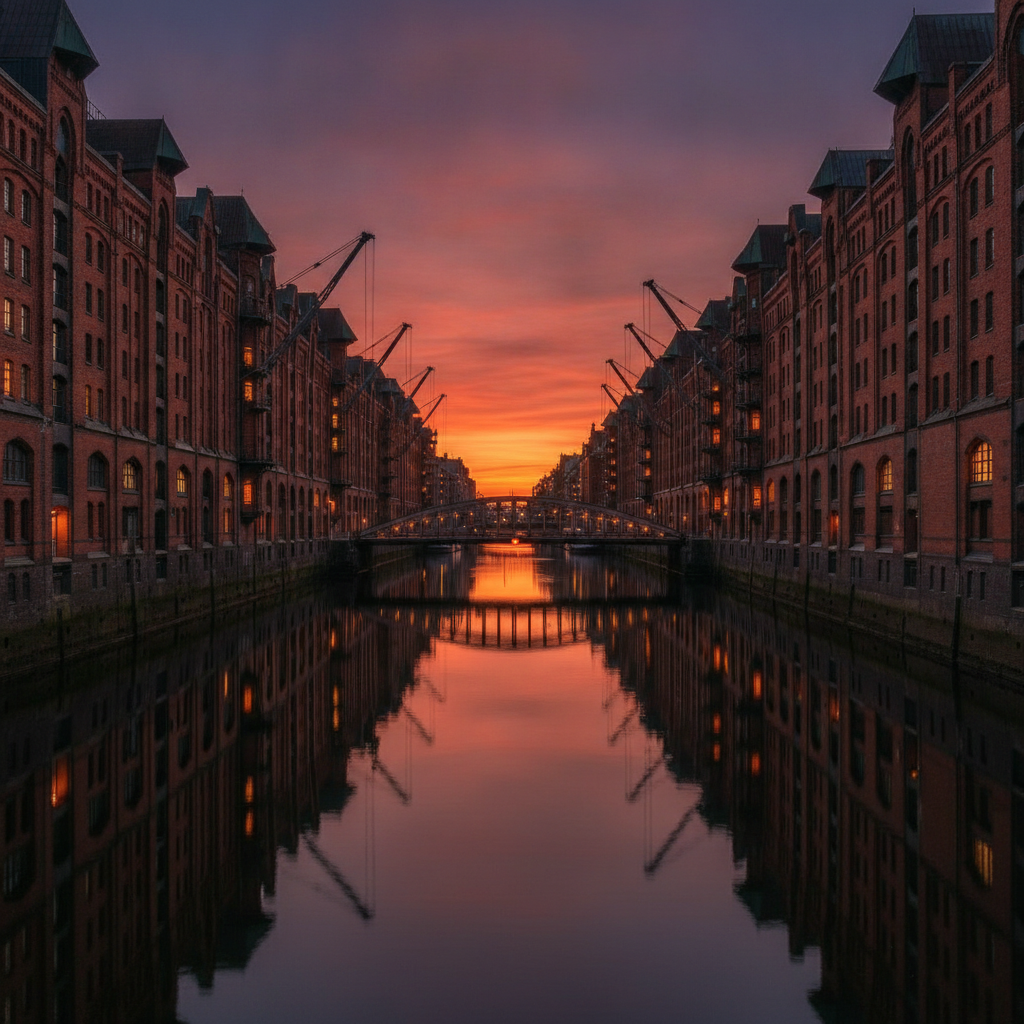
Speicherstadt (the Warehouse City — the UNESCO World Heritage red-brick warehouse complex on the Brooktor island in the Hamburg harbour, the largest contiguous warehouse district in the world at 1.9km length and 26 hectares, built 1883-1927 as the basis for Hamburg's status as a free port): the architecture (the Speicherstadt warehouses — the 7-storey neo-Gothic red-brick buildings on oak piles driven into the Elbe mud, the canals between the warehouse blocks the primary transport channel for the Hamburg spice and coffee trade, the crane arms projecting from the upper warehouse levels the most distinctive roofline feature, the entire complex the most intact industrial heritage of the late 19th-century free port era in northern Europe, the warehouses the most atmospheric single walking destination in Hamburg), the Miniatur Wunderland (the Miniatur Wunderland at Kehrwieder 2-4 — the world's largest model railway exhibition with 16,000m of model track, 1,500 trains, and the complete landscape models of Germany, Austria, Scandinavia, the USA, and Iceland covering 1,500 square metres of floor space, the most visited single attraction in Germany after the Cologne Cathedral at 1.5 million visitors per year, tickets from €20 adults, booking online essential as the same-day queue averages 3-4 hours in summer), the Speicherstadt museums (the Hamburger Zollmuseum in the Alte Zollhaus at Auf dem Sande 1 — the Customs Museum with the most complete collection of smuggling devices in the world including the vacuum-sealed books, the false shoe heels, and the chemically disguised drug packages; the Speicherstadt Museum at Block D Speicherstadt the most historically complete single museum of the warehouse district's history, CHF 5 adults; and the Dialog im Dunkeln (Dialogue in the Dark) at Block X the most empathy-focused sensory exhibition in Germany — the guided tour through a completely dark exhibition simulating the life of the visually impaired, €19 adults, the most experientially unusual museum in Hamburg), the Kafferösterei (the coffee roasters at the Speicherstadt — Hamburg importing 90% of Germany's coffee historically through the Speicherstadt, the coffee aroma still perceptible in the warehouse canals in the early morning, the Tchibo company founded in Hamburg 1949 and the Dallmayr and the Jacobs roasting operations historically sited in the warehouses, the Speicherstadt the most olfactorily distinctive UNESCO World Heritage site in Europe) and the evening light (the Speicherstadt at the golden hour — the red-brick facades turning deep amber at sunset, the canal reflections of the warehouse blocks the most photographed single image of Hamburg, the Holländischbrookfleet canal the most photographed canal section with the Brooksbrücke bridge the primary vantage point, the evening the most atmospheric time for the Speicherstadt visit when the tourist crowds have reduced and the warehouse illumination creates the most deeply coloured brick-and-water reflection in Germany).
- 2
The HafenCity and Elbphilharmonie
HafenCity (the new harbour city district in the Hamburg port — the largest inner-city urban development project in Europe at 157 hectares, the district built on the former port quays east of the Speicherstadt, the most ambitious urban regeneration project in Germany since the post-WWII Berlin Reconstruction): the Elbphilharmonie (the Elbphilharmonie at Platz der Deutschen Einheit 4 — the 2017 Herzog & de Meuron concert hall on the former Kaispeicher B warehouse, the most visited building in Hamburg at 2 million visitors per year and the most internationally recognised German building of the 21st century, the wave-shaped glass upper section on the brick warehouse base the defining architectural image of new Hamburg, the Plaza — the public viewing terrace at 37m on the top of the old warehouse and the base of the glass concert hall — accessible by the curved escalator (Tube) at no cost, with the panoramic view of the Hamburg harbour and the Elbe River the most visited free viewing platform in northern Germany, the concert hall tickets from €10 for the standing balcony to €300 for the premiere seats), the HafenCity streetscape (the Magellan-Terrassen and the Marco-Polo-Terrassen — the 2 waterfront terraces on the HafenCity harbour edge, the most fashionably designed public spaces in Hamburg with the café terraces, the water reflections, and the Elbphilharmonie visible from the terrace level; the Sandtorhafen the historic shipbuilding harbour with the traditional sailing ships and the historic dock cranes preserved as the most atmospherically maritime collection of working harbour artefacts in Hamburg), the International Maritime Museum (the Internationales Maritimes Museum at Kaispeicher B, HafenCity 50 — the world's largest private maritime museum with 40,000 objects on 10 floors including the historical ship models, the navigational instruments, and the 19th-century sea charts, CHF 15 adults, Tuesday-Sunday 10am-6pm), the HafenCity architecture walk (the 25 architectural highlights of the HafenCity development mapped on the district's architecture walk — the buildings by Rem Koolhaas, the Ingenhoven Architekten green tower, and the Rathausmarkt-axis extension the most internationally discussed, the map available free at the HafenCity InfoCenter at Am Sandtorkai 30) and the Elbe waterfront (the Elbe promenade at the HafenCity south edge — the 2km waterfront walk from the Elbphilharmonie to the Baumwall U-Bahn station the most complete single harbour-front promenade in Hamburg, the container ships entering and leaving the Elbe River the most visible working port activity from the city centre).
- 3
The Reeperbahn and St. Pauli
Reeperbahn (the primary entertainment street of Hamburg — the 900m strip in the St. Pauli district the most internationally famous nightlife street in northern Europe and the most historically significant rock music street in the world for the pre-fame Beatles residency): the Beatles in Hamburg (the Beatles played Hamburg from August 1960 to December 1962 — 5 extended residencies at the Indra Club, the Kaiserkeller, the Top Ten Club, and the Star-Club on the Grosse Freiheit, the most formative single period in the Beatles' musical development, the Hamburg years 'making' the band according to John Lennon — the Grosse Freiheit 36 now a concert venue on the original Star-Club site, the Beatles-Platz at the Reeperbahn/Grosse Freiheit intersection the circular memorial with the steel silhouette sculptures of the 5 original Hamburg-era Beatles (including Pete Best and Stuart Sutcliffe) the most visited single Beatles memorial in the world outside Liverpool), the Herbertstrasse (the Herbertstrasse — the red-light district street closed to women and minors, the window-prostitution behind the glazed street-front the most legally specific sex work district in Germany, the area the most historically discussed aspect of Hamburg's nightlife reputation in the international media, the street 2 minutes from the Reeperbahn station), the Reeperbahn clubs (the Reeperbahn the primary club street: the Mojo Club the most highly regarded jazz and soul venue, the Molotow and the Grüner Jäger the most long-established rock music venues, the Große Freiheit 36 the largest former Star-Club space now a concert venue with 1,500 capacity, the Angie's Nightclub the most commercially oriented of the Reeperbahn nightclub operations), the St. Pauli neighbourhood (the St. Pauli neighbourhood north of the Reeperbahn — the most politically left-wing single neighbourhood in Hamburg, the FC St. Pauli football club the most politically identified left-wing football club in Germany with the skull-and-crossbones badge, the Millerntor-Stadion at Heiligengeistfeld the most politically charged football ground in German football, the match tickets from €15) and the Hamburger Dom (the Hamburger Dom — the largest funfair in northern Germany held on the Heiligengeistfeld 3 times per year (spring, summer, and winter) each for 4 weeks, the most attended single fair event in Hamburg at 10 million visitors per year total across the 3 events, the Geisterbahn ghost rides and the Riesenrad ferris wheel the most visited single attractions, free entry, the fair rides individually priced).
- 4
The Alster Lakes and the City Centre
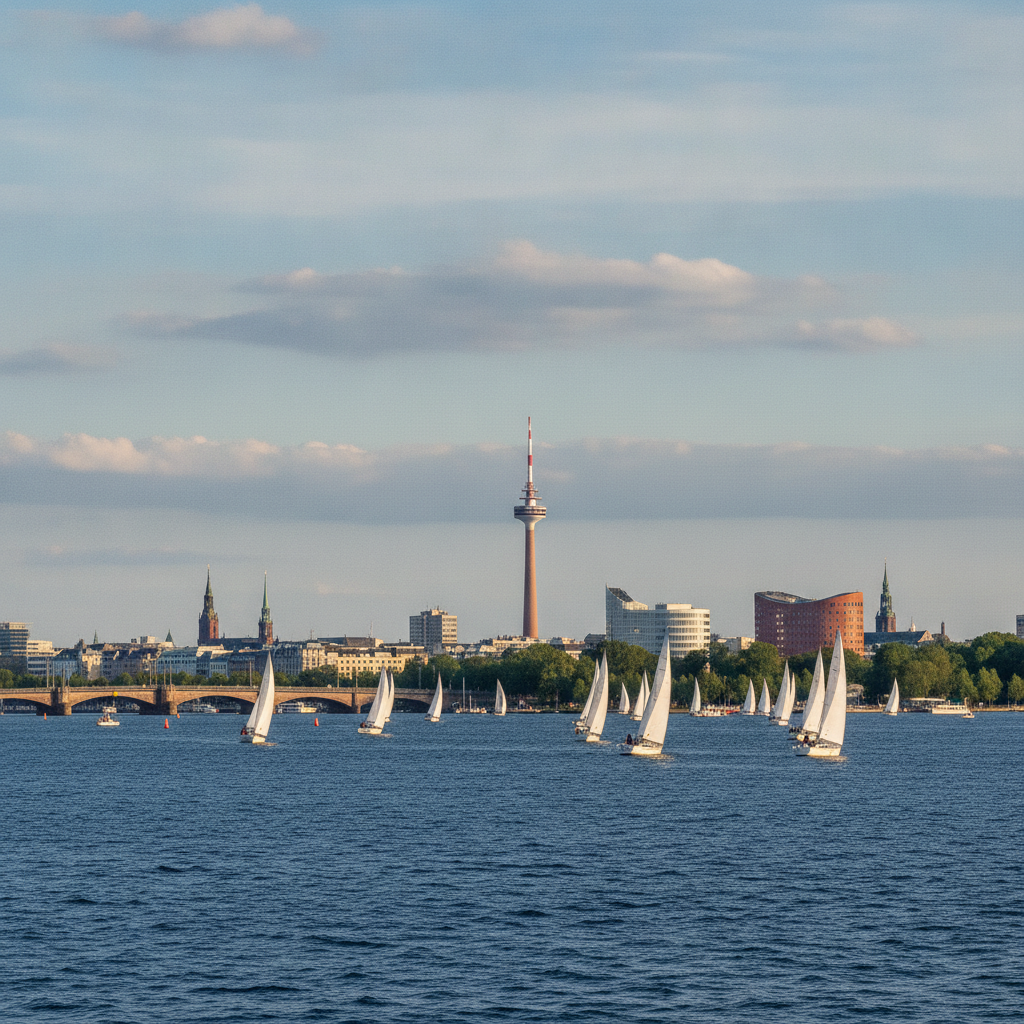
Alster Lakes (the Binnenalster (Inner Alster) and the Aussenalster (Outer Alster) — the 2 artificial lakes at the heart of Hamburg created by the damming of the Alster River in the 13th century, the Alster lakes the most defining natural feature of the Hamburg city centre): the Binnenalster (the Inner Alster — the smaller lake directly north of the Jungfernstieg promenade, the most central piece of water in Hamburg, the Alster Fountain in the centre the Hamburg municipal symbol, the lake surrounded by the luxury hotels — the Hotel Vier Jahreszeiten (Four Seasons) and the Fairmont Hotel Atlantic the 2 most historically prestigious Hamburg hotels both fronting the Binnenalster, the lake the primary starting point for the Hamburg Alster boat tour), the Alster boat tours (the ATG Alster-Touristik boat tours from the Jungfernstieg pier — the 50-minute Binnenalster and Alsterfleet canal tour at €18 adults the most complete water-level view of the Hamburg city centre and the historic Alsterfleet canals, the longer Aussenalster circuit at €18 showing the villa gardens of the Hamburg merchant families on the east and west Alster shores, the tours operating year-round with the heated cabin boats in winter), the Jungfernstieg (the Jungfernstieg promenade along the Binnenalster south shore — the most fashionable single shopping and promenade street in Hamburg, the Alsterhaus department store the most prestigious single retail establishment, the Alster Pavilion café the most atmospherically positioned terrace café in the Hamburg centre with the Alster lake view), the Hamburg Rathaus (the Hamburg Rathaus at Rathausmarkt — the 1897 neo-Renaissance town hall with the 112m tower, the most architecturally imposing city hall in Germany, the Rathausmarkt the most formally beautiful public square in Hamburg, the 647-room building the largest single civic building in Hamburg, the free 45-minute guided tour of the state rooms at €4 adults, Monday-Friday on the hour 10am-3pm) and the Mönckebergstrasse (the Mönckebergstrasse from the Hauptbahnhof to the Rathausmarkt — the primary retail pedestrian street of Hamburg the city's commercial spine, the Karstadt department store and the Galeria Kaufhof the main retail anchors, the Warburghaus and the Petrikirche the historical buildings amid the retail, the street the most commercially animated single stretch in Hamburg on weekday afternoons).
- 5
Hamburg Food and the Fish Market
Hamburg food culture (Hamburg the most gastronomically maritime of the German cities — the Fischmarkt the most famous Sunday market in Germany, the Portugiesenviertel the most internationally diverse dining district, and the Deichstrasse the most historical restaurant street): the Fischmarkt (the Hamburger Fischmarkt at Grosse Elbstrasse 9 in Altona — the Sunday morning fish market operational since 1703, the most historically continuous Sunday market in Germany, open Sundays from 5am (summer) or 7am (winter) to 9:30am, the market the most atmospherically intense market experience in Hamburg with the Marktschreier (market criers) the auctioneer-style fish sellers with the competing volume performances for the mackerel, the eel, and the mixed fish boxes, the market the most visited Sunday morning activity in Hamburg at 70,000 visitors per market day), the Hamburger Fischbrötchen (the fish bread roll — the most specifically Hamburg street food: the Bismarck herring in vinegar with the onion and the gherkin on the white roll the most traditional; the Matjes (raw salted herring) the most delicately flavoured; and the Brathering (fried marinated herring) the most pungently aromatic — all available at the Fischmarkt stalls and the harbour-front fish roll kiosks (Fischbrötchenbude) on the Fischmarkt promenade, the most recommended: the Brücke 10 at Kaijkai 10 the most consistently reviewed fish roll stand in Hamburg at €4-6 per roll), the Portugiesenviertel (the Portugiesenviertel (Portuguese Quarter) on the Ditmar-Koel-Strasse and the Grosse Freiheit — the most ethnically diverse restaurant district in Hamburg with the Portuguese restaurants, the Spanish tapas bars, and the Latin American casas, the Carinhoso restaurant at Ditmar-Koel-Strasse 14 the most long-established Portuguese restaurant in Hamburg), the Deichstrasse (the Deichstrasse — the only surviving row of the original Hamburg merchant houses of the 17th-18th century, the most historically complete single street in Hamburg after the Speicherstadt, the restaurant row in the restored warehouse ground floors facing the historic Nikolaifleet canal the most atmospheric Hamburg dining location, the best table position with the canal view from the Nikolaikeller restaurant terrace) and the Alsterhaus food hall (the Alsterhaus department store at Jungfernstieg 16 — the most prestigious food hall in Hamburg on the ground floor, the caviar and the smoked salmon the primary luxury food purchases, the Alsterhaus the Hamburg equivalent of the London Harrods food hall, the most architecturally grand retail food space in the city).
- 6
Hamburg Harbour Cruise and the Port of Hamburg
Hamburg Hafen (the Port of Hamburg — the largest port in Germany and the third-largest in Europe by container throughput at 9 million TEU per year, the most productive single port facility in northern Europe and the primary reason for Hamburg's historical wealth and contemporary economic significance): the Landungsbrücken (the Landungsbrücken (Landing Bridges) — the floating pontoon landing stage at the Hamburg waterfront, the most visited waterfront in Hamburg and the primary departure point for harbour tours, the Landungsbrücken pier building of 1909 the most classically harbour-front building in Hamburg with the copper dome towers and the clock, the floating pontoon rising and falling with the Elbe tides of 3.5m the most visually dramatic harbour tidal range in a German city), the harbour tour (the HADAG harbour tour from Landungsbrücken Pier 3 — the 75-minute round trip of the working port with the commentary in German and English, the most complete single harbour experience in Hamburg at €25 adults, the tour passing the Köhlbrandbrücke bridge, the Blohm + Voss dry dock where the largest ships in Europe are repaired, the Hamburg container terminals, and the historic sailing ships moored at the museum harbour), the Rickmer Rickmers (the Rickmer Rickmers — the 1896 iron-hull 3-mast steel barque moored at Landungsbrücken Pier 1 as a museum ship, the most atmospherically complete single 19th-century sailing vessel accessible at the Hamburg waterfront, CHF 6 adults, daily 10am-6pm, the most popular museum ship in Hamburg), the Elbe Tunnel (the St. Pauli Elbtunnel — the 1911 tunnel under the Elbe River connecting the St. Pauli waterfront to the Steinwerder shipyard island, the round cast-iron tunnel sections the most remarkable engineering survival of the Wilhelmine era in Hamburg, the elevators from the surface to the tunnel level the original 1911 hydraulic lifts now electric, free pedestrian and cyclist access the most unusual free urban transport experience in Hamburg, open 24 hours) and the Övelgönne Museum Harbour (the Museumshafen Övelgönne at the Övelgönne promenade 2km west of the Landungsbrücken — the voluntary-operated collection of historic Elbe working ships: the steam icebreaker Stettin of 1933, the motor tanker Bleichen of 1952, and the 19th-century wooden Elbe lighters, the most complete collection of historic working harbour vessels accessible in Hamburg, free viewing from the quay, the ships open on summer weekends 10am-5pm at no charge, the most peaceful and least visited significant harbour heritage site in the city centre area).
Walk this route with audio
Stories play automatically as you reach each stop — no tapping needed.
More in hamburg
Hamburg — Kunsthalle, Parks, Elbchaussee, Beatles & St. Nikolai
Hamburg — Hanse Heritage, Wilhelmsburg, Literary Culture, North Sea & the Practical Guide
Hamburg — Rathaus, Gängeviertel, Cycling, Neighbourhoods, Food & the Events Calendar
Hamburg — Schanzenviertel, Lübeck, Working Port, Events & the Historic Altstadt