Ha Long Bay, Ninh Binh & the Natural Wonders Near Hanoi
The dramatic limestone karst landscapes of northern Vietnam — Ha Long Bay (UNESCO World Heritage, one of the New Seven Wonders of Nature) and Ninh Binh (the 'Ha Long Bay on land', UNESCO World Heritage as part of the Trang An Landscape Complex) — are the essential natural excursions from Hanoi and among the most spectacular natural landscapes in Asia.
1. Ha Long Bay — The Bay of the Descending Dragon
- 1
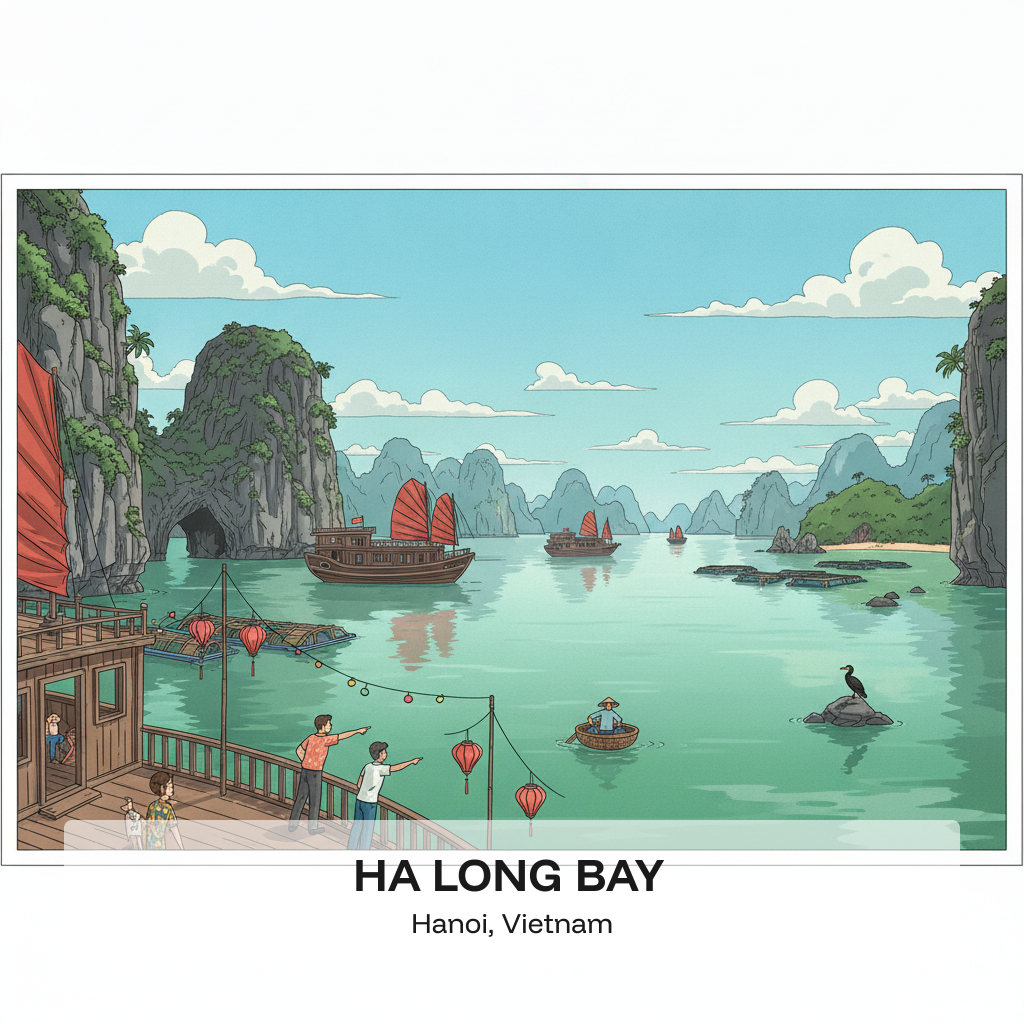
Ha Long Bay — The Bay of the Descending Dragon
Ha Long Bay (Vịnh Hạ Long — 'Bay of the Descending Dragon' — the bay in the Gulf of Tonkin (Vịnh Bắc Bộ) in Quang Ninh Province, 165 km east of Hanoi, accessible in 3.5-4 hours by road — UNESCO World Heritage Site (1994, 2000) and one of the New Seven Wonders of Nature (2011)): the bay (covering approximately 1,553 km² of water and containing approximately 1,969 named islands and islets — the majority uninhabited limestone karst formations rising directly from the sea surface) is the defining natural landscape of Vietnam and one of the most recognizable anywhere in the world; the geology (the limestone karst formations of Ha Long Bay were created over approximately 500 million years (the limestone deposited during the Carboniferous and Permian periods, 350-240 million years ago), subsequently submerged approximately 10,000 years ago when sea levels rose at the end of the last ice age, leaving the limestone peaks (which had been shaped by millions of years of surface erosion into the tower karst (kết tháp đá vôi) form) as islands above the sea surface); the most significant features include: Sung Sot Cave (Hang Sửng Sốt — 'Surprise Cave', the largest cave in Ha Long Bay, with chambers up to 30 metres high and 10,000 m² in area), Ti Top Island (Đảo Ti Tốp — named after Soviet cosmonaut German Titov who visited with Ho Chi Minh in 1962, with a beach and a hilltop viewpoint), and Luon Cave (Hang Luồn — the semi-submerged tunnel cave navigated by kayak through the water-level opening).
- 2
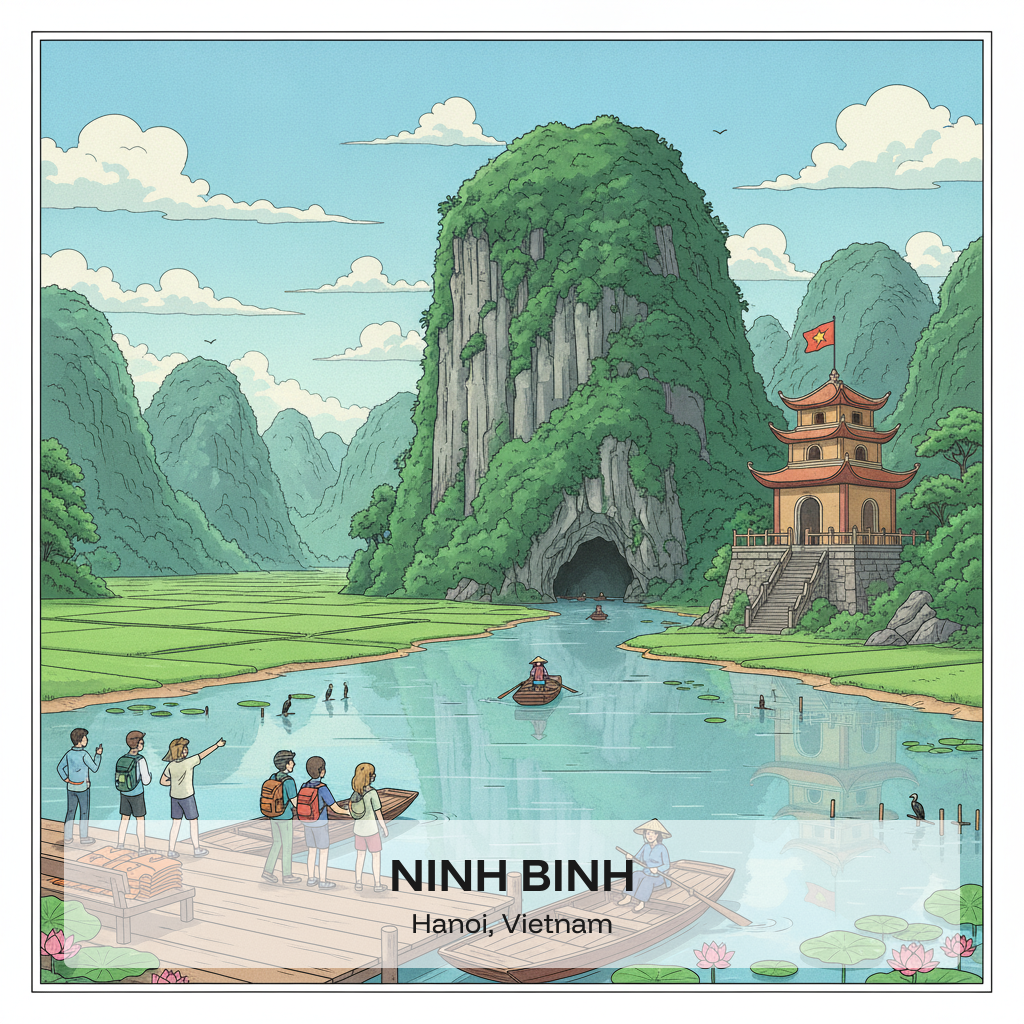
Ninh Binh — Ha Long Bay on Land
Ninh Binh Province (Tỉnh Ninh Bình — the province 90 km south of Hanoi, accessible in 2 hours by road or in 2.5 hours by train — the province containing the most spectacular limestone karst landscape in the northern Vietnamese interior, sometimes called 'Ha Long Bay on land' (Hạ Long trên cạn)): the Trang An Landscape Complex (Quần thể danh thắng Tràng An — the UNESCO World Heritage Site (2014, the first UNESCO site in Vietnam to be recognised for both natural and cultural values) covering approximately 6,000 hectares of limestone karst peaks, rivers, wetlands, and rice paddies): the two main sub-destinations within Ninh Binh are: Tam Coc (Tam Cốc — 'Three Grottos', the most visited site in the province, where wooden flat-bottomed boats (thuyền gỗ) rowed by the feet (the local female boat operators row with their feet rather than their hands, a technique unique to Ninh Binh, allowing them to keep their hands free for rowing past low-ceilinged cave sections) carry visitors through three river caves (the Hang Ca, Hang Hai, and Hang Ba grottos on the Ngo Dong River (Sông Ngô Đồng))) and Trang An (the more extensive boat tour network in the UNESCO core zone, covering 48 km of river routes through the karst landscape, accessible only by non-motorized wooden boats rowed by the guide, with 31 caves and grottoes navigated on the full circuit); Bich Dong Pagoda (Chùa Bích Động — the 18th-century pagoda built into a limestone cave on the cliff face above the Ngo Dong River) is the most dramatic religious site in the province.
- 3
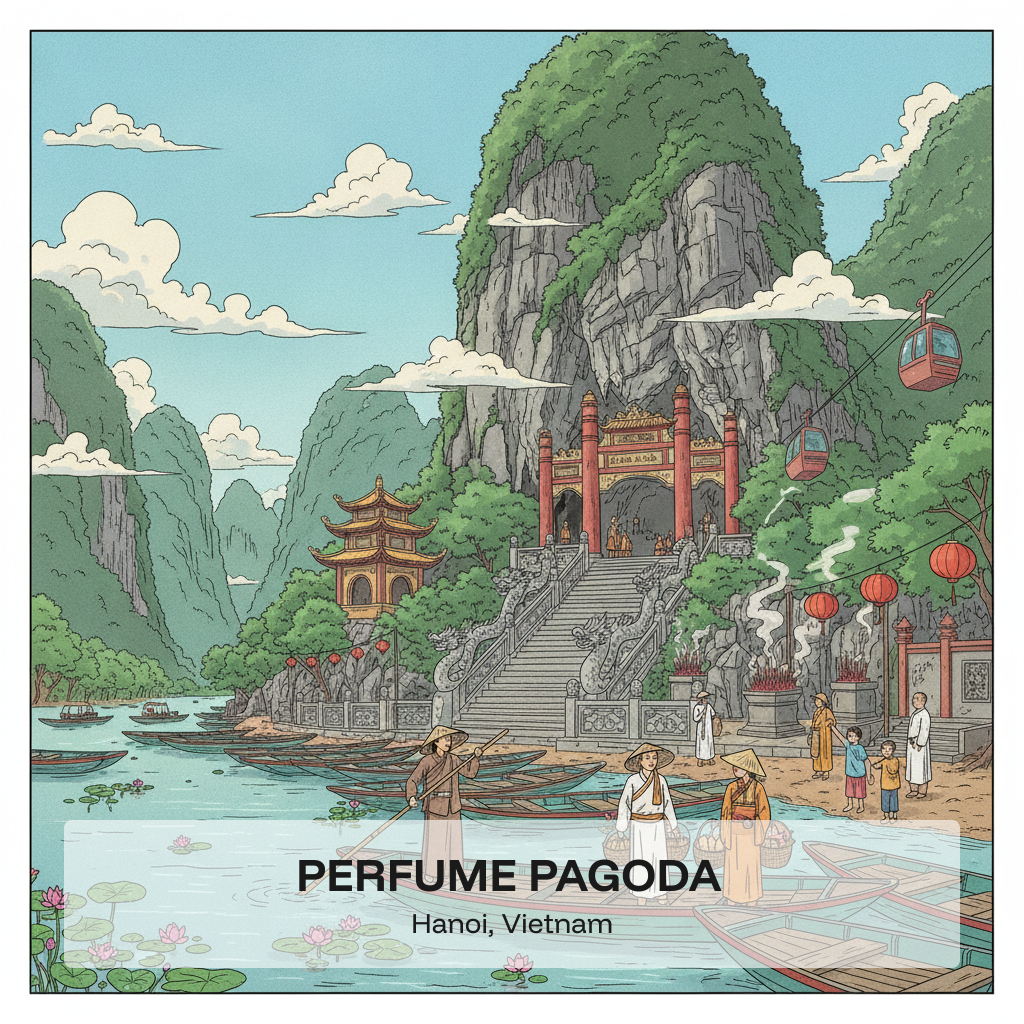
Perfume Pagoda — The Sacred Mountain of Northern Vietnam
Perfume Pagoda (Chùa Hương — Huong Tich Cave Pagoda, in the Huong Son (Fragrant Mountain) complex in the My Duc district of Hanoi, 60 km southwest of the city centre, accessible by boat and on foot or cable car — the most important Buddhist pilgrimage site in northern Vietnam): the Perfume Pagoda complex (the approximately 70 pagodas, temples, and shrines (the majority carved into the limestone cliff faces and cave systems of the Huong Son mountains) spread over approximately 8 km of mountain landscape, accessible from the approach town of Ben Duc by flat-bottomed rowing boat along the Yen River (Sông Yến) through the flooded karst valley (the approach to the pagoda, the 4 km boat journey through the flat valley with the limestone peaks rising on both sides and the water hyacinth covering the surface of the river, is one of the most atmospheric approaches to any pilgrimage site in Asia)) is most famously visited during the Perfume Pagoda Festival (Hội Chùa Hương — the annual festival held from the 6th day of the first lunar month through the end of the third lunar month (approximately January-April), during which hundreds of thousands of Vietnamese Buddhist pilgrims make the journey to the pagoda — the largest Buddhist pilgrimage festival in Vietnam); the Huong Tich Cave (Động Hương Tích — 'Cave of the Fragrant Traces', the main cave sanctuary of the complex, reached by 120 stone steps cut into the cliff face, its entrance carved with the inscription 'Southern Heaven's First Grotto' (Nam Thiên Đệ Nhất Động) by Lord Trinh Samp in 1770) is the innermost sanctuary.
- 4
Hanoi Food Trail — Phở, Bún Chả & Bánh Cuốn
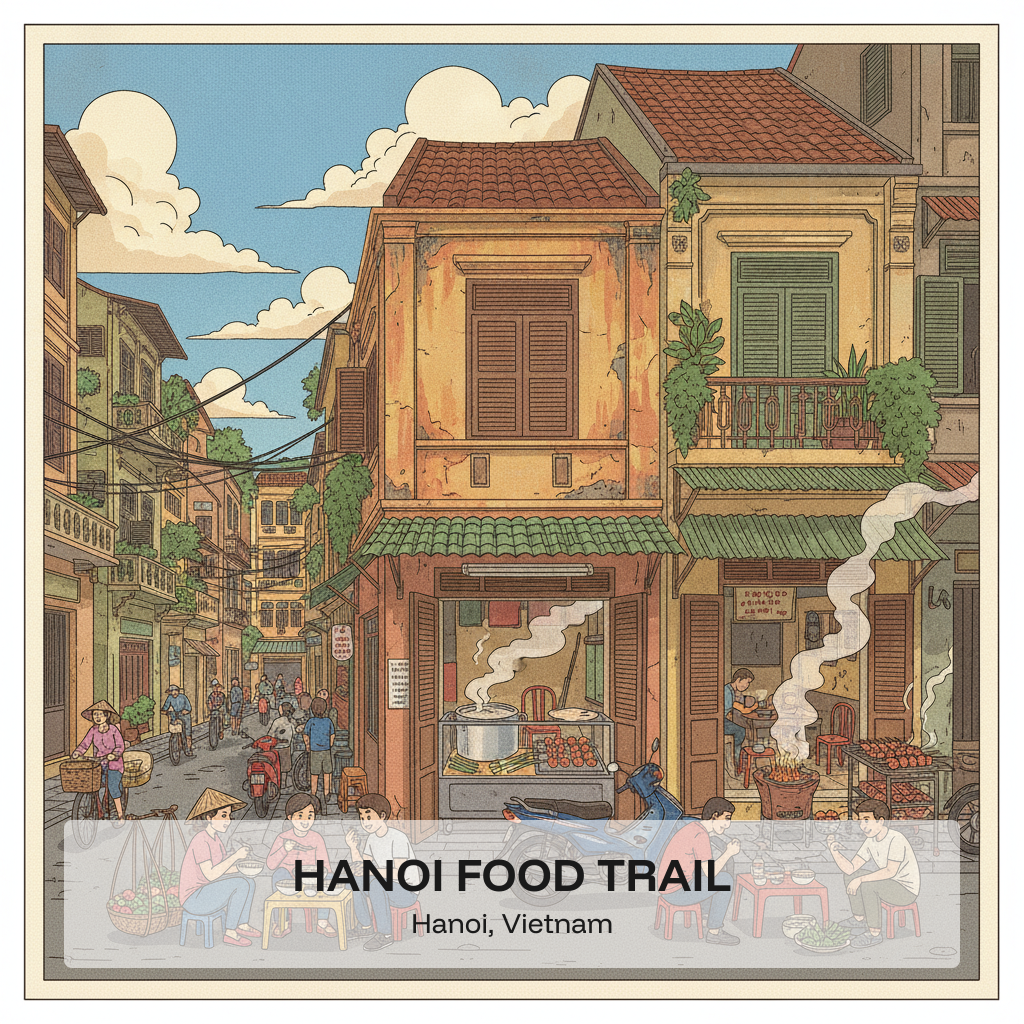
Hanoi cuisine (the cuisine of northern Vietnam, characterized by its relative simplicity, subtlety, and emphasis on fresh herbs (rau thơm), the use of fermented shrimp paste (mắm tôm) in certain dishes, and the northern Vietnamese phở tradition (different from the southern Saigon phở in being clearer, less sweet, and using fewer garnishes)): the essential Hanoi food experiences include: phở Hà Nội (the northern Vietnamese beef noodle soup — lighter and more concentrated than the Saigon version, typically served with only green onion (hành lá) and ginger, without the Saigon-style bean sprouts and hoisin sauce accompaniments — best at the historic phở restaurants of the Old Quarter (Phở Thìn (Phở Thìn — the Old Quarter phở institution at 49 Dinh Tien Hoang Street, famous for its beef stir-fried in garlic oil before being placed in the broth, a distinctly northern Vietnamese technique))), bún chả (grilled pork (thịt nướng) and pork meatballs (chả viên) served in a dipping broth (nước chấm) with rice vermicelli (bún) and fresh herbs (rau sống) — the quintessential Hanoi dish, made internationally famous when US President Barack Obama ate at Bún chả Hương Liên (48 Bát Đàn Street) with the food writer Anthony Bourdain in May 2016 (the table and the menu from that meal are now preserved under a glass case and listed as a tourist attraction)), and bánh cuốn (steamed rice rolls (the thin rice noodle sheets steamed and filled with a mixture of wood ear mushrooms and minced pork, served with Vietnamese ham (chả lụa) and dipping sauce) — the traditional Old Quarter breakfast dish.
- 5
Hanoi Opera House & the French Quarter
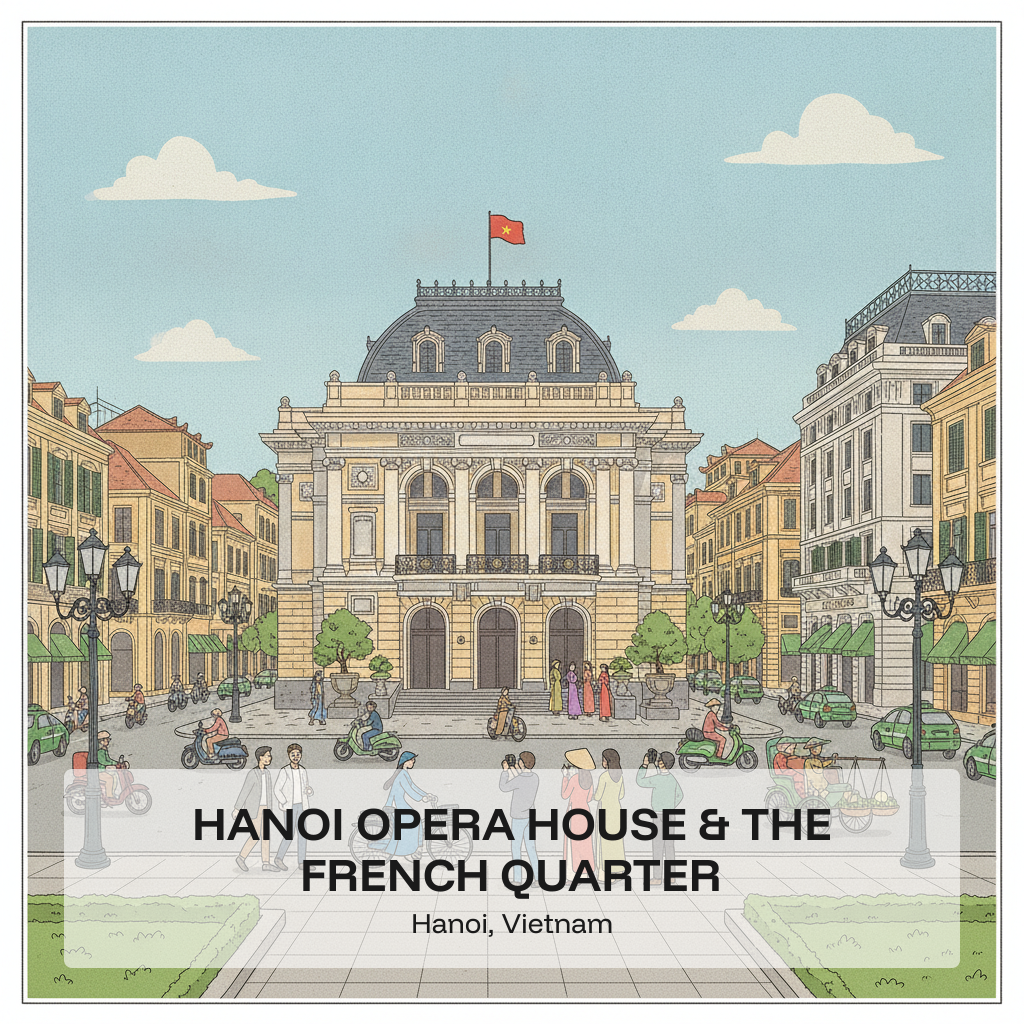
Hanoi Opera House (Nhà hát Lớn Hà Nội — 'Large Theatre of Hanoi', on August Revolution Square (Quảng trường Cách mạng Tháng Tám) at the intersection of Trang Tien Street and Le Thanh Tong Street in the Hoan Kiem district — the most beautiful colonial building in Hanoi and the finest example of French colonial architecture in Vietnam): the opera house (built 1901-1911 by the French colonial administration, modelled on the Paris Opera (Palais Garnier) and specifically on the Opéra-Comique (the smaller Paris opera venue, rather than the larger Palais Garnier)), with the characteristic pale yellow stucco facade (the reinforced concrete structure clad in yellow-grey stone and stucco, with the elaborate classical French mouldings, balconies, and the characteristic mansard roof (the steeply pitched French roof form)) is surrounded by the principal buildings of French colonial Hanoi: the Sofitel Metropole Hanoi (the Metropole Hotel — the white-painted 1901 colonial hotel on Ngo Quyen Street, the oldest and most famous hotel in Hanoi and the finest colonial-era hotel in Vietnam, famous for sheltering Graham Greene (who wrote part of 'The Quiet American' here), Somerset Maugham, Charlie Chaplin, and Angelina Jolie and Brad Pitt (who adopted their first child in Vietnam while staying here)), the Hoan Kiem district post office and the Vietnam National Museum of History (Bảo tàng Lịch sử Quốc gia — the national history museum in the 1932 building designed by Ernest Hébrard in the 'Indochinese style' (the French colonial architectural style incorporating Vietnamese and Chinese decorative elements into a French colonial building type)).
- 6
Hoa Lu — The Ancient Capital & Trang An
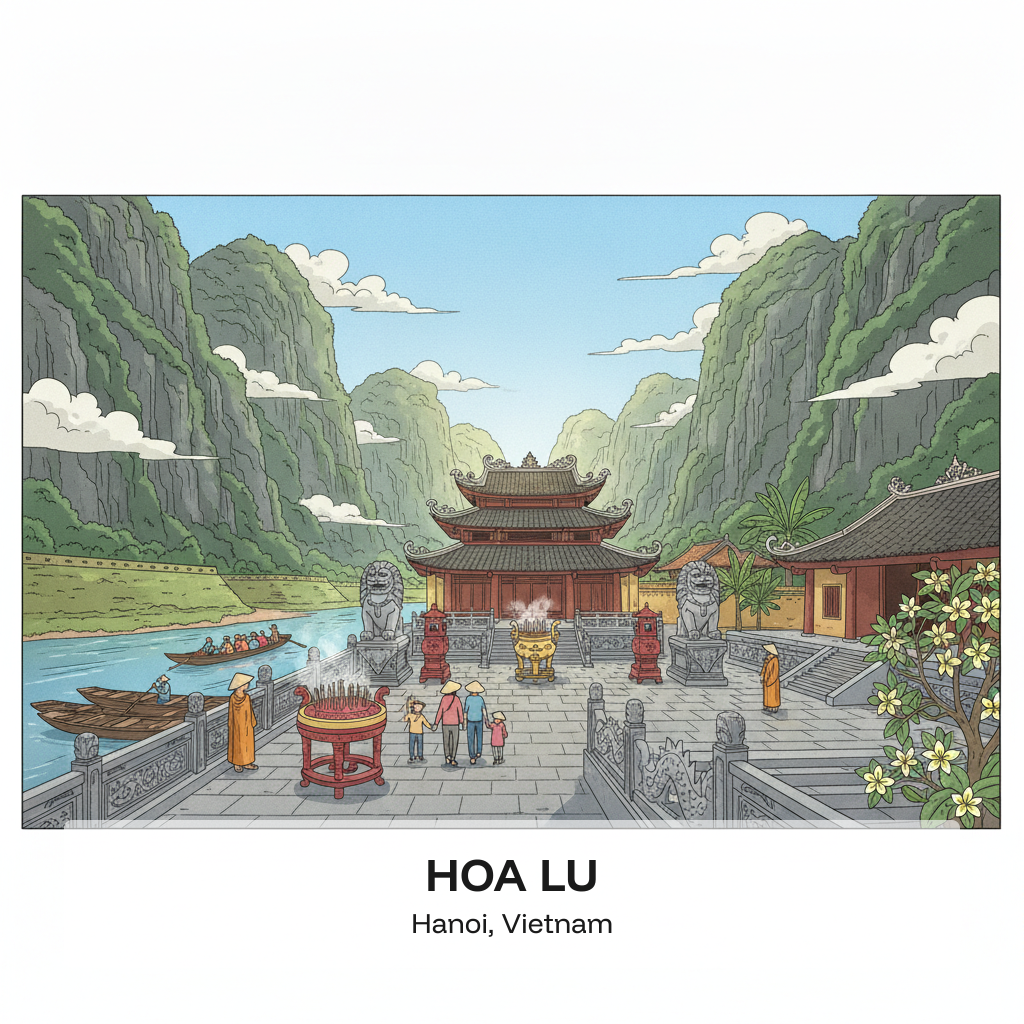
Hoa Lu (Hoa Lư — the ancient imperial capital of Vietnam from 968 to 1010 CE, in Ninh Binh Province approximately 90 km south of Hanoi — the capital of the Dinh dynasty (968-980) and Early Le dynasty (980-1009) and the first capital of a unified and independent Vietnam after the expulsion of Chinese rule): the Hoa Lu Ancient Capital area (the former walled citadel of the Dinh and Le dynasties, now visible mainly as earthworks and temple foundations in the flat valley surrounded by the limestone karst peaks of the Trang An Landscape Complex) is the spiritual and historical cradle of Vietnamese statehood; the surviving structures at Hoa Lu are the Dinh Tien Hoang Temple (Đền Đinh Tiên Hoàng — dedicated to King Dinh Bo Linh (Đinh Bộ Lĩnh, 924-979 CE — the warlord who unified the Vietnamese principalities and became the first Emperor of a united Vietnam, taking the title 'Dinh Tien Hoang De' (Great Victorious Emperor Dinh)) and the Le Hoan Temple (Đền Vua Lê — dedicated to King Le Hoan (Lê Hoàn, 941-1005 CE — the general who usurped the throne and successfully expelled a Tang dynasty Chinese invasion in 981 CE)); the boat tour from Hoa Lu through the Trang An gorges (the 2.5-3 hour UNESCO World Heritage boat tour through the flooded limestone gorges of the Trang An complex, past the Trinh Temple (Phủ Khổng) and through 9 cave passages) is the essential cultural and natural experience in Ninh Binh.
Walk this route with audio
Stories play automatically as you reach each stop — no tapping needed.
More in hanoi
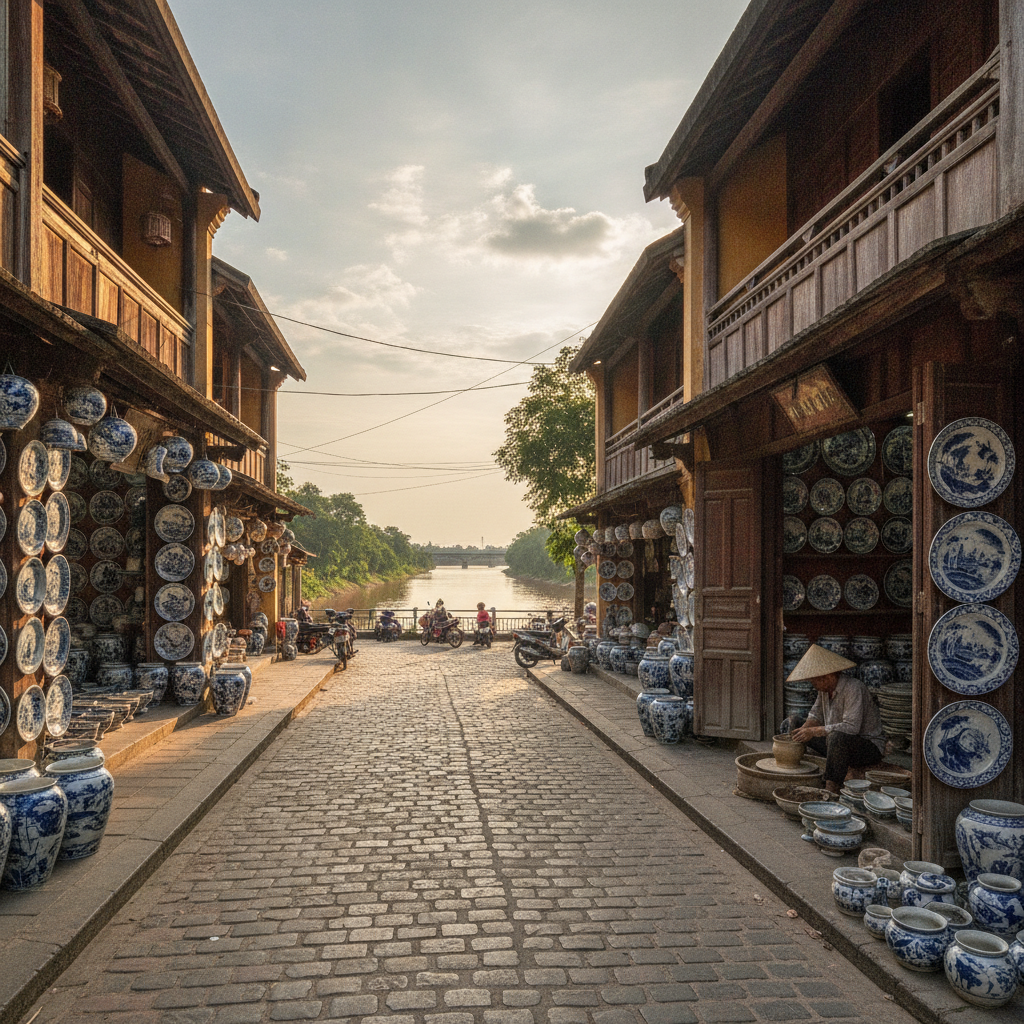
Van Phuc Silk, Bat Trang Ceramics & Hanoi's Ancient Craft Villages
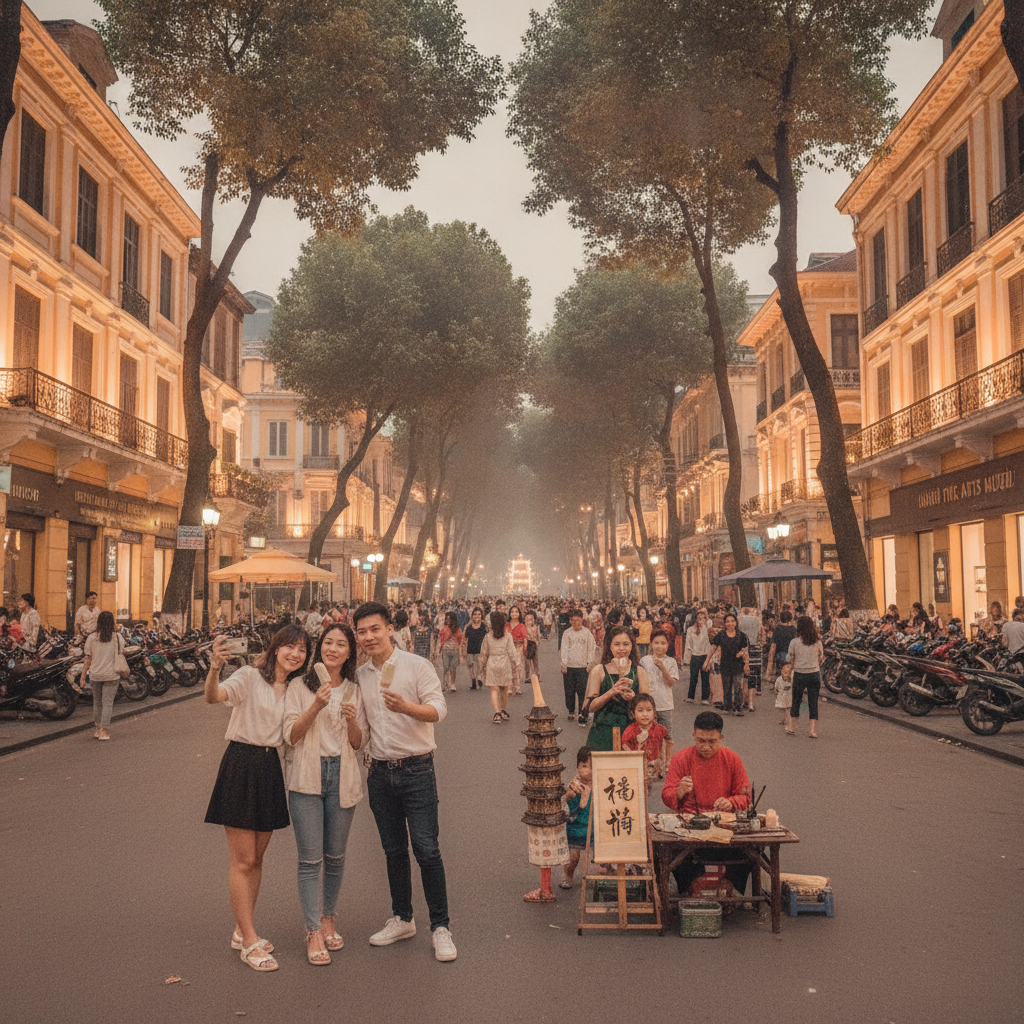
Contemporary Hanoi — Art Galleries, Street Art & the New Vietnamese Capital
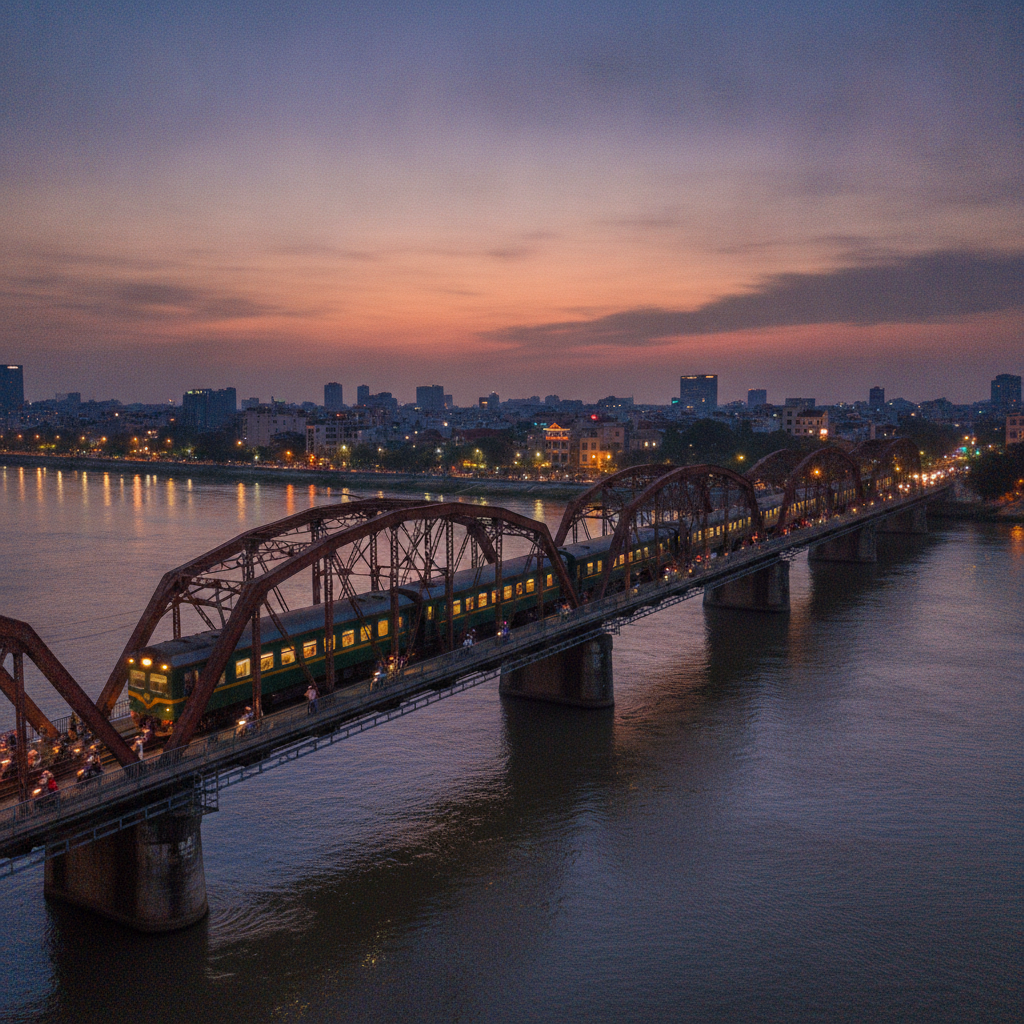
Long Bien Bridge, Red River & the Layers of Hanoi's History
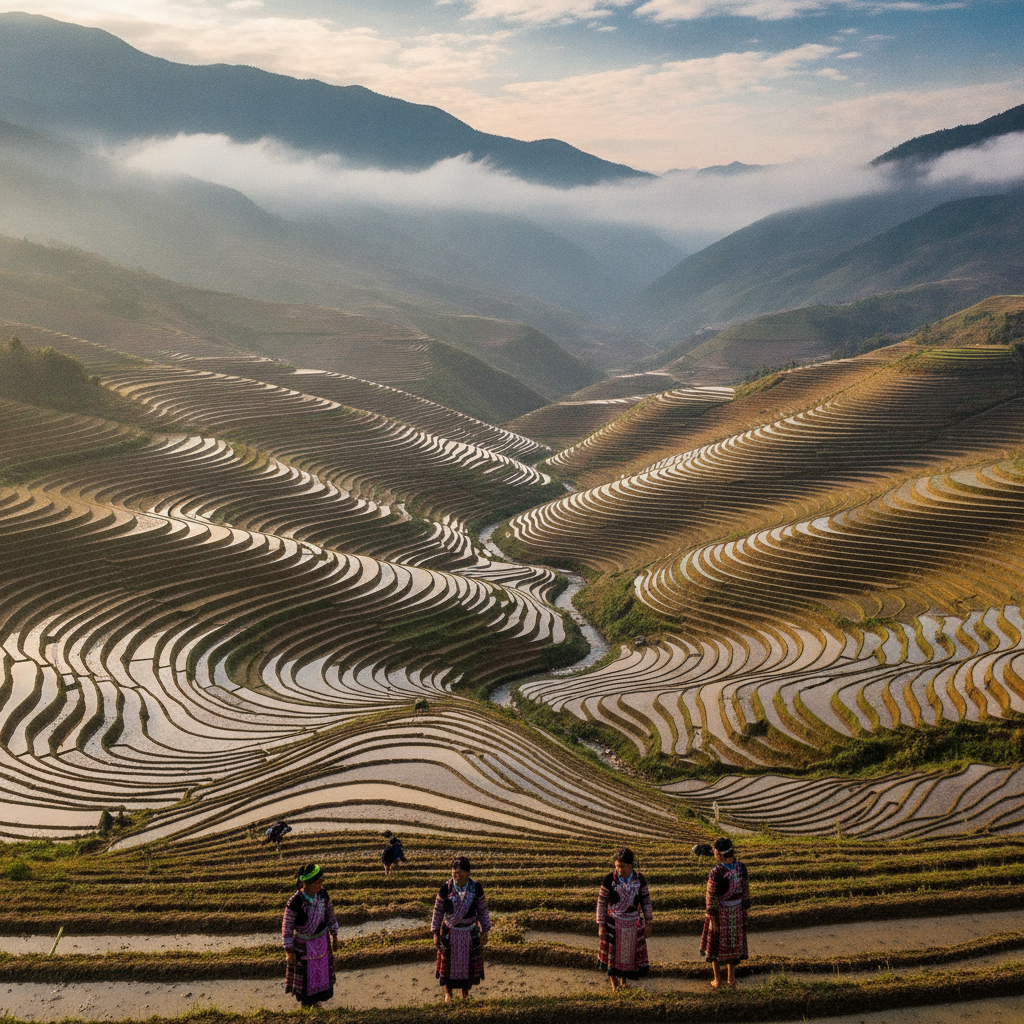
Sapa, Fansipan & the Northern Highlands — Vietnam's Roof of the World
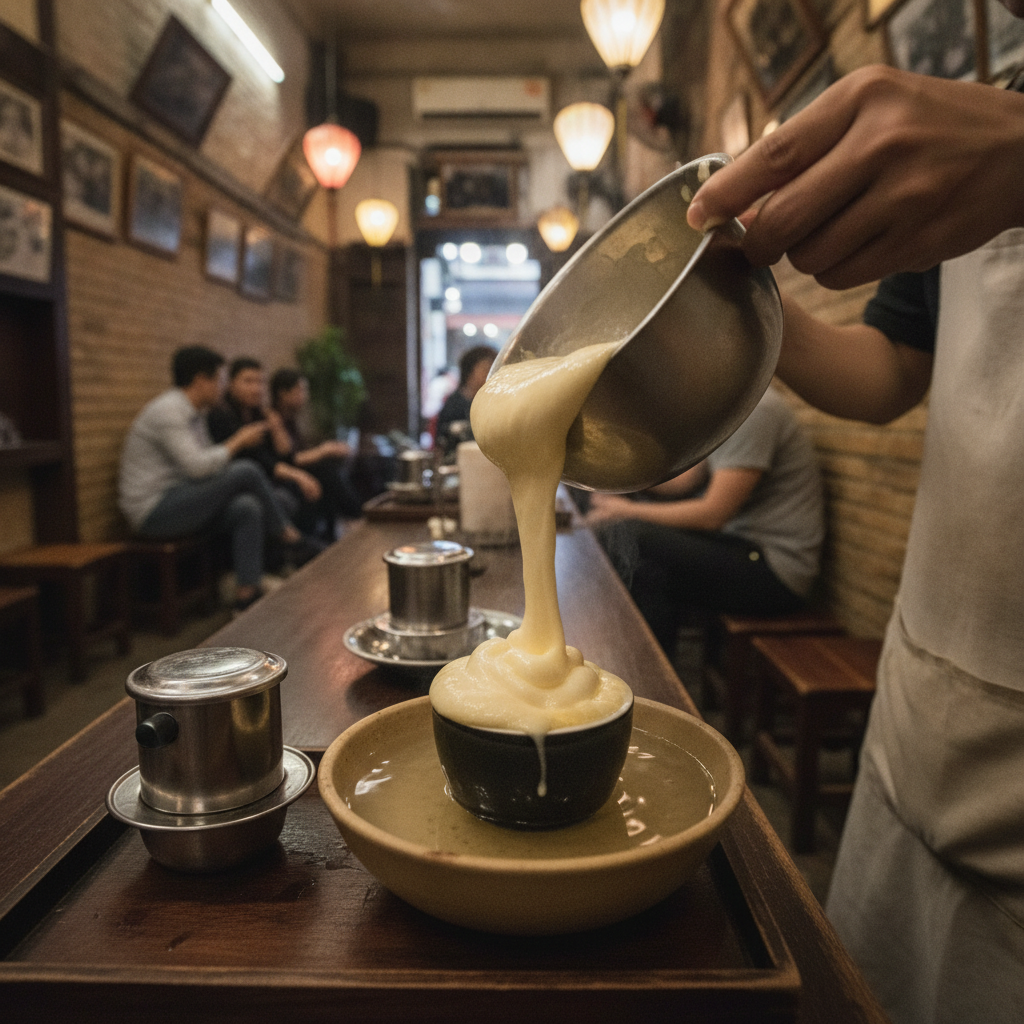
Hanoi Street Food — Phở, Bún Chả, Bánh Mì & Egg Coffee