Hoan Kiem Lake, Old Quarter & the Heart of Ancient Hanoi
Hanoi (Hà Nội — 'City Within the River's Bend', the capital of the Socialist Republic of Vietnam, population approximately 8 million in the city proper and 10 million in the metropolitan area — the political, cultural, and educational capital of Vietnam, founded in 1010 CE by Emperor Ly Thai To as Thang Long (昇龍 — 'Ascending Dragon') and capital of Vietnam for most of the millennium since): Hoan Kiem Lake and the Old Quarter together form the historic and emotional heart of Hanoi, one of the most atmospheric historic city centres in Southeast Asia.
- 1
Hoan Kiem Lake — The Sword Lake of Legend
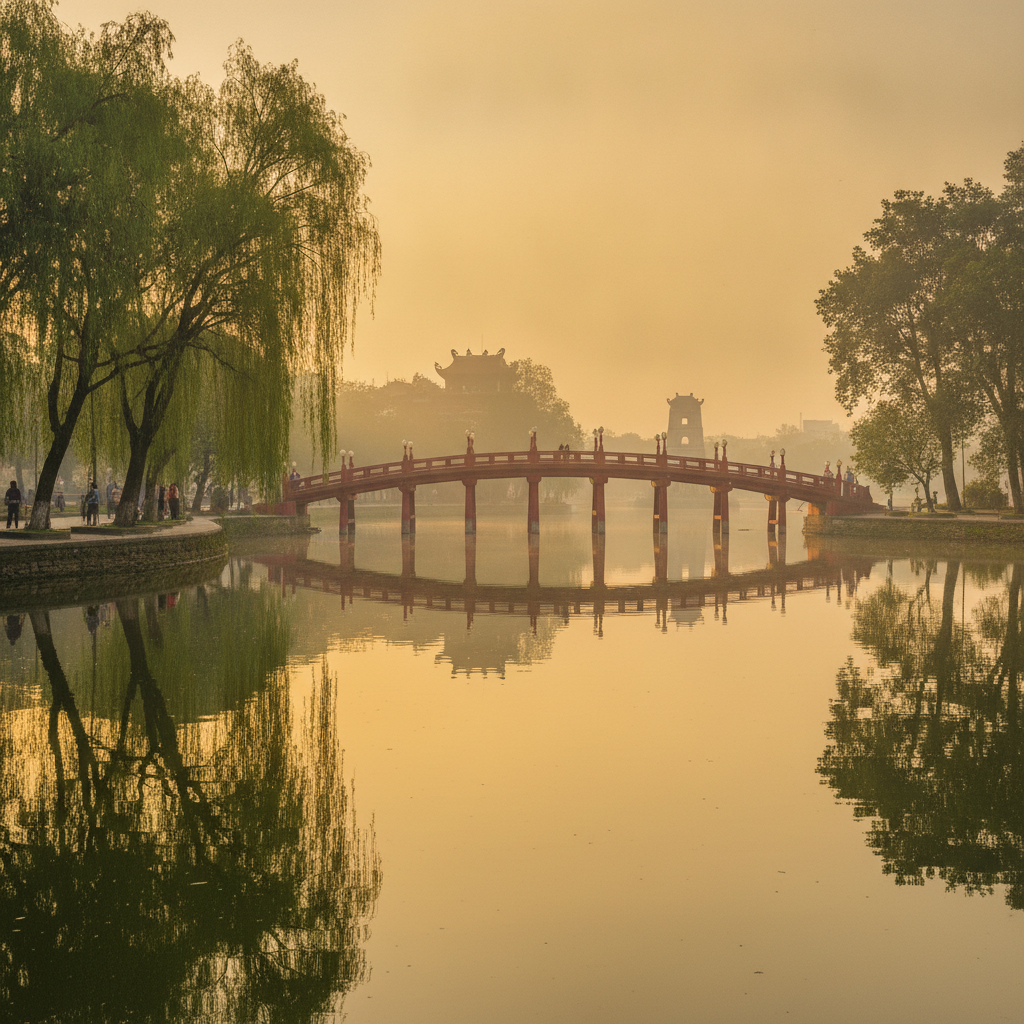
Hoan Kiem Lake (Hồ Hoàn Kiếm — 'Lake of the Restored Sword', also known as 'Sword Lake' (Hồ Gươm) — the small lake (approximately 1.8 hectares, 600 metres long × 200 metres wide) in the heart of Hanoi's historic centre, the most beloved public space in Vietnam): the lake takes its name from the legend of King Le Loi (Lê Lợi — the Vietnamese resistance leader who expelled the Ming Chinese occupation of Vietnam in 1428 and founded the Le dynasty (Nhà Lê)): according to the legend, Le Loi received a magical sword from the Golden Turtle God (Kim Quy) while fishing on the lake, used it to expel the Ming invaders, and returned it to the turtle after victory when a giant golden turtle (Rùa Vàng) rose from the waters to reclaim the sword; the lake (encircled by the lakeside promenade (Đường quanh hồ), the most pleasant pedestrian path in Hanoi, lined with ancient willow trees and dotted with benches from which residents watch the lake) is permanently occupied by a population of giant softshell turtles (Rafetus swinhoei — the Yangtze giant softshell turtle, one of the most critically endangered turtle species in the world, the population of the lake reduced to a single individual (who died in January 2016) after centuries of human presence; a new turtle was discovered in the lake in 2020) — the turtles being the living embodiment of the lake's legendary connection to the divine; the Turtle Tower (Tháp Rùa — the small square Neo-Gothic tower on a rocky islet in the southern section of the lake, built in 1886 on the site of the former Dinh Huong (Incense Burner Pavilion)) is the most photographed element of the lake.
- 2
Ngoc Son Temple — The Jade Mountain Temple on the Lake
Ngoc Son Temple (Đền Ngọc Sơn — 'Temple of the Jade Mountain', on Jade Island (Đảo Ngọc) in the northern part of Hoan Kiem Lake, connected to the lakeside by the red Huc Bridge (Cầu Thê Húc — 'Bridge Where Morning Sunlight Rests')): the temple (built in the early 19th century on the site of an earlier temple dedicated to the hero Tran Hung Dao (the 13th-century Vietnamese general who defeated the Mongol invasions of Vietnam in 1258, 1285, and 1287 — one of the three greatest military victories in Vietnamese history) and to Confucius, rebuilt in its current form in 1865) is dedicated to three deities: the Scholar God Van Xuong (Văn Xương — the deity of literature and examinations, the most important patron deity for Vietnamese students), the god of martial arts Quan Vu (Quan Vũ — the deified Chinese general Guan Yu (關羽), the most widely worshipped deity in the Vietnamese Chinese community), and the National Hero Tran Hung Dao; the temple's most unusual exhibit is the preserved specimen of a giant softshell turtle (Rafetus swinhoei) weighing approximately 250 kg, displayed in a glass case in the back hall — believed to be one of the sacred turtles of the lake, found dead in 1968 and preserved as a religious relic.
- 3
Hanoi Old Quarter — The 36 Streets
Hanoi Old Quarter (Phố cổ Hà Nội — 'Ancient Streets of Hanoi', the dense historic commercial district north of Hoan Kiem Lake — the oldest surviving urban fabric in Vietnam, dating from the 13th-15th century Ly and Tran dynasty period when the district was organized as a series of guild streets, each street specializing in the production and sale of a specific product): the 36 Streets (36 Phố Phường — the 36 guild streets of the Old Quarter, each originally named after the commodity sold there: Hang Bac (Silver Street), Hang Gai (Silk Street), Hang Ma (Paper Votive Offerings Street), Hang Bo (Bamboo Baskets Street), Hang Dao (Dyed Silk Street), etc., the street names still reflecting the original guild organization despite the commodities sold having changed substantially over the centuries) form a dense labyrinth of narrow streets (typically 3-5 metres wide) lined with the characteristic 'tube houses' (nhà ống — the narrow shopfront house (typically 3-5 metres wide but 15-50 metres deep, the extreme narrowness resulting from the width-based property tax imposed by the feudal administration — the narrower the street frontage, the less tax owed) that is the defining building type of Vietnamese historic urban centres); the tube house architecture (the 2-3 storey shophouses with the shop on the ground floor, the living quarters above, and often a small internal courtyard (giếng trời — 'sky well', the light well between the front and rear sections of the house) providing light and ventilation in the middle of the deep narrow building) is the most distinctive traditional urban architecture in Vietnam.
- 4
St. Joseph's Cathedral & French Colonial Hanoi
St. Joseph's Cathedral (Nhà thờ lớn Hà Nội — 'Large Church of Hanoi', the Catholic cathedral on Nha Tho Street (Phố Nhà Thờ) in the Hoan Kiem district, the first major colonial building erected in Hanoi after the French occupation (built 1886, constructed from materials salvaged from the demolished Bao Thien Pagoda (Tháp Bảo Thiên — the most important Buddhist tower of imperial Hanoi, destroyed to build the cathedral) — the most historically contentious building in Hanoi): the cathedral (built in the Neo-Gothic style modelled on Notre-Dame de Paris, with the twin bell towers (37 metres), the rose window, and the dark brick exterior — the first major Gothic revival building in Southeast Asia) is the focal point of the Nha Tho Street café district (the most fashionable café street in the Old Quarter, lined with independent coffee shops, boutiques, and restaurants in renovated French colonial shophouses); French colonial Hanoi (the administrative capital of French Indochina (1887-1954), planned by the French colonial authorities from the 1880s as a grid of broad European-style boulevards south of the Old Quarter — the Presidential Palace, the Opera House, the French Quarter residential villas, and the broad tree-lined avenues of Ba Dinh and Hoan Kiem districts) is the finest surviving example of French colonial urban planning in Asia.
- 5
Hoan Kiem Walking Street — Friday Night Hanoi
Hoan Kiem Lake Walking Street (Phố đi bộ hồ Hoàn Kiếm — the pedestrianized zone around Hoan Kiem Lake and the southern streets of the Old Quarter (Dinh Tien Hoang Street, Hang Khay Street, and the surrounding blocks), closed to vehicles Friday evening through Sunday evening (approximately 7 PM Friday to midnight Sunday) and transformed into a vast public gathering space): the Walking Street (implemented from 2016, the largest regular pedestrianization event in Vietnam — estimated 100,000-200,000 people use the walking street on a typical Friday or Saturday evening) transforms the lake perimeter and the adjacent Old Quarter streets into an outdoor festival every weekend, with street performers (the 'hatched' (hát chèo) and 'reformed' (hát cải lương) traditional Vietnamese music performances, calligraphy artists (thư pháp — the Vietnamese New Year tradition of public calligraphers writing auspicious characters on red paper for visitors, adapted into a year-round performance), Hanoi residents doing tai chi and aerobics on the lakeside promenade, and street food vendors; the gathering of thousands of Hanoians and visitors around the lake on weekend evenings is the most genuine expression of Hanoi public life and the essential social experience of the city.
- 6
Hoa Lo Prison Museum — The 'Hanoi Hilton'
Hoa Lo Prison Museum (Nhà tù Hỏa Lò — 'Hell's Hole Prison', the French colonial prison on Hoa Lo Street in the Hoan Kiem district — built by the French colonial administration in 1896 as the main prison for Vietnamese political prisoners (the Maison Centrale — the Central House, capable of holding 600 prisoners though regularly containing 2,000-3,000), used through the French Indochina War (1946-1954) and then as a North Vietnamese prison for American prisoners of war during the Vietnam War (1964-1973), sardonically nicknamed the 'Hanoi Hilton' by American POWs): the prison (most of the original structure was demolished in the 1990s to make way for the Hanoi Towers commercial development — the remaining section, approximately 1/3 of the original complex, is preserved as a museum) presents its history in two distinct parts: the French colonial section (the documentation of the imprisonment of Vietnamese revolutionary figures under the French, including the guillotine (the French colonial authorities' execution method), the cells, and the stories of famous Vietnamese revolutionary prisoners including former General Secretary Nguyen Van Cu) and the American POW section (the displays of American pilots' flight suits, personal effects, and photographs, presented from the North Vietnamese perspective — the American POW experience at Hoa Lo (which included Senator John McCain, imprisoned here 1967-1973 after his A-4 Skyhawk was shot down over Truc Bach Lake in Hanoi) is presented as relatively comfortable, in contrast to American prisoners' accounts of torture and mistreatment).
Walk this route with audio
Stories play automatically as you reach each stop — no tapping needed.
More in hanoi
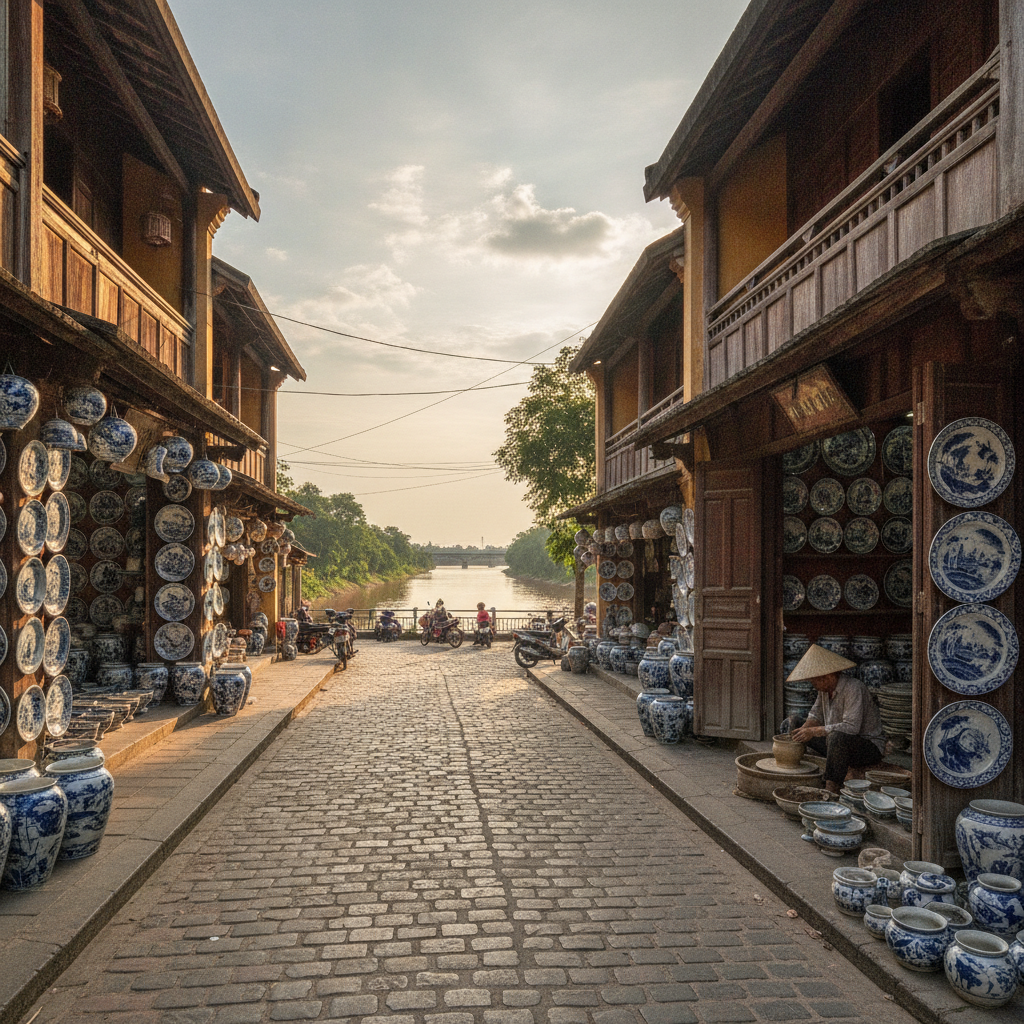
Van Phuc Silk, Bat Trang Ceramics & Hanoi's Ancient Craft Villages
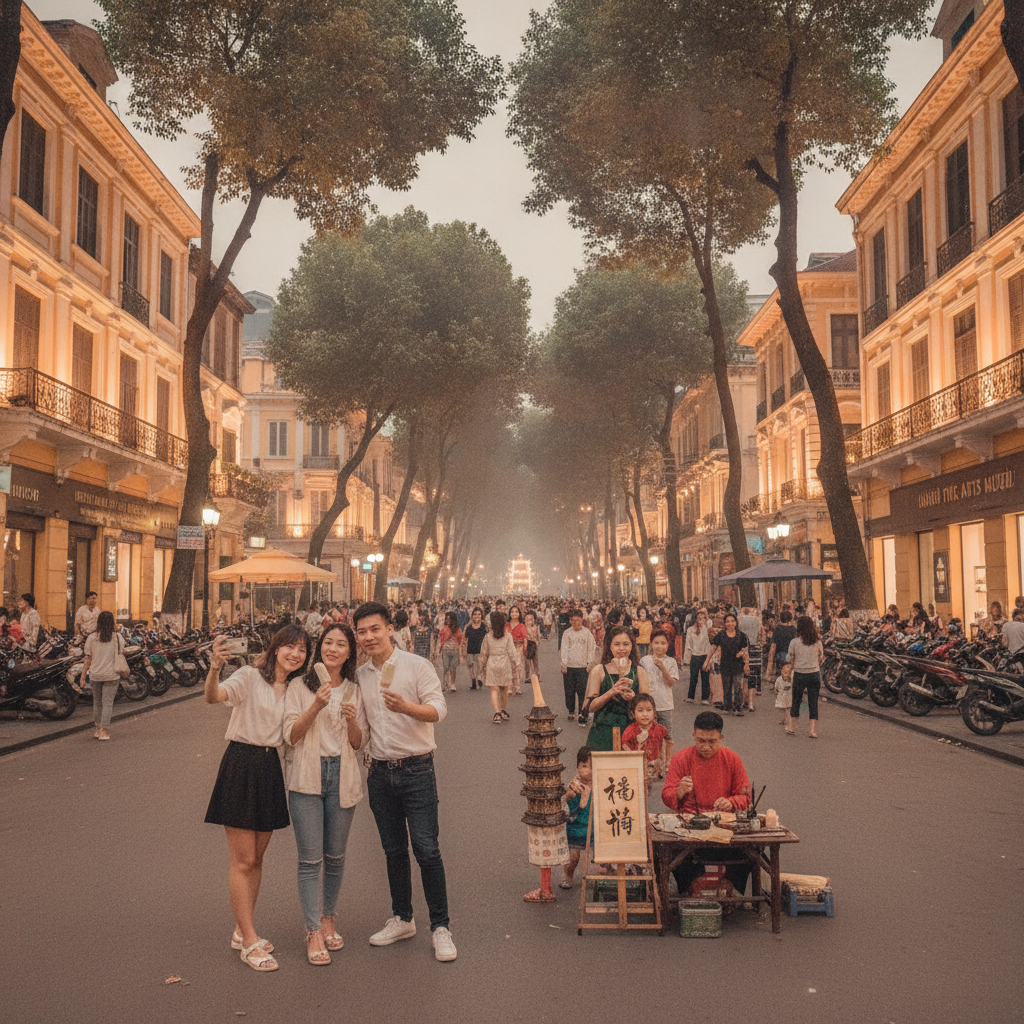
Contemporary Hanoi — Art Galleries, Street Art & the New Vietnamese Capital
Long Bien Bridge, Red River & the Layers of Hanoi's History
Sapa, Fansipan & the Northern Highlands — Vietnam's Roof of the World
Hanoi Street Food — Phở, Bún Chả, Bánh Mì & Egg Coffee