Sapa, Fansipan & the Northern Highlands — Vietnam's Roof of the World
Sapa (Sa Pa — the mountain town in Lao Cai Province, 380 km northwest of Hanoi, accessible overnight by train (8-9 hours) or by day bus (5-6 hours) — the gateway to the Hoang Lien Son mountain range (Dãy Hoàng Liên Sơn — the 'Yellow Lien Son Range', the southernmost extension of the Himalayas into Vietnam)) is the most spectacular mountain destination in Vietnam and the base for trekking among the extraordinary rice terrace landscapes and ethnic minority villages of the northern highlands.
- 1
Sapa Town & the Muong Hoa Valley Rice Terraces
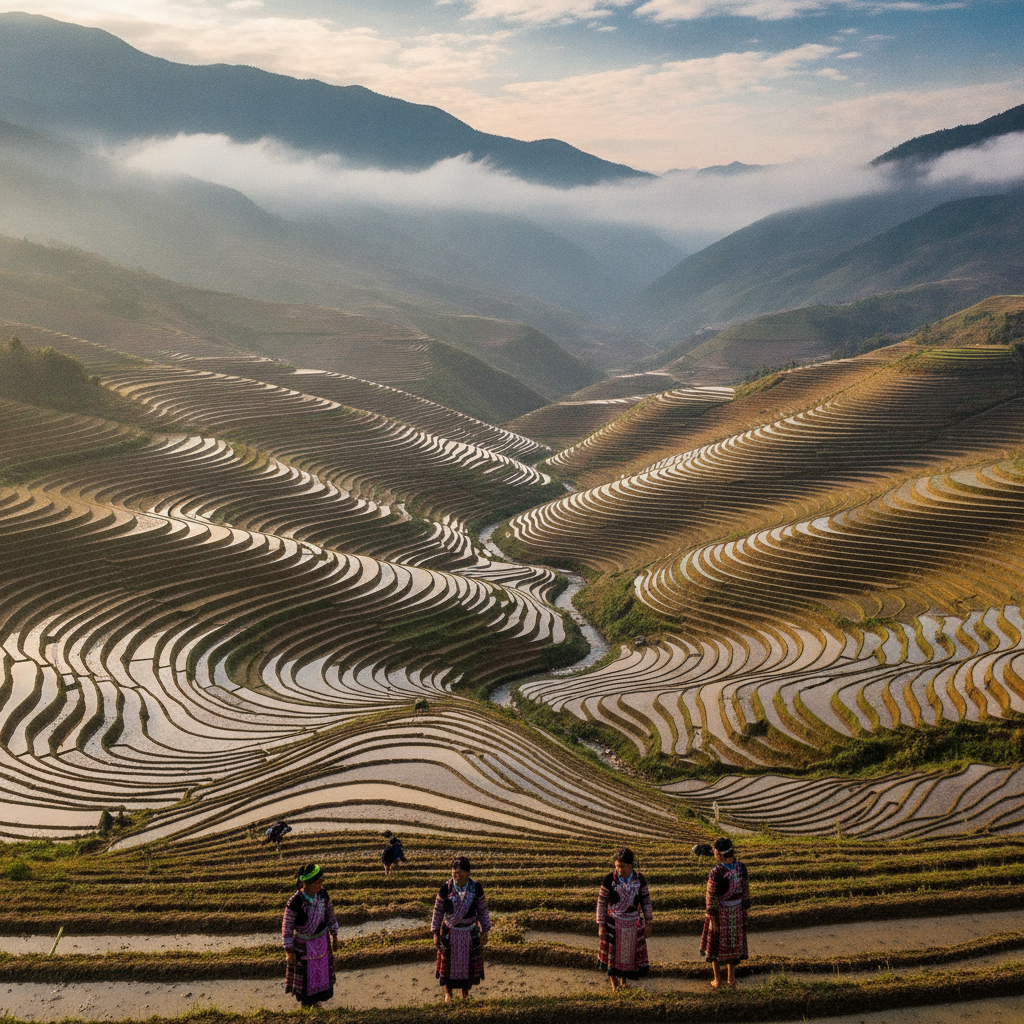
Sapa (Sa Pa — the mountain resort town at 1,500 metres elevation in Lao Cai Province, nestled in a valley on the eastern flank of the Hoang Lien Son range — the former French colonial hill station (established 1903 as a summer retreat for French colonial officials escaping the heat of Hanoi), now the main tourist centre for the northern Vietnamese highlands): the town (elevation 1,500-1,650 metres, climate significantly cooler than Hanoi (average temperature 15-18°C in summer, dropping below 0°C in winter with occasional snow — the only regular snowfall destination in Vietnam)) is the gateway to the Muong Hoa Valley (Thung lũng Mường Hoa — the valley approximately 8 km east of Sapa town, home to the most spectacular rice terrace landscape in Vietnam and the most-photographed agricultural landscape in Southeast Asia): the Muong Hoa Valley terraces (the stepped rice paddies carved into the hillsides by the Black Hmong (H'Mông Đen) and Red Dao (Dao Đỏ) ethnic minority communities over approximately 300-400 years — the most technically extraordinary traditional agricultural engineering in Vietnam, with individual terraces maintained at precise water levels by a traditional irrigation system of bamboo pipes and earthen channels) are at their most beautiful when flooded in May-June (before transplanting), golden in September (harvest time), and green in July-August (full growth).
- 2
Fansipan — The Roof of Indochina
Fansipan (Phan Xi Păng — 3,143 metres, the highest mountain in Vietnam and in the Indochina Peninsula (Vietnam, Laos, and Cambodia), in the Hoang Lien Son range approximately 9 km southwest of Sapa town — known as the 'Roof of Indochina'): the mountain (the peak wreathed in cloud for approximately 300 days per year, typically only fully visible for short periods of clear sky in December-February) can be climbed by two routes: the 3-day traditional trekking route (the most physically demanding trek in northern Vietnam, requiring a local guide and camping at approximately 2,800 metres, the trail through dense primary forest — the Hoang Lien National Park (Vườn Quốc gia Hoàng Liên) on the slopes of Fansipan is the most biodiverse forest in northern Vietnam, with an estimated 1,000 species of vascular plants and 350 species of birds) or the Fansipan cable car (Cáp treo Fansipan — the three-stage gondola cable car system (opened 2016, operated by the Sun Group), the longest three-rope cable car system in the world (6,292 metres total length), ascending from the Sun World Fansipan Legend base station in Sapa to the summit station at 3,143 metres in approximately 15 minutes — the most dramatic cable car journey in Asia): the summit (a Buddhist stupa complex and a 21.5-metre gilded statue of Amitabha Buddha (Di Đà Phật) constructed 2014-2016 at the peak) has views on clear days across the Hoang Lien Son range into Yunnan Province, China.
- 3
Black Hmong & Red Dao Villages — Ethnic Minority Culture
The ethnic minority communities of the Sapa area (the main groups being the Black Hmong (H'Mông Đen — the largest ethnic group in the Sapa area, numbering approximately 60,000 in Lao Cai Province, distinguished by their indigo-dyed clothing and their matrilineal social organization), the Red Dao (Dao Đỏ — the second-largest group, distinguishable by the elaborate red headdress (khăn đội đầu đỏ — the large red embroidered cloth wrapped around the head) worn by women), the Tay (the largest ethnic minority in Vietnam overall, approximately 1.9 million, concentrated in the valley floors of the northern highlands, known for their stilt house architecture and their sophisticated traditional watermill (cối xay nước) technology), and the Giay (Người Giáy — the smallest minority group in the Sapa area, concentrated in Ta Phin and Ta Van villages, known for their distinctive dress and their traditional medicinal herb knowledge)) maintain distinct cultural identities, languages, and traditional practices; the most visited ethnic minority villages near Sapa are: Cat Cat Village (Làng Cát Cát — the Black Hmong village 2 km southwest of Sapa town, the most accessible and most touristic), Ta Van (Làng Tả Van — the mixed Giay and Black Hmong village in the Muong Hoa Valley, 12 km from Sapa, the best starting point for homestay experiences in the terraced landscape), and Ta Phin (Làng Tả Phìn — the Red Dao village 12 km north of Sapa, famous for the traditional herbal medicinal bath (tắm thuốc người Dao Đỏ — the ritual bath in water infused with a blend of 10-20 traditional medicinal herbs, believed by the Red Dao to have healing and strengthening properties) offered to visitors).
- 4
Bac Ha Market — The Rainbow Hmong Sunday Market
Bac Ha Market (Chợ Bắc Hà — the weekly Sunday market in Bac Ha town (Thị trấn Bắc Hà), Lao Cai Province, 110 km from Sapa (2.5 hours) and 350 km from Hanoi — the most colourful and authentic ethnic minority market in northern Vietnam, less touristic than the Sapa market): the Bac Ha Sunday market (held every Sunday from early morning until early afternoon, the most important weekly social and commercial gathering for the ethnic minorities of the Bac Ha plateau) is attended primarily by the Flower Hmong (H'Mông Hoa — the most visually spectacular of the Hmong sub-groups, distinguished by the extraordinarily elaborate patterned dress (the women's skirt a mass of batik (vẽ sáp ong — beeswax batik) and embroidery in multiple bright colours (yellow, orange, red, green, purple) on indigo-dyed fabric, the most elaborate traditional textile art in Vietnam)) as well as the Black Hmong, Dao, Tay, Nung, and Giay communities; the market sells horses (the small mountain horse (ngựa Bắc Hà) used for transport and agriculture in the highlands — horse trading is a significant part of the market activity), local produce, traditional clothing and textiles, traditional alcohol (rượu ngô — corn liquor, the traditional drink of the northern highlands, brewed from yellow corn and drunk from small ceramic cups), and daily necessities; the Bac Ha horse market (the livestock section of the market, held in a separate area) is one of the last surviving traditional horse markets in Vietnam.
- 5
Mu Cang Chai — The Most Spectacular Rice Terraces in Asia
Mu Cang Chai (Mù Cang Chải — the remote district in Yen Bai Province (Tỉnh Yên Bái), approximately 280 km from Hanoi (6-7 hours by road via Nghia Lo) and 160 km from Sapa — the area containing what is widely considered the most spectacular rice terrace landscape in Vietnam and arguably in all of Asia): the Mu Cang Chai terraces (the stepped rice paddies carved into the slopes of the Hoang Lien Son mountains by the Black Hmong community over approximately 300 years, covering approximately 2,200 hectares across three main concentrations (La Pan Tan (La Pán Tẩn), Che Cu Nha (Chế Cu Nha), and Ze Xu Phinh (Zế Xu Phình))) are a UNESCO National Heritage Site (recognized as one of Vietnam's most outstanding landscapes) and the most sought-after destination for landscape photographers in Vietnam; the optimal viewing seasons are: the harvest season (September-October, when the terraces turn gold as the rice ripens — the most photogenic period), the flooding season (May-June, when the terraces are filled with water for planting, the reflective water surfaces creating a mirror landscape), and the planting season (June-July, when the terraces are bright green with young rice seedlings); the total remoteness of Mu Cang Chai (the poor road quality, the lack of tourist infrastructure, and the 6-7 hour journey from Hanoi) means that visitors are predominantly serious photographers and adventure travellers.
- 6
Northern Vietnamese Highlands — Trekking Culture & Homestays
Trekking in the northern Vietnamese highlands (the established network of trekking routes through the ethnic minority villages and rice terrace landscapes of Lao Cai, Ha Giang, Son La, and Yen Bai Provinces — the most popular trekking destination in Vietnam): the characteristic northern highlands trekking experience involves: a certified local guide (typically a Black Hmong or Red Dao woman from the villages being visited, trained as a guide through community-based tourism programmes — the Sapa O'Chau cooperative (Hợp tác xã Sapa O'Chau) being the most respected community trekking operator, founded by the Black Hmong woman Tẩn Thị Su in 2007, now employing over 100 guides from local ethnic minority communities), multi-day treks between villages (the classic 2-3 day Sapa trek visiting Cat Cat, Ban Ho (Bản Hồ), La Pan Tan, and Ta Van villages, with overnight homestays in traditional ethnic minority houses), and the homestay experience (the traditional stilt house of a Hmong or Dao family, sleeping on mats on the wooden floor of the family living room, with communal meals of local rice, vegetables, and meat prepared by the family host — the most immersive cultural experience available to tourists in Vietnam); Ha Giang Province (Tỉnh Hà Giang — the northernmost province of Vietnam, bordering China, accessible in 6-7 hours from Hanoi by road, containing the Dong Van Karst Plateau UNESCO Global Geopark (Công viên địa chất toàn cầu Cao nguyên đá Đồng Văn) and the Ma Pi Leng Pass (Đèo Mã Pí Lèng — the most dramatic mountain pass in Vietnam, overlooking the 1,500-metre-deep Nho Que River gorge)) is the frontier destination for the most adventurous visitors.
Walk this route with audio
Stories play automatically as you reach each stop — no tapping needed.
More in hanoi
Van Phuc Silk, Bat Trang Ceramics & Hanoi's Ancient Craft Villages
Contemporary Hanoi — Art Galleries, Street Art & the New Vietnamese Capital
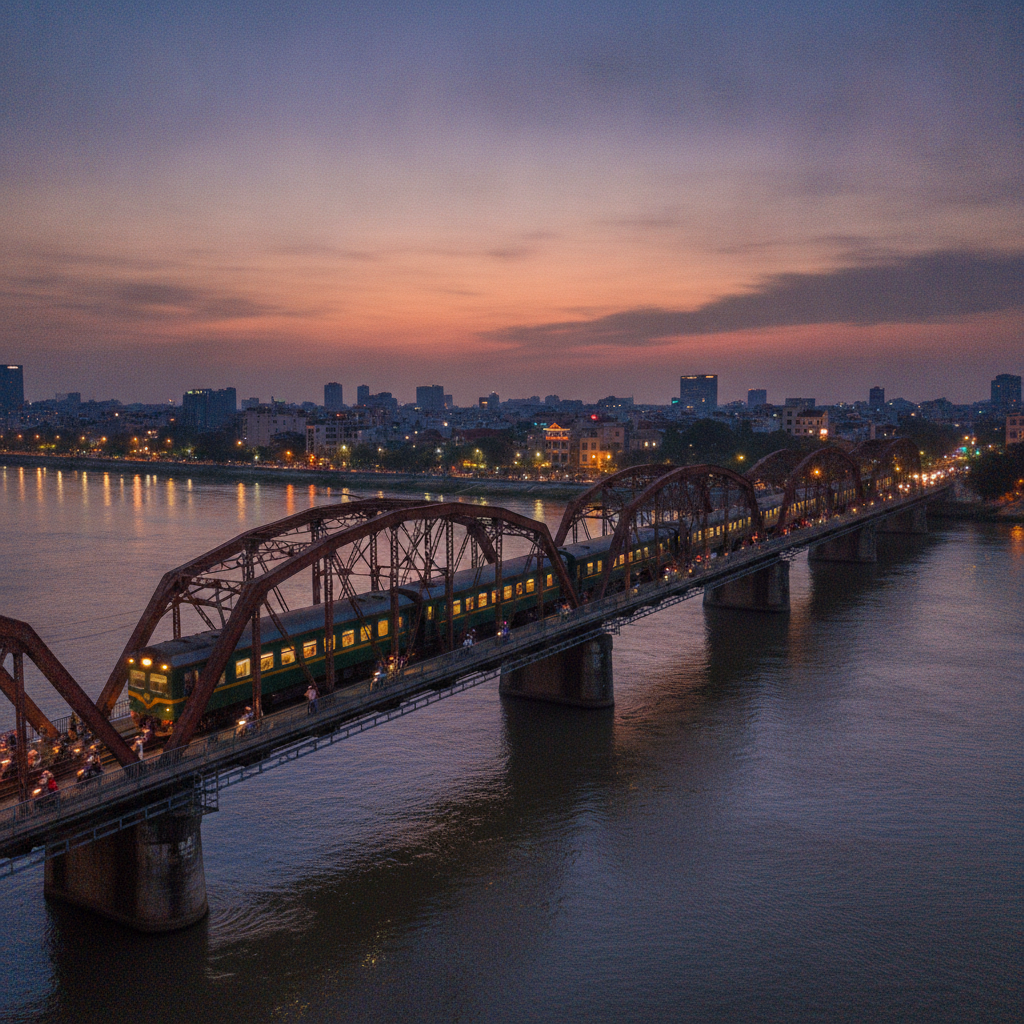
Long Bien Bridge, Red River & the Layers of Hanoi's History
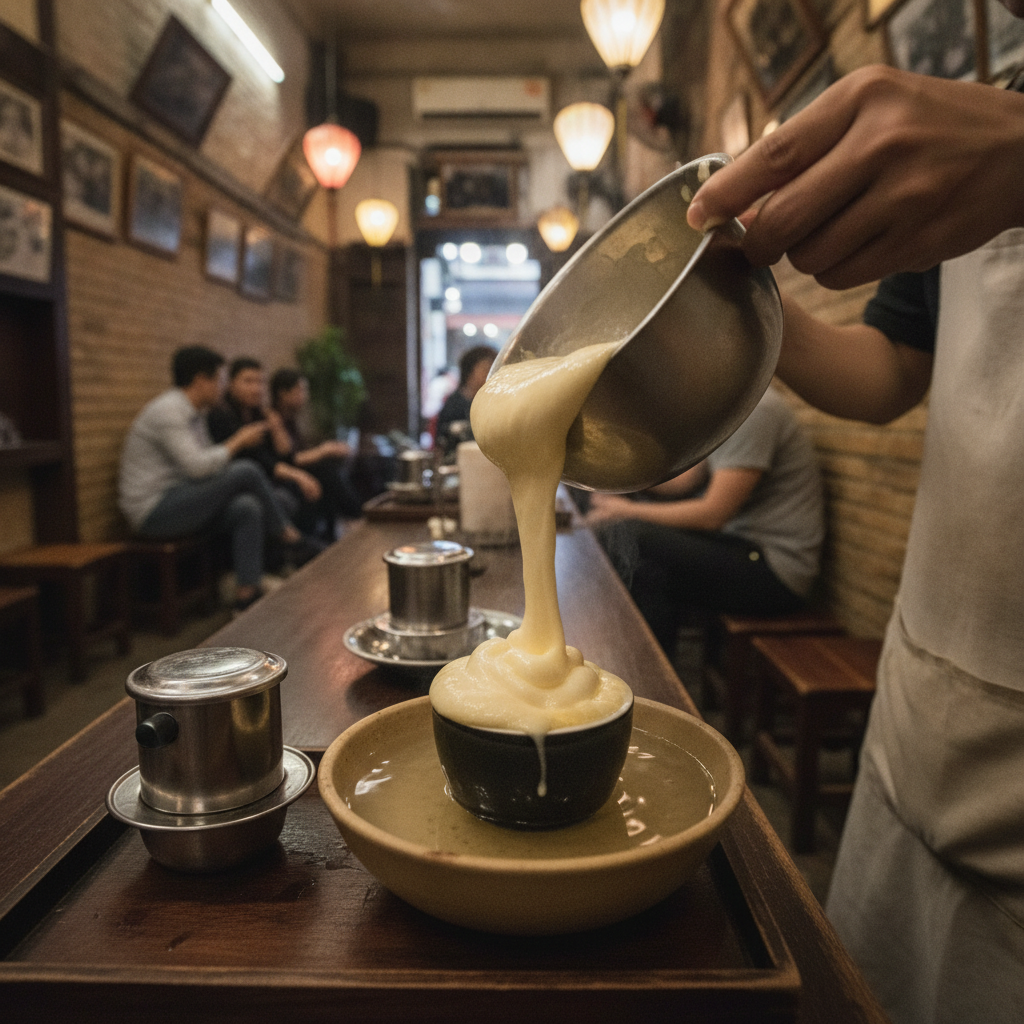
Hanoi Street Food — Phở, Bún Chả, Bánh Mì & Egg Coffee
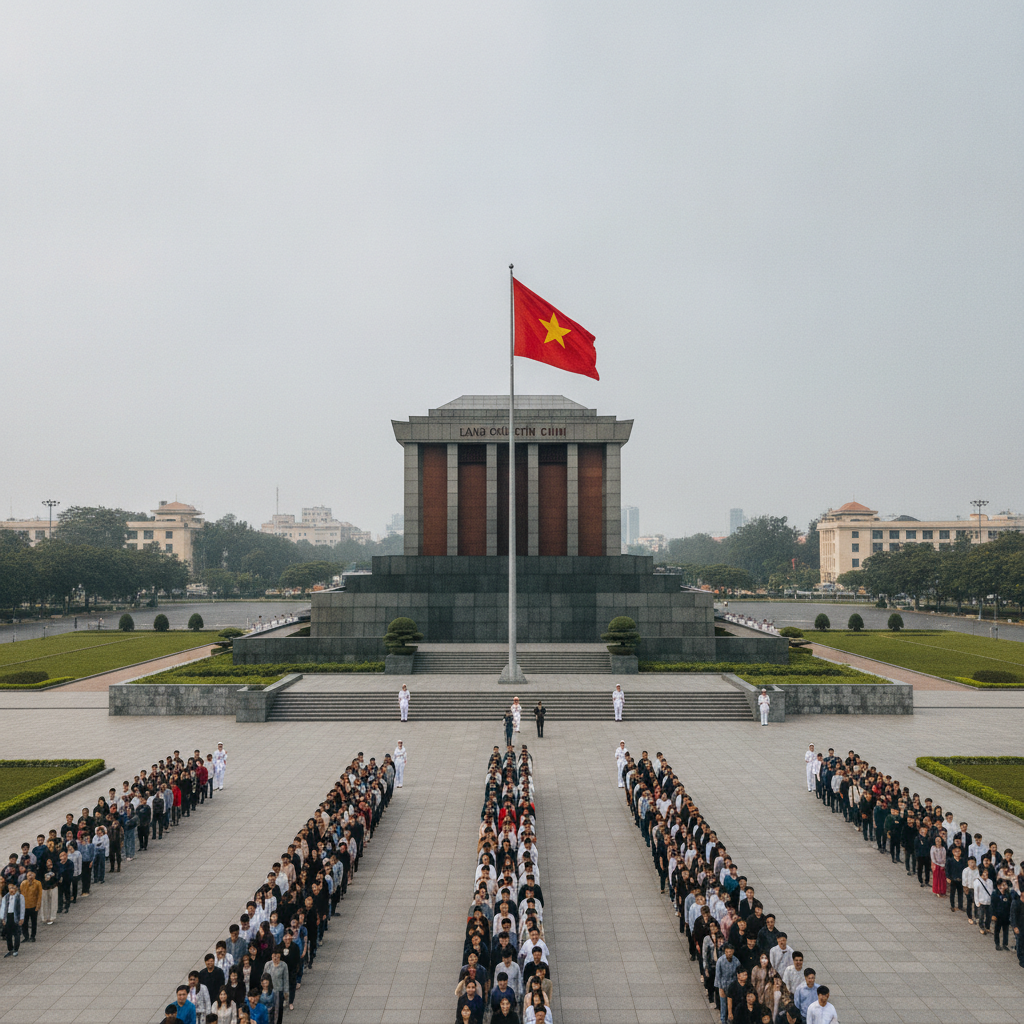
Ho Chi Minh Mausoleum, Ba Dinh & the Temple of Literature