Hemingway's Havana — Finca Vigía, Cojímar & The Old Man and the Sea
Ernest Hemingway (1899-1961) lived in Cuba for 22 years (1939-1960), longer than he lived anywhere else in the world — the years in which he wrote 'For Whom the Bell Tolls' (1940), 'Across the River and Into the Trees' (1950), and 'The Old Man and the Sea' (1952) — the novella that won the Pulitzer Prize for Fiction (1953) and that was cited when Hemingway received the Nobel Prize for Literature (1954). The Finca Vigía (his home in San Francisco de Paula, 15 km from Havana) and the fishing village of Cojímar (the model for the village in 'The Old Man and the Sea') are among the most powerfully literary sites in the Americas.
- 1
Finca Vigía — Hemingway's Cuban Home
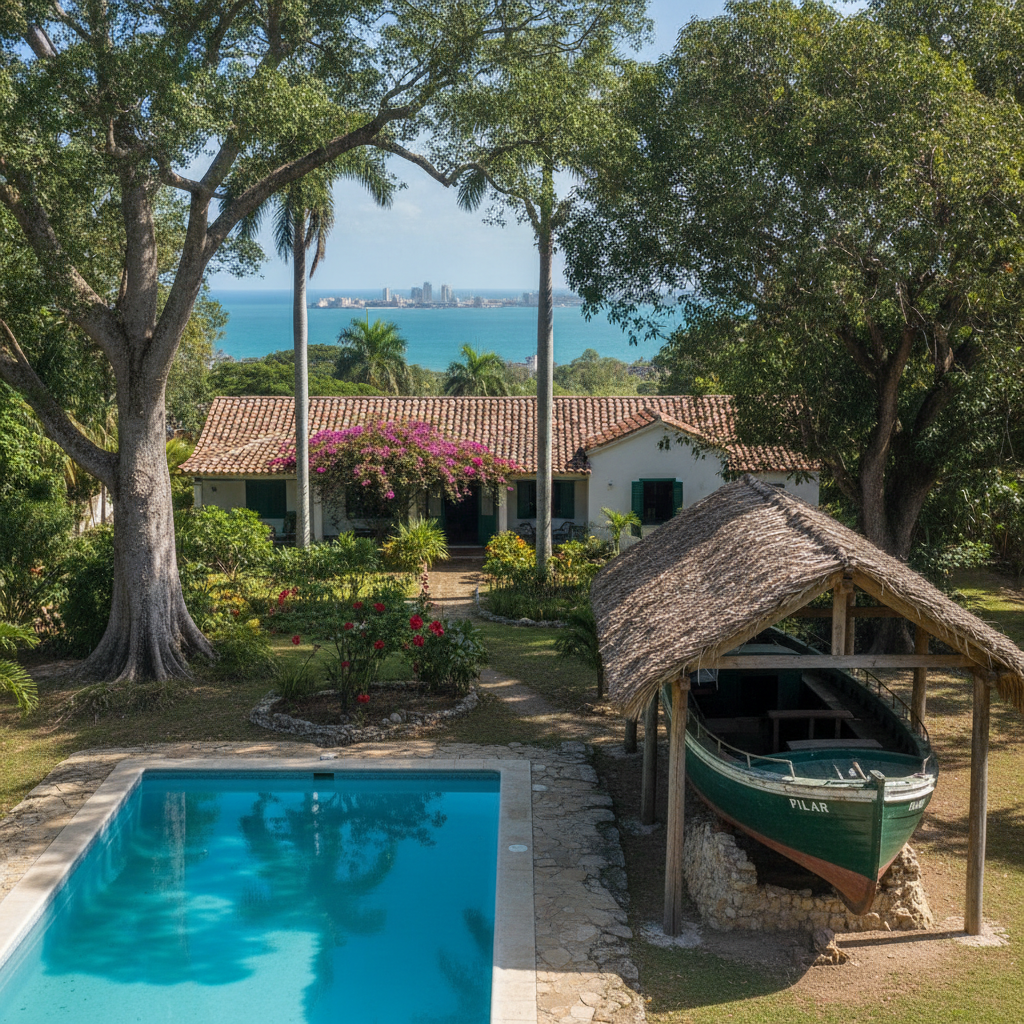
Finca Vigía (the 'Lookout Farm' — the 15-room Spanish colonial house on a hilltop in San Francisco de Paula, 15 kilometres (9 miles) southeast of central Havana, Hemingway's home in Cuba from 1939 to 1960): the history (the Finca Vigía rented initially by Hemingway in 1939 (when he moved to Cuba to live near the fishing waters of the Gulf Stream that he had first experienced during his time in Havana in the 1930s, fishing for marlin from the port of Cojímar on the Pilar, his boat) and purchased by Hemingway in 1940 for $18,500 with the advance he received for the film rights to 'For Whom the Bell Tolls'): the house today (the Museo Hemingway — the house converted into a museum after Hemingway left Cuba in July 1960 and never returned (Hemingway took his own life at his home in Ketchum, Idaho on July 2, 1961): the museum in which the house is preserved exactly as Hemingway left it in 1960: the 9,000-volume library (the books that fill the shelves of every room in the house, the books that Hemingway collected throughout his lifetime), the animal trophies (the heads of the lion, the kudu, the eland, and the buffalo shot on the African safaris of 1933-1934 and 1953-1954 that still hang on the walls of the house), and the writing tower (the separate four-story tower in the garden, the tower built for Hemingway by his third wife Martha Gellhorn but used by Hemingway primarily to house his cats (the 57 cats at the time of his departure from Cuba in 1960, of which the large population of polydactyl cats (cats with extra toes) are the descendants)).
- 2
Cojímar — The Fishing Village of The Old Man and the Sea
Cojímar (the small fishing village on the coast east of Havana, 15 minutes by taxi from La Habana Vieja — the village that was the model for the unnamed village in 'The Old Man and the Sea' (1952), Hemingway's Nobel Prize-winning novella): the village (the Cojímar of today — the small Cuban fishing village of approximately 2,000 inhabitants, with the Fuerte de Cojímar (the 17th-century Spanish colonial fortress at the mouth of the Cojímar River — the most visually prominent landmark of the village), the fishing boats in the small harbour (the wooden 'balsas' and the fiberglass boats of the Cojímar fishermen), and the Monumento a Ernest Hemingway (the bronze bust of Hemingway mounted on a circular marble pedestal in the small plaza beside the Fuerte de Cojímar — the monument erected in 1962 by the fishermen of Cojímar from the propellers, rudders, and metalwork of their fishing boats, donated by the fishermen who had known Hemingway personally)): the Terrace restaurant (the La Terraza de Cojímar restaurant — Hemingway's favourite restaurant in Cojímar, where he ate regularly with the Cojímar fishermen and where the walls are still covered with photographs of Hemingway at the restaurant)): the 'Old Man' (Gregorio Fuentes (1897-2002) — the Cuban fisherman who was the captain of Hemingway's boat 'Pilar' from 1938 to 1960, the man generally believed to be the model for the character of Santiago in 'The Old Man and the Sea', who lived in Cojímar until his death at the age of 104 and was still being visited by journalists and Hemingway researchers until the late 1990s).
- 3
Havana in Literature — The City in Words
Havana in literature (the city that has inspired more important literary works than any other city in the Caribbean or Central America): Alejo Carpentier (1904-1980) — the Cuban novelist and musicologist who is the most important literary figure in the history of Cuban literature, the author of 'El siglo de las luces' ('Explosion in a Cathedral', 1962) and the essay 'La ciudad de las columnas' ('The City of Columns', 1970 — the essay on the architecture of Havana that named the city for its characteristic column-fronted colonial buildings, the essay that is the definitive literary exploration of the aesthetic of Havana): José Lezama Lima (1910-1976) — the Cuban poet and novelist, the author of 'Paradiso' (1966 — the novel that is considered the most important Cuban novel of the 20th century, the dense, Baroque, encyclopaedic novel that chronicles the life of the protagonist José Cemí in a heavily fictionalized version of Havana): Guillermo Cabrera Infante (1929-2005) — the Cuban novelist and cultural critic who lived in exile in London from 1966 to his death, the author of 'Tres tristes tigres' ('Three Trapped Tigers', 1967 — the novel set in the Havana nightclub scene of the late 1950s, the novel that is the most entertaining and the most linguistically playful evocation of pre-Revolutionary Havana in literature): Leonardo Padura (b.1955) — the contemporary Cuban crime novelist, the author of the 'Mario Conde' detective novel series (1991-present — the series of detective novels set in the contemporary Havana of the Special Period and the post-Special Period, the novels that have made Padura the most internationally recognized living Cuban writer).
- 4
Cuban Food — Ropa Vieja, Congri & Havana Street Food
Cuban cuisine (the food of the island that blends the Spanish colonial culinary tradition (the sofrito (the onion, garlic, tomato, and pepper base for the Cuban stews), the rice and beans, the pork, the bacalao (the salt cod)), the Afro-Cuban food tradition (the 'fufu' (the mashed plantain with garlic and pork), the 'frituras de malanga' (the malanga fritters — the malanga (the tropical root vegetable (Xanthosoma sagittifolium) that is one of the most important staple foods in Cuba)), and the Canary Island food tradition (the roots of many Cubans in the Canary Islands, the Spanish archipelago off the northwest coast of Africa)): the ropa vieja (the 'old clothes' — the most beloved dish of Cuban cuisine, the shredded flank steak braised in a sofrito of tomatoes, onions, garlic, peppers, cumin, and bay leaves until the meat falls apart into the 'rags' (the 'ropa vieja') that give the dish its name): the congrí (the 'moros y cristianos' ('moors and Christians') — the Cuban rice and black beans, the combination of long-grain white rice and black beans cooked together in the same pot (the method that distinguishes the Cuban congrí from the Dominican 'moro' and the Puerto Rican 'arroz con gandules')): the lechón asado (the roast suckling pig — the most festive dish of Cuban cuisine, served at the most important celebrations (the Christmas dinner, the New Year's Eve dinner, the quinceañera (the 15th birthday celebration)) roasted whole over a wood fire or in a 'caja china' (the 'Chinese box' — the Cuban-American roasting device consisting of a metal box with a charcoal tray placed on top, the device that roasts the pig from above)): the Havana street food (the 'pan con lechón' (the roast pork sandwich) and the 'croquetas' (the Cuban ham and cheese croquettes) sold from the 'paladares' (the private restaurants in private homes, the alternative to the state restaurants) and the street vendors).
- 5
Pinar del Río & the Viñales Valley
The Viñales Valley (the Valle de Viñales — the UNESCO World Heritage Site in the Pinar del Río Province of western Cuba, 3 hours by car from Havana): the landscape (the Viñales Valley landscape — one of the most distinctive and most beautiful rural landscapes in the Caribbean: the flat valley floor of the red laterite soil planted with tobacco (the Nicotiana tabacum — the tobacco that produces the finest cigar leaf in the world in the Viñales Valley and the surrounding Vuelta Abajo region) and the remarkable limestone formations called the 'mogotes' (the steep-sided, flat-topped limestone massifs that rise abruptly from the flat valley floor to heights of 200-300 metres (660-985 feet) — the remnant towers of an ancient limestone plateau that has been eroded by water over millions of years to leave the isolated massifs standing above the surrounding plain)): the tobacco (the tobacco culture of the Viñales Valley — the small family tobacco farms ('vegas') where the tobacco is still grown using the traditional methods introduced by the Spanish colonists in the 16th century (the 'capas' (the wrapper leaves (the outer leaves of the cigar) grown under the muslin shade cloth ('tapados') to protect them from the direct sun and produce the thin, oily, elastic wrapper leaves that are the most prized part of the Cuban cigar) and the 'tripas' (the filler tobacco grown in the open sun)): the drying barns (the 'casas de tabaco' (the 'tobacco houses') — the traditional thatched wooden barns where the tobacco leaves are hung to dry for 45-60 days before curing)).
- 6
Trinidad, Cuba — The UNESCO Colonial Town
Trinidad (the city in the Sancti Spíritus Province of central Cuba — the UNESCO World Heritage Site colonial town, one of the most intact Spanish colonial towns in the Americas, 340 km (211 miles) east of Havana by road (approximately 4-5 hours by bus on the Viazul service)): the colonial heritage (the colonial town of Trinidad — founded in 1514 by the Spanish conquistador Diego Velázquez de Cuéllar (the Governor of Cuba), one of the original 7 'villas' founded by the Spanish in Cuba in the period 1511-1515): the colonial architecture (the best-preserved colonial town centre in Cuba — the Plaza Mayor (the main square of Trinidad, surrounded by the Iglesia Parroquial de la Santísima Trinidad (the Church of the Holy Trinity, built 1817-1892 in the neoclassical style), the Palacio Brunet (the 1797 palace of the Brunet family — now the Museo Romántico, housing the collection of colonial-era furniture and decorative arts of the wealthy Trinidad sugar aristocracy), and the Palacio Cantero (the 1830 palace of the sugar baron Justo Germán Cantero — now the Museo Histórico Municipal, with the rooftop terrace offering the best panoramic view of Trinidad and the surrounding Valle de los Ingenios (the Valley of the Sugar Mills))).
Walk this route with audio
Stories play automatically as you reach each stop — no tapping needed.
More in havana
Son Cubano, Salsa & Havana's Living Music Culture
Vedado, Plaza de la Revolución & 20th-Century Havana
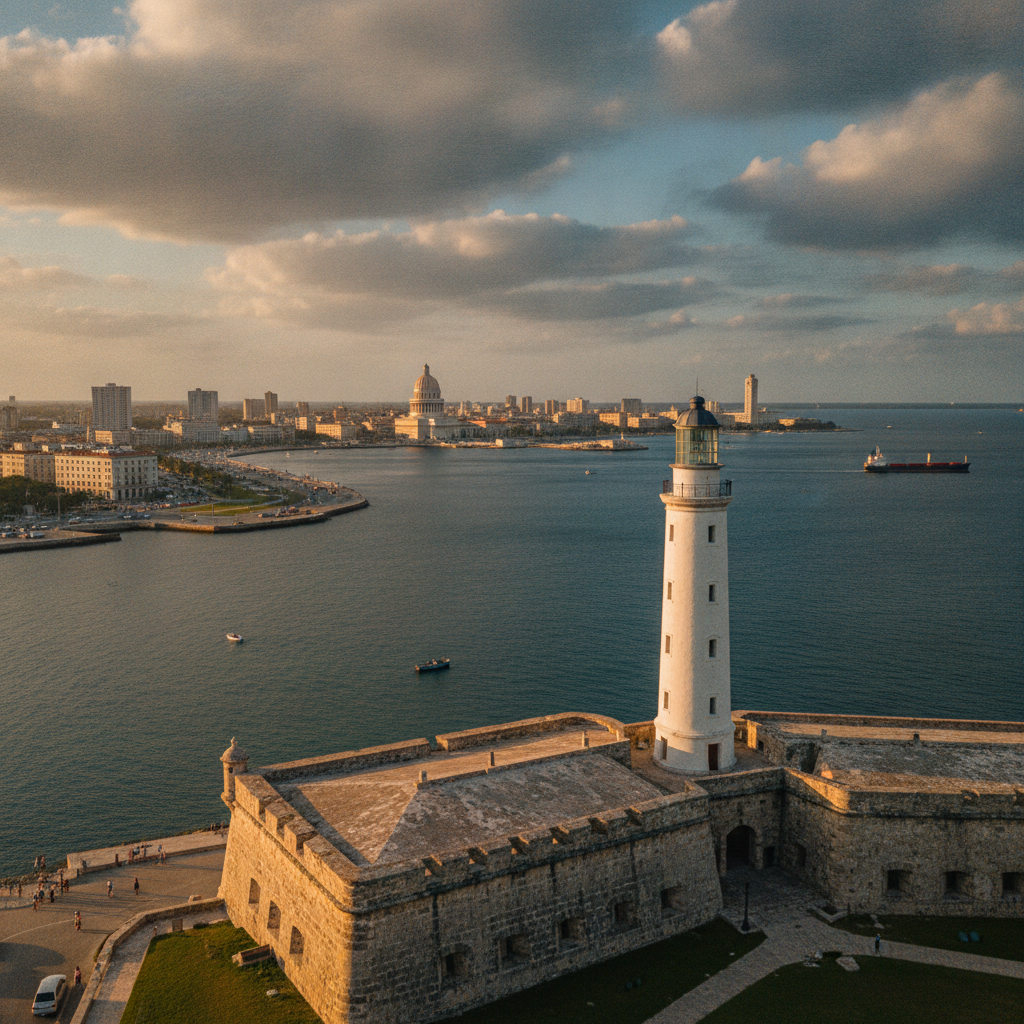
El Morro Fortress, Havana Harbour & The Bay
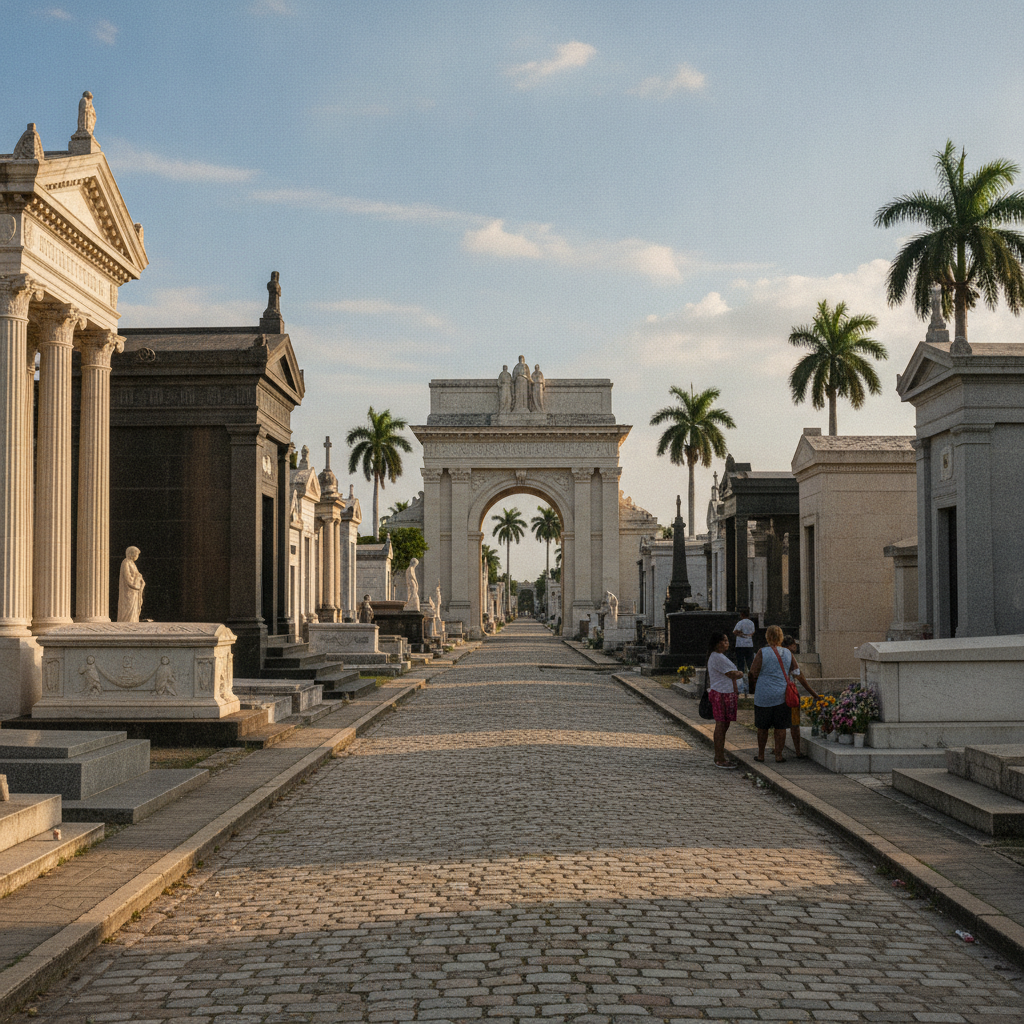
Cementerio de Colón — Havana's City of the Dead
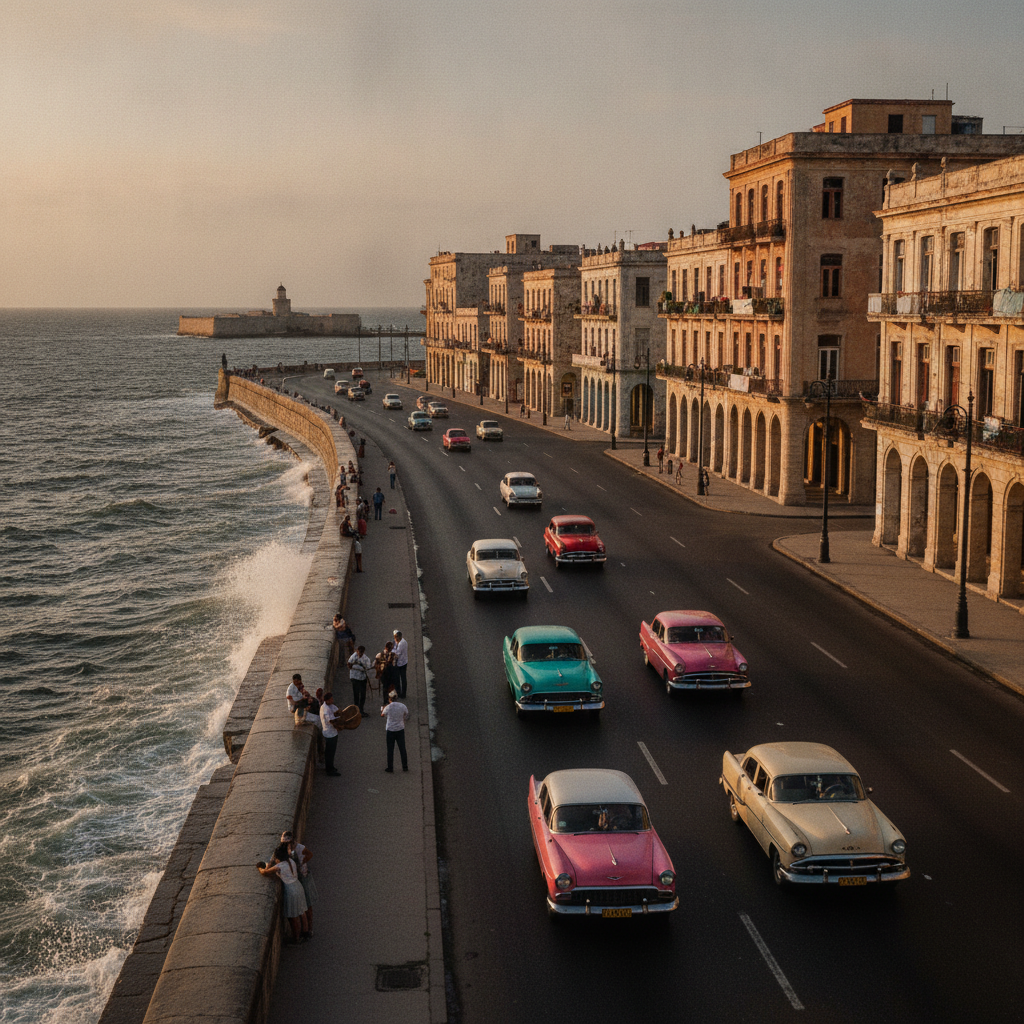
Habana Vieja, the Malecón & Havana's Classic Cars