Habana Vieja, the Malecón & Havana's Classic Cars
Havana (La Habana — the capital of Cuba, population approximately 2.1 million in the city and 2.7 million in the metropolitan area, at the northwestern tip of Cuba on the Straits of Florida): the UNESCO World Heritage Site of Old Havana (La Habana Vieja — the historic colonial core of Havana, designated a UNESCO World Heritage Site in 1982 as one of the best-preserved colonial cities in the Americas) and the Malecón (the 8-kilometre seafront esplanade — the most famous public space in Cuba) are the heart of Havana's identity.
- 1
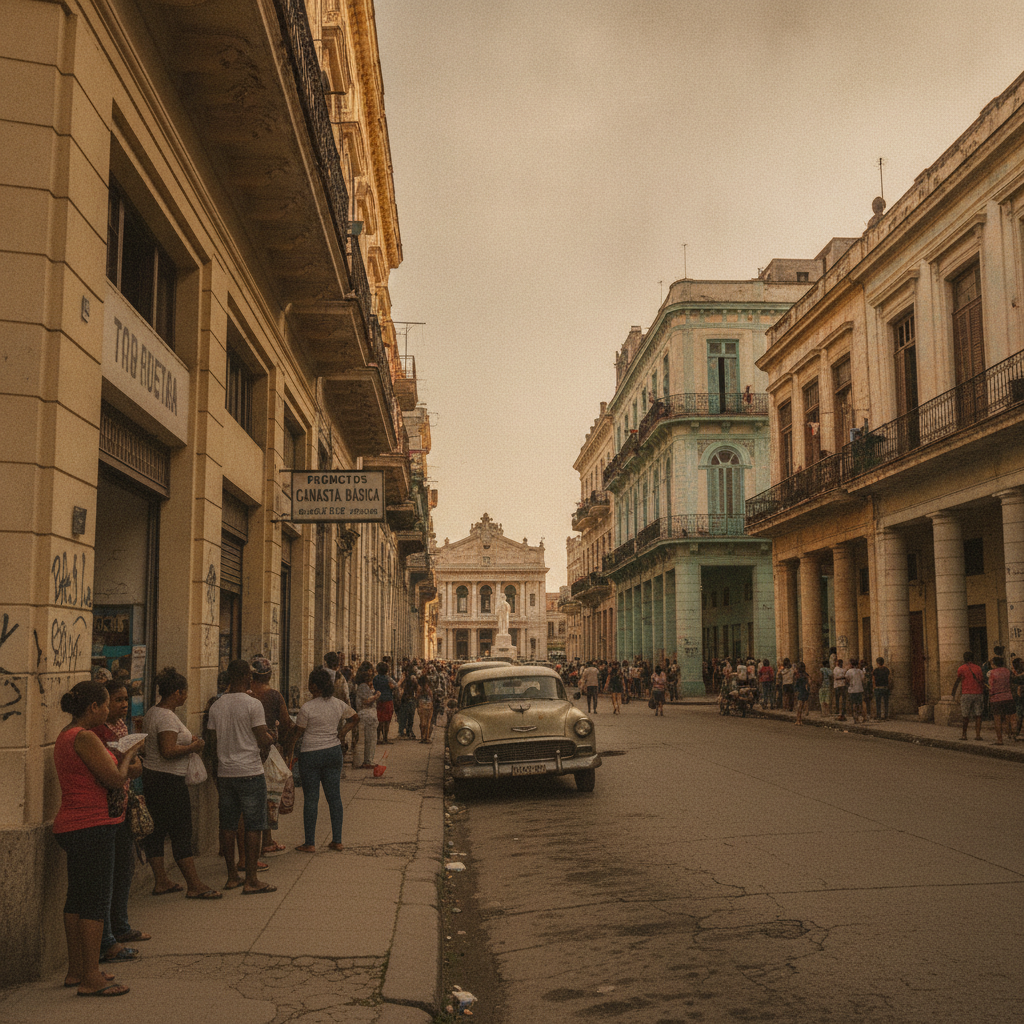
La Habana Vieja — The UNESCO Colonial Heart of Havana
La Habana Vieja (the 'Old Havana' — the UNESCO World Heritage Site historic colonial district of Havana, designated in 1982 as one of the best-preserved Spanish colonial cities in the Americas): the history (the founding of Havana (San Cristóbal de La Habana) on November 16, 1519 (the 'Día de la Fundación' — celebrated annually in Havana as the city's founding anniversary) by the Spanish conquistador Pánfilo de Narváez — the founding of the city that would become the most important Spanish colonial city in the Americas (the 'Key to the New World and Bulwark of the West Indies' — the title given to Havana by the Spanish Crown in recognition of its strategic importance as the assembling point for the treasure fleets (the 'flota') that carried the silver of Mexico and Peru to Spain)): the Habana Vieja streets (the narrow cobblestone streets of La Habana Vieja — the Calle Obispo (the main shopping street of La Habana Vieja — the pedestrian street lined with the colonial buildings housing the bookshops (the second-hand bookshops selling the Cuban books, the Spanish-language literature, and the communist-era publications), the pharmacies (with the original 1920s-1950s tile-fronted dispensaries), the restaurants, the bars, and the street vendors): the colonial architecture (the Spanish colonial and baroque buildings of La Habana Vieja — the Cathedral of Havana (the Catedral de San Cristóbal de La Habana, built 1748-1777 in the Cuban Baroque style — the cathedral described by the Cuban writer Alejo Carpentier as 'music turned to stone'), the Plaza de la Catedral (the cobblestone square in front of the Cathedral — the most beautiful plaza in Havana), the Plaza de Armas (the oldest public square in Havana), the Plaza Vieja (the 'Old Plaza' — the 18th-century square surrounded by the baroque and neoclassical buildings of the colonial period), and the Plaza de San Francisco de Asís (the square in front of the former church of San Francisco de Asís, now used as a concert hall for chamber music)).
- 2
The Malecón — Havana's Famous Seafront Esplanade
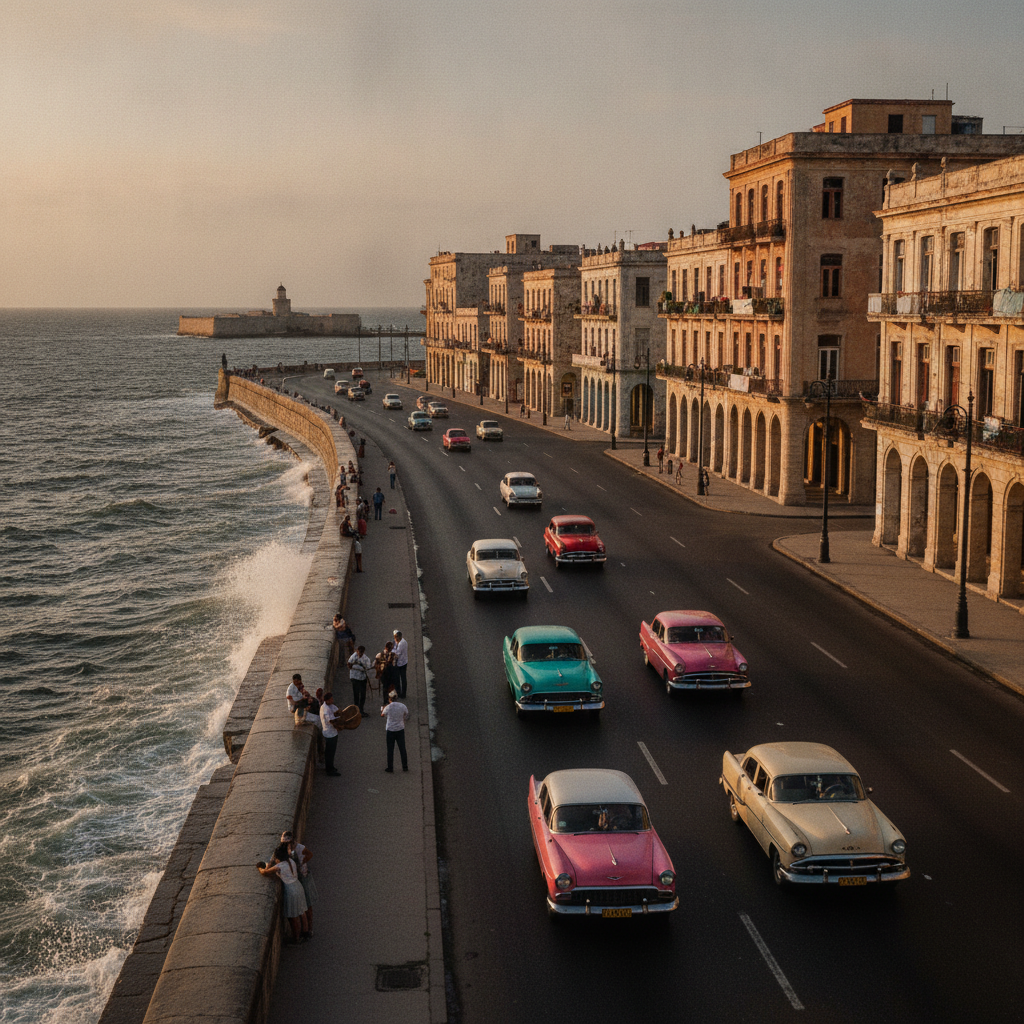
The Malecón (the 'Malecón de La Habana' — the 8-kilometre (5-mile) seafront esplanade and seawall that runs along the northern waterfront of Havana, from the Castillo de San Salvador de la Punta (the 16th-century fortress at the entrance to Havana harbour, at the eastern end of the Malecón) to the neighbourhood of Vedado (the 20th-century upscale residential district at the western end of the Malecón)): the Malecón history (the Malecón built between 1901 and 1952 — the gradual westward extension of the seafront esplanade from its original short stretch in front of La Habana Vieja across the full width of the northern waterfront of Havana): the Malecón social life (the Malecón as the primary social and public space of Havana — the esplanade where the Havanans gather in the late afternoon and evening (when the tropical heat relents) to fish from the seawall (the fishermen with the hand lines casting into the Straits of Florida), to meet friends and lovers (the couples sitting on the seawall watching the sunset), to play music (the musicians with the guitars and the congas who perform for tips along the Malecón), and to simply experience the life of the city): the Malecón and the sea (the Malecón's relationship with the Straits of Florida — the low concrete seawall that is regularly overtopped by the large waves during the northerly winter storms ('los nortes') that batter the Malecón with walls of spray, drenching the colonial buildings on the south side of the esplanade and adding to the atmosphere of romantic decrepitude that defines Havana's particular charm).
- 3
Havana's Classic American Cars — The 1950s Time Capsule
Havana's classic American cars (the 'almendrones' — the 1950s American automobiles that are the most iconic and most photographed aspect of contemporary Havana, the living museum of mid-century American automotive design that has made Havana the most remarkable car city in the world): the reason (the reason why Havana has the most extensive collection of 1950s American cars in the world — the US trade embargo on Cuba (imposed in October 1960 following the expropriation of US-owned properties by the Castro government) that prevented Cubans from importing American cars after 1960, combined with the Cuban government's restriction on private car sales (in place from 1959 until 2011) that meant that the 60,000 American cars imported into Cuba in the 1950s had to be maintained in service indefinitely): the almendrones (the private taxi cars (the 'almendrones' — named for their almond-like rounded body shapes) that serve as shared taxis in Havana, cruising the fixed routes along the Malecón and the main avenues of Havana, picking up passengers who pay a peso convertible (CUC) for a shared ride — the most affordable and most atmospheric transport option in Havana): the cars (the Chevrolet Bel Air (1955-1957 — the most beloved of the American classic cars in Cuba, in turquoise and white or cherry red and white), the Buick Special (1953-1958), the Ford Fairlane (1955-1959), the Plymouth Savoy (1955-1959), and dozens of other models from the same era — all maintained by the ingenuity of the Cuban mechanics who fabricate replacement parts from whatever raw materials are available).
- 4
Castillo de la Real Fuerza & Havana's Fortifications
The Castillo de la Real Fuerza (the 'Castle of the Royal Force' — the oldest surviving Spanish colonial fortress in the Americas, built 1558-1577 on the western side of the entrance to Havana harbour): the fortress history (the Castillo de la Real Fuerza — the fortress built to protect Havana harbour after the French privateer Jacques de Sores sacked and burned Havana in 1555 (the most devastating pirate raid on a Spanish colonial city in the Americas), the fortress that served as the residence of the Governor of Cuba and the storage facility for the treasure (the gold and silver from Mexico and Peru) waiting for the treasure fleets to assemble in Havana harbour): the fortification system (the system of fortifications built by Spain to protect Havana — the most elaborate military fortification system in the Americas: the Castillo de la Real Fuerza (1558-1577), the Castillo de los Tres Reyes del Morro (the 'El Morro' — the fortress built on the eastern headland of the entrance to Havana harbour in 1589-1630, the most photographed landmark in Cuba), the Castillo de San Salvador de la Punta (the small fortress at the western side of the harbour entrance, built 1589-1600 to work in concert with El Morro to seal the harbour entrance with an iron chain at night), the Fortaleza de San Carlos de la Cabaña (the enormous fortress built on the eastern ridge overlooking Havana harbour in 1763-1774 — the largest Spanish colonial fortress in the Americas, with a perimeter of 700 metres (2,297 feet)).
- 5
Cuban Rum, Mojitos & the Bars of Old Havana
Cuban rum (the 'ron cubano' — the light-bodied aged rum that is the most important product of the Cuban economy after sugar and nickel, and the raw material of Cuba's most famous contribution to global cocktail culture): the Cuban rum tradition (the Cuban method of rum production — the distillation of the fermented molasses (the byproduct of the sugar cane refining process) to produce the 'aguardiente' (the raw spirit, distilled at approximately 75% ABV), which is then blended with neutral spirit and aged in American white oak barrels for 3-7 years to produce the characteristic light, clean, floral style of Cuban rum): the rum brands (the Havana Club (the most important Cuban rum brand — the rum founded in 1934 by the Arechabala family in Cárdenas, Cuba, nationalized in 1960 following the Cuban Revolution, and now jointly owned by the Cuban state (through the Corporación Cuba Ron) and the French drinks company Pernod Ricard) and the Ron Santiago de Cuba): the bars (the most famous bars in Old Havana — the Floridita (Obispo 557 at the corner of Monserrate — the 'cradle of the daiquiri', the bar where Ernest Hemingway (1899-1961) drank his frozen daiquiris and where the bronze statue of Hemingway stands at the corner of the bar, his favourite spot) and the Bodeguita del Medio (Empedrado 207, one block from the Cathedral — the bar where Hemingway drank his mojitos (the cocktail of Cuban rum, fresh lime juice, sugar, fresh mint, and soda water that is the most famous drink in Cuba) and where his inscription 'My mojito in La Bodeguita, my daiquiri in El Floridita' is still displayed on the wall)).
- 6
Havana's Revolutionary History & the Cuban Revolution
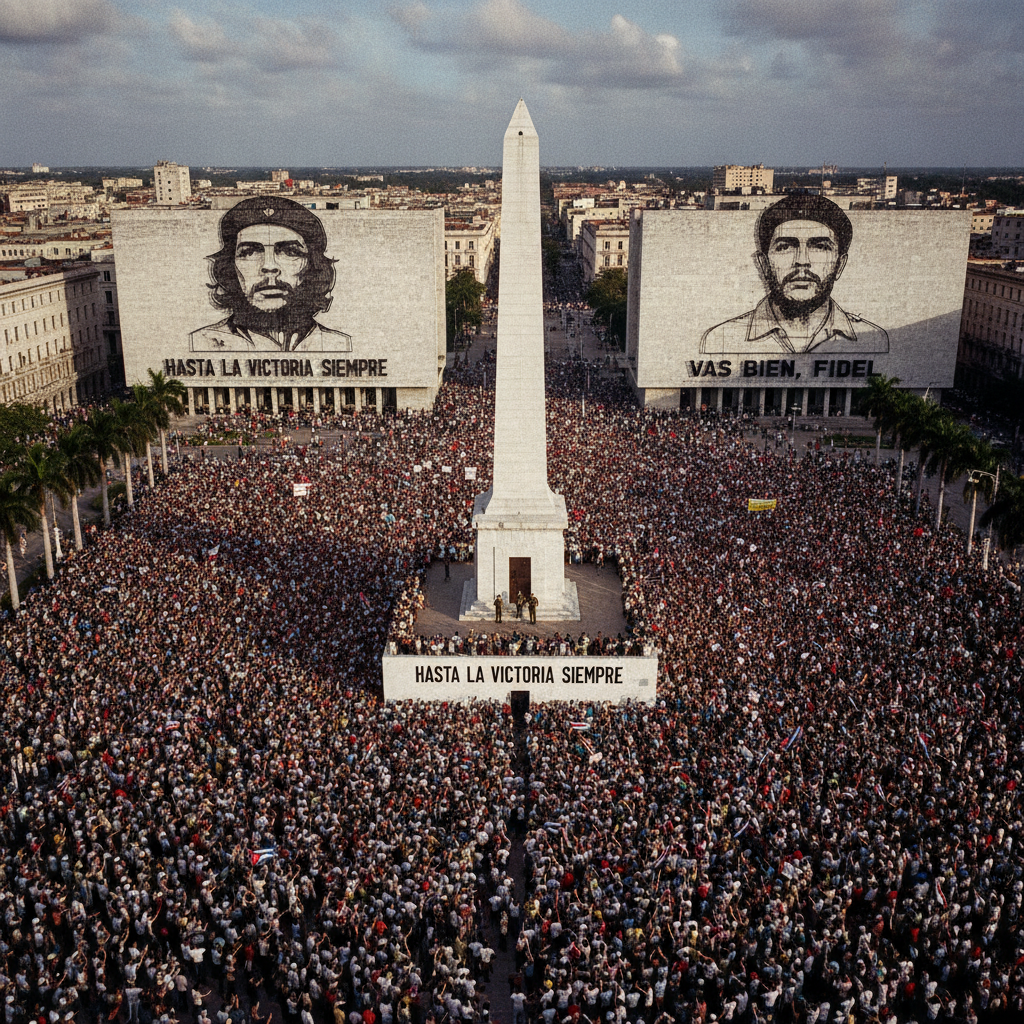
The Cuban Revolution (the political revolution that overthrew the US-backed dictator Fulgencio Batista (1901-1973) on January 1, 1959, when Fidel Castro's (1926-2016) 26th of July Movement guerrilla forces marched into Havana — the revolution that transformed Cuba from one of the most prosperous countries in Latin America (with the highest per capita income in Latin America in the 1950s, after Venezuela) into the only communist state in the Western Hemisphere): the revolutionary sites in Havana (the Revolution Square (the Plaza de la Revolución — the enormous public square in the Vedado district of Havana, with the 109-metre (358-foot) José Martí memorial obelisk and the viewing platform, the Ministry of the Interior building on the north side of the square (on the facade of which the famous wire-frame portrait of Che Guevara's face is mounted, with the 'Hasta la Victoria Siempre' ('Until Victory Always') slogan below)), the Museo de la Revolución (the Museum of the Revolution — housed in the former Presidential Palace of Fulgencio Batista (built 1913-1920 in the eclectic style, with the ornate interior decorated by Tiffany's of New York), the museum that traces the history of the Cuban Revolution from its origins to the present, with the bullet holes from the 1957 student attack on the palace still visible on the exterior facade), and the Memorial Granma (the pavilion adjacent to the Museo de la Revolución that houses the Granma (the 18-metre (59-foot) yacht on which Fidel Castro and 81 other revolutionaries sailed from Mexico to Cuba in November-December 1956, landing in the Oriente Province to begin the guerrilla war that would overthrow Batista 2 years later)).
Walk this route with audio
Stories play automatically as you reach each stop — no tapping needed.
More in havana
Son Cubano, Salsa & Havana's Living Music Culture
Vedado, Plaza de la Revolución & 20th-Century Havana
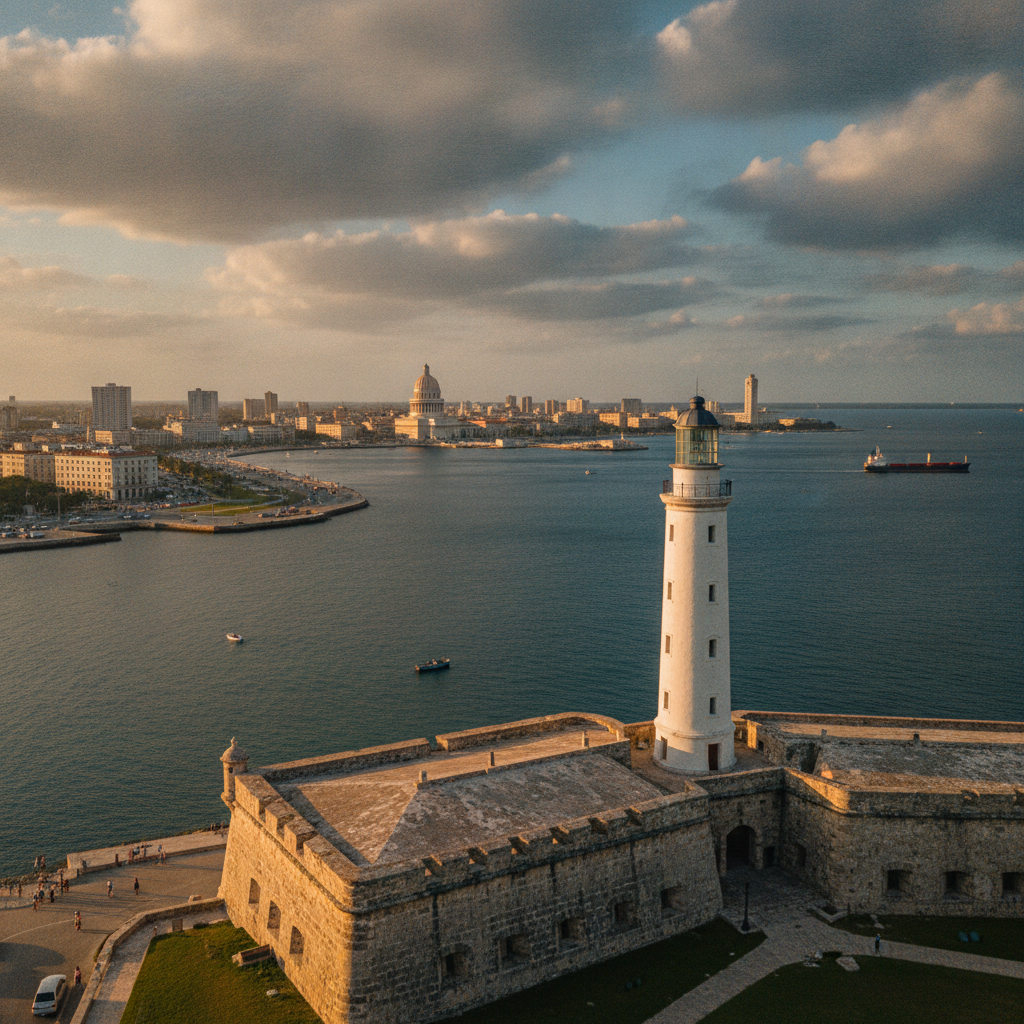
El Morro Fortress, Havana Harbour & The Bay
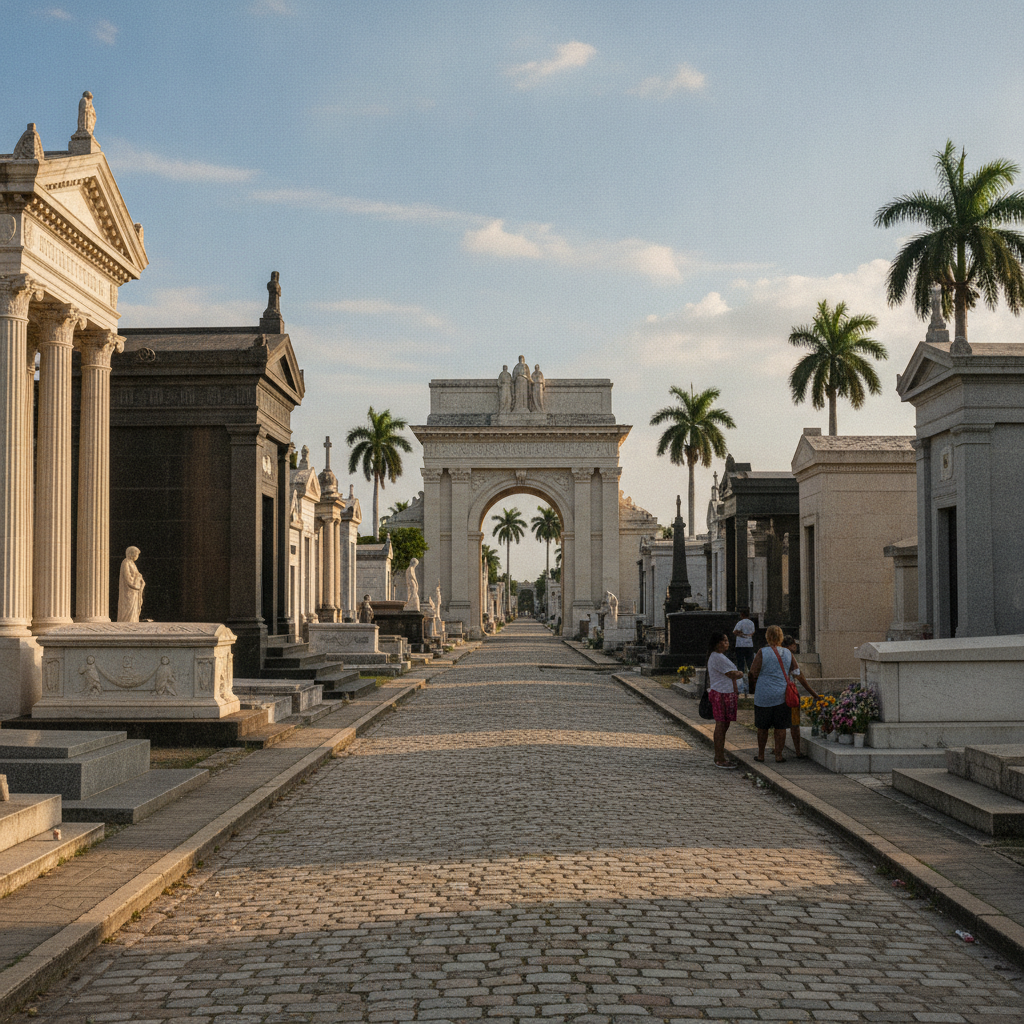
Cementerio de Colón — Havana's City of the Dead
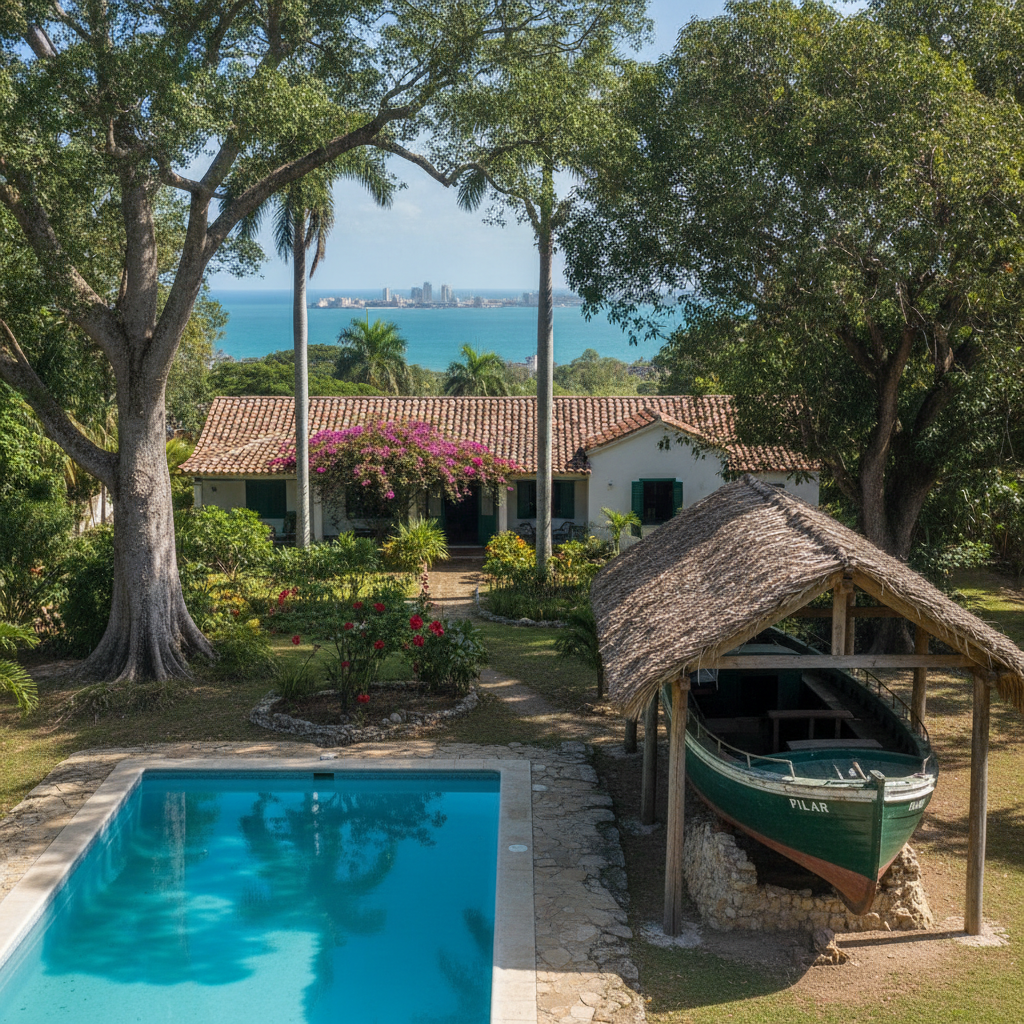
Hemingway's Havana — Finca Vigía, Cojímar & The Old Man and the Sea