Heidelberg — Neckar Cruise, Mannheim Baroque Palace, Worms Cathedral & Speyer's Romanesque Kaiserdom
The Neckar cruise from Heidelberg to Neckargemünd gives the best castle view in Germany. Day trips reach the Baroque grid city of Mannheim, the Romanesque cathedrals of Worms and Speyer, and the most important Reformation monument in the world.
- 1
The Neckar Boat Trip — Heidelberg to Neckargemünd
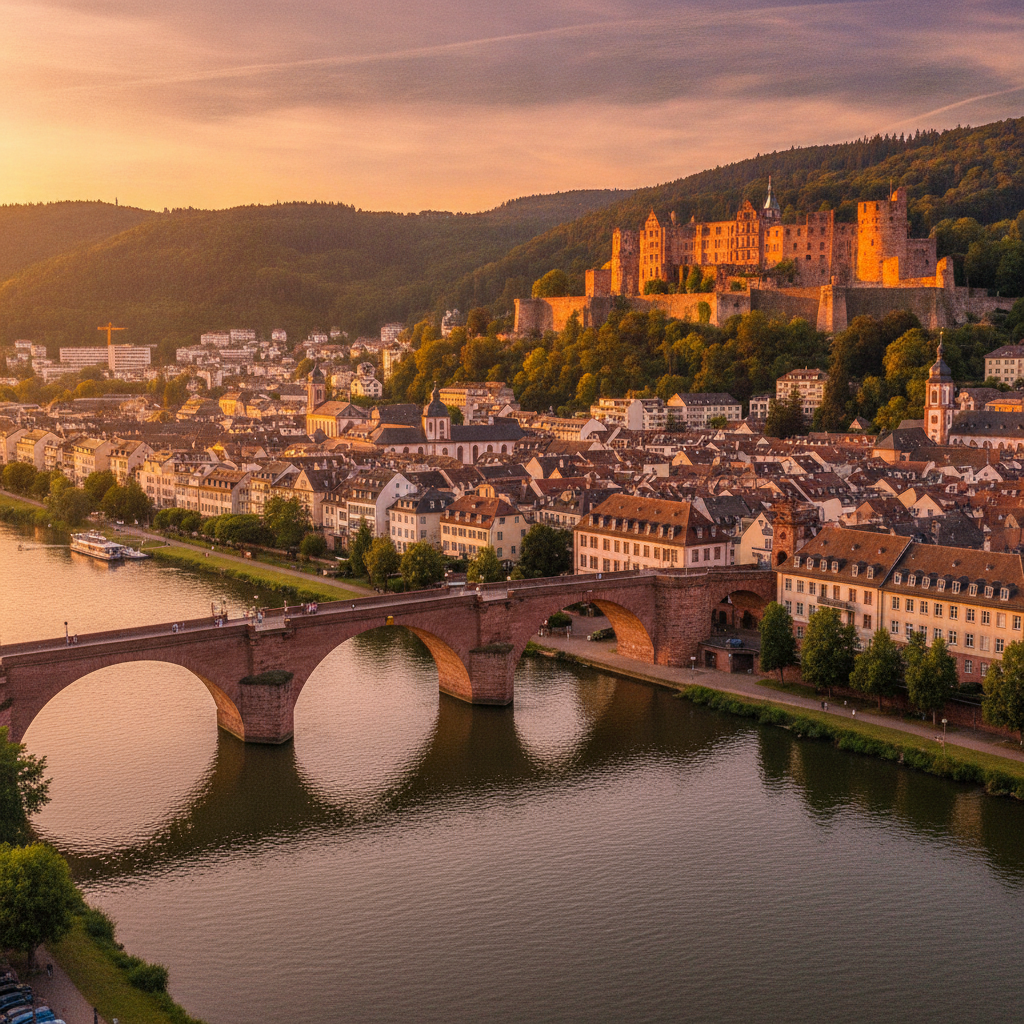
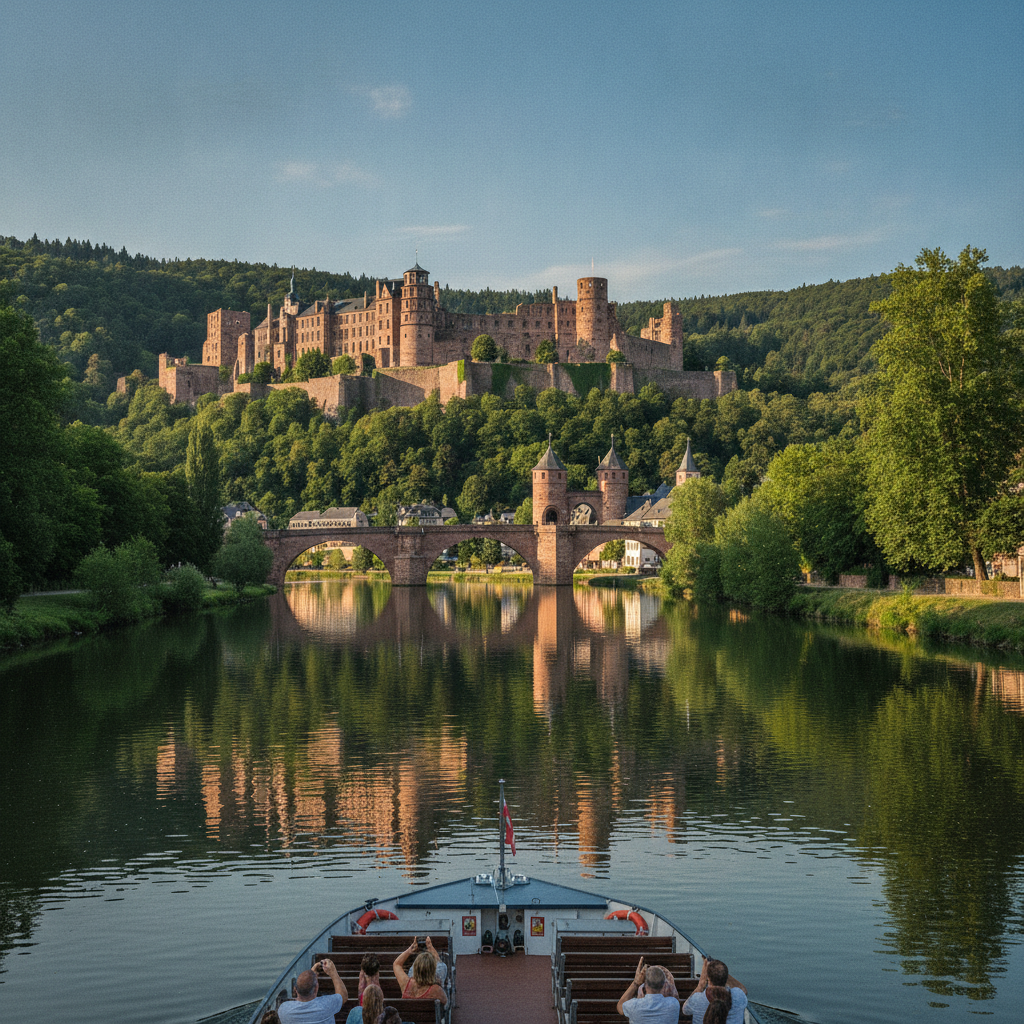
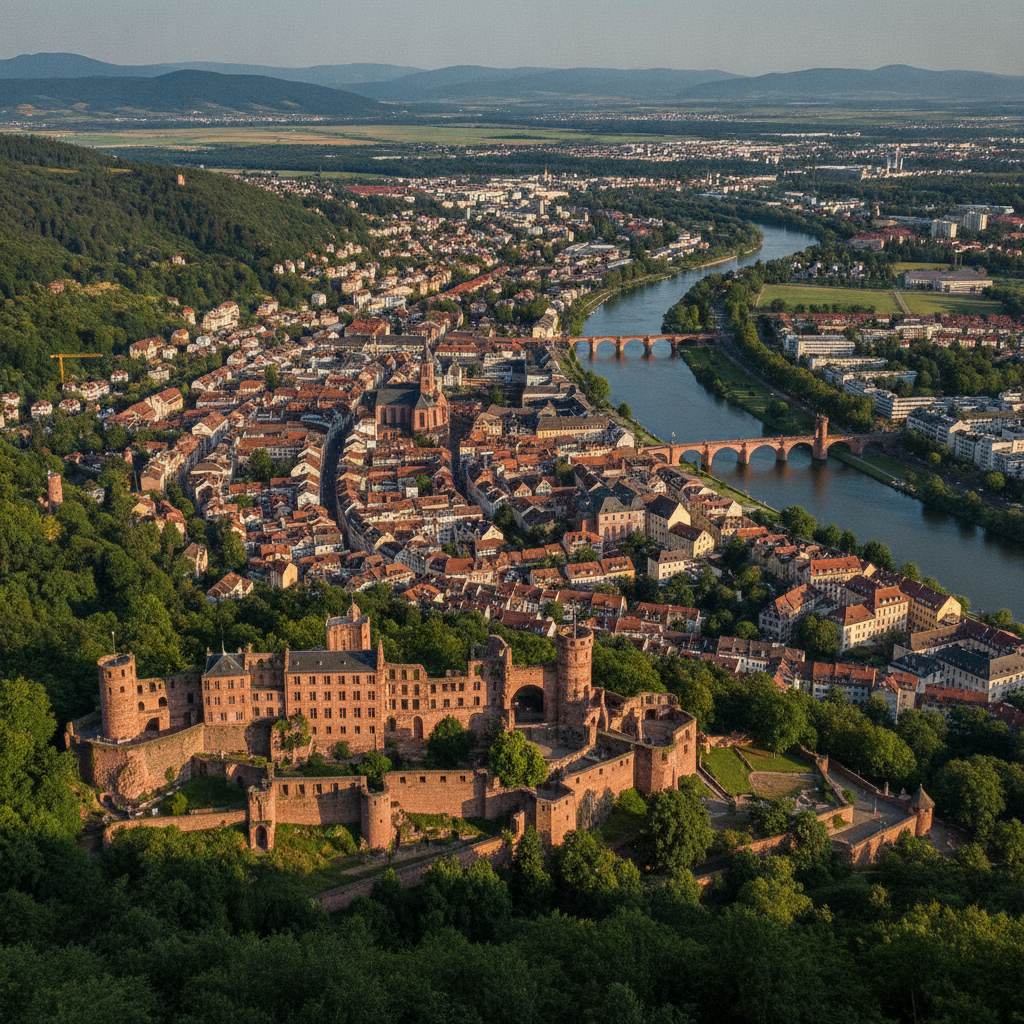
Neckar river cruise (the Heidelberger Personenschifffahrt river cruise from Heidelberg to Neckargemünd — the most scenic river cruise on the Neckar, the 8km river valley between Heidelberg and Neckargemünd the most densely castle-and-village-studded short river stretch in Germany): the cruise (the Heidelberger Personenschifffahrt from the pier at Steingasse 4 — the 2-hour return trip to Neckargemünd, departing daily at 10am, 12noon, 2pm and 4pm from April to October, the most atmospheric single leisure activity from the Heidelberg city centre, the river-level view of the Heidelberg Castle and the Alte Brücke from the water the most architecturally informative and the most photographically rewarding single position not accessible on foot, CHF 13 adults return), the Heidelberg to Ziegelhausen (the first 4km of the cruise from Heidelberg east to Ziegelhausen — the passage under the Theodor-Heuss-Brücke and the Old Bridge, the view up from the river to the castle directly above the most dramatically vertical single castle perspective in Germany, the forested Odenwald hills closing in on both banks as the boat passes the Ziegelhausen sandstone quarry), the Neckarmünzach (the Neckarmünzach hamlet on the south Neckar bank halfway to Neckargemünd — the most picturesquely isolated single Neckar valley hamlet visible from the cruise, the medieval tower and the half-timbered houses directly on the river bank the most precisely valley-idyll single scene on the cruise), the Neckargemünd arrival (the Neckargemünd town — the most charming single Neckar valley destination from Heidelberg, the Neckargemünd Altstadt with the Dilsberg hill visible above, the most atmospherically complete small Neckar town accessible by cruise from Heidelberg, the 1-hour stop at Neckargemünd the standard turnaround break, the Schlossberg terrace restaurant the most panoramically positioned lunch stop in Neckargemünd), the Hölderlin bridge (the Hölderlin Bridge at Nürtingen further upstream — the bridge associated with Friedrich Hölderlin who wrote the 'Heidelberg' poem, the most literary-heritage-associated single bridge in the upper Neckar valley, though not directly on the Heidelberg cruise route the most contextually relevant single upstream Neckar bridge for the Heidelberg visitor interested in Romanticism) and the Neckar fish (the Neckar river fish — the Barbe (Barbel), the Döbel (Chub), and the Hecht (Pike) the 3 most commonly fished species in the Neckar between Heidelberg and Neckargemünd, the Neckarfischerei (river fishing) tradition the most historically rooted single artisan food tradition of the Neckar valley, the Zander (Pikeperch) fillet the most ordered single fish dish in the Heidelberg Neckar riverside restaurants).
- 2
Heidelberg's Weststadt and Bergheim — the Late 19th-Century Districts
Heidelberg Weststadt and Bergheim (the Weststadt and the Bergheim districts west of the Heidelberg Altstadt — the most architecturally intact late 19th-century residential neighbourhoods in Heidelberg, the Gründerzeit (Founders' Era 1871-1914) townhouse streets the most comprehensively historicist domestic architecture in the city): the Weststadt (the Heidelberg Weststadt — the most completely Gründerzeit-townhouse-row residential neighbourhood in Heidelberg, the streets between the Römerstrasse and the Ringstrasse the most comprehensively late-19th-century domestic architecture in the city, the cream-coloured stucco facades and the wrought-iron balconies the most consistent single architectural character of any Heidelberg residential district), the Bergheim (the Heidelberg Bergheim district — the most historically layered single inner district of Heidelberg, the site of the Roman fort (castellum), the 11th-century Bergheim monastery, and the 19th-century townhouse rows all within 500m, the most directly multi-period archaeological district in Heidelberg), the Heidelberg Hauptbahnhof (the Heidelberg Hauptbahnhof (Main Station) — relocated from the Altstadt edge to the current Weststadt position in 1955, the most consequential single 20th-century urban planning decision in Heidelberg (the demolition of the historic station and the opening of the Altstadt east end to through traffic), the current station building the most instructive single example of 1950s German railway architecture in Baden-Württemberg), the Römerstrasse (the Römerstrasse in Bergheim — the longest Roman-road-aligned street in the Heidelberg city limits, the most directly Roman-urban-heritage-associated single named street in Heidelberg, the street running along the exact alignment of the Roman road from the Roman fort to the Ladenburg crossing), the Institut für Technologie (the Heidelberg Karlsruhe Institute of Technology (KIT) satellite campus in Bergheim — the most technically education-focused single campus in the Heidelberg area, the engineering laboratories and the technology transfer centre at the former Bergheim monastery site the most institutionally incongruous single juxtaposition of medieval and modern in Heidelberg) and the Heidelberg cycling infrastructure (the Heidelberg cycling network — the most completely separated urban cycling infrastructure of any German university city under 200,000 population, the VRN rental bikes available at 30 stations across the city at €1 per 30 minutes, the most efficiently priced urban bike rental in Baden-Württemberg, the primary cycling routes: the Neckartalradweg east-west along the river, the Bergstrasse route north, and the Rohrbachtal route south).
- 3
Heidelberg's Science and Technology Heritage
Heidelberg science heritage (the Heidelberg University scientific tradition — the most internationally awarded single German university in the natural and medical sciences, the university's Nobel Prize laureates the most distinguished single scientific community in any German humanities-and-sciences university): the Nobel Prize laureates (the Heidelberg University Nobel Prize laureates — the most Nobel Prize-decorated single German university after Munich LMU and Berlin's institutions: the physics laureates Philipp Lenard (1905) and Walther Bothe (1954), the chemistry laureate Georg Wittig (1979, the Wittig Reaction the most applied single Heidelberg chemistry innovation in pharmaceutical manufacture), the medicine laureates Bert Sakmann (1991) and Harald zur Hausen (2008, the human papillomavirus connection to cervical cancer — the most clinically impactful single Heidelberg medical discovery, the basis for the HPV vaccine programme worldwide), the most directly life-saving single scientific contribution from the Heidelberg academic tradition), the Heidelberg University Hospital (the Universitätsklinikum Heidelberg — the most comprehensively researched single medical institution in Baden-Württemberg, the Heidelberg Cancer Research Centre (DKFZ) at Im Neuenheimer Feld 280 the most internationally recognised single cancer research institution in Germany, the DKFZ the largest single cancer research centre in Europe), the European Molecular Biology Laboratory (the EMBL headquarters at Im Neuenheimer Feld 159 — the most internationally staffed single molecular biology research institution in Europe, the EMBL founded 1974 the most intergovernmentally funded European science institution in Heidelberg, the public open days the most directly accessible single modern research laboratory in Heidelberg for the general visitor), the Heidelberg Ion Beam Therapy Centre (the HIT — Heidelberg Ion Beam Therapy Centre at Im Neuenheimer Feld — the first hospital-based heavy-ion therapy facility in Europe, the most clinically advanced single cancer treatment technology at any European university hospital, the proton and the carbon-ion beams the most precisely targeted single tumour treatment available in Germany), the Max-Planck-Institut für Astronomie (the Max-Planck-Institut für Astronomie (MPIA) at Königstuhl — the most panoramically positioned single astronomy research institute in Germany at the Königstuhl summit, the public guided tours on clear Friday nights the most directly public-accessible single professional observatory in Baden-Württemberg, advance booking required) and the Heidelberg University Physics (the Kirchhoff Institute of Physics at Im Neuenheimer Feld — the institute where Philipp Lenard received his 1905 Nobel Prize for research on cathode rays, the most Nobel-Prize-heritage-associated single physics building in Heidelberg, the exhibition in the institute foyer the most specifically Nobel physics heritage accessible to the public in the Heidelberg campus).
- 4
Mannheim — the Art Deco Grid City and Day Trip
Mannheim day trip (the Mannheim city 20km north of Heidelberg — the most distinctive urban grid plan of any German city, the unique numbered-and-lettered block system the most easily navigable single city street grid in Germany, the Rhine-port city the most architecturally Art Nouveau and Art Deco of any city within the Heidelberg day-trip range): the grid plan (the Mannheim grid — the city planned from 1606 on the strict rectangular grid with the Baroque palace at the north end and the Rhine and Neckar rivers to the north and east, the blocks labelled by letters (A-U) and numbers (1-7) rather than named streets, the most distinctive single urban navigation system in Germany, the grid the most instructively Baroque urban planning example in any German Rhine city), the Mannheim Schloss (the Mannheim Baroque Palace — the Residenzschloss Mannheim, the largest Baroque palace in Germany at 480m facade length, built 1720-1760 for Elector Carl Philipp who moved the Palatinate court from Heidelberg to Mannheim in 1720, the most frequently overlooked single German Baroque royal palace of the first rank, the Rittersaal and the Schlosskirche the most ornate interiors, the Heidelberg university faculty now occupying the palace wings — the most anomalous single use of a German Baroque royal palace), the Reiss-Engelhorn Museum (the MARCHIVUM (Mannheimer Archiv) and the Reiss-Engelhorn-Museen — the most comprehensively Roman-provincial-archaeology-collecting single museum in the Rhine-Neckar metropolitan area, the Weltkulturen Museum (World Cultures Museum) the most internationally ethnographic single collection in Mannheim, the most undervisited single museum of international ethnography in a German Rhine city), the Kunsthalle Mannheim (the Kunsthalle Mannheim — the most significant single German Impressionist and Expressionist painting collection in Baden-Württemberg outside Stuttgart, the new building (2018) the most architecturally ambitious single art museum building in Mannheim, the collection of German Expressionism (Die Brücke and Der Blaue Reiter) the most comprehensive in the Heidelberg day-trip area), the Luisenpark (the Luisenpark Mannheim — the most extensively planted 19th-century public park in Mannheim at 41 hectares, the Mannheim-Heidelberg Bundesgartenschau site of 1975, the Fernmeldeturm (telecommunications tower) the most prominent single structure in the park, the most family-oriented single outdoor space in the Mannheim Rhine-Neckar area) and the Mannheim music (the Mannheimer Schule (Mannheim School) of orchestral composition — the 18th-century Mannheim court orchestra under Johann Stamitz the most technically advanced single orchestral ensemble in 18th-century Europe, the inventor of the 'Mannheim rocket' (the rapid ascending orchestral crescendo) the most directly identifiable single orchestral innovation with a city name in music history, the most musically historically significant single Baroque court in the Rhineland).
- 5
Worms and Speyer — the Romanesque Cathedral Cities Near Heidelberg
Worms and Speyer day trips (the Rhine cathedral cities of Worms (50km south) and Speyer (60km southwest) — the 2 most comprehensively Romanesque cathedral-city destinations within a 1-hour drive of Heidelberg, the most instructive single pair of Romanesque cathedral excursions accessible from any German city): Worms Cathedral (the Wormser Dom (Cathedral of St. Peter at Worms) — the most completely surviving 4-tower Romanesque cathedral in Germany, the cathedral construction from 1130-1181 the most fully Romanesque of the 3 Rhine cathedral programme buildings (Worms, Speyer, Mainz), the interior the most architecturally austere and the most structurally pure of all German Romanesque cathedrals), the Diet of Worms (the Reichstag zu Worms of 1521 — the Imperial Diet before which Martin Luther appeared and issued his 'Here I stand' declaration, the most consequential single event in the European Reformation held in any single German city, the Lutherdenkmal (Luther Monument) in the Lutherplatz the largest single Reformation monument in the world at 11 sculptures), the Speyer Cathedral (the Kaiserdom Speyer — the largest surviving Romanesque building in the world at 134m length, the UNESCO World Heritage site since 1981, the Imperial Cathedral the mausoleum for 8 Holy Roman Emperors and 4 German kings, the most historically significant single Imperial burial site in Germany, the crypt (Kaisergruft) the most completely preserved single Romanesque royal mausoleum in Europe), the Speyer Jewish heritage (the Speyer Judengasse — the medieval Jewish quarter in Speyer, the Mikwe (ritual bath) of 1128 the most completely preserved single medieval Jewish immersion bath in Germany, the SchUM heritage sites (Speyer, Worms, and Mainz — the 3 medieval Rhenish Jewish communities, the UNESCO World Heritage site since 2021 the most recently inscribed single Jewish heritage UNESCO site in Germany), the Worms synagogue (the Worms Synagogue — the Raschi Synagogue at the Hintere Judengasse, the Romanesque women's synagogue (Frauenschule) of 1212-13 the most architecturally significant single surviving medieval synagogue structure in Germany) and the Nibelungenlied (the Nibelungenlied (Song of the Nibelungs) — the most important single German medieval epic poem, set primarily in Worms and the middle Rhine region, the Nibelungenfestspiele (Nibelung Festival) performed annually July-August against the Worms Cathedral facade the most architecturally spectacular single open-air theatrical performance in the Heidelberg regional area).
- 6
Heidelberg Practical — Getting There, Living Costs and Visitor Tips
Heidelberg visitor practical guide (the complete practical visitor information for Heidelberg — the logistics, the costs, and the essential tips for the most effective Heidelberg visit): the transport (the Heidelberg public transport: the S-Bahn from Mannheim Hauptbahnhof in 15 minutes at €3.90 single; the Heidelberg S-Bahn from Frankfurt Hauptbahnhof in 55 minutes via the ICE to Mannheim then S-Bahn; the direct ICE from Frankfurt to Heidelberg in 45 minutes; the Stuttgart ICE to Mannheim in 35 minutes; the HeidelbergCard (€16 for 2 days) the most cost-efficient single visitor transport pass including the Bergbahn, the tram, and the museum entries; the Altstadt entirely pedestrianised in the core zone — the Bismarckplatz to the Marktplatz free of vehicle traffic, the most conveniently pedestrian-zone German city centre for the visitor on foot), the accommodation (the Heidelberg accommodation range — the most expensive accommodation of any German city in the Heidelberg size bracket by average nightly rate due to the castle-view premium: the Hotel Europäischer Hof at Friedrich-Ebert-Anlage 1 the most traditional grand hotel (from €200 per night), the Hotel Zum Ritter at Hauptstrasse 178 in the most historic building in the Altstadt (the only pre-1693 surviving Altstadt building, from €130 per night), the Hotel City the most price-competitive city centre option at €70-90 per night; the cheapest accommodation: the Heidelberg youth hostel (DJH) at Tiergartenstraße 5 at €28-35 per night), the food costs (the Heidelberg food cost range: the Mensa lunch €4-6 the cheapest hot meal in the Altstadt; the Döner Kebab at the Bismarckplatz kiosks €3.50-4.50 the most consistent street food value; the Schnitzel with Sauerkraut at the mid-range Altstadt restaurant €14-18; the Haarlass terrace dinner the most expensive restaurant at €45-65 per head including wine), the castle ticket (the Heidelberg Castle ticket: €9 adults for the castle grounds and the German Pharmacy Museum; the Bergbahn funicular from the Marktplatz: €4 return included in the castle ticket if purchased together at €9, or €12 for the full Königstuhl Bergbahn round trip; the castle the most frequently photographed and the most visited single paid attraction in Heidelberg), the Altstadt crowds (the Heidelberg Altstadt crowd management: the most crowded single hour: Saturday 11am-12noon at the Marktplatz and the castle area; the least crowded: early Sunday morning 7-9am the most atmospheric single time to walk the Hauptstrasse; the most crowded single month: August with 4 million annual visitors making Heidelberg the most visited German city per resident head ratio after Rothenburg ob der Tauber) and the language (the Heidelberg language environment: German the primary language, the most English-language-accommodating single large German city after Berlin, Munich, and Hamburg for the non-German-speaking visitor; the university English-medium research the most internationally anglophone academic environment in the Heidelberg area; the Pfälzer dialect (Pfälzisch) the local vernacular, the most characteristically Rhineland German of any Baden-Württemberg dialect — the 'Gude' greeting the most distinctively Pfälzisch single greeting replacing the standard 'Guten Tag').
Walk this route with audio
Stories play automatically as you reach each stop — no tapping needed.
More in heidelberg
Heidelberg — Castle Illumination, Roman Ladenburg, Baroque Architecture, Odenwald Hiking & Bergstrasse Wine
Heidelberg — Philosophenweg, Wine Country, Museums, Student Culture & Nightlife
Heidelberg — Königstuhl Summit, Handschuhsheim Village, the Electoral Palatinate & Heidelberg in Literature
Heidelberg — Churches, Schwetzingen Garden, Christmas Market, Art Scene & the Full Events Calendar