Helsinki Sauna Culture & Nordic Nature — Public Saunas, Island Life & the Finnish Outdoor Tradition
The sauna is the most important Finnish cultural institution — more saunas than cars in Finland, the sauna the place of birth, death, healing, and socialization in the Finnish tradition. Helsinki's public saunas and island archipelago are the essential complement to the architectural sightseeing.
- 1
The Finnish Sauna — Culture and Protocol
The Finnish sauna (the saunat of Finland — 3.3 million saunas for 5.5 million people, the sauna the social institution of Finland for 2,000 years, the birth place, the negotiating room, the place of healing and the most important domestic space after the kitchen, the Finnish sauna tradition recognized by UNESCO as an Intangible Cultural Heritage of Humanity in 2020): the sauna protocol (the correct use of the sauna: the sauna heated to 70-100 degrees Celsius, the humidity controlled by throwing water on the kiuas — the sauna stove with the pile of heated granite rocks — the water producing the löyly — the steam — the specific sensation of the hot moist air the primary experience of the sauna, the bathers alternating between the sauna and the cooling area — the swim in the lake or the sea, the cool shower, or the outdoor sitting area — the sequence repeated 2-5 times over 1-2 hours, the bathers sitting or lying on the wooden benches in the sauna in silence or in easy conversation, the sauna the rare Finnish context where social inhibitions relax, the birch whisk — vihta or vasta depending on the region — used to stimulate blood circulation by lightly striking the skin, available at the public saunas in season at €5-10), the nakedness (the Finnish sauna is traditionally taken naked, the mixed-gender family sauna the norm in Finnish homes, the public saunas in Helsinki mostly gender-segregated with separate times or separate saunas for men and women, the nudity a matter of hygiene and practical function rather than sexuality, the swimwear acceptable in the public saunas but slightly unusual).
- 2
Löyly Public Sauna — the Award-Winning Design
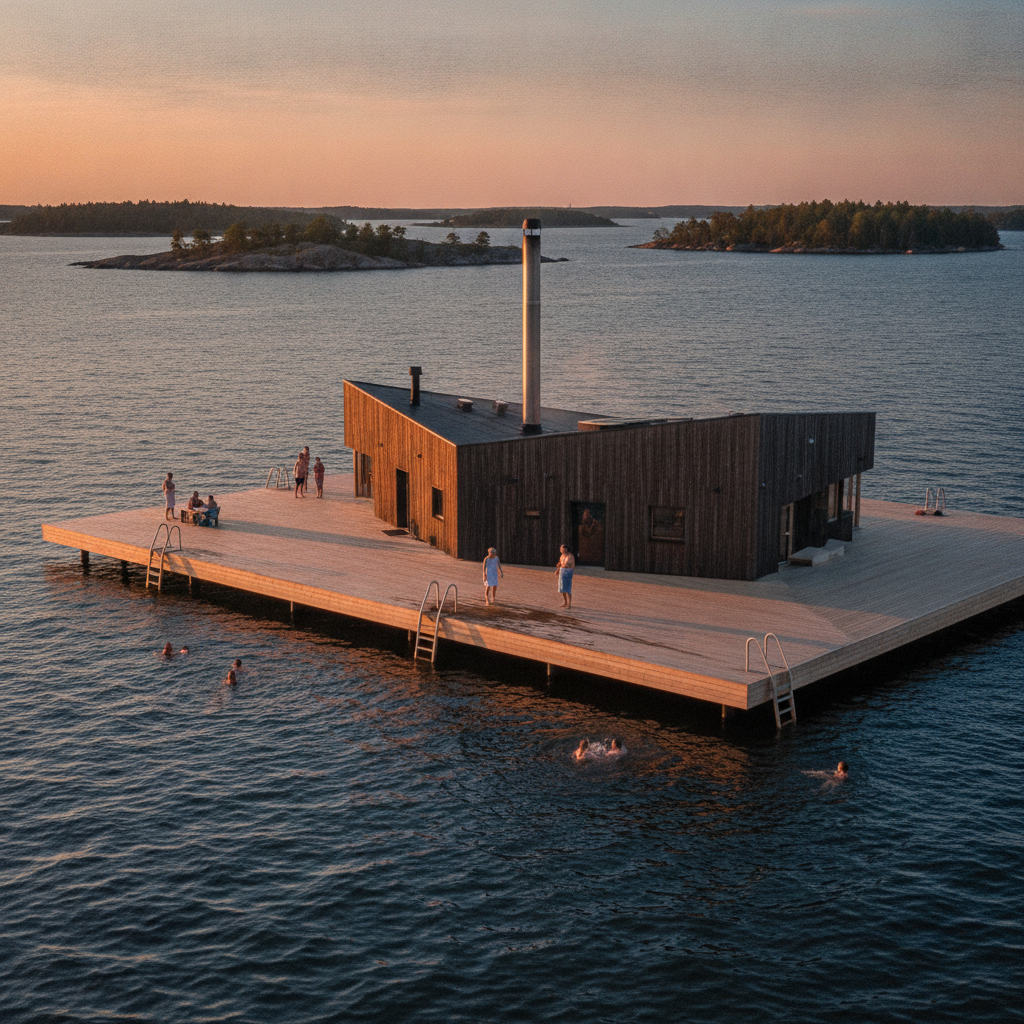
Löyly (Hernesaarenranta 4, the public sauna and restaurant designed by Avanto Architects and opened 2016, the most architecturally significant public sauna in Finland and the most internationally published Finnish building of 2016, €19 adults for the 2-hour sauna session, the booking at loylyhelsinki.fi recommended 1 week in advance for weekends in summer, Monday-Sunday 11am-11pm): the building (the dark stained timber cladding of the angular building on the Hernesaari waterfront 1.5km south of the Market Square, the multiple sauna rooms — the smoke sauna the most traditional, the wood-heated sauna, the electric sauna — and the sea platform with the swimming ladder, the outdoor terrace with the view to the archipelago, the restaurant serving the Finnish wood-grilled food and the craft beer), the sauna types at Löyly (the savusauna — smoke sauna — the most traditional Finnish sauna type, the kiuas heated without a chimney so the smoke fills the room and then clears, the walls blackened from centuries of use, the softest steam and the most aromatic atmosphere; the ordinary wood-heated sauna with the kiuas and the chimney, the most common Finnish sauna type; the sea swimming platform — the Baltic Sea water at 5 degrees in February and 20 degrees in August, the shock of the cold water the essential complement to the sauna heat — and the outdoor terrace restaurant (the grilled Finnish fish and meat, the Finnish craft beer on tap, the view to the Helsinki archipelago the best of any restaurant terrace in the city at €20-35 per main).
- 3
Allas Sea Pool — the Floating Sauna at the South Harbour
Allas Sea Pool (Katajanokanlaitta 2a, at the South Harbour, the floating pool and sauna complex opened 2016, the most central public sauna in Helsinki — 200m from the Market Square, €17 adults for the sauna and the pools, daily 6am-11pm, the booking at allasseapool.fi recommended but walk-ins possible on weekdays): the pools (the three outdoor pools — the 25m lap pool, the family pool, and the seawater pool filled directly from the harbour — the pools heated to 25-28 degrees year-round, the outdoor sauna terrace alongside, the views of the Helsinki Cathedral and the ferry traffic of the South Harbour from the pool level the best pool view in any Nordic capital), the sauna (the wood-heated sauna at Allas the most classically Finnish of the central Helsinki public saunas, the sauna terrace adjacent to the seawater, the jump from the sauna directly into the Baltic the most exhilarating 5-second experience in Helsinki) and the year-round use (the Allas Sea Pool one of the few outdoor public pools in Finland open every day of the year — the pools heated through the winter, the sauna operating at full capacity in January, the avantouinti — ice swimming, the winter sport of jumping into the frozen sea through a hole cut in the ice — practiced at the pool with the ice breaking done by the Allas staff in the coldest winter weeks, the most extreme sauna experience available at Allas in February at -15 degrees outdoor temperature with steam rising from the heated pool water).
- 4
Suomenlinna — the Sea Fortress UNESCO Site
Suomenlinna (the sea fortress on 8 islands, UNESCO World Heritage Site 1991, the ferry from the Market Square in 15 minutes at €5 return on the HSL ticket, the fortress the most visited tourist attraction in Finland): the history (the Swedish sea fortress begun 1748 under the engineer Augustin Ehrensvärd, the largest naval fortress in 18th-century northern Europe, the fortress intended to protect the Swedish Empire's eastern flank from Russian expansion, the fortress surrendered to the Russian Empire in 1808 when the Swedish army was simultaneously defeated in the north — one of the most complete strategic reversals in Baltic history — subsequently used by the Russian Imperial Navy as a base, the fortress renamed Sveaborg by the Swedes, Viapori by the Finns, and Suomenlinna — Finland's Castle — after independence in 1918): the Suomenlinna Museum (the free museum in the main building near the HSL ferry pier, the 30-minute film in English the correct introduction, the permanent exhibition on the fortress history free with the ferry ticket — no, wrong, the museum is €8 separate — the King's Gate — the ceremonial sea gate of 1753 the most important architectural element on the island, the baroque stone arch facing the sea), the fortress atmosphere (the 800 permanent residents, the only inhabited UNESCO World Heritage Site in Finland, the brewery and restaurant cluster near the King's Gate, the 8km of fortification walls walkable in 3-4 hours, the most complete escape from the city in 15 minutes from the Market Square) and the Submarine Vesikko (the 1933 Finnish Navy submarine moored at the island quay, €5 adults May-September, the only surviving submarine from the Finnish Navy's World War II fleet).
- 5
Helsinki's Neighbourhoods — Kallio, Punavuori and Kruununhaka
Helsinki neighbourhoods beyond the tourist centre: Kallio (the working-class district north of the city centre, the neighbourhood of the 1900s-1930s apartment blocks, the most vibrant bar and restaurant scene in Helsinki — the Pitkänsillan pohjoispuoli, 'north of the long bridge' — the district with the highest density of independent cafes, record shops, and vintage clothing in Finland, the Hakaniemi market at its southern tip, the Kallio church at Itäinen Papinkatu 2 — the neoclassical church of 1912, the most dramatic church interior in the Helsinki working-class districts — the nightlife on Vaasankatu and Helsinginkatu the most varied in the city from Thursday to Saturday), Punavuori (the 'Red Hill' district southwest of the city centre, the most rapidly gentrifying neighbourhood in contemporary Helsinki — the former working-class district of the 19th century now the location of the Finnish art and design gallery scene, the best independent restaurants, and the most stylish coffee shops in the city, the UFF vintage shops and the independent concept stores on Iso Roobertinkatu the retail street of the Helsinki creative class) and Kruununhaka (the 'Crown Quarter', the oldest residential district in Helsinki adjacent to Senate Square, the 18th-century townhouses and the 19th-century apartment buildings, the quietest and most historically layered neighbourhood in the city centre, the Helsinki City Museum at Aleksanterinkatu 16 in the former primary school of 1842 — the social history of Helsinki from the fishing village to the capital, free, Monday-Friday 9am-5pm, Sunday 11am-5pm).
- 6
Helsinki in Winter — Darkness, Light and the Finnish Resilience
Helsinki in winter (the city at 60°N latitude experiences the most dramatic winter of any European capital — the sun rising at 9:30am and setting at 3:15pm on the shortest days of December, the darkness the defining condition of the Finnish winter, the Finnish word kaamos for the winter darkness a concept without translation in most other languages): the Helsinki response to the winter (the cafes and the restaurants of the city fully operational and atmospheric in the winter dark — the candlelit interiors, the hot glögi — the Finnish mulled wine served with raisins and almonds — the sauna culture at its most relevant and most therapeutic in the darkest months, the Finns consistently rating among the world's happiest populations in the annual UN World Happiness Report despite the darkness — the Finnish concept of sisu, the untranslatable quality of resilience and grit in the face of adversity, the cultural framework that makes the winter darkness a source of Finnish identity rather than a problem): the Helsinki winter attractions (the outdoor ice rink at Senate Square — the most atmospheric skating venue in Helsinki from December to March, free entry with skate rental at €5 — the Christmas market at Senate Square in December, the traditional Finnish Christmas market with the glögi and the Finnish handicrafts — and the Northern Lights — the aurora borealis visible from Helsinki 10-20 times per year, most clearly from the dark parks and the island fortresses of the Helsinki archipelago, the app 'My Aurora Forecast' the most used tool for the Helsinki aurora prediction).
Walk this route with audio
Stories play automatically as you reach each stop — no tapping needed.
More in helsinki
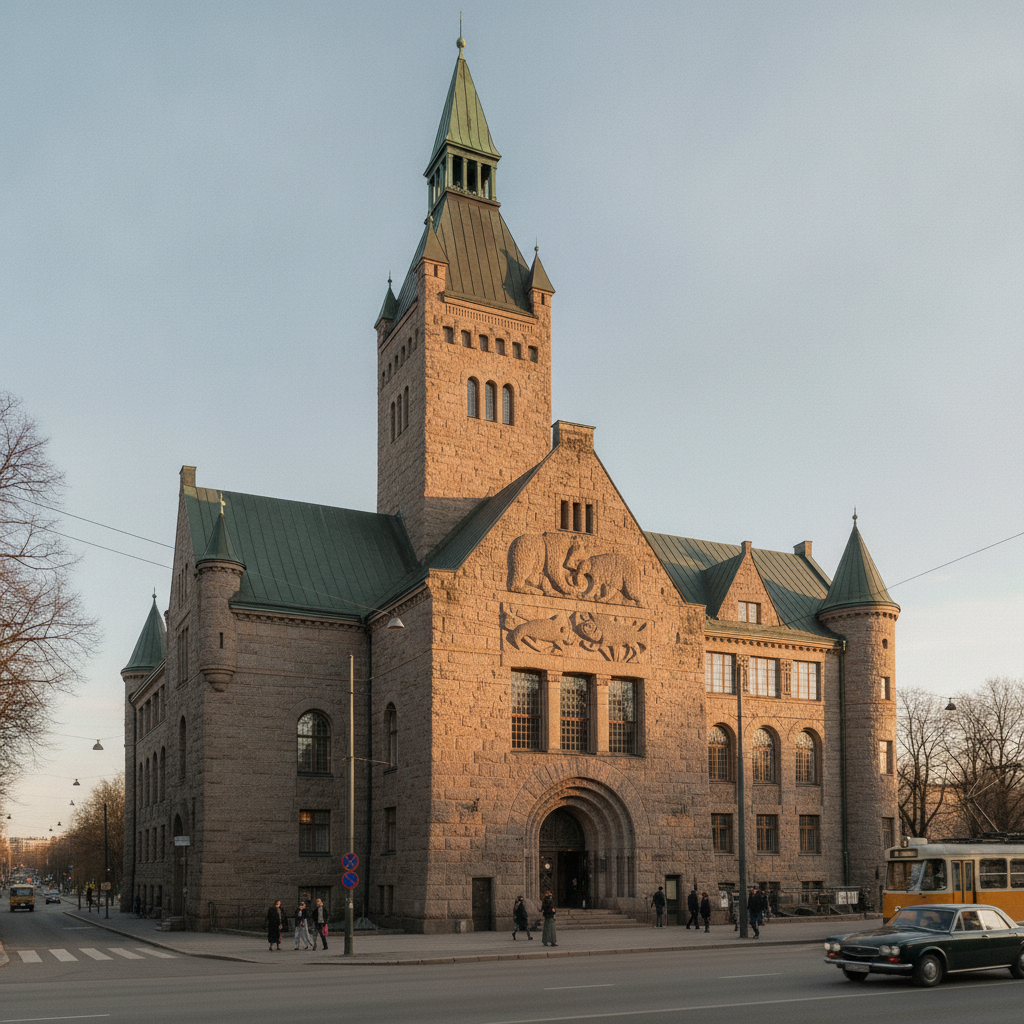
Helsinki Museums & Finnish History — the National Museum, Ateneum & the Finnish Cultural Identity
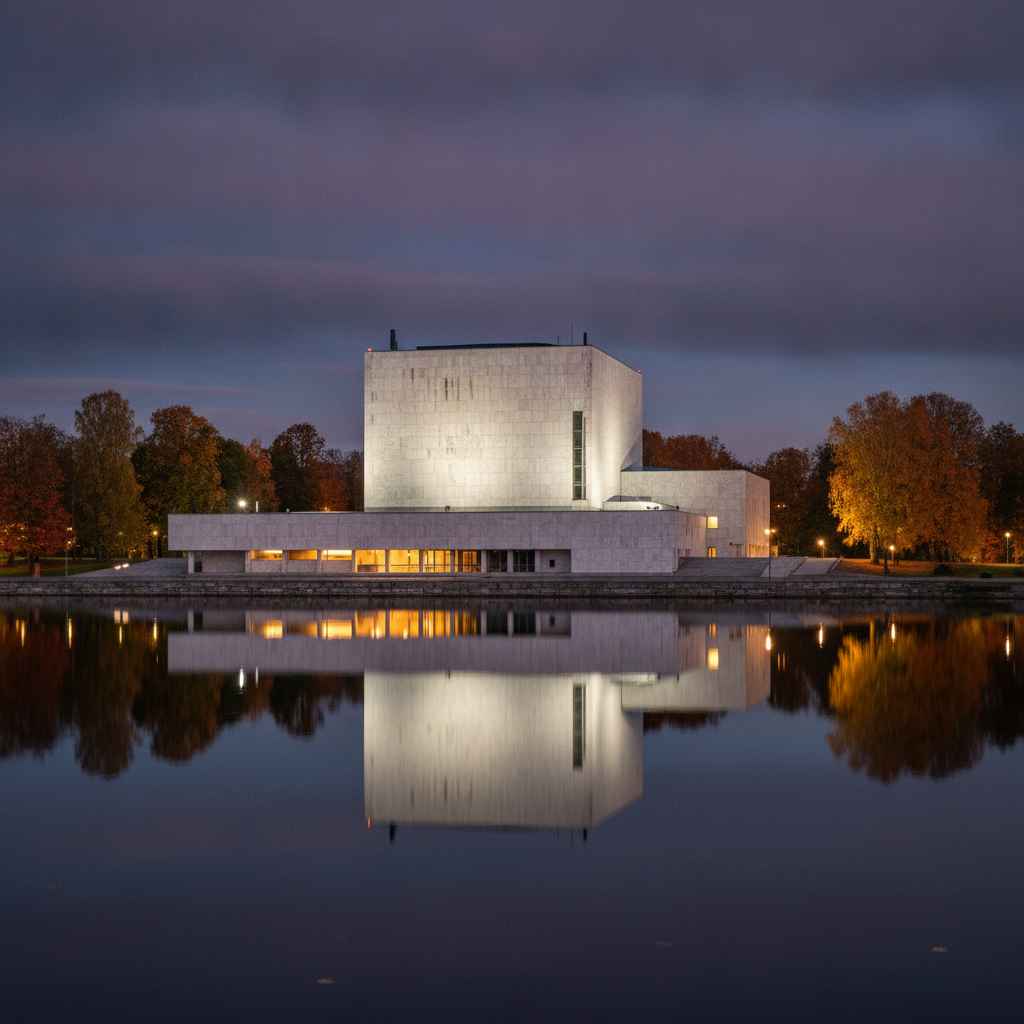
Helsinki Design & Architecture — Alvar Aalto, Finnish Modernism & the Design Capital of Scandinavia
Helsinki Day Trips & Connections — Porvoo Old Town, the Tallinn Ferry & the Finnish Archipelago
Helsinki Food & Markets — Nordic Cuisine, Hakaniemi Market Hall & the Finnish Culinary Tradition