Saigon River, District 2 & the New Face of Ho Chi Minh City
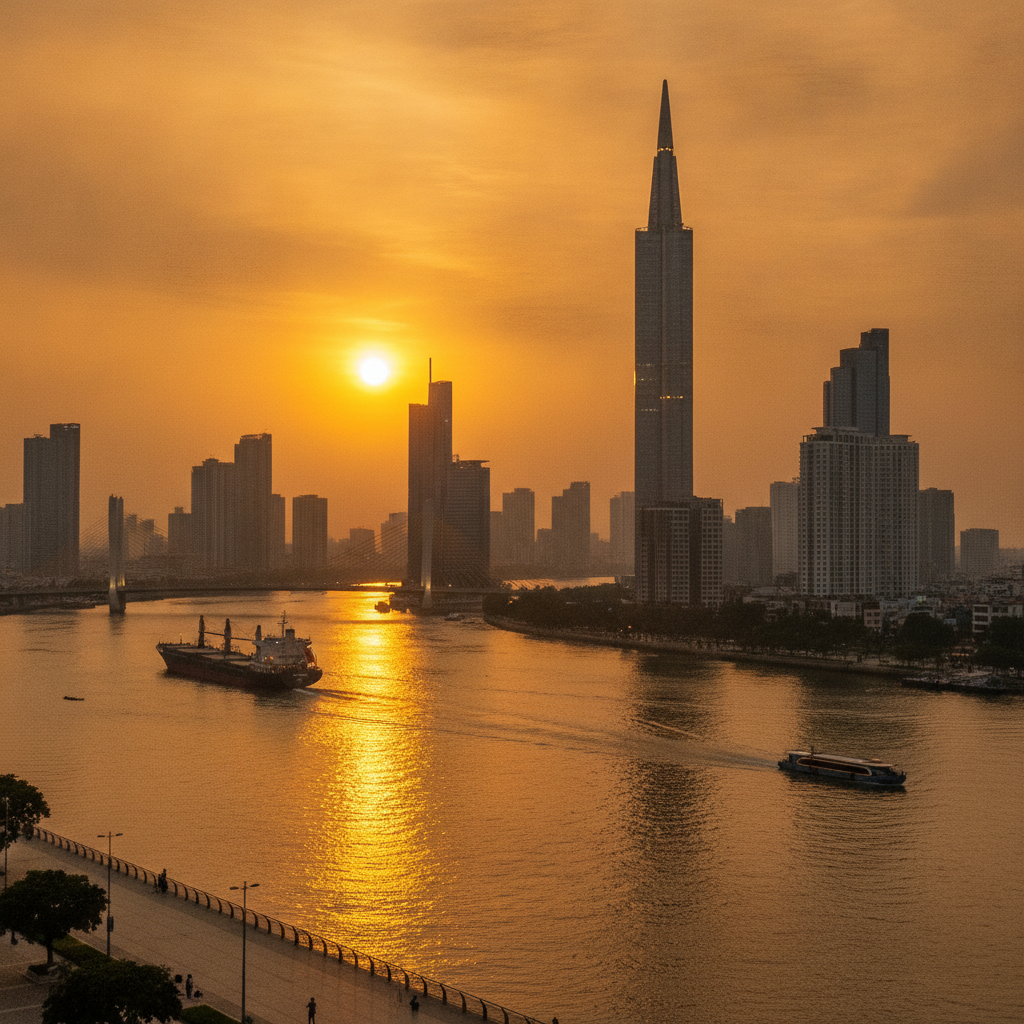
The Saigon River waterfront and the emerging District 2 (Thu Duc City) across the river show a radically different face of Ho Chi Minh City from the colonial and wartime heritage of District 1 — the ultra-modern new city rising on the east bank of the Saigon River is Vietnam's most ambitious urban development project and a glimpse of the country's future.
- 1
Thu Thiem New Urban Area — Vietnam's Future City
Thu Thiem New Urban Area (Khu đô thị mới Thủ Thiêm — the 930-hectare development on the east bank of the Saigon River, directly opposite the Bund-style waterfront of District 1 — the largest single urban development project in Vietnam): the Thu Thiem development (master-planned by the Sasaki Associates firm (the Boston-based urban planning firm that also planned the Pudong New Area in Shanghai) in the late 1990s, with construction beginning in earnest in the 2010s) is transforming a former wetland and informal settlement area into a new CBD (central business district) with approximately 100,000 permanent residents and 500,000 daily workers when complete; the Landmark 81 tower (Tòa nhà Vinhomes Landmark 81 — the 461-metre, 81-floor skyscraper completed in 2018, the tallest building in Vietnam and the 14th tallest building in the world at the time of its completion, designed by the British firm Atkins — the most dramatic addition to the Ho Chi Minh City skyline and the new visual landmark of the city) anchors the waterfront of the new district; the Thu Thiem Tunnel (Hầm Thủ Thiêm — the 1.49 km four-lane underwater tunnel connecting District 1 to Thu Thiem under the Saigon River, opened 2011) and the new Thu Thiem 2 Bridge (the cable-stayed bridge opened in 2022, the most photogenic bridge in the city) are the primary connections.
- 2
District 2 & the Expat Quarter — Thao Dien
Thao Dien (Thảo Điền — the affluent residential neighbourhood in District 2 (now part of Thu Duc City), on the east bank of the Saigon River directly north of the Thu Thiem development — the primary expatriate residential and dining district of Ho Chi Minh City): Thao Dien (the neighbourhood characterized by its tree-lined streets, low-rise villas, and the high concentration of international schools (the British International School, the Australian International School, the Renaissance International School), international supermarkets (An Phu Market (Siêu thị An Phú)), and international restaurants) has been the preferred address for foreign residents of Ho Chi Minh City since the early 2000s; the Thao Dien dining scene (the most internationally diverse restaurant scene in Vietnam, with high-quality restaurants representing virtually every major world cuisine) is centred on Xuân Thủy Street and the surrounding streets; the Saigon River waterfront in Thao Dien (the riverfront promenade and the handful of waterfront restaurants and bars overlooking the river) offers the finest views of the river away from the main waterfront.
- 3
Saigon River Cruise — The City from the Water
The Saigon River cruise (the evening dinner cruise (tàu du lịch sông Sài Gòn) departing from the Bach Dang Wharf (Bến Bạch Đằng) on the Ton Duc Thang Boulevard waterfront of District 1, sailing south on the Saigon River past the port and the container terminals before returning): the river cruise (typically 1.5-2 hours, with dinner buffet of Vietnamese food, traditional music (đờn ca tài tử and quan họ folk music), and views of the illuminated city skyline from the river) offers the best single view of the entire Ho Chi Minh City skyline; as the boat moves south from the city centre (passing the Ben Nghe Canal (Kênh Bến Nghé), the Nha Rong Harbour (Bến Nhà Rồng — where Ho Chi Minh departed for France in 1911 as a ship's cook under the name Van Ba, beginning his 30-year journey that would lead to the founding of the Viet Minh independence movement), the Cat Lai Container Port (the largest container terminal in Vietnam, handling approximately 6 million TEUs per year, the largest port complex in Southeast Asia by volume), and the extensive mangrove (rừng ngập mặn) and industrial landscape south of the city) the full scale of Ho Chi Minh City as a working port becomes visible.
- 4
Landmark 81 Sky Bar — Vietnam's Highest Viewpoint
Landmark 81 (Tòa nhà Vinhomes Landmark 81 — the 461-metre skyscraper in the Vinhomes Central Park residential development in Binh Thanh District, on the north bank of the Ben Nghe Canal (Kênh Bến Nghé) approximately 2 km north of the city centre — the tallest building in Vietnam and (at the time of completion in 2018) the 14th tallest in the world): the SkyView observation deck and SkyBar (on the 79th-81st floors of Landmark 81, at approximately 380-400 metres above ground — the highest publicly accessible viewpoint in Vietnam) offers a 360-degree panoramic view encompassing the full extent of the Ho Chi Minh City metropolitan area (the flat Mekong Delta plain extending to the south and west, the Saigon River winding from the north through the city to the sea, the emerging skyline of the Thu Thiem development visible across the river, and the sprawling low-rise urban fabric of the city (covering approximately 2,095 km², the entire area visible on a clear day) extending to the horizon in all directions); the SkyBar (the cocktail bar on the 79th floor with panoramic views, the most glamorous bar in Vietnam) is the essential luxury experience in Ho Chi Minh City.
- 5
Vietnamese Coffee & Café Culture in Ho Chi Minh City
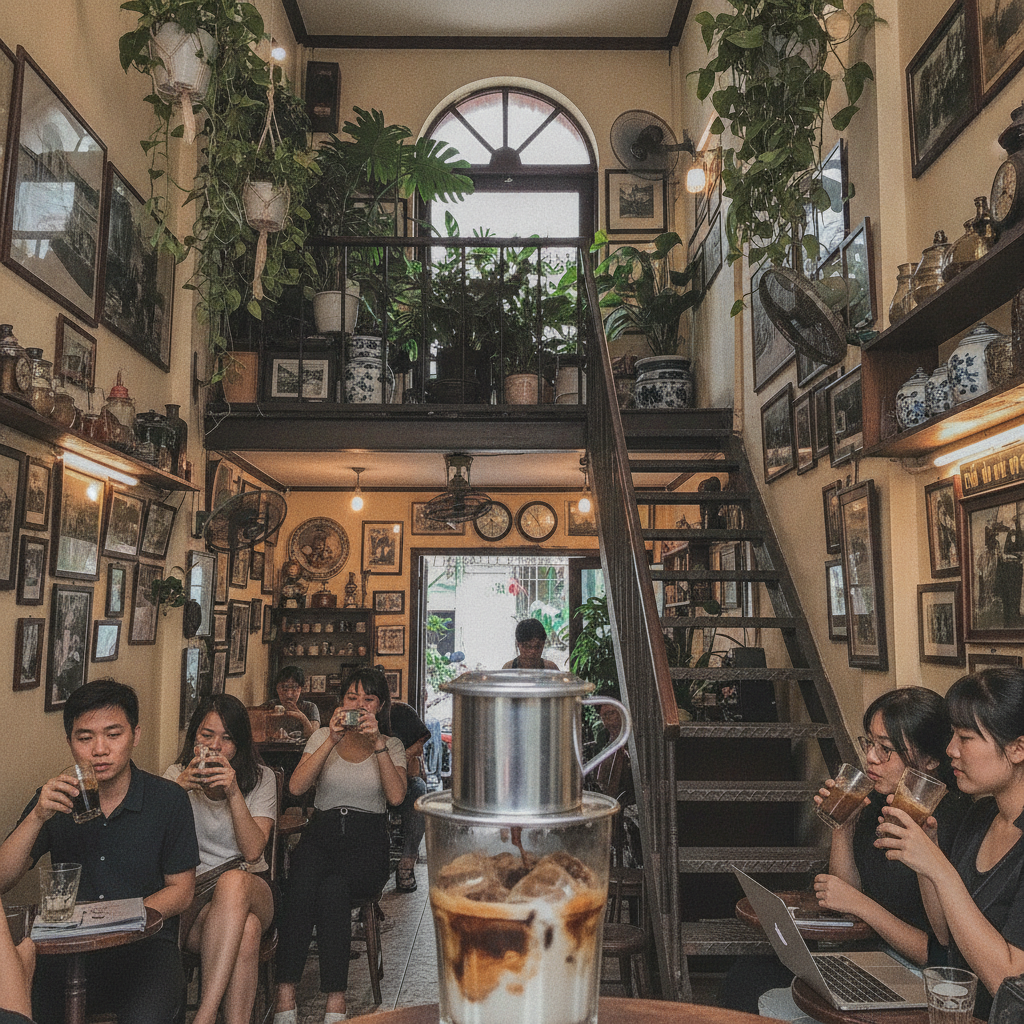
Vietnamese coffee culture (cà phê Việt Nam — one of the most distinctive national coffee cultures in the world, based on the Robusta coffee bean (cà phê Robusta — Vietnam is the world's largest producer of Robusta coffee (approximately 1.5-1.7 million tonnes per year, approximately 16% of world coffee production), grown primarily in the Dalat highlands (Tây Nguyên — the Central Highlands region of Vietnam), roasted dark and brewed in the phin (phễu cà phê — the single-serve metal drip filter (the small stainless-steel or aluminium filter placed on top of the glass, with the ground coffee in the filter basket and the hot water poured over the top, the coffee dripping slowly into the glass over 5-10 minutes)) and served with sweet condensed milk (sữa đặc (the sweetened condensed milk (originally Nestlé sữa Ông Thọ — the most famous Vietnamese brand of condensed milk), poured into the glass before or mixed with the dripped coffee)), iced (cà phê đá) in the hot climate): the café scene of Ho Chi Minh City (the estimated 25,000+ independent cafés in the city, the highest café-per-capita ratio of any city in Southeast Asia) is characterized by the incredible diversity of café concepts — from the traditional Vietnamese street-side cà phê vỉa hè (the plastic-stool pavement café, the cheapest and most authentic coffee experience) to the elaborately designed concept cafés (the 'heritage cafés' in refurbished French colonial villas, the industrial-loft cafés, the garden cafés with tropical plants) to the global chains (Starbucks, The Coffee Bean & Tea Leaf, Highlands Coffee (the most successful Vietnamese coffee chain, with over 700 branches in Vietnam)).
- 6
Reunification & the Modern Vietnamese Identity
The reunification of Vietnam (Thống nhất Việt Nam — the reunification of North and South Vietnam on July 2, 1976, following the Fall of Saigon on April 30, 1975 — the most transformative event in modern Vietnamese history) and its legacy in contemporary Ho Chi Minh City: the city (renamed Ho Chi Minh City in 1975 but still widely called Saigon by residents, particularly the older generation and the business community) has been shaped by the complex interaction between the pre-1975 legacy (the cosmopolitan, commercially dynamic South Vietnamese city with its French colonial infrastructure, Chinese commercial community, and American cultural influence) and the post-1975 Communist government period (the 're-education camps' (trại cải tạo — the camps where an estimated 200,000-300,000 former South Vietnamese government officials, military officers, and professionals were detained for political re-education in the years following reunification — one of the most painful aspects of the post-war period in the South), the nationalization of private businesses, and the mass emigration of the Vietnamese Chinese (Hoa) community following the 1978 Sino-Vietnamese War) and the Đổi Mới (Renewal) reform period (1986-present), which has transformed Vietnam into one of the fastest-growing economies in Asia.
Walk this route with audio
Stories play automatically as you reach each stop — no tapping needed.
More in ho-chi-minh-city
Mekong Delta & Floating Markets — The River World Beyond Saigon
Phở, Bánh Mì & Saigon Street Food — Vietnam on a Plate
Ben Thanh Market, District 1 & the Colonial Heart of Saigon
Saigon After Dark — Rooftop Bars, Night Markets & the City That Never Sleeps
Jade Emperor Pagoda & Saigon's Temple Culture