War Remnants Museum, Cu Chi Tunnels & the History of the American War
Ho Chi Minh City (Thành phố Hồ Chí Minh — the largest city in Vietnam by population (approximately 9-13 million including the metropolitan area), known as Saigon (Sài Gòn) until 1975, renamed after the revolutionary leader Hồ Chí Minh following the fall of the city on April 30, 1975 — the most significant event in recent Vietnamese history and the defining moment of the Vietnam War (known in Vietnam as the 'American War' (Chiến tranh Chống Mỹ cứu nước — 'War of Resistance Against America')): the city's wartime history and the physical and cultural traces of the conflict are the most powerful and internationally significant aspects of the city for outside visitors.
- 1
War Remnants Museum — The Vietnamese Perspective on the American War
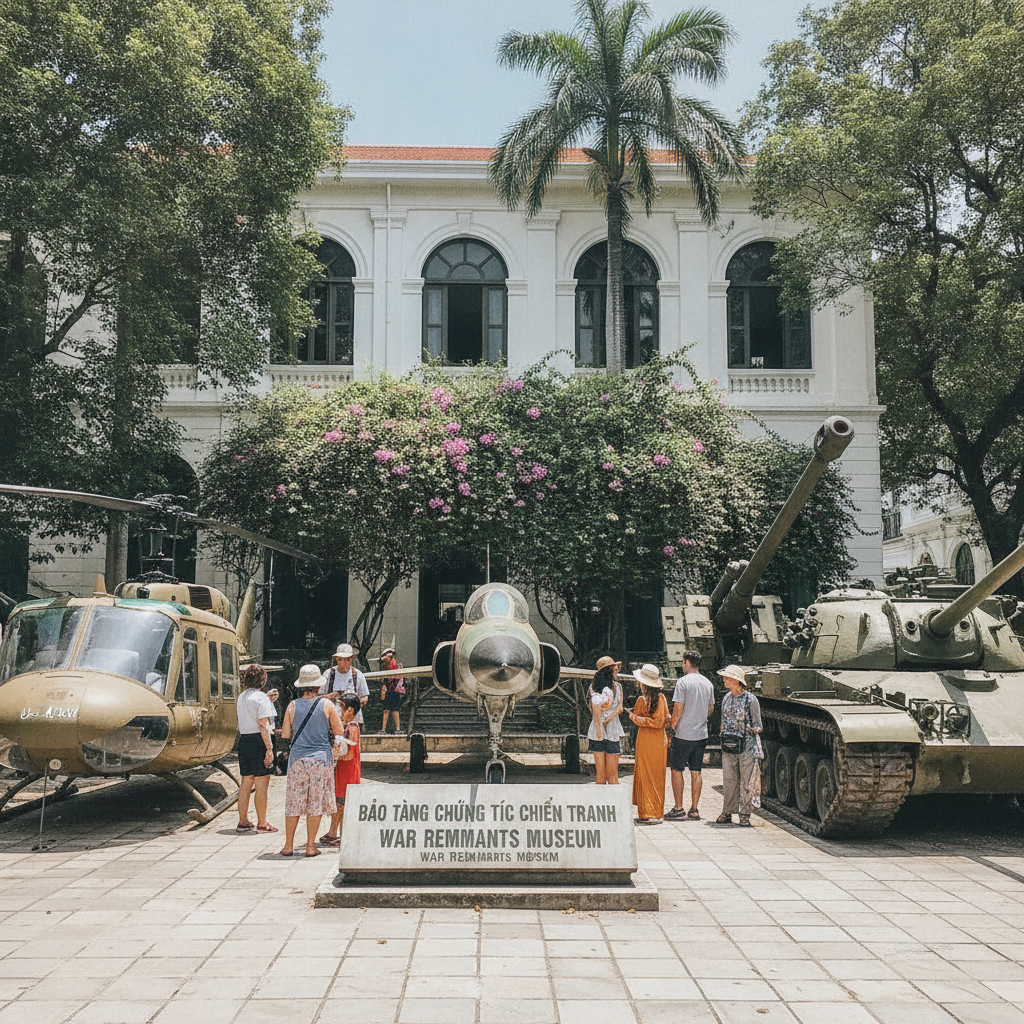
War Remnants Museum (Bảo tàng Chứng tích Chiến tranh — 'Museum of War Vestiges', at 28 Võ Văn Tần Street in District 3 — the most visited museum in Vietnam (approximately 500,000 visitors per year, a majority of them foreign tourists, making it the most internationally visited museum in the country) and the most politically significant museum in Southeast Asia): originally named the 'Exhibition House for US and Puppet Crimes' when it opened in 1975, then renamed the 'Museum of American War Crimes', and finally given its current neutral name in 1995 in the context of the normalization of US-Vietnam relations; the museum's collection (photographs (particularly the work of photographer Nick Ut whose 'Napalm Girl' (1972) is one of the most famous photographs in history, and of Huynh Cong Ut and Associated Press photographers whose wartime images constitute the defining visual record of the conflict), the preserved 'tiger cages' (the solitary confinement cells from the Con Dao prison where political prisoners were kept under the South Vietnamese and US-supported government), and the outdoor display of captured US military equipment (F-5A jet fighter, UH-1 Huey helicopter, M48 Patton tank, CBU-55 fuel-air explosive bomb (the most destructive conventional bomb used in the Vietnam War))) makes a profound impact on every visitor; the Agent Orange Gallery (the documentation of the long-term health effects of the US military's use of Agent Orange herbicide (Operation Ranch Hand, 1961-1971 — the spraying of 76 million litres of Agent Orange and other herbicides over southern Vietnam, Laos, and Cambodia)) is the most disturbing and politically contested section of the museum.
- 2
Reunification Palace — The Fall of Saigon
Reunification Palace (Dinh Thống Nhất — 'Independence Palace', at 135 Nam Kỳ Khởi Nghĩa Street in District 1 — the former residence and working headquarters of the President of the Republic of Vietnam (South Vietnam) from 1966 to April 30, 1975 — the most historically resonant single building in Ho Chi Minh City): the palace (built 1966 on the site of the French colonial Norodom Palace (1871), designed by Vietnamese architect Ngô Viết Thụ in the modernist style) was the site of the most iconic moment of the Fall of Saigon: at 11:30 AM on April 30, 1975, North Vietnamese Army (NVA) Tank 844 (a T-54 medium tank) crashed through the main gate of the palace, and NVA soldiers raised the Viet Cong flag from the balcony — the event that ended the Vietnam War and marked the reunification of Vietnam; the palace interior (preserved exactly as it was on April 30, 1975, the day of the fall — the working offices, reception rooms, the War Room (the underground bunker command centre with its original maps, communication equipment, and war planning tables), and the rooftop helicopter pad (from which the last helicopter of the South Vietnamese government departed)) is the most powerful historical site in the city.
- 3
Cu Chi Tunnels — The Underground War
Cu Chi Tunnels (Địa đạo Củ Chi — the 250 km network of underground tunnels in the Cu Chi district, 70 km northwest of Ho Chi Minh City — the most extraordinary military engineering feat of the Vietnam War): the tunnels (excavated by Viet Cong (National Liberation Front) guerrillas beginning in the late 1940s during the French Indochina War and massively expanded during the American War (1965-1975)) served as the underground headquarters, supply routes, barracks, hospitals, and command centres for the Viet Cong forces operating in the III Corps tactical zone near Saigon; the tunnel system (dug by hand using simple tools in the red clay soil of Cu Chi, the tunnels are typically 80 cm wide × 80 cm tall in the combat sections (enlarged to approximately 120 cm × 120 cm for the tourist sections that visitors can crawl through), and 3-8 metres deep (deep enough to survive B-52 bombing)) included three underground levels (the deepest at 9-12 metres below the surface), with trapdoor entrances concealed under the jungle floor (the openings approximately 40 × 50 cm, large enough for a Vietnamese adult but too small for most American soldiers), ventilation chimneys disguised as termite mounds, kitchens with smoke dispersed underground to prevent aerial detection, and hospitals and meeting rooms; the two main tourist sites (Ben Dinh (Bến Dình) and Ben Duoc (Bến Dược)) offer guided crawls through expanded tunnel sections.
- 4
Notre-Dame Cathedral & the French Colonial Legacy
Notre-Dame Cathedral (Nhà thờ Đức Bà Sài Gòn — Basilica of Our Lady of the Immaculate Conception, on Paris Commune Square (Công xã Paris) in District 1 — the most prominent landmark of colonial Saigon and the most iconic building in Ho Chi Minh City): the cathedral (built 1863-1880 from red bricks imported from Toulouse, France, with the distinctive twin bell towers (58 metres) that dominate the skyline of central Ho Chi Minh City — the towers visible from almost every rooftop in the city centre) was built during the French colonial period as the centrepiece of the French colonial civic district of Saigon (the surrounding district also includes the Central Post Office (Bưu điện Trung tâm Sài Gòn — the 1886 building designed by Gustave Eiffel's company, the most beautiful colonial building in Vietnam), the City Hall (Trụ sở UBND Thành phố Hồ Chí Minh — the 1908 ornate French colonial city hall building on the Nguyen Hue Boulevard, now illuminated at night), and the Ho Chi Minh City Opera House (Nhà hát Thành phố — the 1897 French colonial opera house on Dong Khoi Street)); the large statue of Mary (the 'Notre-Dame of Peace' (Đức Mẹ Hòa Bình) statue erected in 1959) in the forecourt of the cathedral is surrounded by constant activity.
- 5
Dong Khoi Street & the Heart of Old Saigon
Dong Khoi Street (Đường Đồng Khởi — 'General Uprising Street', formerly Rue Catinat during the French colonial period (the most fashionable street in Indochina during the 1950s-1960s, lined with French cafes, boutiques, and hotels — the 'Rue de la Paix' of Southeast Asia) and Tu Do Street (Freedom Street) during the Republic of Vietnam period — the main cultural and commercial street of central Ho Chi Minh City in District 1): Dong Khoi (the street running from Notre-Dame Cathedral in the north to the Saigon River waterfront at Me Linh Square in the south, approximately 1 km long) is now the premier luxury shopping and hotel street in Ho Chi Minh City, lined with the flagship stores of international luxury brands (Louis Vuitton, Cartier, Hermès), the grand colonial hotels (the Hotel Continental (1880 — the oldest hotel in Vietnam, the meeting point of Vietnamese and foreign journalists during the Vietnam War, the 'Continental Shelf' terrace café famous from Graham Greene's 'The Quiet American'), the Caravelle Hotel (1959 — the hotel from whose rooftop bar American and foreign journalists watched the North Vietnamese Army artillery fire into Saigon in the final days of April 1975)), and the Ho Chi Minh City Museum (Bảo tàng Thành phố Hồ Chí Minh — the city history museum in the former Gia Long Palace).
- 6
Ben Thanh Market & Vietnamese Street Food Culture
Ben Thanh Market (Chợ Bến Thành — the central covered market of Ho Chi Minh City, at the intersection of Le Loi, Ham Nghi, Tran Hung Dao, and Le Lai Streets in District 1 — the most famous market in Vietnam and the symbol of Saigon): the market building (the current structure built in 1914 by the French colonial administration in the neoclassical style, with the characteristic clock tower (the most iconic symbol of Ho Chi Minh City) — the market that has occupied this site since the late 1800s) contains approximately 1,400 stalls selling fresh produce, meat and seafood, dried goods, clothing, textiles, lacquerware, and souvenirs; the surrounding streets (the 'night market' (Chợ Đêm Bến Thành) on the surrounding streets in the evening (from approximately 6 PM) when vendor tables extend onto the pedestrianized streets around the market) are the most vibrant street food area in central Ho Chi Minh City; the essential Vietnamese foods available at the Ben Thanh night market include: phở (the beef or chicken noodle soup (the northern Vietnamese national dish, widely available in Saigon versions)), bánh mì (the Vietnamese baguette sandwich — the French-influenced hybrid of a crispy baguette with Vietnamese fillings (pâté, pickled daikon and carrot, chilli, coriander, and grilled pork or chicken) — the most internationally recognized Vietnamese street food), bún bò Huế (the spicy beef noodle soup from Hue), and cơm tấm (broken rice with grilled pork ribs (sườn) — the quintessential Saigon breakfast and lunch dish).
Walk this route with audio
Stories play automatically as you reach each stop — no tapping needed.
More in ho-chi-minh-city
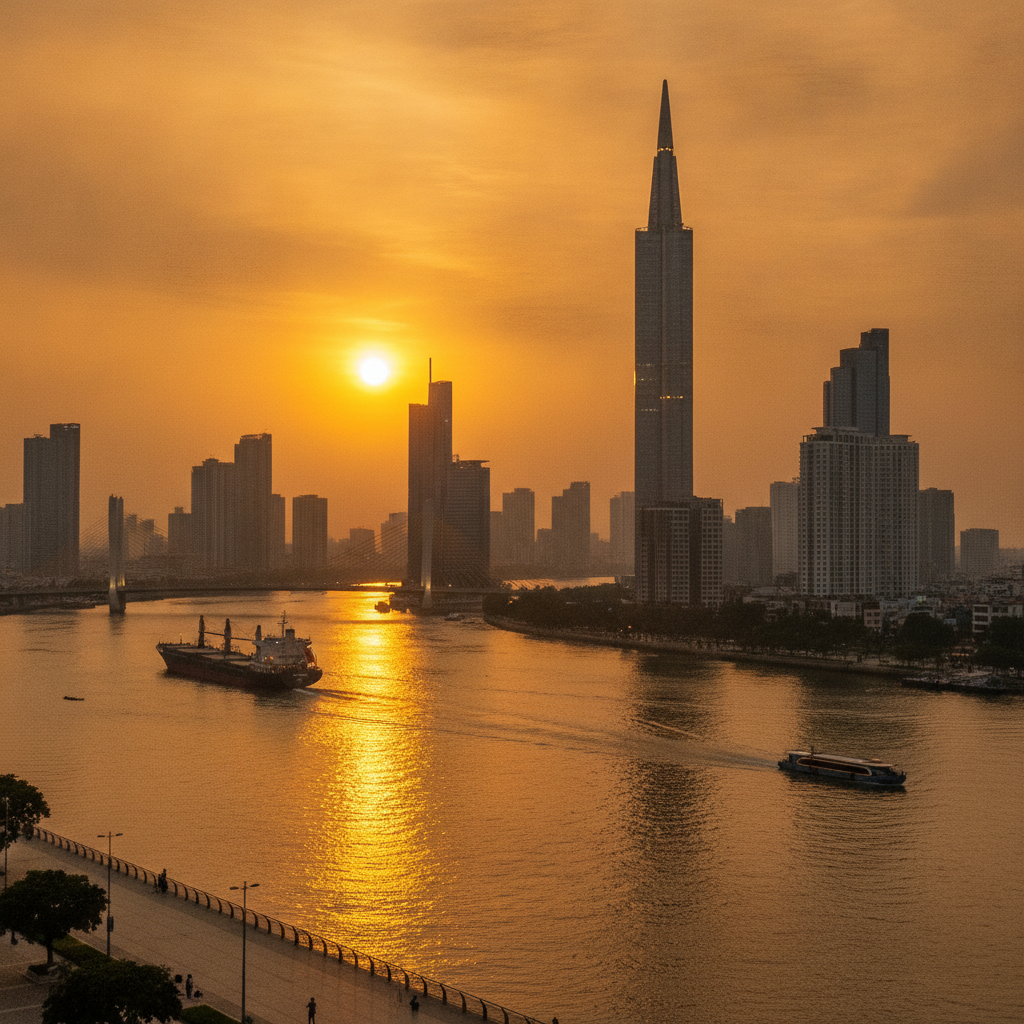
Saigon River, District 2 & the New Face of Ho Chi Minh City
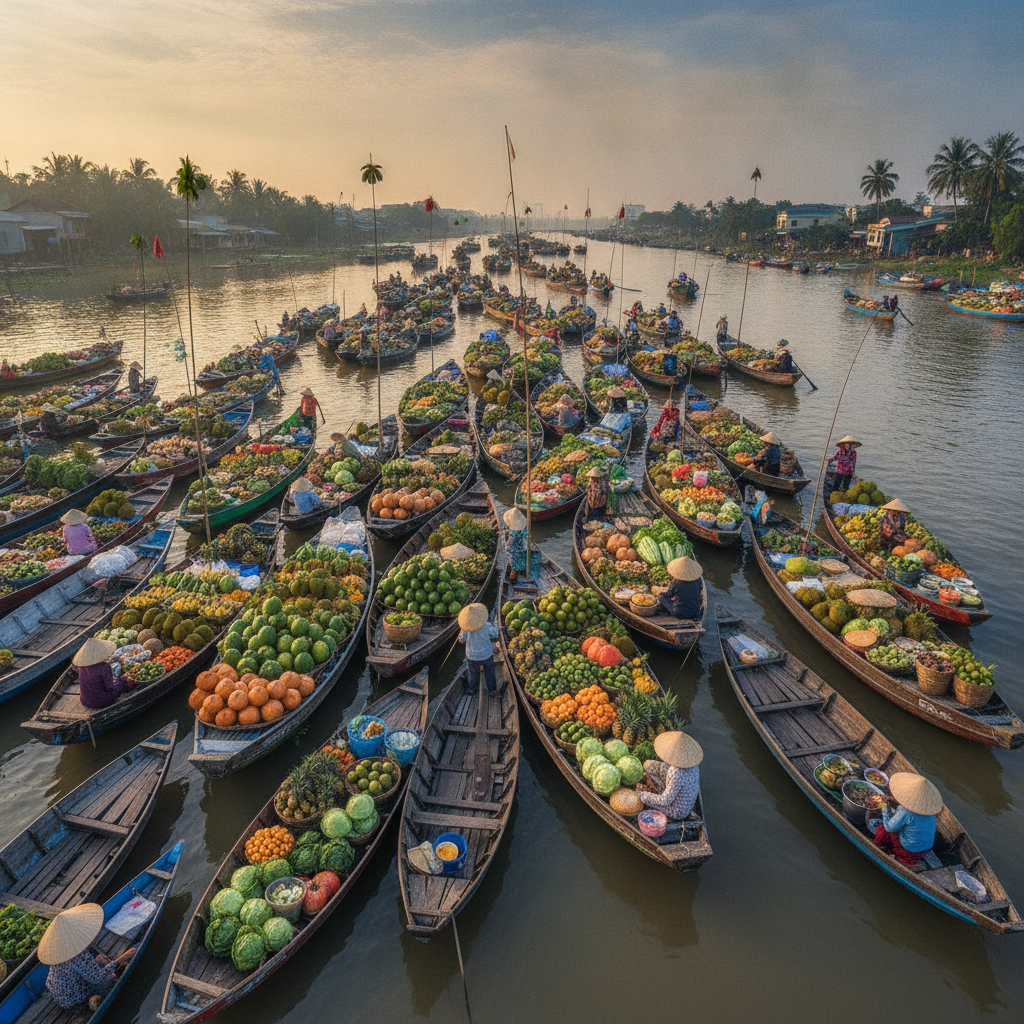
Mekong Delta & Floating Markets — The River World Beyond Saigon
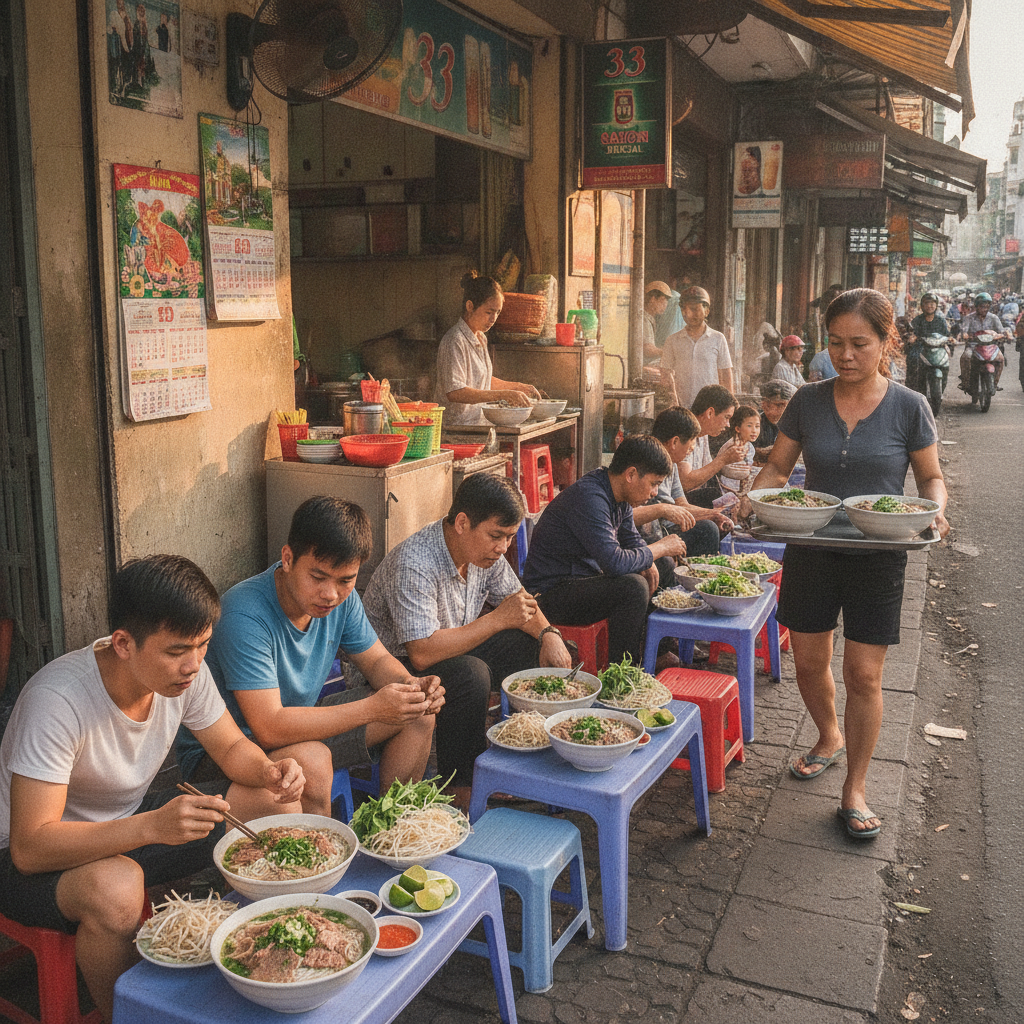
Phở, Bánh Mì & Saigon Street Food — Vietnam on a Plate
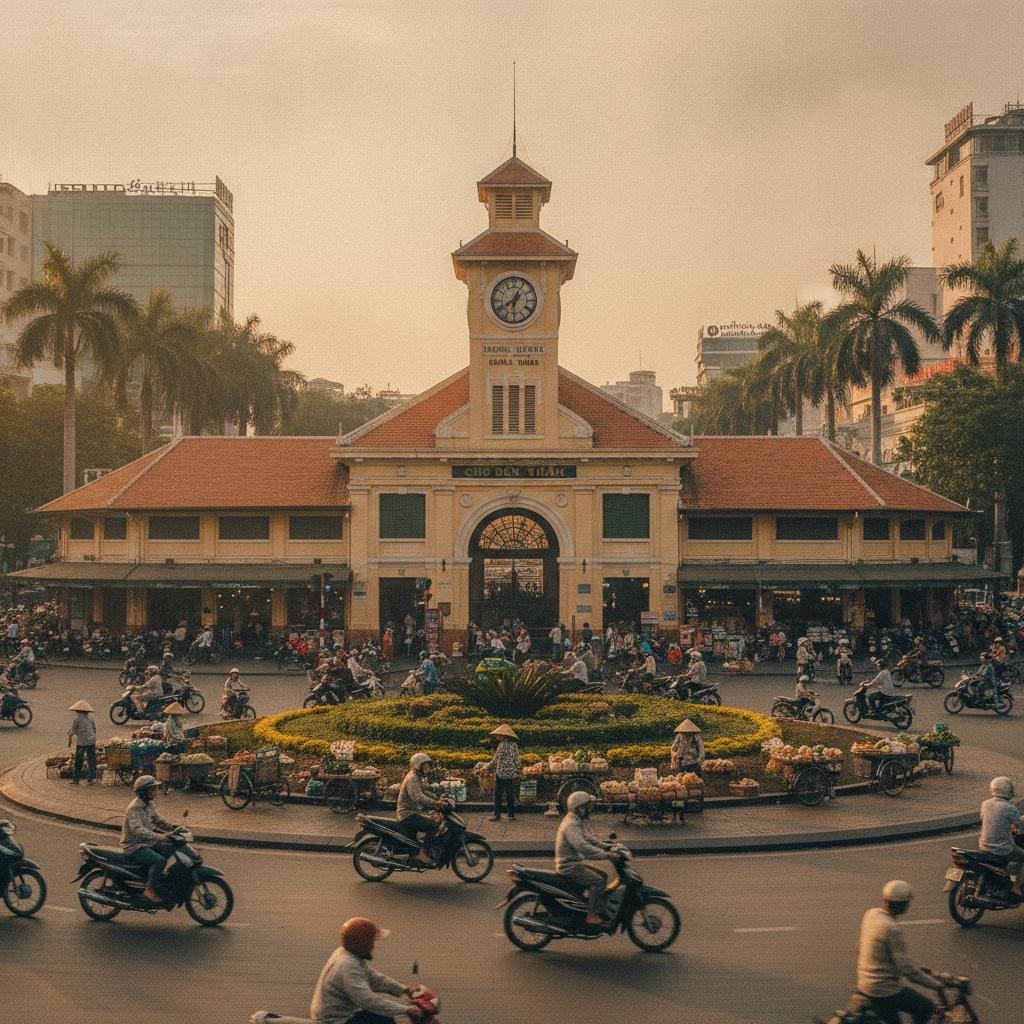
Ben Thanh Market, District 1 & the Colonial Heart of Saigon
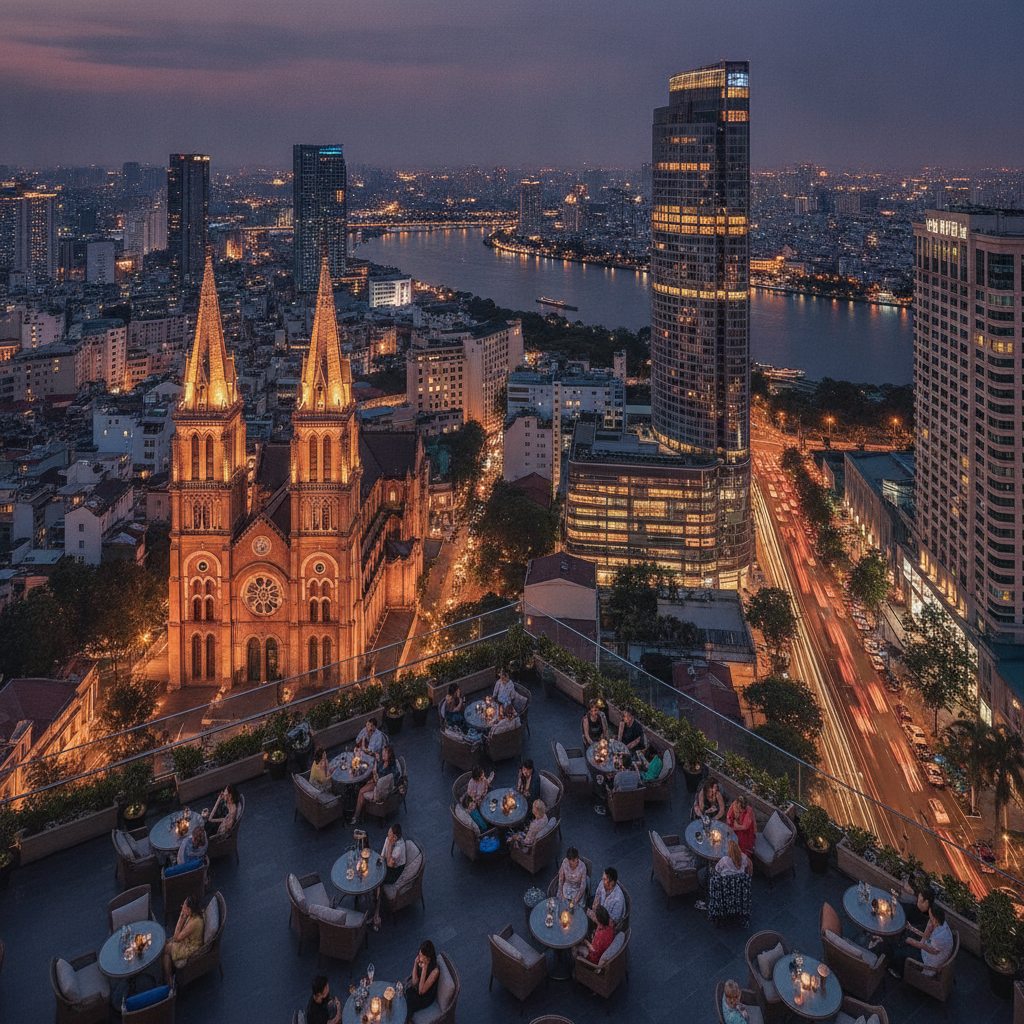
Saigon After Dark — Rooftop Bars, Night Markets & the City That Never Sleeps