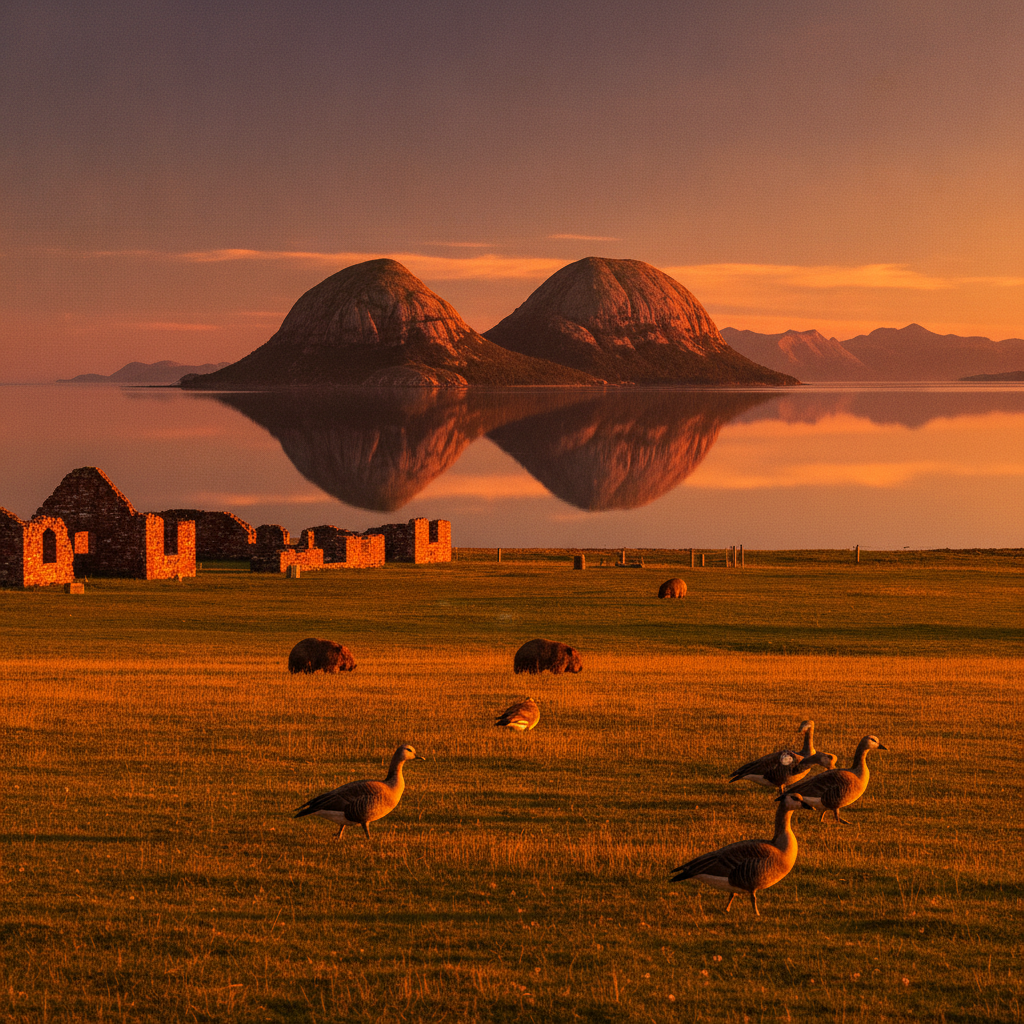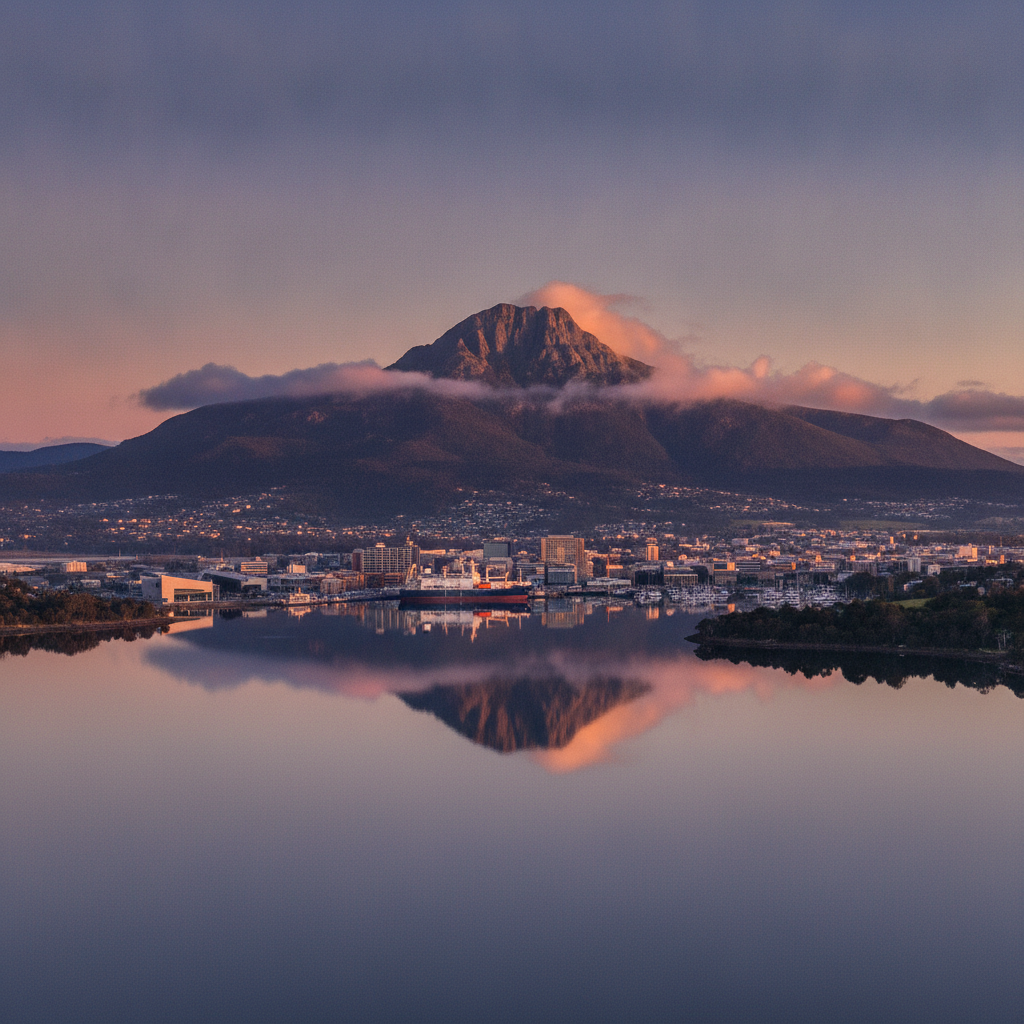
Hobart: MONA World-Class Underground Art Museum, Salamanca Place Colonial Sandstone and Saturday Market, Battery Point Heritage Precinct, kunanyi Mount Wellington Summit, Port Arthur Convict UNESCO Site, and Complete Tasmanian Food and Wilderness Gateway Guide
Hobart: MONA Museum of Old and New Art (David Walsh, underground sandstone galleries, Cloaca Professional), Salamanca Place Saturday Market and Battery Point colonial precinct, Cascade Brewery (Australia oldest, 1824), kunanyi Mount Wellington (1,271m, Organ Pipes dolerite), Port Arthur Historic Site UNESCO (convict penitentiary, 1996 massacre gun reform legacy), and complete practical guide (Tasmanian food, Overland Track, Sullivans Cove whisky, Freycinet/Wineglass Bay).
- 1
Hobart - Australia Most Liveable Small City
Hobart (population approximately 240,000): the capital city of Tasmania, the island state of Australia, and the second-oldest capital city in Australia after Sydney. Hobart sits at the foot of Mount Wellington (kunanyi, 1,271 m) on the Derwent River estuary, approximately 60 km from the Southern Ocean. Hobart character: the most well-preserved colonial streetscape of any Australian capital city (the sandstone Georgian and Victorian architecture of Salamanca Place, Battery Point, and Macquarie Street), combined with the most innovative contemporary art institution in Australia (MONA), the most productive cold-ocean fishing port in the southern hemisphere, and the most accessible temperate wilderness in Australia (the Southwest Wilderness World Heritage Area is within 2 hours of the city). Hobart climate: the coolest and driest of the Australian capitals, with four distinct seasons (summer maximum 22 degrees C, winter minimum 4 degrees C); the alpine character of the hinterland (Mount Wellington has snow in winter) contrasts with the Mediterranean quality of the summer days on the Derwent.
- 2
MONA - the Museum of Old and New Art
MONA (the Museum of Old and New Art, at Berriedale on the Derwent River, 12 km north of Hobart CBD): the most significant privately-funded art museum in Australia and one of the most innovative art museums in the world. MONA was founded and is funded by David Walsh, a professional gambler and art collector from Hobart, who opened the museum on his private estate in January 2011. The MONA building: the underground museum carved into the sandstone escarpment above the Derwent River, with three basement levels of galleries accessible via spiral staircases from the rooftop entrance. The MONA collection: approximately 3,000 works spanning ancient Egyptian artefacts, Roman erotic pottery, contemporary art by Wim Delvoye, and provocative installations. The Cloaca Professional (the machine that digests food and produces faeces on a daily schedule): the most controversial work in the MONA collection, a functioning machine that mimics the human digestive system. The MONA ferry: the passenger catamaran from Sullivan Cove (Hobart waterfront) to MONA, with the interior decorated as an art installation. MONA entry: AUD 35 per adult (Tasmanians free); the O app (the replacement for the traditional audio guide) provides information and interpretation based on visitor location within the museum. The MONA FOMA festival (Festival of Music and Art, January-February): the annual summer festival associated with MONA.
- 3
Salamanca Place and Battery Point - Hobart Colonial Heritage
Salamanca Place (the row of four-storey Georgian sandstone warehouses on the Hobart waterfront, facing Sullivan Cove): the finest example of colonial Australian commercial architecture in the country, built between 1835 and 1860 to serve the Hobart whaling and export trade. The Salamanca Saturday Market (the weekly open-air market on the Salamanca Place forecourt, operating since 1972): the most visited tourist attraction in Hobart, with over 300 stalls selling local produce, Tasmanian crafts, antiques, and fresh food. Battery Point (the historic suburb immediately south of Salamanca Place): the best-preserved early colonial residential precinct in Australia, with the narrow lanes, the Georgian workers cottages, and the Victorian merchant houses of the 1830s-1880s. Arthur Circus (Battery Point): the circular garden at the centre of the Battery Point residential precinct, lined with the original 1840s-1850s workers cottages. The Cascade Brewery (at South Hobart, 4 km from the CBD): the oldest operating brewery in Australia (established 1824), with the sandstone brewery building in the Gothic Revival style set against the Mount Wellington escarpment. Cascade Premium Lager and Cascade Pale Ale are the primary products. The brewery tour (daily): the primary industrial heritage tour in Hobart.
- 4
kunanyi / Mount Wellington - Hobart Iconic Summit
kunanyi / Mount Wellington (1,271 m, the dolerite mountain dominating the western skyline of Hobart): the most distinctive feature of the Hobart landscape, visible from almost every part of the city and the primary outdoor recreation resource for Hobart residents. The summit road (the 22 km sealed road from the Hobart CBD to the summit): the summit road is open year-round but may be closed in winter due to ice and snow. The summit experience: the panoramic view from the summit lookout encompasses the Derwent estuary, the Hobart CBD, the D'Entrecasteaux Channel, Bruny Island, the huon Valley, and on clear days the Southwest Wilderness. The Wellington Park (the conservation reserve covering the mountain and the surrounding range): the primary hiking, mountain biking, and rock climbing area accessible from Hobart. The Organ Pipes (the vertical dolerite columns on the western face of kunanyi): the most dramatic geological feature on the mountain, with the rock climbing routes and the walking tracks below the columns. The Pinnacle (the rocky summit of kunanyi): the wind speeds at the summit regularly exceed 100 km/h; snow falls on the Pinnacle on average 50-60 days per year. The mountain biking on kunanyi: the purpose-built mountain bike trails (the Kunanyi Mountain Bike Trails, including the Ridgeline Track and the Pipeline Track) are considered some of the finest alpine mountain bike trails in Australia.
- 5
Port Arthur Historic Site - Tasmania Convict Heritage
Port Arthur Historic Site (approximately 100 km southeast of Hobart on the Tasman Peninsula, 1.5 hours by road): the most significant convict heritage site in Australia and a UNESCO World Heritage Site (as part of the Australian Convict Sites). Port Arthur operated as a convict settlement from 1830 to 1877, housing the most hardened recidivists and re-offenders transported to Van Diemen Land (Tasmania). The Port Arthur buildings: the penitentiary (the five-storey building that held up to 400 convicts), the Model Prison (the separate prison building based on the Pennsylvania System of solitary confinement and silence), the church, the hospital, the commandant's house, and the guard tower. The convict system at Port Arthur: the prisoners were put to work in the timber mills, the shipyards, and the brick-making operations; the discipline was enforced through the silent system, solitary confinement, and hard labour rather than flogging (which was officially discouraged at Port Arthur, distinguishing it from other convict settlements). The Port Arthur Massacre (28-29 April 1996): the mass shooting in which Martin Bryant killed 35 people at the Port Arthur Historic Site and Seascape Cottage; the massacre was the catalyst for the Howard Government gun control reforms (the National Firearms Agreement of 1996), which banned semi-automatic rifles and pump-action shotguns and bought back approximately 650,000 weapons.
- 6
Hobart Practical Guide - Tasmanian Food, Wilderness Gateway, and Getting Around
Hobart as the gateway to Tasmanian wilderness: the Southwest Wilderness World Heritage Area (the UNESCO World Heritage Area covering the wildest and most remote terrain in Australia) is accessible from Hobart via the Huon Valley (the primary food-producing valley of Tasmania) and the Strathgordon road. The Cradle Mountain-Lake St Clair National Park (the primary wilderness park of Tasmania, approximately 170 km north of Hobart, 2.5 hours): the Overland Track (the 65 km, 6-day wilderness walk from Cradle Mountain to Lake St Clair) is the most celebrated multi-day wilderness walk in Australia. The Freycinet National Park (approximately 200 km northeast of Hobart, 2.5 hours): the pink granite peaks of the Hazards above Wineglass Bay (consistently rated among the most beautiful bays in the world). Tasmanian food: Hobart has the most exciting food scene per capita of any Australian city, driven by the extraordinary produce of Tasmania (the King Island beef, the Huon Valley apple cider and Atlantic salmon, the Bruny Island oysters, the Tasmanian whisky from the Lark Distillery and the Sullivans Cove Distillery — the Sullivans Cove French Oak whisky won the World Whisky Award for the world best single malt in 2014). Hobart airport (HBA): flights from Melbourne (1 hour), Sydney (1.5 hours), and Brisbane (2.5 hours). Best season: December to March (summer festivals, MONA FOMA, and the finish of the Sydney to Hobart yacht race on 28 December).
Walk this route with audio
Stories play automatically as you reach each stop — no tapping needed.
More in hobart
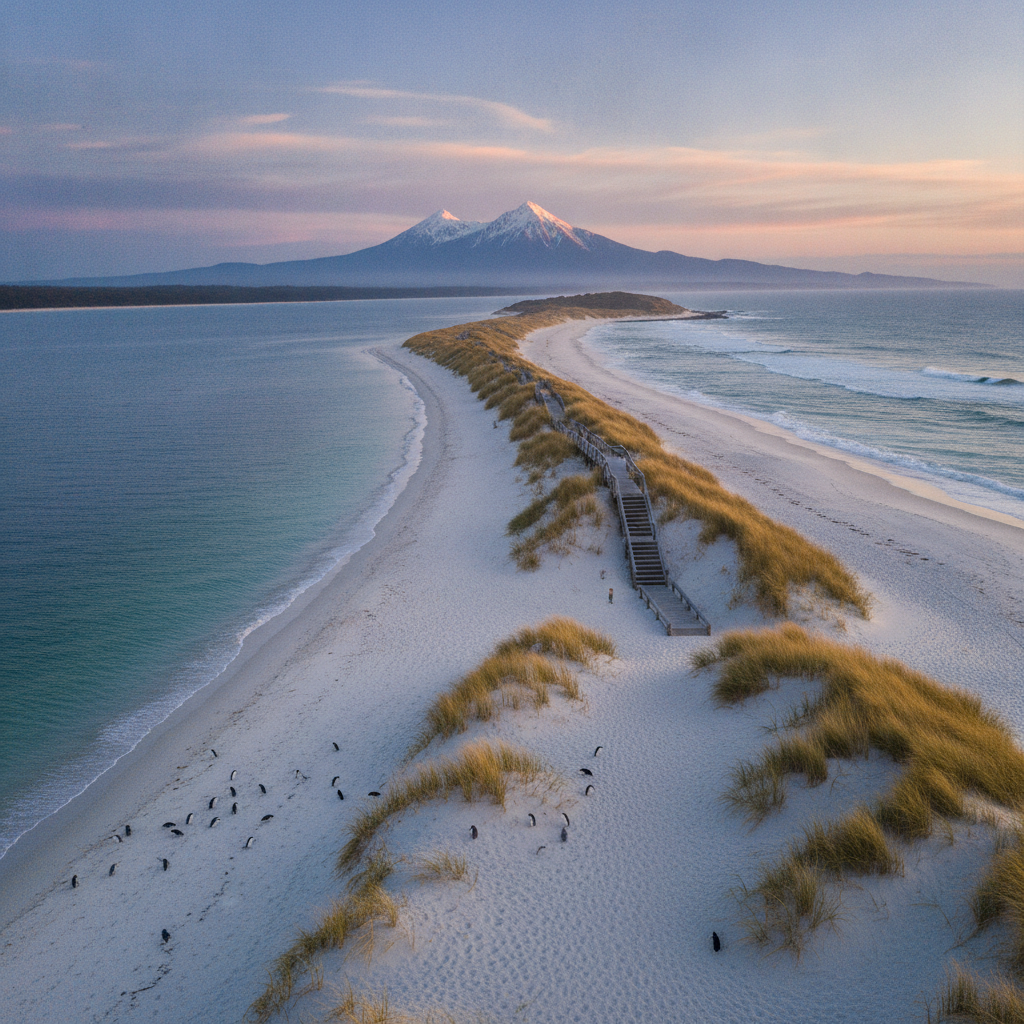
Hobart: Bruny Island Oysters and Little Penguins, Huon Valley Apple Cider and Atlantic Salmon, Overland Track Tasmania Wilderness, Launceston and Coal River Wine, Antarctica Southern Ocean Gateway, Two-Route Complete Verdict
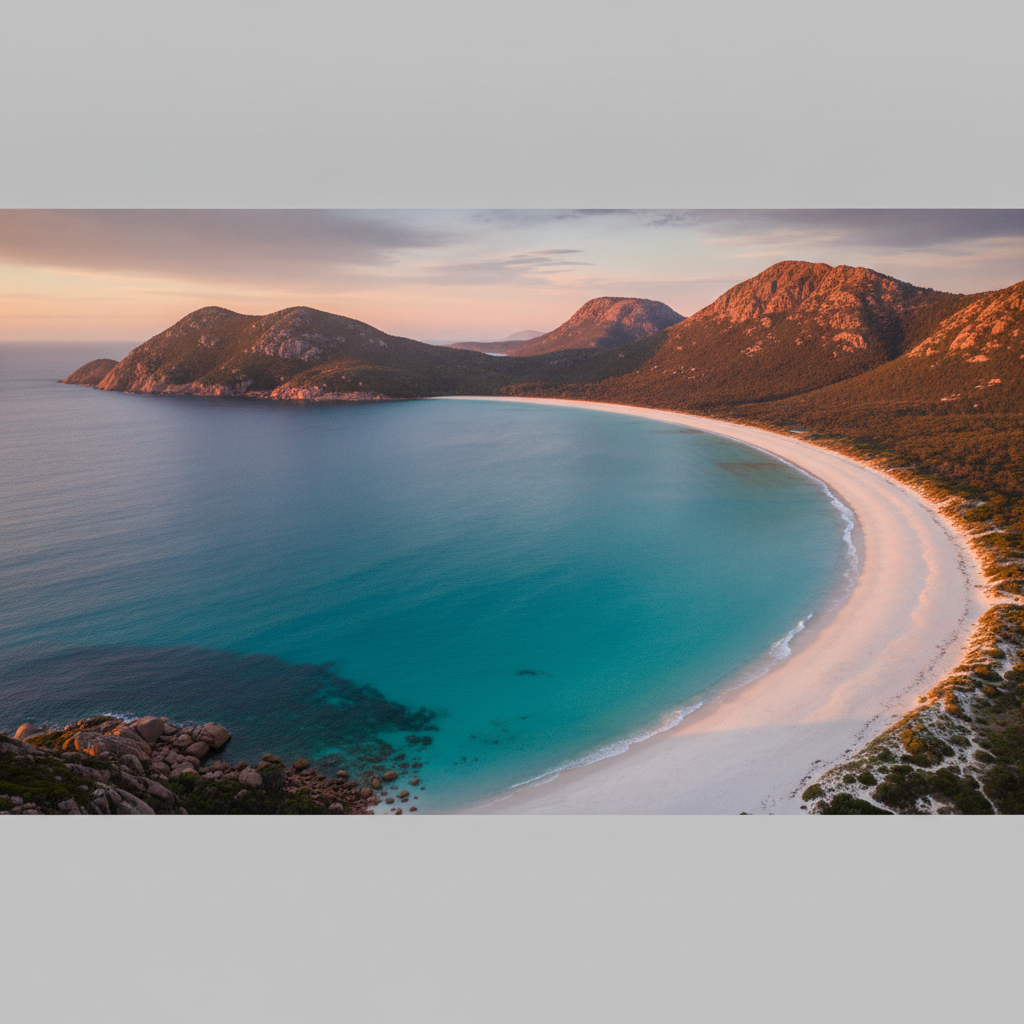
Hobart: Tasmanian Whisky (World Best Single Malt Sullivans Cove), Dark Mofo Winter Festival, Freycinet National Park and Wineglass Bay, Bay of Fires Orange Granite, palawa kani Aboriginal Culture and the Black War, Sydney to Hobart Yacht Race, and Four-Route Complete Verdict