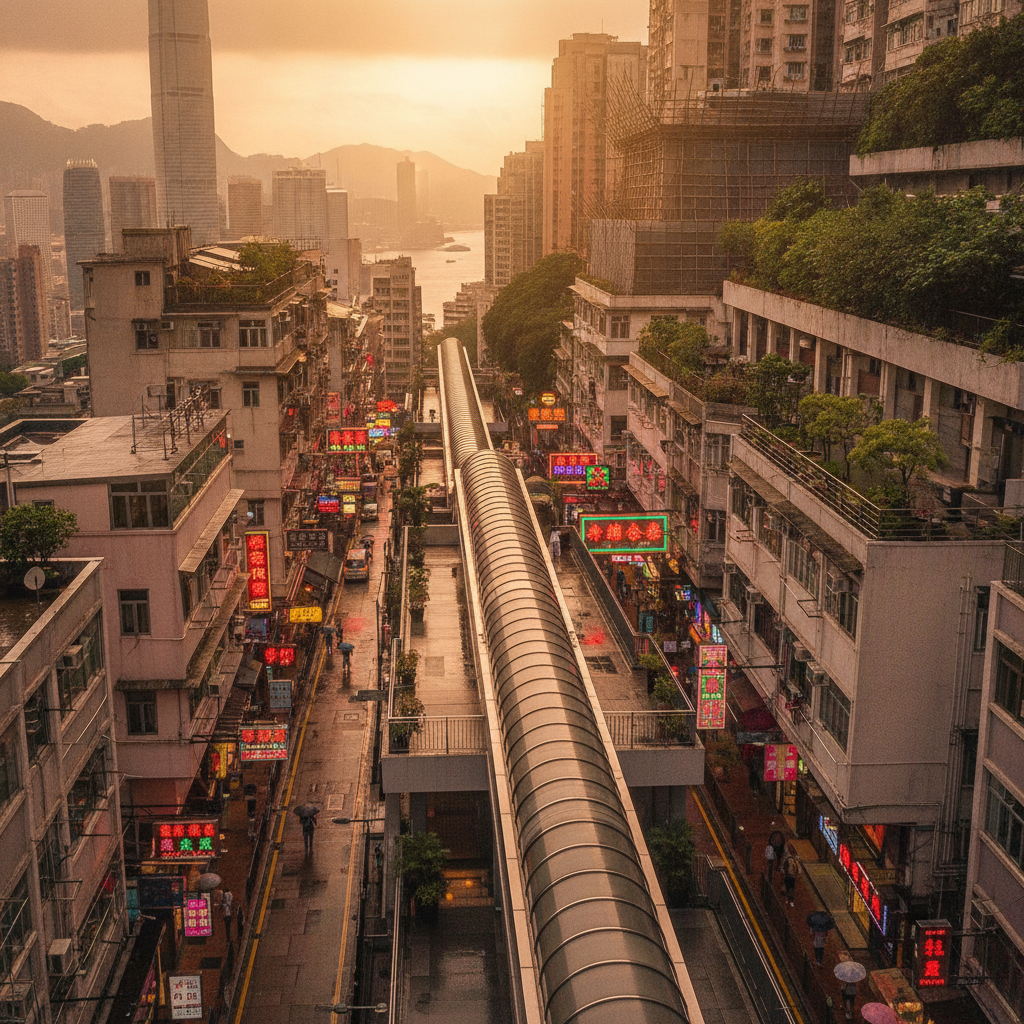
Wong Tai Sin Temple, Chi Lin Nunnery & Nan Lian Garden: Kowloon's Sacred Side
The Wong Tai Sin Temple complex (1921) — the most visited Taoist temple in Hong Kong and the most famous fortune-telling destination in Asia — contrasts with the serenity of the Chi Lin Nunnery (1998), Hong Kong's only Tang Dynasty-style wooden temple complex, and the adjacent Nan Lian Garden, the most meticulously maintained classical Chinese garden in Hong Kong, together forming the most spiritually concentrated cultural walk in Kowloon.
- 1
Wong Tai Sin MTR & Wong Tai Sin Temple (1921)
Wong Tai Sin Temple (Lung Cheung Road, Wong Tai Sin, the Taoist temple complex dedicated to the Great Immortal Wong (黃大仙, Huang Daxian) — a deity said to have been a shepherd boy in Zhejiang province in the 4th century CE named Huang Chuping, who lived as a hermit on a mountain for 40 years and achieved immortality through the practice of Taoist meditation; the present temple in Kowloon was established in 1921 after Taoist priests brought a painting of Wong Tai Sin from Guangdong province; the temple complex covers 18,000 square metres and receives between 3-5 million visitors per year (making it the most visited Taoist temple in Hong Kong and one of the most visited religious sites in East Asia); the temple is particularly famous for qiu qian fortune-telling (籤詩, the practice of shaking a bamboo tube of numbered sticks until one falls out, then receiving an interpretation of the corresponding numbered fortune from a professional fortune-teller in the arcade of fortune-telling stalls adjacent to the main temple) — the most concentrated collection of professional fortune-tellers in any single location in Hong Kong; the temple is busiest on the first and fifteenth days of each month of the Chinese lunar calendar, and during the four days of the Lunar New Year when hundreds of thousands of worshippers come to pray for good fortune, health, and successful relationships).
- 2
Wong Tai Sin Estate & Kowloon Walled City Park (1995)
The Kowloon Walled City Park (Tung Tau Tsuen Road, Kowloon City, the 3.1-hectare park opened in August 1995 on the site of the former Kowloon Walled City — the most extraordinary urban phenomenon in Hong Kong history: the Walled City was a dense, ungoverned urban settlement that existed in a legal limbo between Chinese and British jurisdiction from 1898 until its demolition in 1994; at its peak in the 1980s, the Walled City occupied a 2.7-hectare site and contained 33,000 residents in 350 interconnected buildings of 10-14 storeys each — a population density of approximately 1.2 million people per square kilometre, the highest recorded urban density in the history of human civilization; the Walled City had its own unlicensed doctors, dentists, and food stalls, and operated almost entirely outside Hong Kong law; the demolition of the Walled City in 1994 and the construction of the park on its site is one of the most significant urban redevelopment projects in Hong Kong history; the park preserves the South Gate of the original Qing Dynasty fort that predated the settlement).
- 3
Chi Lin Nunnery — Hong Kong's Tang Dynasty Temple Complex (1998)
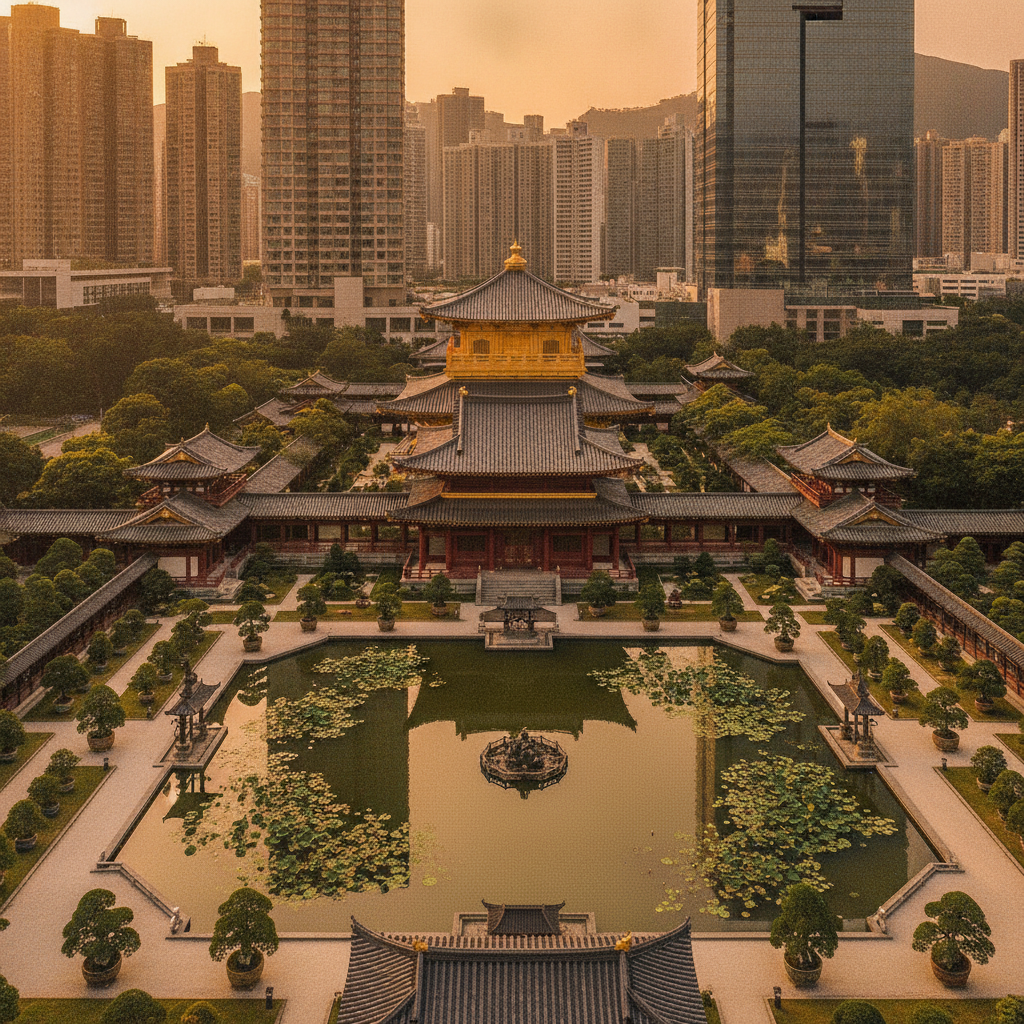
Chi Lin Nunnery (5 Chi Lin Drive, Diamond Hill, the Buddhist nunnery and temple complex rebuilt in the Tang Dynasty architectural style between 1990-2000 (opened to the public in 1998) at a cost of approximately HKD 700 million, using traditional Tang Dynasty construction techniques — the main halls and pavilions of the nunnery complex were built entirely without the use of nails (using the traditional Chinese mortise-and-tenon woodworking system in which wooden joints are interlocked without metal fasteners), using timber from mainland China; the complex is the most faithful and complete example of Tang Dynasty (618-907 CE) wooden architecture in Hong Kong and one of the largest in the world: the main hall (Yuet Heung Shrine) contains a 3.6-metre gilded clay statue of Sakyamuni Buddha flanked by eighteen golden arhats, and is modelled on surviving Tang Dynasty temple halls in Shanxi Province in mainland China; the nunnery is maintained by a community of Buddhist nuns who follow a daily schedule of meditation, chanting, and study; admission is free and the complex is open daily except Tuesday).
- 4
Nan Lian Garden — Classical Tang Dynasty Garden (2006)
Nan Lian Garden (60 Fung Tak Road, Diamond Hill, the 3.5-hectare classical Chinese garden completed in 2006 adjacent to the Chi Lin Nunnery, maintained by the Chi Lin Nunnery Foundation — the most meticulously designed and maintained classical garden in Hong Kong: the garden is designed according to Tang Dynasty garden design principles (as described in the 7th-century Chinese garden design treatise, the 园冶 (Yuan Ye, or 'The Craft of Gardens')) and features elements including a large central lotus pond (planted with lotus varieties dating to the Tang Dynasty), pavilions, corridors, rockery, bonsai specimens (some over 200 years old), and a golden pavilion (the Tin Yam Pavilion) modelled on Tang Dynasty architectural forms; the garden also contains a vegetarian restaurant operated by the nunnery and a timber showroom demonstrating traditional Chinese woodworking techniques; the garden's most extraordinary feature is the contrast between the immaculate natural forms of the garden — the mosses on the rocks, the lotus in the pond, the shaped pines and junipers — and the gleaming towers of Diamond Hill residential development that rise directly behind the garden walls; admission is free and the garden is open daily).
- 5
Diamond Hill — Urban Transformation & The Squatter Village (1990s)
Diamond Hill (鑽石山, the district of Kowloon that surrounds the Chi Lin Nunnery and Nan Lian Garden — the name 'Diamond Hill' refers not to a geological feature but to the Diamond Hill village, which was one of the largest squatter villages in Hong Kong until its clearance in the 1990s: squatter villages (木屋區, makeshift settlements built from corrugated iron and wood on unoccupied government land) were a significant feature of Hong Kong's urban landscape from the post-war period through the 1980s, when massive rural-to-urban migration from mainland China created housing shortages that could not be met by the formal housing market; the Diamond Hill squatter village at its peak housed 10,000 residents and covered the hillside that is now occupied by the Chi Lin Nunnery, Nan Lian Garden, and the Diamond Hill and Lok Fu MTR stations; the clearance of Diamond Hill and other squatter villages was part of the Hong Kong government's Squatter Clearance Programme, which relocated approximately 400,000 squatter residents into public housing estates between the 1970s and 1990s) — Diamond Hill MTR Station (inaugurated 1989) is the transit hub for this part of Kowloon.
- 6
Kowloon City & Hau Wong Temple (1730) — Hung Hom Corridor
Kowloon City (九龍城, Gau Lung Shing, the district immediately south of Wong Tai Sin and north of Kowloon Bay — one of the oldest established districts in Kowloon, with a history predating the British arrival in 1841: the Kowloon Walled City, which stood in what is now the park on Tung Tau Tsuen Road, was originally a Qing Dynasty military fort established in 1847 to monitor British activities on Hong Kong Island; the Hau Wong Temple (Hau Wong Temple Lane, Kowloon City, a small temple dedicated to Hau Wong, a loyal supporter of the last Song Dynasty Emperor Zhao Bing who died in the Battle of Yamen in 1279 — the battle at which the Song Dynasty ended; the temple has stood on this site since approximately 1730, making it one of the oldest places of worship in Kowloon, predating the British arrival in the territory by more than a century) — the Kowloon City district is also famous for its restaurant district (particularly the cluster of Thai restaurants on South Wall Road and the surrounding streets that form the most concentrated Thai food destination outside Thailand), and for the former Kai Tak Airport flight path (which, until the airport's closure in 1998, brought commercial jets directly over the Kowloon City rooftops at altitudes as low as 30 metres during the famous Checkerboard Hill visual approach).
Walk this route with audio
Stories play automatically as you reach each stop — no tapping needed.
More in hongkong
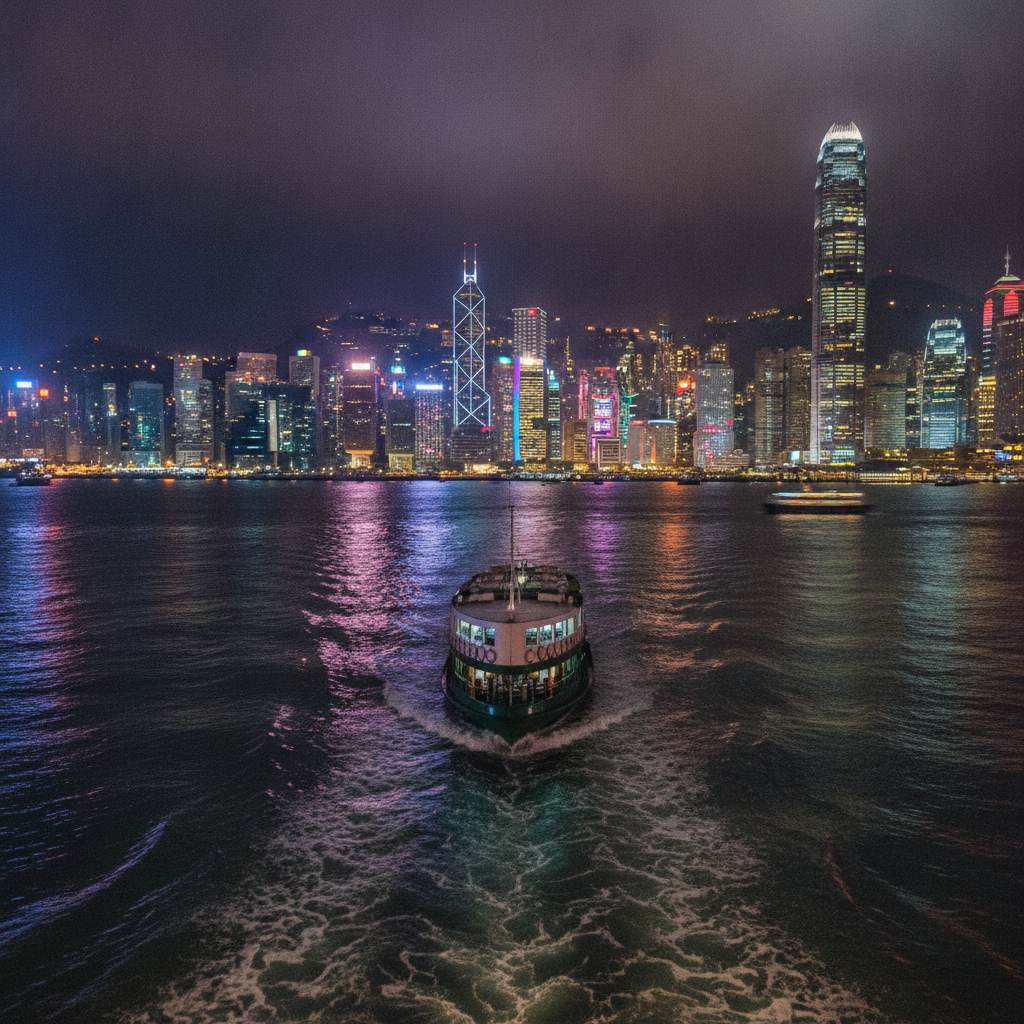
Star Ferry, Tsim Sha Tsui Waterfront & Victoria Harbour: The Soul of Hong Kong
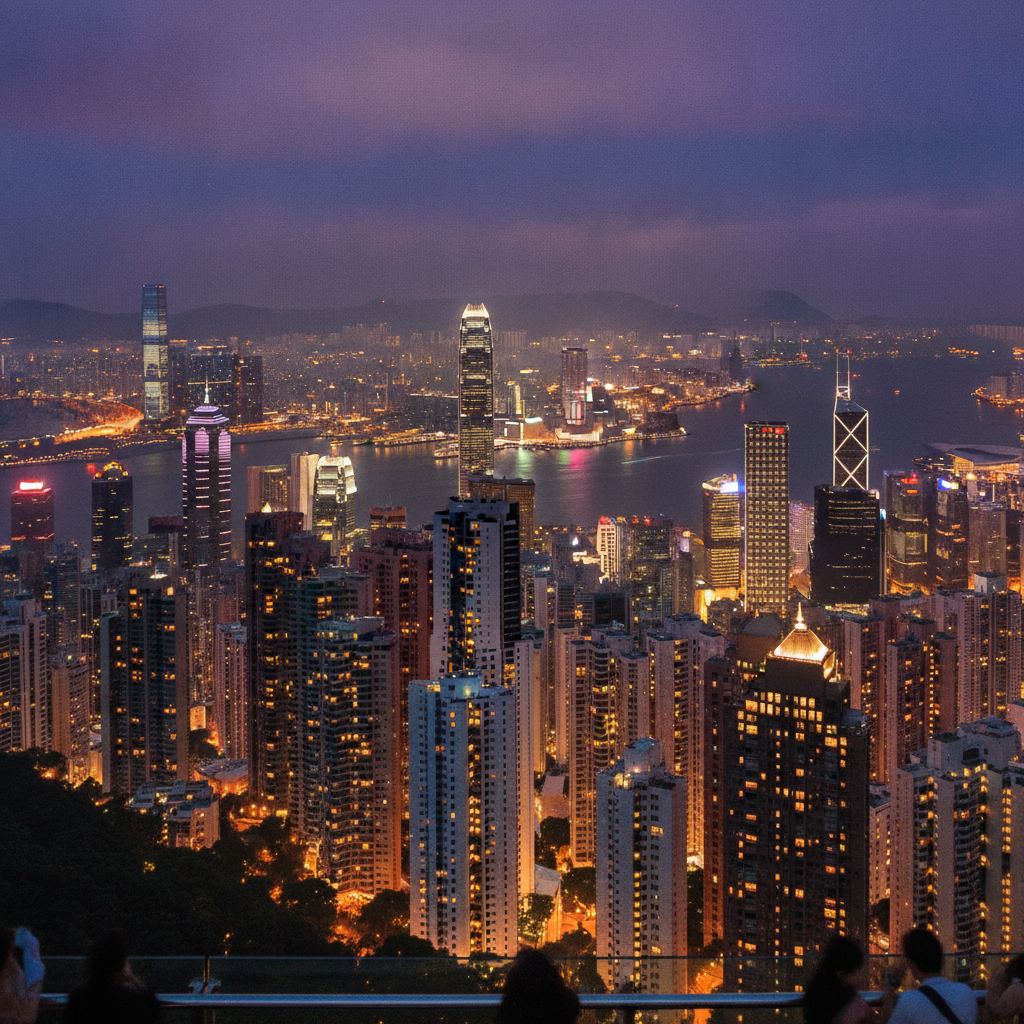
Victoria Peak, Peak Tram & Central: Hong Kong's Defining Panorama
Lantau Island: Big Buddha, Ngong Ping 360 Cable Car & Po Lin Monastery
Mong Kok: Ladies' Market, Goldfish Market, Flower Market & Bird Garden
Cheung Chau & Lamma Island: Hong Kong's Car-Free Outlying Islands