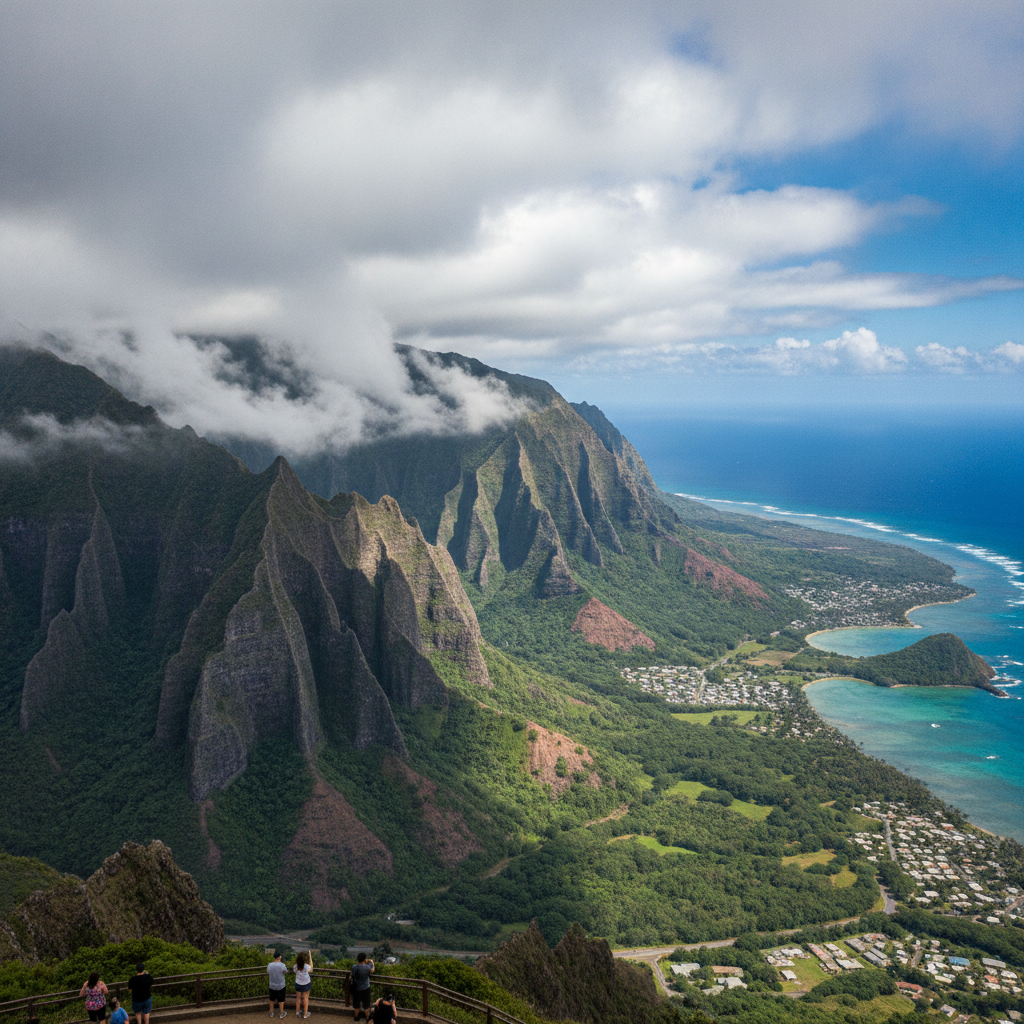
Honolulu: Kamehameha Dynasty History and Kapu Abolition, Ala Moana Center (world largest outdoor mall), Aloha Stadium Swap Meet and Spam Musubi, Luau and Sunset Cocktail Scene (House Without a Key), Punchbowl National Memorial Cemetery (From Here to Eternity), and Island Hopping Guide to Maui, Kauai, Molokai, and Big Island
Honolulu culture and context: the Kamehameha dynasty (unification 1795-1810, kapu abolition 1819, missionary arrival 1820), Ala Moana Center (world largest outdoor mall, 350 shops), aloha shirt history (Ellery Chun 1930s, yukata fabric), Aloha Stadium Swap Meet, sunset cocktails at House Without a Key, Punchbowl National Cemetery (53,000 military dead, From Here to Eternity), and island-hopping guide (Maui/Haleakala/Lahaina wildfire 2023, Kauai/Na Pali/Waimea Canyon, Molokai/Kalaupapa, Big Island/Kilauea).
- 1
Hawaiian Monarchy History and the Kamehameha Legacy
The Kamehameha dynasty: Kamehameha I (Kamehameha the Great, approximately 1758-1819) unified all the Hawaiian islands between 1795 and 1810 using superior military strategy and the cannon advantage provided by his Western advisors (John Young and Isaac Davis). He established the Kingdom of Hawaii with its capital at Lahaina on Maui, moved to Honolulu in 1804. Kamehameha I died in 1819 at Kailua-Kona on the Big Island; his body was hidden according to Hawaiian tradition (the bones of kings were sacred and their hiding place was not disclosed, to prevent enemies from desecrating them). The abolition of the kapu system (1819): within months of Kamehameha I death, his son Liholiho (Kamehameha II) and the powerful chiefess Kaahumanu abolished the kapu (taboo) system that had governed Hawaiian society for centuries. The kapu system enforced strict rules including the separation of men and women at meals, the prohibition of women eating certain foods (pork, bananas, coconuts, certain fish), and the elaborate system of sacred spaces and objects. The arrival of American Protestant missionaries (March 1820): the first company of New England Congregationalist missionaries arrived in Honolulu three months after the kapu system was abolished, and found a people without their traditional religion, producing rapid conversion. The missionaries reduced the Hawaiian language to writing (creating the 13-letter Hawaiian alphabet), established schools, and printed books in Hawaiian. The missionaries also actively suppressed the hula, which they regarded as licentious, and worked to change Hawaiian land ownership.
- 2
Ala Moana Center and Honolulu Shopping and Beach Parks
Ala Moana Center (at 1450 Ala Moana Boulevard, between Waikiki and downtown Honolulu): the largest outdoor shopping mall in the world, with over 350 stores across four levels and 2.4 million square feet of retail space. Ala Moana was the worlds largest mall from 1966 to 1971 and remains one of the most productive malls in the United States (sales per square foot among the highest of any mall). The mall anchors include Bloomingdales, Neiman Marcus, Nordstrom, and the Japanese department store Shirokiya (now Japan Village Walk, a Japanese food hall). Ala Moana Beach Park (directly across Ala Moana Boulevard from the mall): the most popular beach park in Honolulu, with a calm lagoon created by the dredging of the Ala Moana Channel. Magic Island (the peninsula at the east end of Ala Moana Beach Park, added to Oahu in 1964 by filling a former reef): the popular park with the lanai of Magic Island (a calm lagoon swimming area) and the panoramic view of Waikiki and Diamond Head. The Ward Village development (between Ala Moana and Kakaako, currently under construction): the massive mixed-use development transforming the former industrial Kakaako area into a new residential and retail neighborhood. The Kakaako street art (the POWWOW Hawaii mural festival murals, covering building walls throughout Kakaako): the most significant concentration of large-scale street art murals in the Pacific.
- 3
Aloha Stadium Swap Meet and Hawaii Food Trucks
The Aloha Stadium Swap Meet (at the Aloha Stadium in Halawa, 8 km west of Honolulu, Wednesday, Saturday, and Sunday 8am-3pm): the largest outdoor market in Hawaii, with over 400 vendors selling a mix of local produce, crafts, vintage aloha shirts, tropical plants, souvenirs, and street food. The aloha shirt (the Hawaiian shirt, aloha shirt, or Aloha Friday shirt): invented in the 1930s in Honolulu by Ellery Chun (of the King-Smith Clothiers on King Street), who cut the pattern from Japanese kimono fabric (the colorful Japanese prints called yukata). The early aloha shirts featured Japanese kimono-fabric prints adapted to a Western shirt cut; later designs incorporated Hawaiian motifs (hibiscus, plumeria, surfers, outrigger canoes). Aloha Friday (the practice of wearing aloha shirts to work on Fridays): originated in Hawaii in the 1960s and spread to the mainland as casual Fridays. The Hawaii food truck scene: the garlic shrimp trucks on the North Shore (Giovanni Shrimp Truck, Romy Kahului Kahalekai shrimp truck) serve garlic butter shrimp with two scoops of rice; the Honolulu food trucks at the Blaisdell Center and Aloha Stadium include Korean BBQ, Filipino adobo, Spam musubi (the Spam and rice ball wrapped in nori, a uniquely Hawaiian food), and plate lunches. Hawaii has the highest per-capita Spam consumption in the United States, a legacy of World War II military rationing.
- 4
Honolulu Nightlife - Cocktails Luau and Live Music
Honolulu evening and nightlife: the Waikiki luau scene (the commercial luau dinner shows offering kalua pig, Hawaiian food, and hula and fire knife dance performances). The Germaine Luau (on Oahu west shore, transportation from Waikiki included): one of the most established luau shows; the Paradise Cove Luau (at Ko Olina, also with transport): the largest luau in Hawaii. The Royal Hawaiian Hotel luau (at the Pink Palace on Waikiki Beach, Monday evenings): the most atmospheric luau setting on Oahu, with the Royal Hawaiian oceanfront lawn. The House Without a Key (at the Halekulani Hotel, on Waikiki Beach between the Royal Hawaiian and the Halekulani): the most romantic open-air bar in Honolulu, serving cocktails at sunset with a former Miss Hawaii hula dancer and slack-key guitar music. Beachside bars: the edge of the Sheraton Waikiki rooftop bar (the Rumfire bar on the fourth floor of the Sheraton Waikiki, with the most dramatic view of Waikiki Beach and the evening surf from any hotel bar in Hawaii). The Honolulu craft cocktail scene (in the Kaimuki and Kakaako neighborhoods): the Bar Leather Apron (the basement craft cocktail bar on Bishop Street), the Livestock Tavern (in Chinatown, with the most creative cocktail menu in Honolulu). The slack-key guitar (ki-ho-alu): the uniquely Hawaiian guitar style developed by cowboys (paniolo) on the Big Island in the 19th century, using open tunings and a fingerpicking style; live slack-key guitar is performed at the House Without a Key and at the Sunset on the Beach free concert series at Queens Beach.
- 5
Oahu Military History and National Memorial Cemetery
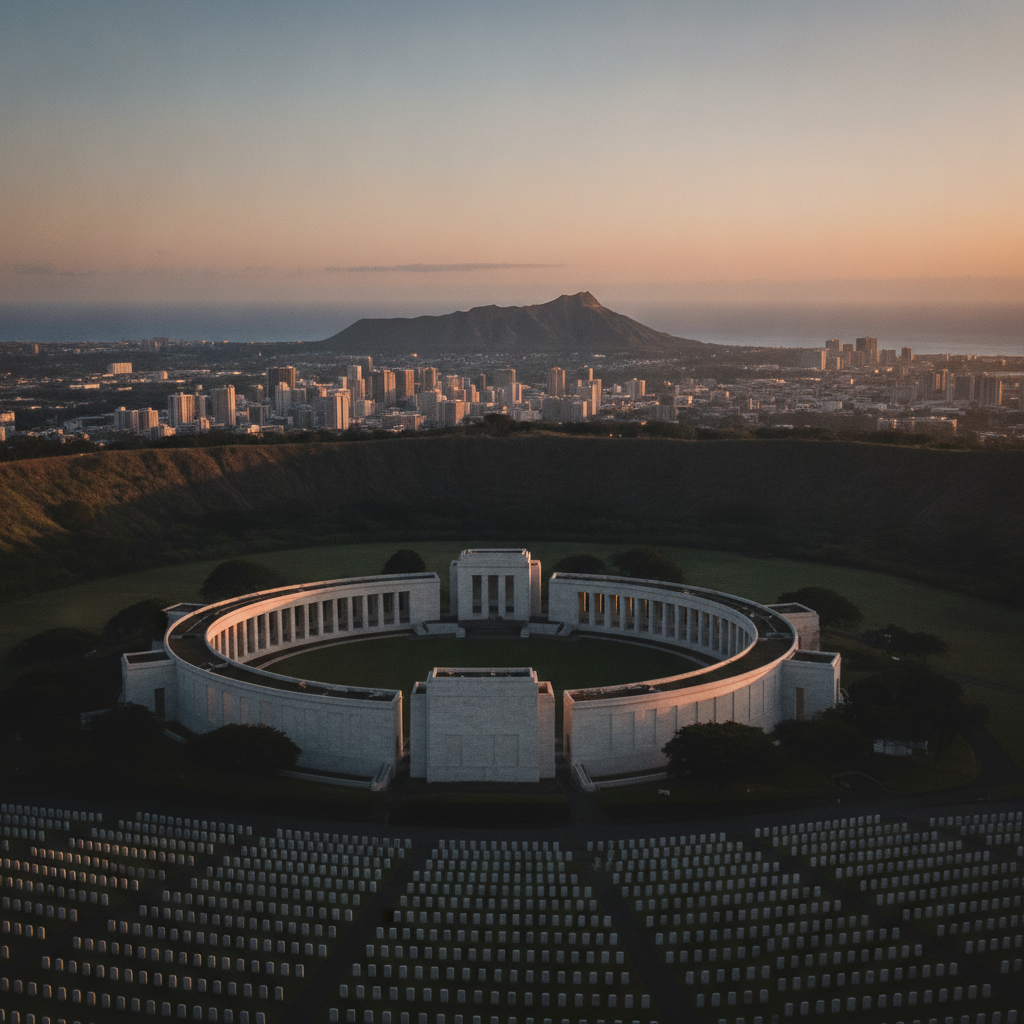
The National Memorial Cemetery of the Pacific (at the Punchbowl Crater in Nuuanu, approximately 3 km from downtown Honolulu): the military cemetery within the Punchbowl, a volcanic tuff cone that the Hawaiians called Puowaina (the Hill of Sacrifice, where kapu violators were sacrificed and cremated in the ancient Hawaiian period). The cemetery contains the remains of over 53,000 American military personnel from World War II, the Korean War, the Vietnam War, and subsequent conflicts, including journalist Ernie Pyle. The Courts of the Missing (the marble courts surrounding the central monument): inscribed with 28,778 names of those missing in action in World War II and the Korean War. The USS Arizona Memorial connection: the survivors of the Pearl Harbor attack who specified burial at the Punchbowl are interred here. The Hawaii State Veterans Cemetery (at Kaneohe): a separate state veterans cemetery on the Windward Coast. The Schofield Barracks military base (at Wahiawa, central Oahu): the setting for the novel From Here to Eternity by James Jones (1951), about the US Army in Hawaii in the months before the Pearl Harbor attack; the novel won the National Book Award and was adapted into the Oscar-winning film of 1953 (directed by Fred Zinnemann, starring Montgomery Clift, Burt Lancaster, and Frank Sinatra). The Hickam Air Force Base (adjacent to the Honolulu International Airport): one of the bases attacked on 7 December 1941.
- 6
Honolulu Island Hopping Guide - Maui Kauai and Molokai
The Hawaiian islands overview for Oahu-based visitors: from Honolulu Airport (HNL), Hawaiian Airlines and Southwest Airlines serve all the main islands with frequent daily flights. Maui (the second largest Hawaiian island, 30-minute flight from Honolulu): Haleakala Crater (the dormant volcano, 3,055 m, with sunrise above the clouds), the Road to Hana (the 64 km coastal road with 59 bridges and 620 curves), Lahaina (the former whaling capital and Hawaiian capital, devastated by the catastrophic wildfire of 8 August 2023, which killed 101 people in the worst US disaster since Hurricane Katrina), and Makena Beach. Kauai (the Garden Isle, the oldest main Hawaiian island at 5.1 million years old, 30-minute flight): Na Pali Coast (the dramatic sea cliffs of the remote northwest coast), Waimea Canyon (the Grand Canyon of the Pacific, 1,097 m deep), Poipu Beach, and the filming location for Jurassic Park (1993), Raiders of the Lost Ark (1981), and Pirates of the Caribbean (2006). Molokai (the least developed main Hawaiian island, 20-minute flight): the Kalaupapa National Historical Park (the former leprosy (Hansen disease) settlement on the isolated Kalaupapa Peninsula, accessible only by mule trail or air, with the story of the Belgian priest Father Damien de Veuster, who cared for the patients until his own death from leprosy in 1889). The Big Island of Hawaii (the youngest and largest Hawaiian island, 45-minute flight to Hilo or Kona): Hawaii Volcanoes National Park, Mauna Kea observatory, Kohala Coast resort beaches, and Captain Cook Monument.
Walk this route with audio
Stories play automatically as you reach each stop — no tapping needed.
More in honolulu
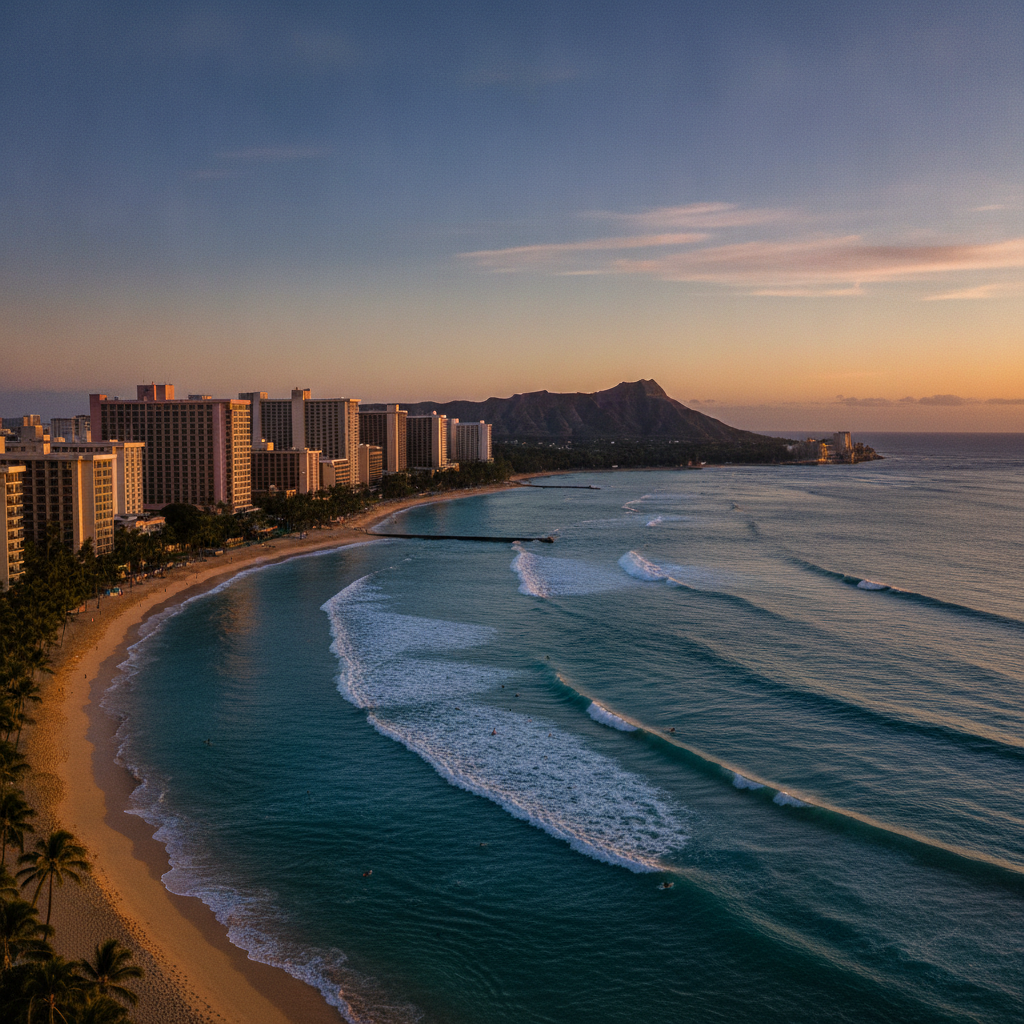
Honolulu: Waikiki Beach and Diamond Head Summit Hike, Pearl Harbor National Memorial (USS Arizona and USS Missouri), North Shore Seven Mile Miracle Surf (Pipeline, Sunset Beach), Polynesian Cultural Center, Hawaiian Plate Lunch and Practical Guide
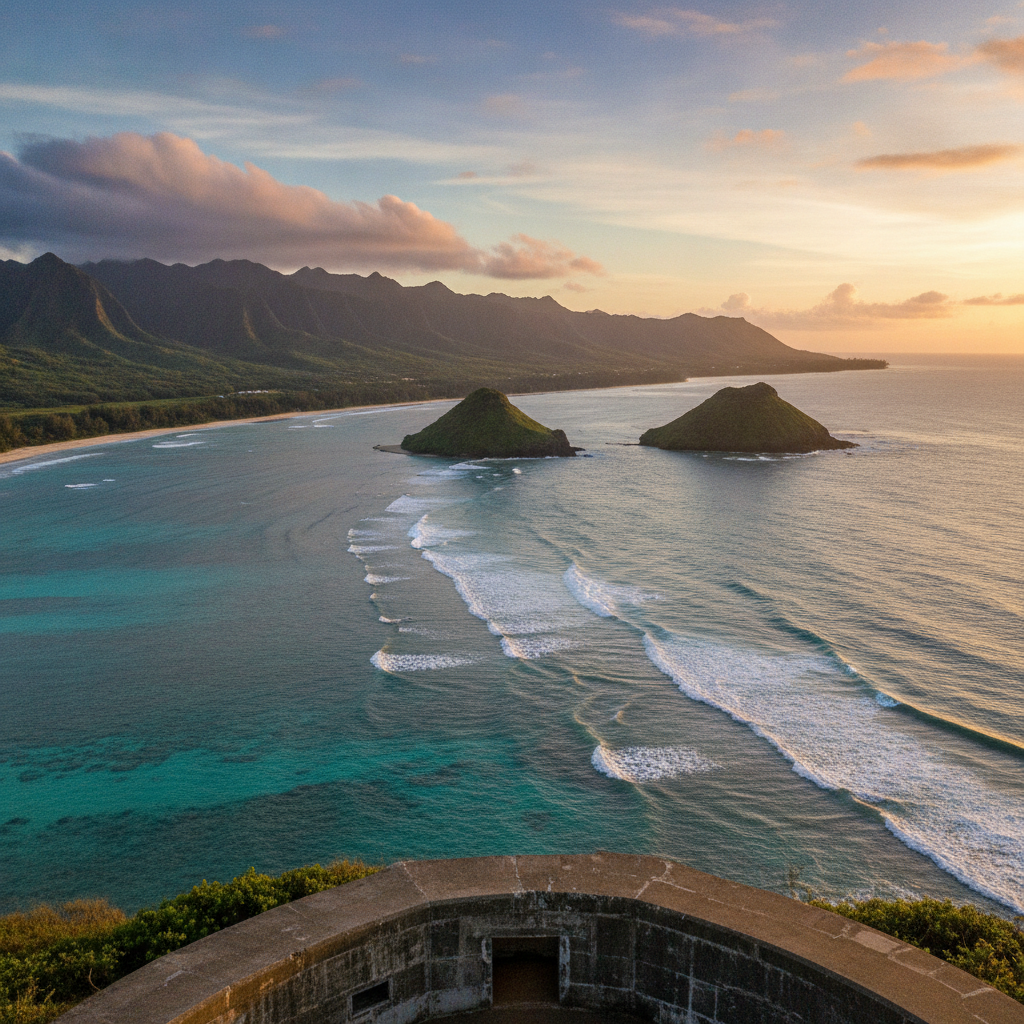
Honolulu: Koko Head Crater Trail and Sandy Beach, Kailua Beach and Lanikai Pillbox Hike, Haleiwa North Shore Town (surf culture, Matsumoto Shave Ice), Waimea Valley Sacred Cultural Site, Dole Plantation Pineapple History, and Hawaii Volcanoes National Park Big Island Day Trip
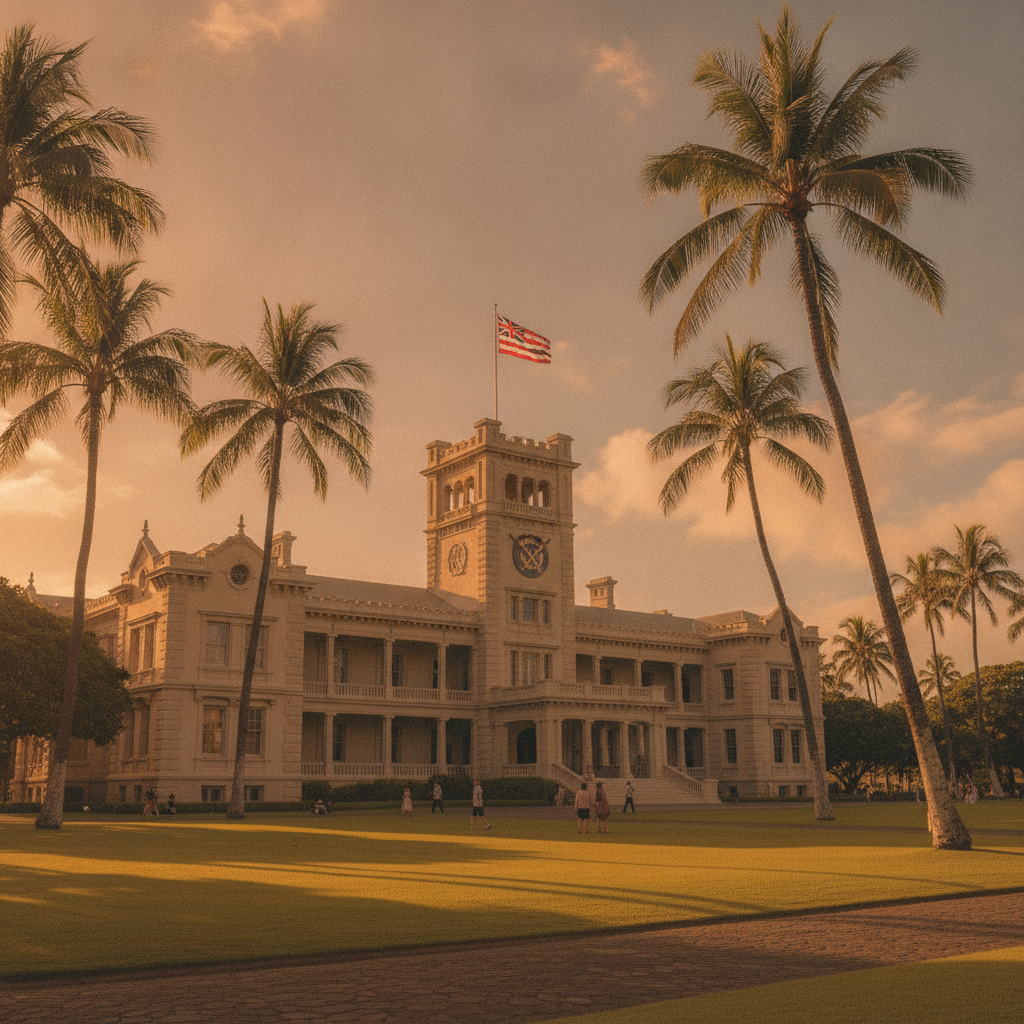
Honolulu: Iolani Palace (Hawaiian Kingdom overthrow 1893), Bishop Museum (Pacific natural and cultural history), Nuuanu Pali Lookout (Battle of Nuuanu 1795), Manoa Falls Rainforest Trail, Hanauma Bay Snorkeling Reserve, and Chinatown Asian Food Scene