Hpa-An Mt. Zwegabin Trek & Monastery Walk
Climb Mount Zwegabin — the most iconic limestone peak visible from Hpa-An rises 722 metres above the plain and the pre-dawn trek to the summit for the sunrise is the most rewarding single physical challenge accessible at the destination, with the Buddhist monastery at the summit and the panoramic view of the entire karst landscape visible in every direction.
- 1
Zwegabin Base Camp Start
The base of Mount Zwegabin (the starting point of the main trekking route up the mountain, the path beginning at the small monastery and the ticket booth at the mountain's base where the pilgrim and visitor register before the ascent) is the departure point for the most physically demanding and the most rewarding single experience accessible in the Hpa-An area — the trek (approximately 2,200 steps cut into the mountain's limestone face, the ascent taking 1.5-2 hours at a comfortable pace) begins through the mature forest that covers the lower slopes, where the shade and the birdsong provide the most pleasant early section of the climb. The mountain's significance (the sacred peak visible from Hpa-An and from the surrounding plain, the summit monastery that has existed for centuries as the pilgrimage destination of the Karen Buddhist community) makes the Zwegabin trek the most religiously-culturally layered single physical activity accessible at the destination.
- 2
Forest Trail Ascent
The forest trail section of the Zwegabin ascent (the lower third of the climb through the mature limestone forest, where the tree canopy provides shade and the forest's biological diversity is most accessible — the limestone flora, the cave-entrance vegetation, and the bird community of the forest all visible within the first 30 minutes of climbing) is the most ecologically informative single section of the mountain experience — the forest's composition (the fig trees whose roots can be seen descending over the limestone outcrops, the various Pandanus species growing in the rock crevices, and the ferns colonising the shaded limestone walls) represents the most specialised plant community accessible at any trekking destination in Karen State. The morning bird activity in the forest canopy (the hornbill species, the various flycatcher and woodpecker species, and the chorus of bulbuls that provides the most complete acoustic survey of the Hpa-An limestone forest accessible during the pre-dawn ascent) is the most biodiversity-rich single encounter available on the trek.
- 3
Summit Monastery View
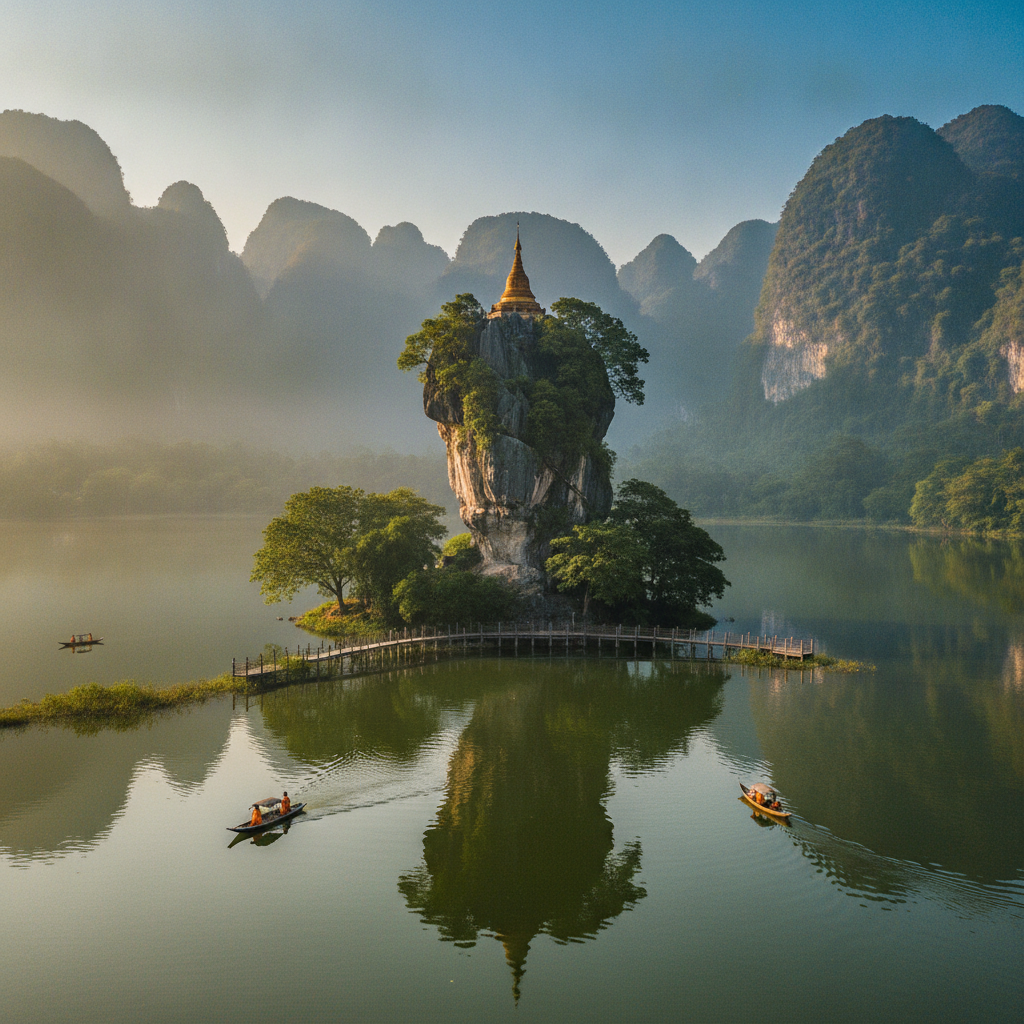
The summit monastery of Mount Zwegabin (the Buddhist religious complex at the mountain's highest point, built on the narrow summit platform above the vertical faces of the limestone peak, with the panoramic 360-degree view accessible from the monastery terrace) provides the most geographically comprehensive single viewpoint accessible in the Hpa-An area — the summit view (the entire Thanlwin/Salween River plain visible in all directions, the river itself visible as a silver band in the morning light, the surrounding limestone towers visible as isolated peaks below the summit level, and the distant ridges of the Karen Hills visible to the east) is the most spatially overwhelming single viewpoint accessible at any destination in southern Myanmar. The monastery's cats (the large population of cats maintained by the monks at the summit monastery, the most densely cat-populated single religious site accessible in Myanmar) add the most charmingly incongruous wildlife encounter to the otherwise dramatically austere mountain summit experience.
- 4
Sunrise Karst Panorama
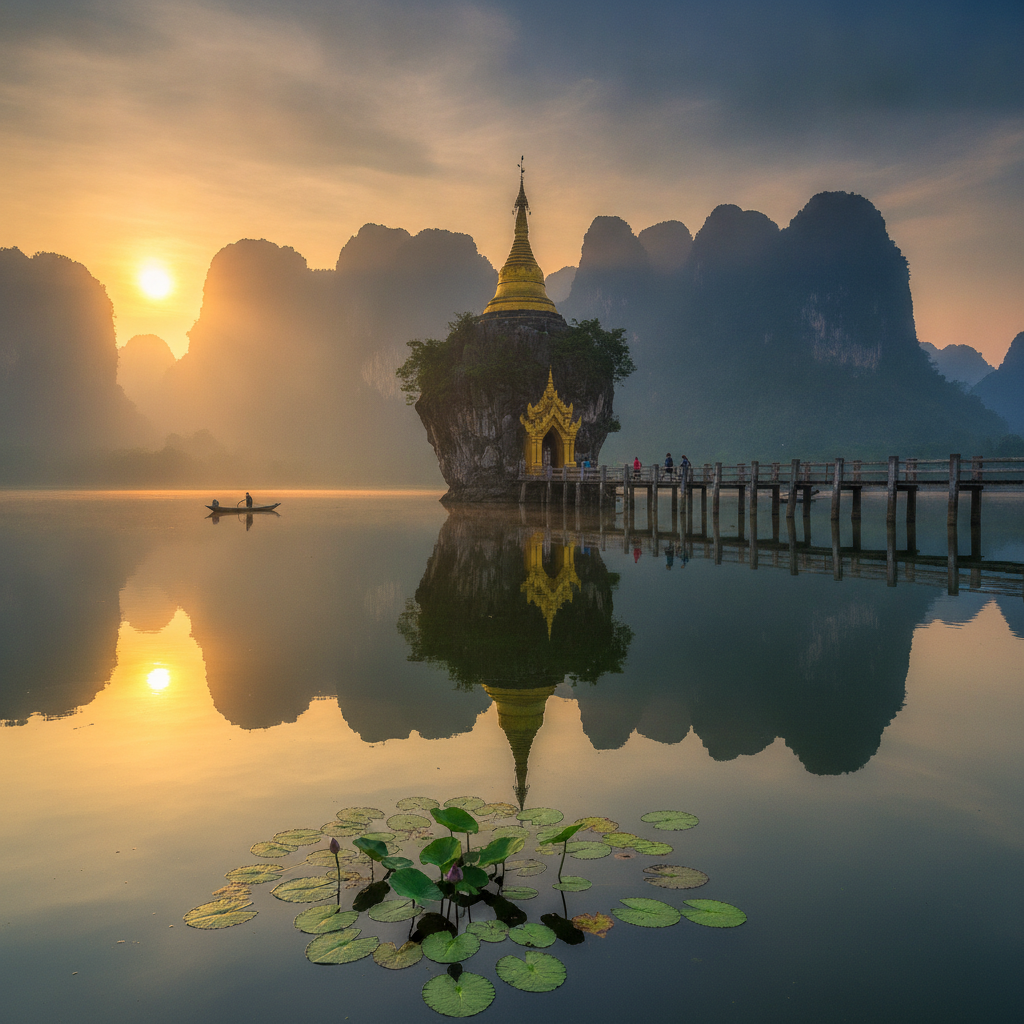
The Zwegabin summit sunrise (the moment when the first sunlight appears above the eastern hills and illuminates the limestone karst landscape below — the towers catching the orange light on their eastern faces while the western faces remain in shadow, the Salween River floodplain between the towers filling with the warm morning mist, and the Hpa-An town visible in the distance below) is the single most photographically dramatic natural event accessible in southern Myanmar — the sunrise's progression (the gradual illumination of the landscape from the first grey light that reveals the towers' shapes to the fully golden illumination that makes the limestone glow with the warmth of the early light) and the physical experience of having trekked in the pre-dawn darkness to arrive at the summit for this specific moment create the most completely earned single visual experience accessible at the destination. The sunrise's specific colours (the orange-gold that the limestone reflects more warmly than any other rock type, combined with the morning mist in the valleys between the towers) makes the Zwegabin sunrise the most consistently cited single peak travel experience in the Hpa-An visitor memory.
- 5
Descent Forest Path
The descent from the Zwegabin summit (the return journey down the same stone staircase in the full morning light that reveals the forest details invisible in the pre-dawn darkness of the ascent, the views expanding and contracting as the path descends through the various levels of the forest) provides the most observationally complete survey of the Zwegabin environment accessible in a single visit — the descent's advantages over the ascent (the full light revealing the forest's details, the absence of the physical effort required for the uphill allows the attention to shift from the physical challenge to the natural and cultural observation, and the cooler temperature after the sun has not yet reached the lower forest levels) make the return journey as experientially rich as the outward trek despite being the familiar path already walked. The descent's final section (the emergence from the forest into the paddy landscape around the mountain's base, the views of the mountain face from below becoming visible as the path nears the base) completes the most comprehensive single mountain encounter accessible at Hpa-An.
- 6
Karen Village Culture
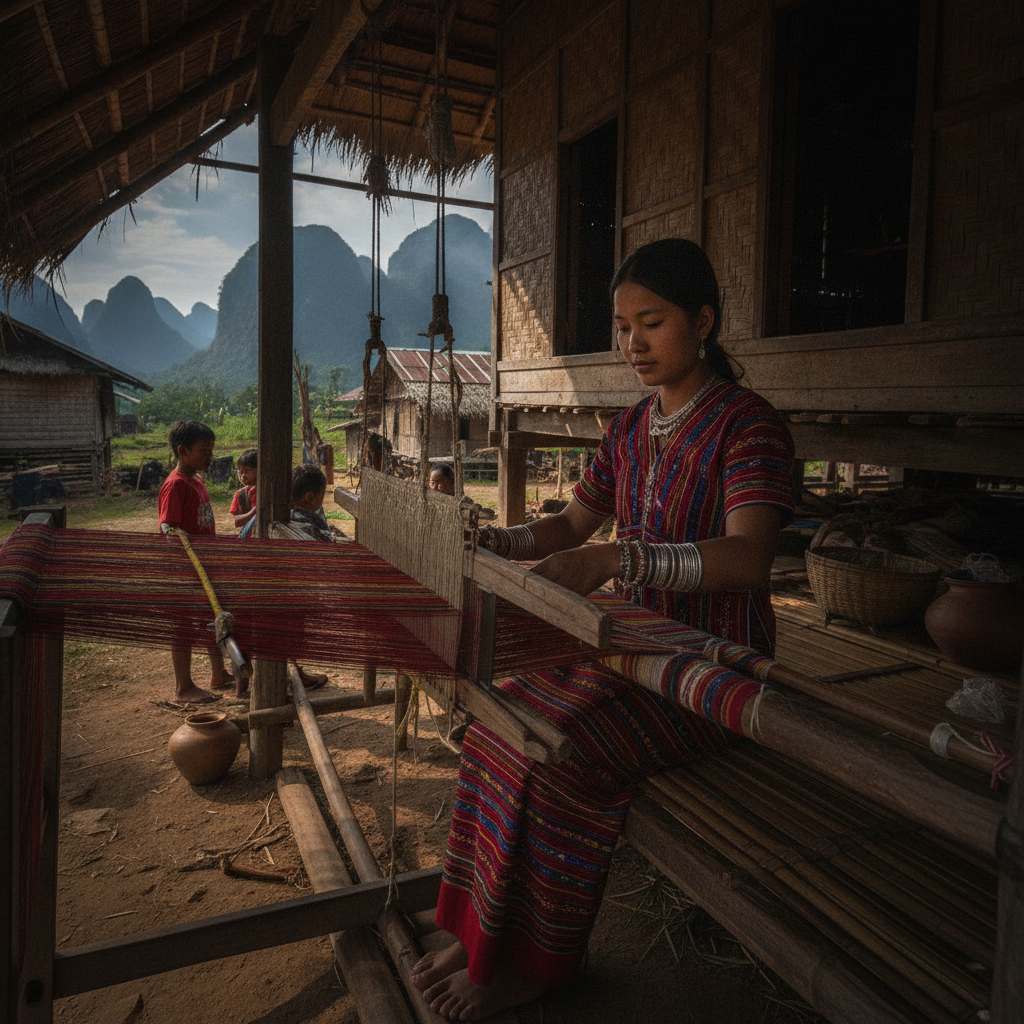
The Karen villages accessible in the landscape surrounding Mount Zwegabin (the communities of the Karen people — the largest ethnic minority in Myanmar, whose traditional animist-Buddhist culture is most directly accessible in the Karen State countryside near Hpa-An) provide the most directly ethnographically engaging single encounter available during the Zwegabin trekking day — the Karen community's distinctive dress (the women in the traditional hand-woven sarong with the Karen geometric woven borders, and the men in the traditional Karen longyi with the characteristic red woven stripe) and the village agricultural landscape (the Karen farming community whose terraced agriculture and the bamboo house construction create the most visually distinctive settlement pattern accessible in the Hpa-An plain) provide the most immediately cultural context for the karst landscape's human history. The Karen Buddhist monastery visible in the village (the local community's religious centre, where the monks' practice represents the Karen adoption of the Theravada Buddhist tradition onto the older animist spiritual foundation) is the most directly community-specific religious encounter accessible near the mountain.
Walk this route with audio
Stories play automatically as you reach each stop — no tapping needed.